⚡ FLASH SALE: Get 60% OFF All Premium 3D & STL Models! ⚡

In the expansive realm of 3D modeling, few vehicles command as much respect and admiration as the Land Rover Defender 110. Its rugged silhouette, unwavering capability, and storied history make it an enduring icon, a symbol of adventure and resilience. For 3D artists, game developers, automotive designers, and visualization specialists, having access to a meticulously crafted digital representation of such a legend is invaluable. It transforms creative concepts into tangible realities, bridging the gap between imagination and a photorealistic or game-ready asset.
Today, we’re diving deep into the technical intricacies and creative potential offered by an exceptional example of digital automotive artistry: the Land Rover Defender 110 3D Model. This isn’t just a static object; it’s a versatile foundation, engineered for a spectrum of professional applications, from high-fidelity automotive rendering to immersive game development and even precise 3D printing. At 88cars3d.com, creators can discover a treasure trove of high-quality 3D car models designed to elevate any project, and this Defender 110 stands out as a prime example of their commitment to detail and functionality.
The success of any 3D project hinges not just on the quality of the model itself, but also on its compatibility and adaptability across different software and platforms. This is where understanding the various 3D file formats becomes critical. Each format serves a specific purpose, optimized for different stages of the 3D pipeline – be it raw editing, real-time deployment, or physical fabrication. The Land Rover Defender 110 3D Model thoughtfully includes a comprehensive suite of these formats, ensuring maximum utility for professionals.
The .blend format is the native file type for Blender, a powerful open-source 3D creation suite. When you receive a .blend file, you’re getting a fully editable Blender scene. This means all the original mesh data, materials, textures, lighting setups, camera positions, and even animation data are preserved. For artists who primarily work in Blender, this is the most flexible format, allowing for direct modification, rigging, custom shaders, and integration into existing Blender projects without any loss of fidelity or conversion artifacts. It’s ideal for deep customization and leveraging Blender’s robust toolset for modeling, sculpting, and rendering with Cycles or Eevee.
.fbx (Filmbox) is arguably the most widely used proprietary 3D file format for exchanging data between various 3D software applications and game engines like Unreal Engine and Unity. It’s renowned for its ability to store not just mesh data, but also complex scenes, animations, cameras, lights, and materials in a single file. For game developers or those needing to transfer the Land Rover Defender 110 into real-time pipelines, .fbx is indispensable. It ensures that the model’s hierarchies, pivots, and basic material assignments are maintained, facilitating a smooth transition from a modeling package to an engine for optimization and interaction.
The .obj (Wavefront Object) format is a universal standard, widely supported by virtually every 3D application. It excels at storing pure geometry data – vertices, normals, UV coordinates, and faces – making it incredibly robust for cross-software compatibility. While .obj files can reference external .mtl (material) files, their strength lies in their simplicity and widespread acceptance for mesh exchange. If you need a clean, unadorned mesh of the Defender 110 that can be imported into almost any program for further texturing and material setup, .obj is your go-to.
.glb (GLB-Binary) is the binary version of the glTF (GL Transmission Format) specification, specifically optimized for web-based 3D applications, AR (Augmented Reality), and VR (Virtual Reality). It’s a single-file format that bundles models, textures, animations, and PBR (Physically Based Rendering) materials efficiently. For showcasing the Land Rover Defender 110 in interactive web viewers, AR apps, or light VR experiences, .glb offers excellent performance and ease of deployment, ensuring consistent visual fidelity across different browsers and devices.
.stl (Stereolithography) is the de facto standard for 3D printing. It represents a 3D model as a collection of unconnected triangular facets, defining only the surface geometry of an object without color, texture, or other CAD attributes. When converting the Land Rover Defender 110 for physical production, the .stl format is crucial. It provides the slicing software with the necessary information to generate toolpaths for FDM, SLA, or DLP printers, allowing you to bring the digital model into the physical world as a collectible miniature or a prototype.
.ply (Polygon File Format) is another format for storing 3D data, often used for precision meshes, scanned data, or CAD output. It can store various properties beyond just geometry, such as color, transparency, and even normal vectors for each vertex or face. While not as universally common as .obj or .fbx for general modeling, .ply is valuable in specific pipelines where precise mesh information, often from scientific or engineering contexts, needs to be preserved for analysis or specialized manufacturing processes.
The .unreal designation typically refers to assets specifically packaged or optimized for direct import and use within Unreal Engine. While .fbx is the common import format, a dedicated “.unreal” file or folder structure often implies an asset that has undergone specific preparation: appropriate scaling, pivot points, collision meshes, LODs (Levels of Detail), and even basic material setups tailored for Unreal Engine’s PBR workflow. This significantly streamlines the integration process for game developers, saving valuable time on setup and optimization.
Lastly, the .max format is the native scene file for Autodesk 3ds Max, a leading software for 3D modeling, animation, rendering, and visual effects. Similar to .blend, a .max file contains a complete scene, including models, modifiers, materials (like V-Ray or Corona setups), lighting, cameras, and animation data. For professionals working within the Autodesk ecosystem, particularly in architectural visualization or high-end product rendering, the .max file provides full parametric control and access to all native 3ds Max features for sophisticated rendering and animation of the Defender 110.
The Land Rover Defender 110 is more than just a vehicle; it’s a statement. Capturing its essence in a 3D model requires an understanding of its legacy and a meticulous eye for detail. This particular 3D model rises to that challenge, offering a digital recreation that embodies the spirit and rugged utility of the original.
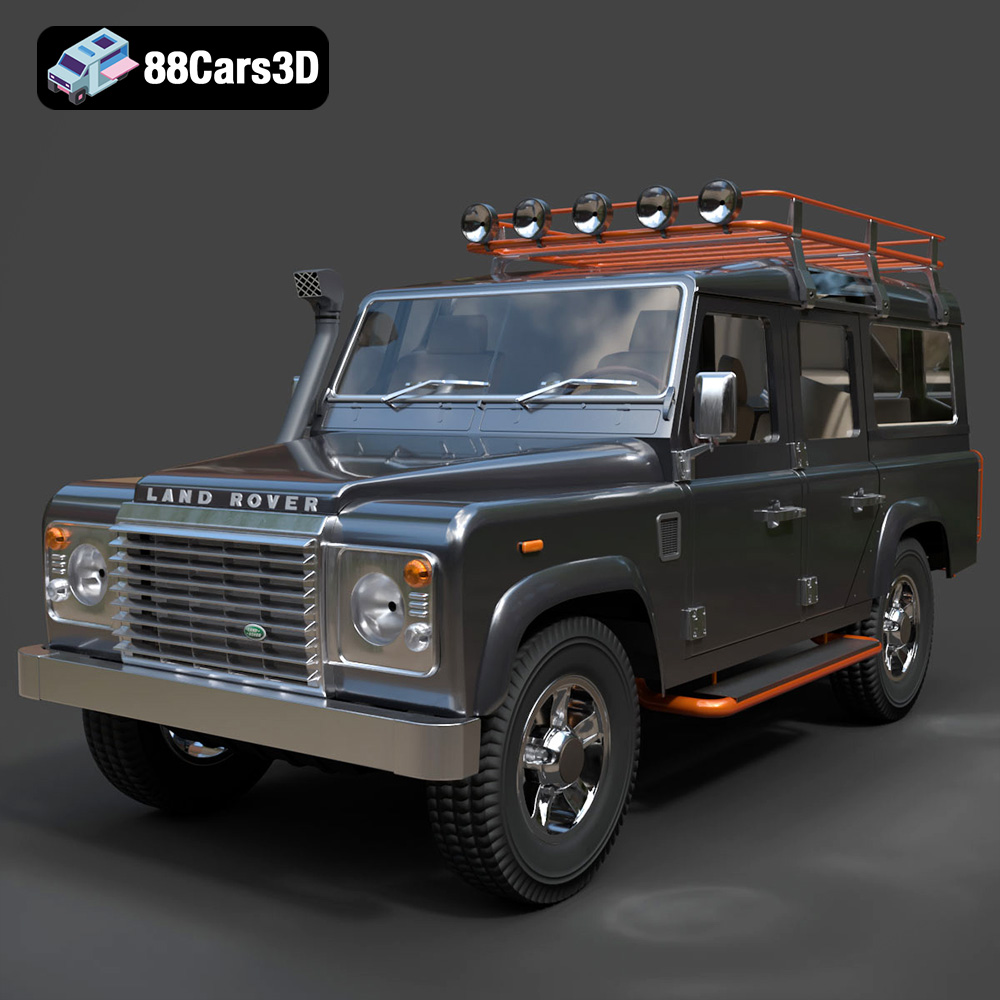
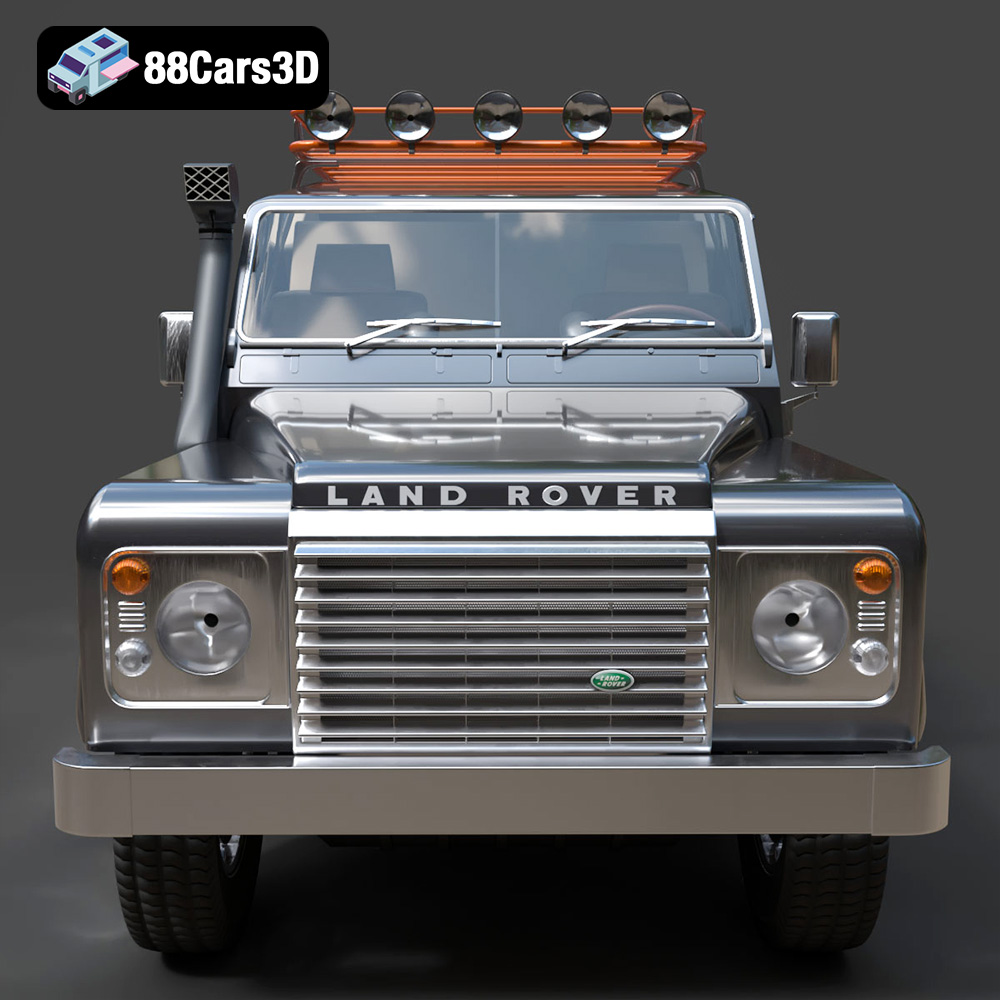
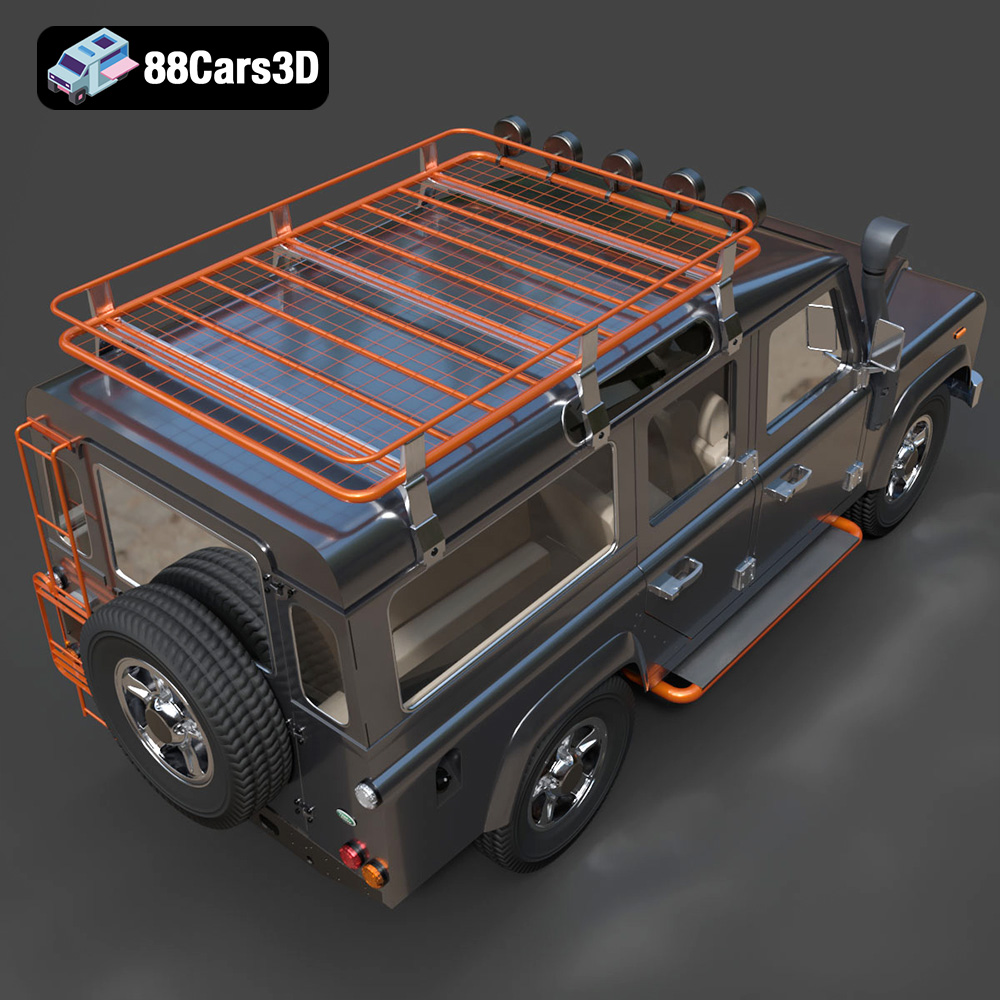
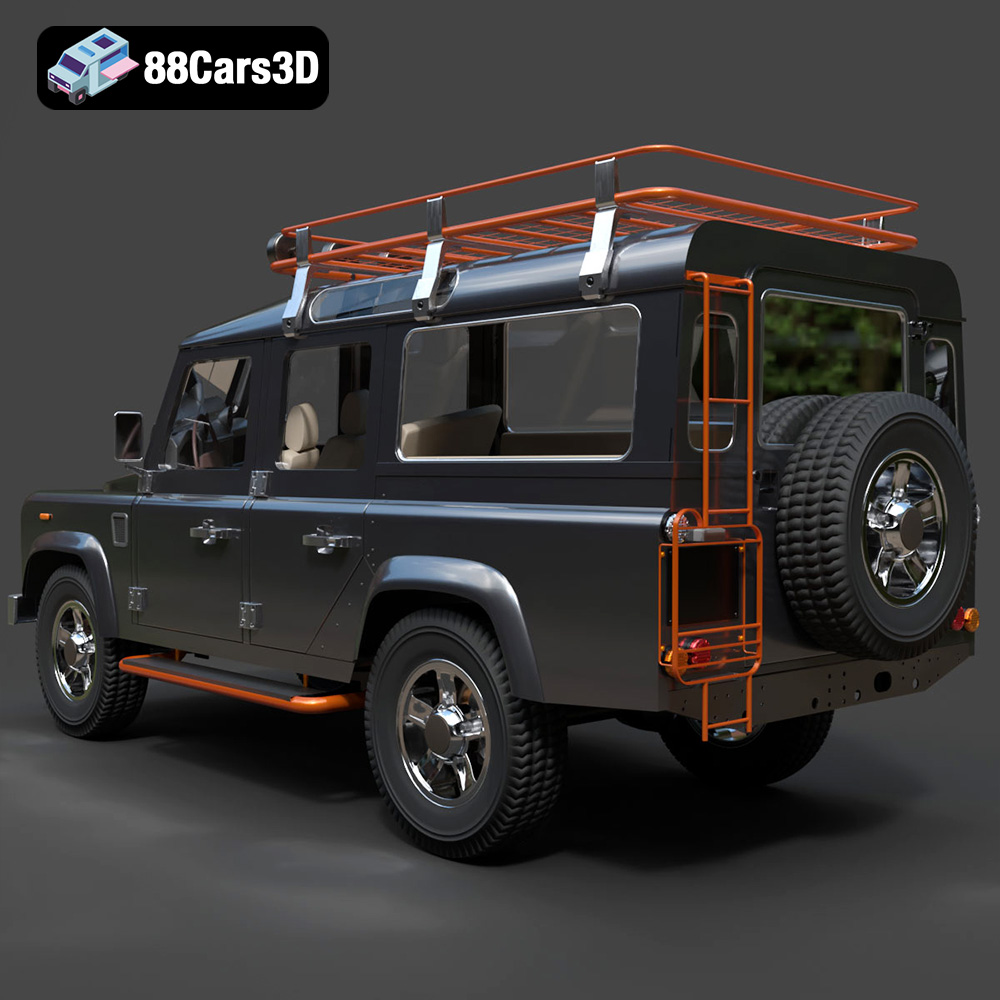
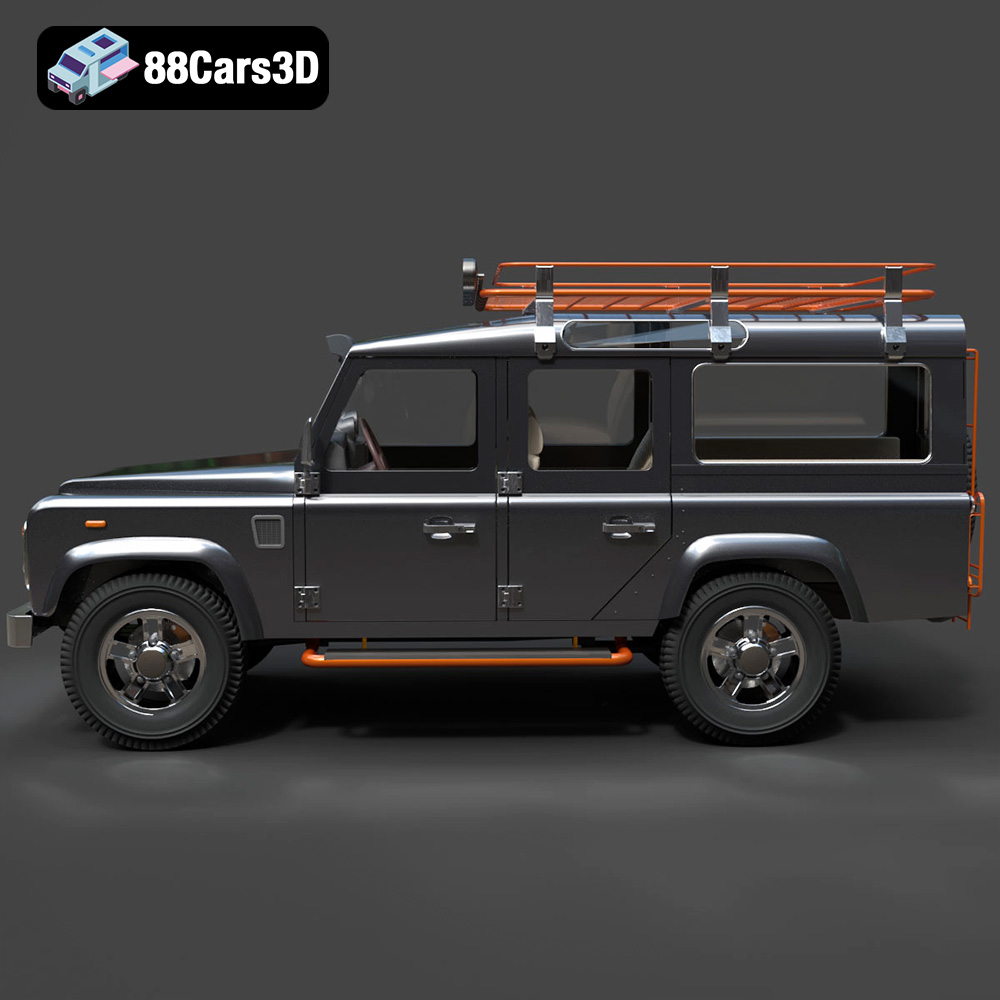
The Land Rover Defender 110 3D Model excels in its faithful reproduction of the vehicle’s iconic exterior. Every characteristic, from the distinctive boxy body structure and flat hood design to the signature front grille and classic round headlamps, has been carefully modeled. The reinforced bumpers speak to its off-road prowess, while the extended wheelbase proportions accurately convey the 110’s unique stance. Details like the roof configuration (whether solid or roof rack-ready), exposed hinges, and the quintessential rear-mounted spare wheel are all present, contributing to a truly authentic representation. Even the side steps and off-road tires are rendered with precision, hinting at the adventures this digital Defender is ready for. Crucially, separate wheels and steering components are included, making the model animation-ready for dynamic scenes and interactive simulations.
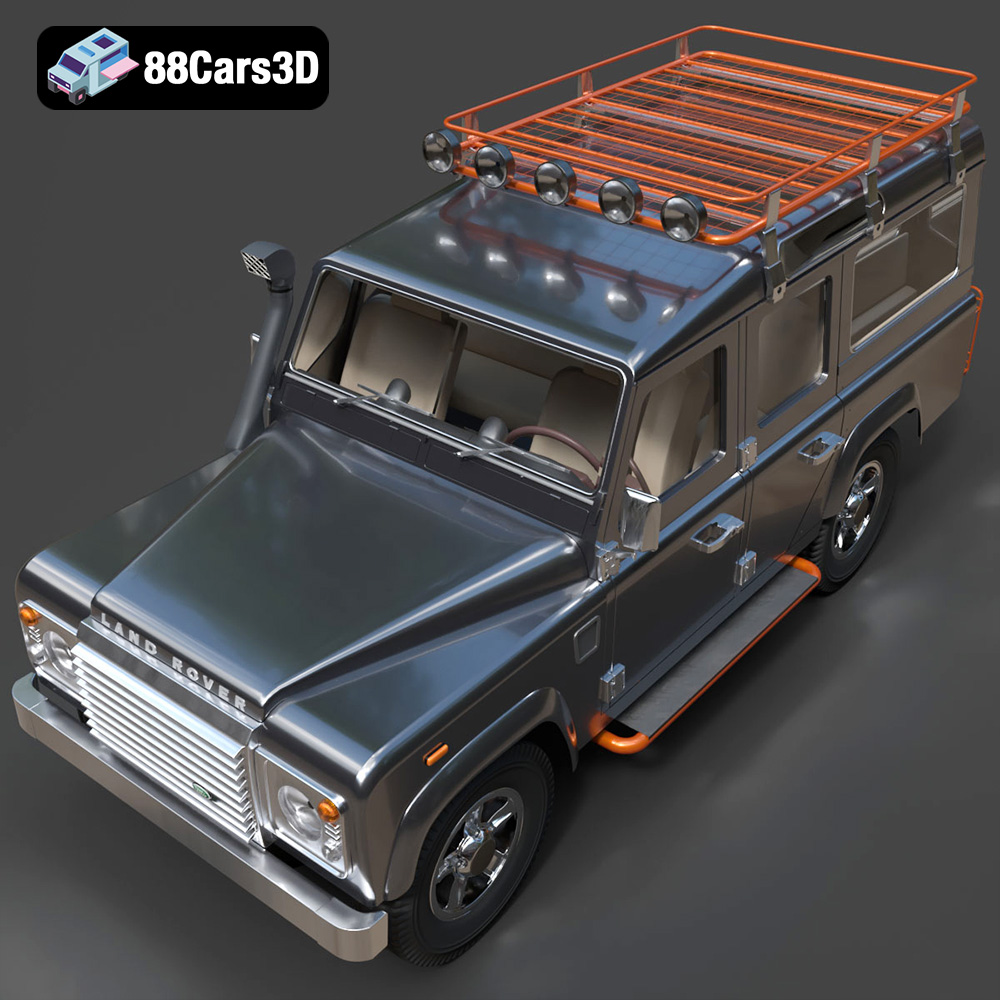
Beyond its rugged exterior, the Defender 110’s interior, though utilitarian in its real-world counterpart, is equally important for creating immersive digital experiences. This 3D model includes a functional dashboard layout with an analog instrument cluster, providing a sense of realism for driver’s perspective shots or interactive simulations. The steering wheel and driver control configuration are accurately represented, alongside the front and rear seating layout. Details such as the center console and gear shifter further enhance the interior’s authenticity. Importantly, the interior panel structure is optimized for real-time rendering, ensuring that game environments and AR/VR experiences maintain high performance without sacrificing visual quality when users peer inside.
In the demanding world of 3D production, a beautiful model is only as good as its underlying technical foundation. The Land Rover Defender 110 3D Model distinguishes itself with several key technical advantages that ensure both visual fidelity and practical usability across diverse platforms.
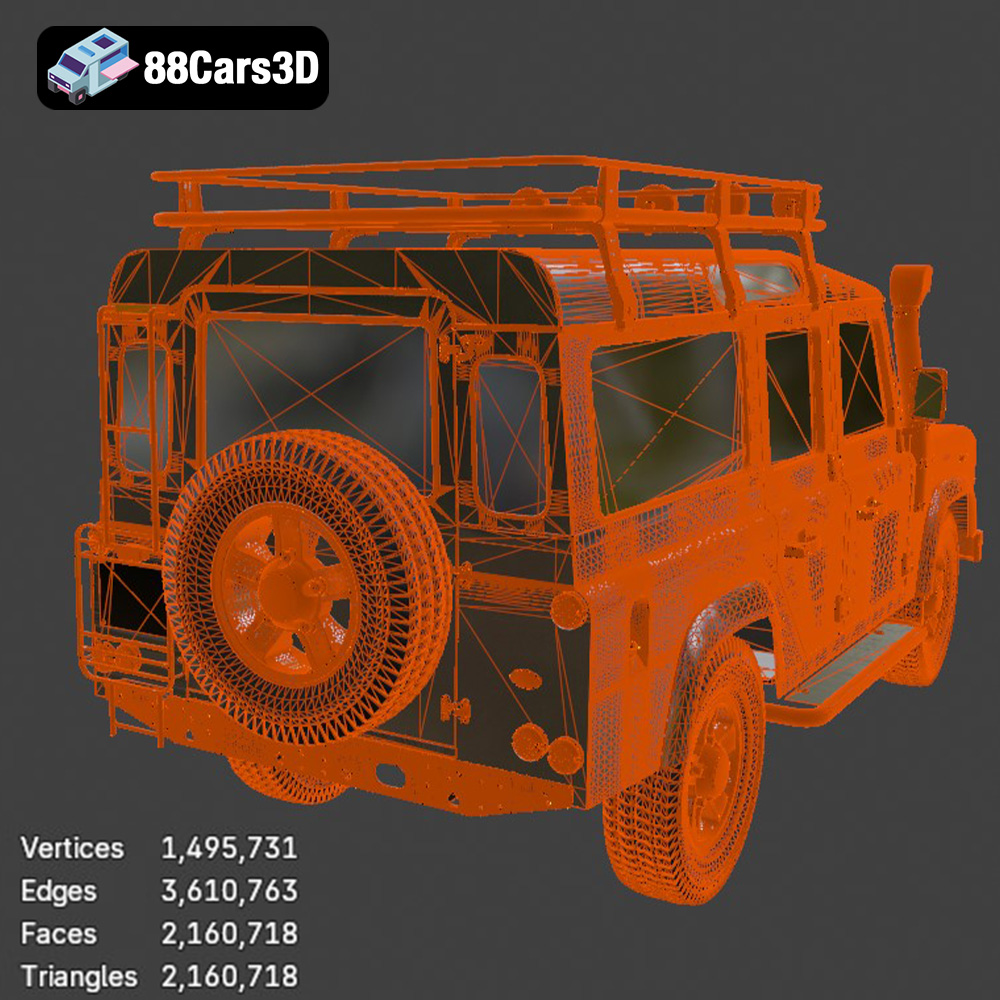
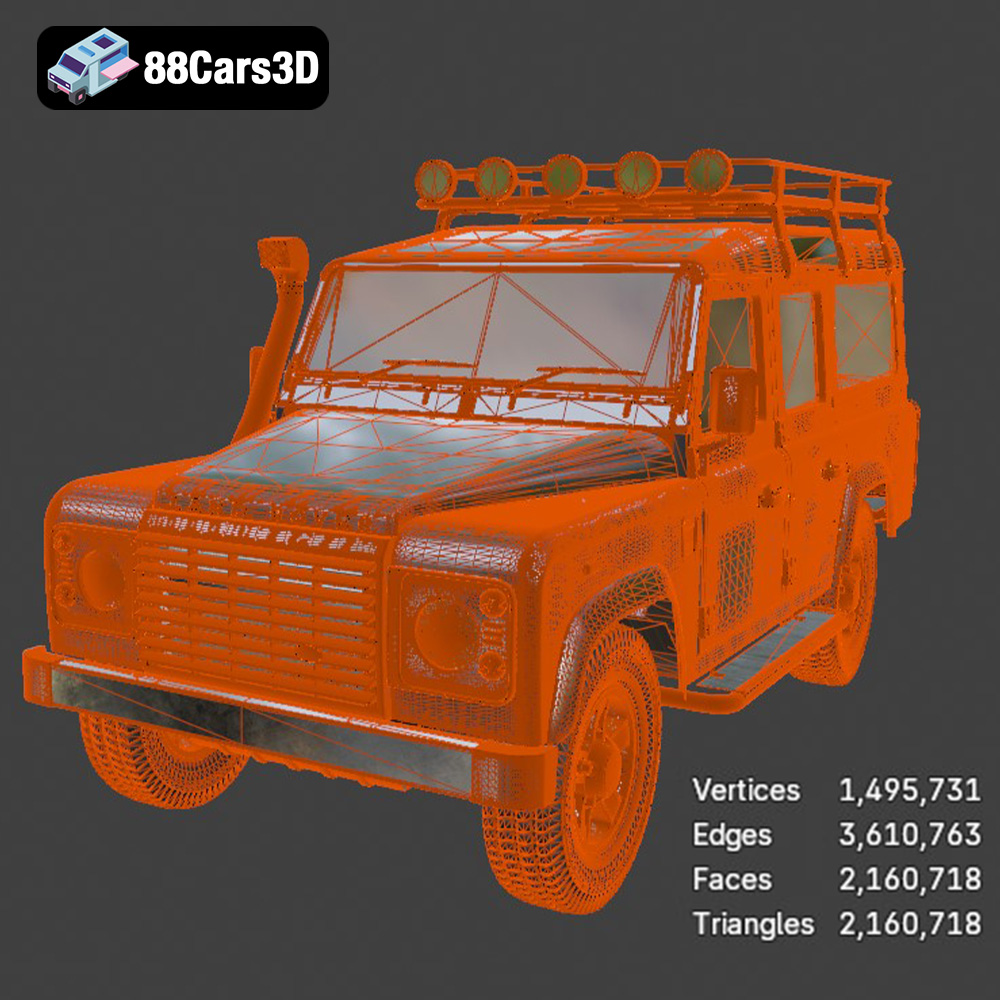
At the heart of any professional 3D model is its mesh structure. This Defender 110 boasts a clean and well-organized mesh, which is crucial for smooth deformation during animation, efficient UV mapping, and trouble-free subdivision modeling. The optimized polygon flow strikes a balance between performance and realism, ensuring that the model looks great up close without being overly demanding on system resources. Furthermore, real-world scale accuracy is maintained, meaning the model will fit seamlessly into existing scenes or environments without requiring tedious resizing, a common pitfall with less professional assets. This attention to detail simplifies integration into major 3D software platforms like 3ds Max, Blender, and Cinema 4D, making it a truly versatile asset.
For dynamic projects, animation is key, and this model is built with that in mind. The proper pivot setup for steering and wheel rotation allows artists to quickly rig and animate the vehicle for driving sequences, cinematic shots, or interactive control in games. This pre-configured readiness saves countless hours of setup time. For asset management, the clean mesh and logical grouping of components make it easy to manage, modify, and integrate into complex scenes. Whether you’re a solo artist or part of a large studio, the technical integrity of this Land Rover Defender 110 3D Model ensures a smooth and efficient workflow.
The true value of a high-quality 3D model lies in its adaptability across various creative and technical domains. The Land Rover Defender 110 3D Model is not confined to a single purpose; its robust design and comprehensive file format support make it suitable for a multitude of applications, reflecting the diverse needs of modern 3D artists and developers.
For professionals in automotive marketing, advertising, and architectural visualization, the demand for photorealistic vehicles is constant. The Defender 110 model is an ideal candidate for creating stunning outdoor advertising visuals, captivating automotive marketing campaigns, and adventure-themed promotions. Imagine it traversing a digital desert landscape for an off-road tire advertisement or parked elegantly in front of a modern safari lodge rendering. Its detailed exterior and real-world proportions ensure that it stands up to close-up shots and high-resolution renders, making it a compelling centerpiece for any visualization project.
The Land Rover Defender 110 is a perfect fit for game development, particularly for genres that emphasize exploration, simulation, or survival. With formats like .fbx and .unreal included, it’s designed for seamless integration into game engines like Unreal Engine and Unity. Developers can utilize it in open-world exploration games, off-road driving simulators, or even as a utility vehicle in survival-based environments. Its optimized polygon flow and clean mesh structure are crucial for maintaining high frame rates and smooth performance in real-time applications. The separate wheels and steering components are invaluable for implementing realistic vehicle physics and handling, providing an engaging experience for players.
Beyond traditional rendering and gaming, the Defender 110 extends its utility into emerging and specialized fields. For AR/VR, the .glb format makes it perfect for immersive expedition simulations or interactive vehicle demonstrations, allowing users to virtually explore the legendary SUV. In simulation and training, it serves as a valuable asset for terrain-driving simulations or utility vehicle modeling for educational or operational purposes. Finally, its design makes it convertible to .stl format, opening the door to 3D printing. This allows for the creation of scale off-road display models and collectible miniatures, bringing the digital asset into the physical world. The provided 3D print settings, such as recommended scales (1:32 / 1:24 / 1:18 / 1:10), layer height, wall thickness, infill, and support requirements, offer a clear guide for enthusiasts looking to physically manifest this iconic vehicle.
A truly versatile 3D asset provides not just a foundation, but also a springboard for creativity. The Land Rover Defender 110 3D Model offers extensive customization options, allowing artists to tailor it precisely to their vision and project requirements.
The ability to easily modify the model’s aesthetics is paramount for creative freedom. Users can effortlessly change the body color, choosing from classic hues like green, sand, or black, or applying custom tones to match a specific brand or artistic direction. Beyond color, the model is prepared for adding a range of roof racks, snorkels, or other off-road accessories, transforming it from a standard utility vehicle into a bespoke expedition machine. Modifying wheel and tire configurations can further alter its stance and character, making it suitable for anything from a pristine showroom display to a battle-hardened desert explorer. Applying expedition decals or military markings can imbue the model with a rich backstory and specific context, enhancing narrative depth in cinematic or game projects.
The customization extends beyond the vehicle itself to its interaction with the environment. Artists can adjust lighting to suit diverse settings, whether they’re aiming for the harsh glint of a desert sun, the dappled light of a forest trail, or the dramatic glow of a mountain sunset. This flexibility allows the Land Rover Defender 110 3D Model to seamlessly integrate into various digital landscapes, becoming a natural part of any scene. Whether you’re crafting a serene wilderness visual or an action-packed chase sequence, the model provides the perfect anchor for your environmental storytelling.
For professional 3D artists, understanding how a new asset fits into established workflows is crucial. The Land Rover Defender 110 3D Model is designed for optimal integration, supporting common pipelines from initial modeling to final rendering or real-time deployment.
Consider a game development scenario. An artist might begin by importing the .blend file of the Land Rover Defender 110 3D Model into Blender. Here, they can perform any necessary modifications, such as adding specific details, adjusting materials, or optimizing the mesh for particular LODs. The clean topology and proper pivot setup make these adjustments straightforward. Once satisfied, the model can be exported as an .fbx, ensuring that its hierarchy, basic materials, and animation readiness are preserved. Importing this .fbx into Unreal Engine (or Unity) is typically a smooth process. Within the engine, artists can refine PBR materials, set up collision meshes, configure vehicle blueprints for interactive control, and integrate it into game levels. The inclusion of an .unreal format option further streamlines this, indicating that some pre-optimization specific to the engine may already be in place, reducing iteration time and accelerating development cycles.
For high-fidelity automotive rendering and visualization, a common workflow involves 3ds Max and a powerful renderer like V-Ray or Corona. The .max file provided offers direct access to the model within 3ds Max, complete with its original setup. Artists can leverage 3ds Max’s robust modeling tools for any fine-tuning and then proceed to set up advanced materials using V-Ray, incorporating intricate details like metallic flakes, clear coats, and realistic tire rubber. Placing the Land Rover Defender 110 3D Model into a custom scene, perhaps a dramatic studio environment or a sprawling desert landscape, allows for precise lighting setups and camera angles. Post-processing in applications like Photoshop or Nuke can then enhance the rendered image, adding atmospheric effects, lens flares, and color grading to achieve a truly cinematic quality, perfect for high-impact advertising or promotional visuals.
The Land Rover Defender 110 is an icon, and its digital counterpart, the Land Rover Defender 110 3D Model, is a testament to the power of meticulous 3D artistry. From its accurate exterior details and functional interior to its robust technical advantages and comprehensive file format support, this model is a powerhouse asset for professionals across various industries. Whether you’re crafting breathtaking automotive rendering scenes, developing immersive open-world games, designing compelling AR/VR experiences, or even fabricating physical miniatures through 3D printing, this model provides the quality and flexibility needed to excel.
Its readiness for animation, clean topology, and compatibility with major software like Blender, 3ds Max, and game engines like Unreal Engine, makes it an indispensable tool. The inclusion of diverse formats such as .blend, .fbx, .obj, .glb, .stl, .ply, .unreal, and .max ensures that regardless of your specific pipeline or end goal, you have the right starting point. Explore the vast potential and elevate your next project with this exceptional 3D car model, available at 88cars3d.com, your trusted source for premium 3D assets.
The Land Rover Defender 110 3D Model is a high-detail digital recreation of the legendary long-wheelbase off-road SUV known for its rugged durability, utilitarian design, and global expedition heritage. Built to conquer extreme terrains, the Defender 110 has become an icon of adventure, military service, agriculture, and exploration worldwide. This 3D model accurately captures the boxy body structure, flat hood design, signature front grille, round headlamps, reinforced bumpers, extended wheelbase proportions, roof configuration, exposed hinges, and rear-mounted spare wheel. Designed with clean topology and real-world scale accuracy, it is ideal for rendering, animation, simulation, game development, and AR/VR environments. Convert the model to .stl for scale off-road display models and collectible miniatures, with specific 3D print settings provided for optimal results. Includes .blend, .fbx, .obj, .glb, .stl, .ply, .unreal, and .max formats.
$29.99
.4×4
.arvr
.automotive
.blend
.car3dmodel
.defender110
.expeditionvehicle
.fbx
.gameasset
.glb
.landrover
.max
.obj
.offroadvehicle
.ply
.rendering
.simulation
.stl
.unreal
.utilityvehicle
SUV