⚡ FLASH SALE: Get 60% OFF All Premium 3D & STL Models! ⚡

In the dynamic world of 3D visualization, automotive design, and interactive media, the quality and accuracy of 3D car models are paramount. From breathtaking photorealistic renders that define modern advertising to immersive open-world gaming experiences, the digital vehicles we interact with must not only look convincing but also be technically robust. Professionals across industries continually seek high-fidelity assets that can seamlessly integrate into diverse pipelines, saving invaluable development time while elevating the final product. It’s in this pursuit of excellence that specialized marketplaces like 88cars3d.com truly shine, offering a curated selection of premium 3D models designed for rigorous applications.
Today, we’re taking a deep dive into an exceptional example of such an asset: the Lincoln Navigator 2018 3D Model. This particular model stands as a testament to meticulous digital craftsmanship, recreating the full-size luxury SUV with an eye for every detail that makes its real-world counterpart a symbol of modern American luxury. Whether your project demands a stunning hero shot for an automotive commercial, a drivable asset for a next-gen game, or even a tangible miniature for a collector, this versatile 3D model offers the foundation for unparalleled creative freedom and technical precision.
The success of any 3D project hinges not just on the quality of the model itself, but also on its compatibility and optimization for specific software and use cases. Understanding the various file formats available for 3D car models is crucial for any professional seeking efficiency and versatility. The Lincoln Navigator 2018 3D Model from 88cars3d.com is provided in a comprehensive suite of formats, ensuring its utility across the most demanding pipelines. Let’s break down each one:
The .blend file is Blender’s native format, offering a complete, editable scene. This is ideal for users who primarily work within Blender and require full access to the model’s original data, including its mesh, materials, textures, lighting, and any animation setup. For the Lincoln Navigator 2018 3D Model, this means artists can delve into the intricate node-based materials, modify the topology, or even rig custom animations directly within Blender’s powerful ecosystem. It’s the go-to format for maximum flexibility and customization within an open-source environment.
.fbx (Filmbox) is arguably the most widely used interchange format in the 3D industry, particularly favored for game development (Unreal, Unity) and real-time pipelines. It excels at transferring 3D model data, including geometry, materials, textures, cameras, and animation data, between different software applications while striving to maintain fidelity. The .fbx version of the Lincoln Navigator 2018 3D Model is optimized for these environments, offering robust compatibility and ensuring that all necessary components are transferred cleanly and efficiently for immediate integration into an engine or a different 3D application like 3ds Max or Maya.
The .obj (Wavefront OBJ) format is a universal, widely supported format for exchanging 3D geometry data. While it’s excellent for transferring mesh information (vertices, faces, UVs), it’s more limited in handling complex material properties or animation compared to .fbx. However, its widespread support makes it an invaluable option for cross-software compatibility, especially when dealing with legacy systems or simpler geometry transfers. The .obj of the Lincoln Navigator 2018 3D Model serves as a reliable fallback, guaranteeing that the core mesh data is accessible to virtually any 3D software.
.glb (GLB format, a binary form of glTF) is an increasingly popular format optimized for efficient transmission and loading of 3D scenes and models, particularly in augmented reality (AR), virtual reality (VR), and browser-based applications. It packages geometry, materials, textures, and animation into a single, self-contained file, making it incredibly lightweight and easy to deploy on the web or mobile devices. For interactive virtual showrooms or AR experiences featuring the Lincoln Navigator, the .glb format offers a streamlined, high-performance solution.
The .stl (Stereolithography) format is the standard for 3D printing. It represents 3D surfaces as a collection of unconnected triangular facets, defining only the geometry of the object without color, texture, or other properties. The .stl version of the Lincoln Navigator 2018 3D Model is specifically prepared to be watertight and manifold, ensuring it’s ready for immediate slicing and physical fabrication. This is crucial for creating physical prototypes, scale models, or collectible miniatures.
The .ply (Polygon File Format, or Stanford Triangle Format) is another format for storing 3D data, particularly useful for scanned data, CAD applications, and scientific analysis. Like .obj and .stl, it’s excellent for mesh data but can also include properties like color, transparency, and surface normals per vertex or face. While less common for general 3D asset exchange than .fbx, it offers precision and detail suitable for engineering or reverse-engineering tasks related to the Lincoln Navigator model.
The .unreal format signifies an asset specifically optimized and ready for direct import and use within Unreal Engine. This often implies pre-configured materials, collision meshes, LODs (Levels of Detail), and potentially Blueprints or animation setups tailored for the engine. While .fbx is often used to import into Unreal, a dedicated .unreal asset can save significant setup time, ensuring the Lincoln Navigator 2018 3D Model is truly “plug-and-play” for game developers and architectural visualization artists working in Unreal.
Finally, the .max file is the native project format for Autodesk 3ds Max. This format provides the most complete and editable version of the model within 3ds Max, including all modifiers, scene settings, lights, cameras, and renderer-specific materials (e.g., V-Ray, Corona). For professionals who rely on 3ds Max for high-end automotive rendering, animation, or complex scene assembly, the .max version of the Lincoln Navigator 2018 3D Model offers the highest degree of control and flexibility, allowing artists to leverage Max’s extensive toolset directly.
The inclusion of such a diverse array of file formats with the Lincoln Navigator 2018 3D Model underscores its professional-grade utility, making it a truly versatile asset available on 88cars3d.com.
The 2018 Lincoln Navigator, known for its commanding presence and opulent amenities, has been meticulously translated into a high-detail 3D car model, offering artists and developers an unparalleled asset. This digital recreation is not merely a surface representation but a deep dive into the vehicle’s engineering and design philosophy, ensuring both aesthetic appeal and technical integrity. Sourced from 88cars3d.com, this model reflects the commitment to providing high-quality 3D car models that meet professional standards.
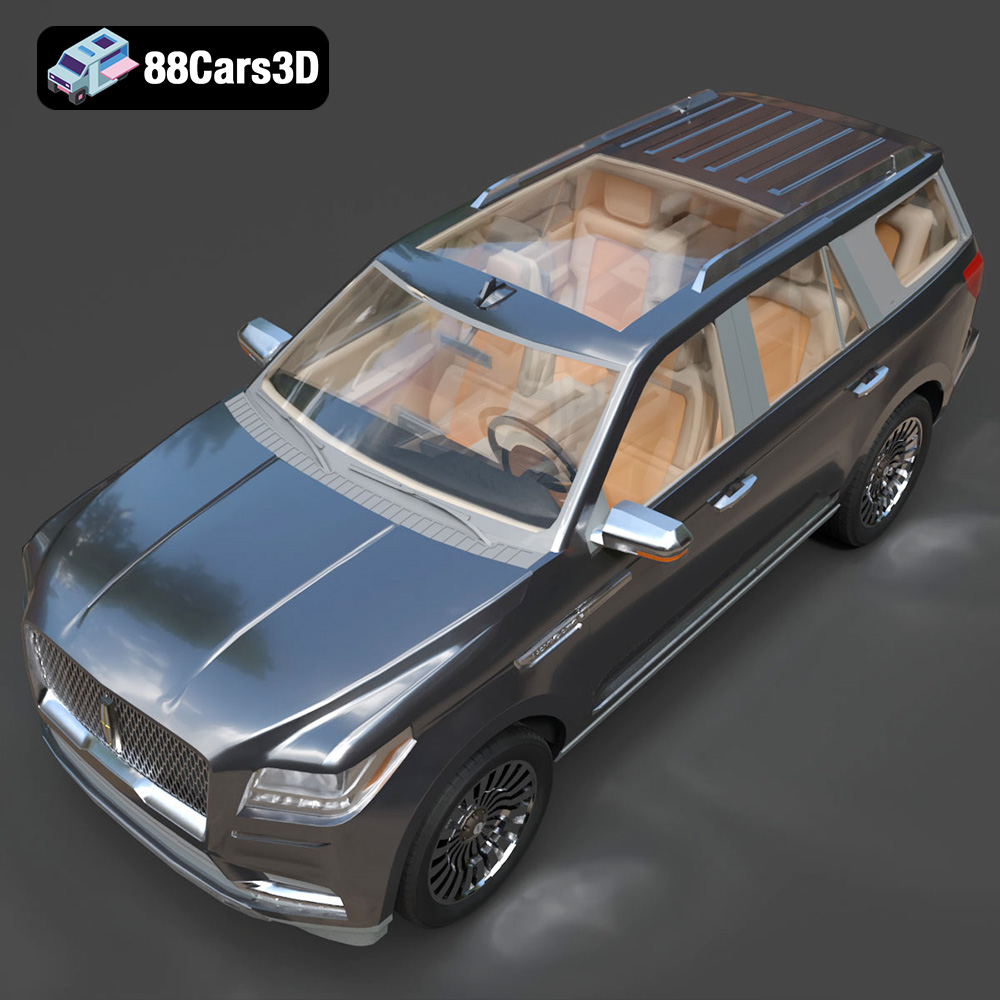
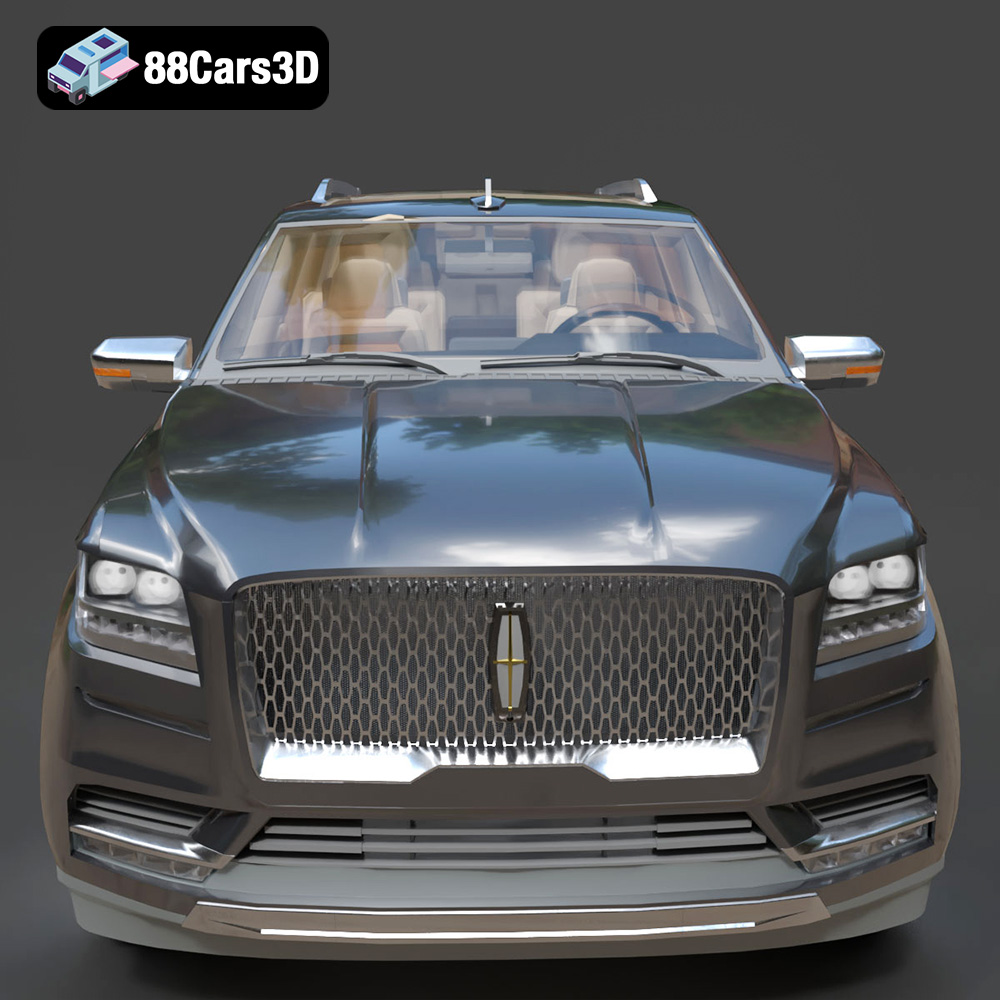
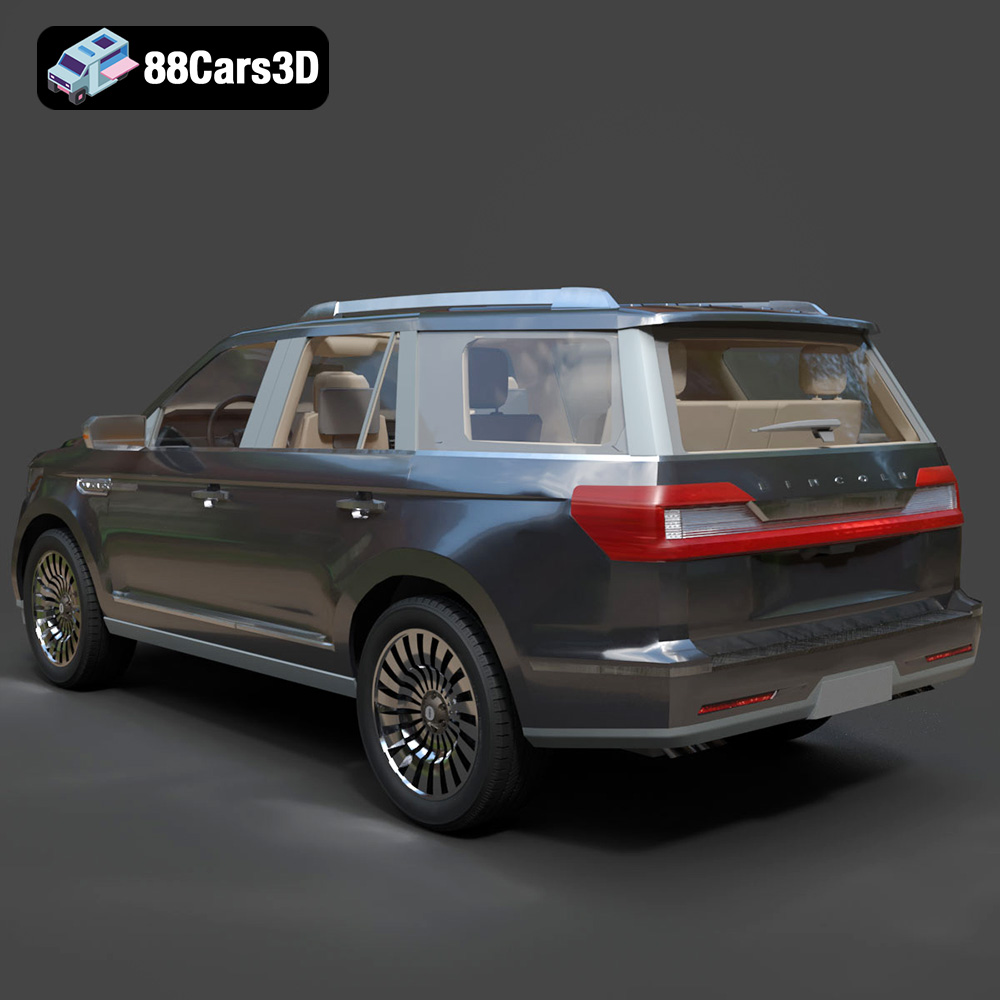
The exterior of the Lincoln Navigator 2018 3D Model flawlessly mirrors the real-world vehicle’s bold styling. The accurate body proportions of the 2018 Navigator are immediately apparent, conveying its formidable road presence. Every curve and panel has been sculpted with precision, from the dominant signature chrome mesh front grille – a hallmark of modern Lincoln design – to the intricate detailing of the LED headlight and taillight designs. These lighting elements are not just textures but properly modeled geometry, ready for realistic material assignments that catch and refract light accurately. The sculpted hood, side body contours, roof rails, and window trim detailing are all present, adding layers of realism. The large multi-spoke alloy wheels are separately modeled, ensuring proper pivot setup for animation, which is crucial for driving simulations and cinematic sequences. Even subtle elements like transparent glass materials and mirror geometry are handled with care, reflecting the environment and contributing to photorealistic renders.
Stepping into the digital cabin of the Lincoln Navigator 2018 is to experience its premium comfort and sophisticated design. The 3D model features a luxurious dashboard with a digital display cluster that replicates the modern interface of the SUV. The multifunction steering wheel is detailed, along with the center console and infotainment screen, providing a convincing interior environment suitable for close-up renders or first-person game perspectives. The premium seat geometry includes stitching detail, elevating the sense of luxury and attention to detail. Door panel and trim representations complete the spacious cabin layout, making this model ideal for urban environments, luxury vehicle showcases, and commercial presentations where interior shots are as important as the exterior. All interior components are modeled with optimized geometry, ensuring they are suitable for both high-quality renders and efficient integration into real-time engines.
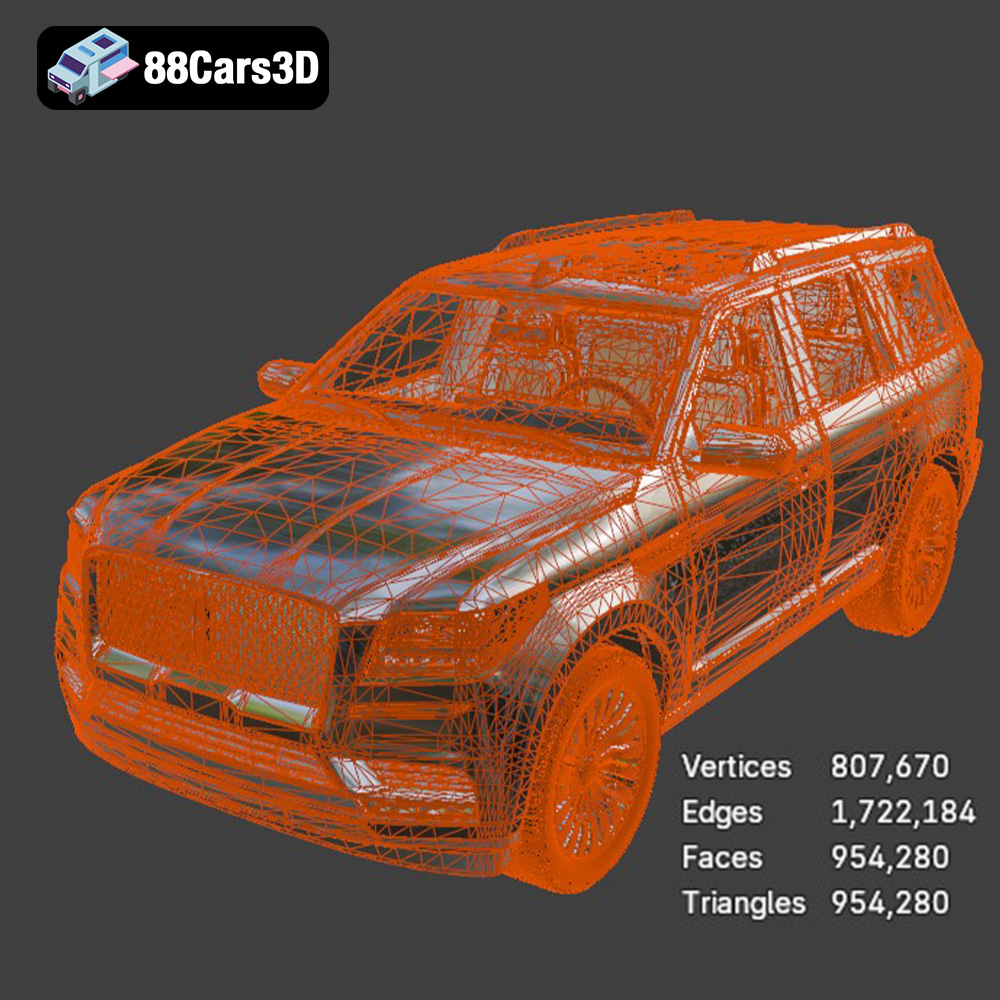
The true value of a premium 3D asset like the Lincoln Navigator 2018 3D Model lies in its adaptability across various professional workflows. Thanks to its clean topology, real-world scale accuracy, and inclusion of multiple optimized file formats, it empowers artists and developers to achieve stunning results efficiently.
For automotive rendering, 3ds Max remains an industry standard, often paired with powerful renderers like V-Ray or Corona. The .max file provided for the Lincoln Navigator 2018 3D Model offers an immediate starting point. Artists can leverage 3ds Max’s robust modeling and UV tools to further refine or customize the model if needed. The clean and well-organized mesh structure ensures smooth subdivision for high-detail close-ups without artifacts. Proper pivot setups for steering and wheel rotation simplify animation tasks, allowing for realistic driving sequences. With V-Ray or Corona, material creation can be pushed to hyper-realism – from the metallic flake paint and chrome reflections to the intricate leather textures and ambient lighting of the interior. This model is perfect for creating marketing materials, dealership presentations, and cinematic projects where visual fidelity is non-negotiable.
Game development and interactive AR/VR experiences demand assets that are not only visually impressive but also highly optimized for real-time performance. The .fbx and .unreal formats of the Lincoln Navigator 2018 3D Model are specifically geared towards these applications. Game artists can import the FBX directly into Unreal Engine or Unity, utilizing the engine’s advanced material systems (like Unreal’s physically based rendering) to recreate the luxury SUV’s aesthetics. The optimized polygon flow ensures efficient rendering without sacrificing detail, crucial for maintaining high frame rates in open-world driving games or city simulators. The separated wheels and steering components are essential for implementing accurate vehicle physics and responsive handling within these engines. This allows for immersive virtual showrooms and interactive SUV demonstrations, providing users with a rich, responsive experience.
Blender users benefit from the native .blend file, which provides full access to the model’s structure. This allows for extensive customization, from adjusting geometry to redesigning components. Blender’s powerful animation tools can be used to create intricate vehicle animations, camera fly-throughs, or even complex simulations. Artists can experiment with Eevee for real-time visualization or Cycles for photorealistic rendering, adapting the Lincoln Navigator 2018 3D Model to their specific artistic vision. Its clean topology and real-world scale ensure that any modifications or animations maintain a professional standard, making it a highly adaptable asset for individual creators and studios alike.
Beyond digital rendering and real-time applications, the Lincoln Navigator 2018 3D Model offers an exciting pathway to physical creation through 3D printing. The inclusion of the .stl format, specifically designed for additive manufacturing, opens up possibilities for creating tangible representations of this luxury SUV, from collectible scale models to physical prototypes for display.
To successfully translate the digital Lincoln Navigator into a physical object, careful consideration of 3D print settings is essential. The model is prepared with manifold geometry, ensuring it is watertight and ready for slicing. Recommended scales such as 1:32, 1:24, 1:18, or even 1:14 allow for varying levels of detail and print size. For FDM printers, a layer height of 0.10–0.18 mm is generally good for balancing detail and print time. However, for smaller scales or intricate details like the grille mesh and LED lighting, resin printing (SLA/DLP) with layer heights of 0.04–0.12 mm is highly recommended to capture the finer elements. A wall thickness of 1.5–2.5 mm ensures structural integrity, while an infill of 15–25% provides sufficient strength without excessive material usage. Supports will be required for overhangs such as the side mirrors, roof rails, and certain underbody details to prevent print failures. A recommended print orientation involves printing the main body angled to achieve a smoother surface finish, while wheels are best printed separately for optimal detail and easier post-processing.
Once printed, the raw physical model provides a solid foundation for an astonishing finish. Post-processing is where the luxury aspect of the Lincoln Navigator truly comes to life. This typically involves sanding to smooth out layer lines and imperfections, followed by the application of a primer to create an even surface for paint. For the ultimate luxury look, a high-gloss luxury paint finish is paramount. This can be achieved through multiple coats of automotive-grade paints, often followed by clear coats and careful polishing. Optional chrome detailing, using specialized paints or foils, can perfectly replicate the signature grille and trim accents, elevating the miniature to a display-worthy automotive collectible. The ability to produce physical assets from this digital model extends its utility to product designers, miniature enthusiasts, and those seeking unique tabletop displays or car prototypes.
The inherent flexibility of the Lincoln Navigator 2018 3D Model, available at 88cars3d.com, is one of its most compelling advantages. Its well-structured design not only ensures technical stability but also provides a robust canvas for extensive customization, allowing artists to tailor the model to virtually any creative brief or project requirement.
One of the most straightforward yet impactful customizations is the ability to change the body color and chrome accents. Digital artists can easily experiment with a vast palette of finishes, from classic Lincoln colors to bespoke shades that match specific branding guidelines or artistic visions. Adding custom license plates or branded decals is a simple process, allowing the vehicle to be seamlessly integrated into specific narratives or marketing campaigns. The modular nature of the model also permits modifications to wheel style and finish, enabling designers to swap out the existing multi-spoke alloys for aftermarket designs or different factory options, further personalizing the vehicle’s appearance. Even adjusting the ride height or suspension stance is achievable, perfect for creating dynamic visual effects or adapting the SUV to various terrain types in simulations or games. This level of aesthetic control ensures that the Lincoln Navigator 2018 3D Model can be a unique asset in every project.
Beyond static aesthetics, the model’s design facilitates dynamic scene creation. Configuring lighting for day, night, or showroom scenes is made intuitive thanks to the well-defined geometry of headlights, taillights, and interior illumination elements. Artists can simulate realistic light propagation through transparent glass materials, creating captivating renders that showcase the vehicle’s luxury under various environmental conditions. For animation, the separated wheels and steering components are crucial. This separation allows for precise control over vehicle movement, enabling complex driving sequences, suspension dynamics, and even tire deformation. Whether it’s a serene sunset drive through a cityscape or a bustling urban commute, the model provides the foundational elements to bring such scenes to life with convincing realism and technical accuracy, making it an invaluable asset for any project requiring high-quality 3D car models.
The Lincoln Navigator 2018 3D Model represents a gold standard in digital automotive assets, blending meticulous detail with unparalleled technical versatility. From the authentic recreation of its bold exterior and luxurious interior to its compatibility across a spectrum of professional software and workflows, this model is engineered for excellence. Whether your goal is to produce stunning photorealistic renders for advertising, integrate a high-performance vehicle into a next-generation game, craft immersive AR/VR experiences, or even physically manifest a miniature collectible through 3D printing, this asset delivers on every front.
The comprehensive range of file formats—from .blend and .max for native software power users, to .fbx and .unreal for real-time engine integration, and .stl for tangible output—ensures that professionals have the right tool for every job. This commitment to quality and flexibility is what sets assets from 88cars3d.com apart, providing designers, artists, and developers with the robust foundation needed to bring their automotive visions to life with precision and impact. Investing in such a high-fidelity 3D car model is an investment in efficiency, realism, and the ultimate creative freedom.
The Lincoln Navigator 2018 3D Model is a high-detail digital recreation of the full-size luxury SUV known for its bold presence, refined design, and premium comfort. Combining powerful performance with upscale craftsmanship, the 2018 Navigator represents modern American luxury in the SUV segment. This 3D model accurately captures the commanding front grille, signature LED lighting, sculpted body lines, chrome trim accents, large alloy wheels, and spacious cabin layout. Designed with clean topology and real-world scale accuracy, it is ideal for rendering, animation, automotive visualization, game development, and AR/VR experiences.
$29.99
.2018suv
.americanSUV
.arvr
.automotive
.blend
.car3dmodel
.fbx
.gameasset
.glb
.lincoln
.luxurysuv
.max
.navigator
.obj
.ply
.rendering
.simulation
.stl
.unreal