⚡ FLASH SALE: Get 60% OFF All Premium 3D & STL Models! ⚡

“`html
The world of 3D printing is built on digital blueprints, and at the heart of these blueprints lie file formats. For hobbyists, makers, and automotive enthusiasts looking to bring their favorite cars to life through 3D printing, understanding these formats is crucial. When you download a stunning printable car model, chances are it’s in an STL, OBJ, or FBX file. But what’s the difference? Which format will yield the best print quality, the smoothest surface finish, and the least printing headaches? This comprehensive guide will demystify these common 3D file formats, exploring their structure, strengths, weaknesses, and ultimately, helping you choose the best format for your next 3D printing project, especially when dealing with intricate automotive designs.
We’ll dive deep into the technical nuances of each format, from how they represent 3D geometry to their implications for slicing software and printer settings. Whether you’re using FDM or resin printing, fine-tuning your slicer, or preparing a complex car model downloaded from platforms like 88cars3d.com, this article will equip you with the knowledge to select and optimize your files for superior results. Get ready to transform your digital models into tangible, high-fidelity 3D prints.
Before we pit STL, OBJ, and FBX against each other, it’s essential to grasp how 3D models are fundamentally described digitally. Most 3D modeling software creates models based on surfaces composed of polygons. These polygons are typically triangles or quadrilaterals, which are then tessellated into smaller triangular facets. The collective arrangement of these vertices (points in 3D space) and faces (the polygons connecting them) defines the shape and volume of a 3D object. This is known as mesh geometry. For 3D printing, the slicer software needs to interpret this mesh geometry to generate the layer-by-layer instructions (G-code) that your printer follows. The way a file format stores this mesh data directly impacts the accuracy, file size, and compatibility with your printing workflow.
At its core, a 3D mesh is a collection of vertices, edges, and faces. Vertices are the individual points that define the corners of polygons. Edges are the lines connecting two vertices, forming the boundaries of faces. Faces are the flat polygons (most commonly triangles in 3D printing contexts) that make up the surface of the model. The arrangement and connectivity of these elements are crucial. A “manifold” or “watertight” mesh is one that has no holes, no internal faces, and a clear inside and outside, which is absolutely critical for successful 3D printing. If there are gaps or inconsistencies in the mesh, slicers can struggle to define the solid volume, leading to printing errors like gaps in the model or failed prints.
Another critical component of mesh data is the surface normal. A normal is a vector (a direction) that is perpendicular to a face at a specific point. It indicates which way the surface is facing – outward or inward. Correctly oriented surface normals are vital for slicers to understand the external surface of your model. If normals are flipped (pointing inward), the slicer might interpret the outside of your model as a hole, or it might struggle to generate infill or outer shells correctly. Most 3D modeling and repair software can visualize and correct flipped normals, a common troubleshooting step for problematic STL files.
The STL format is, by far, the most prevalent file format for 3D printing. Developed by 3D Systems in the 1980s, it was designed specifically for stereolithography and rapid prototyping. Its simplicity and widespread adoption make it the de facto standard. An STL file describes the surface geometry of a 3D object using triangular facets. It lists the coordinates of the vertices for each triangle and a normal vector indicating the outward direction. STL files can be saved in two main ways: ASCII (human-readable text) and binary (more compact and faster to process). For 3D printing, binary STL is generally preferred due to its smaller file size.
The fundamental principle of STL is tessellation – breaking down any complex curved surface into a multitude of small, flat triangles. The more triangles used, the smoother the approximation of the original curved surface will be. This means that STL files are inherently approximations. Highly detailed models with smooth curves require a very large number of triangles, which can lead to large file sizes and potentially slower processing times in slicers. Conversely, a low-triangle-count STL will appear faceted and blocky when printed at a large scale. When downloading models from 88cars3d.com, you’ll often find that they are already optimized with a good balance of detail and manageable file size.
Strengths:
Weaknesses:
When choosing an STL, consider the intended print size and desired level of detail. For highly detailed car models, a higher polygon count STL will generally produce a smoother finish, but ensure your slicing software can handle the file size efficiently.
The OBJ file format, developed by Wavefront Technologies, is another popular choice in 3D modeling and is increasingly supported in the 3D printing ecosystem. Unlike STL, OBJ is not limited to representing just the geometry. It can also store information about color, texture mapping, and material properties, making it a more versatile format for visually rich models. An OBJ file typically consists of multiple files: the main `.obj` file containing the geometry, and often a `.mtl` (Material Template Library) file that references texture images (`.jpg`, `.png`, etc.).
An OBJ file defines vertices, texture coordinates (UVs), vertex normals, and faces. Faces in OBJ can be defined not only as triangles but also as quadrilaterals or even polygons with more vertices. The slicer software will typically triangulate these polygons during the slicing process. The inclusion of texture coordinates (UV mapping) is a significant advantage, allowing for the application of detailed surface textures and color. This is particularly beneficial for models where intricate details like liveries, badges, or interior textures are desired, though for standard 3D printing, these color/texture aspects are often ignored unless using multi-material or color printing capabilities.
Advantages:
Caveats:
For 3D printing, the primary benefit of OBJ is its potential for cleaner geometry representation before slicing. If you have access to an OBJ version of a model and your slicer handles it well, it can sometimes lead to slightly better surface quality, particularly for models with complex curves that were not excessively tessellated in the original modeling software.
FBX, or Filmbox, is a proprietary file format developed by Autodesk, primarily designed for interchange between different digital content creation applications, particularly in the animation, VFX, and gaming industries. It is a complex format capable of storing a vast amount of data, including mesh geometry, scene hierarchy, rigging information, animations, lighting, cameras, and material properties. For 3D printing, FBX is less common than STL or OBJ but offers certain advantages if supported by your workflow.
FBX’s strength lies in its ability to package a comprehensive scene. It can store highly detailed polygonal models, often with complex material setups and even embedded textures. For 3D printing, the key components are the mesh geometry and possibly material definitions. Like OBJ, FBX can represent faces using various polygon types, which are then triangulated by the receiving software. The format’s ability to preserve scene structure and hierarchy can be useful for assembling complex models with multiple parts, ensuring correct positioning and orientation.
Advantages:
Disadvantages:
In most 3D printing scenarios, especially for hobbyists downloading models from marketplaces, FBX files are typically converted to STL or OBJ before being used in a slicer. Software like Blender or dedicated converters can perform this translation. The benefit of using FBX might arise if you are working within a professional pipeline where models are already in FBX and you have tools to extract and prepare the geometry for printing.
Regardless of the chosen format (though most critical for STL), the quality of the mesh geometry is paramount for a successful 3D print. Even a perfectly chosen format can result in failure if the underlying mesh data is corrupt or incomplete. This is where file preparation and repair become indispensable steps in the 3D printing workflow. For intricate models like cars, where smooth surfaces and detailed features are expected, a watertight and well-formed mesh is non-negotiable. Understanding common issues and how to fix them will save you time, material, and frustration.
Several issues can plague 3D models intended for printing:
Software like Meshmixer, Blender, Netfabb, or even built-in repair functions in some slicers can detect and often automatically fix these errors. For complex automotive models, manual inspection and repair in modeling software might be necessary to ensure delicate parts like mirrors or spoilers are correctly defined.
While high polygon counts can capture detail, they can also lead to massive files that bog down slicers. Conversely, too few polygons result in a faceted appearance. Mesh optimization involves adjusting the polygon count.
When downloading models, especially from sources that don’t specialize in print-ready files, performing a quick check and repair in Meshmixer or Blender before slicing is a wise practice. For high-quality models from specialized marketplaces like 88cars3d.com, the files are typically already prepared, manifold, and optimized for printing, significantly reducing this preparation burden.
The “best” file format ultimately depends on your specific needs, the source of your model, and the capabilities of your software and hardware. While STL reigns supreme in terms of compatibility, other formats offer advantages in different scenarios. Understanding these nuances will help you make informed decisions and optimize your printing process, leading to more accurate and aesthetically pleasing results for your 3D printable car models.
STL is the go-to format for most 3D printing applications. You should favor STL when:
For typical prints from sources like 88cars3d.com, an STL file is usually your best bet for immediate, hassle-free printing.
OBJ offers a step up in data representation and can be beneficial in specific situations:
Always test an OBJ file in your slicer to ensure it’s processed correctly and that no critical geometry information is lost or misinterpreted.
FBX is primarily an interchange format and rarely used directly for slicing:
In almost all hobbyist and maker scenarios, FBX files will need to be converted to STL or OBJ using software like Blender before they can be sliced and printed.
Ultimately, the file format is secondary to the quality of the 3D model itself. A well-designed, watertight, and optimized model is essential, regardless of whether it’s an STL, OBJ, or FBX. Always prioritize models that are explicitly stated to be “print-ready,” have clean geometry, and are provided by reputable sources. When dealing with detailed automotive models, the skill of the modeler in creating clean, printable geometry far outweighs the choice between STL and OBJ for standard printing.
While slicer software primarily works with triangulated meshes, the nuances of how it interprets geometry from different formats can sometimes influence print settings. Understanding how your slicer handles STL, OBJ, and potentially converted FBX files can help you fine-tune parameters for the best possible output, especially for complex shapes like car bodies and intricate details. Even with identical geometry, minor differences in mesh representation might subtly affect how supports are generated or how fine details are rendered.
Most slicers are heavily optimized for STL. Settings like layer height (e.g., 0.1mm for detailed car bodies, 0.2mm for faster prints), print speed (e.g., 50mm/s for outer walls, 70mm/s for infill), wall thickness (e.g., 1.2mm for FDM), and infill density (e.g., 10-20% for display models) are directly applied to the triangulated data. The slicer determines which triangles form the outer shell, which form the inner walls, and which define the infill regions. Support generation is based on overhangs detected from the STL’s surface normals. Print orientation becomes crucial here; orienting a car model to minimize overhangs on visible surfaces is key.
When importing an OBJ, some slicers will simply triangulate its polygons and proceed as with an STL. Others might offer options to interpret material data (if present) or leverage cleaner base geometry. If your slicer allows, ensure it’s set to triangulate any non-triangular polygons appropriately. For high-detail car models, if an OBJ offers a slightly smoother curve representation due to its original polygon structure (before triangulation by the slicer), you might see subtle improvements in surface finish at higher resolutions. Pay attention to settings related to fine details, such as minimum layer time or cooling, which can be critical for sharp edges and intricate parts like grilles or spoilers.
The generation and removal of support structures are critical for most complex 3D printable car models, regardless of file format. Overhangs, bridges, and delicate components like side mirrors or wings will require support. While the underlying geometry dictates where supports are needed, the way a slicer interprets the mesh (influenced by its triangulation from STL/OBJ) can affect support density and ease of removal. For FDM printing, using settings like support interface layers, Z-distance, and XY-separation can make removal much cleaner. For resin printing, the angle and density of supports are even more critical to prevent print failures and minimize scarring on the model surface during removal. Always ensure your support settings are tuned for the specific geometry, not necessarily the file format.
“`

Texture: Yes | Material: Yes | 3D Printable: Yes. Download the Italian Thoroughbreds Bundle featuring 5 iconic 3D models: Lamborghini Huracán Performante, Ferrari 458 Italia, Lamborghini Urus, Diablo SV, and Maserati GT. Optimized for 4K rendering and 3D printing (STL included). Save 50% with this ultimate Italian vehicle collection.
Price: $199.99

Download the Elite Future Mobility Bundle featuring 4 highly optimized 3D models: Tesla Model S, Avatr 11, Li L9, and Zoox Robotaxi. Perfect for ArchViz, Smart City renders, and game dev. Optimized for Unreal Engine and Blender. Includes .fbx, .obj, and .max formats.
Price: $99

🚗 5 Iconic German Cars (BMW M4 G82, M5 CS, X3, 1 Series & Mercedes E-Class). ✅ Optimized for ArchViz: Ready for Corona & V-Ray. 💰 Save €71 with this limited-time collection! 🚀 Instant Download after purchase.
Price: $119

Download the Extreme Off-Road & Survival 3D Models Bundle! Includes the Brabus 800 Adventure, Dodge Ram Bigfoot, Spec Truck, and a Caravan. Save over €210 on this premium 4-in-1 off-grid vehicle pack for ArchViz and game development.
Price: $149.99

Download the Heavy Duty & Commercial Logistics 3D Models Bundle! Includes the Ford Sterling, Caterpillar CT680, Mercedes Citaro Bus, and Vito Van. Save over €130 on this massive, game-ready 4-in-1 industrial vehicle pack.
Price: $109.99

Download the Ultimate Custom Motorcycles 3D Models Bundle. Includes a Custom Chopper, Ducati 916 Café Fighter, Harley XR1200X, and BMW K100. Perfect premium props for luxury ArchViz garages. Save over €250 today!
Price: $159.99

Download the ultimate JDM Street Racing 3D Models Bundle! Includes the Nissan GT-R, Toyota Supra, Mazda RX-7, Lancer Evo IX, and Honda NSX. Save big on this highly optimized, game-ready 5-in-1 Japanese legend car pack.
Price: $129.99

Download the ultimate American Muscle & Cinematic Classics 3D Models Bundle! Includes the Dodge Charger ’68, Mustang Eleanor GT500, Camaro Z28 ’79, and a custom ’69 Mustang. Save over €240 on this game-ready, premium 4-in-1 pack.
Price: $149.99
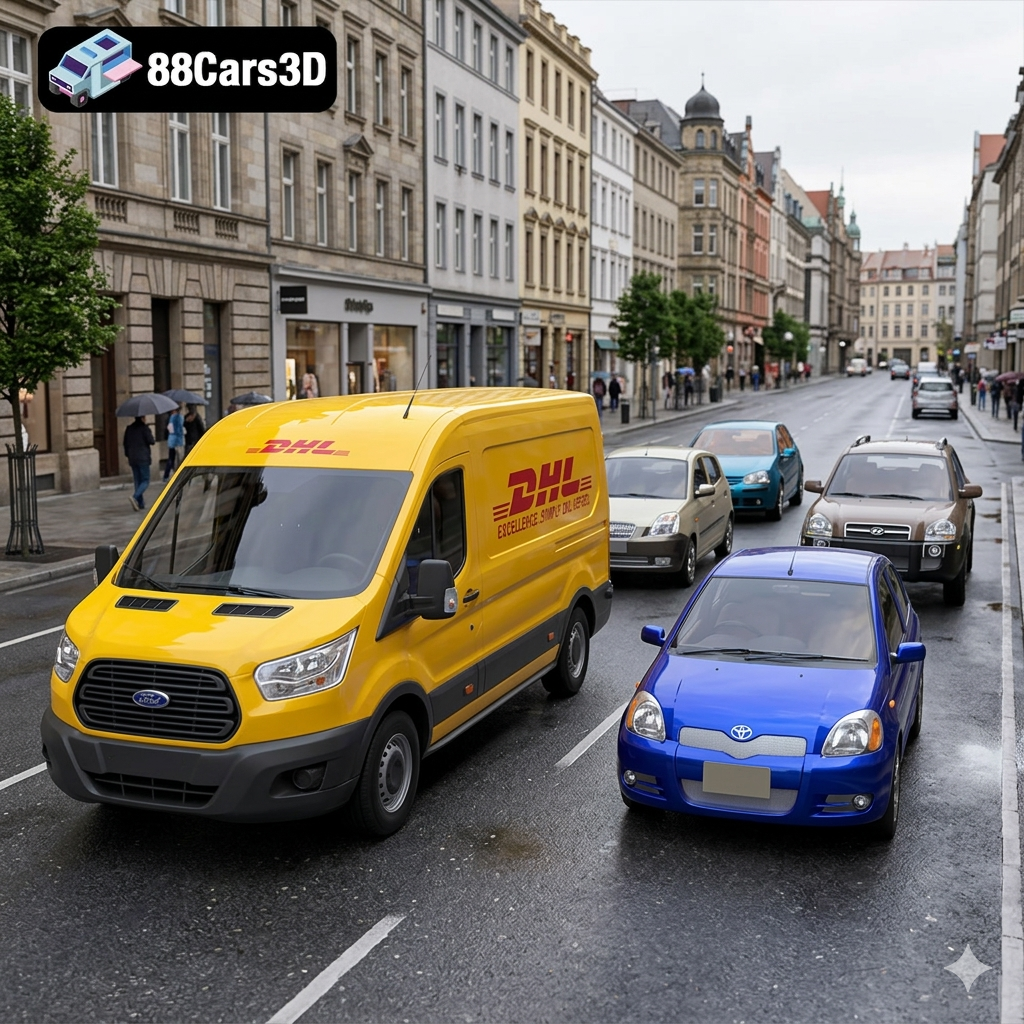
Download the Everyday City Traffic 3D Models Bundle. Includes the VW Golf, Kia Picanto, Hyundai Tucson, Toyota Yaris, and a DHL Ford Transit Van. Save big on this 5-in-1 pack, perfectly optimized for realistic ArchViz streets and game traffic.
Price: $99.99
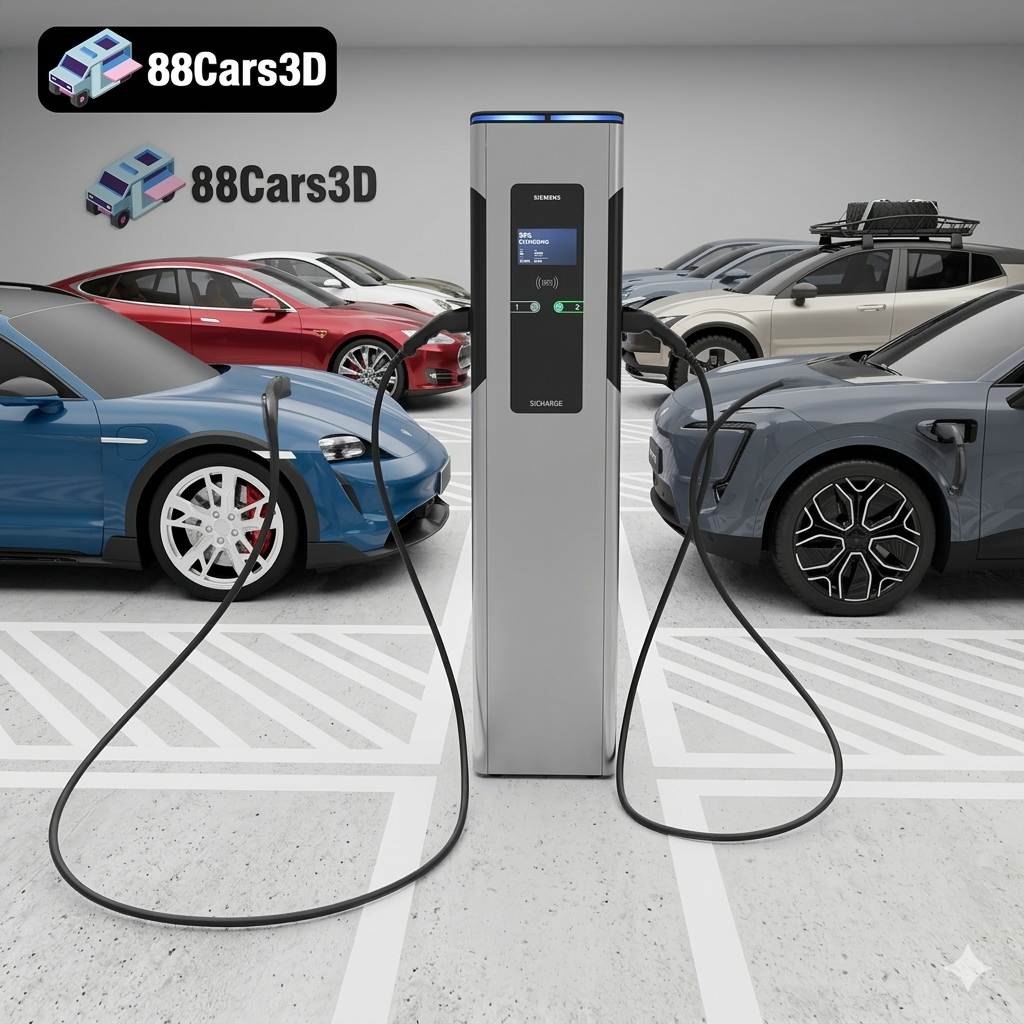
Download the Future of Mobility EV 3D Models Bundle. Includes the Volvo EX30, Tesla Model S, AVATR 11, Porsche Taycan, and a Siemens EV Charger. Save big on this highly optimized 5-in-1 pack for ArchViz and game development!
Price: $89.99

