⚡ FLASH SALE: Get 60% OFF All Premium 3D & STL Models! ⚡

The world of 3D modeling is a vibrant intersection of art and engineering, where designers, artists, and developers meticulously craft digital assets that breathe life into virtual worlds. From hyper-realistic automotive renders to immersive game environments and precise architectural visualizations, the demand for high-quality 3D models is constantly growing. Among the most cherished categories are classic vehicles, which offer a unique blend of historical charm, intricate design, and universal appeal. Today, we’re diving deep into one such iconic creation: the Vespa VNB 125-B 3D Model.
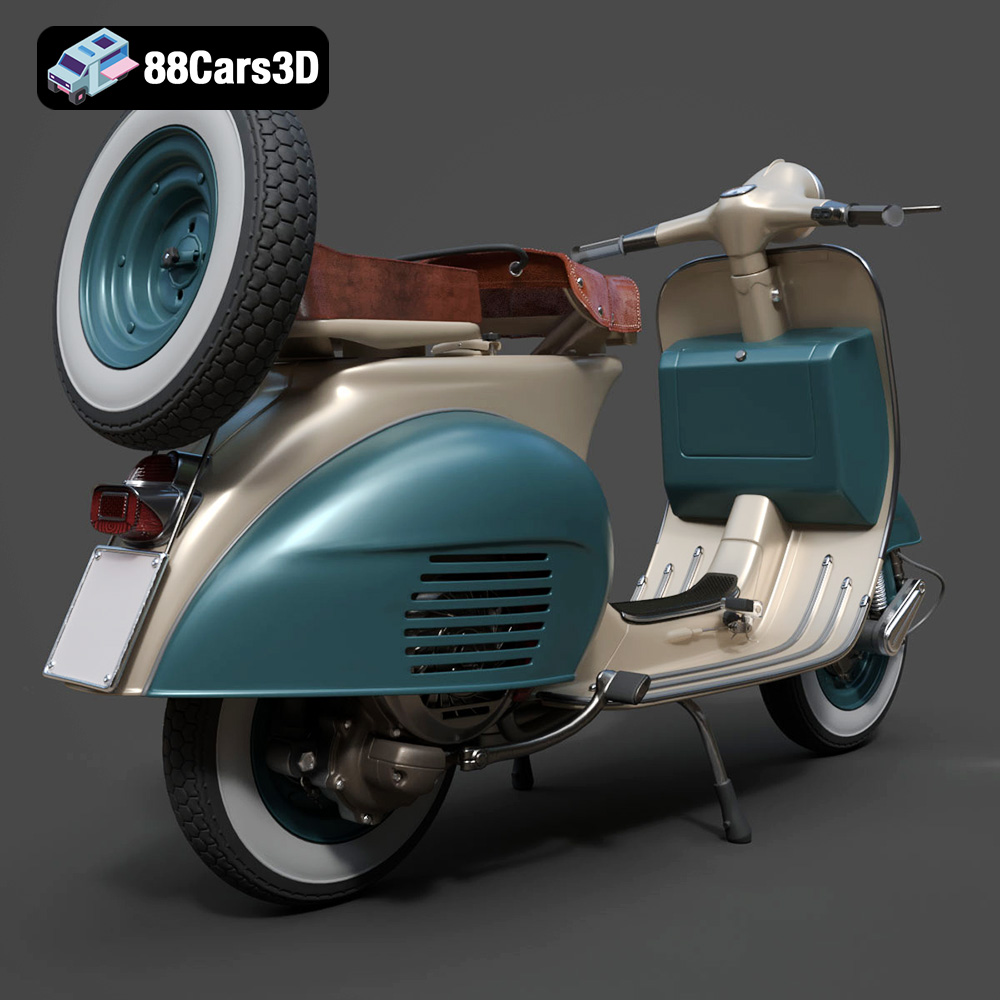
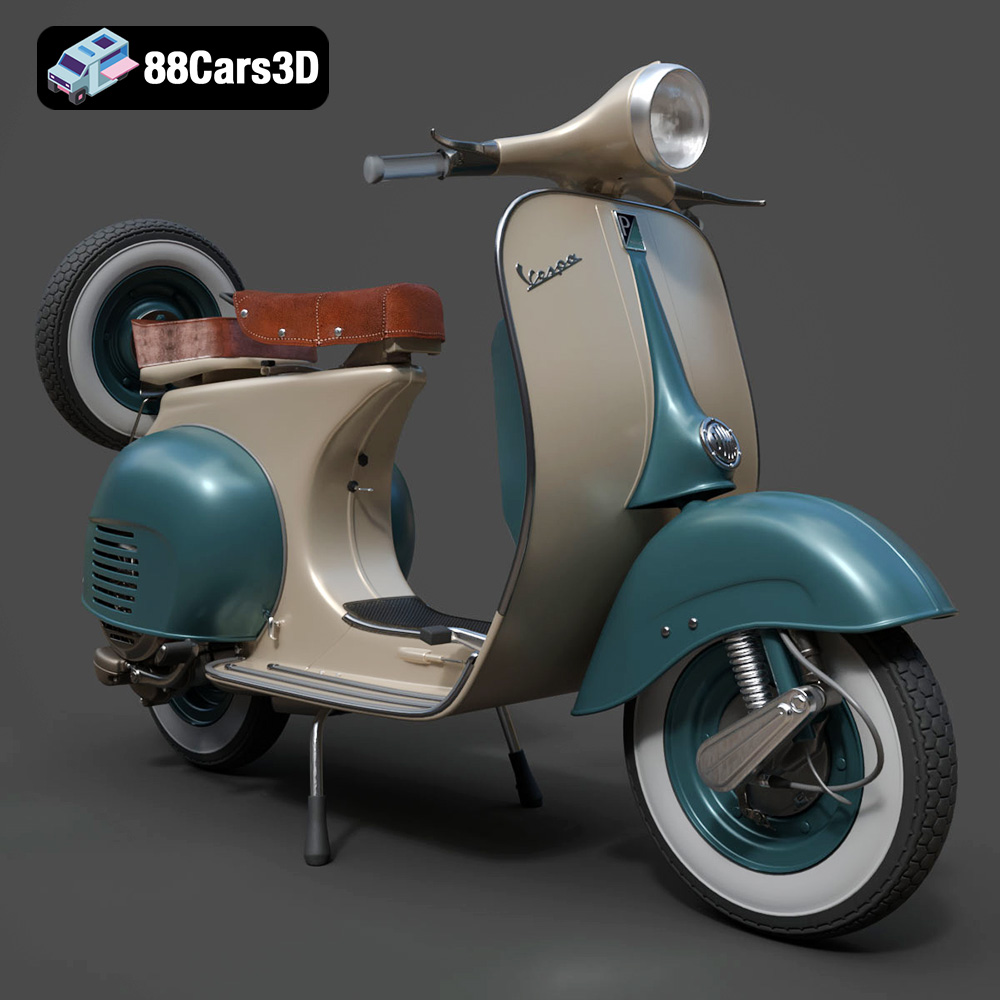
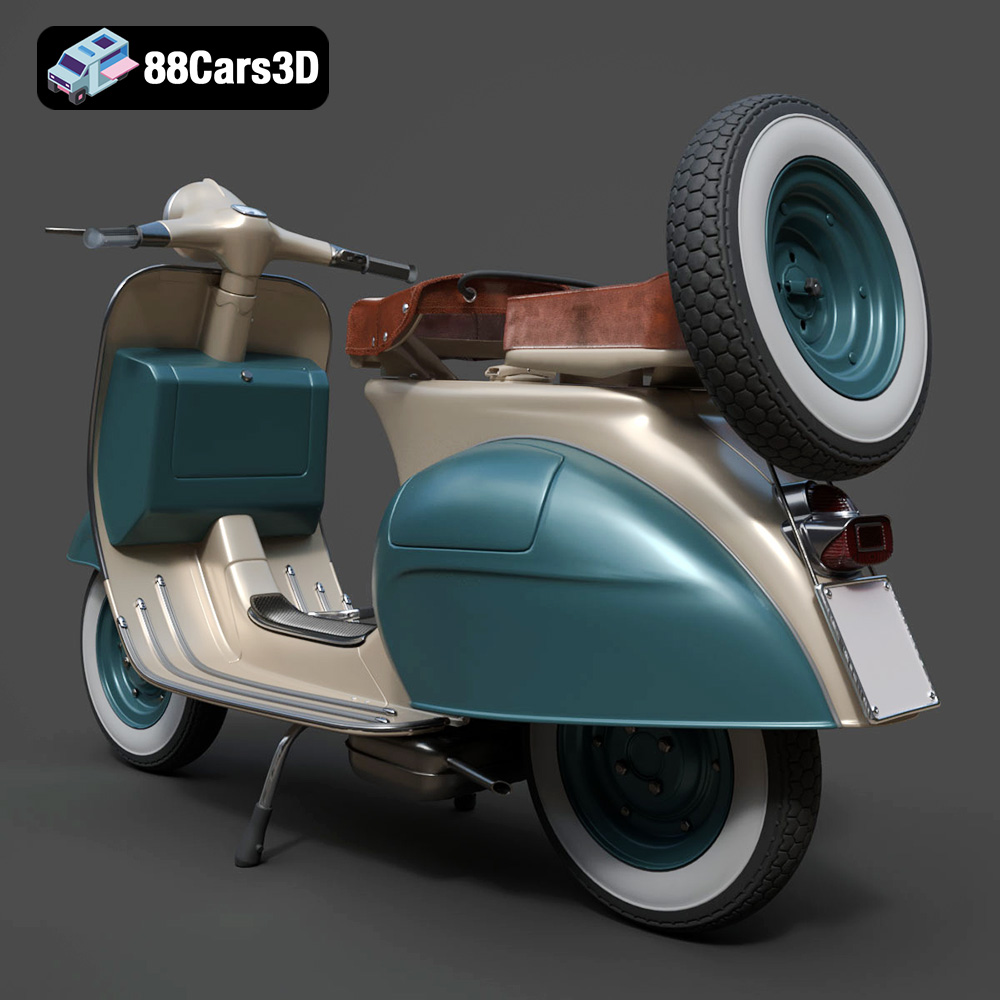
This isn’t just another digital asset; it’s a meticulously crafted recreation of a timeless Italian legend, the Vespa VNB 125-B from the early 1960s. Its classic lines and charming details make it an indispensable asset for anyone looking to infuse their projects with a touch of retro European elegance. Whether you’re an architect visualizing a café scene, a game developer building a vibrant urban environment, or a cinematic artist creating a period-correct narrative, the Vespa VNB 125-B 3D Model provides the perfect blend of accuracy and aesthetic appeal. At 88cars3d.com, we understand the critical role such models play in professional workflows, and this particular asset exemplifies the quality and versatility that discerning professionals seek.
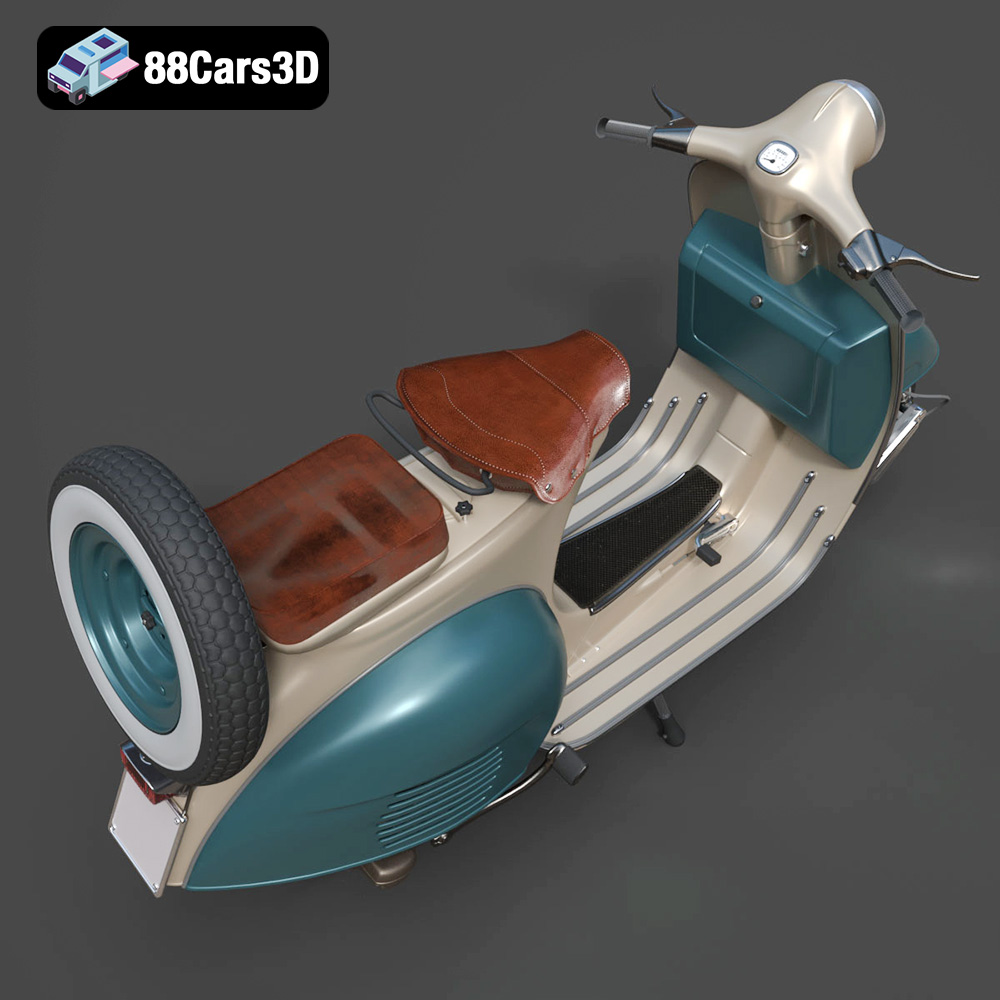
The allure of classic vehicles transcends generations. In 3D, this translates into models that are not only visually striking but also tell a story. The Vespa VNB 125-B, with its distinctive monocoque steel body and signature rounded leg shield, evokes images of post-war European liberation and effortless style. Digitally, this means providing an asset that is historically accurate, geometrically clean, and ready for immediate deployment across various platforms. The careful attention to details like the chrome-trimmed circular headlamp, vented side panels, and vintage wheel configuration ensures that the digital model holds the same timeless charm as its real-world counterpart.
For professional applications, “good enough” is never truly good enough. Accuracy in proportion, detailing, and scale is paramount. A classic vehicle like the Vespa VNB 125-B requires careful study and translation into the digital realm to ensure it resonates authentically. From the exposed handlebar assembly to the subtle refinements in its mechanical components, every element contributes to the overall realism and usability of the model. This level of detail makes the Vespa VNB 125-B 3D Model exceptionally versatile, capable of standing up to close-up renders, cinematic sequences, and real-time interactive experiences without compromise.
Choosing the right 3D file format is as crucial as selecting the model itself. Each format serves distinct purposes, offering specific advantages for different stages of the 3D pipeline – from initial modeling and texturing to real-time rendering, animation, and physical fabrication. The Vespa VNB 125-B 3D Model comes packaged with a comprehensive array of formats, ensuring maximum compatibility and flexibility for virtually any professional workflow. Understanding these formats is key to leveraging the full potential of your 3D car models.
The .blend format is Blender’s native file type. It’s an all-encompassing scene file that stores everything related to your project: mesh data, materials, textures, lighting, cameras, animations, physics simulations, and even custom scripts. For artists working primarily within Blender, this format offers the most control and retains full editability. When you download the Vespa VNB 125-B as a .blend file, you’re getting a fully functional, ready-to-render scene, complete with its PBR materials and organized hierarchy. This makes it ideal for iterative design, detailed customization, and leveraging Blender’s robust suite of modeling and animation tools.
.fbx (Filmbox) is arguably the most widely adopted proprietary 3D file format for transferring models, animations, and scenes between different 3D applications and game engines. Developed by Autodesk, it supports geometry, skinning, animation, cameras, lights, and PBR materials. Its strength lies in its ability to maintain complex scene data during export and import, making it an ideal choice for game development pipelines using Unreal Engine or Unity. The Vespa VNB 125-B .fbx file is meticulously prepared to ensure smooth integration into these environments, preserving material assignments, proper scaling, and pivot points for animation, which is crucial for things like wheel rotation and steering.
The .obj (Wavefront Object) format is one of the oldest and most universally supported 3D file formats. It’s an open standard that primarily stores geometric data (vertices, normals, texture coordinates, and faces). While it lacks support for animation and complex material properties (these are typically handled by an accompanying .mtl file for basic color and texture references), its simplicity ensures broad compatibility across virtually all 3D software. For the Vespa VNB 125-B, the .obj file serves as a reliable geometric base, perfect for users who need a clean mesh to re-texture and shade in their preferred application, or for archival purposes.
.glb (GL Transmission Format Binary) is the binary version of glTF, a royalty-free specification for the efficient transmission and loading of 3D scenes and models by applications. It’s rapidly becoming the “JPEG of 3D” due to its optimization for web-based, AR (Augmented Reality), and VR (Virtual Reality) experiences. A .glb file efficiently bundles model data, textures, and animations into a single file, making it incredibly lightweight and fast to load. The Vespa VNB 125-B in .glb format is perfectly suited for showcasing the model interactively on a website, embedding it in an AR app, or integrating it into a virtual showroom, offering an optimized viewing experience without compromising visual quality.
The .stl (Stereolithography) format is the standard file type for 3D printing. It represents a 3D model as a series of connected triangles (a triangular mesh) without color, texture, or other CAD attributes. For a model like the Vespa VNB 125-B, which is advertised as 3D printable, the .stl file is critically important. It must be “manifold,” meaning it has no holes, self-intersections, or inverted normals, ensuring a watertight mesh suitable for slicer software. The provided .stl for the Vespa is optimized for physical output, allowing creators to produce scale models or collectibles.
The .ply (Polygon File Format, also known as Stanford Triangle Format) is another format for storing 3D data, particularly suited for scanner data and point clouds, but also for polygon meshes. Unlike .obj, .ply can store a wider range of properties, including color, transparency, surface normals, and even confidence values, for each vertex and face. While less common for general asset exchange than .fbx or .obj, it’s valuable for applications requiring precise geometric analysis or when working with high-density meshes from 3D scanning, offering a robust representation of the Vespa VNB 125-B’s form.
While not a standard “file format” in the same vein as .fbx or .obj, the inclusion of an .unreal file package for the Vespa VNB 125-B implies a direct, engine-ready asset tailored specifically for Unreal Engine. This typically means the model has been imported, optimized, and potentially even configured with materials, collision meshes, LODs (Levels of Detail), and blueprint functionality within Unreal. This streamlines the workflow for game developers, allowing them to drag-and-drop a pre-configured Vespa into their project with minimal setup, saving significant time and effort in asset integration.
The .max format is Autodesk 3ds Max’s native scene file. Similar to .blend for Blender, it contains the complete 3ds Max scene, including geometry, materials, textures, lighting, cameras, and animation data. For professionals using 3ds Max for architectural visualization, product design, or animation, the .max file for the Vespa VNB 125-B offers full control. Users can easily modify materials, adjust rigging, or integrate the scooter into complex scenes, leveraging 3ds Max’s powerful rendering engines like V-Ray or Corona for stunning visualizations.
This comprehensive array of formats for the Vespa VNB 125-B 3D Model underscores its versatility and the thoughtfulness behind its creation, catering to a wide spectrum of 3D professionals and their diverse project requirements.
The art of translating a physical object into a digital one requires more than just polygon construction; it demands an understanding of form, history, and the subtle nuances that define a classic. The Vespa VNB 125-B 3D Model stands as a testament to this philosophy, meticulously capturing the essence of the early 1960s scooter.
The original Vespa VNB 125-B was known for its elegant simplicity and functional design. This 3D model accurately reflects that, from its signature monocoque steel body construction to the graceful curve of its rounded front leg shield. Every detail, no matter how small, has been carefully considered:
The inclusion of a separate steering assembly and wheels, with proper pivot setup, is a critical technical advantage. This thoughtful organization facilitates smooth animation, allowing artists to effortlessly create dynamic shots of the scooter in motion – whether it’s navigating cobbled streets or performing a graceful turn.
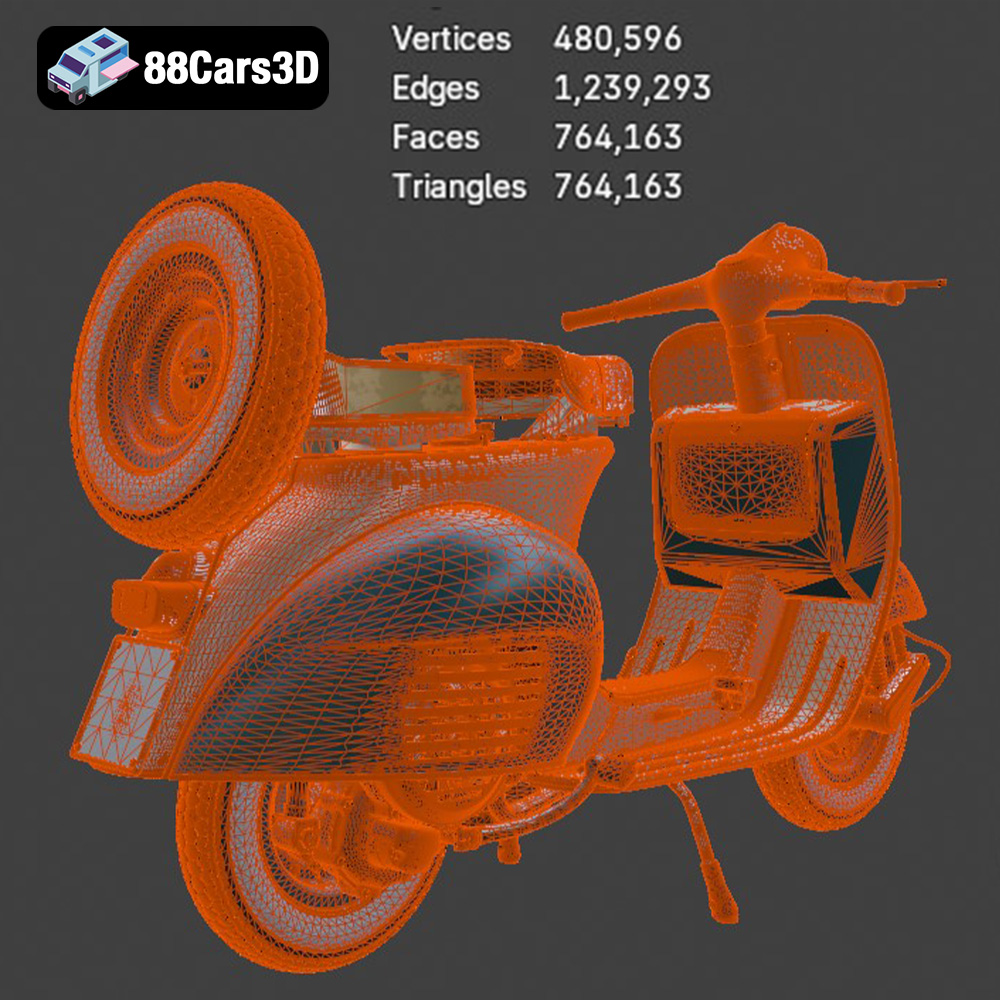
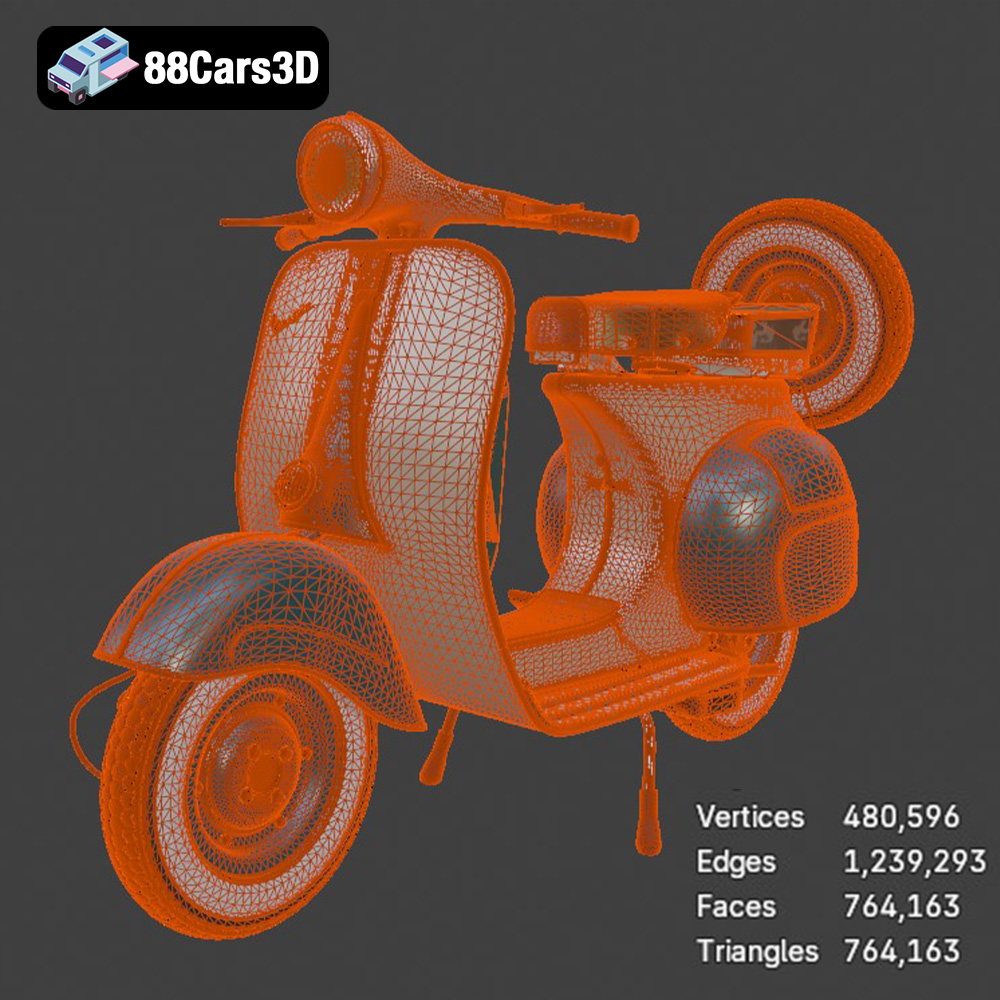
Beyond visual accuracy, the technical underpinnings of a 3D model are paramount. The Vespa VNB 125-B 3D Model boasts a clean and well-organized mesh structure, which translates to ease of use and superior performance. Real-world scale accuracy ensures that the scooter fits seamlessly into any scene without requiring extensive scaling adjustments, a common headache with lesser-quality models. Optimized polygon flow is another key technical advantage; it means the model maintains detail where needed while efficiently managing polygon count for performance, making it suitable for both high-fidelity rendering and real-time engine integration. This attention to topology is a hallmark of premium 3D car models found on platforms like 88cars3d.com.
Automotive rendering is a specialized field that demands photorealism and artistic flair. The Vespa VNB 125-B 3D Model provides an excellent foundation for achieving stunning visualizations, whether for marketing, architectural scenes, or cinematic productions.
To push the boundaries of realism, lighting and materials are key. With the Vespa VNB 125-B, artists can leverage its clean UVs and well-defined geometry to apply sophisticated PBR (Physically Based Rendering) materials. Imagine a metallic paint shader catching the glint of the sun, or the subtle imperfections on a vintage leather seat. In 3ds Max, rendering engines like V-Ray or Corona can be used to simulate global illumination and complex reflections, bringing the scooter to life with incredible fidelity. Similarly, Blender users can harness Cycles or Eevee, utilizing HDRI (High Dynamic Range Image) lighting to cast authentic environmental reflections onto the scooter’s polished surfaces.
The animation-ready features of the Vespa VNB 125-B, such as separate wheels and a pivot-setup steering assembly, make it perfect for cinematic sequences. Envision the scooter cruising down a charming Italian street, its wheels rotating smoothly, the handlebars turning with natural grace. This level of preparation saves animators countless hours, allowing them to focus on storytelling and visual impact. The model is also ideal for background elements in animated shorts, commercials, or even feature films set in a mid-20th-century European context. The model’s ability to be customized with different body colors, vintage registration plates, and even additional accessories like a rear rack or spare wheel further enhances its utility for diverse storytelling needs.
In the fast-paced world of game development and interactive experiences, efficiency and optimization are paramount. The Vespa VNB 125-B 3D Model is designed with these considerations in mind, making it a valuable asset for real-time environments.
For games, the balance between visual quality and performance is critical. The Vespa VNB 125-B’s “optimized polygon flow” and “clean geometry” are directly beneficial here. This means the model is built to look great without excessively taxing the game engine’s resources. When integrating into Unreal Engine or Unity, developers can expect:
Imagine the Vespa VNB 125-B populating a vibrant open-world game set in a 1960s European city. Players could interact with it, or it could simply serve as an authentic background element, adding depth and character to the environment. Its versatility extends to urban simulators, allowing for period-accurate traffic and immersive street scenes.
Augmented Reality (AR) and Virtual Reality (VR) demand highly optimized assets due to the stringent performance requirements for real-time interaction and immersion. The .glb format included with the Vespa VNB 125-B is explicitly designed for this. Its compact, bundled nature ensures quick loading times and smooth rendering in AR/VR applications. This makes the model perfect for:
The accurate real-world scale also plays a crucial role in AR, ensuring the virtual scooter appears correctly proportioned when overlaid onto the physical world. This attention to detail elevates the user experience in these cutting-edge mediums.
The utility of a high-quality 3D model extends far beyond digital screens. The Vespa VNB 125-B 3D Model is specifically designed with 3D printing in mind, allowing enthusiasts and professionals to bring this classic design into the physical world as a tangible collectible or display piece.
3D printing requires specific considerations that differ from digital rendering. The inclusion of the .stl format, optimized for physical output, is a critical feature. The product description highlights important settings and considerations:
3D printing is often just the first step. The post-processing recommendations provide a clear pathway to achieving a professional-grade physical model: “sanding, primer, gloss pastel or cream paint finish, chrome detailing recommended.” This suggests that with a little effort, the printed Vespa VNB 125-B can be transformed into a beautiful, shelf-worthy collectible, mirroring the classic aesthetic of the original scooter. This capability opens doors for product designers, miniature collectors, and educators to create physical prototypes or demonstration models.
A truly valuable 3D asset offers more than just fidelity; it provides flexibility. The Vespa VNB 125-B 3D Model excels in its adaptability, allowing users to tailor it to a myriad of project requirements.
The customization options listed demonstrate the model’s inherent versatility:
Such options allow artists to quickly iterate on designs and integrate the model seamlessly into diverse visual narratives without having to create elements from scratch.
Beyond direct modifications, the inherent quality of the Vespa VNB 125-B 3D Model empowers artists to experiment with creative lighting and atmospheric effects. Adjusting lighting for daylight, sunset, or cinematic scenes can evoke dramatically different moods, transforming the scooter’s appearance from bright and cheerful to mysterious and moody. This capacity for creative expression makes it an invaluable tool for designers and artists across various industries, from advertising agencies crafting retro-themed campaigns to independent filmmakers needing authentic period props. The Vespa VNB 125-B is more than a model; it’s a creative canvas waiting to be brought to life.
In the dynamic landscape of 3D content creation, the demand for meticulously crafted, versatile assets is unwavering. The Vespa VNB 125-B 3D Model stands out as a prime example of such an asset, offering unparalleled detail, technical precision, and broad compatibility across numerous digital and physical applications. From high-end automotive rendering and cinematic sequences to immersive game environments and tangible 3D printed collectibles, this model provides a robust foundation for professionals and enthusiasts alike.
Its adherence to real-world scale, clean topology, and optimized file formats ensures that it can be seamlessly integrated into virtually any workflow, saving valuable production time and enhancing creative output. Whether you’re navigating the complexities of game engine optimization or aiming for photorealistic renders in a visualization project, the Vespa VNB 125-B delivers.
For those seeking to elevate their projects with high-quality, historically accurate, and technically sound 3D car models, look no further than 88cars3d.com. The Vespa VNB 125-B 3D Model is a testament to the quality and versatility available, empowering creators to build captivating digital worlds and stunning visualizations. Add this iconic piece of automotive history to your asset library today and unlock new creative possibilities.
The Vespa VNB 125-B 3D Model is a high-detail digital recreation of the classic Italian scooter variant from the early 1960s. The VNB 125-B maintained the timeless Vespa silhouette while incorporating subtle production refinements, improved mechanical components, and refined detailing that defined the era of practical European urban mobility. This 3D model accurately captures the monocoque steel body construction, rounded front leg shield, chrome-trimmed circular headlamp, vented side panels, exposed handlebar assembly, and vintage wheel configuration. Built with clean topology and real-world scale accuracy, it is ideal for rendering, animation, simulation, game development, and AR/VR classic vehicle environments.
$19.9
.arvr
.blend
.classicscooter
.fbx
.gameasset
.glb
.italianscooter
.max
.motorcycle3dmodel
.obj
.ply
.rendering
.retro
.simulation
.stl
.twowheeler
.unreal
.urbanvehicle
.vespa
.vintagevehicle
.vnb125b