⚡ FLASH SALE: Get 60% OFF All Premium 3D & STL Models! ⚡

The allure of classic vehicles transcends generations, captivating enthusiasts with their timeless design and nostalgic charm. For 3D artists, game developers, architects, and visualizers, recreating these iconic machines presents a unique blend of challenge and reward. It demands a meticulous eye for detail, a deep understanding of digital craftsmanship, and the ability to translate real-world elegance into a perfectly optimized virtual asset.
Few vehicles embody this blend of style and history quite like the Vespa. And among its storied lineage, the Vespa VNB 125-B stands out – a quintessential Italian scooter from the early 1960s, celebrated for its smooth curves, practical design, and undeniable panache. Imagine bringing this piece of automotive history to life in your next project, whether it’s populating a bustling European street scene in a game, creating stunning marketing visuals, or even producing a physical miniature through 3D printing. This is precisely where a high-quality 3D car model like the Vespa VNB 125-B offered on 88cars3d.com becomes an invaluable asset, providing the foundation for endless creative possibilities.
In this comprehensive guide, we’ll delve into the technical nuances of creating and utilizing premium 3D vehicle models, using the Vespa VNB 125-B as our exemplary focus. We’ll explore critical file formats, professional workflows, artistic applications, and the sheer technical advantage of starting with a meticulously crafted asset. Prepare to accelerate your understanding of automotive 3D modeling and discover how such a model can transform your digital projects.
The versatility of a 3D model often lies in its compatibility across various software and platforms. When acquiring a premium asset like the Vespa VNB 125-B 3D Model, understanding the nuances of its included file formats is paramount. Each format serves specific purposes, catering to different stages of the 3D pipeline from creation and animation to real-time rendering and physical production.
The .blend file format is Blender’s native project file. It encapsulates an entire Blender scene, including the mesh geometry, materials, textures, lighting, camera setups, animation data, and even modifiers. For artists working within Blender, this is the most convenient and fully editable format. It allows for complete control over the model, enabling quick adjustments to topology, UV mapping, material properties, and integrating the Vespa VNB 125-B directly into an existing Blender project with all its intricate details preserved. It’s the ideal starting point for customization or further development within the Blender environment.
.fbx (Filmbox) is a proprietary file format developed by Autodesk, widely recognized as the industry standard for exchanging 3D data between various software applications. It supports geometry, materials, textures, animation, and rigging, making it incredibly robust for collaborative workflows. For the Vespa VNB 125-B, an .fbx file ensures that the model can be smoothly imported into software like 3ds Max, Maya, Cinema 4D, and crucially, game engines such as Unreal Engine and Unity. Its ability to retain hierarchical structures and animation data (like the separate wheels and steering assembly for the Vespa) makes it indispensable for game development and animation pipelines where interoperability is key.
The .obj (Wavefront OBJ) format is one of the oldest and most universally supported 3D file formats. It’s a simple, text-based format primarily storing geometry information (vertices, normals, texture coordinates, and faces) and referencing external .mtl (material) files for basic material properties. While .obj doesn’t support animation or rigging, its widespread compatibility makes it an excellent choice for static mesh interchange between virtually any 3D software. When precision geometry is the main concern, as with the accurate VNB 125-B body proportions, .obj provides a clean, dependable mesh for modeling, sculpting, and rendering across diverse platforms.
.glb (GL Transmission Format Binary) is the binary version of glTF, a royalty-free specification for the efficient transmission and loading of 3D scenes and models by applications. It’s highly optimized for web-based applications, AR/VR experiences, and interactive browser display. A .glb file packages all necessary data—geometry, textures, materials, and animations—into a single file, reducing load times and simplifying distribution. For showcasing the Vespa VNB 125-B in an interactive online portfolio, a virtual showroom, or an AR app, .glb offers an unparalleled combination of visual quality and performance.
.stl (Stereolithography) is the de facto standard file format for 3D printing. It represents a 3D model as a series of connected triangles (a triangular mesh), defining only the surface geometry of an object without color, texture, or other CAD attributes. While simple, its ubiquity in the 3D printing world means that the Vespa VNB 125-B, supplied in .stl format, is ready for direct slicing and manufacturing on FDM, SLA, or DLP printers. This is crucial for hobbyists and professionals looking to create physical scale models or prototypes of this classic scooter.
.ply (Polygon File Format, or Stanford Triangle Format) is another format used for storing 3D data, particularly useful for scanned data, point clouds, and mesh data from scientific and engineering applications. It supports properties like color, transparency, normals, texture coordinates, and often contains higher precision data than .obj. While not as common for general artistic asset exchange as .fbx or .obj, its inclusion for the Vespa VNB 125-B implies a high degree of geometric integrity and suitability for specialized workflows where mesh fidelity for analysis or reverse engineering might be required.
The .unreal file implies an asset specifically packaged or optimized for direct import and use within Unreal Engine. This often means pre-configured materials, collision meshes, LODs (Levels of Detail), and sometimes even basic animation blueprints. For game developers, having a native Unreal-ready file for the Vespa VNB 125-B streamlines the integration process significantly, cutting down on conversion time and potential import issues, allowing artists to immediately focus on scene composition and interaction within real-time environments.
The .max file is the native scene file for Autodesk 3ds Max, a powerful 3D modeling, animation, rendering, and visualization software. Like .blend for Blender, a .max file contains all scene information, including the model’s geometry, materials, textures, lighting, cameras, and animation curves. For professionals using 3ds Max for high-fidelity automotive rendering or complex animation projects, the .max format provides the most comprehensive and editable version of the Vespa VNB 125-B, enabling intricate adjustments and seamless integration into large-scale production pipelines.
Each of these formats contributes to the comprehensive utility of the Vespa VNB 125-B 3D Model, ensuring it’s a versatile asset suitable for any professional workflow.
The true value of a premium 3D model lies in its faithful reproduction of the real-world object. The Vespa VNB 125-B 3D Model exemplifies this commitment, meticulously recreating an iconic piece of Italian design history. This isn’t just a generic scooter; it’s a specific variant, and the digital model captures its unique identity.
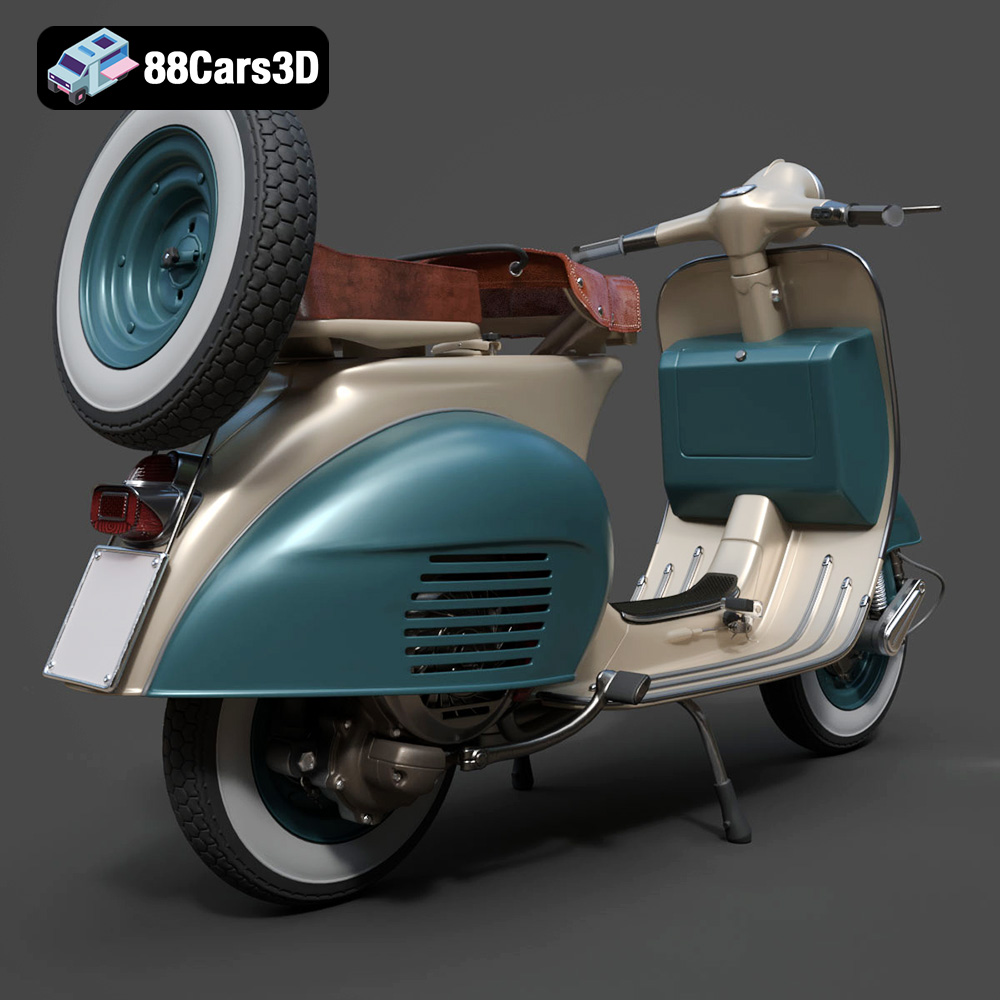
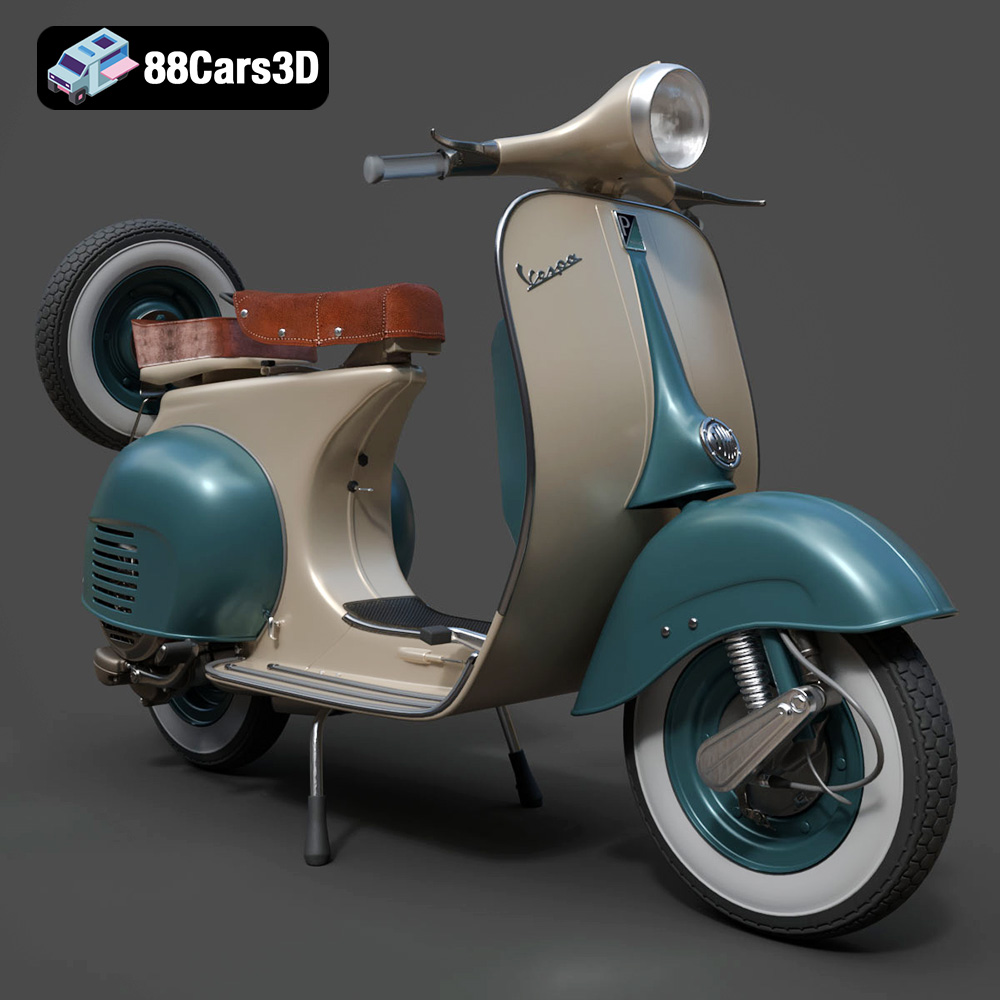
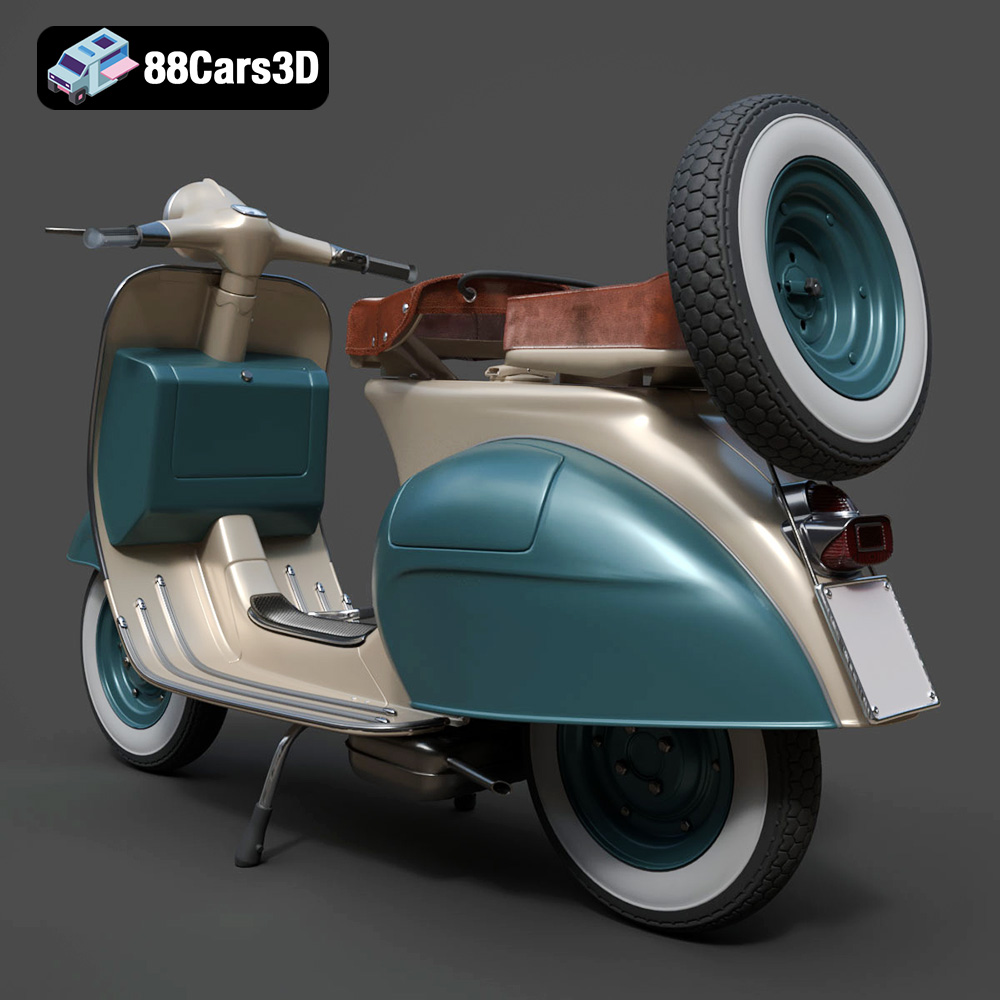
The early 1960s Vespa VNB 125-B maintained the celebrated timeless silhouette while incorporating subtle production refinements. This 3D model accurately reflects these distinctions, from the monocoque steel body construction to the elegantly rounded front leg shield. Observe the chrome-trimmed circular headlamp – a hallmark of the era – and the characteristic vented side panels that define the mechanical heart of the scooter. Such attention to detail in the exterior features ensures that the model instantly evokes the correct period and style, making it ideal for retro European streets, café scenes, or coastal promenades.
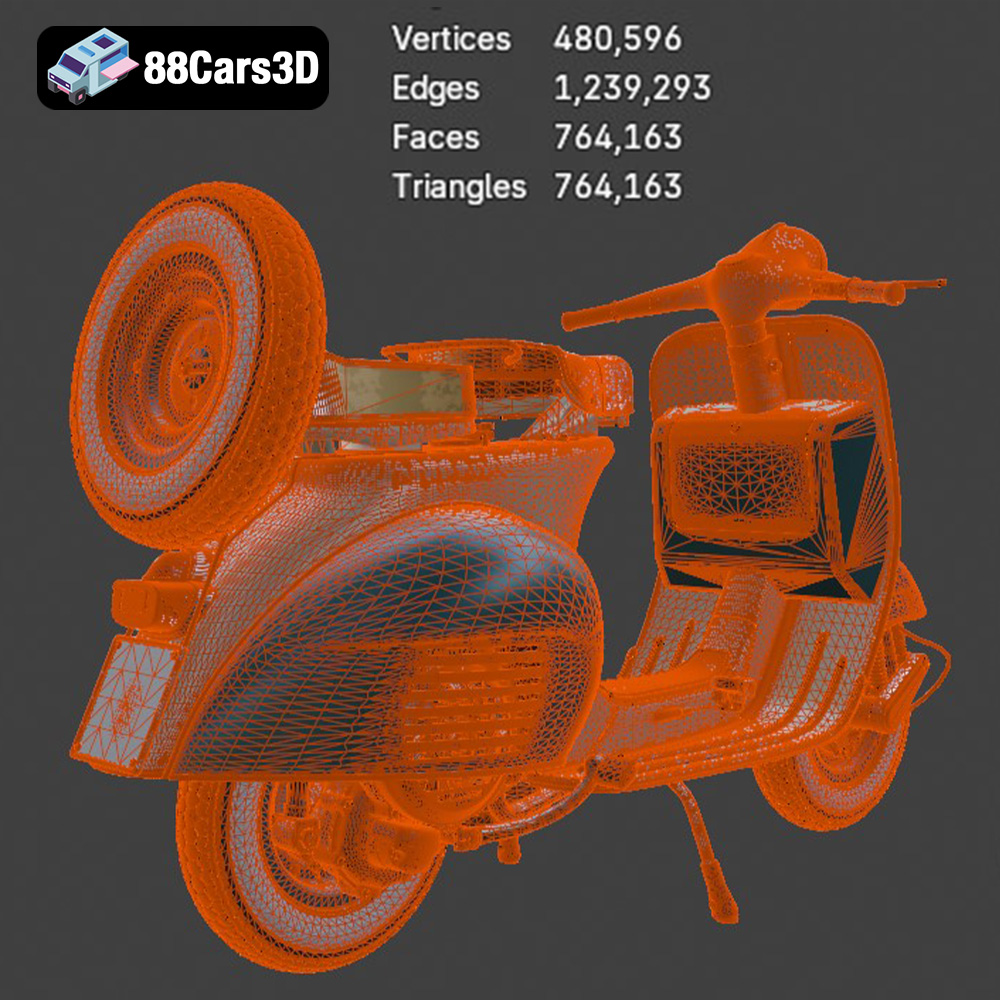
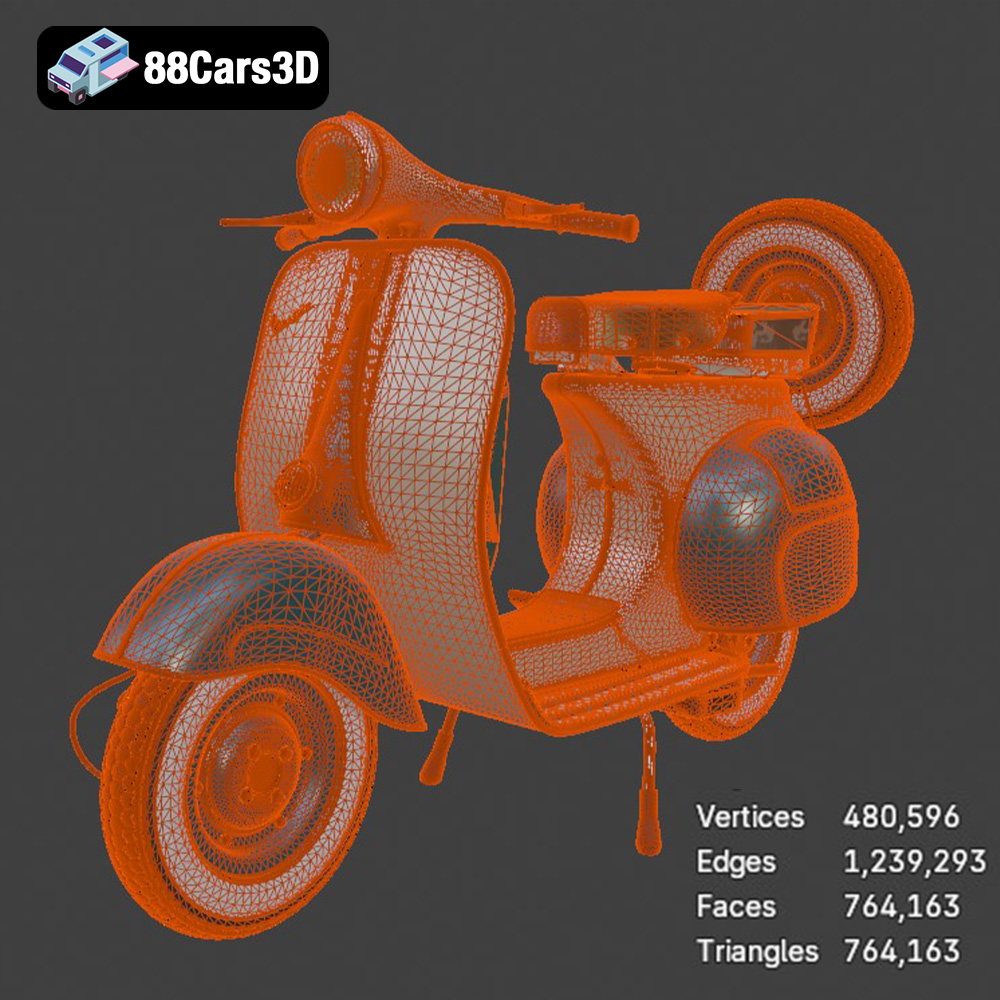
Beyond visual fidelity, technical accuracy is paramount. The Vespa VNB 125-B model is built with real-world scale, a critical factor for seamless integration into diverse 3D environments, whether for architectural visualization or game development. Its clean topology ensures predictable subdivision for high-resolution renders and efficient performance in real-time applications. Crucially, the model boasts a proper pivot setup for steering and wheel rotation, making it production-ready for animation sequences. The vintage exhaust, suspension detailing, and period-correct wheels and tire proportions are not merely cosmetic; they are geometrically accurate representations that allow for close-up scrutiny without compromise.
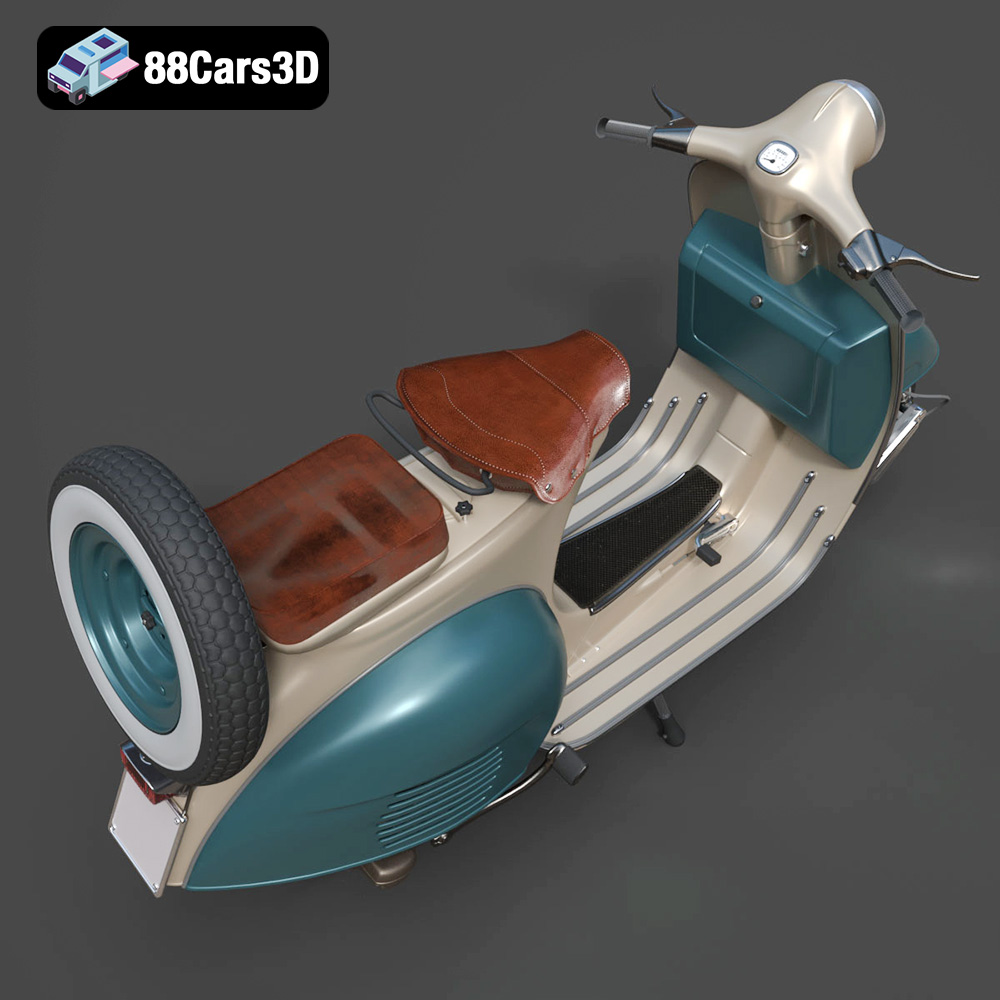
The experience of a vehicle extends beyond its exterior, and the Vespa VNB 125-B 3D Model delivers on this front. The rider area features a detailed handlebar assembly, complete with an integrated speedometer. Elements like the throttle, brake lever, and control detailing are all present, ready to be animated or showcased in static renders. The ribbed footboard design adds another layer of authenticity, while the seat configuration is ready for either single or dual setups, offering flexibility for various scene compositions. This level of interior detail, coupled with clean geometry optimized for real-time engines, ensures that the model can hold up to interior shots or close-up player perspectives in interactive experiences.
A high-quality 3D model like the Vespa VNB 125-B from 88cars3d.com isn’t just an object; it’s a catalyst for creativity across multiple industries. Its versatility allows it to seamlessly integrate into various professional pipelines, serving diverse artistic and technical goals.
For advertising agencies, product design studios, and architectural visualization firms, the Vespa VNB 125-B is a dream asset. Its high level of detail and clean mesh make it ideal for stunning photorealistic renders. Imagine it parked gracefully outside a charming Italian villa in an architectural visualization, or taking center stage in a lifestyle branding campaign for a fashion line. The ability to customize body colors with classic pastel schemes, add vintage registration plates, or adjust lighting for different moods—daylight, sunset, or cinematic scenes—transforms it into a powerful tool for visual storytelling. Artists can leverage software like 3ds Max or Blender to achieve breathtaking results, applying advanced rendering techniques like global illumination and subsurface scattering to truly bring the scooter to life.
The demands of game development are unique: models must be visually appealing yet incredibly efficient. The Vespa VNB 125-B’s optimized polygon flow and clean geometry are perfectly suited for real-time engines like Unreal Engine and Unity. Its proper pivot setup for steering and wheel rotation means it’s animation-ready, allowing developers to easily implement it as an environmental prop, a background vehicle, or even a drivable asset in urban open-world games set in the 1960s. The included .fbx and .unreal formats ensure a smooth pipeline into these engines, reducing setup time and enabling rapid iteration for game designers creating immersive European street simulations or period-specific levels.
Augmented Reality (AR) and Virtual Reality (VR) are transforming how we interact with digital content. The Vespa VNB 125-B, with its optimized .glb format, is an excellent candidate for these immersive platforms. Developers can create interactive retro vehicle showrooms where users can walk around the scooter, inspect its details up close, or even “sit” on it in a virtual environment. Imagine an educational AR app that overlays historical information onto a physical Vespa model, or a VR experience that transports users to a bustling Piazza in Rome, complete with authentic vehicles. The model’s real-world scale accuracy ensures a believable and engaging experience in these highly sensitive, scale-dependent applications.
One of the most exciting applications of this 3D model is its suitability for 3D printing. The Vespa VNB 125-B is convertible to .stl format, making it ready for physical production. This opens up possibilities for creating collectible scooter miniatures, scale display models, or even custom components for dioramas. The product description provides precise 3D print settings: recommended scales (1:18, 1:12, 1:10), layer height (0.08–0.16 mm), wall thickness (1.2–2.0 mm), and infill (15–25%). Crucially, it advises on support placement (handlebar, exhaust, center stand) and print orientation for the best finish, with separate printing for wheels. Post-processing suggestions—sanding, primer, classic paint finishes, and chrome detailing—guide enthusiasts toward achieving a stunning physical replica. This blend of digital fidelity and physical tangibility truly highlights the model’s versatility.
The foundation of any outstanding 3D asset lies in its technical integrity. The Vespa VNB 125-B 3D Model is engineered not just for visual appeal, but for robust performance and ease of use within professional workflows. This technical superiority is what distinguishes a truly valuable asset from a mere digital curiosity.
At the core of the Vespa VNB 125-B model is a clean and well-organized mesh structure. This isn’t a superficial detail; it’s fundamental to the model’s performance and manipulability. A clean mesh means efficient polygon distribution, minimizing unnecessary geometry while retaining crucial detail. This translates to faster render times, smoother deformations if animated, and easier UV mapping for texturing. Artists can confidently use this model knowing they won’t spend hours cleaning up messy geometry, allowing them to focus on artistic direction rather than technical remediation. The optimized polygon flow ensures that the model looks great from any distance without unnecessarily taxing system resources, a critical advantage in both rendering and real-time contexts.
Real-world scale accuracy is another non-negotiable technical advantage. This ensures that the Vespa VNB 125-B will integrate seamlessly into any scene without requiring tedious scaling adjustments. When placed next to architectural models or human characters, its proportions will be correct, contributing to overall scene realism. Furthermore, the proper pivot setup for steering and wheel rotation is a testament to its animation-readiness. This isn’t just a static prop; its components are intelligently separated and pivoted, enabling dynamic animations for cinematic sequences or interactive simulations. The attention to detail in technical aspects like this allows for high fidelity and compelling visual narratives.
Beyond its inherent quality, the model offers significant customization options, enhancing its adaptability across various projects. The availability of fully editable formats like .blend and .max means artists have full control. Want to change the body color to a vibrant pastel blue or a classic cream? Easily done. Need to add a vintage registration plate specific to a particular region or year? No problem. The model supports configuring single or dual seat variations, and even adding accessories like a rear rack or a spare wheel, all of which contribute to unique scene compositions. The ability to adjust lighting setups to match specific moods – be it a bright Italian morning or a moody cinematic twilight – further underscores its versatility, making the Vespa VNB 125-B a truly flexible asset for any vision.
The practical application of high-quality 3D assets like the Vespa VNB 125-B 3D Model extends far beyond theoretical discussions. Let’s consider some plausible real-world scenarios where such a model proves indispensable, demonstrating its value in various professional domains.
Imagine a documentary film team recreating a scene from 1960s Rome. Instead of relying on archival footage or expensive physical props, they can license the Vespa VNB 125-B 3D Model from 88cars3d.com. The model’s accurate proportions, period-correct detailing, and animation-ready components allow filmmakers to integrate it seamlessly into CGI shots. They can animate it driving through digitally reconstructed streets, or use it as a static background element to enhance the authenticity of their period productions. This not only saves significant production costs but also offers unparalleled creative control, allowing for camera angles and interactions that would be impossible with real vehicles.
A lifestyle brand launching a new line of vintage-inspired apparel needs evocative marketing materials. Instead of organizing a costly photoshoot in Italy, they can leverage the Vespa VNB 125-B 3D Model. Artists can create stunning renders of models wearing the clothing, posed alongside the digital Vespa in a beautifully rendered café scene or a picturesque coastal promenade. The ability to customize the scooter’s color, add specific accessories, and control every aspect of lighting and camera angle means the brand can achieve perfectly tailored visuals that resonate with their target audience, all while staying within budget and maintaining creative consistency. This approach offers flexibility for countless iterations and promotions without the logistical headaches of physical production.
An independent game studio is developing an open-world adventure set in a fictional European city during the mid-20th century. Populating this world with believable vehicles is crucial for immersion. Purchasing individual high-quality 3D car models like the Vespa VNB 125-B becomes a strategic investment. With its clean geometry, optimized performance, and native Unreal Engine compatibility, developers can swiftly integrate the scooter into their game world. It can serve as a static background prop, a vehicle for NPCs, or even a player-controlled asset. The technical advantages, such as proper pivot setups for animation and well-organized meshes, allow smaller teams to achieve AAA-level environmental detail without extensive in-house modeling efforts, thus accelerating development and enhancing the overall player experience.
In the dynamic world of 3D content creation, the difference between a good project and an exceptional one often comes down to the quality of its foundational assets. The Vespa VNB 125-B 3D Model stands as a testament to this principle, offering a meticulously crafted, technically superior, and incredibly versatile digital recreation of a timeless classic.
From high-fidelity automotive rendering and cinematic visualization to immersive game development, AR/VR experiences, and even tangible 3D prints, this model provides a robust starting point. Its comprehensive file format support, including .blend, .fbx, .obj, .glb, .stl, .ply, .unreal, and .max, ensures seamless integration into virtually any professional pipeline. The attention to detail in its accurate proportions, clean topology, optimized performance, and customizable features empowers artists and developers to achieve their creative visions with efficiency and authenticity.
Whether you’re aiming to enrich a historical simulation, add a touch of retro charm to a branding campaign, or simply admire the beauty of Italian engineering in miniature form, the Vespa VNB 125-B 3D Model is an investment in quality. Discover this and a vast array of other premium 3D car models and game assets by visiting 88cars3d.com, where excellence in automotive 3D modeling is just a click away.
The Vespa VNB 125-B 3D Model is a high-detail digital recreation of the classic Italian scooter variant from the early 1960s. The VNB 125-B maintained the timeless Vespa silhouette while incorporating subtle production refinements, improved mechanical components, and refined detailing that defined the era of practical European urban mobility. This 3D model accurately captures the monocoque steel body construction, rounded front leg shield, chrome-trimmed circular headlamp, vented side panels, exposed handlebar assembly, and vintage wheel configuration. Built with clean topology and real-world scale accuracy, it is ideal for rendering, animation, simulation, game development, and AR/VR classic vehicle environments. Includes .blend, .fbx, .obj, .glb, .stl, .ply, .unreal, and .max formats for comprehensive compatibility.
$19.9
.arvr
.blend
.classicscooter
.fbx
.gameasset
.glb
.italianscooter
.max
.motorcycle3dmodel
.obj
.ply
.rendering
.retro
.simulation
.stl
.twowheeler
.unreal
.urbanvehicle
.vespa
.vintagevehicle
.vnb125b