⚡ FLASH SALE: Get 60% OFF All Premium 3D & STL Models! ⚡

Few vehicles have achieved the same level of iconic status and cultural resonance as the Volkswagen Transporter T1. Known affectionately as the “Microbus” or “Split Window Bus,” this legendary van transcended its utilitarian origins to become a symbol of freedom, adventure, and a simpler era. Its distinctive rounded silhouette, charming split windshield, and unassuming demeanor have cemented its place in automotive history and popular culture.
For 3D artists, game developers, automotive designers, and visualization specialists, recreating such an emblem of design and nostalgia in the digital realm presents both a challenge and an opportunity. The demand for accurate, high-quality 3D car models of classic vehicles like the T1 is consistently high, driven by projects ranging from retro-themed games and cinematic animations to precise historical visualizations and interactive AR/VR experiences. This is where a meticulously crafted asset, such as the Volkswagen Transporter T1 1950 3D Model, becomes indispensable. Developed with an eye for detail and optimized for a wide array of applications, this model provides a robust foundation for bringing the spirit of the 1950s Microbus into contemporary digital projects.
From intricate rendering scenarios that demand photorealism to performance-critical game environments and even physical 3D prints, a versatile 3D asset is key. This article will delve into the technical intricacies, practical applications, and creative potential offered by this exceptional 3D car model, exploring how it integrates seamlessly into various professional pipelines and empowers creators to evoke the timeless charm of the Volkswagen T1.
In the world of 3D modeling, the choice of file format is paramount, dictating compatibility, feature retention, and the efficiency of your workflow. The Volkswagen Transporter T1 1950 3D Model from 88cars3d.com is provided in an impressive array of formats, ensuring maximum flexibility for any project. Understanding what each format offers is crucial for leveraging your 3D car models effectively.
The .blend format is the native file type for Blender, a powerful and increasingly popular open-source 3D creation suite. When you receive a .blend file, you’re not just getting a mesh; you’re getting a complete Blender scene. This includes the model’s geometry, materials, textures, lighting setups, cameras, animation data, and even modifiers or rigging. For artists who primarily work in Blender, this format offers the highest level of editability and allows for direct manipulation of every aspect of the model without loss of data or needing to re-import. It’s ideal for deep customization, animation work within Blender, or simply using the model as a starting point for further creative development.
.fbx (Filmbox) is arguably one of the most widely supported 3D file formats in the industry, developed by Autodesk. Its strength lies in its ability to store not only geometry but also complex data like animations, rigs, cameras, lights, and PBR (Physically Based Rendering) materials. This makes it an ideal choice for transferring assets between different 3D software packages (e.g., 3ds Max to Maya, Blender to Unreal Engine) and, critically, for real-time pipelines like game development (Unreal, Unity) or AR/VR applications. The .fbx format ensures that your animated doors and wheels on the T1 model transfer smoothly, maintaining their hierarchy and pivot points for easy implementation in an interactive environment.
The .obj (Wavefront Object) format is a venerable and highly compatible format, often considered the “universal” 3D file type for geometry. It’s excellent for transmitting just the mesh data, including vertex positions, UV coordinates, normals, and optionally, material references (via an accompanying .mtl file). While it doesn’t support advanced features like animation or rigging, its simplicity and widespread support make it perfect for cross-software compatibility. If you need to import the T1 model into a less common 3D application or simply need the raw geometry for sculpting or retopology, .obj is a reliable choice.
.glb (GL Transmission Format Binary) is an increasingly vital format, especially for modern interactive experiences. It’s the binary version of glTF (GL Transmission Format), designed to be a compact, efficient, and runtime-agnostic format for the transmission of 3D scenes and models. .glb files embed all necessary data—geometry, textures, animations, and PBR materials—into a single file, making them incredibly easy to load and display in web browsers, AR/VR applications, and mobile environments. For showcasing the Transporter T1 in an interactive web viewer or an augmented reality app, .glb provides optimal performance and visual fidelity.
.stl (Stereolithography) is the de facto standard format for 3D printing. It represents a 3D model as a series of connected triangles, describing only the surface geometry of an object. The key requirement for a good .stl file for printing is “manifold” geometry, meaning it must be a completely enclosed, watertight mesh with no holes or intersecting faces. The inclusion of an .stl file for the Volkswagen Transporter T1 1950 3D Model directly supports its “3D Printable” designation, allowing enthusiasts and professionals to bring this digital asset into the physical world as a collectible scale model.
.ply (Polygon File Format) is another format often used for storing 3D data, particularly from 3D scanners or for CAD applications. It can store a wider range of properties than .obj, including vertex colors, normals, and even transparency. While not as universally used as .fbx or .obj for general 3D assets, its ability to carry rich data makes it valuable for specific analytical or manufacturing workflows where precise mesh data, potentially with per-vertex information, is required.
The .unreal format, or more accurately, assets pre-optimized and structured for Unreal Engine, typically refers to a collection of files (meshes, materials, textures) organized within an Unreal project structure or ready for direct import with minimal setup. This format simplifies the integration of the T1 model directly into an Unreal Engine project, often coming with pre-configured materials using Unreal’s shader system and appropriate collision meshes, saving considerable development time for game and real-time visualization artists.
Similar to .blend for Blender, the .max format is the native file type for Autodesk 3ds Max, a leading software for 3D modeling, animation, and rendering. An included .max file means you get the full 3ds Max scene, complete with the model’s geometry, materials, lighting, cameras, and any applied modifiers or animation data. For professionals working in the Autodesk ecosystem, this provides direct access to the model in its native environment, allowing for comprehensive editing, advanced rendering setups, and intricate animation sequences using 3ds Max’s powerful toolset.
The availability of such a diverse range of formats for the Volkswagen Transporter T1 1950 3D Model underscores its versatility and value, ensuring that regardless of your preferred software or target application, you have an appropriate, high-quality asset at your disposal. This commitment to cross-platform compatibility is a hallmark of the quality found on 88cars3d.com.
The Volkswagen Transporter T1 isn’t just a vehicle; it’s a cultural icon, a symbol of freedom, and a design marvel that still turns heads today. Translating this rich legacy into a digital 3D car model requires meticulous attention to detail and a deep understanding of what makes the T1 so beloved.
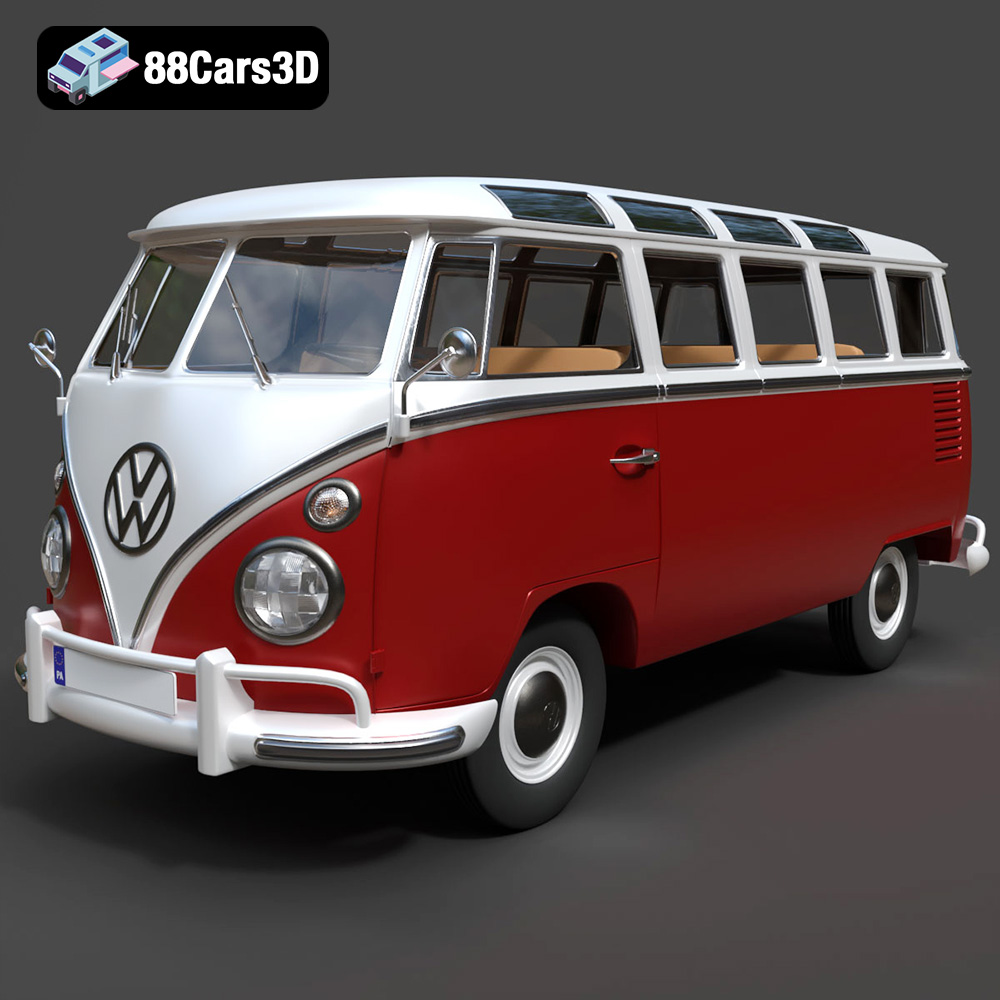
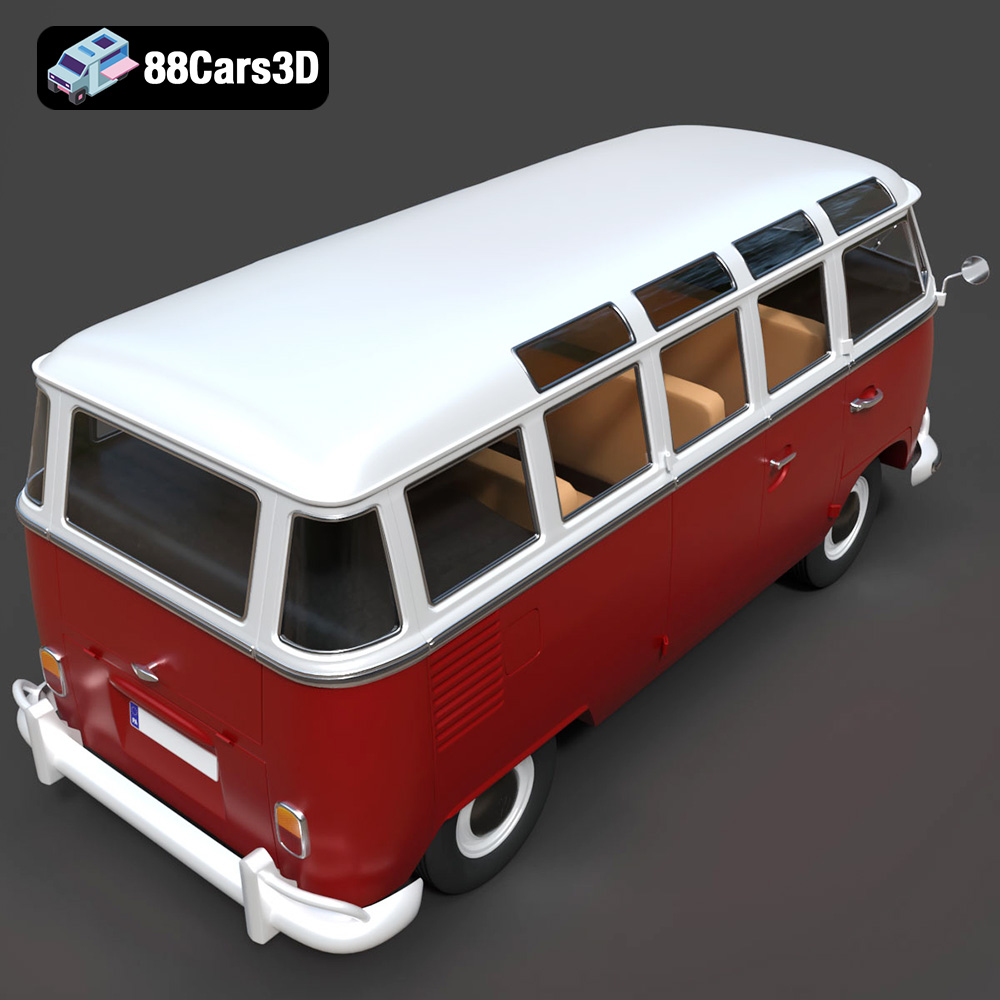
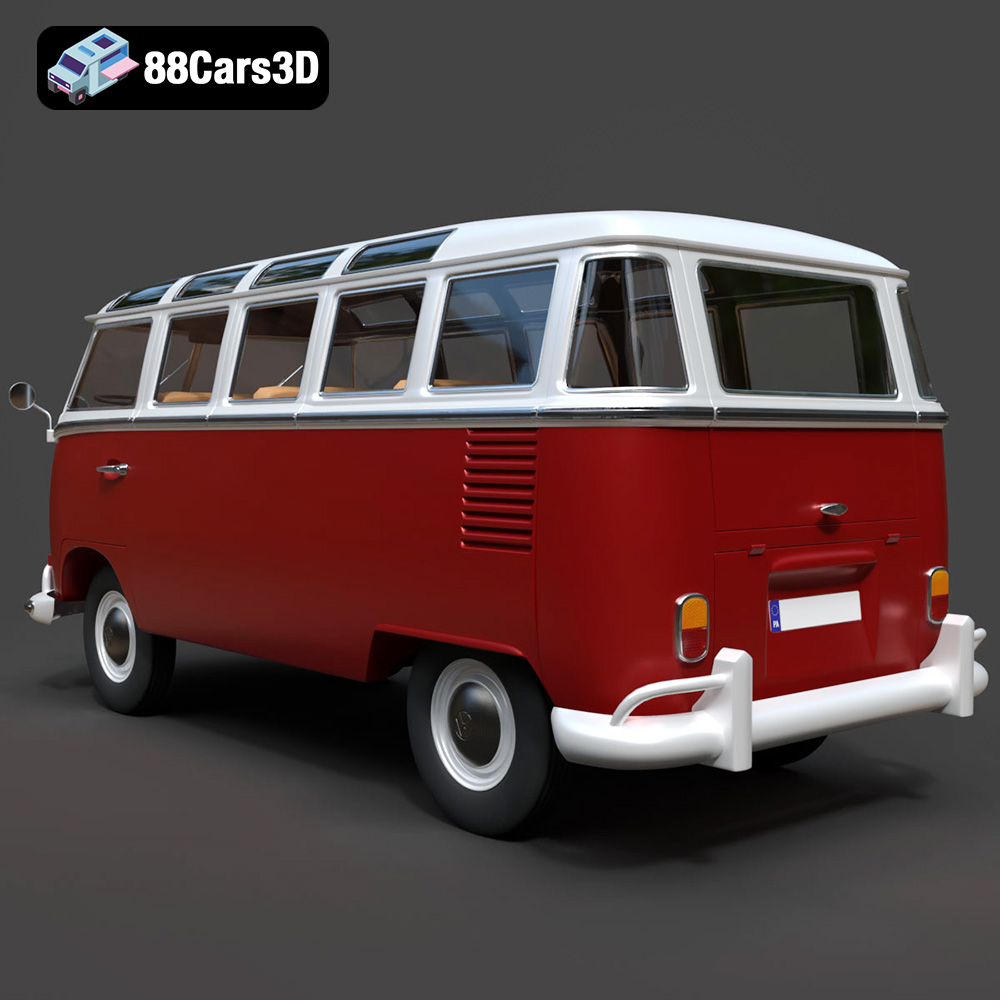
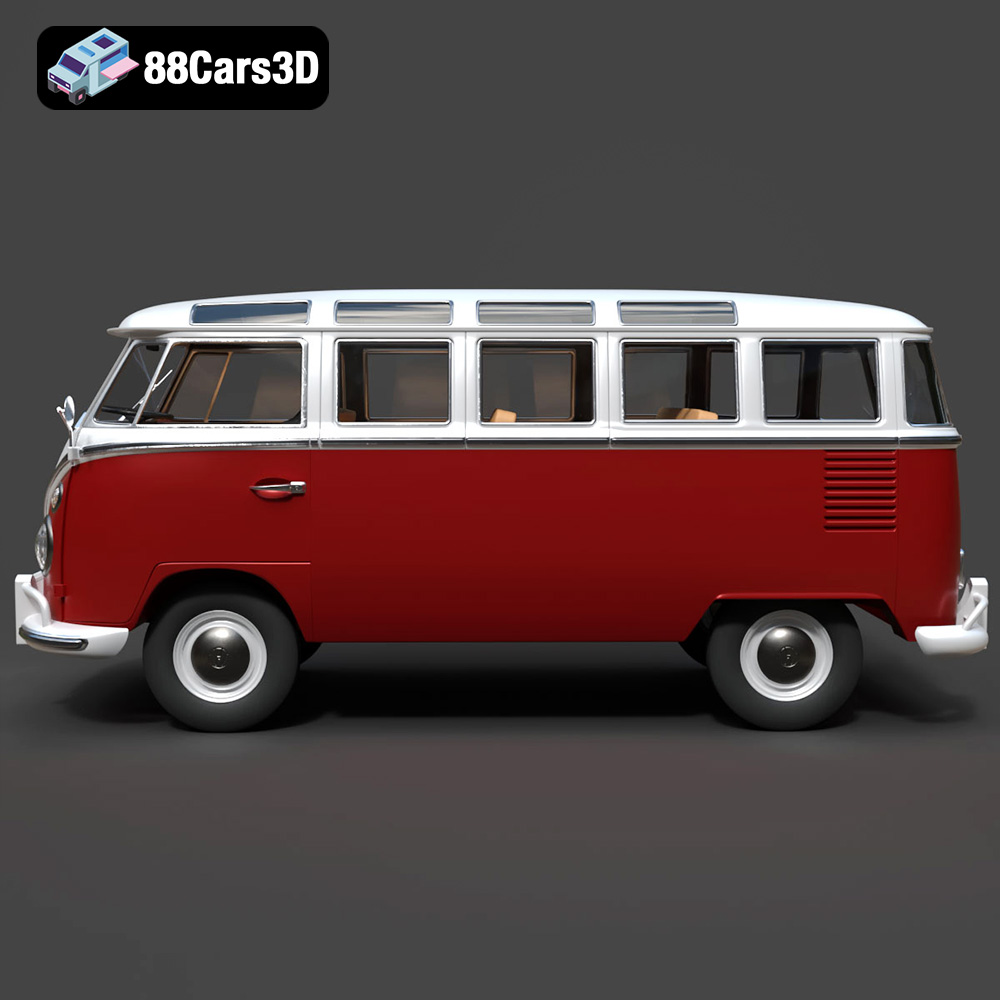
The Volkswagen Transporter T1 1950 3D Model accurately captures the essence of the “Microbus.” Its rounded body shape, the distinctive split front windshield, the subtle V-shaped body panel styling on the front, and the rear-mounted engine layout are all faithfully reproduced. This isn’t just about getting the shape right; it’s about preserving the character and spirit of a vehicle that became synonymous with road trips, counter-culture, and a distinctive mid-century aesthetic. For projects aiming to evoke a specific era or mood, such historical accuracy is invaluable.
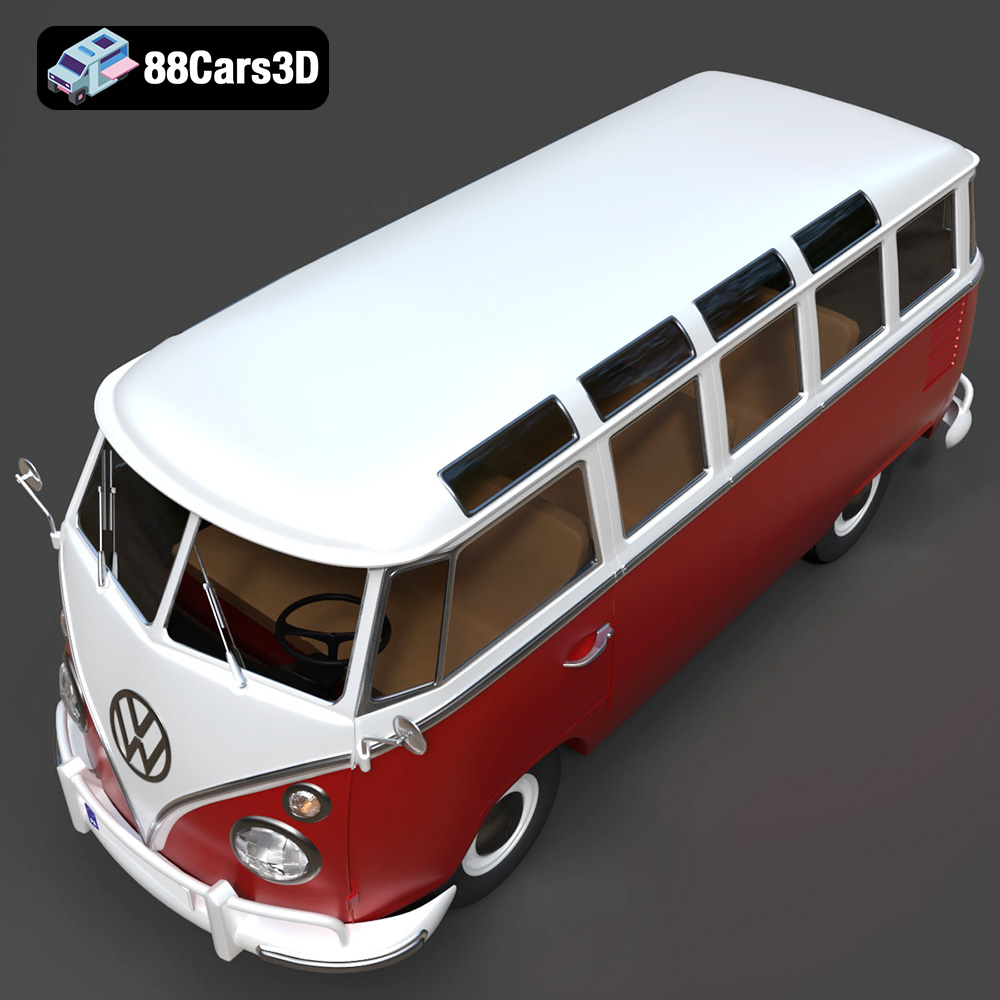
The model boasts a rich array of features that demonstrate its high quality. On the exterior, you’ll find accurate body proportions, realistic round headlights, chrome bumpers, and a detailed front emblem. The wheels, hubcaps, and classic tire profile are all carefully modeled, contributing significantly to the overall realism. Importantly, separate doors, hood panels, and wheels are provided, enabling sophisticated animation workflows where parts can move independently. Inside, the minimalist dashboard, steering wheel, simple gauge cluster, front bench seat, and detailed interior panels are consistent with the 1950 design, offering a convincing interior for close-up renders or interactive walk-throughs. This level of detail ensures the model holds up under scrutiny, whether in a static render or a dynamic animation.
The aesthetic versatility of the T1 is perfectly translated into this 3D car model. It’s ideally suited for a myriad of creative scenarios: envisioning a bustling retro city street, crafting nostalgic marketing visuals for a brand, designing travel-themed environments, or creating collectible vehicle showcases. The clean topology and realistic proportions ensure that it integrates seamlessly into diverse scenes, from sun-drenched beachscapes to gritty urban backdrops. This adaptability makes the Volkswagen Transporter T1 1950 3D Model a valuable asset for any artist looking to add a touch of vintage charm and authenticity to their digital canvas.
The true value of a high-quality 3D car model lies in its seamless integration into various professional pipelines. The Volkswagen Transporter T1 1950 3D Model is engineered to facilitate diverse creative and technical endeavors, from stunning photorealistic renders to immersive interactive experiences.
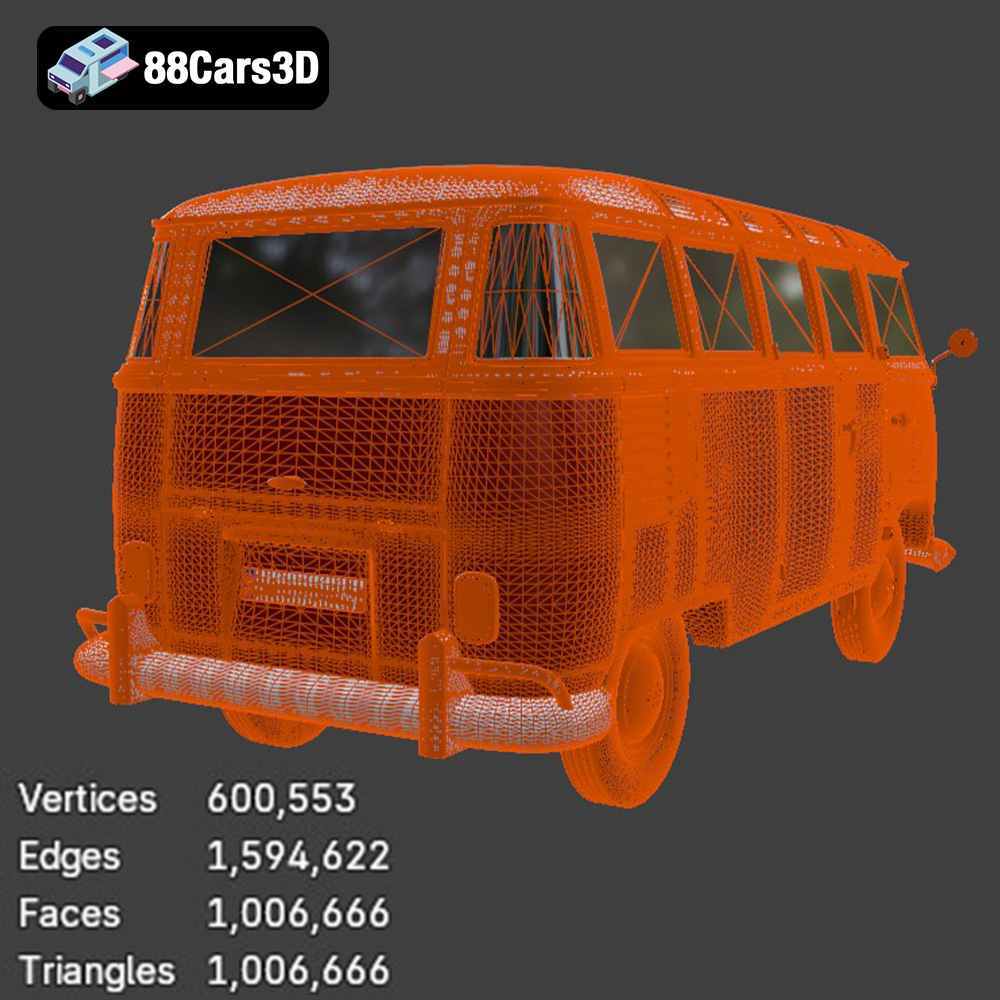
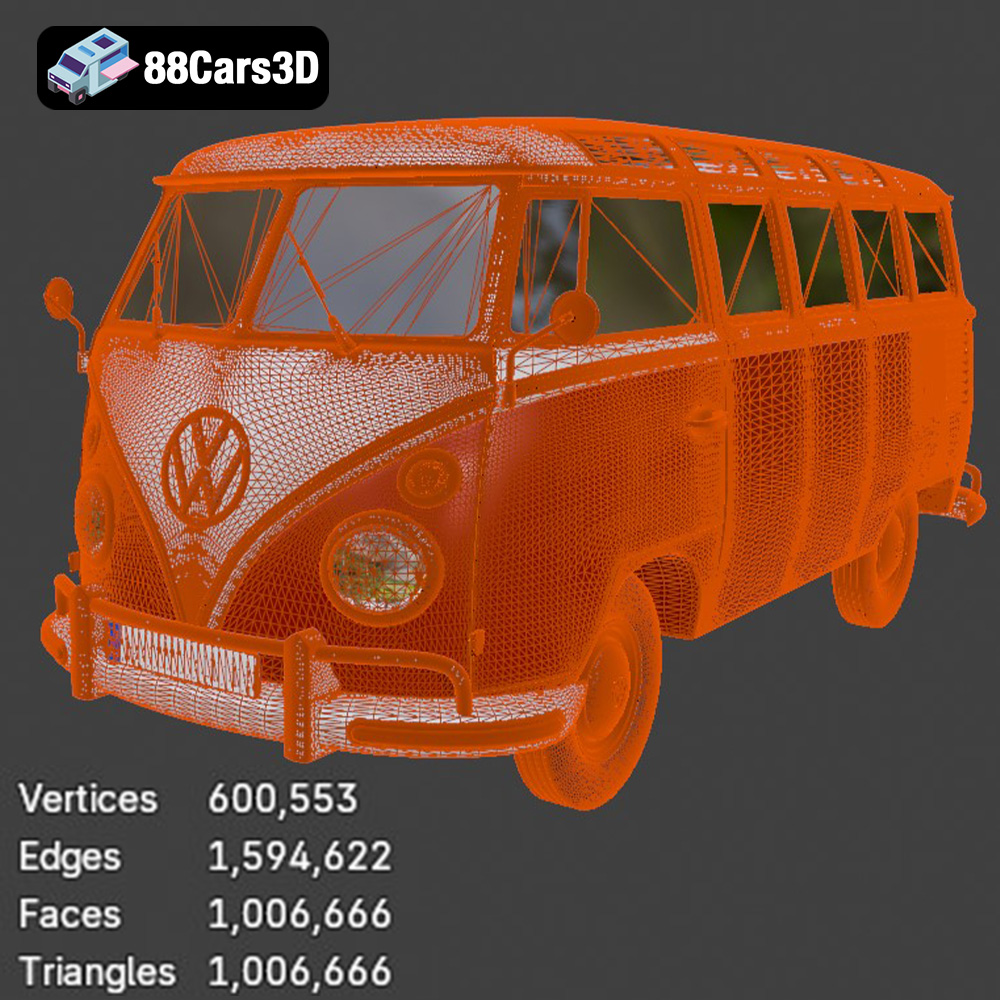
For rendering and visualization artists, the quality of the base model is paramount. The T1 model, with its clean quad-based geometry and real-world scale accuracy, is an excellent foundation for high-fidelity automotive rendering. Artists using renderers like V-Ray, Corona, Octane, or Blender’s Cycles can achieve breathtaking results. The clean mesh allows for smooth subdivision surfacing, creating perfectly curved panels without artifacts. With proper PBR material setup – replicating the distinctive paint finishes, chrome reflections, and rubber textures – and sophisticated lighting techniques, the T1 can be brought to life with photorealistic precision. Imagine a studio render highlighting its iconic lines, or an environmental render placing it in a nostalgic 1950s California beach scene, complete with surfboards. The model’s optimized mesh also supports efficient ray tracing and global illumination calculations, reducing render times while maintaining quality.
In game development, performance is king. The Volkswagen Transporter T1 1950 3D Model is designed with an optimized polygon count, making it suitable for real-time applications without excessively taxing system resources. The included .fbx and .unreal formats are specifically tailored for integration into game engines like Unreal Engine and Unity. The proper hierarchy for wheel rotation and door animation is critical here; game developers can easily implement interactive elements, allowing players to open doors, rotate wheels, or even drive the Microbus in a period-accurate simulation. This makes it a perfect game asset for retro open-world titles, historical simulations, or adding authentic vehicle traffic to a virtual city. Developers can further optimize the model by generating Level of Detail (LOD) meshes to ensure smooth performance across various distances and hardware specifications, making it a robust and flexible asset for any game project.
The emerging fields of Augmented Reality (AR) and Virtual Reality (VR) demand highly optimized yet visually appealing 3D assets. The T1 model’s clean topology and support for formats like .glb make it an ideal candidate for AR/VR applications. Whether it’s a virtual classic car exhibition where users can inspect the vehicle from all angles, an interactive retro showcase for a marketing campaign, or an educational presentation on automotive history, the model provides a compelling and performant digital experience. The .glb format ensures efficient streaming and rendering on various AR/VR platforms, allowing for smooth, responsive interactions and immersive viewing.
Beyond digital screens, the Volkswagen Transporter T1 1950 3D Model offers an exciting pathway to the physical world through 3D printing. The inclusion of the .stl format, specifically designed for additive manufacturing, opens up possibilities for creating tangible collectibles, scale models, and prototypes.
The journey from a digital 3D car model to a physical object is fascinating. The .stl file converts the smooth, detailed digital surface into a triangulated mesh, the language understood by 3D printers. This allows enthusiasts and professionals to manufacture their own replicas of the iconic Microbus. Whether it’s for a tabletop display, a diorama, or a gift, having a physical representation of this classic vehicle adds another dimension to its appreciation.
Achieving a high-quality 3D print requires careful attention to print settings, and the product description provides excellent guidance. Recommended scales of 1:24, 1:32, 1:18, or 1:12 cater to various display needs, from smaller tabletop versions to larger, more detailed models. A layer height of 0.12–0.18 mm ensures a good balance between print speed and surface detail, capturing the subtle curves of the T1. A wall thickness of 2–3 mm provides structural integrity, while an infill of 15–25% is sufficient for most static models. Supports are crucial for overhangs like bumpers, mirrors, and wheel arches, preventing print failures. For optimal surface finish on the roof, printing the body upside-down is recommended, leveraging gravity during the printing process. Printing wheels separately allows for better detailing and easier post-processing. After printing, sanding, priming, and applying a classic two-tone paint finish, optionally sealed with a clear coat, will transform the raw print into a stunning miniature replica.
The 3D printable nature of the T1 model also invites extensive customization. Beyond standard paint schemes, users can experiment with custom vintage decals and branding to replicate specific historical liveries or create unique, personalized designs. Modelers can add miniature surfboards, roof racks, or even interior camper conversions to enhance the realism and narrative of their physical models. This capability turns the 3D car model into a starting point for intricate miniature artistry, allowing for endless creative expression.
The underlying technical construction of any 3D car model significantly impacts its usability and longevity in various projects. The Volkswagen Transporter T1 1950 3D Model stands out due to its thoughtful engineering and inherent flexibility.
A hallmark of professional 3D assets is clean geometry, and this model delivers with its clean quad-based geometry. Quads (four-sided polygons) are preferred in modeling because they deform smoothly, are easy to work with for subdivision, and minimize rendering artifacts. This attention to topology ensures that the model can be used in high-end renders where close-ups are required, as well as in real-time engines where efficient mesh processing is crucial. Furthermore, the model features real-world scale accuracy, which is vital for integration into architectural visualization (arch-viz) scenes, simulations, or any project where precise measurements are important.
Another significant technical advantage is the proper hierarchy for wheel rotation and door animation. This means that the wheels are parented correctly to the main body, and individual doors are set up to pivot accurately. For animators, this is a tremendous time-saver, allowing for quick setup of driving sequences, opening/closing doors, or even simulating suspension movement. This “rigging-ready” aspect makes the T1 model highly functional out of the box for dynamic scenes.
The T1’s inherent simplicity and iconic design provide a fantastic canvas for creative customization, both digitally and physically. The model’s clean structure supports a wide range of modifications. Digital artists can easily apply various classic two-tone paint schemes, experimenting with different color combinations that were popular in the 1950s and 60s. Beyond paint, the model can be augmented with additional 3D car models of accessories, such as surfboards strapped to a roof rack, a vintage cooler, or even a full camper conversion for its interior, transforming it from a basic van into a personalized road trip machine.
The possibilities extend to lighting and environment. Artists can adjust lighting setups to depict the T1 in different moods and settings – a sunny beach environment, a moody urban alley, or a pristine studio showcase. The clean geometry is also conducive to applying custom vintage decals, branding, or even distress textures to give it a worn, lived-in look, further enhancing its storytelling potential. This deep customization capability ensures that the Volkswagen Transporter T1 1950 3D Model remains a versatile asset for countless projects, allowing artists to imprint their unique vision onto a timeless design.
The Volkswagen Transporter T1 1950 is more than just a vehicle; it’s a testament to enduring design and cultural significance. For anyone working in the digital creative space, having access to a high-quality 3D car model of such an icon is an incredible asset. The Volkswagen Transporter T1 1950 3D Model embodies this perfectly, offering exceptional detail, clean topology, and a robust structure suitable for a vast array of applications.
From captivating automotive rendering and visualization to performance-optimized game development and immersive AR/VR experiences, this model provides the versatility and technical excellence demanded by professional workflows. Its support for multiple industry-standard file formats—including .blend, .fbx, .obj, .glb, .stl, .ply, .unreal, and .max—ensures seamless integration into virtually any pipeline. Furthermore, its 3D printability opens up exciting avenues for creating tangible, collectible scale models, blurring the lines between the digital and physical realms.
Whether you’re crafting nostalgic marketing visuals, building a retro game environment, or bringing a piece of automotive history to life, the Volkswagen Transporter T1 1950 3D Model from 88cars3d.com is an investment in quality and creative potential. It’s a prime example of how a meticulously developed 3D car model can serve as a cornerstone for ambitious projects, allowing artists to focus on their creative vision rather than wrestling with technical imperfections. Embrace the timeless charm of the Microbus and elevate your next digital creation with this outstanding asset.
The Volkswagen Transporter T1 1950 3D Model is a detailed digital recreation of the iconic first-generation Type 2 van produced by Volkswagen. Known as the “Microbus” or “Split Window Bus,” the 1950 T1 is a symbol of post-war industrial design and became a cultural icon throughout the 1950s and 1960s. This 3D model accurately captures the rounded body shape, split front windshield, rear-mounted engine layout, and minimalist utility design that made the T1 famous. Designed with clean topology and realistic proportions, it is ideal for rendering, animation, classic automotive visualization, game development, and AR/VR applications. Perfect for retro city scenes, vintage marketing visuals, travel-themed environments, and collectible vehicle showcases.
$29.99
.arvr
.blend
.car3dmodel
.classicvan
.fbx
.gameasset
.glb
.max
.microbus
.obj
.ply
.rendering
.simulation
.stl
.transportert1
.unreal
.vehicleasset
.vintagevehicle
.volkswagen
.vwbus