⚡ FLASH SALE: Get 60% OFF All Premium 3D & STL Models! ⚡

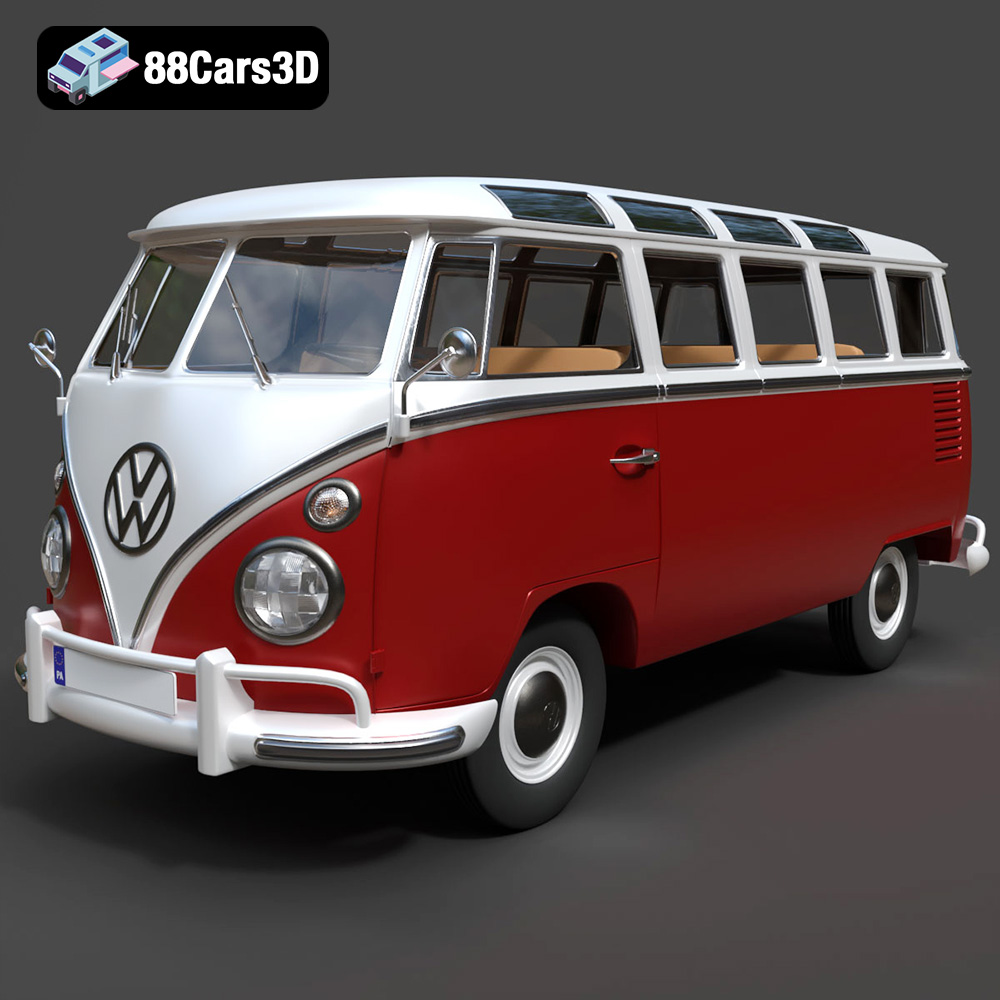
Few vehicles in history command the same nostalgic affection and cultural significance as the Volkswagen Transporter T1. Affectionately known as the “Microbus” or “Split Window Bus,” this iconic van transcended its utilitarian origins to become a symbol of freedom, counter-culture, and global exploration. From sandy beaches to bustling city streets, the T1’s distinctive silhouette is instantly recognizable, evoking a bygone era of optimistic adventure.
Today, this timeless design continues to inspire, finding new life not just on collectors’ roads, but within the intricate digital landscapes crafted by 3D artists, game developers, and visualization specialists. The demand for high-quality 3D car models that accurately capture such heritage is immense. This is precisely where a meticulously crafted asset like the Volkswagen Transporter T1 1950 3D Model from 88cars3d.com proves invaluable. It’s more than just a digital replica; it’s a meticulously engineered piece of digital artistry ready to drive your projects forward, whether for stunning renders, immersive game environments, or even tangible 3D prints.
The versatility of a 3D model often hinges on the file formats it supports. Each format is designed with specific use cases in mind, offering different levels of compatibility, data retention, and optimization for various software and pipelines. When you acquire a professional-grade asset like the Volkswagen Transporter T1 1950 3D Model, understanding these formats is key to maximizing its potential across diverse projects.
The .blend format is the native file type for Blender, the powerful open-source 3D creation suite. When you receive a .blend file, you’re getting a complete Blender scene, often including not just the mesh geometry, but also materials, textures, lighting setups, cameras, and even animations. This makes it ideal for Blender users who want full control and editability. Artists can easily inspect the scene’s construction, modify materials, adjust topology, or use Blender’s robust rigging and animation tools directly. For complex projects requiring extensive customization within Blender, the .blend format is the most comprehensive and flexible option.
The .fbx (Filmbox) format is a proprietary file format developed by Autodesk, serving as a universal standard for 3D data exchange between various software applications and game engines. It’s particularly strong at preserving hierarchical data, animation, textures, and even embedded media. For pipelines involving Unreal Engine, Unity, 3ds Max, Maya, or Cinema 4D, .fbx is often the go-to. Its robust support for skeletal animation and PBR materials makes it ideal for game development and real-time visualization, allowing the Volkswagen Transporter T1 1950 3D Model to be seamlessly imported with all its rigging and material assignments intact for immediate use.
The .obj (Wavefront OBJ) format is one of the oldest and most widely supported 3D formats. It’s a simple, text-based format primarily used for transferring geometric data, including vertices, normals, UV coordinates, and faces. While it doesn’t typically store animation or advanced material properties within the file itself (these are often referenced in an accompanying .mtl file), its universality makes it excellent for basic mesh exchange between almost any 3D software. If you need a clean mesh of the Volkswagen T1 for sculpting, retopology, or import into less common 3D applications, .obj is a reliable choice.
The .glb (GLB format, derived from glTF, Graphics Language Transmission Format) is an increasingly popular, modern 3D file format designed for efficient transmission and loading of 3D scenes and models in web and real-time applications. It packages textures, animations, and other scene data directly into a single binary file, making it perfect for augmented reality (AR), virtual reality (VR), and browser-based 3D viewers. The T1 model in .glb format would be perfectly suited for an interactive web display on a vintage car website or for an AR application showcasing classic vehicles in a user’s environment.
The .stl (Stereolithography) format is the industry standard for 3D printing. It represents a 3D model as a collection of unconnected triangular facets, defining only the surface geometry of an object without color, texture, or other CAD attributes. While simple, its ubiquity in the 3D printing world is unmatched. The Volkswagen Transporter T1 1950 3D Model, when provided in .stl, is directly ready for slicing software, allowing you to produce a physical, tangible replica of this classic vehicle. This is especially useful for creating collectible scale models or rapid prototyping.
The .ply (Polygon File Format) is another format for storing 3D data, often used in scientific and engineering applications, especially for scanned data. It can store a wider range of properties than .obj or .stl, including color, transparency, normals, texture coordinates, and even reliability information for each vertex and face. While less common for general artistic asset exchange, it can be valuable for projects requiring precise mesh data, often originating from 3D scanning or for detailed analysis and CAD integration of the T1 model.
The .unreal format, or more accurately, assets packaged for Unreal Engine, typically refers to a collection of files (like .uasset) organized within an Unreal project structure. While not a single universal file format, receiving a model “ready for Unreal” means it’s pre-configured with materials, textures, and often collision meshes and LODs (Levels of Detail) specifically optimized for the engine. This significantly streamlines the workflow for game developers and real-time artists using Unreal, allowing for a drag-and-drop experience for the Volkswagen T1 1950 3D Model into their virtual worlds.
Similar to .blend, the .max format is the native file type for Autodesk 3ds Max, a leading software for 3D modeling, animation, and rendering. A .max file contains the entire scene data, including geometry, materials, lighting, cameras, animation, and any modifiers or procedural effects applied. This format offers maximum flexibility and control for artists working within 3ds Max, enabling them to dissect the T1 model, adjust its components, or integrate it into complex architectural visualizations or cinematic sequences with ease.
Understanding these formats allows professionals to choose the right tool for the job, ensuring that the high-quality Volkswagen Transporter T1 1950 3D Model can be utilized to its fullest potential across any creative endeavor.
Creating a truly exceptional 3D car model, especially one with such a rich history as the Volkswagen Transporter T1, requires more than just translating blueprints into polygons. It demands an artistic eye combined with rigorous technical precision to capture the vehicle’s essence. The Volkswagen Transporter T1 1950 3D Model available on 88cars3d.com exemplifies this balance, offering a digital asset that is both beautiful and robust.
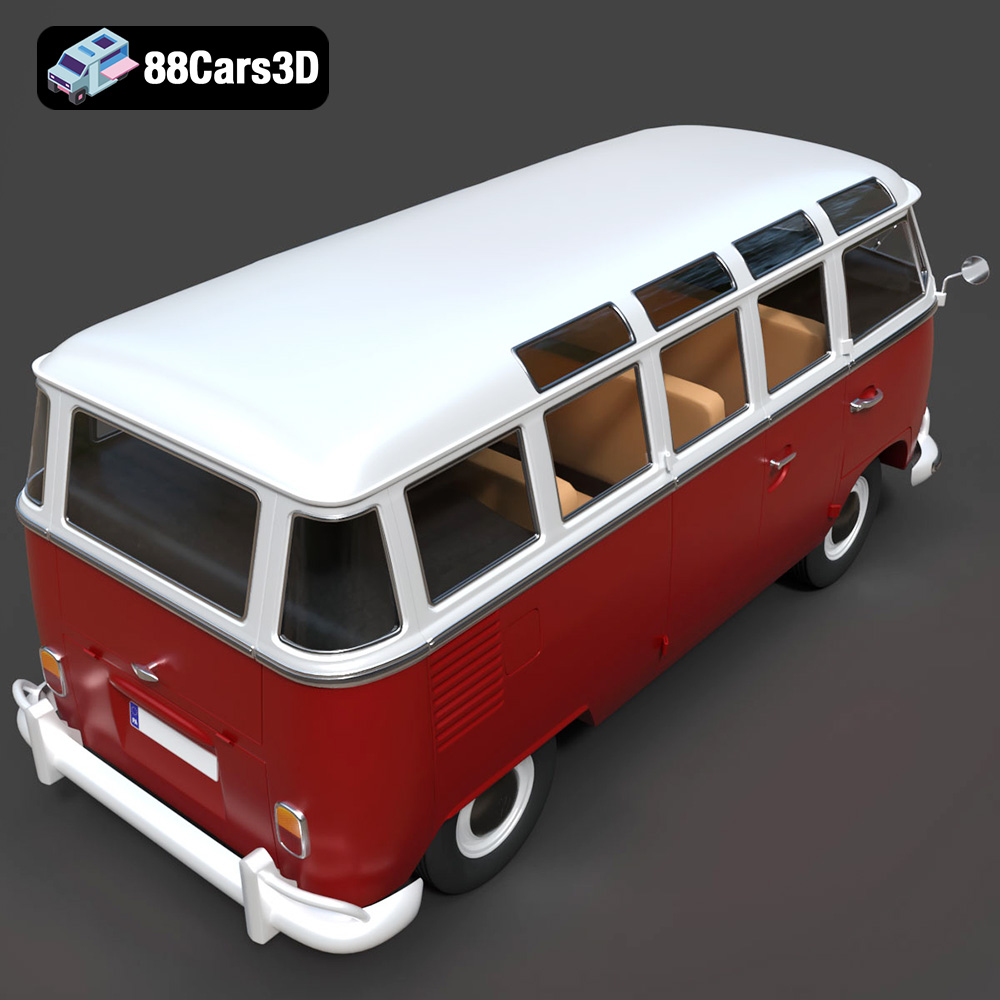
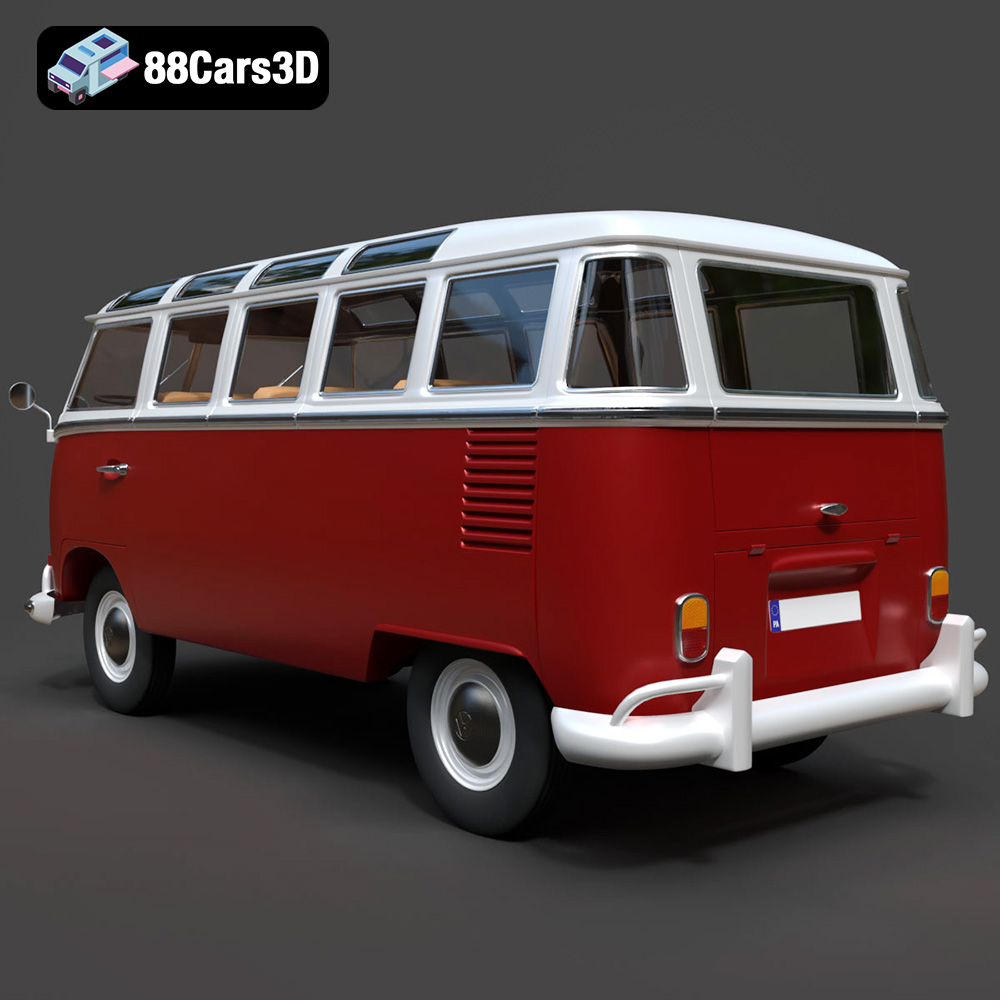
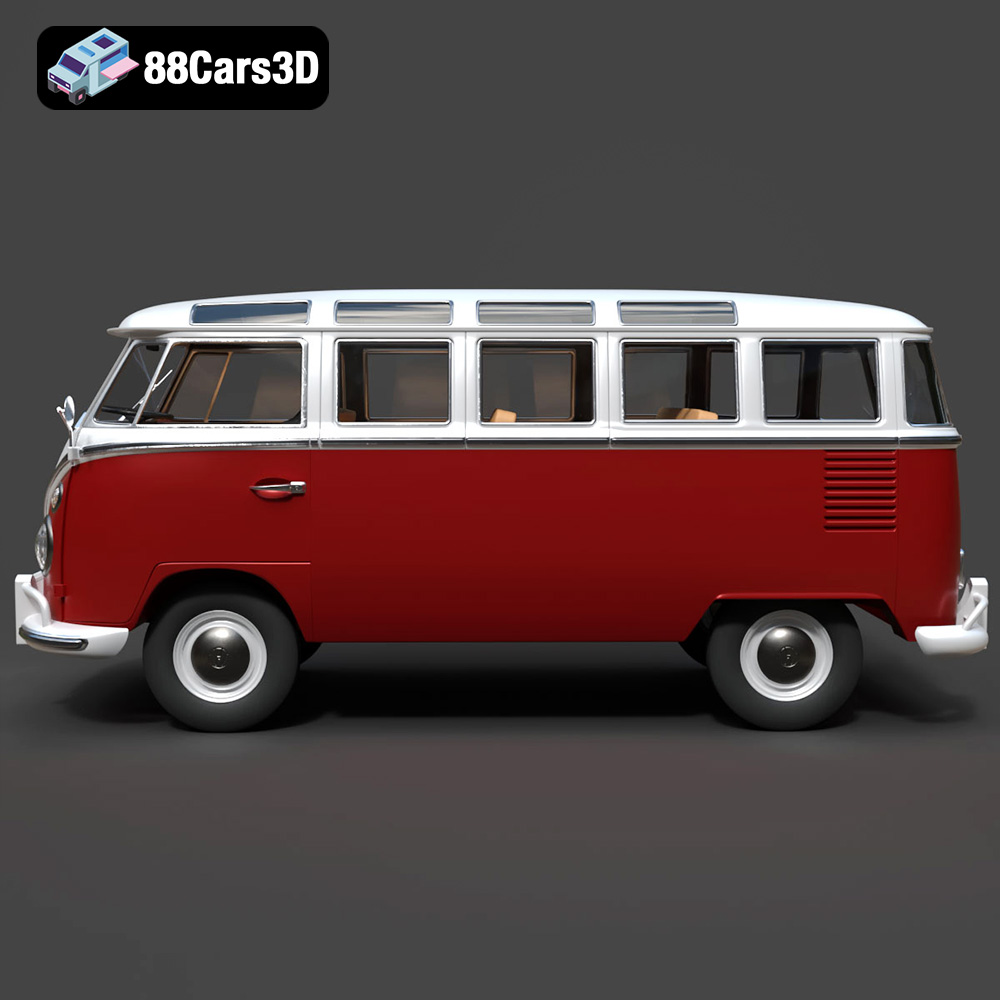
The defining characteristic of any historically accurate 3D model is its adherence to real-world proportions and design nuances. For the 1950 T1, this means meticulously replicating its rounded body shape, the distinctive V-shaped front panel, and of course, the iconic split front windshield. Every curve, panel gap, and emblem must be faithfully recreated. This precision ensures that whether the model is placed in a photorealistic render or a historical simulation, it feels authentic and instantly recognizable. Such accurate detailing saves artists countless hours of research and modeling, providing a ready-to-use foundation.
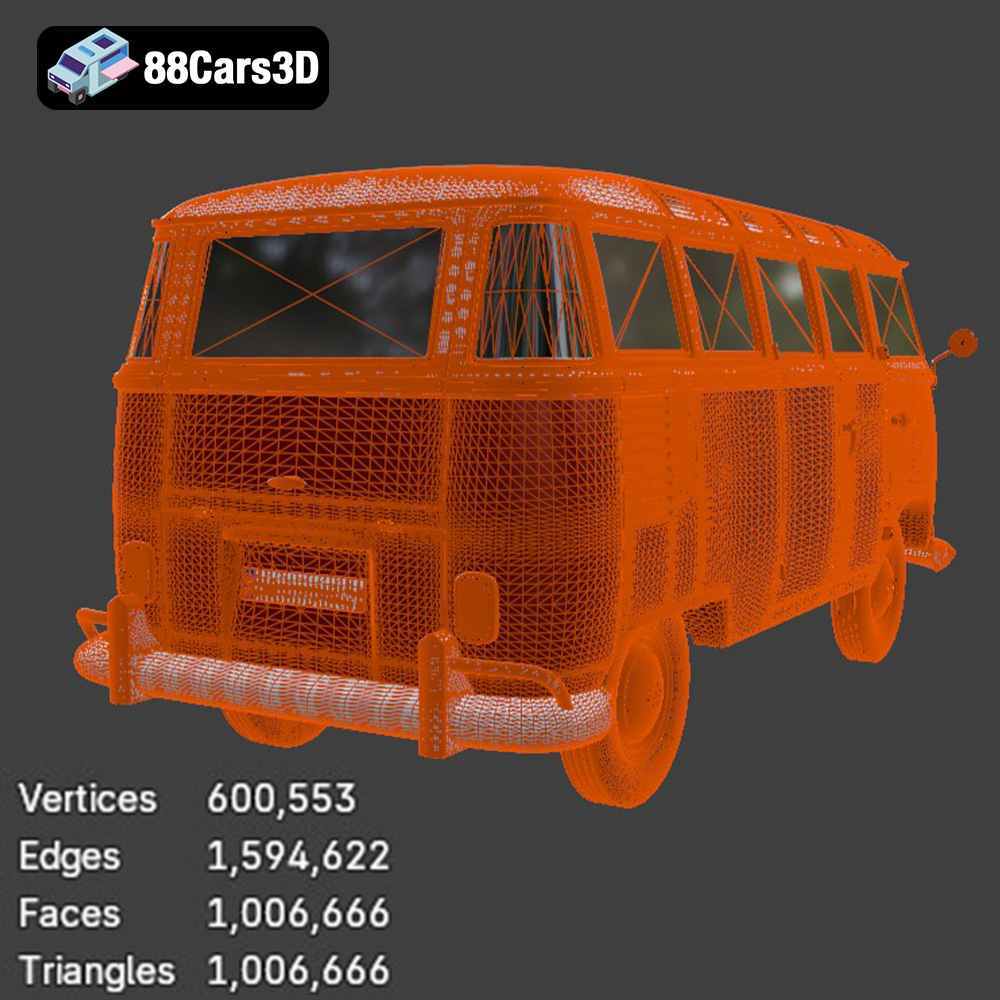
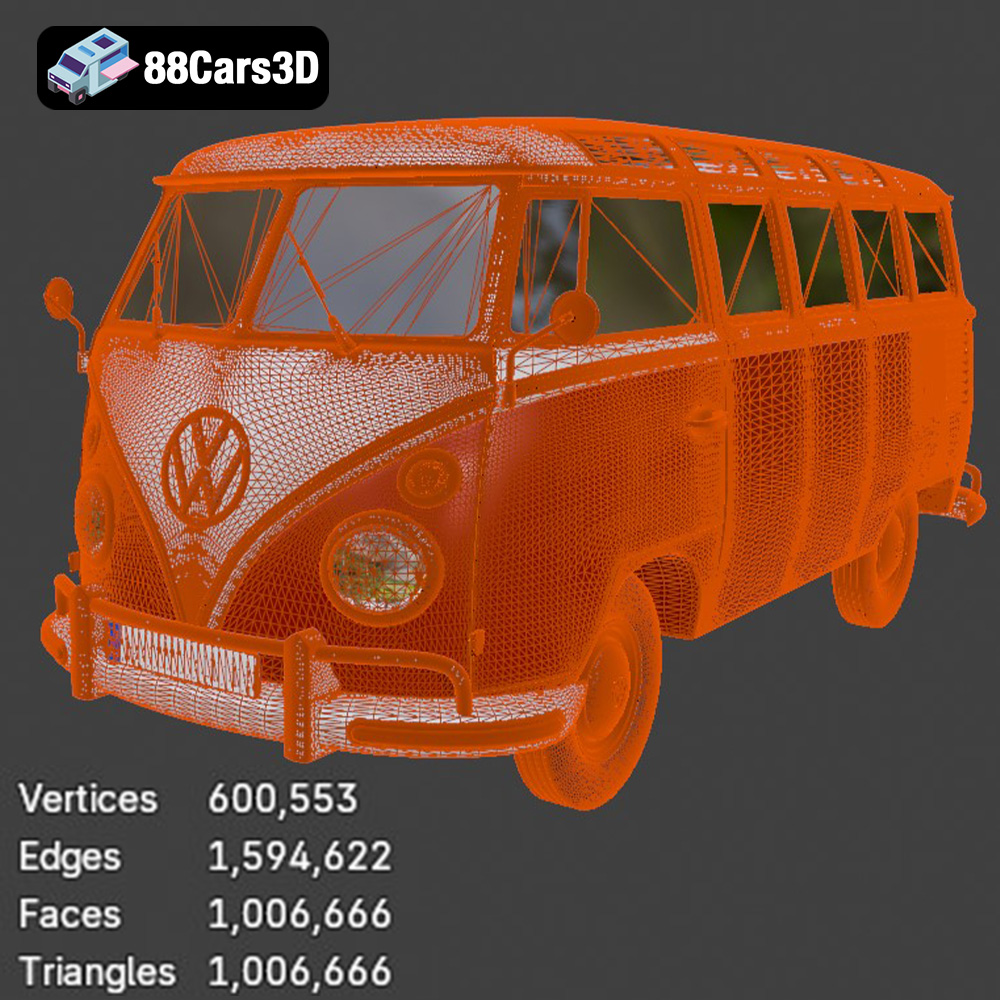
Beneath the surface of any great 3D model lies its topology – the arrangement of its polygons. The Volkswagen Transporter T1 1950 3D Model boasts “clean quad-based geometry,” which is a hallmark of professional modeling. Quads (four-sided polygons) are preferred over tris (three-sided) for several reasons: they deform better during animation, are easier to subdivide for smoother results, and simplify UV mapping. A clean, optimized polygon count is also critical, ensuring the model performs well in real-time applications like game engines without sacrificing visual fidelity in high-quality renders.
Furthermore, “proper hierarchy for wheel rotation and door animation” is a technical advantage that streamlines workflow significantly. This means the model’s components are logically grouped and parented (e.g., wheels are children of axles, doors are children of the body), allowing for straightforward rigging and animation without complex adjustments. This foresight in design is a testament to the model’s professional quality and its readiness for dynamic scenes.
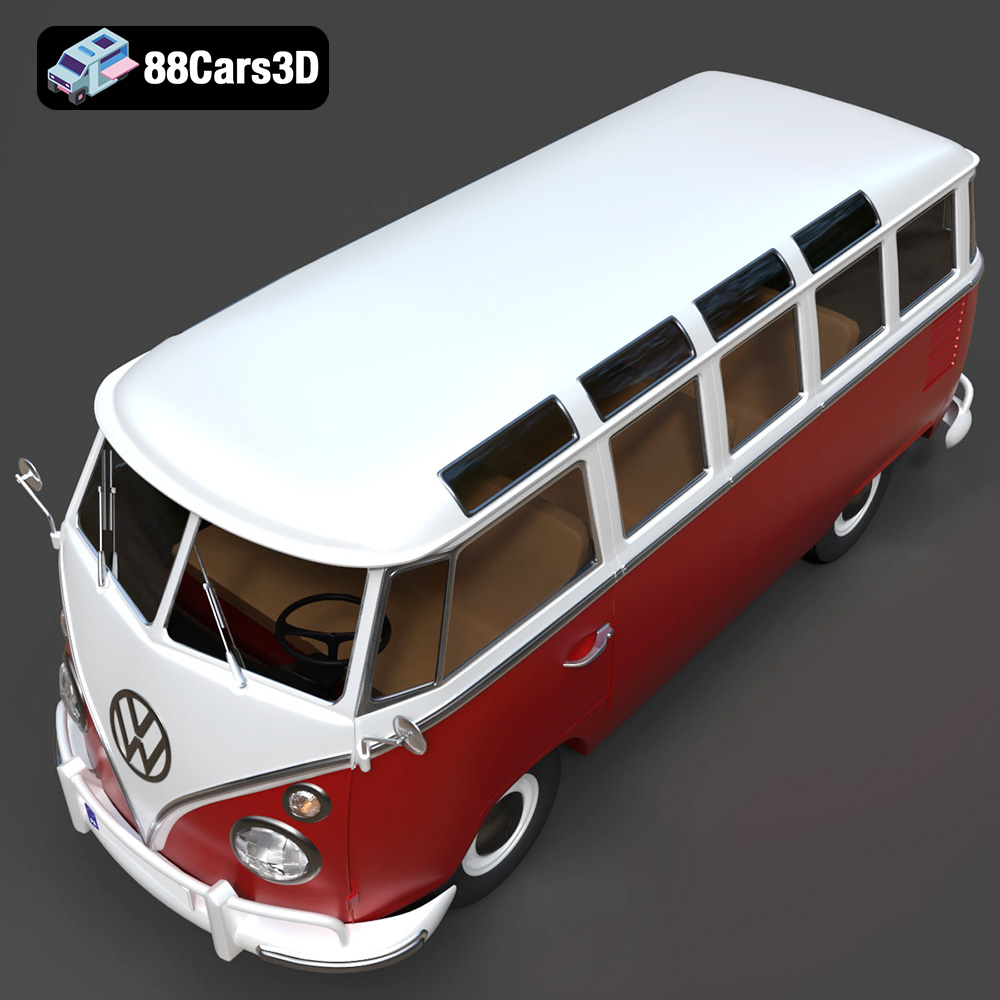
The comprehensive detailing extends to both the exterior and interior of the T1 model. On the outside, features like realistic round headlights, chrome bumpers, and accurately modeled wheels with classic tire profiles contribute to its authentic appearance. The inclusion of separate doors, hood panels, and wheels means that the model is prepared for interactive or animated scenarios, allowing for opening doors, rotating wheels, or even damage modeling. Internally, the “minimalist dashboard layout consistent with 1950 design,” steering wheel, simple gauge cluster, and front bench seat provide a credible cabin environment, optimized for both real-time performance and high-quality renders where the interior might be visible.
The true power of a high-quality 3D car model like the Volkswagen Transporter T1 1950 lies in its ability to be transformed into breathtaking visual content. From advertising campaigns to cinematic sequences, automotive rendering and visualization push the boundaries of realism, and a well-prepared asset is the cornerstone of this process.
Achieving photorealism with the Volkswagen Transporter T1 1950 3D Model involves a sophisticated interplay of materials, lighting, and rendering techniques. In software like 3ds Max or Blender, artists can leverage physically based rendering (PBR) workflows. This means assigning materials that accurately simulate how light interacts with surfaces – from the reflective sheen of the paintwork and chrome bumpers to the subtle texture of the tires and interior upholstery. Using HDRI (High Dynamic Range Imaging) environments for global illumination is crucial, as it provides realistic lighting and reflections that ground the vehicle within its scene. The T1’s clean geometry and proper UV mapping ensure that textures—whether classic two-tone paint schemes or vintage decals—apply seamlessly and without distortion, leading to stunning, lifelike imagery.
Beyond static renders, the T1 model is built for motion. Its “proper hierarchy for wheel rotation and door animation” is a key technical advantage here. Artists can easily rig the wheels to rotate along their correct axes and animate the separate door panels to open and close. This functionality makes it ideal for cinematic sequences, virtual product showcases, or interactive configurators. Imagine the T1 cruising down a virtual coastal road, or its doors opening to reveal a meticulously modeled interior in a brand advertisement. Whether animated within 3ds Max’s robust timeline or Blender’s intuitive animation tools, the model’s structure supports fluid, believable motion.
The versatility of the Volkswagen Transporter T1 1950 3D Model extends to integrating it into broader visualization projects. Architects might use it to populate a retro-themed street scene in an urban development visualization, adding character and a sense of history. Marketing agencies can deploy it in campaigns requiring a nostalgic or adventurous aesthetic, placing the iconic Microbus in picturesque landscapes or bustling vintage cityscapes. Its real-world scale accuracy ensures it fits perfectly into any scene without requiring manual adjustments, saving valuable production time and ensuring visual harmony across diverse applications.
The advent of powerful game engines and real-time rendering technologies has revolutionized how we experience 3D content. The Volkswagen Transporter T1 1950 3D Model is not just for static renders; it’s also a prime candidate for dynamic, interactive environments, serving as a versatile game asset for virtual worlds, simulations, and immersive AR/VR experiences.
Game development demands a delicate balance between visual fidelity and performance. The Volkswagen Transporter T1 1950 3D Model is designed with an “optimized polygon count for performance,” making it suitable for integration into engines like Unreal Engine and Unity. While aiming for detail, professional game assets must avoid excessive poly counts that could bog down frame rates. Furthermore, proper UV mapping is crucial for efficient texture packing and rendering within game engines. Textures are often baked into atlases, and efficient UV layouts ensure minimal waste of texture space. When integrating the T1 into Unreal, for instance, developers would import the .fbx or .unreal format, which typically includes pre-setup materials, PBR textures (Albedo, Normal, Roughness, Metallic, AO), and often collision meshes. This ‘engine-ready’ approach dramatically reduces the time and effort required to get the vehicle functional in a game.
Augmented Reality (AR) and Virtual Reality (VR) offer new frontiers for interactive experiences. The T1 model, particularly in its .glb format, is well-suited for these platforms. In AR, users could project the virtual Transporter T1 into their real-world environment via a smartphone or tablet, examining its classic design from all angles. For VR, the model could populate a historical car museum, a retro street, or even a driving simulation, allowing users to step inside and experience the Microbus up close. The optimized mesh ensures smooth performance even on mobile AR/VR devices, providing a seamless and immersive user experience without noticeable lag.
Beyond entertainment, the Volkswagen Transporter T1 1950 3D Model holds significant value in simulation and training environments. Educational institutions might use it for historical automotive demonstrations, allowing students to study its construction and design. In interactive media, such as museum exhibits or virtual travel experiences, the T1 can serve as a central interactive element. Its separate components (doors, wheels) allow for interaction, such as opening doors to view the interior or animating its movement across a virtual map. This versatility makes it an excellent choice for developers looking to add a touch of vintage charm and interactive realism to their projects.
While 3D models are often associated with digital displays, the rise of 3D printing has opened up an exciting avenue for transforming virtual assets into tangible objects. The Volkswagen Transporter T1 1950 3D Model is explicitly designed for this transition, offering the potential to create physical collectible scale models and miniature builds.
The inclusion of the .stl format is paramount for 3D printing. This format strips away textures and materials, focusing solely on the geometry, making the Volkswagen Transporter T1 1950 3D Model directly compatible with most slicing software (e.g., Cura, PrusaSlicer, Chitubox). This means artists, hobbyists, and collectors can literally hold a piece of automotive history in their hands. The ability to produce physical models allows for unique merchandising opportunities, personalized gifts, or additions to a tabletop display. The satisfaction of printing a complex model like the T1 and then physically painting and finishing it offers a different kind of creative fulfillment compared to digital rendering.
Successful 3D printing relies on careful preparation and understanding of printer settings. The product description provides excellent guidance:
These technical specifications provide a clear roadmap for anyone looking to print the T1 model successfully, minimizing trial and error and ensuring a high-quality physical output.
The journey from a raw 3D print to a display-ready collectible involves post-processing. “Sanding, primer, classic two-tone paint finish, optional clear coat” are standard steps for achieving a professional look. For the Volkswagen Transporter T1, a classic two-tone scheme is almost mandatory to capture its vintage charm. The details in the model, like the separate wheels, allow for easier painting and assembly. This hands-on process of bringing the digital model to life further enhances its value, turning a digital file into a unique, custom-finished piece of art or a highly sought-after collectible.
A truly valuable 3D asset is not just a static representation but a flexible foundation for diverse creative endeavors. The Volkswagen Transporter T1 1950 3D Model from 88cars3d.com offers extensive customization potential and seamless professional integration, ensuring it serves as a long-term asset in any digital artist’s toolkit.
The beauty of a well-structured 3D model lies in its adaptability. While the T1 model is historically accurate, it also serves as a canvas for creative interpretation. “Classic two-tone paint schemes” can be easily applied, but artists are free to experiment with custom colors, metallic finishes, or even weathered looks to tell a unique story. The ability to “add surfboards, roof racks, or camper conversions” means the model can be transformed to fit specific narratives – a beach-bound cruiser, an adventurous overlander, or a retro mobile cafe. Furthermore, “custom vintage decals and branding” can personalize the T1 for marketing campaigns, game assets, or personalized renders. This level of customization allows the model to remain relevant and versatile across countless projects.
Time is a precious commodity in any professional production. Starting with a high-quality, pre-modeled, and optimized 3D car model significantly streamlines the workflow. Instead of spending weeks on modeling and optimizing a complex vehicle, artists can immediately jump into texturing, lighting, animation, or scene integration. The availability of multiple file formats (.blend, .fbx, .obj, .glb, .stl, .ply, .unreal, .max) ensures compatibility across virtually all major 3D software and game engines, eliminating conversion headaches and data loss. This ‘ready-to-use’ nature means faster iteration, quicker delivery, and more efficient resource allocation, ultimately leading to higher quality final products and happier clients.
Investing in a premium 3D model like the Volkswagen Transporter T1 1950 is an investment in versatility and quality. It’s an asset that can be rendered in a photorealistic advertising visual, driven in a retro-themed video game, explored in an AR/VR experience, or 3D printed into a tangible collectible. This multi-faceted utility extends its lifespan and value across a broad spectrum of industries, from automotive design and entertainment to education and product visualization. The commitment to “clean quad-based geometry,” “real-world scale accuracy,” and “proper hierarchy” ensures that the model is not just visually appealing but also technically sound, making it a reliable and future-proof addition to any creative library.
The Volkswagen Transporter T1 1950 stands as a testament to enduring design and cultural impact. Its transformation into a high-quality 3D model offers an unparalleled opportunity for digital artists and developers to integrate this icon into their modern projects. From the meticulous detail of its split-window design to its optimized geometry and multi-format compatibility, the Volkswagen Transporter T1 1950 3D Model is more than just an asset; it’s a foundation for creativity.
Whether you are crafting cinematic renders in 3ds Max, building immersive game worlds in Unreal Engine, exploring AR/VR applications, or producing tangible scale models through 3D printing, this model provides the technical excellence and artistic fidelity required. It bridges the gap between historical automotive heritage and cutting-edge digital visualization, proving that classic designs can truly thrive in the digital age. For professionals seeking top-tier 3D car models that deliver both quality and versatility, a visit to 88cars3d.com is a crucial step towards unlocking new creative possibilities. Embrace the legacy of the Microbus and let your imagination drive your next project forward with this exceptional digital asset.
The Volkswagen Transporter T1 1950 3D Model is a detailed digital recreation of the iconic first-generation Type 2 van. It accurately captures the rounded body shape, split front windshield, and minimalist utility design that made the T1 famous. Designed with clean topology and realistic proportions, it is ideal for rendering, animation, classic automotive visualization, game development, AR/VR, and is even convertible to .stl for 3D printing collectible scale models.
$29.99
.arvr
.blend
.car3dmodel
.classicvan
.fbx
.gameasset
.glb
.max
.microbus
.obj
.ply
.rendering
.simulation
.stl
.transportert1
.unreal
.vehicleasset
.vintagevehicle
.volkswagen
.vwbus