⚡ FLASH SALE: Get 60% OFF All Premium 3D & STL Models! ⚡

Welcome, fellow makers and automotive enthusiasts! At 88cars3d.com, we’re passionate about bringing detailed, high-quality 3D printable car models to life. Whether you’re assembling a fleet of classic muscle cars, prototyping a custom chassis, or simply expanding your collection, the foundation of a successful print lies in understanding your tools. Two of the most fundamental, yet often overlooked, aspects of 3D printing are the nozzle diameter and the build plate size. These seemingly simple components profoundly influence print speed, detail resolution, material compatibility, and the overall feasibility of your project. In this comprehensive guide, we’ll dive deep into the technicalities of selecting the optimal nozzle and bed size, ensuring your 3D printer is perfectly configured for everything from intricate miniature wheels to larger-scale body panels. Get ready to unlock new levels of print quality and efficiency!
We’ll cover everything from the micro-level impact of nozzle diameter on layer lines and extrusion width to the macro-level considerations of build volume for ambitious projects. By the end of this article, you’ll have a clear roadmap for making informed decisions that will elevate your 3D printing game, especially when working with detailed models like those found on 88cars3d.com.
The nozzle is where the magic happens – it’s the point where molten filament is precisely deposited onto the build plate, layer by layer. The diameter of this tiny opening is a critical parameter that dictates a multitude of printing characteristics. Most FDM (Fused Deposition Modeling) printers come standard with a 0.4mm nozzle, and for good reason. This size offers a balanced compromise between print speed and detail. However, exploring different nozzle sizes can unlock significant advantages for specific applications.
When printing highly detailed objects, such as the intricate grilles, emblems, and sharp body lines found on many 88cars3d.com models, a smaller nozzle diameter is your best friend. Nozzles ranging from 0.1mm to 0.3mm allow for finer extrusion, resulting in thinner layer lines and significantly improved surface finish. This means sharper details and a smoother appearance, often reducing the need for extensive post-processing like sanding.
Technical Tip: When switching to a smaller nozzle, remember to adjust your slicer settings accordingly. You’ll need to decrease your extrusion multiplier (or flow rate) to prevent over-extrusion, as less material is being pushed out per unit of movement. Additionally, increasing the number of perimeters (walls) can help reinforce thin details and create a more robust model.
Conversely, if your priority is speed or structural integrity, a larger nozzle diameter is the way to go. Nozzles of 0.6mm, 0.8mm, or even 1.0mm can dramatically reduce print times by depositing more material in a single pass. This is particularly useful for larger models, prototypes, or functional parts where speed is essential and fine detail is less critical. For example, if you’re printing a large-scale body for a display model or a structural component for a RC car project, a larger nozzle can cut down print duration by 50% or more.
Technical Tip: When using larger nozzles, you’ll typically need to increase your extrusion width in the slicer to match or slightly exceed the nozzle diameter. This ensures proper extrusion and adhesion between lines. Be mindful of your printer’s hotend capacity; larger nozzles require more heat to melt the increased volume of filament, so ensure your hotend can keep up.
The material you choose also plays a role in nozzle selection. Abrasive materials like carbon fiber-filled filaments, wood-filled filaments, or glow-in-the-dark filaments can rapidly wear down standard brass nozzles. For these materials, hardened steel or ruby-tipped nozzles are highly recommended. These are significantly more durable and will maintain their precise opening over extended use, preventing inconsistencies in extrusion.
Key Takeaway: For the highly detailed car models found on 88cars3d.com, consider using a 0.2mm or 0.3mm nozzle for exceptional fidelity. If you’re printing larger, less detailed parts or need faster prints, a 0.6mm nozzle can be a great upgrade. Always remember to recalibrate your extruder and adjust slicer settings when changing nozzle sizes.
The build plate, or print bed, is the surface upon which your 3D model is constructed. Its dimensions – the length and width – define the maximum size of a single print job your printer can accommodate. While seemingly straightforward, the build plate size influences your project planning, model orientation, and even the choice of printer for larger-scale endeavors.
Most entry-level and mid-range FDM printers typically offer build volumes in the range of 200x200x200mm to 300x300x300mm. This is ample space for a vast majority of 3D printable car models, including many of the detailed 1:24 or 1:18 scale kits available from marketplaces like 88cars3d.com. However, for ambitious projects, such as printing an entire car body in multiple sections for a larger display piece or creating full-scale automotive components (which is beyond the scope of typical hobbyist models but relevant for prototyping), a larger build volume becomes a necessity.
Even with a standard-sized build plate, many large or complex car models are designed to be printed in multiple sections. This approach has several advantages:
Technical Tip: When working with multi-part models, ensure you have a strategy for joining them. Super glue (cyanoacrylate), epoxy, or even friction-fit designs with alignment pins are common methods. Proper alignment is crucial for a seamless finish. Many model designers, including those providing files on 88cars3d.com, incorporate these features into their designs.
The size of your build plate also dictates how you can orient your model. Optimal orientation is key to minimizing support material, reducing print time, and achieving the best surface finish. A larger build plate offers more flexibility in placing models to take advantage of specific printer bed characteristics or to avoid supporting delicate overhangs.
Bed adhesion is paramount, especially for larger prints or those with a small footprint. Different build surfaces (e.g., glass, PEI, BuildTak) have varying properties that affect how well your first layer sticks. Ensuring a clean, level bed and using appropriate adhesion aids (like glue stick or hairspray for certain surfaces) is critical, regardless of build plate size.
Technical Tip: For large prints, consider a brim or raft in your slicer settings to increase the surface area contact with the build plate, significantly improving adhesion and reducing the risk of warping or detachment during the print.
When considering a new printer, think about the types of projects you envision undertaking. If you anticipate wanting to print larger-scale models, functional car parts, or even full-size components in the future, investing in a printer with a larger build volume from the outset can save you money and hassle down the line. Conversely, if your focus is strictly on highly detailed, smaller-scale models, a standard or even compact printer might be perfectly adequate.
Key Takeaway: While standard build volumes are sufficient for most hobbyist car models, larger build plates offer greater flexibility. Always consider the trade-offs between build volume and printer cost, maintenance, and usability. For larger models, mastering multi-part printing and assembly is essential.
Once you’ve chosen your nozzle and understood your build volume, the next crucial step is configuring your slicer software (like Cura, PrusaSlicer, or Simplify3D) to leverage these hardware choices. The slicer translates your 3D model (STL, OBJ, etc.) into machine instructions (G-code) for your printer, and its settings must align with your nozzle diameter and build plate capabilities.
The layer height determines the vertical resolution of your print, while the extrusion width dictates the width of each extruded line of filament. These two settings are intrinsically linked to your nozzle diameter.
Technical Tip: When printing highly detailed car models with a small nozzle (e.g., 0.2mm), consider increasing the number of wall loops (perimeters) in your slicer. This adds more material to the outer shell, reinforcing delicate features and ensuring a solid surface, even with very thin extrusions. Aim for at least 3-4 walls.
Print speed is directly influenced by nozzle size. Depositing more material requires more time. If you use a larger nozzle (e.g., 0.8mm) but maintain the same print speed you would use for a 0.4mm nozzle, you’ll likely experience severe under-extrusion, leading to weak prints with gaps.
Technical Tip: Always perform calibration prints (like speed test towers) when changing nozzle sizes or significantly altering print speeds. This helps you find the sweet spot for quality and speed without compromising the integrity of your print.
The choice of nozzle and the available build plate space also influence support generation and adhesion strategies. Smaller nozzles can create more delicate support structures, which are easier to remove but may be less robust for complex overhangs. Larger nozzles can build supports faster but may leave more prominent marks on the model surface.
Technical Tip: When printing multi-part models that will later be joined, consider orienting each part on the build plate to minimize supports on the joining surfaces. This will make post-processing and assembly much cleaner.
Key Takeaway: Slicer settings must be meticulously tuned to your nozzle diameter and build plate capabilities. Layer height, extrusion width, print speed, and adhesion strategies are all interconnected and require careful adjustment for optimal results.
Beyond the core nozzle and bed size, several other factors contribute to successful prints, especially when tackling complex projects like detailed automotive models. Ensuring your printer is well-calibrated, you’re using the right materials, and your STL files are in perfect condition is crucial.
The type of filament you use has a significant impact on printability and final part properties. For 88cars3d.com models, which often prioritize visual fidelity:
Technical Tip: For the best surface finish on detailed car models, consider using a filament with a matte finish or one specifically formulated for high detail. Post-processing techniques like priming and wet-sanding can also dramatically improve the look of any filament.
A well-calibrated printer is the bedrock of consistent, high-quality 3D printing. This involves several key steps:
Technical Tip: Regularly perform these calibrations, especially after changing hardware (like nozzles), switching materials, or if you notice a decline in print quality. Small adjustments can make a world of difference.
Even the highest quality STL files can sometimes have issues that prevent them from slicing correctly or printing cleanly. Always inspect your downloaded STL files, especially complex ones like automotive models.
Software like Meshmixer, Blender, or even Netfabb (in some versions) can be used to repair these mesh issues. Many online marketplaces, including 88cars3d.com, strive to provide clean, print-ready files, but it’s always good practice to be aware of potential issues. When downloading models from marketplaces such as 88cars3d.com, look for descriptions that mention “clean geometry” or “print-ready,” but be prepared to run a quick mesh repair scan in your slicer.
Technical Tip: Before committing to a long print, always perform a “preview” or “layer view” in your slicer. This allows you to visually inspect the entire print path, check for potential issues like gaps in walls, inadequate supports, or odd extrusion patterns before you waste filament and time.
Key Takeaway: Material choice, diligent printer calibration, and clean, repaired STL files are fundamental for achieving professional-grade prints, especially for the intricate details found in 3D printable car models.
Choosing the right nozzle and understanding the implications of your build plate size are foundational skills for any serious 3D printer user. Whether you’re aiming for the razor-sharp details of a classic sports car with a small nozzle or the rapid creation of larger components with a larger one, these hardware choices dictate your entire printing workflow. Remember that the 0.4mm nozzle is a versatile starting point, but exploring 0.2mm for unparalleled detail or 0.6mm+ for speed opens up new possibilities.
Similarly, while standard build volumes suffice for many projects, knowing your printer’s limits and leveraging multi-part printing strategies ensures that even the most ambitious builds are achievable. Platforms like 88cars3d.com offer a fantastic range of meticulously designed STL files, but the success of bringing them to life rests on your ability to optimize your slicer settings, maintain your printer, and select the appropriate hardware. By mastering the interplay between nozzle size, build volume, filament choice, and slicing parameters, you’re well on your way to producing flawless, high-quality 3D prints that will impress even the most discerning automotive enthusiast.
Don’t be afraid to experiment! Print calibration tests, try different nozzle sizes on sample models, and learn how your printer behaves. The journey of 3D printing is one of continuous learning and refinement. So, dive in, adjust those settings, and happy printing!
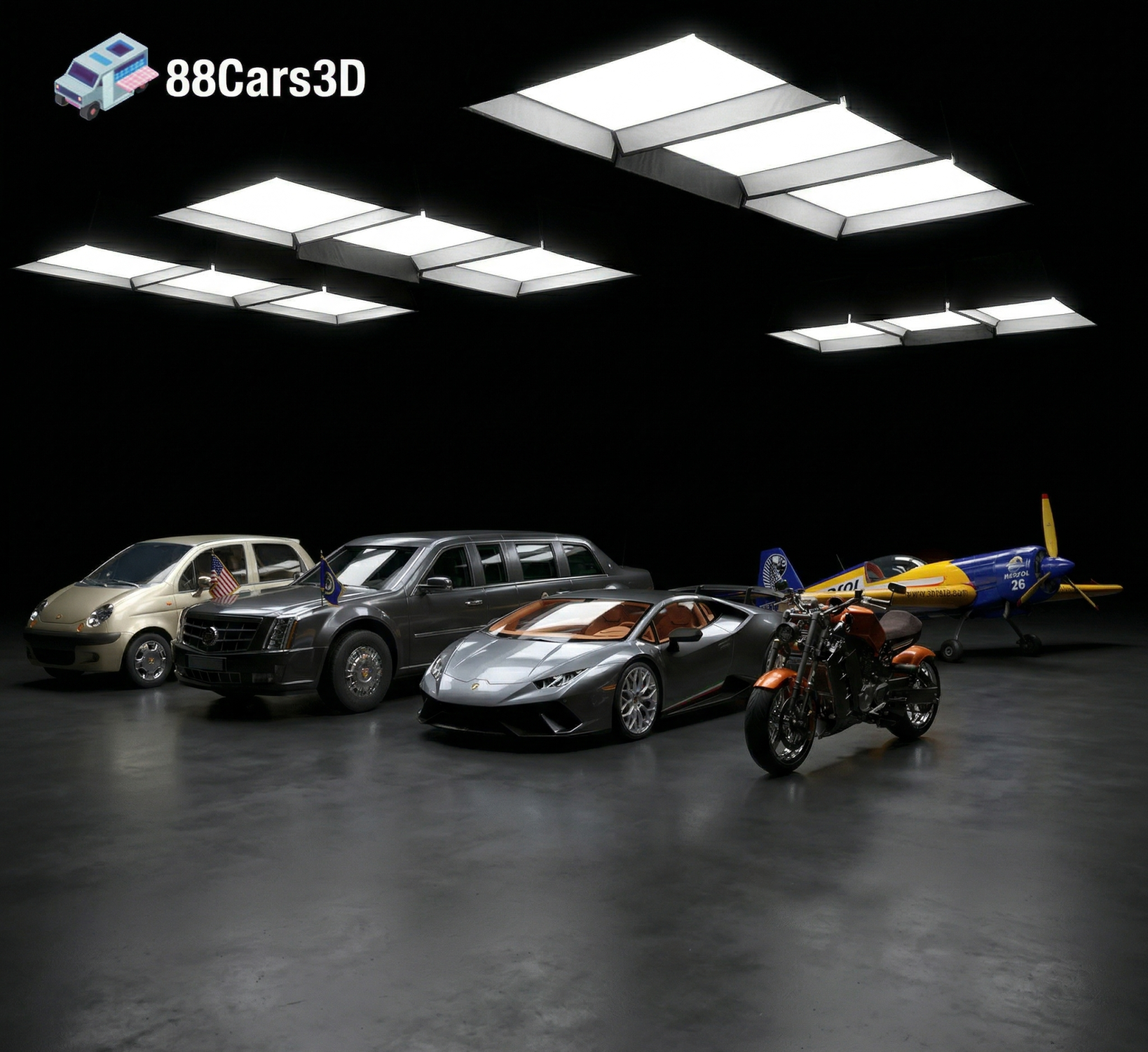
Texture: Yes | Material: Yes | 3D Printable: Yes. Download the Ultimate Creators’ Showcase featuring 5 premium 3D models: Lamborghini Huracan, ZAV Concept Motorcycle, Sukhoi SU-26, Presidential Limousine, and Daewoo Damas. Optimized for 4K CGI rendering and 3D printing. Save massive with this exclusive multi-category bundle!
Price: $99.99

Texture: Yes | Material: Yes | 3D Printable: Yes. Download the Italian Thoroughbreds Bundle featuring 5 iconic 3D models: Lamborghini Huracán Performante, Ferrari 458 Italia, Lamborghini Urus, Diablo SV, and Maserati GT. Optimized for 4K rendering and 3D printing (STL included). Save 50% with this ultimate Italian vehicle collection.
Price: $199.99

Download the Elite Future Mobility Bundle featuring 4 highly optimized 3D models: Tesla Model S, Avatr 11, Li L9, and Zoox Robotaxi. Perfect for ArchViz, Smart City renders, and game dev. Optimized for Unreal Engine and Blender. Includes .fbx, .obj, and .max formats.
Price: $99

🚗 5 Iconic German Cars (BMW M4 G82, M5 CS, X3, 1 Series & Mercedes E-Class). ✅ Optimized for ArchViz: Ready for Corona & V-Ray. 💰 Save €71 with this limited-time collection! 🚀 Instant Download after purchase.
Price: $119

Download the Extreme Off-Road & Survival 3D Models Bundle! Includes the Brabus 800 Adventure, Dodge Ram Bigfoot, Spec Truck, and a Caravan. Save over €210 on this premium 4-in-1 off-grid vehicle pack for ArchViz and game development.
Price: $149.99

Download the Heavy Duty & Commercial Logistics 3D Models Bundle! Includes the Ford Sterling, Caterpillar CT680, Mercedes Citaro Bus, and Vito Van. Save over €130 on this massive, game-ready 4-in-1 industrial vehicle pack.
Price: $109.99

Download the Ultimate Custom Motorcycles 3D Models Bundle. Includes a Custom Chopper, Ducati 916 Café Fighter, Harley XR1200X, and BMW K100. Perfect premium props for luxury ArchViz garages. Save over €250 today!
Price: $159.99

Download the ultimate JDM Street Racing 3D Models Bundle! Includes the Nissan GT-R, Toyota Supra, Mazda RX-7, Lancer Evo IX, and Honda NSX. Save big on this highly optimized, game-ready 5-in-1 Japanese legend car pack.
Price: $129.99

Download the ultimate American Muscle & Cinematic Classics 3D Models Bundle! Includes the Dodge Charger ’68, Mustang Eleanor GT500, Camaro Z28 ’79, and a custom ’69 Mustang. Save over €240 on this game-ready, premium 4-in-1 pack.
Price: $149.99

Download the Everyday City Traffic 3D Models Bundle. Includes the VW Golf, Kia Picanto, Hyundai Tucson, Toyota Yaris, and a DHL Ford Transit Van. Save big on this 5-in-1 pack, perfectly optimized for realistic ArchViz streets and game traffic.
Price: $99.99

