Get 20% OFF All Premium 3D & STL Models!

The sleek lines of a classic muscle car, the futuristic curves of an electric concept, or the rugged utility of an off-road beast – whatever your automotive passion, bringing these vehicles to life in the digital realm requires a unique blend of artistry and technical mastery. In today’s fast-paced industries, from automotive design and cinematic visualization to cutting-edge game development and interactive AR/VR experiences, high-quality 3D car models are the engine that drives innovation. Yet, creating or integrating these complex assets effectively demands a deep understanding of intricate workflows, meticulous optimization, and a keen eye for realism.
This comprehensive guide delves into the technical intricacies of working with 3D car models, equipping you with the knowledge to achieve stunning results across various applications. We’ll navigate the critical stages, from ensuring pristine model topology and crafting flawless UV maps to developing photorealistic PBR materials, mastering advanced rendering techniques, and optimizing assets for demanding real-time environments. Whether you’re an aspiring 3D artist, a seasoned game developer, or a visualization professional, prepare to elevate your craft and unlock the full potential of automotive 3D assets. Platforms like 88cars3d.com understand these demands, offering expertly crafted 3D models that serve as a robust foundation for your projects.
At the heart of any exceptional 3D car model lies impeccable topology and a well-thought-out edge flow. This isn’t merely an aesthetic choice; it’s a fundamental engineering principle that impacts everything from surface smoothness during subdivision to realistic deformations and efficient UV mapping. For automotive models, where reflections play a crucial role in conveying quality and form, a clean, consistent mesh is non-negotiable. Poor topology can lead to pinching, unwanted bumps, and artifacts that break the illusion of realism, especially under close scrutiny or during animation.
The primary goal is to maintain an all-quad mesh (polygons with four sides), as these are the most predictable and stable for subdivision surface modifiers (like TurboSmooth in 3ds Max or Subdivision Surface in Blender). While minor triangles or N-gons (polygons with more than four sides) might be acceptable in hidden or flat areas, they should generally be avoided, particularly on critical reflective surfaces. Aim for a consistent polygon density, meaning the size of your quads should be relatively uniform across the mesh, preventing areas of extreme stretching or compression. High-quality models, whether for film or games, often range from 50,000 to 300,000 triangles for a high-poly render-ready asset, and 10,000 to 50,000 triangles for optimized game assets, depending on the level of detail required.
Quads are the bedrock of good topology because they allow for smooth and predictable subdivision. When a mesh is subdivided, each quad is divided into four smaller quads, resulting in a smoother surface. This process works best when edge loops can flow unimpeded around complex curves, such as wheel arches, car doors, and fender flares. Poles, which are vertices where more or less than four edges meet, are often necessary but must be placed strategically. E-poles (five edges meeting at a vertex) and N-poles (three edges meeting at a vertex) are common, but placing them on flat areas or away from major reflective surfaces minimizes their visual impact. A good rule of thumb is to allow edge loops to encircle features like headlights, grilles, and window frames, creating clean seams that accurately represent the car’s construction.
For areas requiring sharp creases, such as the distinct panel lines of a car body, additional supporting edge loops are essential. These edges run parallel and close to the main edge, effectively “tightening” the subdivision surface along that line without significantly increasing the overall poly count. This technique is critical for capturing the precise engineering of an automobile. Without these support loops, subdivided surfaces would round off aggressively, losing the crispness that defines automotive design. Always visualize how your mesh will look with subdivision applied, even during the initial modeling phase, to ensure your topology supports the final desired form.
Once your 3D car model‘s geometry is pristine, the next crucial step is UV mapping. UV mapping is the process of flattening the 3D surface of your model into a 2D space, allowing textures to be accurately applied. For complex objects like cars, with their myriad of curved surfaces, distinct panels, and intricate details, meticulous UV unwrapping is paramount. Poor UVs can lead to stretched, distorted, or misaligned textures, rendering even the most detailed PBR materials ineffective and undermining the realism of your asset.
The goal is to create UV islands (individual flattened pieces of your model) that minimize distortion, utilize space efficiently within the 0-1 UV coordinate range, and allow for clean texture painting or application. Imagine the car’s body panels being carefully peeled off and laid flat – that’s the essence of good UVs. Key considerations include minimizing the number of seams (especially on highly visible or reflective areas), ensuring uniform texel density (the amount of texture resolution per unit of surface area) across all surfaces, and providing adequate padding between UV islands to prevent texture bleed when mipmaps are generated. This is particularly important for automotive rendering where high-resolution textures are expected.
For automotive models, it’s wise to break down the UVs into logical components. The main body panels might form one large, contiguous UV island or several smaller ones, depending on the car’s design and material zones. Wheels, tires, interior elements, glass, and intricate components like grilles should each have their own distinct UV islands or even separate UV maps/channels. For instance, the main car body might be unwrapped and occupy a large portion of the 0-1 space, while smaller, repeating elements like bolts or emblems could be grouped and tiled. Using tools like 3ds Max’s Unwrap UVW, Blender’s UV Editor, or Maya’s UV Toolkit, you can strategically place seams along natural breaks, such as panel gaps, edges, or hidden areas, to minimize their visibility. Specialized techniques like “hard surface UVing” focus on preserving sharp angles and ensuring straight lines in the UV layout, which is essential for decals and precise surface details.
Maintaining consistent texel density is critical for visual fidelity. If one part of your car has a much higher texel density than another, textures will appear blurry or pixelated in the lower-density areas. Many 3D software packages offer tools to visualize and unify texel density across different UV islands. For example, if your main body texture is 4K (4096×4096 pixels), ensure that smaller details, when scaled in UV space, receive a comparable pixel density. This level of precision is what differentiates a professional-grade 3D car model from a hastily unwrapped one, especially when the model is intended for high-resolution renders or detailed close-ups. Proper planning in the UV stage saves immense time and frustration during texturing and shader creation.
With stellar topology and precise UVs in place, the next step is imbuing your 3D car models with realistic surface properties through Physically Based Rendering (PBR) materials. PBR is a modern shading paradigm that aims to accurately simulate how light interacts with surfaces in the real world, leading to more consistent and believable results across various lighting conditions. Gone are the days of manually tweaking diffuse and specular values until they “look right”; PBR relies on physically accurate parameters, making the artist’s job more intuitive and the output far more photorealistic. For automotive rendering, PBR is indispensable for achieving the nuanced reflections of car paint, the metallic sheen of chrome, and the unique properties of glass and rubber.
There are two primary PBR workflows: Metallic-Roughness and Specular-Glossiness. The Metallic-Roughness workflow, favored by most modern game engines (Unity, Unreal Engine) and renderers, uses maps for Base Color (Albedo), Metallic (0 for dielectric, 1 for metallic), Roughness (0 for perfectly smooth, 1 for perfectly rough), Normal, and Ambient Occlusion. The Specular-Glossiness workflow, less common but still used in some contexts, employs maps for Diffuse, Specular (color and intensity of reflections), and Glossiness (inverse of roughness). Understanding these workflows is key to creating compatible and high-quality materials, whether you’re hand-painting textures or leveraging procedural tools like Substance Painter.
The core PBR maps are critical for defining how light interacts with your surfaces. The Base Color (Albedo) map defines the color of the surface without any lighting information. The Metallic map dictates whether a surface is metallic or dielectric (non-metallic), drastically changing its reflective properties. The Roughness map (or Glossiness) controls the micro-surface detail, determining how blurry or sharp reflections appear. A low roughness value (high glossiness) yields mirror-like reflections, crucial for car paint clear coats and polished chrome. The Normal map adds fine surface detail without increasing polygon count, simulating bumps, scratches, or panel lines. Finally, Ambient Occlusion (AO) simulates soft shadows where surfaces are close together, adding depth and realism.
For automotive materials, specialized approaches are often necessary. Car paint, for example, is a complex layered material typically composed of a base color coat, metallic flakes (for metallic paints), and a clear coat layer that provides the glossy, reflective finish. This is often achieved using layered shaders in renderers like Corona or V-Ray, or by blending multiple PBR materials in game engines. Chrome and other metals require very low roughness values and a high metallic value, accurately reflecting their surroundings. Glass needs specific transmission and refraction properties, often controlled by IOR (Index of Refraction) values (e.g., 1.5-1.6 for common glass). Rubber and plastic will have lower metallic values, higher roughness, and distinct base colors. Mastering these material types is paramount for generating photorealistic 3D car models that captivate the viewer.
Even the most meticulously modeled and textured 3D car model will fall flat without compelling lighting and a robust rendering workflow. Lighting is not merely about making the object visible; it’s about sculpting form, creating mood, and highlighting key design features. For automotive subjects, accurate reflections and specularity are paramount, and these are entirely dictated by the lighting setup. Following the render, post-processing acts as the final polish, enhancing realism, correcting imperfections, and adding cinematic flair to your images.
Modern render engines offer incredible power and flexibility, but understanding their nuances is key. Whether you use CPU-based engines like Corona Renderer and V-Ray (known for their realism and ease of use in architectural and product visualization) or GPU-based engines like Blender’s Cycles and Autodesk’s Arnold (often favored in animation and VFX studios for their versatility and robust feature sets), the principles of good lighting remain consistent. The choice of renderer often depends on project requirements, available hardware, and integration with your primary 3D software.
For product shots of 3D car models, studio lighting is a common and effective approach. A typical setup might involve a large, soft key light (e.g., an area light or a large softbox mesh emitter) to illuminate the main form, a fill light to soften shadows and reveal details on the darker side, and a rim light from behind to create a subtle highlight around the edges, separating the car from the background. High Dynamic Range Images (HDRIs) are invaluable for realistic environment lighting. An HDRI provides both accurate lighting information (color, intensity, direction) and a surrounding environment for reflections, which is crucial for shiny car surfaces. Combining HDRIs with targeted area lights allows for precise control over reflections and highlights while maintaining a natural, integrated look. For example, using a studio HDRI will provide realistic, soft reflections across the car body, while a carefully placed rectangular area light can create a sharp, intentional highlight on a specific panel, emphasizing its curvature.
When rendering a car in an outdoor environment, ensure your lighting matches the scene’s mood and time of day. A bright, sunny day will produce sharp shadows and intense reflections, while an overcast sky will result in softer, more diffused lighting. Experiment with different HDRIs, sun and sky systems (e.g., Corona Sun & Sky, V-Ray Sun & Sky), and volumetric effects to create depth and atmosphere. Remember that the quality of reflections on a car’s surface is a direct indicator of the lighting’s quality. Pay close attention to how highlights flow across the curves and creases, as this is what truly sells the realism of your automotive rendering.
Efficient rendering is about balancing quality with speed. Modern renderers offer various settings for sampling, denoising, and global illumination. For instance, in Corona Renderer, adjusting the ‘Passes’ limit or ‘Noise Limit’ can control render quality, while its built-in denoiser can significantly reduce render times without sacrificing much quality. V-Ray offers adaptive samplers and multiple denoiser options. Understanding how to utilize render passes (e.g., diffuse, reflection, raw lighting, Z-depth) allows for greater flexibility in post-processing. Instead of re-rendering, you can adjust specific elements in a compositing software.
Post-processing is the final, crucial stage where your raw render transforms into a polished, professional image. Software like Adobe Photoshop, Affinity Photo, or even the built-in compositors in Blender or Fusion (DaVinci Resolve) are used to enhance the visual impact. Common techniques include:
These adjustments can elevate a good render to an exceptional one, adding that extra layer of believability and artistic touch that clients and audiences expect from top-tier visualization work.
The versatility of high-quality 3D car models extends far beyond static renders. They are critical assets for interactive experiences in game development, immersive applications in Augmented Reality (AR) and Virtual Reality (VR), and even physical prototypes through 3D printing. However, each of these applications imposes unique technical requirements and optimization challenges that demand specialized workflows. A model optimized for photorealistic offline rendering often needs significant adjustments to perform efficiently in real-time engines or to be physically manufacturable.
The core challenge for real-time environments is performance. Game engines like Unity and Unreal Engine need to render thousands, sometimes millions, of polygons multiple times per second, alongside complex lighting, physics, and AI. This necessitates aggressive optimization strategies to maintain high frame rates. For AR/VR, these demands are even stricter, as performance directly impacts user comfort and immersion. 3D printing, on the other hand, requires models to be “watertight” and structurally sound, shifting the focus from visual fidelity to physical integrity.
Optimizing game assets like 3D cars involves a multi-pronged approach. One of the most critical techniques is creating Level of Detail (LODs). An LOD system consists of multiple versions of the same model, each with progressively lower polygon counts. As the player moves further away from the car, the engine automatically switches to a lower-poly LOD, saving computational resources. A typical car might have 3-5 LODs, ranging from a high-detail model (e.g., 50,000-80,000 tris) for close-ups to a very low-poly version (e.g., 500-2,000 tris) for distant views. Each LOD must maintain visual consistency to avoid popping.
Another crucial optimization is reducing draw calls. Every time the engine has to switch materials or textures, it incurs a draw call, which can impact performance. Texture atlasing, where multiple smaller textures are combined into one larger texture map, is an effective way to reduce material count and, consequently, draw calls. For car models, this means combining textures for different car parts (e.g., dashboard, seats, trim) into a single atlas. Furthermore, ensuring efficient material setups, using material instances, and baking complex lighting into lightmaps or vertex colors are all vital for performance. When importing 3D car models into Unity or Unreal Engine, ensure correct FBX export settings, proper material setup (Metallic-Roughness PBR), and appropriate collision meshes to allow for realistic physics interactions.
AR/VR optimization takes real-time constraints to an extreme. Mobile AR/VR experiences, in particular, demand incredibly lightweight models and textures. Polygon counts should be as low as visually acceptable (often under 20,000 tris for an entire car, sometimes even lower), and texture resolutions might be limited to 1K or 2K. Special attention is paid to shader complexity, avoiding costly effects, and ensuring efficient rendering pipelines. File formats like GLB (GL Transmission Format) and USDZ (Universal Scene Description Zip) are preferred for AR/VR due to their compact size and ability to embed all necessary model, material, and texture data into a single file, making them ideal for web and mobile deployment. For creators sourcing assets, platforms like 88cars3d.com often provide models specifically optimized for these use cases, offering multiple LODs and clean, efficient PBR materials.
For 3D printing, the requirements shift dramatically from visual fidelity to physical integrity. The model must be “watertight” – meaning it has no holes or open edges, forming a completely enclosed volume. All normals must point consistently outwards (manifold geometry), and there should be no overlapping or intersecting polygons that would confuse the slicer software. Common issues like non-manifold edges, inverted normals, and thin walls must be addressed. Tools like Blender’s 3D Print Toolbox, Meshmixer, or Netfabb can help identify and repair these issues. Additionally, consider the practicalities of printing: appropriate wall thickness (e.g., minimum 1.5mm-2mm for robust prints), potential support structures, and the final scale of the object. High-detail models might need decimation to reduce file size while maintaining enough geometry for the printer to reproduce fine details accurately.
The lifecycle of a 3D car model often involves multiple software packages and diverse applications, necessitating a firm grasp of various file formats and efficient interoperability workflows. The ability to seamlessly move assets between modeling software (3ds Max, Blender, Maya), texturing tools (Substance Painter), rendering engines (Corona, V-Ray), and real-time platforms (Unity, Unreal Engine) is fundamental to any professional pipeline. Furthermore, staying abreast of emerging technologies and file formats ensures your skills and assets remain future-proof in the ever-evolving landscape of automotive design and visualization.
Understanding the strengths and limitations of each format allows artists and developers to make informed decisions, preventing data loss, compatibility issues, and unnecessary rework. A robust workflow also includes disciplined asset management, version control, and clear communication within teams, especially when dealing with complex assets like entire vehicles that comprise hundreds of individual parts and texture sets. The professional standard demands not just technical skill but also organizational prowess.
The FBX (Filmbox) format is arguably the industry standard for 3D asset interchange. Developed by Autodesk, FBX can store comprehensive data including meshes, PBR materials, textures, animations, cameras, and lights, making it incredibly versatile for transferring complete scenes or complex individual assets like 3D car models between different software. However, FBX can be proprietary, sometimes leading to version-specific compatibility issues or unexpected material conversions. When exporting to FBX, always ensure that embedded media is included if necessary, and that units are set correctly.
OBJ (Wavefront Object) is a simpler, more universal format primarily used for mesh data and basic material information (via an accompanying MTL file). It’s highly compatible but does not support animations, complex PBR materials directly, or hierarchies as robustly as FBX. For web and AR/VR, GLB and USDZ are rapidly gaining traction. GLB (a binary version of glTF) is an efficient, compact format designed for web-based 3D and AR/VR, packaging models, materials, and textures into a single file. USDZ, Apple’s proprietary format built on Pixar’s Universal Scene Description (USD) framework, is likewise optimized for AR experiences on iOS devices. Native formats like .max (3ds Max), .blend (Blender), and .ma/.mb (Maya) offer the most comprehensive data preservation but are only readable by their respective software.
A professional workflow for 3D car models emphasizes efficiency, quality assurance, and scalability. This often begins with meticulously sourced blueprints and reference images for accurate modeling. Once the high-poly model is complete, a low-poly version (if needed for games/AR/VR) is created, followed by baking processes to transfer normal maps, ambient occlusion, and other details from the high-poly to the low-poly mesh. Texture authoring in tools like Substance Painter allows for non-destructive, layered material creation, which is then exported as PBR texture sets tailored to the target render engine or game engine.
Version control systems (like Git or Perforce) are indispensable for managing changes to 3D assets, especially in collaborative environments. They allow artists to track revisions, revert to previous versions, and merge changes without overwriting each other’s work. Regular review cycles, where stakeholders can provide feedback on models, textures, and renders, are also crucial for maintaining quality and ensuring the final asset meets project specifications. Integration with CAD data (Computer-Aided Design) is becoming more common, allowing designers to convert highly precise engineering models into game-ready or visualization-ready assets, often requiring extensive mesh cleanup and retopology. This blend of technical precision and artistic adaptation is what defines excellence in modern 3D automotive pipelines.
The journey through creating, optimizing, and deploying high-quality 3D car models is a testament to the intricate fusion of technical skill and artistic vision. From meticulously sculpting topology and crafting efficient UV maps to developing photorealistic PBR materials and orchestrating sophisticated lighting setups, every stage plays a vital role in bringing these complex digital assets to life. Whether your goal is to produce breathtaking automotive rendering for marketing, develop immersive game assets, create interactive AR/VR experiences, or prepare detailed models for 3D printing, the principles discussed here form the bedrock of professional practice.
Mastering these workflows requires dedication, continuous learning, and an eye for both the grand aesthetic and the smallest technical detail. By understanding the nuances of polygon count management, texture resolution, shader networks, and file format compatibility, you empower yourself to push the boundaries of realism and performance across diverse industries. The landscape of 3D visualization is constantly evolving, and staying informed about best practices and emerging technologies is key to future success. Remember that investing in high-quality starting assets can drastically accelerate your projects; platforms like 88cars3d.com provide expertly crafted 3D car models, ready to be integrated into your next masterpiece. Embrace the challenge, refine your techniques, and drive your digital automotive creations to unparalleled heights.
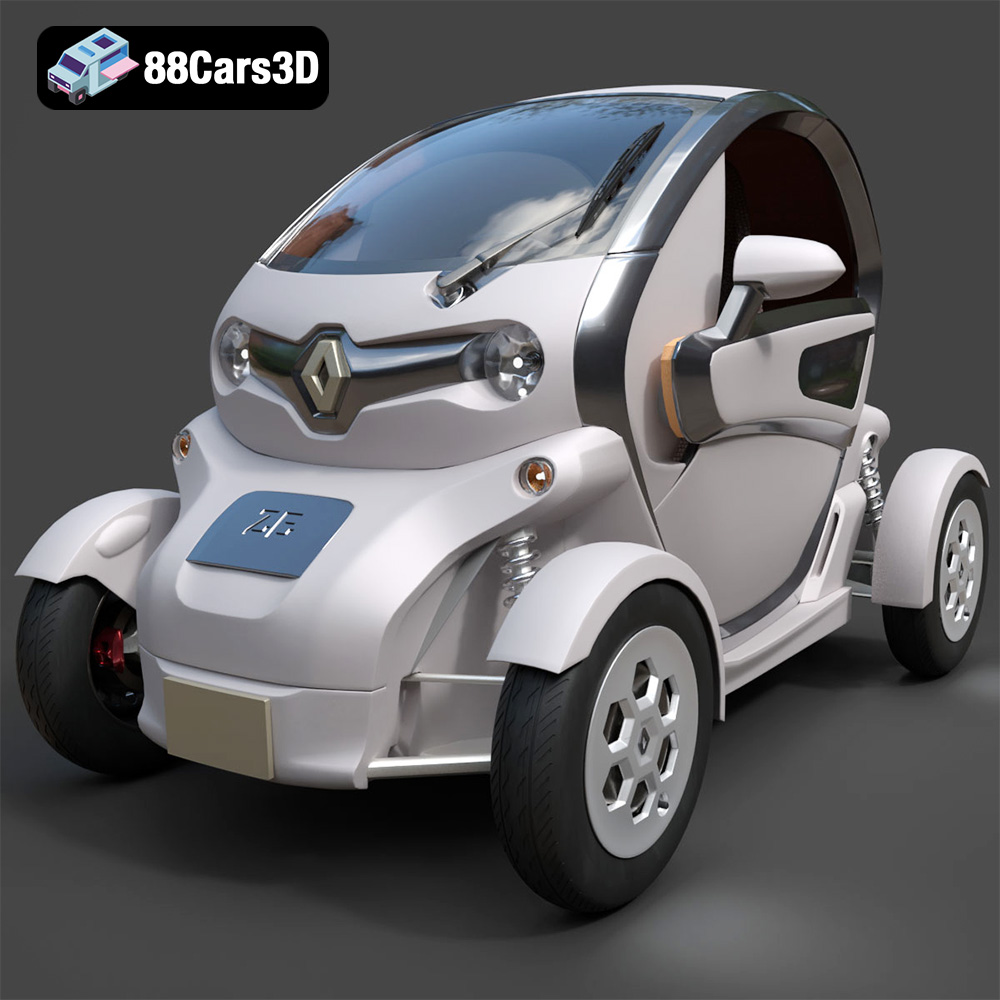
Texture: Yes
Material: Yes
Download the Renault Twizy ZE 3D Model featuring clean geometry, realistic detailing, and a fully modeled interior. Includes .blend, .fbx, .obj, .glb, .stl, .ply, .unreal, and .max formats for rendering, simulation, and game development.
Price: $4.99
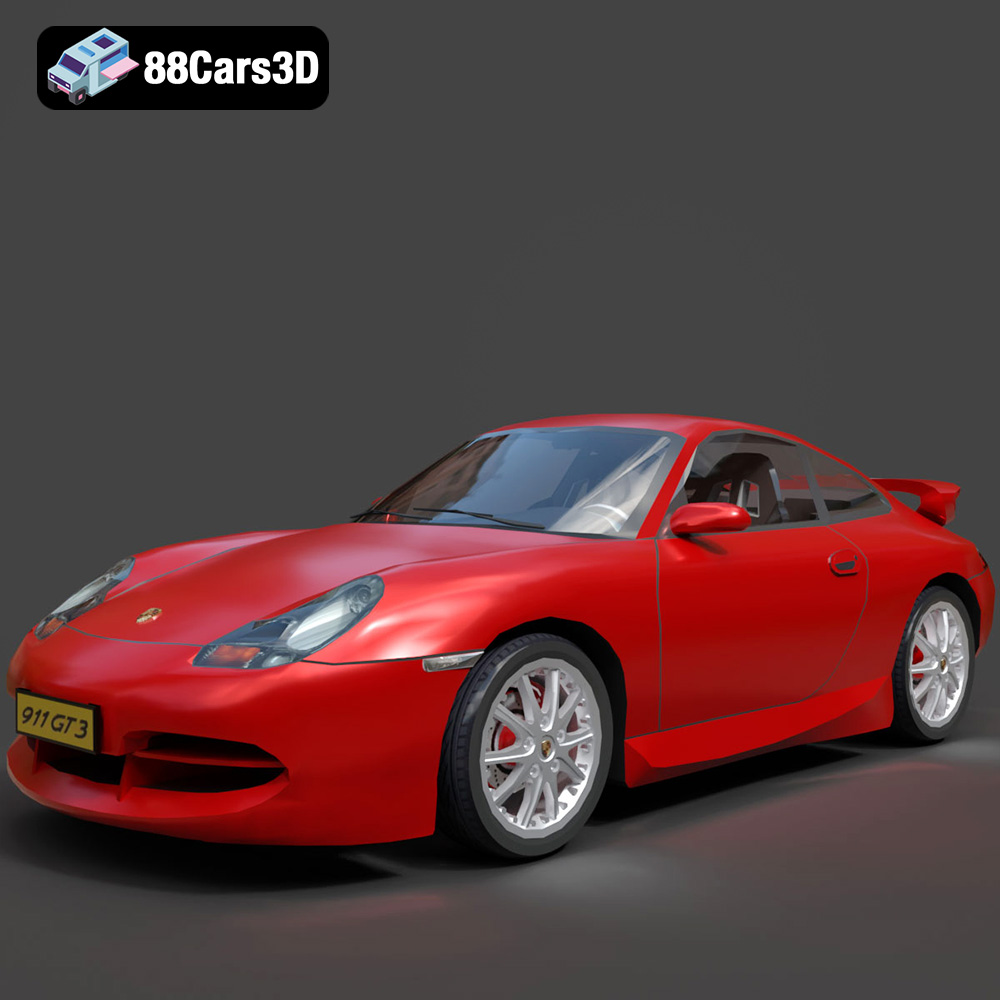
Texture: Yes
Material: Yes
Download the Porsche 911 GT3 3D Model featuring clean geometry, realistic detailing, and a fully modeled interior. Includes .blend, .fbx, .obj, .glb, .stl, .ply, .unreal, and .max formats for rendering, simulation, and game development.
Price: $4.99
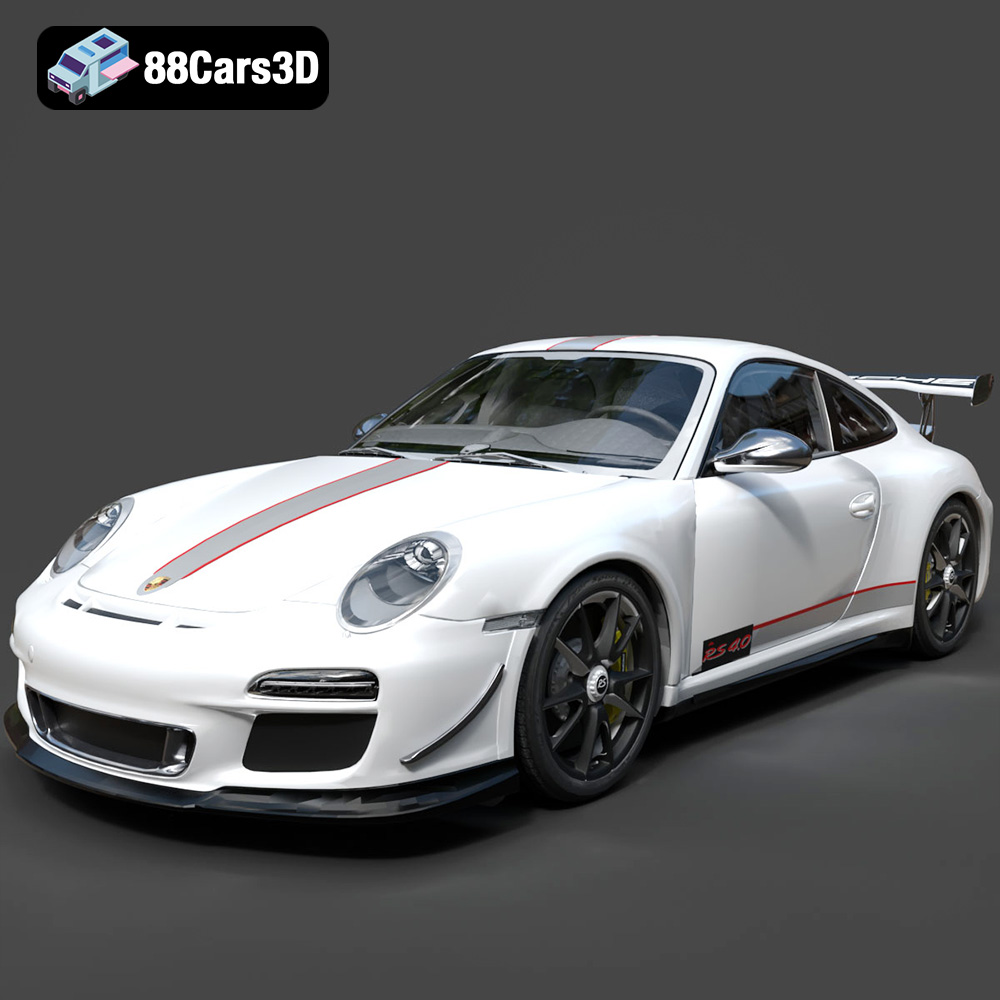
Texture: Yes
Material: Yes
Download the Porsche 911 997 GT3 RS 4.0 2011 3D Model featuring clean geometry, realistic detailing, and a fully modeled interior. Includes .blend, .fbx, .obj, .glb, .stl, .ply, .unreal, and .max formats for rendering, simulation, and game development.
Price: $4.99
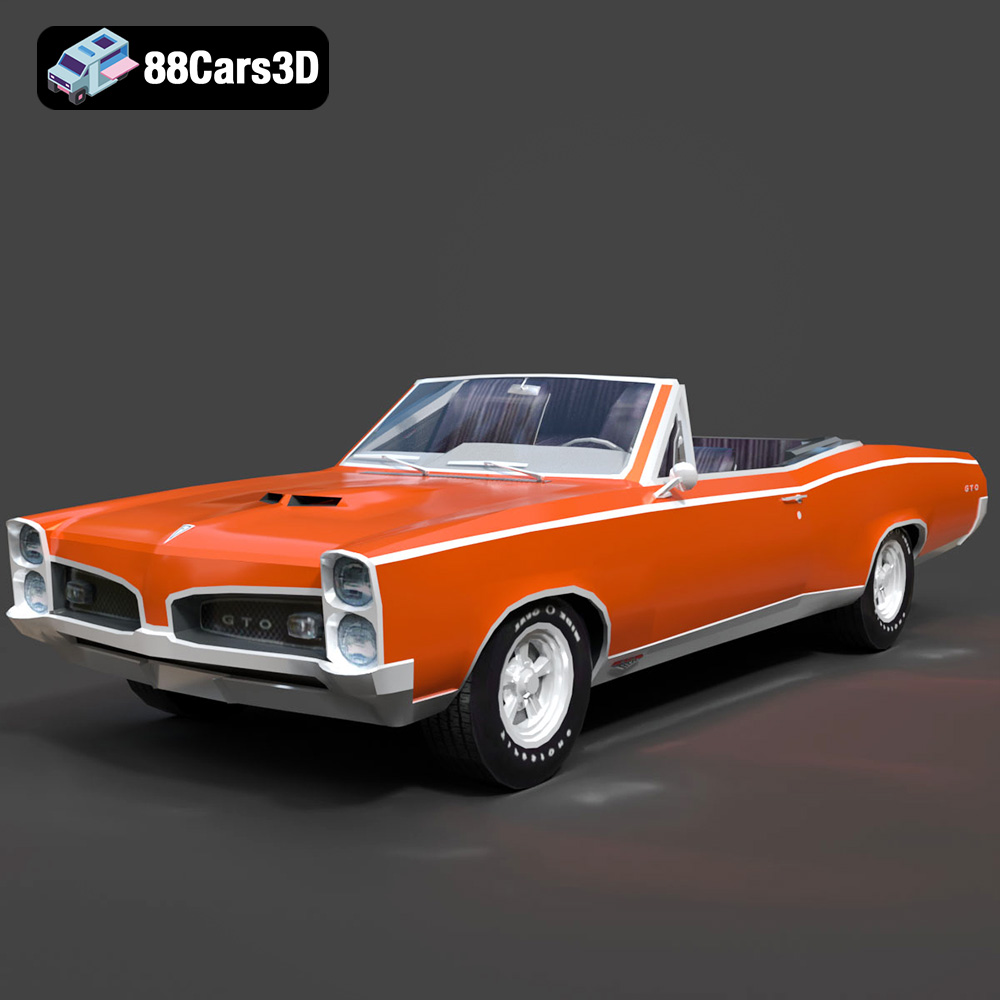
Texture: Yes
Material: Yes
Download the Pontiac GTO Cabrio 1967 3D Model featuring clean geometry, realistic detailing, and a fully modeled interior. Includes .blend, .fbx, .obj, .glb, .stl, .ply, .unreal, and .max formats for rendering, simulation, and game development.
Price: $4.99
Texture: Yes
Material: Yes
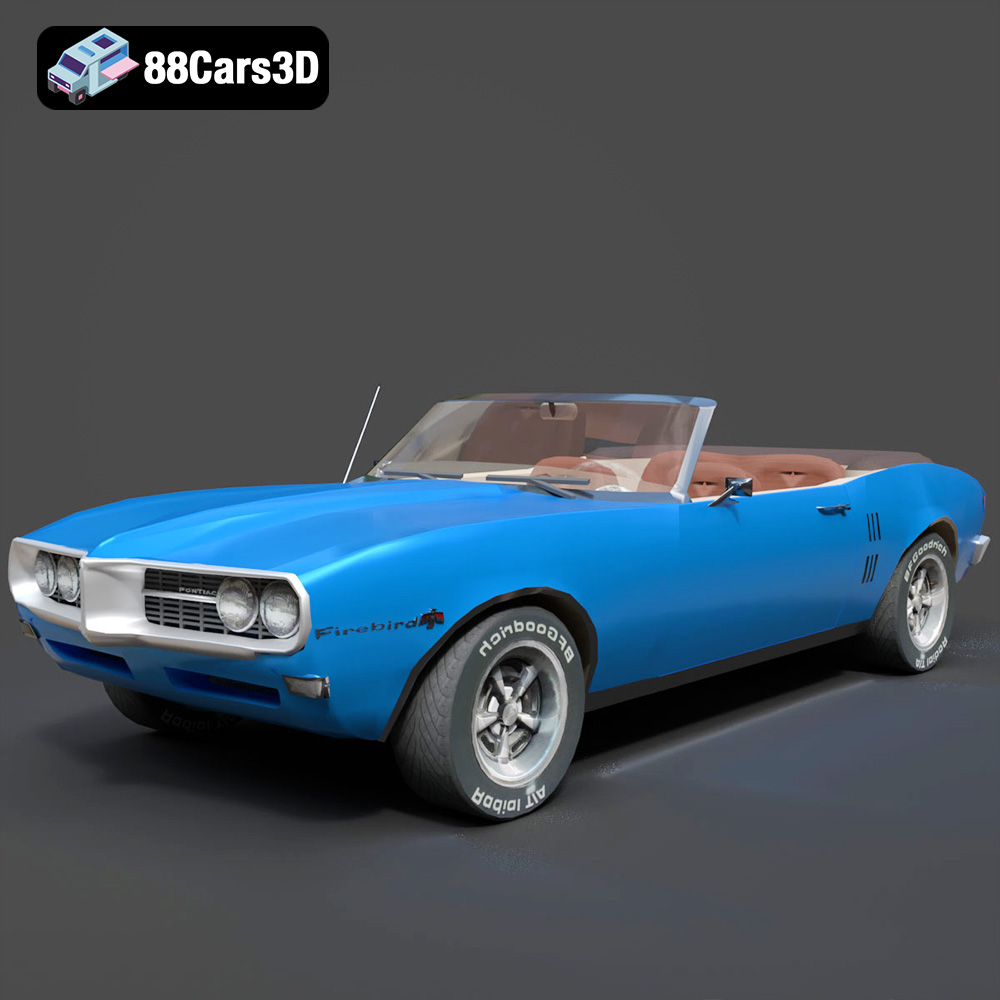
Download the Pontiac Firebird Convertible 1968 3D Model featuring clean geometry, realistic detailing, and a fully modeled interior. Includes .blend, .fbx, .obj, .glb, .stl, .ply, .unreal, and .max formats for rendering, simulation, and game development.
Price: $4.99

Texture: Yes
Material: Yes
Download the Peugeot 508 2011 3D Model featuring clean geometry, realistic detailing, and a fully modeled interior. Includes .blend, .fbx, .obj, .glb, .stl, .ply, .unreal, and .max formats for rendering, simulation, and game development.
Price: $4.99
Texture: Yes
Material: Yes
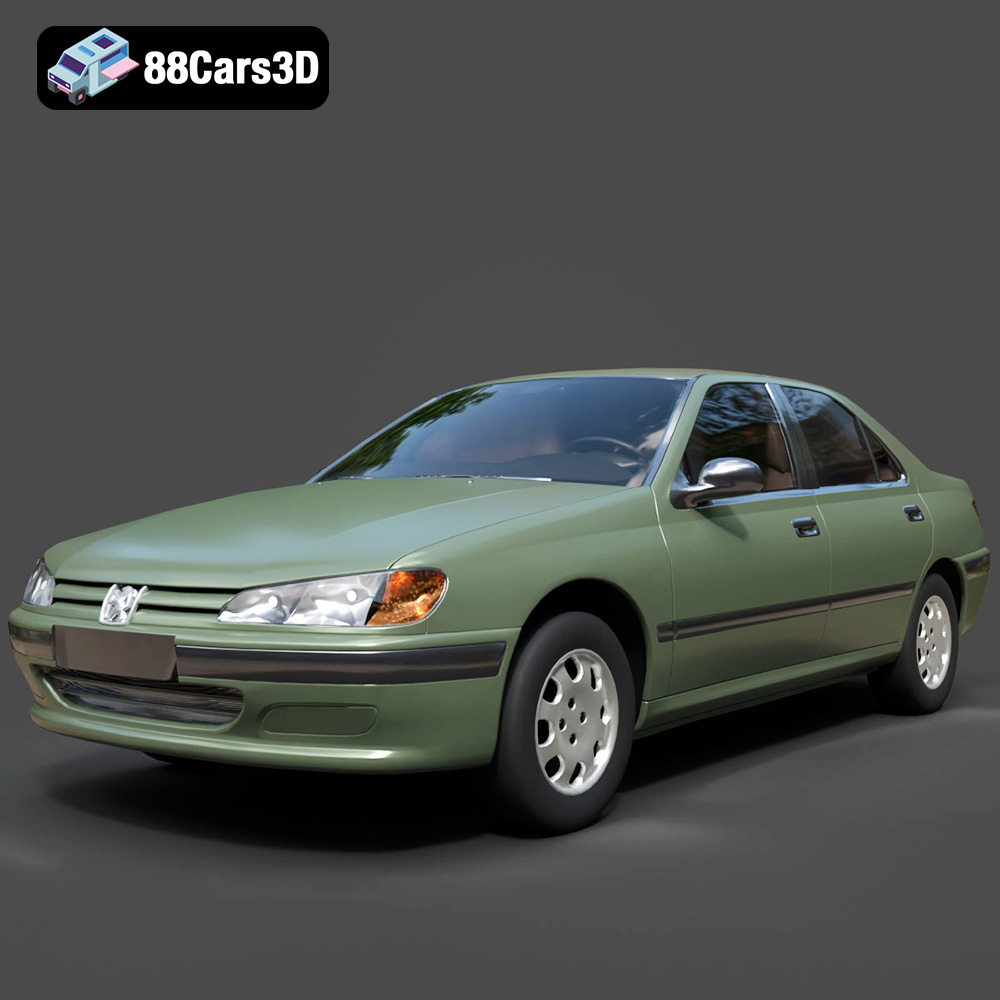
Download the Peugeot 406 1996 3D Model featuring clean geometry, realistic detailing, and a fully modeled interior. Includes .blend, .fbx, .obj, .glb, .stl, .ply, .unreal, and .max formats for rendering, simulation, and game development.
Price: $10
Texture: Yes
Material: Yes
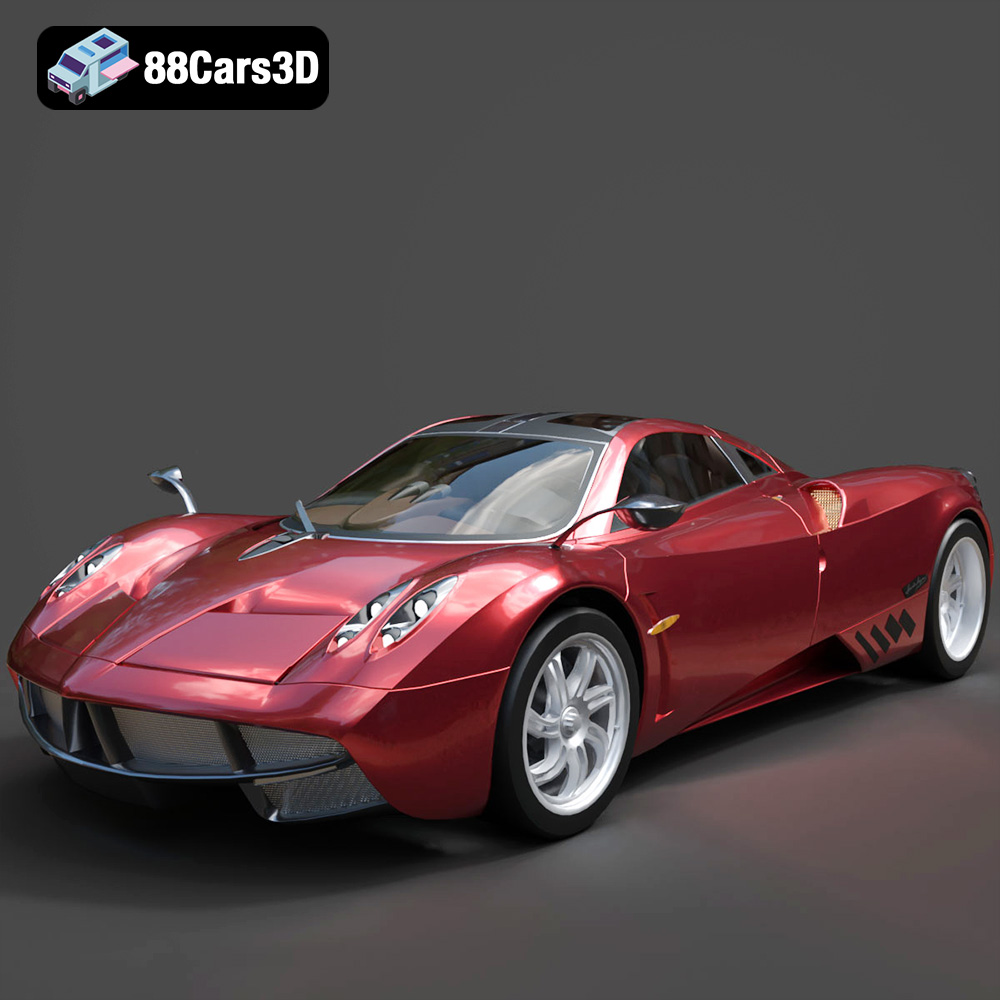
Download the Pagani Huayra 2012 3D Model featuring clean geometry, realistic detailing, and a fully modeled interior. Includes .blend, .fbx, .obj, .glb, .stl, .ply, .unreal, and .max formats for rendering, simulation, and game development.
Price: $10
Texture: Yes
Material: Yes
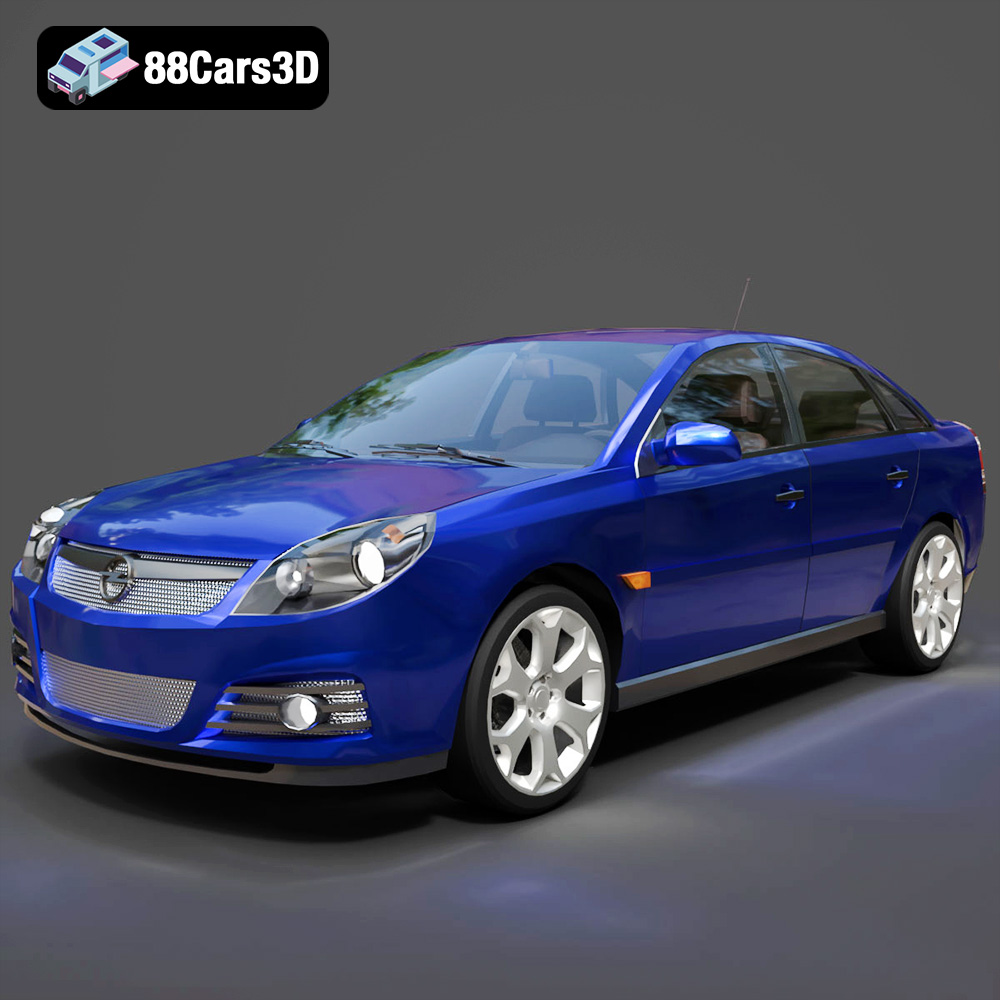
Download the Opel Vectra C 2005 3D Model featuring clean geometry, realistic detailing, and a fully modeled interior. Includes .blend, .fbx, .obj, .glb, .stl, .ply, .unreal, and .max formats for rendering, simulation, and game development.
Price: $10

Texture: Yes
Material: Yes
Download the Opel Insignia OPC 3D Model featuring clean geometry, realistic detailing, and a fully modeled interior. Includes .blend, .fbx, .obj, .glb, .stl, .ply, .unreal, and .max formats for rendering, simulation, and game development.
Price: $10

