Get 20% OFF All Premium 3D & STL Models!

The world of 3D modeling is a fascinating intersection of art and engineering, and nowhere is this more apparent than in the creation of high-fidelity 3D car models. These meticulously crafted digital assets are far more than just pretty pictures; they are critical tools that drive innovation across industries, from automotive design and cinematic visualization to cutting-edge game development and immersive AR/VR experiences. The demand for realism, performance, and versatility in 3D car models has never been higher, pushing artists and developers to master complex technical workflows.
Achieving truly professional results requires a deep understanding of several interconnected disciplines: pristine topology, intelligent UV mapping, sophisticated physically based rendering (PBR) materials, efficient game engine optimization, and robust file format management. Whether you’re a seasoned 3D artist aiming to elevate your craft, a game developer seeking to integrate photorealistic vehicles, or an automotive designer visualizing future concepts, this comprehensive guide will dissect the technical intricacies involved. We’ll explore the best practices, workflows, and secret sauce that transform raw polygons into breathtaking digital automobiles, ensuring they perform flawlessly across diverse applications. Prepare to dive deep into the technical bedrock that underpins every great 3D car model, enabling you to create, optimize, and deploy assets that truly stand out.
At the heart of every great 3D car model lies impeccable topology and intelligent edge flow. These foundational elements dictate not only the visual fidelity of the model but also its animation capabilities, subdivision performance, and overall efficiency. For automotive models, which are characterized by sleek curves, sharp creases, and complex panel intersections, clean topology is paramount. It ensures smooth reflections, accurate deformation during animation, and manageable polygon counts without sacrificing detail.
A professional 3D car model typically adheres to a quad-based topology, meaning every face is a four-sided polygon. While triangles and N-gons (polygons with more than four sides) can occasionally be found in specific, non-deforming areas, their use should be minimized, especially on curved surfaces where they can lead to pinching, shading artifacts, and unpredictable subdivision behavior. Good edge flow means that the edges of your polygons follow the natural contours and creases of the car’s body. This creates predictable loops that define the vehicle’s form, allowing for easy selection, modification, and the addition of supporting edge loops for sharp details.
When modeling an automotive surface, maintaining an all-quad mesh is the golden rule. Quads distribute deformation evenly and behave predictably when subdivided, which is crucial for achieving smooth, high-resolution surfaces from a lower-poly base. Poles—vertices where more or less than four edges meet—are inevitable, but their placement is critical. Ideally, poles should be placed in flat, less visible areas or where changes in surface direction occur naturally, avoiding prominent curved surfaces or areas subject to deformation.
Edge loops should run along the contours of the car, such as around wheel arches, window frames, door seams, and panel gaps. These loops act as “guide wires” for the surface, allowing you to easily tighten or soften edges by adding or removing supporting loops. For instance, to define a sharp crease like a fender line, you’d place a series of tight, parallel edge loops along that line. Conversely, a soft, flowing curve would have more widely spaced loops. This methodical approach to topology management ensures that the model is both visually accurate and technically robust, preparing it for subsequent stages like UV mapping and texturing.
Modeling cars presents unique challenges due to their highly organic yet geometrically precise forms. Achieving perfectly smooth, reflective surfaces without visible faceting or bumps requires careful attention to curvature. This often involves using subdivision surface modeling (e.g., OpenSubdiv in 3ds Max or Blender’s Subdivision Surface modifier) combined with control loops to maintain crispness where needed. Panel gaps, a subtle yet crucial detail, must be modeled with precision, often by creating separate mesh pieces for each panel and ensuring consistent spacing and depth.
Another common challenge is managing complex intersections, such as where a headlight housing meets the fender. Instead of relying on boolean operations which can generate messy N-gons, skilled modelers build these intersections with clean quad flow, carefully routing edge loops to define the joining surfaces. This ensures that even at extreme close-ups, the surface remains pristine and free of artifacts. When sourcing high-quality 3D car models from marketplaces like 88cars3d.com, inspecting the wireframe and topology is always a good practice to ensure they meet these industry standards for clean geometry, guaranteeing a smooth workflow for any intended application.
Once your 3D car model boasts pristine topology, the next critical step toward photorealism is UV mapping and texture creation. UV mapping is the process of flattening the 3D surface of your model into a 2D space, allowing you to “paint” textures onto it. For complex objects like cars, meticulous UV unwrapping is essential to prevent distortion, maximize texture resolution, and facilitate efficient material application. Poor UVs can lead to stretched textures, visible seams, and wasted texture space, severely detracting from the realism of your asset.
Effective UV mapping isn’t just about avoiding distortion; it’s also about organizing your UV space efficiently. This often involves consolidating similar materials onto fewer UV maps or even into a single texture atlas. For game development, this reduces draw calls and improves real-time performance. For rendering, it simplifies material management. The goal is to create a seamless canvas that accurately represents every surface of the car, from the smooth paint to the intricate details of tires and grilles.
Unwrapping a car model requires a strategic approach. Large, contiguous surfaces like the body panels should be unwrapped with minimal cuts to preserve continuity and reduce visible seams. Tools in software like 3ds Max (UVW Unwrap), Blender (UV Editor), and Maya (UV Toolkit) allow for various projection methods—planar, cylindrical, spherical—which are then often combined with “peel” or “relax” functions to minimize distortion. It’s crucial to identify natural seam lines (e.g., hidden edges, panel gaps, underbody sections) to place UV cuts, making them less noticeable.
For components with repetitive patterns, such as tire treads or grilles, tiling textures can be used, requiring smaller UV space for those elements. Unique parts like headlights or emblems will need their own dedicated UV island space. Consider UDIM workflows for extremely high-resolution assets, where multiple 4K or 8K texture maps are assigned to different regions of the model (e.g., one UDIM for the main body, another for interior details), ensuring unprecedented texture fidelity without overwhelming a single texture file. Careful manual tweaking of UV islands after initial unwrapping is almost always necessary to optimize their layout, align details, and ensure consistent texel density across the entire model, making sure every pixel counts.
The resolution of your textures directly impacts the visual quality of your 3D car model. While 4K (4096×4096 pixels) or even 8K textures are common for hero assets in cinematic renders, game assets often require a balance. A typical high-quality game asset might use 2K textures for major components and 1K or 512×512 textures for smaller, less prominent parts. However, the trend for current-gen games is pushing towards 4K textures for primary vehicles. The key is to allocate resolution based on visibility and importance, ensuring that crucial details like emblems or tire sidewall text are crisp.
Texture atlasing is a powerful optimization technique, especially for real-time applications. Instead of having multiple small texture files for different parts of the car (e.g., one for the wheel, one for the brake caliper), all these textures are consolidated into a single, larger texture map (an “atlas”). This significantly reduces the number of draw calls an engine needs to make, leading to better performance. When building an atlas, it’s vital to pack UV islands efficiently within the atlas space, leaving minimal wasted area while ensuring sufficient padding between islands to prevent texture bleeding. Tools like RizomUV or software-specific packing utilities can automate and optimize this process, providing both resolution and performance benefits for your automotive 3D models.
To achieve the photorealistic look expected of modern 3D car models, a deep understanding and mastery of Physically Based Rendering (PBR) materials and advanced shading networks are indispensable. PBR is a rendering approach that simulates how light interacts with surfaces in the real world, based on physical properties of materials. This scientific basis ensures that materials react realistically under any lighting condition, providing a consistent and believable appearance, unlike older, more artistic “diffuse-specular” workflows.
PBR materials typically use a set of textures (maps) to define various surface properties: Albedo (or Base Color), Metallic, Roughness (or Glossiness), Normal, and Ambient Occlusion. These maps work together to accurately represent everything from the diffuse color of a surface to its reflectivity, shininess, and microscopic surface details. Crafting these materials is an art in itself, requiring an eye for detail and an understanding of how real-world materials behave.
PBR relies on two main workflows: Metalness/Roughness and Specular/Glossiness. The Metalness/Roughness workflow, widely adopted in game engines and modern renderers, is generally simpler. It uses a grayscale Metallic map (0 for non-metal, 1 for metal) and a grayscale Roughness map (0 for perfectly smooth/glossy, 1 for completely rough/matte). The Albedo map defines the base color of non-metals and the reflective color of metals. This system intrinsically adheres to energy conservation principles, meaning light reflected plus light absorbed cannot exceed the incident light, resulting in more natural and predictable material responses.
The Specular/Glossiness workflow, while still used, is slightly more complex, requiring a diffuse map, a specular map (defining the color and intensity of reflections), and a glossiness map (inverse of roughness). Regardless of the workflow, the core principle remains: define materials in a physically plausible way. This ensures that a car paint shader, for instance, will look correct whether it’s rendered under a bright sunny sky or in a dimly lit garage, eliminating the need for manual adjustments to reflection values for different lighting conditions. This consistency is a major strength of PBR, making it the standard for high-quality assets like those found on 88cars3d.com.
Creating realistic automotive shaders involves more than just plugging in PBR textures; it often requires advanced techniques within shader networks to capture subtle nuances. Car paint, for example, is a highly complex material. A basic PBR setup can be enhanced with:
Glass shaders demand accurate transmission, refraction, and absorption. For car windows, a slightly tinted and reflective glass material with subtle imperfections and smudges can significantly boost realism. Chrome and other polished metals require low roughness values and often specialized normal maps to capture microscopic surface scratches or brushed effects. Tire rubber, on the other hand, will be characterized by very low metallic values, high roughness, and intricate normal maps derived from displacement to show tread patterns and sidewall details. Mastering these specific material properties within your chosen rendering engine (e.g., Corona, V-Ray, Cycles, Arnold) is essential for bringing your 3D car models to life.
Rendering is the final stage where all the meticulous work on modeling, UVs, and materials culminates in a photorealistic image or animation. High-fidelity automotive rendering demands a precise workflow that integrates sophisticated lighting, realistic environments, and powerful render engines, followed by careful post-processing. The goal is to produce images that are indistinguishable from real-world photography, capturing the intricate details, reflections, and mood of the vehicle.
Choosing the right render engine is often a matter of preference and project requirements, but popular choices like V-Ray, Corona Renderer (for 3ds Max/Cinema 4D), Cycles (Blender), and Arnold (Maya/3ds Max) all offer physically accurate results. Regardless of the engine, the principles of effective lighting, material setup, and environment integration remain consistent, dictating the quality and impact of the final render.
Effective lighting is arguably the most crucial element in achieving photorealism for 3D car models. A common and highly effective technique is Image-Based Lighting (IBL), using High Dynamic Range Images (HDRIs) to illuminate the scene. HDRIs provide rich, complex lighting information, including accurate reflections and ambient illumination from real-world environments. For studio shots, combinations of HDRIs with strategically placed area lights (softboxes) can create controlled, dramatic lighting.
Beyond global illumination, specific accent lights are often used to highlight key design lines or reflective surfaces on the car. Rim lights can define the car’s silhouette, while subtle fill lights can prevent harsh shadows. The environment itself, whether a seamless studio backdrop, a detailed street scene, or a custom backplate, must complement the lighting and the car’s aesthetic. Real-world photography often uses backplates – high-resolution images of a location – combined with matching 3D environments and carefully calibrated camera settings to seamlessly blend the 3D car into a photographic scene. This attention to detail in lighting and environment is what separates a good render from an exceptional one.
Each render engine has its strengths and nuances:
Regardless of the engine, understanding its material system (e.g., CoronaMtl, V-Ray Mtl, Standard Surface), sampling settings, denoisers (which dramatically reduce noise in renders), and render passes (separate layers for diffuse, reflection, shadows, etc., useful for compositing) is essential. Optimizing render settings involves balancing quality and render time – typically increasing samples, depth, and ray bounces for higher fidelity, while leveraging features like adaptive sampling or render region for efficiency.
The raw render output, while good, is rarely the final image. Post-processing and compositing in software like Adobe Photoshop, After Effects, or Nuke are crucial steps to elevate the render to a professional standard. This stage allows for non-destructive adjustments and enhancements:
These post-production techniques add a layer of polish and realism that makes the 3D car model truly shine, making it indistinguishable from a professionally shot photograph. Many platforms, including 88cars3d.com, ensure their assets are production-ready for these advanced rendering and post-processing workflows.
While cinematic renders prioritize absolute visual fidelity, game engines and real-time applications (like interactive configurators or simulators) demand a different set of optimizations. Performance is king, and every polygon, texture, and shader instruction must be carefully managed to ensure smooth frame rates without compromising visual quality too much. This requires a shift in mindset from pure realism to “perceived realism” coupled with extreme efficiency.
Key optimization strategies include rigorous polygon reduction, intelligent use of Level of Detail (LOD) systems, efficient material setups, and smart asset management to minimize draw calls and memory footprint. The goal is to make the 3D car model look as good as possible within strict performance budgets, ensuring a fluid and engaging user experience on diverse hardware.
Level of Detail (LOD) is a crucial optimization technique for real-time applications. It involves creating multiple versions of a 3D model, each with a progressively lower polygon count and simpler materials. The game engine then automatically switches between these LODs based on the camera’s distance to the object. For example, a high-detail LOD0 (e.g., 100,000-200,000 polygons) might be used when the car is close to the camera, while a much simpler LOD3 (e.g., 5,000-10,000 polygons) is used when it’s far away.
Creating effective LODs is an art and a science. Manual retopology for each LOD provides the best control over mesh quality, but automatic decimation tools (like those in Blender, Maya, or ZBrush Decimation Master) can be used for faster results, especially for distant LODs. It’s essential to maintain consistent UV mapping across LODs, ensuring that textures still apply correctly without noticeable pop-in when switching between levels. Modern game engines like Unity and Unreal Engine have robust built-in LOD systems that simplify implementation, allowing artists to define transition distances and fade settings for seamless transitions, making detailed 3D car models viable in large open-world environments.
In real-time rendering, a “draw call” occurs every time the GPU is instructed to draw something. Minimizing draw calls is vital for performance. Each unique material, each separate mesh, and each texture typically incurs at least one draw call. For a complex car model with dozens of materials and separate parts, this can quickly add up.
To reduce draw calls:
These techniques, combined with optimized collision meshes (simplified geometric shapes representing the car’s physical boundaries for physics calculations) and adherence to strict performance budgets (e.g., polygon counts, texture memory, instruction counts per pixel shader), are fundamental for integrating high-quality 3D car models into demanding real-time environments.
The utility of high-quality 3D car models extends far beyond traditional rendering and game development. They are becoming indispensable assets in emerging technologies such as Augmented Reality (AR) and Virtual Reality (VR), as well as in advanced manufacturing processes like 3D printing. Each of these applications imposes its own unique technical requirements and optimization challenges, demanding specialized workflows to ensure optimal performance and fidelity.
For AR/VR, the focus shifts to ultra-efficient real-time rendering and specific file format compatibility. For 3D printing, the concerns revolve around mesh integrity, manifold geometry, and physical printability. Understanding these divergent demands allows artists and developers to prepare their 3D car models for a wider array of innovative uses, unlocking new possibilities for visualization, interaction, and production.
AR/VR experiences require incredibly lean and optimized 3D assets due to the strict performance demands of maintaining high frame rates (typically 90 FPS or higher to prevent motion sickness) on often mobile or standalone hardware. Polygon counts must be significantly lower than for desktop games, often in the range of 30,000 to 100,000 triangles for a hero car model, including interior elements. Texture resolutions are often capped at 1K or 2K, and complex shader networks are replaced with simpler, performance-optimized PBR materials.
Specific file formats are key for AR/VR deployment:
When preparing 3D car models for AR/VR, meticulous attention must be paid to:
Ensuring your 3D car models are AR/VR-ready opens up possibilities for interactive showrooms, virtual test drives, and immersive product showcases.
3D printing a car model brings a different set of technical requirements. Unlike digital rendering, where non-manifold geometry or open meshes might pass unnoticed, 3D printers require perfectly “watertight” and “manifold” meshes. This means every edge must be connected to exactly two faces, there should be no holes in the mesh, no inverted normals, and no intersecting or self-intersecting geometry.
Key preparation steps for 3D printing include:
Understanding these requirements allows artists to transform their high-quality digital 3D car models into tangible physical objects, unlocking possibilities for rapid prototyping, collectible models, and educational tools.
In the diverse world of 3D, seamless data exchange is crucial. 3D car models often move between different software packages, rendering engines, and real-time platforms. This necessitates a clear understanding of various 3D file formats, their capabilities, and the best practices for conversion and asset management. Incorrect file handling can lead to lost data, broken materials, scale issues, and wasted production time. Professional workflows emphasize clean exports, consistent scaling, and robust asset organization.
The choice of file format largely depends on the destination and purpose of the 3D car model – whether it’s for animation, static rendering, game development, or AR/VR. Each format has its strengths, limitations, and specific metadata it carries, impacting how faithfully the model translates across different environments.
Here’s a breakdown of the most commonly used 3D file formats for automotive models:
Converting between formats requires attention to detail to preserve data integrity:
CAR_Body_LOD0, CAR_Paint_Albedo). This makes assets easier to find, manage, and debug across teams.By understanding these file formats and adopting best practices for conversion and asset management, artists and developers can ensure their high-quality 3D car models remain robust, versatile, and production-ready for any application. Platforms like 88cars3d.com often provide models in multiple common formats to streamline this process, saving valuable development time and ensuring broad compatibility.
The journey from concept to a fully realized, production-ready 3D car model is a testament to the intricate blend of artistic vision and technical mastery. We’ve traversed the critical stages, from laying down the foundational geometry with pristine topology and intelligent edge flow, through the meticulous process of UV mapping and PBR material creation, all the way to advanced rendering techniques and rigorous optimization for real-time engines and emerging technologies like AR/VR and 3D printing. Each step demands precision, adherence to industry best practices, and a deep understanding of how different components interact to create a cohesive, high-performance asset.
Mastering these workflows is an ongoing pursuit. The digital landscape is constantly evolving, with new software features, rendering techniques, and hardware capabilities emerging regularly. However, the core principles of clean modeling, efficient texturing, physically accurate materials, and performance optimization remain timeless. By consistently applying these technical insights, you empower yourself to create 3D car models that not only look stunning but also perform flawlessly across diverse applications, meeting the exacting standards of automotive design, game development, and visualization professionals.
Whether you’re building a hyper-realistic vehicle for a cinematic short, optimizing a fleet of cars for a new game, or preparing a prototype for 3D printing, remember that quality begins with the fundamentals. Invest in understanding the ‘why’ behind each technique, and always strive for efficiency and precision. For those seeking a head start or ready-to-use, meticulously crafted assets, platforms like 88cars3d.com offer a curated selection of high-quality 3D car models designed with these very principles in mind. Embrace the challenge, keep learning, and continue pushing the boundaries of what’s possible in the world of 3D automotive visualization.

Texture: Yes
Material: Yes
Download the Nissan Fuga 2003 3D Model featuring clean geometry, realistic detailing, and a fully modeled interior. Includes .blend, .fbx, .obj, .glb, .stl, .ply, .unreal, and .max formats for rendering, simulation, and game development.
Price: $4.99
Texture: Yes
Material: Yes
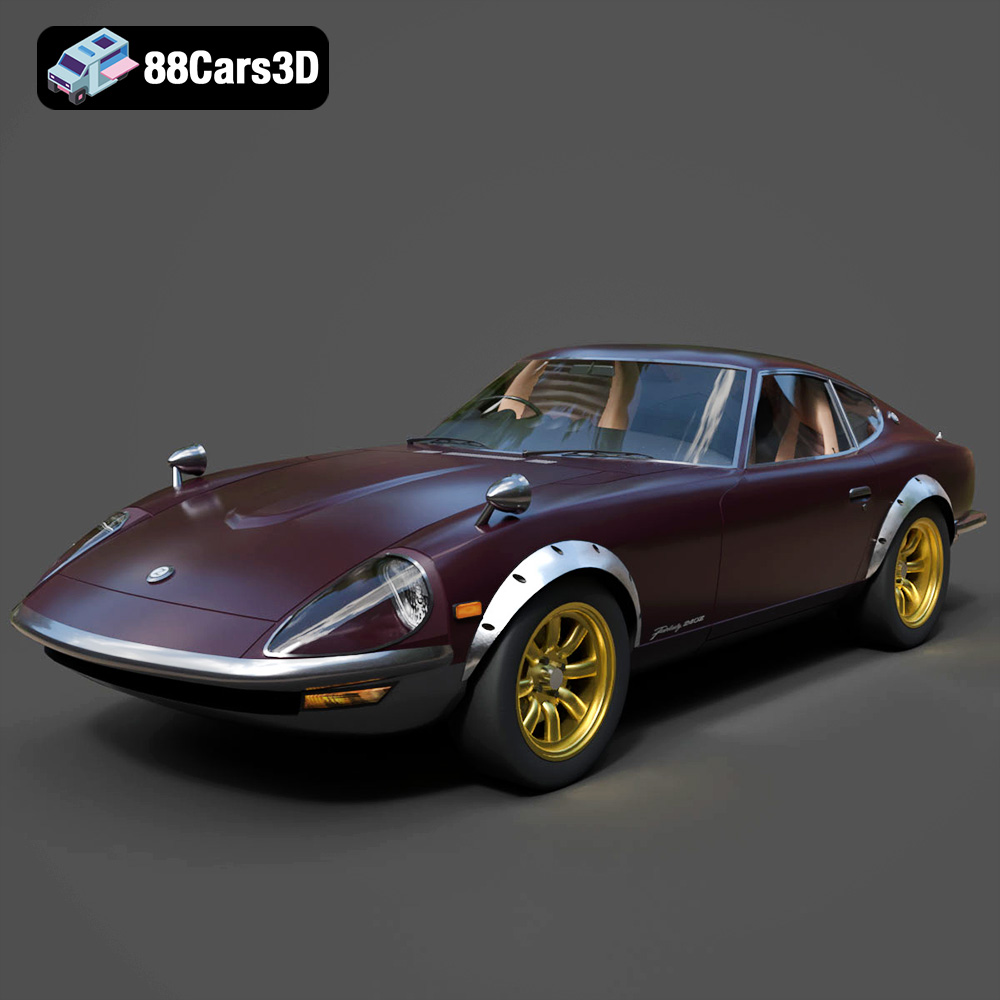
Download the Nissan FairLady 240ZG 3D Model featuring clean geometry, realistic detailing, and a fully modeled interior. Includes .blend, .fbx, .obj, .glb, .stl, .ply, .unreal, and .max formats for rendering, simulation, and game development.
Price: $4.99
Texture: Yes
Material: Yes
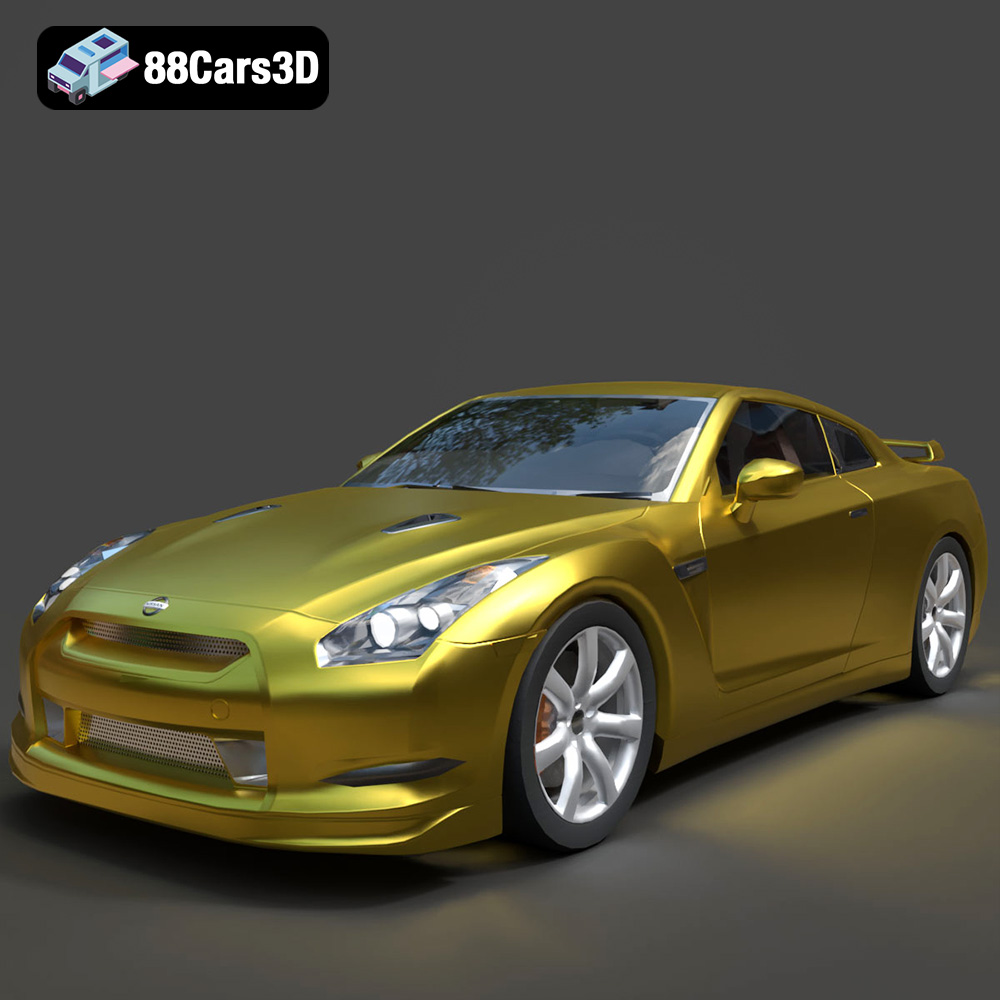
Download the Nissan GT-R 2008 3D Model featuring clean geometry, realistic detailing, and a fully modeled interior. Includes .blend, .fbx, .obj, .glb, .stl, .ply, .unreal, and .max formats for rendering, simulation, and game development.
Price: $4.99

Texture: Yes
Material: Yes
Download the Nissan Cube 3D Model featuring clean geometry, realistic detailing, and a fully modeled interior. Includes .blend, .fbx, .obj, .glb, .stl, .ply, .unreal, and .max formats for rendering, simulation, and game development.
Price: $4.99

Texture: Yes
Material: Yes
Download the Nissan Cedric Y32 3D Model featuring clean geometry, realistic detailing, and a fully modeled interior. Includes .blend, .fbx, .obj, .glb, .stl, .ply, .unreal, and .max formats for rendering, simulation, and game development.
Price: $4.99

Texture: Yes
Material: Yes
Download the Nissan Cima Infiniti Q45 2007 3D Model featuring clean geometry, realistic detailing, and a fully modeled interior. Includes .blend, .fbx, .obj, .glb, .stl, .ply, .unreal, and .max formats for rendering, simulation, and game development.
Price: $4.99

Texture: Yes
Material: Yes
Download the Nissan Juke 2025 3D Model featuring clean geometry, realistic detailing, and a fully modeled interior. Includes .blend, .fbx, .obj, .glb, .stl, .ply, .unreal, and .max formats for rendering, simulation, and game development.
Price: $4.99
Texture: Yes
Material: Yes
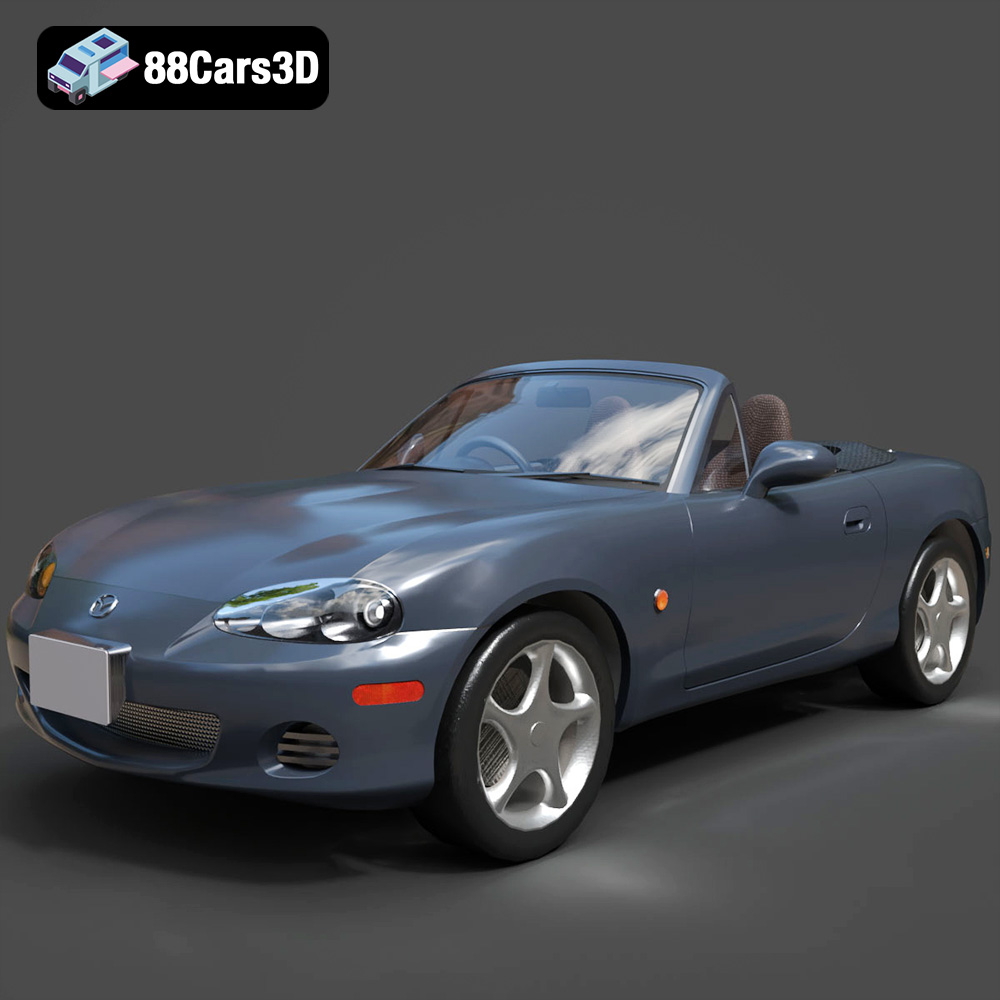
Download the Mazda MX-5 2025 3D Model featuring clean geometry, realistic detailing, and a fully modeled interior. Includes .blend, .fbx, .obj, .glb, .stl, .ply, .unreal, and .max formats for rendering, simulation, and game development.
Price: $4.99

Texture: Yes
Material: Yes
Download the Nissan Maxima 2009 3D Model featuring clean geometry, realistic detailing, and a fully modeled interior. Includes .blend, .fbx, .obj, .glb, .stl, .ply, .unreal, and .max formats for rendering, simulation, and game development.
Price: $4.99
Texture: Yes
Material: Yes
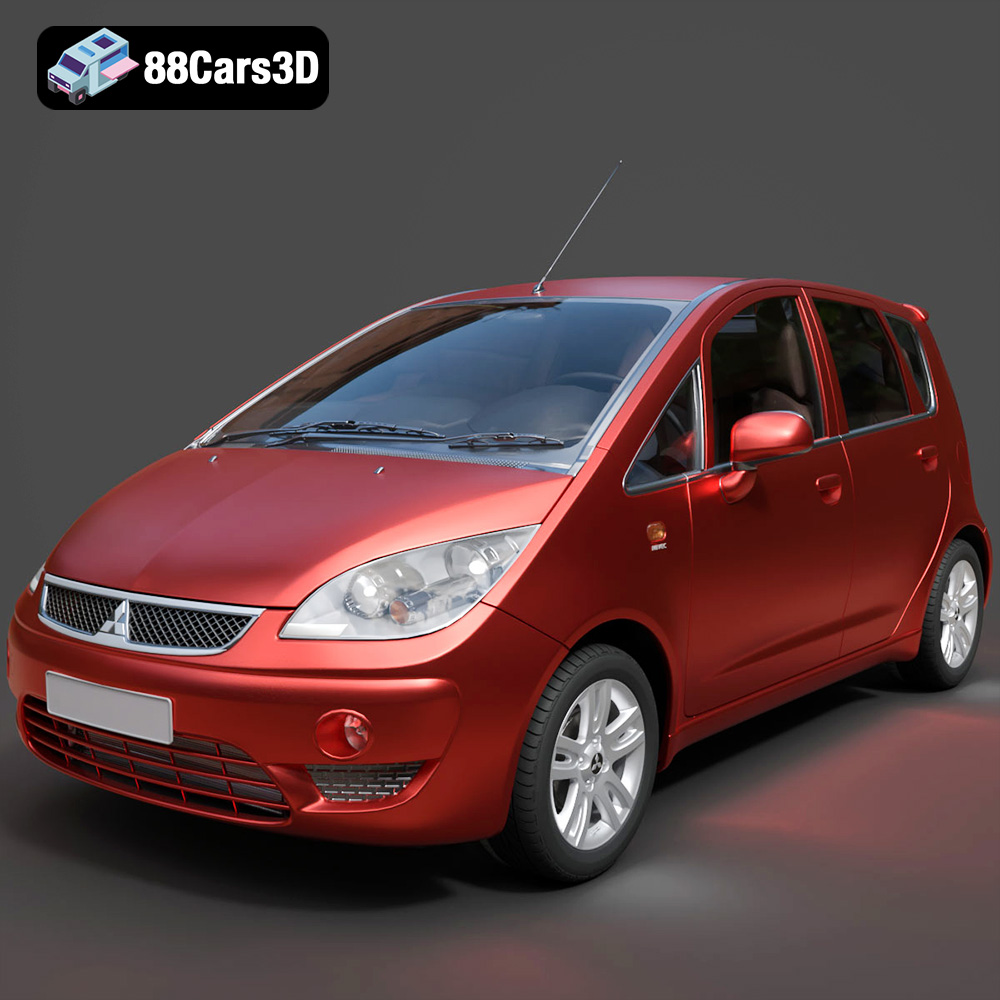
Download the Mitsubishi Colt 2025 3D Model featuring clean geometry, realistic detailing, and a fully modeled interior. Includes .blend, .fbx, .obj, .glb, .stl, .ply, .unreal, and .max formats for rendering, simulation, and game development.
Price: $4.99

