Get 20% OFF All Premium 3D & STL Models!

In the dynamic world of 3D visualization, automotive design, and game development, the demand for exceptionally high-quality 3D car models has never been greater. Whether you’re an architect seeking to populate a photorealistic rendering, a game developer striving for immersive realism, an automotive designer iterating on cutting-edge concepts, or an AR/VR innovator pushing the boundaries of interactive experiences, the underlying quality of your 3D assets dictates the success of your project.
This comprehensive guide delves deep into the technical intricacies of crafting, optimizing, and deploying 3D car models across various industries. We’ll explore the foundational principles of clean topology, the art of strategic UV mapping, the science behind physically based rendering (PBR) materials, and advanced rendering workflows. Furthermore, we’ll equip you with the knowledge to optimize models for real-time game engines, prepare them for the unique demands of AR/VR, and even ready them for 3D printing. Understanding these core concepts and advanced techniques is crucial for anyone looking to create visually stunning and technically sound automotive assets that stand out. By the end of this journey, you’ll have a profound understanding of what makes a premium 3D car model truly exceptional and how to leverage such assets for maximum impact in your creative endeavors.
The bedrock of any high-quality 3D car model is its topology – the arrangement of polygons (usually quads) that define the mesh surface. For automotive assets, clean, efficient, and intentional topology is paramount. It ensures smooth deformations, artifact-free shading, and ease of manipulation throughout the production pipeline. Unlike organic models where slight irregularities can be forgiven, the precise, often reflective, surfaces of a car demand absolute perfection in mesh construction. Poor topology leads to pinching, undesirable reflections, and difficulty in UV mapping and texturing.
A professional 3D car model, such as those found on platforms like 88cars3d.com, typically boasts an all-quad mesh with well-defined edge loops that follow the natural curvature and contours of the vehicle. This approach allows for efficient subdivision modeling, enabling artists to create low-polygon base meshes that can be smoothly subdivided for high-resolution renders without introducing geometry errors. A typical high-detail automotive model might range from 200,000 to over a million polygons, depending on the required level of detail for specific components like interiors, engines, or intricate panel gaps, but the underlying structure remains clean and scalable.
Clean edge flow is the practice of aligning edge loops to capture the major forms, creases, and design lines of the car. For instance, edge loops should run along panel gaps, around headlights, and define the sharp creases of body lines. This isn’t just aesthetic; it’s functional. When a model is subdivided (e.g., using a TurboSmooth modifier in 3ds Max or Subdivision Surface in Blender), these edge loops control how the surface smooths, ensuring sharp details remain crisp while broad surfaces stay perfectly smooth. Professional models strictly adhere to a quad-dominant mesh, meaning almost every face is a four-sided polygon. Triangles (tris) are generally avoided as they can cause pinching, unpredictable subdivision behavior, and issues during UV mapping or rigging. N-gons (polygons with more than four sides) are an absolute no-go in production-ready meshes.
Special attention is paid to areas like wheel wells, door seams, and window frames, where multiple curves meet or sharp edges are present. Here, edge loops must converge and diverge gracefully, often using strategically placed five-pole or three-pole vertices (where five or three edges meet, respectively) to redirect the flow without disrupting surface continuity. The goal is to distribute polygons as evenly as possible across the surface, especially on large, flat panels, to prevent texture stretching and shading anomalies. This meticulous approach ensures that even under close scrutiny and high-definition rendering, the car’s surfaces appear pristine and true to life.
While high polygon counts are desirable for extreme realism in offline renders, they become a performance bottleneck in real-time applications like games or AR/VR. This necessitates a strategic approach to mesh density. A common practice is to create multiple versions of a model at different Levels of Detail (LODs), which we will discuss later. However, even the base high-poly mesh benefits from optimization. This involves avoiding unnecessary geometry in areas that won’t be seen or don’t contribute significantly to the silhouette. For instance, detailed engine components might only need high polygon counts if the hood opens, otherwise, a simplified mesh will suffice.
Techniques like efficient use of supporting edge loops around hard edges (often called control loops or holding loops) allow artists to maintain sharpness without requiring an excessive density of polygons across the entire surface. Instead of creating a chamfer using a large number of explicit polygons, a few well-placed control loops can achieve the same visual effect when subdivided. Furthermore, components that are flat and simple, such as emblems or window panes, should use minimal polygons. The balance between visual fidelity and polygon efficiency is a critical aspect of professional 3D car modeling, ensuring the asset is versatile for various project requirements without compromising quality.
Once the topology is solid, the next crucial step is UV mapping – the process of unwrapping the 3D mesh into a 2D space, allowing textures to be accurately painted and applied. For complex automotive surfaces with varying curvature, reflections, and intricate details, impeccable UV mapping is essential for realistic texturing. Poor UVs lead to stretched, blurry, or misaligned textures, immediately breaking immersion. Professional models prioritize clean, non-overlapping UV layouts with consistent texel density across all visible parts.
Following UV mapping, texturing involves creating the various maps (Base Color, Metallic, Roughness, Normal, etc.) that define the car’s appearance using Physically Based Rendering (PBR) workflows. PBR materials simulate how light interacts with surfaces in a physically accurate way, resulting in highly realistic renders regardless of lighting conditions. This involves understanding the properties of real-world materials and translating them into digital textures. The synergy between precise UVs and well-crafted PBR textures is what elevates a 3D car model from good to exceptional.
Effective UV unwrapping for a car model begins with strategic seam placement. Seams should be hidden in less visible areas, such as under the car, along natural panel gaps, or inside wheel arches. The goal is to minimize visible texture seams on prominent surfaces like the hood, doors, or fenders. For the main body panels, a single, continuous UV island is often preferred if possible, or large, well-organized islands to ensure consistent texture flow. Hard surface UV unwrapping differs significantly from organic character UVs; it often involves projection mapping (planar, cylindrical, spherical) followed by relaxing the resulting islands to minimize distortion. Tools in 3ds Max, Blender, or Maya offer robust UV editors for this task.
Another critical aspect is maintaining consistent texel density. Texel density refers to the number of texture pixels per unit of 3D space. Without consistent texel density, parts of the model will appear sharp while others look blurry. Artists use techniques like checking UV island sizes relative to their surface area on the model or using checker map patterns to visually inspect and unify texel density across all UV islands. For highly detailed models, multi-tile UVs (UDIMs) are often employed, allowing for multiple texture sets across different parts of the car, enabling incredibly high texture resolutions (e.g., 4K or 8K per UDIM tile) without exceeding a single texture map’s resolution limits. This approach is common for cinematic quality assets and allows for extreme close-ups without loss of detail.
The core of modern texturing lies in Physically Based Rendering (PBR). PBR materials rely on a set of texture maps to define how light interacts with a surface. For a car, this typically includes:
For car paint, especially complex multi-coat finishes, artists often employ sophisticated shader networks within their rendering software (e.g., V-Ray, Corona, Cycles, Arnold). These networks might combine multiple layers of materials – a base metallic coat, a clear coat with specific reflectivity and Fresnel falloff, and perhaps even flake maps to simulate metallic paint particles. The Index of Refraction (IOR) is also a crucial parameter for materials like glass, chrome, and clear coats, accurately dictating how light bends and reflects. Tools like Substance Painter or Mari are industry standards for creating these complex PBR textures, allowing artists to procedurally generate and hand-paint intricate details, weathering, and wear effects that bring the car to life. When sourcing models from marketplaces such as 88cars3d.com, you can expect professionally authored PBR materials that are ready for immediate integration and rendering.
Rendering is the final stage where all the meticulous modeling, UV mapping, and texturing converge to produce stunning visual output. For automotive visualization, achieving photorealism is the primary goal. This involves mastering advanced lighting techniques, camera settings, and leveraging the capabilities of powerful rendering engines. The choice of renderer (e.g., Corona, V-Ray, Cycles, Arnold) often depends on specific project requirements, software ecosystem, and desired artistic control, but the underlying principles of good rendering remain consistent.
Professional rendering workflows don’t just stop at hitting the render button. They encompass a holistic approach to scene setup, material calibration, and post-processing, ensuring that every detail, from the reflections on the car body to the subtle environmental nuances, contributes to a cohesive and believable image. A well-executed render can transform a technical 3D model into an emotionally engaging piece of art, critical for marketing, advertising, and high-end visualization projects.
Lighting is arguably the most critical component of a photorealistic render. For cars, studio lighting setups are common for showcasing details and forms, often employing softbox lights and fill lights to highlight contours without harsh shadows. High Dynamic Range Images (HDRIs) are indispensable for realistic exterior shots, providing both environmental illumination and reflections, accurately simulating real-world lighting scenarios. An HDRI will not only light the scene but also provide realistic reflections on the car’s glossy surfaces, which is crucial for automotive renders.
Many renderers also offer physically accurate sky models and sun systems (e.g., Corona Sun & Sky, V-Ray Sun & Sky) for daylight scenes, allowing for precise control over time of day, cloud cover, and atmospheric effects. Interior lighting, when rendering a car’s cabin, requires careful placement of smaller lights to simulate dashboard illumination, ambient lighting, and reflections from screens. The interaction of light with the car’s complex surfaces – the way it bounces off metallic paint, refracts through glass, and highlights chrome accents – is what ultimately sells the realism. Iterative testing and fine-tuning of light intensity, color temperature, and position are standard practice to achieve the perfect mood and visual impact.
Just as in photography, camera composition plays a vital role in cinematic 3D renders. Proper focal length selection, depth of field (DOF), and adherence to compositional rules (rule of thirds, leading lines) can dramatically enhance the visual appeal. For automotive shots, a focal length of 85mm-135mm often provides a pleasing perspective without distortion. Depth of field is used selectively to draw attention to specific parts of the car while subtly blurring the foreground or background. Motion blur, accurately simulated by renderers, is essential for conveying speed in dynamic shots.
Modern renderers offer a wealth of advanced settings for achieving peak visual quality. Ray tracing algorithms meticulously calculate light paths for accurate reflections, refractions, and global illumination. Denoising technologies (e.g., NVIDIA OptiX, Intel Open Image Denoise) are integrated into most renderers to dramatically reduce render times by cleaning up noisy images with minimal quality loss. Render passes (or AOVs – Arbitrary Output Variables) are also crucial. These separate output layers (e.g., diffuse, reflection, refraction, Z-depth, normal, object ID) allow for immense control in post-production, enabling artists to fine-tune specific aspects of the image without re-rendering the entire scene. Understanding and utilizing these settings are key to producing professional-grade automotive renders.
The raw render output is rarely the final image. Post-processing and compositing in software like Adobe Photoshop, After Effects, or Blackmagic Fusion/Nuke are indispensable steps to refine and enhance the visuals. This stage involves adjustments that can dramatically elevate the render’s impact and realism. Common post-processing tasks include color grading to set the mood and unify the image’s palette, contrast adjustments to add punch, and curve manipulations for fine-tuning tonal range. Vignettes can draw attention to the car, while subtle chromatic aberration can add a photographic touch.
Utilizing the various render passes from the previous step is where compositing truly shines. The Z-depth pass allows for precise depth of field adjustments. Object ID passes enable selective color corrections or effects on specific parts of the car. Reflection and refraction passes can be tweaked to enhance the sparkle of chrome or the clarity of glass. Adding subtle lens flares, glare, or environmental haze can further integrate the car into its virtual environment. Dust or fingerprint overlays on glass, subtle imperfections, and even atmospheric elements like fog or rain can be composited to push the realism further, making the rendered car indistinguishable from a real photograph. This final polish is what makes renders truly pop and captivate the audience.
While offline rendering prioritizes ultimate visual fidelity, game development and other real-time applications demand a delicate balance between graphical quality and performance. A high-polygon, feature-rich 3D car model designed for cinematics will almost certainly overwhelm a game engine without significant optimization. Creating game-ready automotive assets involves a specific set of techniques to ensure smooth frame rates, efficient resource usage, and a visually appealing experience on various hardware platforms.
The goal is to provide maximum visual impact with minimal computational cost. This means strategically reducing polygon counts, optimizing textures, managing materials, and implementing systems like Levels of Detail (LODs). For developers using engines like Unity or Unreal Engine, understanding these optimization strategies is crucial for creating fluid and immersive driving experiences or interactive visualizations. When sourcing 3D car models for games, ensure they are already optimized for real-time environments, such as the carefully crafted assets available at 88cars3d.com, which often come with multiple LODs and efficient material setups.
Level of Detail (LOD) is a fundamental optimization technique for real-time applications. It involves creating multiple versions of a single 3D model, each with progressively fewer polygons and simpler textures. The game engine then automatically swaps between these LODs based on the camera’s distance from the object. When the car is far away, a low-poly LOD (e.g., 5,000-10,000 polygons) is used; as it gets closer, a medium-poly LOD (e.g., 50,000-100,000 polygons) is loaded; and for extreme close-ups, the full high-poly LOD (e.g., 200,000+ polygons) is displayed. This ensures that the engine only renders the necessary detail, significantly reducing the polygon count on screen and improving frame rates.
Creating LODs requires careful planning. Automatic decimation tools can be used, but manual cleanup and optimization often yield better results, especially for retaining critical silhouette details. It’s important that the transition between LODs is seamless and not noticeable to the player. Tools like Unity’s LOD Group component or Unreal Engine’s built-in LOD system make implementing this straightforward once the different mesh versions are prepared. Furthermore, texture resolutions might also be scaled down for lower LODs (e.g., 4K for LOD0, 2K for LOD1, 1K for LOD2), further reducing memory footprint and GPU load, while ensuring the visual fidelity matches the geometric detail.
Optimizing textures and materials is equally vital for game performance. High-resolution textures consume significant GPU memory and bandwidth. Therefore, it’s common practice to use texture atlases – combining multiple smaller textures into one larger image – to reduce draw calls. Each draw call represents a command from the CPU to the GPU to render a batch of triangles using a specific material. By atlasing textures and consolidating materials, the number of draw calls can be drastically reduced, leading to better performance. For example, instead of having separate materials for each car part (body, wheels, windows, lights), ideally, a car would use just a few materials, each referencing an atlas.
Material instancing is another powerful technique in engines like Unity and Unreal. Instead of creating a unique material for every car with minor color variations, a base material can be instanced, allowing artists to change parameters (like base color) without creating new materials, thus saving memory and reducing CPU overhead. Compression formats (e.g., DXT for desktop, ASTC for mobile) for textures are also critical for memory efficiency. Balancing visual quality with the limitations of the target platform’s memory and processing power is a constant challenge, requiring judicious choices in texture resolution (e.g., 2K or 4K for major components, 512×512 for minor details) and material complexity.
Beyond visual fidelity, game-ready car models require functional elements for interaction. Collision meshes are simplified, invisible versions of the car’s geometry used by the physics engine to detect collisions with other objects or the environment. These meshes are often drastically simpler than the visual mesh, composed of basic primitives like spheres, boxes, or convex hulls, to minimize physics calculation overhead. A common setup might include a single box collider for the main body, and smaller sphere colliders for the wheels.
For realistic driving mechanics, cars also need to be rigged. This typically involves creating a bone hierarchy for the wheels, steering, and suspension, allowing them to animate correctly based on player input or physics simulations. For more advanced interactions like opening doors or trunks, additional bones and pivot points are set up. Rigging ensures that when the car moves, its components behave realistically, enhancing the player’s immersion. These functional aspects are just as crucial as visual optimization for a truly game-ready asset, enabling not just beautiful renders but also dynamic and responsive gameplay.
The utility of high-quality 3D car models extends far beyond traditional static renders and game engines. Emerging technologies like Augmented Reality (AR) and Virtual Reality (VR), combined with established fields such as 3D printing and advanced visualization, are continually finding new and exciting applications for these digital assets. However, each of these domains presents its own unique set of technical requirements and optimization challenges that artists and developers must address.
Adapting a single 3D car model for such diverse platforms requires a deep understanding of polygon budgets, real-time rendering constraints, physical mesh integrity, and specific file format capabilities. A model that looks spectacular in a cinematic rendering might be too heavy for a mobile AR experience or unsuitable for 3D printing without significant preparation. The versatility of 3D car models means they are invaluable tools, provided they are correctly tailored for their intended use case.
AR and VR experiences demand extreme optimization due to their real-time nature and often mobile-first deployment. Maintaining high frame rates (e.g., 90 FPS for VR) is critical to prevent motion sickness and ensure a comfortable user experience. This means significantly lower polygon counts than typical game assets, especially for mobile AR. A typical AR/VR car model might range from 30,000 to 100,000 triangles, with meticulous use of normal maps to retain detail. Texture resolutions also need to be optimized, often capping at 2K or even 1K for mobile devices to manage memory and GPU load efficiently.
Further optimization techniques include careful culling of unseen geometry (e.g., interior parts if the doors don’t open), baking complex lighting into textures (lightmaps), and minimizing material complexity by reducing the number of texture maps per material. File formats like GLB (for web-based AR/VR) and USDZ (Apple ARKit) are becoming standard, as they encapsulate geometry, materials, and animations into a single, compact file, ideal for quick deployment. When preparing models for AR/VR, ensuring correct real-world scale is also paramount for believable experiences, aligning the virtual car perfectly with the physical world or virtual environment.
3D printing a car model involves a fundamentally different set of requirements compared to screen-based visualization. The digital mesh must be “watertight” – a completely enclosed volume with no gaps, holes, or inverted normals – to be successfully translated into a physical object. Gaps in the mesh, often acceptable for rendering (especially if unseen by the camera), will cause errors and print failures. Mesh repair tools in software like Meshmixer, Blender, or dedicated CAD software are used to identify and fix these issues.
Furthermore, wall thickness becomes a critical parameter. Very thin surfaces in a 3D model, while visually fine, may be too fragile or simply unprintable. Designers must ensure that all parts of the model have a minimum wall thickness (e.g., 1-2mm depending on the print technology and material). High-polygon models might also need to be decimated (polygon reduction) to reduce file size and processing time for the slicer software, but care must be taken to preserve critical details. Support structures and orientation for printing are also factors to consider. Preparing models for 3D printing transforms the focus from visual illusion to physical integrity and structural soundness.
In the automotive industry itself, 3D car models are central to the entire design and marketing process. From initial concept sketching and clay modeling to final production, 3D assets are used for iterative design, engineering analysis, marketing campaigns, and real-time configurators. Here, extreme fidelity to CAD data is often required. Engineers might start with NURBS surfaces from CAD software, which are then converted to high-quality polygonal meshes for rendering and visualization. These models can feature millions of polygons, accurately representing every screw, bolt, and internal mechanism.
For marketing and sales, interactive configurators powered by real-time engines allow customers to explore different paint colors, wheel options, and interior trims in a virtual showroom. This requires highly optimized assets that maintain visual quality across various configurations. For cinematic commercials and presentations, the models must be capable of showcasing minute details under extreme close-ups, often requiring 8K+ texture resolutions and incredibly dense meshes. The integration of 3D car models into automotive design workflows streamlines development, reduces physical prototyping costs, and enhances collaboration across design, engineering, and marketing teams.
The journey of a 3D car model from creation to deployment often involves navigating a complex landscape of file formats. Each format has its strengths, weaknesses, and specific use cases, dictating how geometry, materials, textures, and animations are stored and exchanged between different software applications and platforms. Understanding these nuances is crucial for ensuring seamless interoperability and maintaining the integrity of your assets throughout the production pipeline.
The challenge lies in preserving all crucial data – especially complex PBR materials and precise UV mapping – during conversion. Incorrect export/import settings can lead to missing textures, broken normals, or corrupted animations, necessitating rework. Professional 3D artists and developers must be adept at managing these conversions, ensuring that a model created in one application performs flawlessly in another, whether it’s for rendering, game development, or AR/VR. This cross-platform compatibility is a cornerstone of efficient 3D workflows.
Each format serves a specific purpose, and professional workflows often involve converting between them based on the stage of production or the target platform. Platforms like 88cars3d.com often provide models in multiple formats to cater to diverse user needs, ensuring maximum flexibility.
Converting a 3D car model from one format to another requires attention to detail to avoid data loss. When exporting from a modeling software, crucial settings include:
Common challenges during conversion include:
By meticulously controlling export settings and understanding the specific requirements of the target platform, artists can achieve seamless cross-platform compatibility, making their 3D car models truly versatile and pipeline-ready.
The journey of a 3D car model from concept to a polished, deployable asset is a complex yet rewarding endeavor, demanding expertise across various technical disciplines. We’ve explored the critical importance of clean topology and efficient edge flow for artifact-free surfaces, delved into the intricacies of strategic UV mapping, and mastered the creation of photorealistic PBR materials. We then transitioned into advanced rendering workflows, leveraging powerful engines and post-processing techniques to achieve stunning visuals. Finally, we addressed the unique optimization challenges and format requirements for real-time applications like games and AR/VR, as well as the precision needed for 3D printing and high-fidelity automotive visualization.
Every step in this process, from initial poly-modeling to final compositing, contributes to the overall quality and versatility of the 3D asset. Understanding these technical foundations not only empowers artists to create exceptional content but also enables developers and designers to select and integrate models more effectively into their projects. The digital automotive landscape is continually evolving, pushing the boundaries of realism and interactivity. By internalizing the best practices and advanced techniques discussed, you’ll be well-equipped to navigate these challenges and unlock the full potential of 3D car models in your professional work.
For those seeking to accelerate their projects with professionally crafted, high-quality 3D car models, exploring reputable marketplaces like 88cars3d.com provides access to assets meticulously prepared with these very principles in mind, saving valuable production time and ensuring top-tier results. Invest in quality assets and advanced knowledge, and watch your creative visions come to life with unparalleled realism and performance.

Texture: Yes
Material: Yes
Download the Nissan Fuga 2003 3D Model featuring clean geometry, realistic detailing, and a fully modeled interior. Includes .blend, .fbx, .obj, .glb, .stl, .ply, .unreal, and .max formats for rendering, simulation, and game development.
Price: $4.99
Texture: Yes
Material: Yes
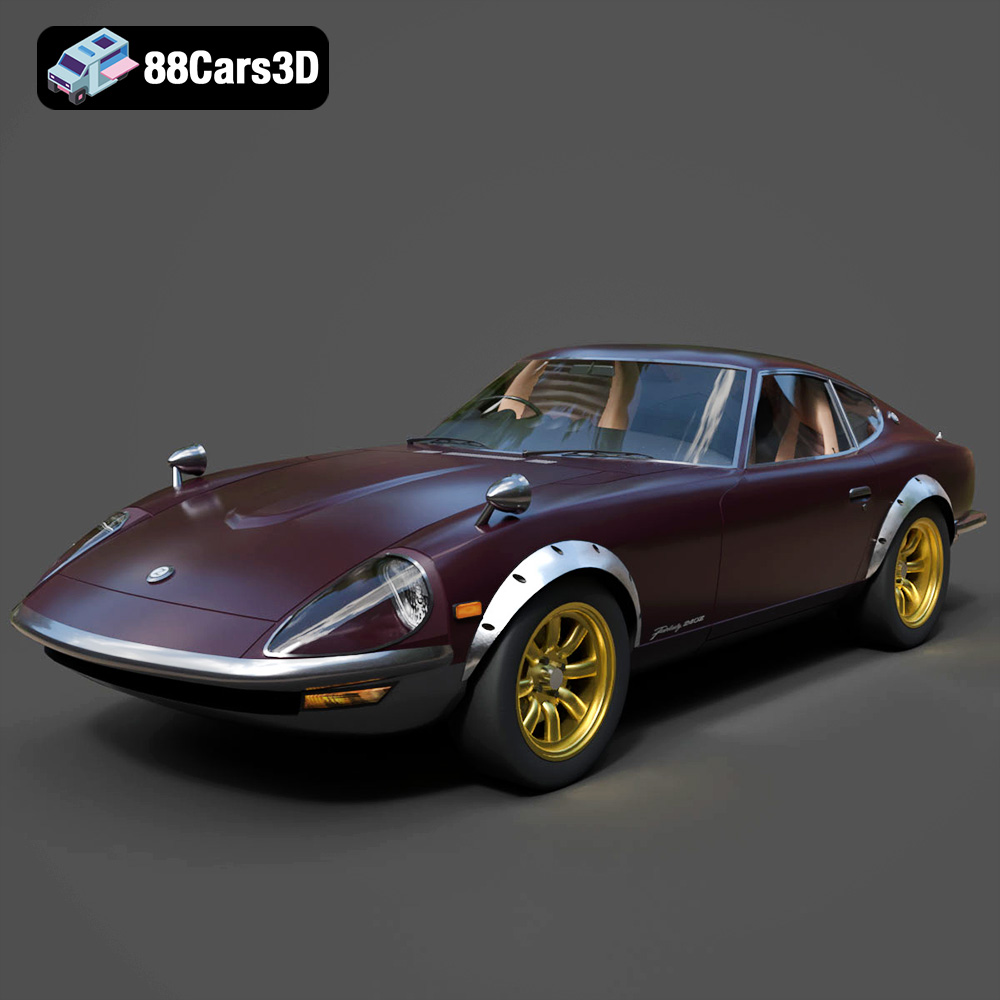
Download the Nissan FairLady 240ZG 3D Model featuring clean geometry, realistic detailing, and a fully modeled interior. Includes .blend, .fbx, .obj, .glb, .stl, .ply, .unreal, and .max formats for rendering, simulation, and game development.
Price: $4.99
Texture: Yes
Material: Yes
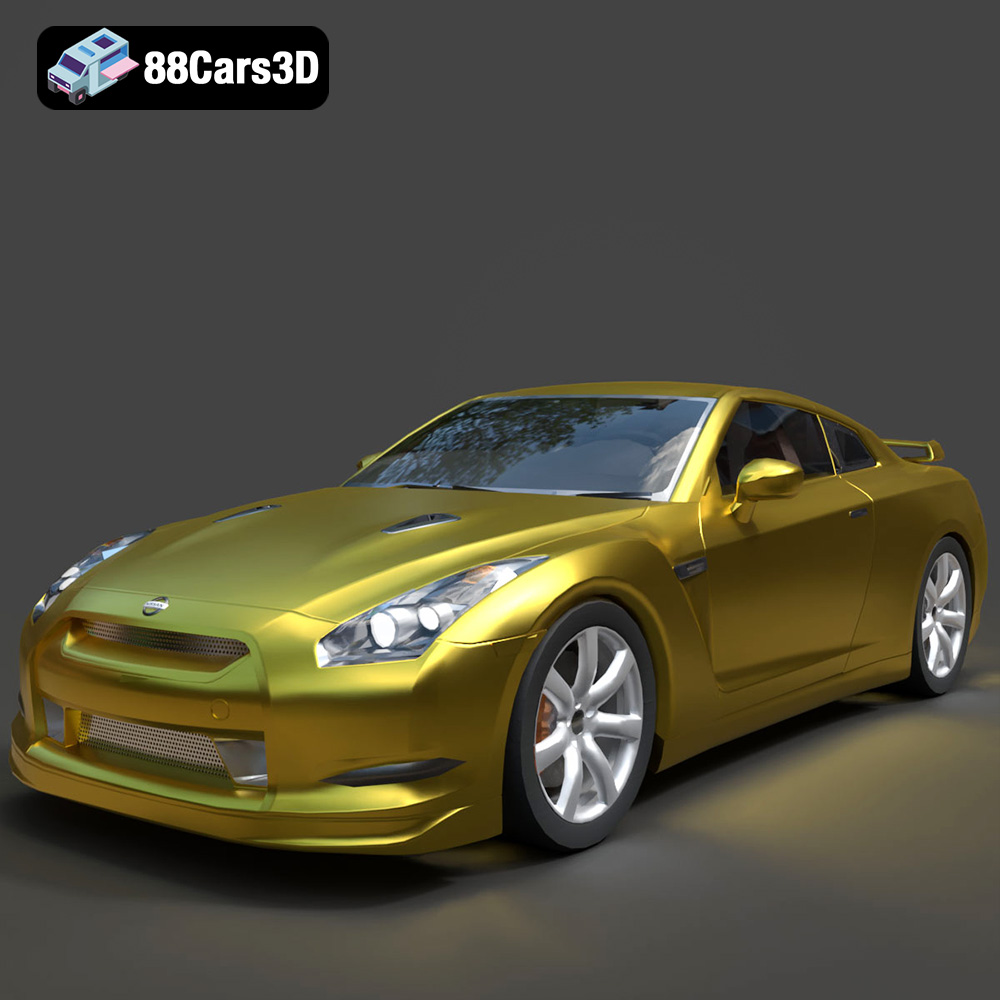
Download the Nissan GT-R 2008 3D Model featuring clean geometry, realistic detailing, and a fully modeled interior. Includes .blend, .fbx, .obj, .glb, .stl, .ply, .unreal, and .max formats for rendering, simulation, and game development.
Price: $4.99

Texture: Yes
Material: Yes
Download the Nissan Cube 3D Model featuring clean geometry, realistic detailing, and a fully modeled interior. Includes .blend, .fbx, .obj, .glb, .stl, .ply, .unreal, and .max formats for rendering, simulation, and game development.
Price: $4.99

Texture: Yes
Material: Yes
Download the Nissan Cedric Y32 3D Model featuring clean geometry, realistic detailing, and a fully modeled interior. Includes .blend, .fbx, .obj, .glb, .stl, .ply, .unreal, and .max formats for rendering, simulation, and game development.
Price: $4.99

Texture: Yes
Material: Yes
Download the Nissan Cima Infiniti Q45 2007 3D Model featuring clean geometry, realistic detailing, and a fully modeled interior. Includes .blend, .fbx, .obj, .glb, .stl, .ply, .unreal, and .max formats for rendering, simulation, and game development.
Price: $4.99

Texture: Yes
Material: Yes
Download the Nissan Juke 2025 3D Model featuring clean geometry, realistic detailing, and a fully modeled interior. Includes .blend, .fbx, .obj, .glb, .stl, .ply, .unreal, and .max formats for rendering, simulation, and game development.
Price: $4.99
Texture: Yes
Material: Yes
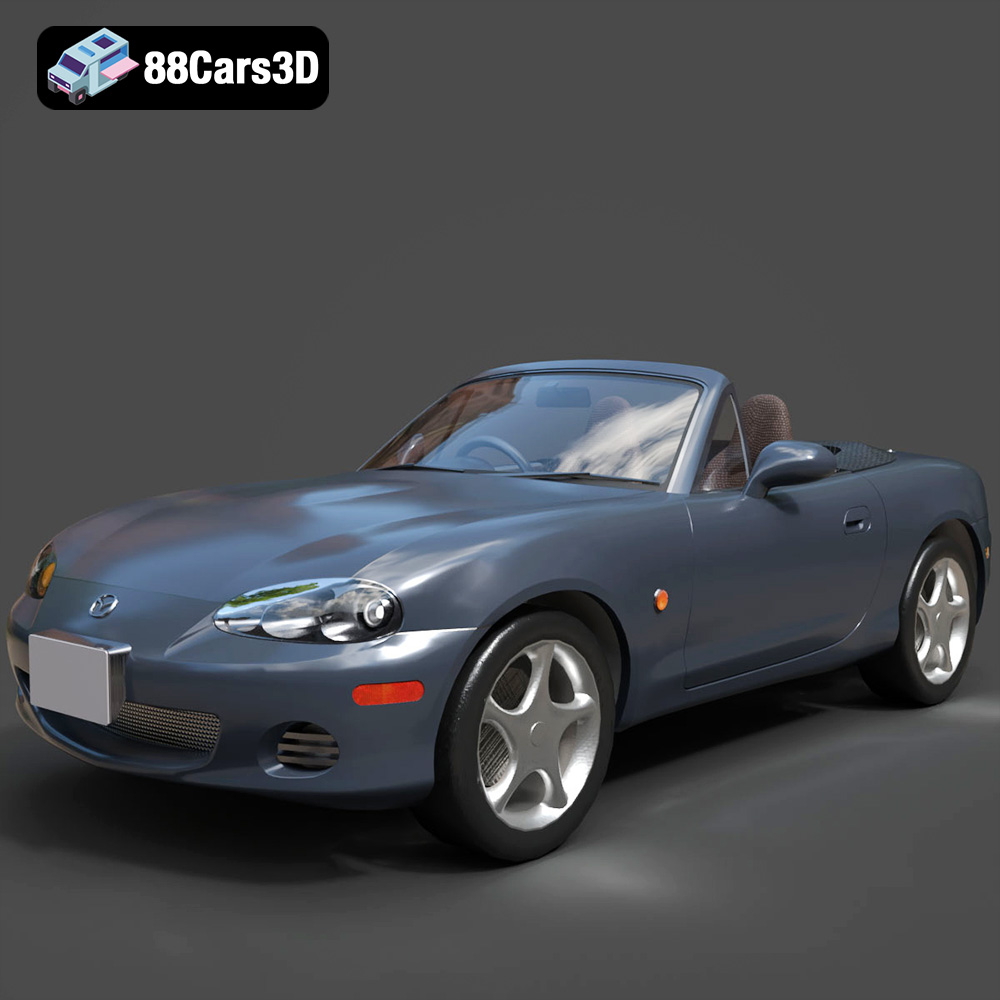
Download the Mazda MX-5 2025 3D Model featuring clean geometry, realistic detailing, and a fully modeled interior. Includes .blend, .fbx, .obj, .glb, .stl, .ply, .unreal, and .max formats for rendering, simulation, and game development.
Price: $4.99

Texture: Yes
Material: Yes
Download the Nissan Maxima 2009 3D Model featuring clean geometry, realistic detailing, and a fully modeled interior. Includes .blend, .fbx, .obj, .glb, .stl, .ply, .unreal, and .max formats for rendering, simulation, and game development.
Price: $4.99
Texture: Yes
Material: Yes
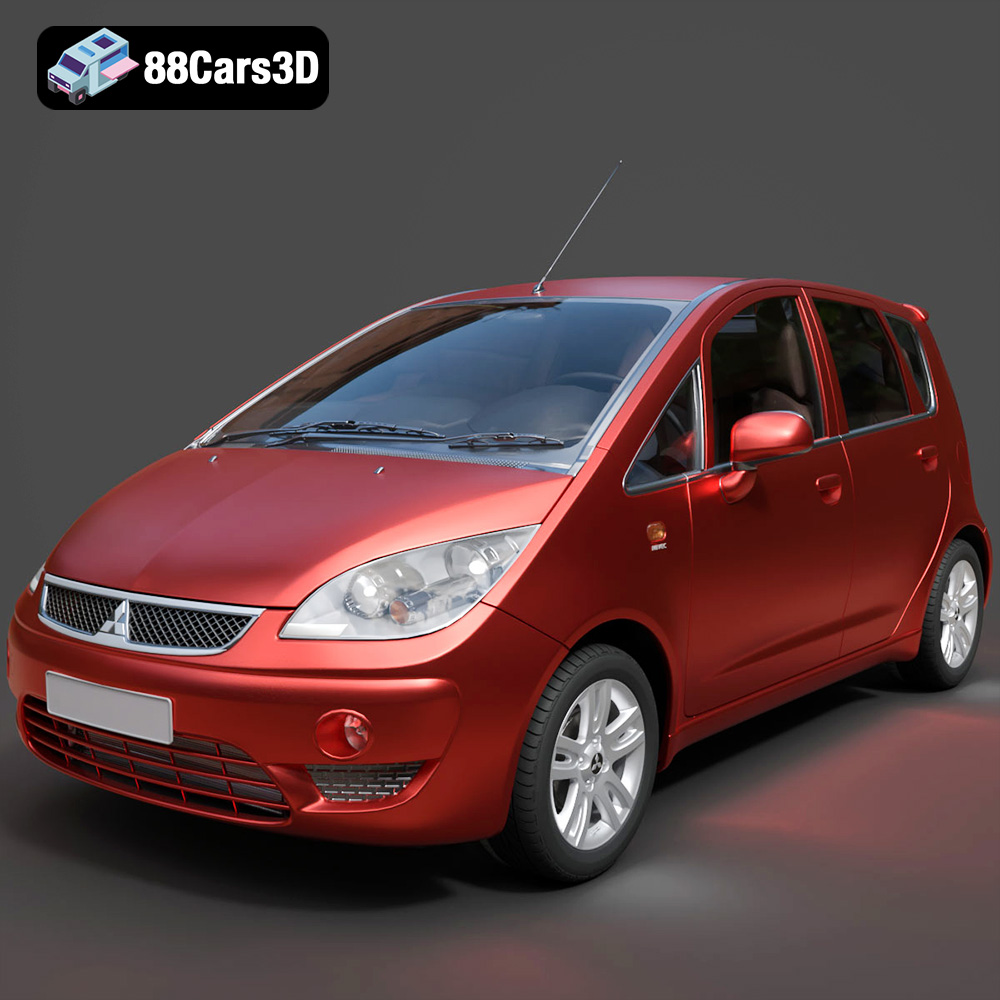
Download the Mitsubishi Colt 2025 3D Model featuring clean geometry, realistic detailing, and a fully modeled interior. Includes .blend, .fbx, .obj, .glb, .stl, .ply, .unreal, and .max formats for rendering, simulation, and game development.
Price: $4.99

