Get 20% OFF All Premium 3D & STL Models!

The allure of a beautifully crafted automobile extends far beyond the showroom floor, captivating designers, artists, and enthusiasts alike. In the digital realm, this passion translates into the creation and utilization of high-fidelity 3D car models – assets that are not just visually stunning but also technically robust. From breathtaking photorealistic renders that define automotive advertising to immersive experiences in video games, virtual reality, and intricate architectural visualizations, the demand for excellence in 3D car models has never been higher.
This comprehensive guide delves into the intricate world of creating, optimizing, and deploying 3D car models for a myriad of applications. We’ll explore the foundational principles of clean topology, the artistry of UV mapping, and the science behind physically based rendering (PBR) materials. We’ll journey through advanced rendering techniques, uncover the secrets of game engine optimization, and touch upon specialized applications like AR/VR and 3D printing. Whether you’re an aspiring 3D artist, a seasoned game developer, an automotive designer, or a visualization professional, understanding these technical facets is crucial for unlocking the full potential of your digital automotive projects. Prepare to elevate your workflow and achieve unparalleled realism and performance with 3D car models.
The cornerstone of any high-quality 3D car model is its topology – the arrangement of vertices, edges, and faces that form the mesh. For automotive models, which are characterized by sleek curves, sharp creases, and reflective surfaces, flawless topology is not just a preference; it’s a necessity. Poor topology can lead to pinching, artifacts, and an inability to achieve smooth subdivisions, ultimately compromising the visual integrity of the model under various lighting conditions and viewing angles. A well-constructed mesh ensures that the model deforms predictably, takes subdivision surfaces gracefully, and provides a clean canvas for texturing and shading.
When modeling complex automotive surfaces, artists primarily rely on subdivision surface modeling techniques. This involves starting with a low-polygon “cage” model and then applying a subdivision modifier (like TurboSmooth in 3ds Max, Subdivision Surface in Blender, or Smooth Mesh in Maya) to generate a smooth, high-resolution surface. The key is to maintain an all-quad topology wherever possible, as quads subdivide cleanly and predictably, avoiding the undesirable triangulation that can cause unsightly ripples and bumps. Understanding how edge loops flow around specific features – such as headlights, door seams, and vents – is critical for defining these details without distorting the overall curvature of the car body. These supporting edge loops, often placed very close to hard edges, help to “hold” the sharpness of the form after subdivision, preventing it from becoming overly soft or rounded.
Achieving that signature automotive smoothness requires adherence to strict modeling principles. Every polygon should be a quad, and triangles should be avoided unless absolutely necessary, and even then, carefully placed in flat, non-deforming areas. Poles – vertices where more or less than four edges meet – must be managed meticulously. While N-poles (vertices with N edges, where N is not 4) are sometimes unavoidable, especially on complex surfaces, they should be strategically placed in areas of minimal curvature or where their impact on subdivision is negligible. Common areas for careful pole placement include the corners of windows, headlights, or around complex vents.
Consistent mesh density is another vital consideration. Areas requiring more detail, like intricate grilles or logos, will naturally have a higher polygon density, but transitions to flatter surfaces should be gradual to avoid abrupt changes in shading. For instance, when creating a fender, the edge flow should follow the contour of the wheel arch, allowing for smooth curvature while also providing clean loops for panel gaps or future modifications. Aim for even spacing between edge loops to ensure uniform subdivision and prevent stretching or compression of the mesh. This methodical approach to modeling in software like 3ds Max, Blender, or Maya ensures the foundation is solid for all subsequent stages of the 3D pipeline.
Beyond static beauty, 3D car models often need to be prepared for animation, whether it’s opening doors, rotating wheels, or simulating suspension. This is where edge flow optimization becomes crucial. For articulated parts, dedicated edge loops must be established around the pivot points to ensure clean deformation. For example, a car door needs clear edge loops defining its edges, as well as additional loops around its hinge to allow for a smooth rotation without distorting the surrounding bodywork. Similarly, the wheels and suspension components require robust topology that can handle rotation and compression without intersecting or collapsing.
While a highly detailed model for a hero render might boast several million polygons post-subdivision, game-ready or real-time models require a more optimized approach. A high-poly model might serve as the base for baking normal maps, but the actual asset for a game engine could target anywhere from 50,000 to 150,000 polygons for the main vehicle, depending on the platform and desired fidelity. This optimization often involves strategically removing unnecessary edge loops from flat surfaces while preserving crucial definition around curves and hard edges. The goal is to maintain the visual quality of the shape while significantly reducing the computational burden, ensuring the model performs efficiently without visual compromise.
Once the 3D car model’s topology is pristine, the next critical step is to prepare it for texturing and shading. This involves UV mapping – the process of unwrapping the 3D mesh into 2D coordinates – and then creating sophisticated Physically Based Rendering (PBR) materials that accurately simulate how light interacts with the car’s surfaces. These two stages are paramount for achieving the hyper-realism expected in modern automotive visualization and games.
Effective UV mapping is an art in itself. It’s about creating an efficient and clean layout of the 2D texture coordinates, minimizing distortion, and maximizing texel density. For complex objects like cars, this often means breaking the model into multiple UV islands representing different panels, components, or material types. The goal is to provide a seamless canvas for texture artists, ensuring that paint, decals, scratches, and other surface details are applied without stretching or blurring. For very high-resolution projects, especially in cinematic rendering, techniques like UDIMs (Unique Digital Identity Maps) are often employed. UDIMs allow artists to use multiple UV tiles, each with its own high-resolution texture set, making it possible to achieve extreme levels of detail on large, complex surfaces like an entire car body, where a single 8K or 16K texture might still not be enough.
The strategic layout of UVs for automotive models demands careful consideration. Each panel – hood, doors, fenders, roof – typically receives its own UV island to minimize seams and allow for individual detailing. The goal is to achieve uniform texel density across the entire model, meaning that a texture applied to the hood will have the same pixel density as a texture applied to the door or bumper, preventing certain areas from appearing blurry while others are sharp. Tools like RizomUV, the UV editors in Maya, Blender, and 3ds Max, provide advanced features for unwrapping, packing, and checking for distortion.
For intricate details such as headlights, grilles, or interior components, specialized unwrapping methods might be used, sometimes involving overlapping UVs for symmetry or tiling textures for repetitive patterns like tire treads or fabric. However, for unique car paint or custom decals, unique UVs are indispensable. A common approach for cars is to dedicate one or two large UV atlases for the main body panels and then create separate smaller atlases for glass, tires, interior elements, and small details. This organized approach streamlines the texturing process in software like Substance Painter or Mari, ensuring efficient texture application and optimal material creation.
Once UVs are established, the focus shifts to PBR material creation. PBR is an approach to shading that aims to simulate light interaction with surfaces based on real-world physics, resulting in more consistent and realistic renders across different lighting environments. Key PBR maps include:
* **Albedo/Base Color:** Defines the color of the surface, stripped of lighting information. For car paint, this would be the base color of the pigment.
* **Metallic:** A grayscale map indicating whether a surface is metallic (white) or non-metallic (black).
* **Roughness:** A grayscale map defining the micro-surface detail, influencing how light scatters. Lower roughness means shinier, higher roughness means duller.
* **Normal Map:** A tangent-space normal map that fakes high-resolution surface detail using RGB values to represent surface normals.
* **Ambient Occlusion (AO):** A grayscale map that darkens crevices and contact points, simulating self-shadowing.
* **Clear Coat:** For car paint, a dedicated clear coat layer (with its own roughness and normal map) is essential to simulate the protective, glossy outer layer.
Creating realistic PBR shader networks involves layering these maps and fine-tuning their parameters within renderers like Corona, V-Ray, Cycles, or Arnold. For car paint, a complex shader often involves a base diffuse layer, a metallic flake layer (simulated with noise or specific maps), and a top clear coat layer with Fresnel reflections. Glass materials require accurate refraction and reflection properties. Tire rubber needs specific roughness and normal maps to convey its texture, while chrome and other metallic surfaces rely heavily on the Metallic and Roughness maps. Platforms like 88cars3d.com often provide models with meticulously crafted PBR materials, ensuring out-of-the-box realism and compatibility with various rendering engines.
With a perfectly modeled and textured 3D car model, the next stage is to bring it to life through high-fidelity rendering. This is where the magic happens, transforming digital assets into breathtaking images and animations that rival real-world photography. Automotive rendering is a specialized field, demanding a deep understanding of lighting, camera principles, and renderer-specific settings to achieve that coveted photorealistic look.
The primary goal in automotive rendering is to showcase the car’s design, form, and material quality in the most appealing way possible. This often involves mimicking professional photography studio setups, complete with softboxes, beauty dishes, and elaborate background environments. The interplay of light and shadow, reflections on the polished car body, and the overall mood contribute significantly to the final image. Artists frequently utilize advanced rendering software such as Corona Renderer or V-Ray in 3ds Max, Cycles in Blender, or Arnold in Maya, all of which offer powerful physically accurate rendering capabilities crucial for automotive visualization.
Effective lighting is the single most important factor in achieving realistic automotive renders. The car’s reflective surfaces act like mirrors, revealing every detail of the surrounding environment. Therefore, the lighting setup must be carefully orchestrated to define the car’s contours and highlights. A common approach involves using High Dynamic Range Images (HDRIs) as primary light sources. An HDRI can encapsulate an entire lighting environment – from a sunny day to an overcast studio – providing accurate global illumination and reflections. Complementing HDRIs, artists often place virtual studio lights, such as large area lights or softboxes, to create specific highlights and reflections that emphasize the car’s curves and panel lines.
The three-point lighting system (key, fill, and rim lights) is a fundamental technique often adapted for cars. A strong key light defines the primary form, while softer fill lights reduce harsh shadows. Rim lights are particularly effective for cars, creating a subtle halo around the edges that separates the vehicle from the background and highlights its silhouette. Beyond the lights themselves, the surrounding environment plays a crucial role. For studio shots, large reflective planes or simple backdrops are used. For outdoor scenes, a detailed 3D environment or a backplate with matching lighting can seamlessly integrate the 3D car model into a photorealistic setting, making it appear as if it was truly captured by a camera.
Each rendering engine has its unique strengths and settings that artists must master. For instance, Corona Renderer is renowned for its ease of use and physically correct light transport, making it highly intuitive for setting up realistic automotive lighting. Its interactive rendering capabilities allow artists to see changes in real-time, accelerating the lighting and material refinement process. V-Ray, a long-standing industry standard, offers unparalleled control over every aspect of rendering, from highly customizable sampling rates to advanced global illumination algorithms, allowing for fine-tuned quality and performance. Blender’s Cycles renderer, known for its integration and robust node-based shader editor, provides excellent path tracing capabilities for stunning visual fidelity. Arnold, favored in film VFX, excels at handling complex geometry and volumetric effects, delivering highly detailed and accurate renders.
Optimizing render settings is crucial for balancing quality and render times. Parameters like ray depth (how many times light bounces), samples per pixel, and denoising algorithms directly impact the final image. Modern renderers often include powerful denoisers (like NVIDIA OptiX or Intel Open Image Denoise) that can significantly reduce render times by cleaning up noise, allowing artists to render with fewer samples without sacrificing quality. For maximum flexibility in post-production, rendering out various passes – such as reflection, refraction, raw global illumination, and object IDs – enables artists to fine-tune specific elements in compositing software like Adobe Photoshop or Foundry Nuke, providing ultimate control over the final automotive image.
While high-fidelity rendering focuses on ultimate visual quality, game engines and real-time applications demand a delicate balance between visual realism and performance. A 3D car model that looks stunning in a static render might bring a game engine to its knees. Optimizing 3D car models for real-time environments like Unity, Unreal Engine, or WebGL is a critical skill, transforming high-polygon assets into efficient, interactive experiences suitable for video games, augmented reality (AR), virtual reality (VR), and interactive configurators.
The core challenge lies in reducing the computational load on the GPU while maintaining as much visual fidelity as possible. This involves strategies like carefully managing polygon counts, optimizing texture usage, reducing draw calls, and implementing various levels of detail. Game development often requires a systematic approach to asset optimization, where every polygon, every texture, and every material decision impacts the final frame rate and user experience. The process is iterative, often involving extensive profiling within the target engine to identify and address performance bottlenecks, ensuring smooth and responsive interaction with the 3D car model.
**Level of Detail (LODs):** This is a cornerstone optimization technique. Instead of loading a single, high-polygon model at all distances, LODs involve creating multiple versions of the same asset, each with a progressively lower polygon count. The game engine then automatically switches between these versions based on the camera’s distance from the object. A hero car model might have 3-5 LODs:
* **LOD0 (High-Poly):** For close-up shots (e.g., 50,000-150,000 polygons for PC/console, or 20,000-50,000 for mobile).
* **LOD1 (Medium-Poly):** For mid-range viewing (e.g., 20,000-50,000 polygons).
* **LOD2 (Low-Poly):** For distant viewing (e.g., 5,000-15,000 polygons).
* **LOD3 (Very Low-Poly):** For extreme distance or background elements (e.g., 1,000-5,000 polygons).
* **LOD4 (Imposter/Billboard):** Sometimes a 2D image is used for extreme distances.
Software like Simplygon or native LOD tools in Unity and Unreal Engine automate much of this process.
**Draw Calls:** Every time the GPU is told to draw something, it incurs a “draw call.” Reducing the number of draw calls is paramount for performance. This is achieved by:
* **Merging Meshes:** Combining multiple smaller meshes (e.g., individual nuts and bolts) into a single mesh where appropriate.
* **Instancing:** Using the same mesh multiple times without creating duplicate data (e.g., identical wheels).
* **Material Optimization:** Limiting the number of unique materials on an object, as each material typically requires its own draw call.
**Texture Atlasing:** Instead of using many small texture files, texture atlasing combines multiple textures (e.g., for different car parts like the interior, wheels, and lights) into a single, larger texture map. This reduces memory overhead and simplifies GPU access, leading to fewer texture swaps and improved rendering efficiency. It’s a common practice for optimizing game assets, allowing for more efficient batching of rendering commands.
Augmented Reality (AR) and Virtual Reality (VR) environments impose even stricter performance requirements than traditional video games, primarily due to the need for a sustained high frame rate (typically 60-90 FPS per eye) to prevent motion sickness and ensure a smooth, immersive experience. For AR/VR 3D car models, polygon counts are often drastically lower than even LOD0 for games, frequently targeting less than 20,000 polygons for an entire vehicle, sometimes even under 10,000, depending on the platform (mobile AR vs. high-end PC VR).
Key AR/VR optimization techniques include:
* **Extreme Polygon Reduction:** Aggressive decimation while preserving silhouette using normal maps baked from high-poly versions.
* **Baked Lighting:** Pre-calculating complex lighting and shadows into textures (lightmaps) to avoid real-time calculations.
* **Texture Budgeting:** Very conservative texture resolutions (e.g., 1K-2K for the entire car body, rather than 4K-8K).
* **Occlusion Culling:** Dynamically disabling rendering of objects that are not visible to the camera (e.g., parts of the car interior when only the exterior is visible).
* **Single-Pass Stereo Rendering:** Rendering both eyes in a single pass to save GPU time in VR.
* **Specialized File Formats:** GLB (Binary glTF) and USDZ are popular for AR/VR due to their efficiency and support for PBR materials, making them ideal for web-based AR experiences or Apple’s ARKit.
When sourcing models from marketplaces such as 88cars3d.com, artists often look for “game-ready” or “AR/VR optimized” tags, which signify that these rigorous optimization steps have already been taken, saving significant development time and ensuring smooth performance in demanding real-time applications.
The journey of a 3D car model extends far beyond cinematic renders and interactive game experiences. These versatile digital assets serve a multitude of industries, each with its unique technical requirements and specialized workflows. From manufacturing and product design to marketing and educational tools, 3D car models are becoming indispensable. Understanding how to prepare these models for diverse applications, including 3D printing and seamless file format conversion, is crucial for maximizing their utility and ensuring broad compatibility.
The flexibility of a well-constructed 3D car model means it can be repurposed and adapted for new challenges. For instance, a model initially designed for a high-end visualization might need adjustments for efficient 3D printing, or a game-ready asset might be converted for use in an augmented reality app. Each application demands specific considerations regarding mesh integrity, scale, and supported file formats. Mastering these aspects allows artists and developers to leverage their existing libraries effectively and expand the reach of their digital creations.
Preparing a 3D car model for 3D printing involves a distinct set of considerations focused on manufacturing feasibility rather than visual aesthetics. The most critical requirement is a “watertight” mesh – a completely closed surface with no holes, inverted normals, or self-intersecting geometry. Unlike rendering, where minor mesh imperfections might go unnoticed, a non-watertight mesh will cause errors in the slicing software used by 3D printers, resulting in incomplete or failed prints.
Key steps for 3D printing preparation include:
* **Mesh Repair:** Tools like Netfabb, Meshmixer, or Blender’s 3D Print Toolbox can automatically detect and fix common mesh errors such as non-manifold geometry, inverted normals, and open edges.
* **Wall Thickness:** Ensuring all parts of the model have sufficient wall thickness (typically at least 0.8mm-2mm, depending on the printing technology and material) to be structurally sound. Thin walls can break during printing or post-processing.
* **Scale and Orientation:** The model must be correctly scaled to the desired physical dimensions and oriented flat on the print bed to minimize the need for support structures and optimize print quality.
* **Detail Resolution:** While highly detailed models are desirable, excessive small details might not be accurately reproduced by the printer or could lead to very long print times. Simplification of intricate areas might be necessary.
* **File Formats:** The most common file formats for 3D printing are STL (Stereolithography) and OBJ, which are widely supported by slicing software.
The diverse ecosystem of 3D software and applications means that understanding various file formats and their specific strengths is essential for smooth workflows. No single format is universally perfect for all tasks; each excels in certain areas.
* **FBX (Filmbox):** Developed by Autodesk, FBX is the industry standard for interchange between 3D software packages (e.g., 3ds Max, Maya, Blender) and game engines (Unity, Unreal Engine). It supports geometry, materials, textures, animations, rigs, and camera data, making it incredibly versatile for complex scene transfers.
* **OBJ (Wavefront Object):** A universal, widely supported format primarily for geometric data. It’s simple, robust, and excellent for transferring meshes and UVs, but it has limited support for advanced material properties or animations.
* **GLB/glTF (Graphics Language Transmission Format):** An open-standard, royalty-free format designed for efficient transmission and loading of 3D scenes and models by applications. It’s becoming the “JPEG of 3D” and is heavily favored for web-based 3D, AR, and VR due to its compact size and PBR material support. GLB is the binary version, embedding all data into a single file.
* **USDZ (Universal Scene Description Zip):** Developed by Apple in collaboration with Pixar, USDZ is a proprietary format specifically for augmented reality experiences on Apple devices. It’s an uncompressed, unencrypted zip archive containing USD (Universal Scene Description) files and associated assets, optimized for quick loading in ARKit.
* **BLEND, MAX, MA:** Native project files for Blender, 3ds Max, and Maya, respectively. These contain the complete scene data, including modifiers, lights, cameras, and procedural materials, offering the most comprehensive information for artists working within a specific software environment.
When acquiring 3D models from platforms like 88cars3d.com, pay attention to the included file formats. A comprehensive package will offer multiple formats (e.g., FBX, OBJ, GLB) to ensure maximum compatibility across different pipelines and applications. Clean exports from native files are crucial for maintaining mesh integrity, UV accuracy, and material fidelity during conversion, ensuring that the high-quality assets translate perfectly to your specific project needs.
The journey of a 3D car model, from its intricate topological foundation to its diverse applications across industries, is a testament to the blend of artistic vision and technical mastery. We’ve traversed the critical stages of meticulous modeling, strategic UV mapping, and the crafting of physically accurate materials, emphasizing how these elements combine to create stunningly realistic digital vehicles. We’ve also explored the specialized requirements for high-fidelity rendering, where lighting and renderer-specific settings elevate a model to cinematic grandeur, and the rigorous optimization processes necessary for seamless performance in demanding real-time environments like games, AR, and VR.
Whether your goal is to produce breathtaking automotive visualizations, develop immersive interactive experiences, or prepare models for physical 3D printing, the underlying principles of clean mesh data, efficient texturing, and intelligent optimization remain paramount. Understanding these technical nuances is not merely about achieving visual appeal; it’s about creating robust, versatile assets that can stand the test of varied digital pipelines and deliver consistent excellence.
The world of 3D car models is constantly evolving, with new software, rendering techniques, and application demands emerging regularly. By adhering to industry best practices and continuously refining your technical skillset, you empower yourself to create and utilize digital automotive assets that are truly exceptional. For your next project, remember the value of starting with a strong foundation – exploring high-quality 3D car models from trusted sources can significantly accelerate your workflow and elevate your final output. Invest in quality, optimize with precision, and watch your automotive visions come to life.

Texture: Yes
Material: Yes
Download the Nissan Fuga 2003 3D Model featuring clean geometry, realistic detailing, and a fully modeled interior. Includes .blend, .fbx, .obj, .glb, .stl, .ply, .unreal, and .max formats for rendering, simulation, and game development.
Price: $4.99
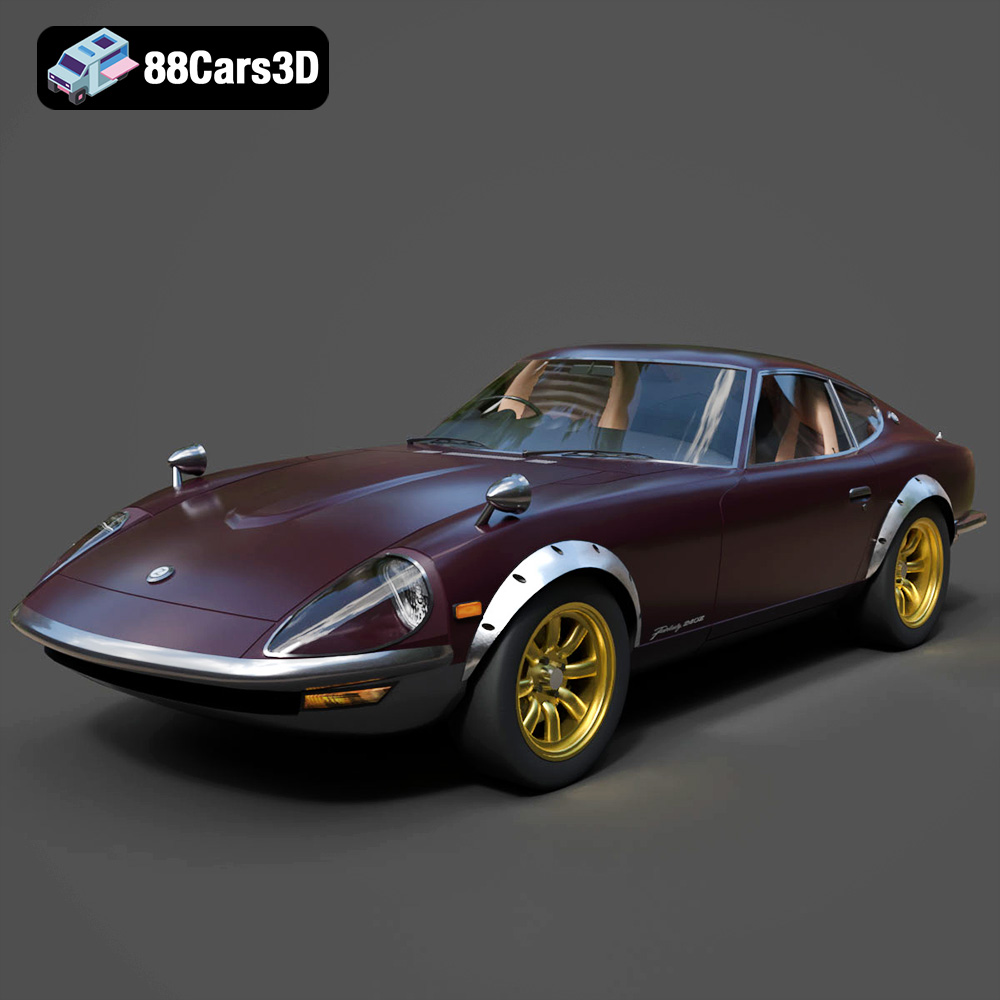
Texture: Yes
Material: Yes
Download the Nissan FairLady 240ZG 3D Model featuring clean geometry, realistic detailing, and a fully modeled interior. Includes .blend, .fbx, .obj, .glb, .stl, .ply, .unreal, and .max formats for rendering, simulation, and game development.
Price: $4.99
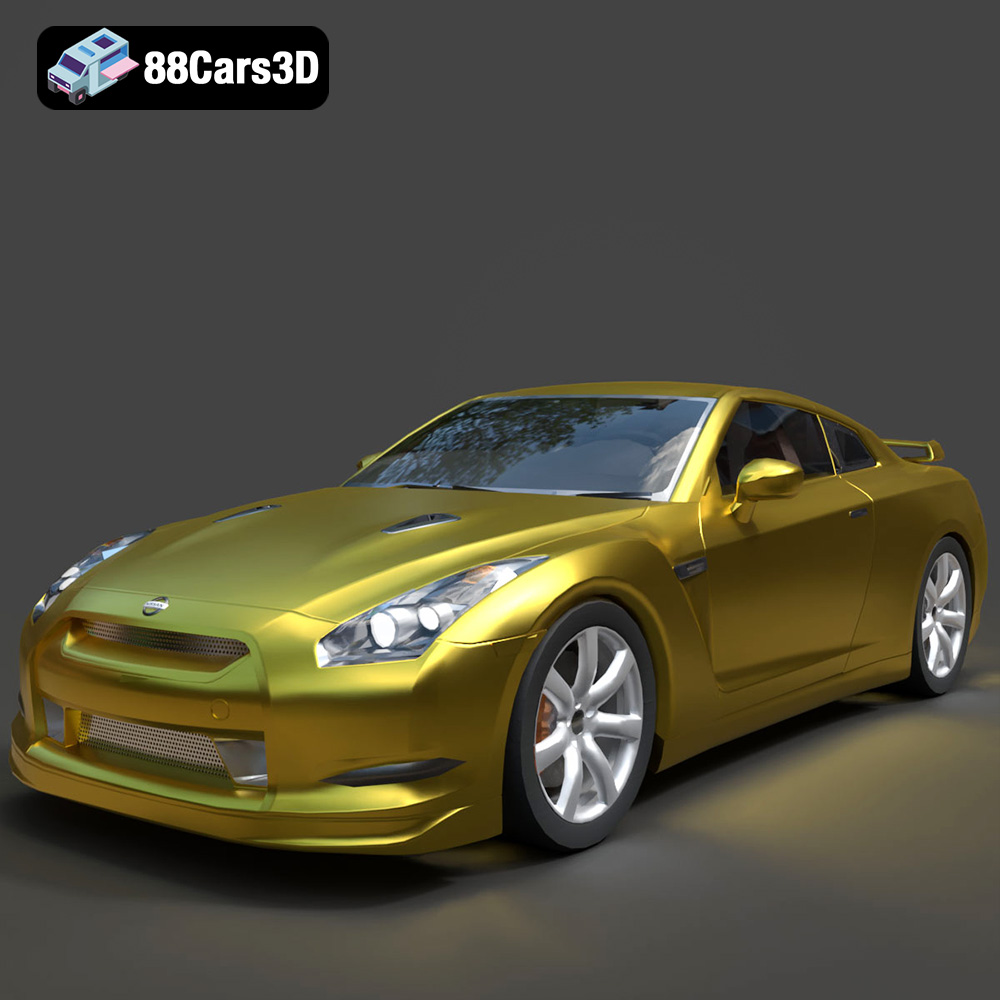
Texture: Yes
Material: Yes
Download the Nissan GT-R 2008 3D Model featuring clean geometry, realistic detailing, and a fully modeled interior. Includes .blend, .fbx, .obj, .glb, .stl, .ply, .unreal, and .max formats for rendering, simulation, and game development.
Price: $4.99

Texture: Yes
Material: Yes
Download the Nissan Cube 3D Model featuring clean geometry, realistic detailing, and a fully modeled interior. Includes .blend, .fbx, .obj, .glb, .stl, .ply, .unreal, and .max formats for rendering, simulation, and game development.
Price: $4.99

Texture: Yes
Material: Yes
Download the Nissan Cedric Y32 3D Model featuring clean geometry, realistic detailing, and a fully modeled interior. Includes .blend, .fbx, .obj, .glb, .stl, .ply, .unreal, and .max formats for rendering, simulation, and game development.
Price: $4.99

Texture: Yes
Material: Yes
Download the Nissan Cima Infiniti Q45 2007 3D Model featuring clean geometry, realistic detailing, and a fully modeled interior. Includes .blend, .fbx, .obj, .glb, .stl, .ply, .unreal, and .max formats for rendering, simulation, and game development.
Price: $4.99

Texture: Yes
Material: Yes
Download the Nissan Juke 2025 3D Model featuring clean geometry, realistic detailing, and a fully modeled interior. Includes .blend, .fbx, .obj, .glb, .stl, .ply, .unreal, and .max formats for rendering, simulation, and game development.
Price: $4.99
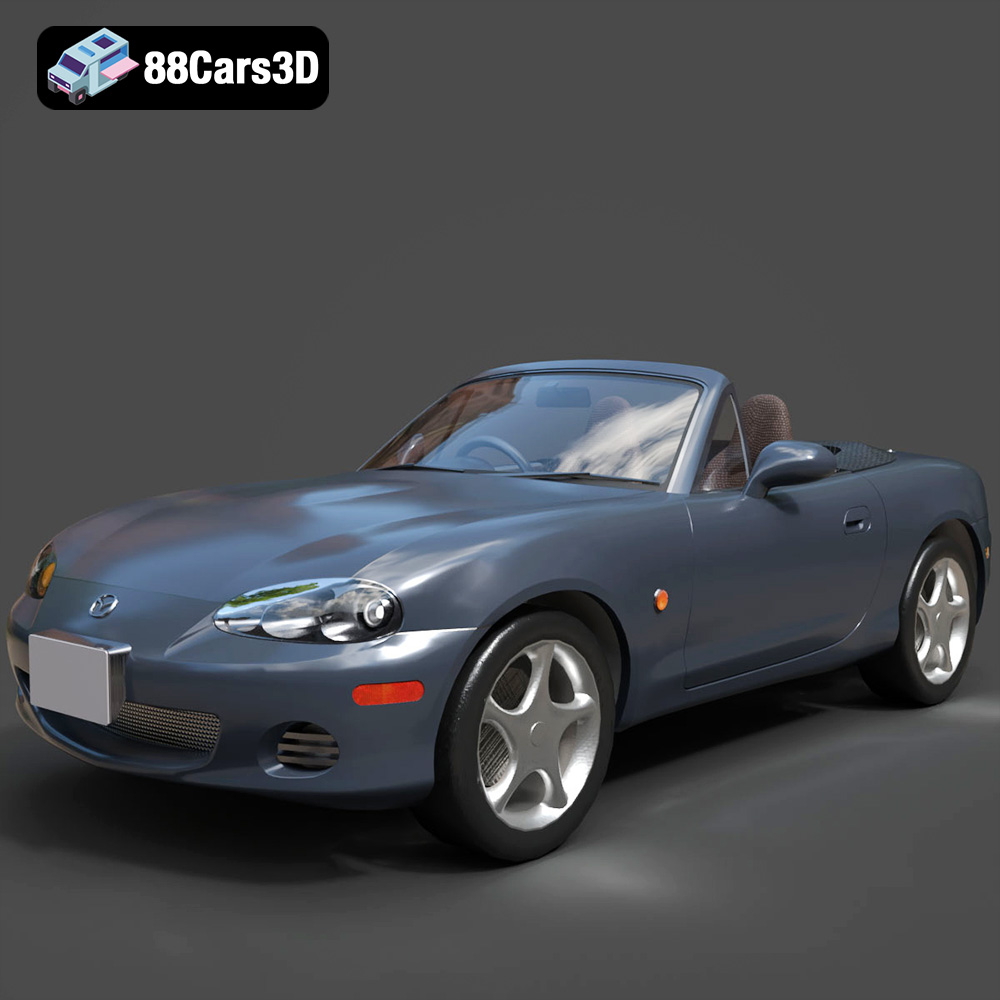
Texture: Yes
Material: Yes
Download the Mazda MX-5 2025 3D Model featuring clean geometry, realistic detailing, and a fully modeled interior. Includes .blend, .fbx, .obj, .glb, .stl, .ply, .unreal, and .max formats for rendering, simulation, and game development.
Price: $4.99

Texture: Yes
Material: Yes
Download the Nissan Maxima 2009 3D Model featuring clean geometry, realistic detailing, and a fully modeled interior. Includes .blend, .fbx, .obj, .glb, .stl, .ply, .unreal, and .max formats for rendering, simulation, and game development.
Price: $4.99
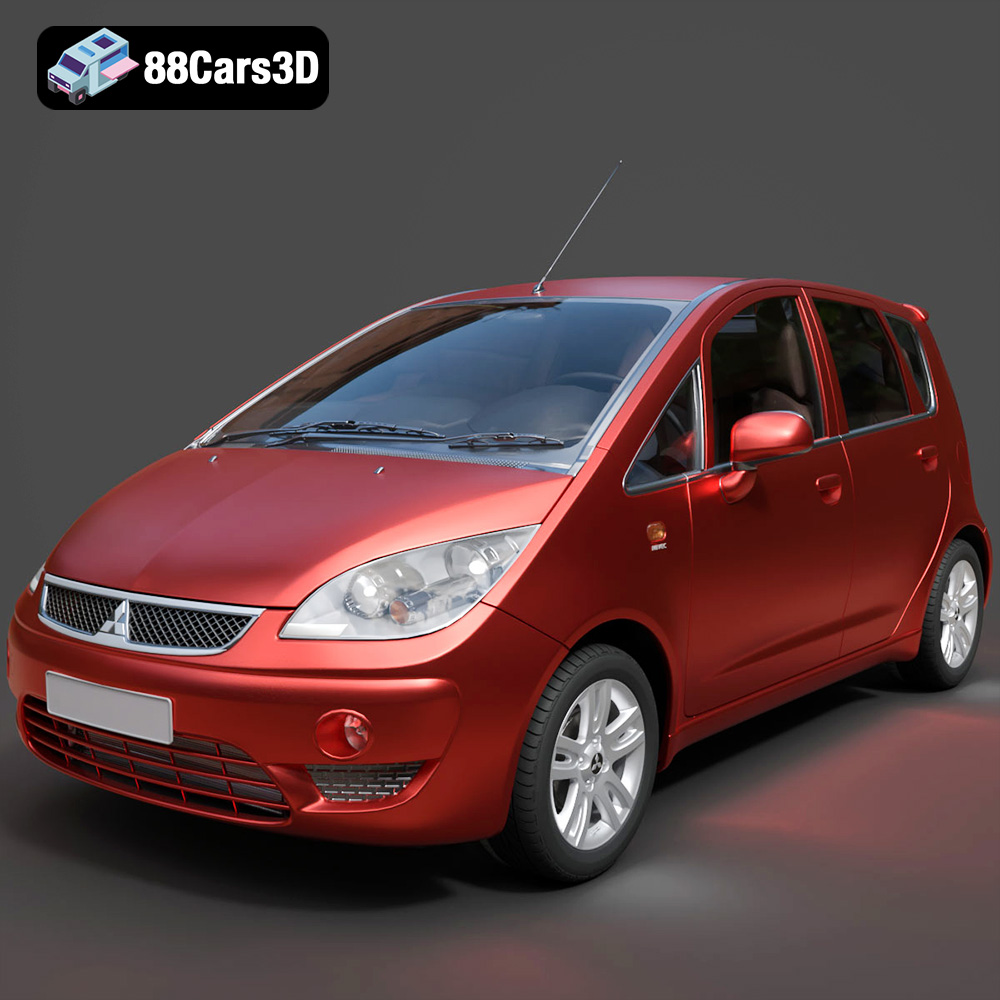
Texture: Yes
Material: Yes
Download the Mitsubishi Colt 2025 3D Model featuring clean geometry, realistic detailing, and a fully modeled interior. Includes .blend, .fbx, .obj, .glb, .stl, .ply, .unreal, and .max formats for rendering, simulation, and game development.
Price: $4.99

