Get 20% OFF All Premium 3D & STL Models!

The allure of a perfectly rendered automobile, whether cruising through a photorealistic streetscape, tearing across a virtual racetrack, or shining in an augmented reality showroom, is undeniable. But behind every captivating digital vehicle lies a foundation of meticulous craftsmanship: a high-quality 3D car model. For professionals in automotive design, game development, architectural visualization, AR/VR experiences, and even advanced 3D printing, understanding the intricacies of creating, optimizing, and utilizing these complex assets is paramount. It’s not merely about polygons and textures; it’s about capturing the soul of a machine in a digital medium.
This comprehensive guide will take you on an in-depth journey through the technical landscape of 3D car models. We’ll explore everything from the foundational principles of clean topology and efficient UV mapping to the advanced techniques of PBR material creation and cutting-edge automotive rendering. We’ll also delve into crucial considerations for game assets optimization, multi-platform compatibility through various file formats, and the specialized demands of AR/VR visualization. Whether you’re a seasoned 3D artist aiming to refine your craft, a game developer seeking peak performance, or an automotive designer pushing the boundaries of virtual prototyping, prepare to unlock the secrets to truly exceptional digital automobiles.
At the heart of every great 3D car model lies impeccable topology. This isn’t just an aesthetic choice; it’s a critical technical requirement that dictates everything from deformation quality to rendering accuracy and ease of UV unwrapping. Automotive surfaces are renowned for their complex curves, sharp creases, and subtle reflections, all of which must be captured with absolute precision. Good topology ensures that these surfaces are smooth, free of pinching, and can be easily manipulated without introducing artifacts. The goal is to achieve an even distribution of polygons, primarily quads, that flow naturally along the contours and design lines of the vehicle.
Challenges often arise with complex panel gaps, vents, and intricate headlight designs. A common pitfall is the introduction of too many triangles or n-gons, especially in areas of high detail, which can lead to shading issues, suboptimal subdivision results, and difficulties in animation or deformation. Professionals typically adhere to strict quad-based modeling workflows, leveraging techniques like edge loops to define sharp creases and support subtle curvature. This meticulous approach guarantees that the model will behave predictably under subdivision, allowing for both low-poly and high-poly representations from a single clean base mesh.
The industry standard for automotive 3D modeling is almost exclusively quad-based geometry, especially when utilizing subdivision surface modifiers (e.g., TurboSmooth in 3ds Max, Subdivision Surface in Blender, Smooth Mesh in Maya). Quads (four-sided polygons) deform more predictably than triangles and are essential for maintaining smooth, continuous surfaces after subdivision. When a subdivision surface algorithm is applied, it interpolates new geometry between the existing vertices, effectively smoothing the mesh. For a car body, this means that subtle curvature and reflective surfaces remain pristine, without any unsightly bumps or creases that don’t belong.
Proper edge flow is crucial for how these subdivisions perform. Edge loops should follow the natural lines of the car’s design – around wheel wells, along character lines, and defining panel gaps. This allows for localized detail without propagating unwanted geometry across the entire mesh. For example, to create a sharp edge on a fender, you’d typically add two or three closely spaced edge loops along that line. When subdivided, these loops will “hold” the sharpness, while areas without such support loops will smooth out. This control over detail and smoothness is fundamental to achieving a convincing and high-fidelity automotive model.
Replicating the seamless fit and finish of a real car’s body panels is one of the greatest challenges in 3D modeling. Panel gaps need to be precise, consistent, and perfectly parallel. This often involves creating separate mesh pieces for each panel (hood, doors, fenders) and then carefully modeling the edges to ensure a clean, uniform gap. Many artists employ a “shrinkwrap” technique or projection modeling to ensure that complex details like grilles, vents, and badge mounts conform perfectly to the underlying curved surfaces without intersecting or creating artifacts. This involves carefully projecting geometry onto the main car body and then extruding or cutting details based on that projection.
Another critical aspect is maintaining consistent wall thickness for details such as mirrors, spoilers, and interior elements. Using techniques like shell modifiers or manual extrusion with precision tools ensures that parts have realistic depth and solidity. For complex details like tire treads or intricate headlight internals, a combination of procedural generation and careful manual modeling often yields the best results, balancing fidelity with reasonable polygon counts. When you source 3D car models from platforms like 88cars3d.com, these topological considerations are often already handled by experienced artists, saving immense time and ensuring a professional base.
Once the geometry is solidified, the next step towards realism involves surface detailing through UV mapping and PBR material creation. UV mapping is the process of flattening the 3D surface of a model into a 2D space, allowing textures to be applied accurately. For complex objects like cars, this is a meticulous task, as seamless textures and efficient texture utilization are paramount. PBR (Physically Based Rendering) materials, on the other hand, define how light interacts with the model’s surfaces, simulating real-world properties like metallic reflections, rough surfaces, and transparent glass with incredible accuracy.
The synergy between well-executed UVs and correctly authored PBR maps is what elevates a 3D car model from a mere collection of polygons to a visually stunning, photorealistic asset. Poor UVs can lead to stretched textures, visible seams, or inefficient use of texture memory, while incorrect PBR values can make a surface look dull, plastic, or simply unrealistic. Achieving excellence in this area requires a deep understanding of texture coordinate systems, material properties, and the rendering pipeline.
Efficient UV mapping for a car requires a strategic approach. The goal is to minimize seams, avoid stretching, and utilize the 2D texture space (UV space) as effectively as possible. Large, continuous surfaces like the car body, hood, and roof are often unwrapped as single large islands to ensure seamless paint finishes. Smaller, distinct parts like wheels, brake calipers, and interior components will have their own dedicated UV islands. Many artists segment their UVs into logical groups – one UV set for the body, another for wheels, another for glass, and so on – to manage texture resolutions and material assignments more effectively.
Modern UV unwrapping tools in software like 3ds Max, Blender, and Maya offer advanced features like automatic unwrapping, pelt mapping, and projection methods. However, manual refinement is almost always necessary to optimize seam placement (e.g., hiding seams in panel gaps or under the car), straighten UV shells for easier texture painting, and ensure consistent texel density across the entire model. For game assets, it’s often beneficial to pack multiple smaller textures onto a single large texture atlas to reduce draw calls and improve performance. This careful balance between visual quality and technical efficiency is a hallmark of professional 3D car models.
PBR materials are the backbone of modern automotive rendering realism. Instead of simply painting colors, PBR workflows focus on physically accurate properties: Base Color (albedo), Metallic, Roughness, Specular, Normal, and Opacity maps. For a car, the metallic paint is a prime example: a high Metallic value combined with a varying Roughness map (to simulate clear coat reflections and micro-scratches) yields stunning results. Glass materials require specific settings, often with low Roughness, high transmission, and correct IOR (Index of Refraction) values to accurately bend light.
Authoring these textures involves a combination of procedural noise, image-based textures, and hand-painting. Software like Substance Painter and Quixel Mixer are invaluable for creating complex material layers, weathering effects, and realistic wear and tear. For example, a car tire would have a diffuse map for color, a normal map for tread detail, and a roughness map to simulate the rubber’s texture. Even subtle details like the texture of plastic trims or the weave of interior fabrics contribute significantly to the overall realism. Utilizing high-resolution textures (e.g., 4K or 8K for major components) is common for high-end visualization, while optimizing for lower resolutions (e.g., 2K or 1K) might be necessary for real-time game assets.
Once a 3D car model is meticulously built and textured, the next crucial step is to illuminate and render it to its full potential. Automotive rendering is an art form in itself, demanding a keen eye for lighting, composition, and material interaction. The goal is to create images or animations that are indistinguishable from real-world photography, showcasing the vehicle’s design and finish in the most flattering way possible. This involves leveraging powerful rendering engines and understanding how to manipulate light, reflections, and the environment to achieve photorealism.
Different rendering engines – Corona Renderer, V-Ray, Cycles, Arnold – each offer unique strengths and workflows, but the underlying principles of physically accurate lighting and material interaction remain consistent. Mastering these tools and techniques allows artists to produce breathtaking visuals for marketing, design reviews, or cinematic sequences. The interplay of subtle reflections on a metallic paint job, the accurate refraction through glass, and the detailed shadows cast by intricate components are all fundamental to achieving a believable final image.
Effective lighting is the single most important factor in achieving photorealistic automotive rendering. High Dynamic Range Images (HDRIs) are almost universally used as primary light sources because they provide realistic environmental lighting and reflections from a single source. A studio HDRI with softboxes and diffusers can beautifully highlight the car’s curves, while an outdoor HDRI can place the car convincingly in a specific location, complete with natural sky and ground reflections.
Beyond HDRIs, additional light sources are often strategically placed. Area lights can be used as subtle fill lights or to emphasize specific details, while spot lights can create dramatic highlights or simulate headlights. Rim lights can help separate the car from the background, adding depth. Crucially, the environment itself plays a huge role. Even if the car is the main subject, a simple ground plane with a reflective material and perhaps some background elements can vastly improve realism by providing something for the car to reflect and cast shadows upon. The goal is to mimic the conditions of a professional photoshoot, where every light and reflection is carefully controlled. Exposure, white balance, and color grading within the rendering engine’s camera settings also contribute significantly to the final look.
Each major rendering engine—Corona Renderer, V-Ray, Cycles (Blender), and Arnold (Maya, 3ds Max)—has its own strengths and optimization strategies.
Regardless of the engine, common optimization techniques include instancing duplicate objects (like wheels), using efficient texture formats, and baking complex lighting or ambient occlusion maps where possible. Understanding these engine-specific nuances allows artists to achieve optimal quality within reasonable render times.
While photorealistic renders prioritize visual fidelity above all else, game assets demand a careful balance between visual quality and real-time performance. A stunning 3D car model for an offline render can bring a game engine to its knees if not properly optimized. The challenges in game development include maintaining high frame rates, managing memory usage, and ensuring smooth gameplay across a range of hardware specifications. This requires a dedicated approach to mesh density, texture management, and dynamic loading strategies.
Successful game asset integration means your 3D car models look great, respond fluidly, and contribute positively to the overall game experience without causing performance bottlenecks. This involves techniques like creating multiple Levels of Detail (LODs), carefully utilizing texture atlases, and understanding the impact of draw calls on the rendering pipeline. Platforms like 88cars3d.com often provide game-ready models, pre-optimized for efficient integration into popular engines like Unity and Unreal Engine, significantly streamlining development workflows.
Levels of Detail (LODs) are crucial for optimizing 3D car models in game engines. An LOD system automatically swaps between different versions of a model based on its distance from the camera. A car far in the distance might use an LOD0 (very low polygon count, simplified textures), while a car up close would use an LOD3 or LOD4 (full detail mesh and textures). Typically, 3-5 LOD levels are created for each vehicle, drastically reducing the polygon count and vertex processing for objects that are not directly in the player’s view. For instance, an LOD0 might have 5,000 polygons, while LOD3 could be 80,000-150,000 polygons for an exterior view.
Texture atlasing is another vital optimization technique. Instead of having dozens of individual textures for different parts of a car (body, wheels, windows, interior), these textures are strategically packed onto one or a few larger “atlas” textures. This reduces the number of material calls (draw calls) the game engine needs to make to render the car. Fewer draw calls mean better performance. For example, all the interior textures could be combined into one 2K atlas, and all the wheel textures into another. This not only boosts frame rates but also helps manage VRAM usage more efficiently, making the game assets more robust for various platforms.
Beyond LODs and texture atlasing, several other factors contribute to game engine performance. Draw calls are instructions sent to the GPU to render geometry. Each material, texture, or separate mesh object can contribute to a draw call. Minimizing these by combining meshes and materials is paramount. For a car, this means careful consideration of how many separate material IDs are truly necessary. Often, combining similar materials onto a single texture atlas helps reduce these calls.
Collision meshes are simplified versions of the car’s geometry, used purely for physics calculations and collision detection, not for rendering. A detailed rendering mesh is far too complex for real-time physics, so a separate, much lower-poly collision mesh (often a convex hull or a series of primitive shapes) is created. This ensures accurate collision responses without bogging down the physics engine. Furthermore, optimizing the car’s physics asset – including wheel colliders, suspension settings, and center of mass – is crucial for realistic driving dynamics in games. These details, though not visible, are fundamental to a high-quality, game-ready 3D car model, especially in simulations or racing titles.
The utility of high-quality 3D car models extends far beyond traditional renders and games. They are increasingly vital for immersive AR/VR visualization, where interactive digital twins provide unparalleled experiences for product design, training, and virtual showrooms. Furthermore, the advancements in 3D printing technology mean that digital models can transition into tangible prototypes or collectibles, demanding specific preparation. Central to all these applications is a deep understanding of various file formats and their respective strengths and limitations, ensuring seamless compatibility across different pipelines and platforms.
Adapting a single master model for such diverse uses requires specialized workflows and optimization strategies. What works for a high-end cinematic render will likely be too complex for a mobile AR experience and not watertight for 3D printing. Understanding how to intelligently convert, optimize, and prepare models for each specific use case is a valuable skill in today’s multi-platform 3D ecosystem.
AR/VR visualization places unique demands on 3D car models. Performance is critical, especially for mobile AR (e.g., Apple ARKit, Google ARCore) where processing power is limited. Models need to be highly optimized, often with significantly lower polygon counts than desktop VR or high-end renders. This means aggressive use of LODs, smaller texture resolutions (e.g., 512×512 or 1K), and baked lighting/ambient occlusion maps where possible to reduce real-time calculations.
For VR, the polygon budget can be higher, but frame rates must remain consistently high (e.g., 90 FPS) to prevent motion sickness. This necessitates efficient mesh geometry, streamlined shader networks, and a keen awareness of draw calls. Textures are often compressed for memory efficiency, and transparency effects must be handled carefully. Ensuring proper scale and pivot points for AR/VR is also essential for correct placement and interaction in the virtual or augmented space. Models used in AR/VR applications also benefit greatly from specialized file formats like GLB and USDZ, which are designed for efficient transmission and rendering in these environments.
Transitioning a 3D car model from screen to physical object through 3D printing introduces a new set of challenges. The primary concern is mesh integrity: the model must be “watertight” or manifold, meaning it has no holes, inverted normals, or self-intersecting geometry. Every edge must be connected to exactly two faces, forming a continuous surface without gaps. Software tools like Blender’s 3D Print Toolbox, Netfabb, or Meshmixer are invaluable for checking and repairing mesh errors. Wall thickness is also crucial; parts must be thick enough to be structurally sound once printed, typically above 1-2mm depending on the printing technology and material.
While high polygon counts are acceptable, extremely fine details might be lost or require specialized high-resolution printers. For complex models, separating the car into logical, interlocking parts (e.g., body, wheels, interior components) before printing can improve print quality and reduce support material requirements. Scale and material properties (e.g., PLA, ABS, resin) must be considered, as they dictate the final surface finish and strength. Pre-sliced models are often saved in STL or OBJ formats, which are widely compatible with 3D printing software.
Understanding file formats is crucial for interoperability and workflow efficiency. Each format has its strengths:
Choosing the correct format based on the intended use case streamlines workflows and prevents compatibility issues. When looking for high-quality models, discerning what file formats are available (like on 88cars3d.com) can determine if a model fits your specific project needs.
The journey of creating a high-quality 3D car model doesn’t end with the render button. To truly elevate an image to photorealistic perfection, post-processing and compositing are indispensable steps. This phase is where the final touches are applied, enhancing the mood, correcting imperfections, and adding cinematic flair that can transform a good render into an exceptional one. It’s akin to a photographer’s darkroom work, meticulously refining every pixel to achieve maximum visual impact and emotional resonance.
Utilizing software like Adobe Photoshop, After Effects, or Blackmagic Fusion, artists can fine-tune colors, add atmospheric effects, integrate render passes, and perform a myriad of adjustments that are difficult or impossible to achieve solely within the 3D rendering engine. This stage allows for creative freedom and the ability to unify various elements into a cohesive final image, making the automotive rendering truly shine.
Post-processing in applications like Photoshop is critical for adding polish to automotive renders. The first step often involves color correction to ensure accurate white balance and tonal range. Adjustments to curves and levels can enhance contrast and bring out details that might be flat in the raw render. Subtle sharpening can make edges crisper, while selective blurring (e.g., depth of field effects) can guide the viewer’s eye.
A common technique is the use of render passes (or “render elements”) exported from the 3D software. These passes—like reflection, refraction, ambient occlusion, raw lighting, and Z-depth—allow for precise, non-destructive adjustments to specific aspects of the image. For instance, you can separately adjust the intensity of reflections on the car paint, add a subtle glow to headlights, or create atmospheric haze. Vignettes, subtle chromatic aberration, and lens flares can further mimic real-world camera effects, adding a layer of authenticity to the final image. This granular control ensures that every detail contributes to the overall realism and aesthetic appeal of the 3D car model.
For cinematic automotive rendering, color grading and advanced effects take center stage, often performed in tools like After Effects, DaVinci Resolve, or Nuke. Color grading sets the mood and tone of the image, influencing how the viewer perceives the vehicle. This could involve applying a warm, golden hour look, a cool, futuristic aesthetic, or a gritty, high-contrast feel, all designed to complement the car’s design and narrative. Look-up Tables (LUTs) are frequently used to apply consistent color grades, emulating film stocks or specific visual styles.
Beyond color, effects like motion blur (especially for animation), subtle film grain, lens distortion, and bloom can significantly enhance the cinematic quality. Compositing multiple renders – for example, combining a clean car render with a dynamic background, dust particles, or atmospheric fog – helps create a more believable and immersive scene. Even subtle imperfections, such as finger smudges on glass or dust on a surface, when strategically added in post-production, can paradoxically make a pristine 3D car model feel more real and lived-in. This final layer of artistic refinement is what often separates good visualization from truly exceptional visual storytelling.
The journey through the creation and utilization of high-quality 3D car models is a testament to the blend of technical precision and artistic vision required in today’s digital landscape. From the foundational principles of clean topology and efficient UV mapping to the advanced techniques of PBR material creation and intricate automotive rendering, every stage plays a critical role in achieving photorealistic results. We’ve explored the rigorous demands of game assets optimization, the specialized requirements of AR/VR visualization, and the careful preparation needed for tangible 3D printing, all underpinned by the mastery of various file formats and the final polish of post-processing.
Whether your goal is to produce stunning marketing visuals, develop immersive virtual experiences, or prototype physical designs, the depth of knowledge and the quality of your assets are paramount. Investing in robust workflows and understanding these intricate technical details will not only save you time and resources but also elevate the impact of your work dramatically. For artists and developers seeking a head start, platforms like 88cars3d.com provide expertly crafted, production-ready 3D car models that adhere to these industry best practices, allowing you to focus on bringing your creative vision to life without compromising on technical excellence. Embrace these insights, and drive your digital automotive projects towards unparalleled success.

Texture: Yes
Material: Yes
Download the Nissan Fuga 2003 3D Model featuring clean geometry, realistic detailing, and a fully modeled interior. Includes .blend, .fbx, .obj, .glb, .stl, .ply, .unreal, and .max formats for rendering, simulation, and game development.
Price: $4.99
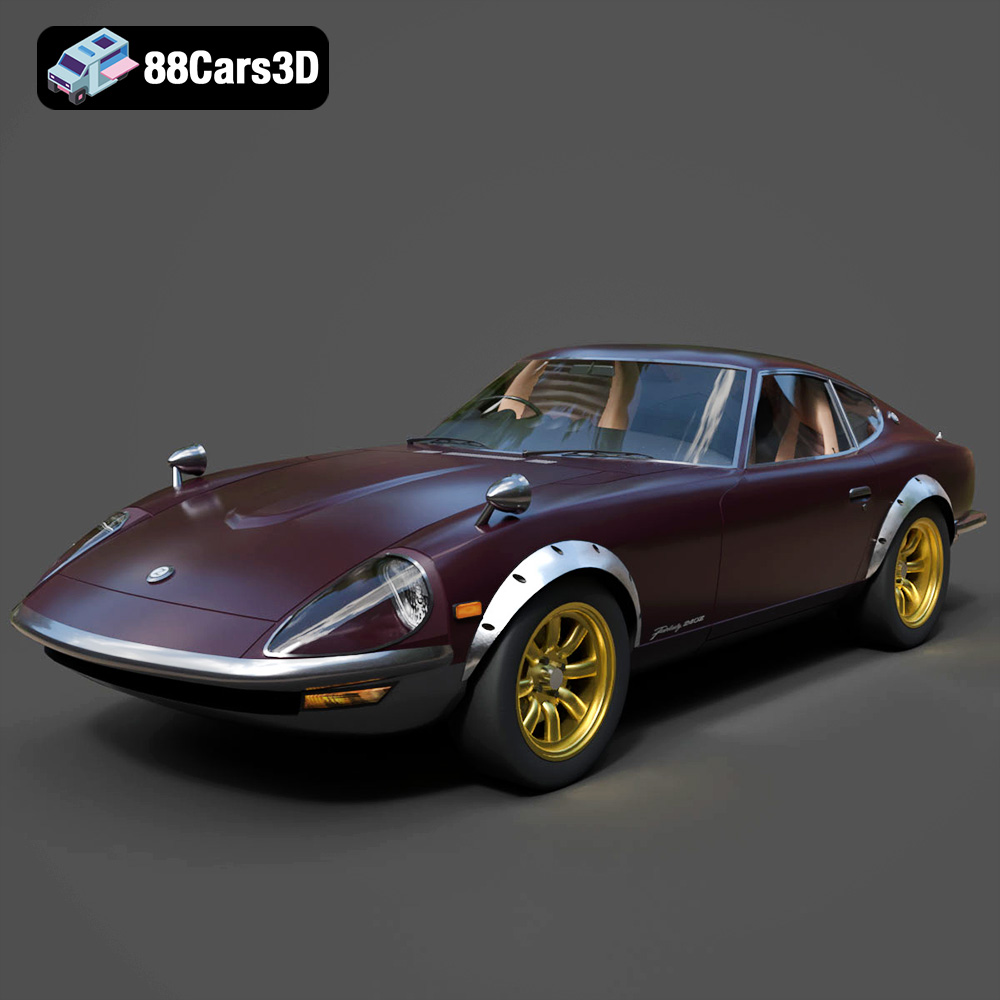
Texture: Yes
Material: Yes
Download the Nissan FairLady 240ZG 3D Model featuring clean geometry, realistic detailing, and a fully modeled interior. Includes .blend, .fbx, .obj, .glb, .stl, .ply, .unreal, and .max formats for rendering, simulation, and game development.
Price: $4.99
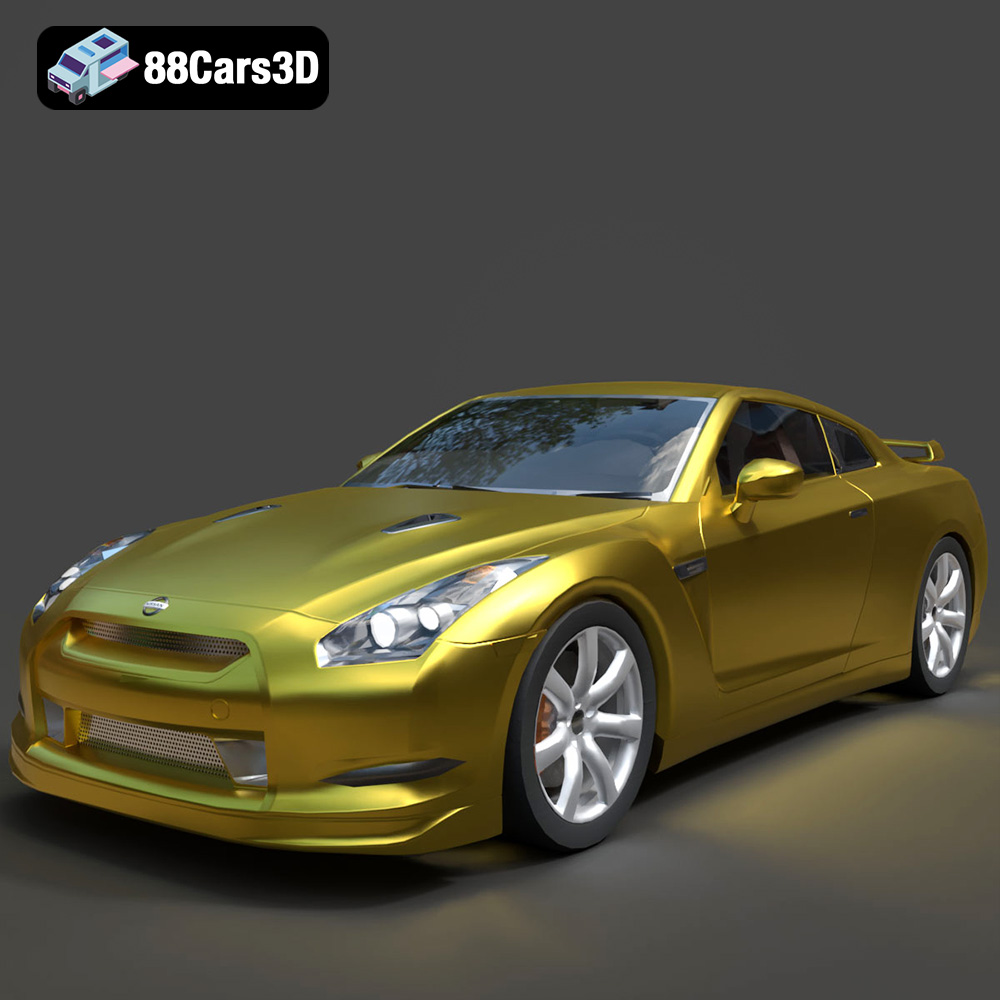
Texture: Yes
Material: Yes
Download the Nissan GT-R 2008 3D Model featuring clean geometry, realistic detailing, and a fully modeled interior. Includes .blend, .fbx, .obj, .glb, .stl, .ply, .unreal, and .max formats for rendering, simulation, and game development.
Price: $4.99

Texture: Yes
Material: Yes
Download the Nissan Cube 3D Model featuring clean geometry, realistic detailing, and a fully modeled interior. Includes .blend, .fbx, .obj, .glb, .stl, .ply, .unreal, and .max formats for rendering, simulation, and game development.
Price: $4.99

Texture: Yes
Material: Yes
Download the Nissan Cedric Y32 3D Model featuring clean geometry, realistic detailing, and a fully modeled interior. Includes .blend, .fbx, .obj, .glb, .stl, .ply, .unreal, and .max formats for rendering, simulation, and game development.
Price: $4.99

Texture: Yes
Material: Yes
Download the Nissan Cima Infiniti Q45 2007 3D Model featuring clean geometry, realistic detailing, and a fully modeled interior. Includes .blend, .fbx, .obj, .glb, .stl, .ply, .unreal, and .max formats for rendering, simulation, and game development.
Price: $4.99

Texture: Yes
Material: Yes
Download the Nissan Juke 2025 3D Model featuring clean geometry, realistic detailing, and a fully modeled interior. Includes .blend, .fbx, .obj, .glb, .stl, .ply, .unreal, and .max formats for rendering, simulation, and game development.
Price: $4.99
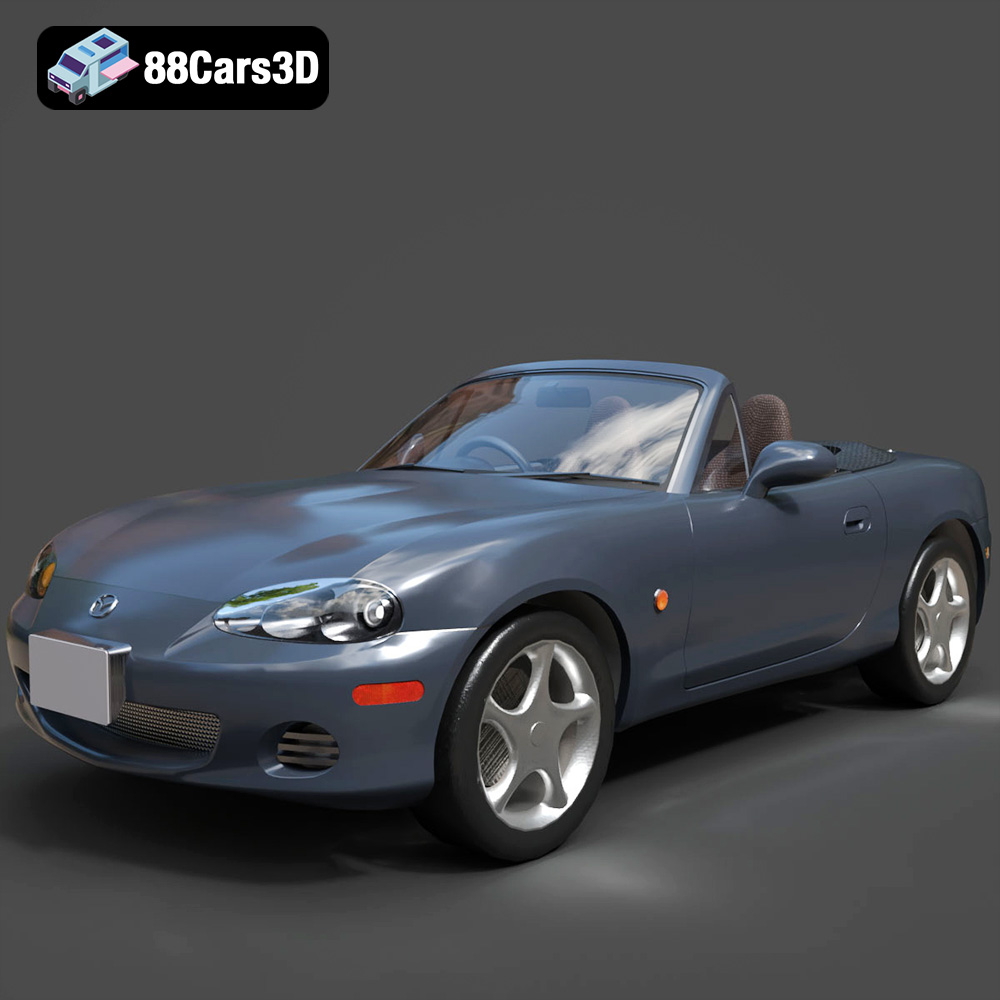
Texture: Yes
Material: Yes
Download the Mazda MX-5 2025 3D Model featuring clean geometry, realistic detailing, and a fully modeled interior. Includes .blend, .fbx, .obj, .glb, .stl, .ply, .unreal, and .max formats for rendering, simulation, and game development.
Price: $4.99

Texture: Yes
Material: Yes
Download the Nissan Maxima 2009 3D Model featuring clean geometry, realistic detailing, and a fully modeled interior. Includes .blend, .fbx, .obj, .glb, .stl, .ply, .unreal, and .max formats for rendering, simulation, and game development.
Price: $4.99
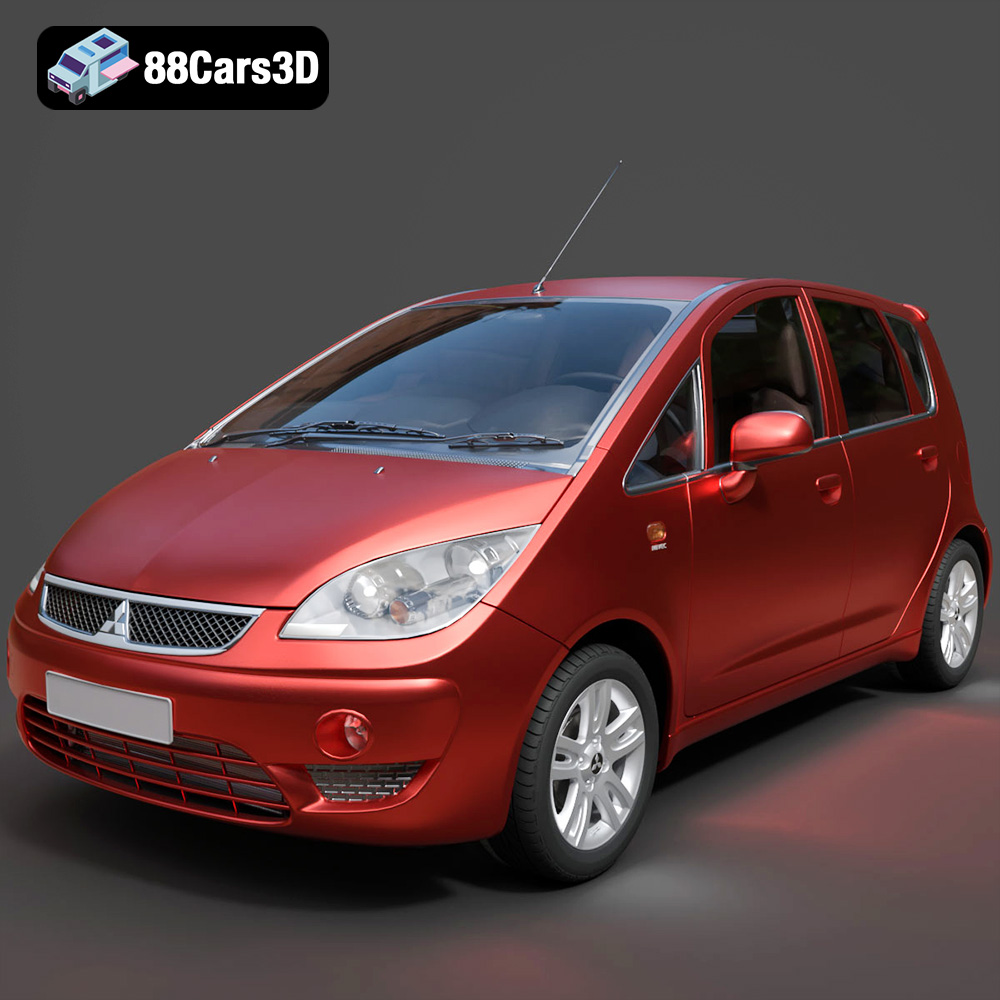
Texture: Yes
Material: Yes
Download the Mitsubishi Colt 2025 3D Model featuring clean geometry, realistic detailing, and a fully modeled interior. Includes .blend, .fbx, .obj, .glb, .stl, .ply, .unreal, and .max formats for rendering, simulation, and game development.
Price: $4.99

