Get 20% OFF All Premium 3D & STL Models!

The digital realm has revolutionized how we design, visualize, and interact with automobiles. From breathtaking cinematic renders to immersive virtual reality experiences and high-octane game environments, the demand for meticulously crafted 3D car models has never been higher. Yet, behind every stunning digital vehicle lies a complex tapestry of technical artistry, demanding precision in modeling, texturing, optimization, and deployment. This isn’t just about aesthetics; it’s about robust engineering in the digital space.
For 3D artists, game developers, automotive designers, and visualization professionals, understanding the intricate technical considerations involved in creating and utilizing high-quality 3D car models is paramount. It’s the difference between a passable asset and a professional-grade masterpiece that performs flawlessly across diverse platforms. This comprehensive guide will take you on a deep dive into the essential technical aspects, from the foundational principles of topology and UV mapping to advanced rendering techniques, game engine optimization, and preparing models for cutting-edge applications like AR/VR and 3D printing. Get ready to elevate your understanding and harness the full potential of automotive 3D design.
The underlying structure of a 3D car model – its topology and edge flow – is arguably the most critical factor influencing its quality and versatility. Good topology ensures smooth deformation, clean subdivision, and efficient UV mapping, which are all non-negotiable for realistic automotive renders and interactive experiences. Automotive surfaces, with their sleek curves and sharp creases, present unique challenges that demand precise control over mesh construction.
The cornerstone of professional 3D car modeling is a quad-based mesh. Quads (four-sided polygons) are ideal because they allow for predictable subdivision, enabling the model to retain its overall shape while gaining detail. Triangles can cause pinching, unpredictable deformation, and make UV mapping significantly harder, while N-gons (polygons with more than four sides) are an absolute no-go as they break subdivision surfaces and create rendering artifacts. A clean, evenly distributed quad mesh ensures that when you apply a subdivision surface modifier (like Turbosmooth in 3ds Max or Subdivision Surface in Blender), the model smooths out beautifully without unwanted bumps or distortions, accurately representing the car’s intended design language.
For high-end visualization, the initial base mesh should be relatively low-poly, typically ranging from 30,000 to 150,000 polygons, designed specifically to work with subdivision modifiers. This approach offers flexibility: you can adjust the subdivision level for different applications. For game development or AR/VR, however, the target polygon count is a direct performance concern. A main player vehicle in a racing game might have a maximum of 100,000-150,000 polygons (triangles) for its highest LOD, while background vehicles could be as low as 10,000-20,000. When sourcing 3D car models, always check the base mesh topology and polygon count before subdivision, as this indicates its true quality and adaptability.
Automotive design is defined by its precise blend of sweeping curves and sharp, defined edges. Achieving this balance in 3D requires intelligent use of edge loops. Supporting edge loops (or “control loops”) are crucial for maintaining hard edges on a subdivided surface. These are tightly spaced edge loops running parallel to a sharp corner, effectively “pinching” the surface to prevent it from over-smoothing. For example, around a car’s wheel arch or door cut lines, a minimum of two to three closely grouped edge loops will define that sharp transition perfectly upon subdivision. Conversely, areas needing smooth, flowing surfaces, like the main body panels, should have widely spaced edge loops that conform naturally to the curvature, allowing the subdivision modifier to create seamless transitions without faceting.
Beyond quads and edge loops, best practices include avoiding poles (vertices where more than five edges meet) where possible, especially on flat surfaces, as they can cause pinching. Always ensure proper edge flow that directs the mesh’s deformation along logical paths, mirroring the car’s physical construction. For instance, the edges around a door panel should flow cleanly along the door’s outline and not cut across it haphazardly. Employing techniques like creasing edges (without relying solely on them, as they can be destructive) or using bevels with multiple segments can also help control hard surface details precisely without excessively increasing the polycount of the base mesh. A well-constructed mesh will also be easier to unwrap for UVs, paint textures on, and rig for animation, making it a truly versatile asset.
Once your 3D car model boasts impeccable topology, the next critical step for visual fidelity is UV mapping. UVs are the 2D coordinates that tell your 3D software how to project a 2D texture onto the 3D surface. Without carefully planned UVs, even the highest resolution textures will appear stretched, distorted, or misaligned, ruining the realism of your automotive model. Effective UV mapping is a meticulous process that balances texture density, seam placement, and overall layout efficiency.
The goal is to create a seamless, non-overlapping UV layout that utilizes as much of the texture space as possible, minimizing wasted pixels. For complex assets like cars, this often means creating multiple UV sets for different material types or resolutions. For instance, the main body might have one UV set, while the interior, wheels, and glass might have their own, allowing for tailored texture resolutions without unnecessarily increasing the overall texture memory footprint. A common pitfall is ignoring the distribution of UV shells; ensure that areas requiring higher detail (like badges or headlights) receive more UV space than less critical areas.
Unwrapping a car model requires strategic planning. Start by identifying logical seams that would be less visible, much like how a real car is constructed from panels. Good candidates for seams include edges along panel gaps, under the vehicle, or where different materials meet. Tools like “Pelt Mapping” or “Unfold” (in 3ds Max), “Smart UV Project” or “Follow Active Quads” (in Blender), and Maya’s native UV editor tools are invaluable. For complex curves, cylindrical or planar projections can be a starting point, followed by careful relaxation and unfolding to minimize distortion. Always use a checker pattern or a gradient texture to visually inspect your UVs for stretching and compression before committing to your final texture maps. Areas with high stretching will visibly distort the checker pattern, indicating a need for further unwrapping or relaxing.
Texture density refers to the number of pixels per unit of surface area. For automotive models, maintaining consistent texture density across major visible parts is crucial for a uniform look. Tools exist to automatically scale UV shells based on their 3D surface area, helping achieve this consistency. While seams are unavoidable, strategically placing them in less visible areas (e.g., along panel lines, under the car, or within crevices) minimizes their impact. For high-resolution textures, even perfectly aligned seams can sometimes be visible, so careful texture painting that blends across these boundaries in programs like Substance Painter is often necessary. Grouping small, non-critical parts (like nuts, bolts, or small interior elements) into a single UV island and dedicating a smaller portion of the texture map to them can also optimize texture usage and draw calls in real-time environments.
For ultra-high-resolution automotive projects, such as cinematic rendering or detailed visualization, a single 0-1 UV space is often insufficient. This is where Multi-Tile UVs, commonly known as UDIMs, come into play. UDIM allows you to spread your UV shells across multiple UV tiles (e.g., 1001, 1002, 1003, etc.), each capable of holding its own high-resolution texture map. This means a car body could have multiple 4K or 8K texture maps dedicated to different sections, providing an incredible level of detail without compromising texture resolution. UDIM workflows are standard in film and VFX and are increasingly supported by renderers like V-Ray, Corona, Cycles, and Arnold, as well as texturing applications like Substance Painter and Mari.
Conversely, for real-time applications like games or AR/VR, texture atlasing is a powerful optimization technique. This involves packing multiple smaller textures (e.g., textures for the wheels, mirrors, and interior parts) into a single larger texture map. While it can lead to slight quality compromises if not managed well, it significantly reduces draw calls, improving performance. When sourcing models from marketplaces such as 88cars3d.com, pay attention to whether UDIMs are used for high-end assets or if textures are atlased for game-ready versions, as this indicates the model’s intended primary use case and optimization level.
The realism of a 3D car model largely hinges on its materials and how light interacts with them. Physically Based Rendering (PBR) has become the industry standard for creating photorealistic materials because it simulates light behavior based on real-world physics, resulting in consistent and believable results across different lighting conditions and renderers. Mastering PBR involves understanding its core principles and how to construct sophisticated shader networks.
At its heart, PBR defines materials by properties that describe how they reflect and absorb light, rather than simply defining their color. The two main workflows are Metallic-Roughness and Specular-Glossiness. The Metallic-Roughness workflow, favored by most game engines and modern renderers, uses maps for Base Color (Albedo), Metallic, Roughness, Normal, and Ambient Occlusion. The Specular-Glossiness workflow uses Diffuse (Albedo), Specular, Glossiness, Normal, and Ambient Occlusion. Both aim for the same physical accuracy, but their input maps differ. Understanding which workflow your chosen renderer or engine prefers is crucial for compatibility and correct material interpretation.
In the Metallic-Roughness workflow:
For Specular-Glossiness, the workflow is similar but with different map interpretations. The key is never to mix and match; choose one workflow and stick to it for all your PBR materials.
Car paint is notoriously complex, often requiring layered shaders to achieve photorealism. A typical car paint shader might involve:
Modern renderers like Corona Renderer, V-Ray, Cycles, and Arnold offer sophisticated material nodes that allow for complex layering. For instance, in 3ds Max with Corona Renderer, you might use a CoronaLayeredMtl to combine a base CoronaPhysicalMtl for the paint (metallic, slightly rough) with another CoronaPhysicalMtl for the clear coat (highly reflective, very smooth, with a higher IOR). Realistic car interiors also require a range of PBR materials: leathers (with subtle normal maps and varying roughness), plastics (often matte or slightly textured), fabrics (with delicate normal and displacement maps), and intricate metallic accents.
Beyond the basics, advanced shader techniques elevate automotive realism.
When acquiring 3D car models, especially from platforms like 88cars3d.com, look for models that explicitly state PBR material setup, ideally with maps optimized for the Metallic-Roughness workflow, as this ensures maximum compatibility and quality across various rendering pipelines.
Once your 3D car model is impeccably textured with PBR materials, the next step is to bring it to life through rendering. Rendering is the process of generating a 2D image from a 3D model, and it’s where all your modeling and texturing efforts culminate into a photorealistic visual. Achieving stunning automotive renders requires a deep understanding of render engines, lighting, camera principles, and post-processing.
The choice of renderer significantly impacts workflow and output. Different renderers excel in various areas, from raw speed to advanced realism features. Regardless of the engine, the fundamental principles of lighting and photography remain paramount. Just as a professional photographer meticulously sets up their studio or finds the perfect natural light, a 3D artist must carefully craft their virtual environment to showcase the car in its best light. This involves balancing direct and indirect illumination, managing reflections, and setting up cameras that mimic real-world lenses.
High-quality 3D car models from platforms like 88cars3d.com often come pre-optimized for various renderers, including scene files with basic lighting setups, making it easier to jump straight into rendering.
Lighting is the soul of any render. For automotive visualization, High Dynamic Range Images (HDRIs) are indispensable. An HDRI captures real-world lighting and environment data (both light and reflections) and projects it onto your scene, providing instant, photorealistic global illumination and reflections. Combining HDRIs with targeted area lights, spot lights, and photometric lights allows for intricate control over highlights and shadows. For example, a large softbox area light can simulate studio lighting, emphasizing the car’s curves, while a subtle backlight can create dramatic rim lighting. Always consider the reflections on the car’s body panels – these reflections define its shape and material properties. The environment should complement the car, whether it’s a sterile studio setting, an urban street, or a serene natural landscape. Ensure your ground plane or backdrop integrates seamlessly, catching reflections and shadows appropriately.
Treat your virtual camera like a real-world camera. Understand focal length (longer lenses for telephoto compression, wider lenses for more dramatic perspectives), aperture (controlling depth of field and bokeh), and shutter speed (for motion blur in animations). Depth of Field (DOF) is a powerful tool to draw the viewer’s eye to specific parts of the car and add cinematic realism. A shallow DOF can artfully blur the background and foreground, isolating the car. Render passes (or AOVs – Arbitrary Output Variables) are crucial for professional post-processing. These include separate layers for diffuse, reflection, refraction, shadow, ambient occlusion, depth, and material IDs. Compositing these passes in software like Adobe Photoshop, After Effects, or Nuke allows for non-destructive adjustments to exposure, color grading, contrast, sharpening, and adding effects like lens flares or glow, transforming a raw render into a polished masterpiece. This final stage is where the magic truly happens, elevating a good render to an exceptional one.
While cinematic renders prioritize absolute visual fidelity, game development and real-time applications like AR/VR demand a delicate balance between visual quality and performance. A beautifully rendered 3D car model for a still image can be a performance hog in a game engine, causing frame rate drops and stuttering. Optimizing 3D car models for real-time environments is a specialized skill that focuses on reducing computational load while preserving visual integrity. This involves strategic polygon reduction, efficient texture usage, and smart asset management.
The primary goal is to minimize draw calls, reduce memory footprint, and ensure smooth rendering at target frame rates. Every polygon, every material, and every texture map contributes to the scene’s complexity. Game engines like Unity and Unreal Engine are highly optimized but still require artists to provide lean, efficient assets. A typical game-ready car model might range from 50,000 to 150,000 triangles for a hero vehicle, down to a few thousand for distant background props. This requires a different modeling mindset than for high-poly subdivision surface models.
Level of Detail (LOD) is a critical optimization technique. Instead of rendering a single high-resolution model regardless of its distance from the camera, LODs provide multiple versions of an asset, each with a progressively lower polygon count and simpler textures. When the car is close to the camera, the highest LOD (LOD0) is displayed. As it moves further away, the engine automatically switches to LOD1, then LOD2, and so on, using models with significantly fewer polygons. A common strategy for car models is to have 3-5 LODs.
This ensures that performance is optimized without a noticeable drop in visual quality to the player. LODs can be generated manually by artists or semi-automatically using tools within game engines or external software like MeshLab or InstaLOD, though manual refinement is always recommended for critical assets.
A draw call occurs every time the CPU tells the GPU to render a set of polygons using a specific material. Too many draw calls can quickly bottleneck performance. The fewer unique materials and textures an object has, the fewer draw calls it will generate.
For realistic interaction in a game, car models require collision meshes. These are simplified, often convex, proxy meshes that the physics engine uses to calculate collisions, rather than the complex visual mesh. Using the high-poly visual mesh for collision detection would be computationally expensive. A car typically needs multiple collision meshes: one for the main body, and separate ones for wheels, doors, and potentially removable parts. These are often created using primitive shapes (boxes, spheres, capsules) or very simplified versions of the visual mesh. Furthermore, a car might also require a physics asset (or “rigidbody” in Unity) that defines its mass, center of gravity, friction, and suspension characteristics, allowing for realistic driving physics within the game engine. When sourcing game-ready 3D car models, always verify that they include properly optimized LODs, atlased textures, and robust collision meshes and physics assets for seamless integration.
The applications for high-quality 3D car models extend far beyond traditional rendering and game development. Augmented Reality (AR) and Virtual Reality (VR) offer immersive experiences, while 3D printing brings digital designs into the physical world. Each of these cutting-edge applications introduces its own set of technical requirements and preferred file formats, demanding further specialized optimization and preparation.
The core challenge for AR/VR remains real-time performance, often on less powerful mobile devices. For 3D printing, the focus shifts entirely to mesh integrity and physical manufacturability. Understanding the nuances of these platforms and their associated file formats is crucial for maximizing the utility and reach of your 3D automotive assets. It’s about ensuring your digital creation can seamlessly transition across diverse mediums.
AR/VR environments, especially those targeting mobile devices, are extremely sensitive to performance. The polygon budget for a detailed car model in mobile AR/VR is typically much lower than for desktop games, often ranging from 10,000 to 50,000 triangles for the highest LOD. Textures should also be optimized, frequently limited to 2K or 1K resolution, with careful use of compression. PBR materials are still the standard, but complex shader networks should be baked down or simplified to improve real-time performance. Overdraw (multiple transparent surfaces overlapping) should be minimized, and physics calculations should be simplified or pre-baked where possible.
For AR/VR, two file formats dominate:
These formats ensure that your 3D car models are lightweight, visually consistent, and performant across the emerging landscape of immersive technologies. When creating assets for platforms like 88cars3d.com, offering GLB or USDZ versions alongside traditional formats significantly enhances their utility for modern applications.
3D printing demands an entirely different approach to mesh construction. Unlike rendering, where a thin surface is sufficient, 3D printable models must represent a solid, manifold object. This means:
Preparing a 3D car model for printing might involve significant modification of the original render/game asset, often requiring simplification of complex internal structures and ensuring all components are fused into a single, solid object or separated into clearly defined, printable parts.
The ecosystem of 3D file formats can be daunting, but understanding their strengths and weaknesses is vital for compatibility and workflow efficiency.
When acquiring 3D car models, especially from marketplaces such as 88cars3d.com, always verify the available formats. A model offered in FBX, GLB, and its native format (e.g., MAX or BLEND) provides the best flexibility for integration into various pipelines, from high-end rendering to real-time applications and AR/VR experiences.
The journey from a blank canvas to a high-quality, deployable 3D car model is a testament to technical skill, precision, and an eye for detail. We’ve traversed the critical stages, from the foundational importance of clean topology and efficient UV mapping to the intricacies of PBR material creation, advanced rendering techniques, and the specialized optimizations required for game engines, AR/VR, and even 3D printing. Each step demands a meticulous approach, understanding how technical choices impact visual fidelity, performance, and cross-platform compatibility.
Mastering these technical aspects not only elevates the visual quality of your automotive projects but also streamlines your workflow, allowing you to adapt your assets for any application the future might hold. The digital automotive landscape is continually evolving, driven by innovations in rendering, real-time technology, and immersive experiences. By embracing these best practices and continually expanding your technical knowledge, you position yourself at the forefront of this exciting domain.
For those ready to dive in, platforms like 88cars3d.com offer an exceptional starting point, providing meticulously crafted 3D car models designed with many of these technical considerations in mind. Whether you’re a professional artist seeking the perfect asset for your next visualization, a game developer needing optimized vehicles for your title, or an enthusiast exploring the frontiers of digital automotive design, the technical insights shared here will empower you to make informed decisions and achieve unparalleled results. The road to digital perfection is paved with technical excellence – it’s time to put the pedal to the metal.

Texture: Yes
Material: Yes
Download the Nissan Fuga 2003 3D Model featuring clean geometry, realistic detailing, and a fully modeled interior. Includes .blend, .fbx, .obj, .glb, .stl, .ply, .unreal, and .max formats for rendering, simulation, and game development.
Price: $4.99
Texture: Yes
Material: Yes
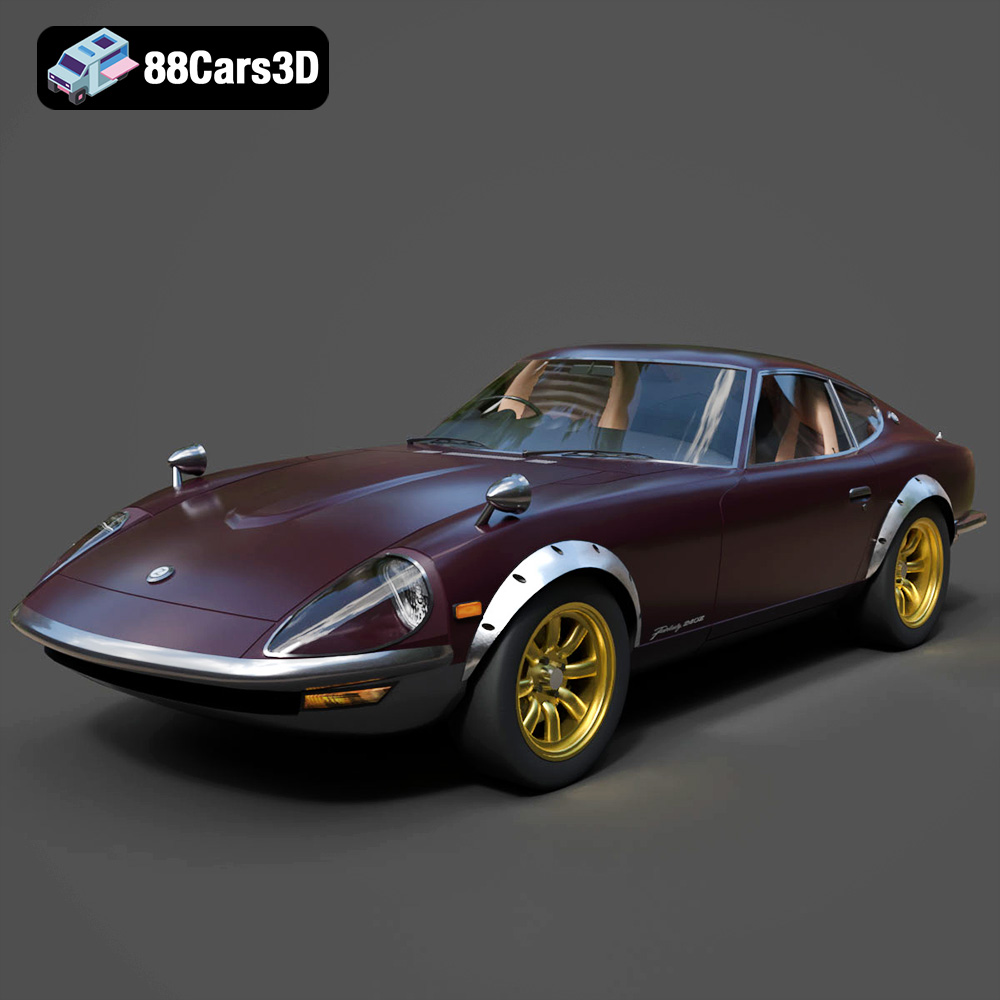
Download the Nissan FairLady 240ZG 3D Model featuring clean geometry, realistic detailing, and a fully modeled interior. Includes .blend, .fbx, .obj, .glb, .stl, .ply, .unreal, and .max formats for rendering, simulation, and game development.
Price: $4.99
Texture: Yes
Material: Yes
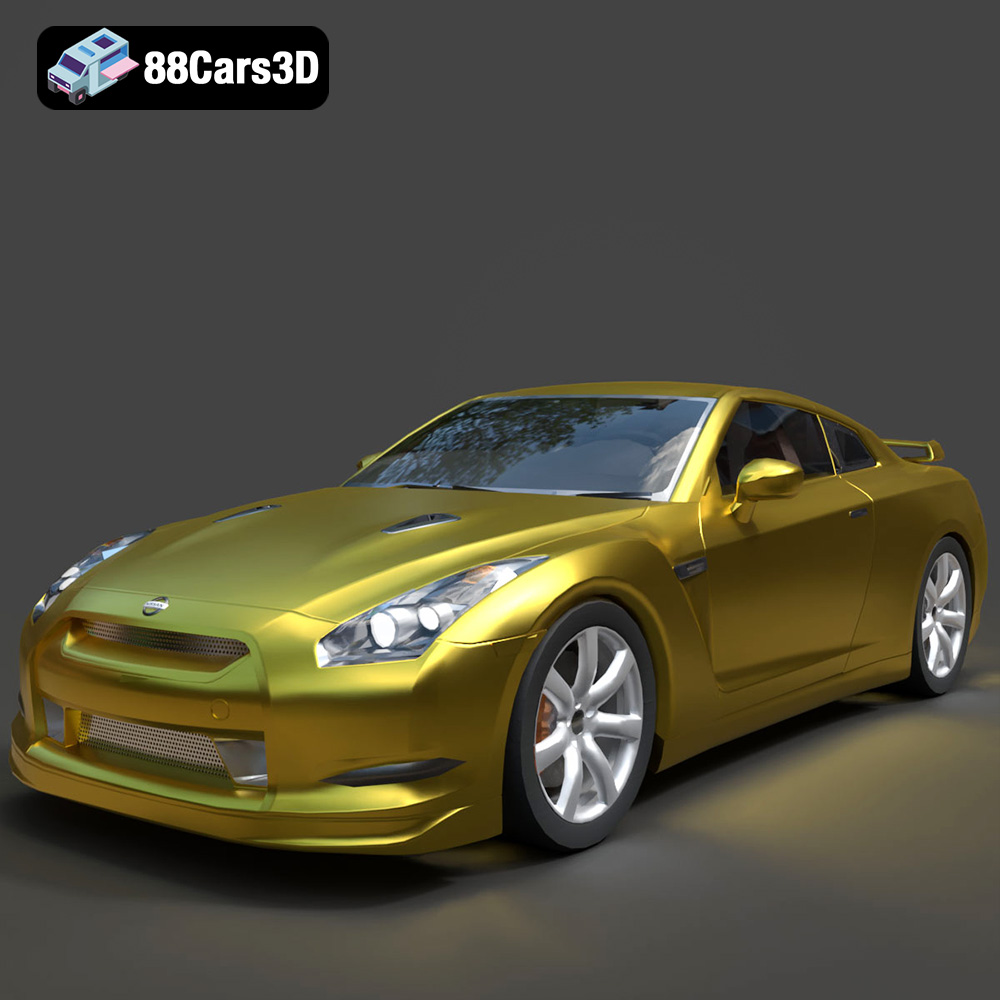
Download the Nissan GT-R 2008 3D Model featuring clean geometry, realistic detailing, and a fully modeled interior. Includes .blend, .fbx, .obj, .glb, .stl, .ply, .unreal, and .max formats for rendering, simulation, and game development.
Price: $4.99

Texture: Yes
Material: Yes
Download the Nissan Cube 3D Model featuring clean geometry, realistic detailing, and a fully modeled interior. Includes .blend, .fbx, .obj, .glb, .stl, .ply, .unreal, and .max formats for rendering, simulation, and game development.
Price: $4.99

Texture: Yes
Material: Yes
Download the Nissan Cedric Y32 3D Model featuring clean geometry, realistic detailing, and a fully modeled interior. Includes .blend, .fbx, .obj, .glb, .stl, .ply, .unreal, and .max formats for rendering, simulation, and game development.
Price: $4.99

Texture: Yes
Material: Yes
Download the Nissan Cima Infiniti Q45 2007 3D Model featuring clean geometry, realistic detailing, and a fully modeled interior. Includes .blend, .fbx, .obj, .glb, .stl, .ply, .unreal, and .max formats for rendering, simulation, and game development.
Price: $4.99

Texture: Yes
Material: Yes
Download the Nissan Juke 2025 3D Model featuring clean geometry, realistic detailing, and a fully modeled interior. Includes .blend, .fbx, .obj, .glb, .stl, .ply, .unreal, and .max formats for rendering, simulation, and game development.
Price: $4.99
Texture: Yes
Material: Yes
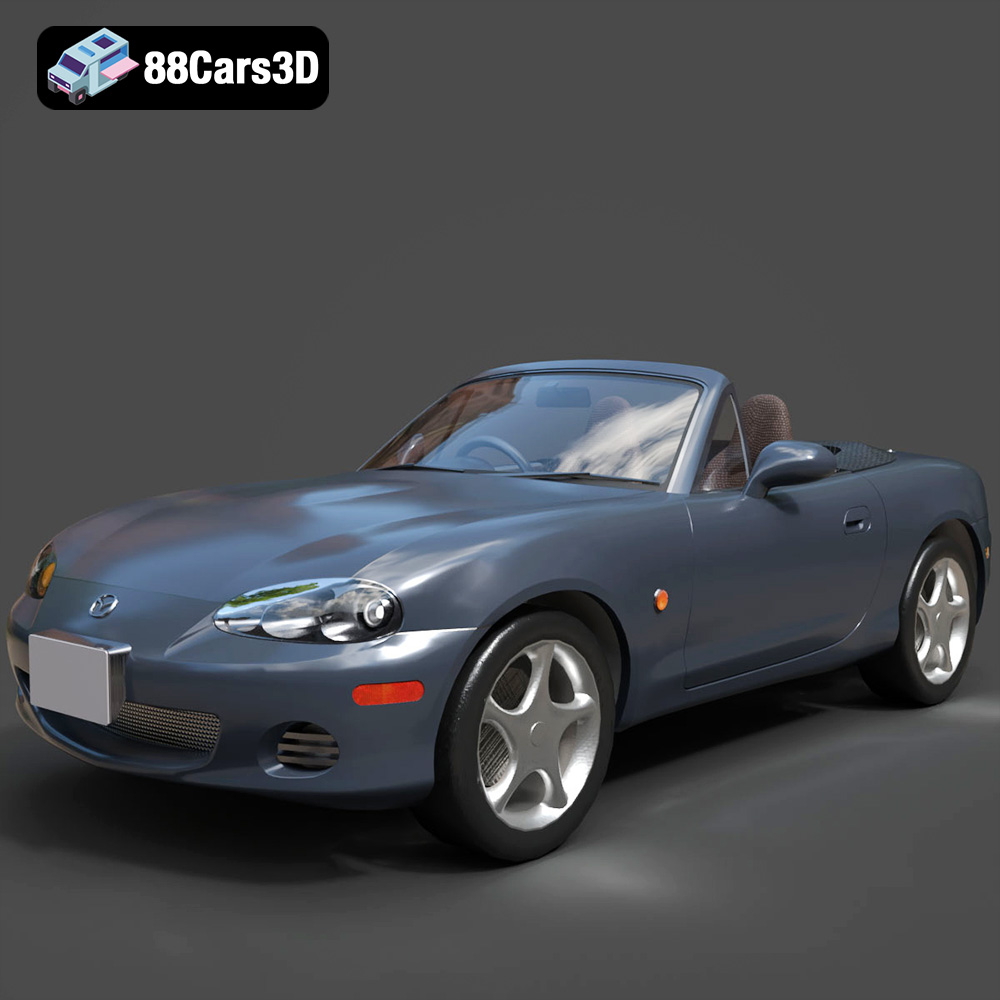
Download the Mazda MX-5 2025 3D Model featuring clean geometry, realistic detailing, and a fully modeled interior. Includes .blend, .fbx, .obj, .glb, .stl, .ply, .unreal, and .max formats for rendering, simulation, and game development.
Price: $4.99

Texture: Yes
Material: Yes
Download the Nissan Maxima 2009 3D Model featuring clean geometry, realistic detailing, and a fully modeled interior. Includes .blend, .fbx, .obj, .glb, .stl, .ply, .unreal, and .max formats for rendering, simulation, and game development.
Price: $4.99
Texture: Yes
Material: Yes
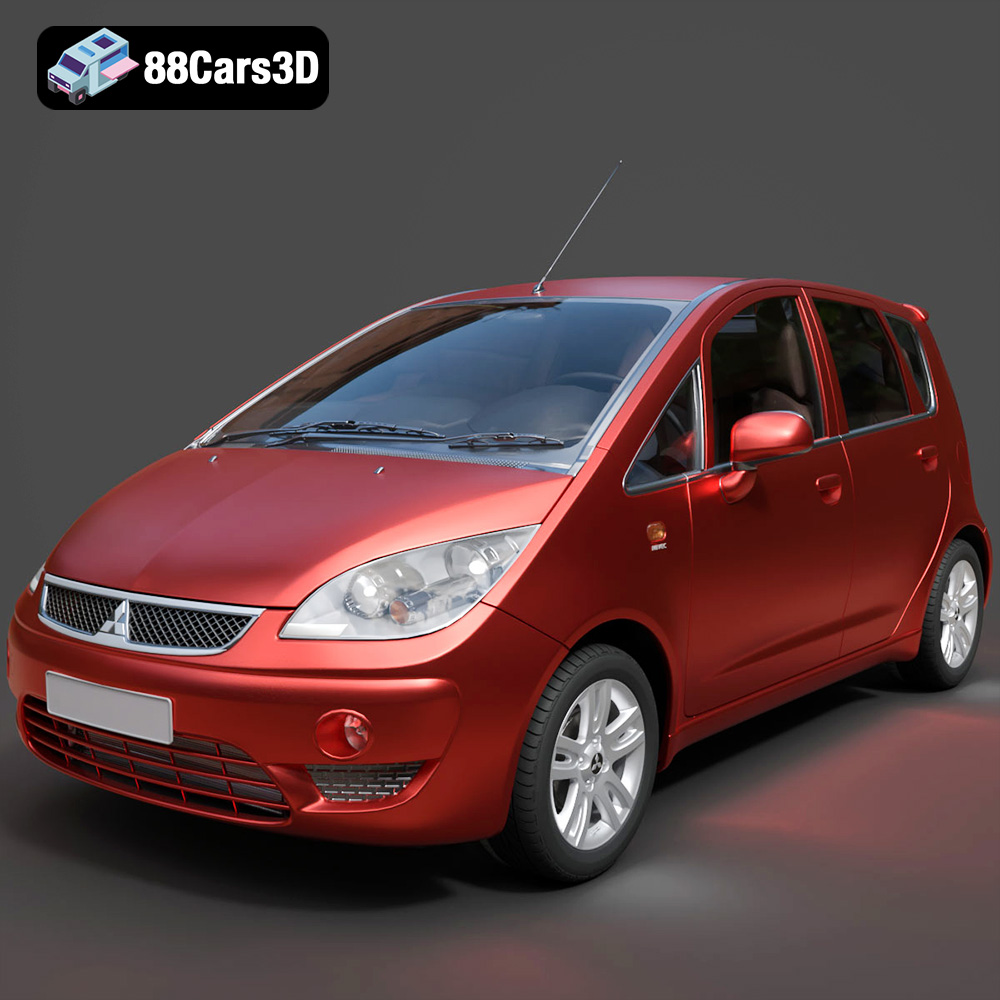
Download the Mitsubishi Colt 2025 3D Model featuring clean geometry, realistic detailing, and a fully modeled interior. Includes .blend, .fbx, .obj, .glb, .stl, .ply, .unreal, and .max formats for rendering, simulation, and game development.
Price: $4.99

