Get 20% OFF All Premium 3D & STL Models!

The allure of a perfectly rendered automobile, gleaming under a virtual sun or speeding through a meticulously crafted game world, is undeniable. For 3D artists, game developers, automotive designers, and visualization professionals, creating or sourcing high-quality 3D car models is a cornerstone of success. However, achieving this level of realism and performance isn’t simply about having a good idea; it requires a deep understanding of intricate workflows, technical specifications, and industry best practices. From the foundational polygons that define its shape to the complex shaders that replicate its paint, every aspect contributes to the final impact.
This comprehensive guide delves into the multifaceted world of 3D car modeling, offering insights into advanced techniques for every stage of production. We’ll navigate the critical path from establishing impeccable topology and mastering UV mapping, through the creation of stunning PBR materials, to achieving breathtaking automotive rendering. Furthermore, we’ll explore vital optimization strategies for game assets, preparation for immersive AR/VR experiences, and even the nuances of readying models for 3D printing. Whether you’re a seasoned professional or an aspiring artist, this article will equip you with the knowledge to elevate your automotive 3D projects to professional standards.
At the heart of any exceptional 3D car model lies its topology – the arrangement of polygons (faces, edges, and vertices) that define its surface. For complex, highly reflective objects like automobiles, clean and efficient topology is paramount. It dictates how well the model deforms, how smooth its surfaces appear under subdivision, and how easily it can be textured and animated. Poor topology can lead to undesirable shading artifacts, stretched UVs, and difficult-to-manage meshes.
The goal is to maintain an all-quad workflow wherever possible. While triangles and N-gons (polygons with more than four sides) have their places in certain game engine optimizations or specific non-deforming hard surface areas, they generally lead to issues when subdividing or deforming. Quads, on the other hand, provide predictable subdivision behavior and facilitate smooth, natural curvature, which is essential for the graceful lines and complex curves of automotive designs. Paying close attention to edge flow – the way edges run across the surface – ensures that surface details, creases, and hard edges are accurately represented and transition smoothly.
Every automotive design features distinct lines, panels, and curvature transitions. Proper edge flow ensures that these features are captured precisely. Edges should follow the natural contours of the car’s body, outlining panel gaps, character lines, and major changes in surface direction. For example, around wheel wells, headlights, and door cut lines, the edge loops should meticulously trace these features, creating clean boundaries. This structured approach not only makes modeling easier but also prevents “pinching” or undesirable bumps when subdivision surfaces are applied.
When modeling, visualize how light will reflect off the surface. Smooth, continuous edge loops translate to smooth, continuous reflections. Interruptions or abrupt changes in edge flow often result in jagged or distorted reflections, immediately diminishing the realism of the 3D car model. Strive for uniformity in polygon density across large, smooth areas and increase density only where necessary to capture fine details or sharp creases. This balance is key for optimizing polygon counts without sacrificing visual fidelity.
Many professional 3D car models are built using subdivision surface (SubD) modeling, often referred to as NURBS-to-SubD workflows or pure polygonal SubD modeling. Software like 3ds Max, Blender, and Maya excel at this. The process involves creating a low-polygon base mesh and then applying a subdivision modifier (e.g., Turbosmooth in 3ds Max, Subdivision Surface in Blender) to smooth it out. To maintain sharp edges and details like door gaps or fender flares, artists use “support loops” or “crease weights.”
Typically, a high-quality rendering model might have a base mesh of 100,000-300,000 polygons, which can escalate to millions of polygons after 2-3 levels of subdivision, offering incredibly smooth surfaces for detailed renders. For game assets, the focus shifts to optimizing this base mesh further for lower polygon targets, sometimes leveraging normal maps baked from the high-poly version.
Once the geometric foundation is solid, the next crucial step is to define the visual characteristics of the car’s surface. This involves meticulous UV mapping and the creation of physically based rendering (PBR) materials. These two elements work in tandem to convey everything from the car’s paint job and metallic sheen to the texture of its tires and the transparency of its glass.
UV mapping is the process of flattening the 3D surface of a model into a 2D space, allowing textures to be applied accurately. Without proper UVs, textures will appear stretched, distorted, or misaligned, ruining the realism. PBR materials, on the other hand, define how light interacts with the surface, simulating real-world properties like reflectivity, roughness, and color, which is essential for achieving photorealistic results in modern renderers and game engines.
Effective UV unwrapping for a complex object like a car requires a strategic approach to seam placement and efficient packing. The goal is to minimize stretching and distortion, create easily paintable UV islands, and make the most of the available texture space. Each major component of the car – body panels, interior, wheels, glass, lights – will typically have its own set of UVs, often consolidated into one or more UV atlases.
PBR materials are the industry standard for realistic rendering. They are based on real-world physics, ensuring that materials react correctly to light in any lighting environment. A typical PBR workflow involves creating a set of texture maps:
These maps are then plugged into a shader network within your chosen render engine (e.g., Corona Physical Material, V-Ray PBR Material, Blender Principled BSDF, Arnold Standard Surface). Specialized software like Substance Painter and Marmoset Toolbag are excellent for creating these PBR textures, offering powerful layering and procedural generation capabilities. When sourcing models from marketplaces such as 88cars3d.com, expect these PBR texture sets to be included and properly configured.
Once the model is built and textured, the true magic of visual storytelling begins with rendering. Automotive rendering is an art form in itself, requiring a keen eye for detail, an understanding of real-world photography, and mastery over powerful rendering software. The goal is to create images that are indistinguishable from photographs, conveying the car’s design, materials, and emotional appeal.
Achieving photorealism involves more than just hitting the render button. It’s a delicate balance of precise lighting, sophisticated material setup, optimal camera angles, and expert post-processing. Each element plays a crucial role in shaping the final image, turning a static 3D model into a captivating visual experience.
Lighting is arguably the most critical component of a realistic render. For automotive visualization, it’s about showcasing the vehicle’s form and reflecting its surfaces accurately. High Dynamic Range Images (HDRIs) are indispensable here. An HDRI acts as both a light source and a reflection environment, providing realistic light intensity, color, and reflections from a real-world location.
Each renderer has its strengths and unique features for automotive rendering:
A raw render is rarely a finished image. Post-processing and compositing in software like Adobe Photoshop or After Effects are crucial for pushing a render from “good” to “stunning.” This stage is where you refine the image to match a cinematic look or a professional automotive advertisement.
While rendering aims for visual perfection regardless of polygon count, game development demands a delicate balance between fidelity and performance. Game assets, especially complex ones like cars, must be meticulously optimized to run smoothly in real-time environments like Unity and Unreal Engine. Unoptimized models can lead to crippling frame rate drops and a poor user experience, making optimization a critical skill for any game artist.
The goal is to reduce the computational load on the GPU and CPU without significantly compromising the visual quality. This involves strategic polygon reduction, smart texture management, and leveraging engine-specific features to ensure your 3D car models perform flawlessly across various platforms.
One of the most effective optimization techniques is using Level of Detail (LODs). Instead of rendering a single, high-polygon model at all distances, LODs involve creating multiple versions of the same model, each with progressively fewer polygons. As the car moves further away from the camera, the game engine automatically switches to a lower-polygon LOD, significantly reducing the rendering load.
Draw calls are instructions from the CPU to the GPU to render an object. Too many draw calls can bottleneck performance. Every material on a model typically generates at least one draw call. A complex car with separate materials for paint, glass, chrome, tires, interior plastics, and lights can quickly accumulate a high number of draw calls.
For interactive game experiences, cars need accurate collision detection and realistic physics. Simply using the high-polygon visual mesh for collisions is inefficient and computationally expensive.
When sourcing high-quality game assets from platforms like 88cars3d.com, look for models that already provide optimized LODs, atlased textures, and separate collision meshes to streamline your development workflow.
The utility of high-quality 3D car models extends far beyond traditional rendering and gaming. With the rise of immersive technologies and rapid prototyping, automotive visualization professionals are increasingly leveraging 3D assets for Augmented Reality (AR), Virtual Reality (VR), and 3D printing. Each application presents its own unique set of technical requirements and optimization challenges.
For AR/VR, the focus remains on real-time performance and seamless integration into interactive environments, often with even stricter polygon budgets than traditional games. For 3D printing, the emphasis shifts to ensuring mesh integrity and manufacturability, preparing a digital model for physical manifestation.
AR/VR experiences demand extremely high frame rates (typically 90 FPS or more) to prevent motion sickness and ensure immersion. This means models for AR/VR often require even more aggressive optimization than standard game assets. The goal is to maximize visual fidelity while minimizing draw calls and polygon counts.
Transforming a digital 3D car model into a physical object via 3D printing requires a different kind of preparation. The digital model must be “watertight” and free of errors that could cause printing failures. This process often involves mesh repair and ensuring physical integrity.
In the fast-paced world of 3D production, efficiency is as critical as artistic skill. A well-structured workflow, combined with a clear understanding of various file formats, can significantly streamline project delivery, reduce errors, and enhance collaboration. Mastering these aspects allows artists and developers to seamlessly move assets between different software packages and prepare them for diverse applications.
From organizing your project files to converting between specialized formats, strategic planning and attention to detail ensure that your 3D car models are always production-ready, no matter the final destination – be it a high-resolution render, a real-time game, or an interactive AR experience.
The 3D industry uses a myriad of file formats, each with its strengths and typical use cases. Understanding which format to use and how to convert between them is a fundamental skill:
When converting between formats, be mindful of potential data loss. Always check the exported model in the target software to ensure all elements (geometry, UVs, textures, materials) are intact and correctly interpreted.
A well-organized asset library is crucial for any serious 3D artist or team. Disorganized files lead to wasted time and potential errors. Implement a robust data management strategy:
Not every project requires building a car from scratch. Sometimes, time constraints or specific project needs necessitate leveraging existing, high-quality assets. This is where reputable online marketplaces become invaluable resources. Platforms like 88cars3d.com specialize in providing production-ready 3D car models that meet industry standards for topology, UV mapping, PBR materials, and multiple file formats. Sourcing models from such platforms can drastically reduce development time, allowing artists to focus on rendering, animation, or integration rather than foundational modeling.
The journey through the intricate world of 3D car models reveals a landscape rich with technical challenges and creative opportunities. From the precision required in building clean topology and the artistry involved in UV mapping, to the scientific accuracy of PBR materials and the photographic skill behind automotive rendering, every stage demands expertise. We’ve explored how to optimize these complex assets for demanding real-time environments like games, adapt them for cutting-edge AR/VR experiences, and prepare them for the tangible world of 3D printing. Furthermore, understanding various file formats and maintaining an efficient workflow are critical for success in any multidisciplinary project.
Mastering these techniques empowers you to create visually stunning and technically sound 3D automobiles that captivate audiences across diverse mediums. The continuous evolution of software and hardware means there’s always something new to learn and integrate into your workflow. By embracing best practices and a meticulous approach, you can ensure your 3D car models not only look exceptional but also perform flawlessly in their intended application. Dive into the world of automotive 3D and explore the endless possibilities that await. For those looking to jumpstart their projects with professional-grade assets, consider exploring the extensive collection of high-quality models available on 88cars3d.com.

Texture: Yes
Material: Yes
Download the Nissan Fuga 2003 3D Model featuring clean geometry, realistic detailing, and a fully modeled interior. Includes .blend, .fbx, .obj, .glb, .stl, .ply, .unreal, and .max formats for rendering, simulation, and game development.
Price: $4.99
Texture: Yes
Material: Yes
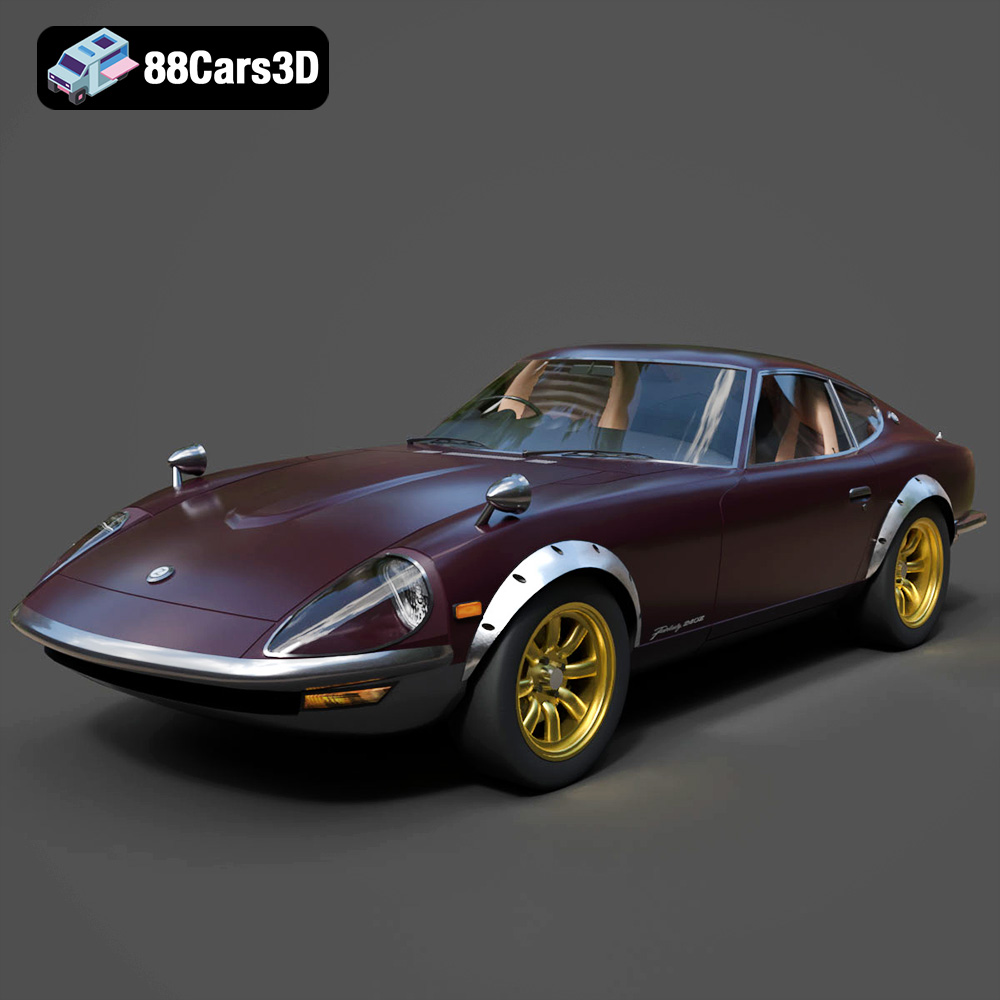
Download the Nissan FairLady 240ZG 3D Model featuring clean geometry, realistic detailing, and a fully modeled interior. Includes .blend, .fbx, .obj, .glb, .stl, .ply, .unreal, and .max formats for rendering, simulation, and game development.
Price: $4.99
Texture: Yes
Material: Yes
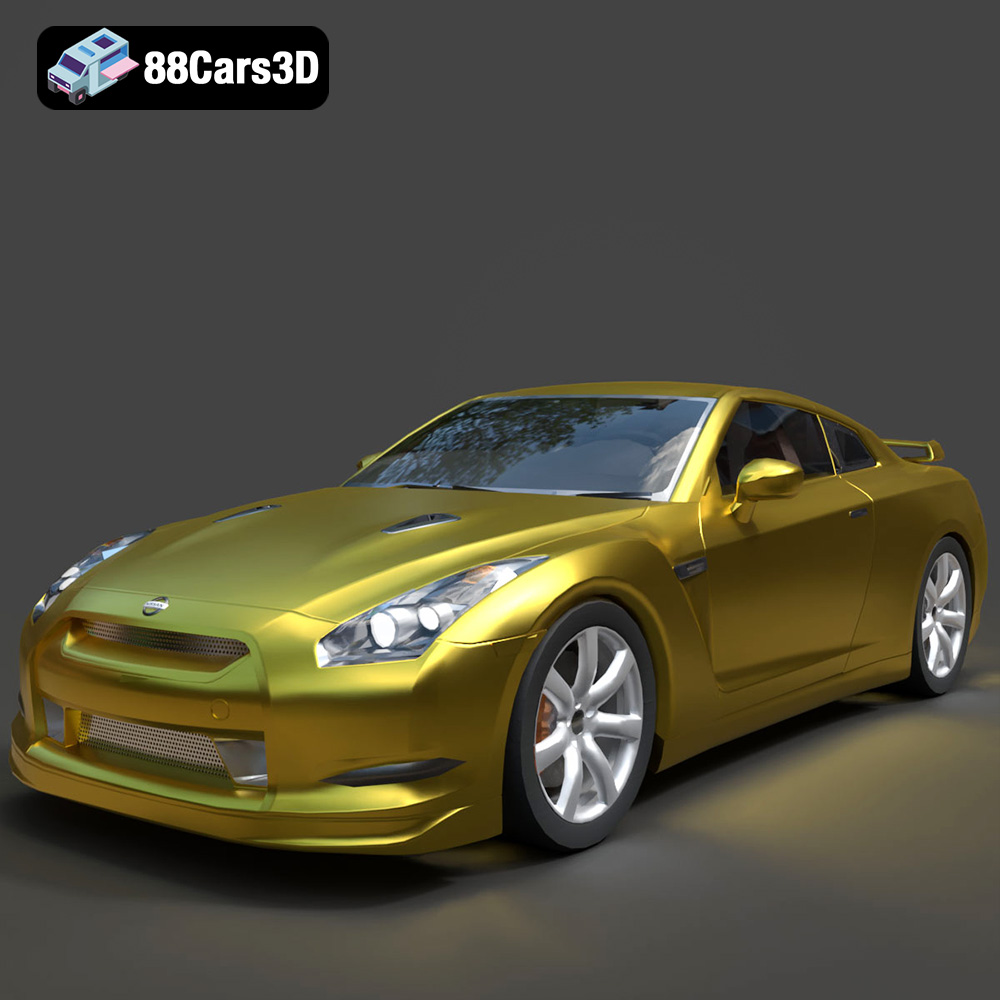
Download the Nissan GT-R 2008 3D Model featuring clean geometry, realistic detailing, and a fully modeled interior. Includes .blend, .fbx, .obj, .glb, .stl, .ply, .unreal, and .max formats for rendering, simulation, and game development.
Price: $4.99

Texture: Yes
Material: Yes
Download the Nissan Cube 3D Model featuring clean geometry, realistic detailing, and a fully modeled interior. Includes .blend, .fbx, .obj, .glb, .stl, .ply, .unreal, and .max formats for rendering, simulation, and game development.
Price: $4.99

Texture: Yes
Material: Yes
Download the Nissan Cedric Y32 3D Model featuring clean geometry, realistic detailing, and a fully modeled interior. Includes .blend, .fbx, .obj, .glb, .stl, .ply, .unreal, and .max formats for rendering, simulation, and game development.
Price: $4.99

Texture: Yes
Material: Yes
Download the Nissan Cima Infiniti Q45 2007 3D Model featuring clean geometry, realistic detailing, and a fully modeled interior. Includes .blend, .fbx, .obj, .glb, .stl, .ply, .unreal, and .max formats for rendering, simulation, and game development.
Price: $4.99

Texture: Yes
Material: Yes
Download the Nissan Juke 2025 3D Model featuring clean geometry, realistic detailing, and a fully modeled interior. Includes .blend, .fbx, .obj, .glb, .stl, .ply, .unreal, and .max formats for rendering, simulation, and game development.
Price: $4.99
Texture: Yes
Material: Yes
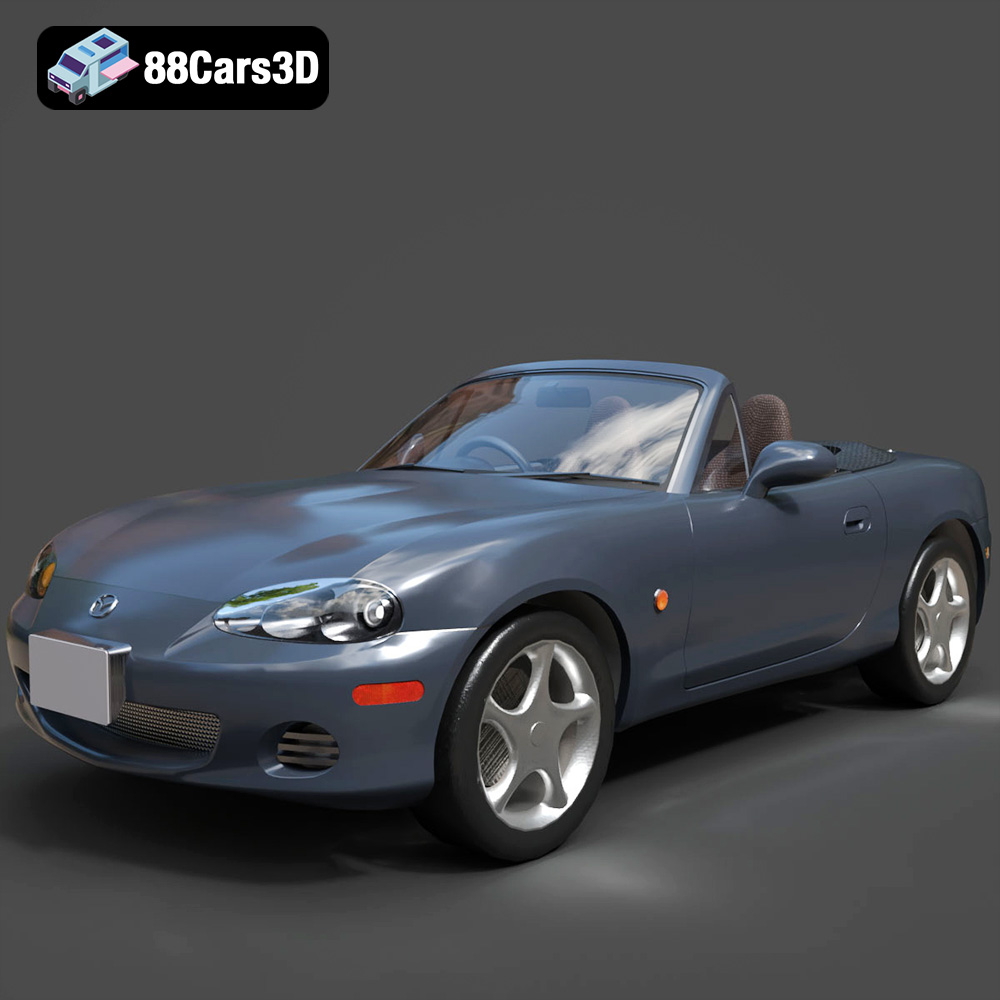
Download the Mazda MX-5 2025 3D Model featuring clean geometry, realistic detailing, and a fully modeled interior. Includes .blend, .fbx, .obj, .glb, .stl, .ply, .unreal, and .max formats for rendering, simulation, and game development.
Price: $4.99

Texture: Yes
Material: Yes
Download the Nissan Maxima 2009 3D Model featuring clean geometry, realistic detailing, and a fully modeled interior. Includes .blend, .fbx, .obj, .glb, .stl, .ply, .unreal, and .max formats for rendering, simulation, and game development.
Price: $4.99
Texture: Yes
Material: Yes
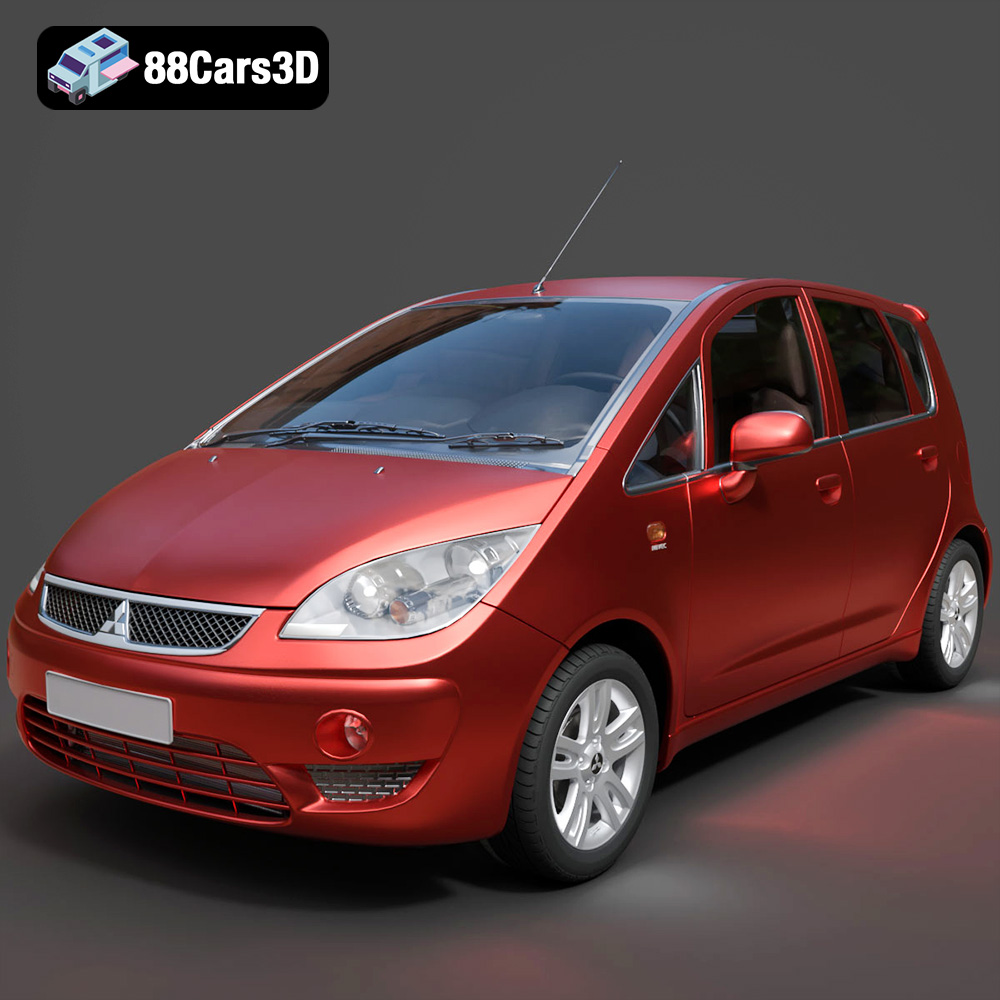
Download the Mitsubishi Colt 2025 3D Model featuring clean geometry, realistic detailing, and a fully modeled interior. Includes .blend, .fbx, .obj, .glb, .stl, .ply, .unreal, and .max formats for rendering, simulation, and game development.
Price: $4.99

