Get 20% OFF All Premium 3D & STL Models!

The allure of a beautifully rendered automobile is undeniable, whether it graces a high-octane video game, a cinematic commercial, or a virtual showroom. In the fast-evolving world of 3D visualization, creating and utilizing high-quality 3D car models has become a cornerstone for professionals across diverse industries. From hyper-realistic automotive rendering to immersive game development, augmented reality experiences, and even precise 3D printing, the demand for meticulously crafted digital vehicles continues to skyrocket.
This comprehensive guide delves deep into the technical intricacies involved in mastering 3D car models. We’ll navigate the complex journey from foundational modeling principles and advanced texturing techniques to cutting-edge rendering workflows, game engine optimization, and preparing assets for interactive AR/VR environments and physical 3D prints. Our goal is to equip you with the knowledge and actionable strategies required to achieve stunning visuals and peak performance in your projects. By understanding these core concepts, you’ll be empowered to create, utilize, and optimize automotive assets that truly stand out, ready for any application.
The journey to a photorealistic 3D car model begins with its underlying mesh. For automotive design, where sleek curves and sharp creases define the aesthetic, impeccable topology is not just preferred, it’s essential. A clean, all-quad mesh ensures smooth subdivision surfaces, prevents pinching, and simplifies UV mapping and animation. Every edge, every face, contributes to the final silhouette and surface quality. When modeling a complex form like a car body, starting with clear blueprints or reference images is crucial. Software like 3ds Max, Blender, or Maya offer robust poly modeling tools that allow artists to meticulously build the car’s shell, panel by panel, ensuring accurate proportions and curvature.
Achieving the right level of detail and mesh efficiency requires a delicate balance. High-resolution production models for cinematic renders might boast upwards of 500,000 polygons for the main body alone (before subdivision), capturing every subtle curve and reflection. In contrast, game-ready models will target significantly lower poly counts, often leveraging normal maps to convey fine details. Understanding this spectrum is vital for preparing an asset for its intended purpose.
The golden rule in automotive modeling is to maintain an all-quad topology, particularly if you intend to use subdivision surface modifiers (like TurboSmooth in 3ds Max or Subdivision Surface in Blender/Maya). Quads deform predictably when subdivided, producing smooth, continuous surfaces. Triangles, while sometimes unavoidable in minor, flat areas, can lead to undesirable pinching or creasing when smoothed, disrupting the elegant curvature of a car body. Good edge flow means edges follow the natural contours and design lines of the vehicle, allowing for easy selection, modification, and deformation. This meticulous approach is what differentiates a professional-grade model from a hastily built one, ensuring that reflections glide smoothly across the car’s surface rather than breaking up.
To define the crisp edges found on car panels, wheel arches, or vents without adding an excessive amount of geometry or resorting to harsh boolean operations, supporting edge loops are indispensable. These are additional edge loops placed very close to a hard edge. When the model is subdivided, these supporting loops constrain the smoothing effect, causing the surface to retain its sharp definition. The distance between the supporting loops directly influences the sharpness of the crease. A tighter gap means a sharper edge. This technique allows for control over the hardness of edges while maintaining a relatively low base mesh polygon count, leading to efficient and editable models. Knowing when and where to apply these loops is a key skill for any automotive 3D artist.
Once the geometry is perfected, the next crucial step is to define how textures will be applied to the model’s surfaces. This is where UV mapping comes into play – essentially flattening the 3D surface into a 2D space so that images can be wrapped around it. For complex forms like car bodies, strategic UV unwrapping is critical to prevent stretching, distortion, and seams that disrupt the visual flow. Beyond the base color, modern rendering relies heavily on Physically Based Rendering (PBR) materials, which simulate how light interacts with surfaces in a physically accurate manner. This involves creating a suite of textures – Albedo, Roughness, Metallic, Normal, and Ambient Occlusion – that collectively define a material’s appearance. The quality of these maps directly impacts the realism and believability of your 3D car model.
Achieving a convincing automotive finish, whether it’s the deep gloss of paint, the subtle texture of plastic, or the intricate weave of carbon fiber, depends entirely on the precision of your UVs and the fidelity of your PBR textures. Texture resolutions are also paramount: 4K (4096×4096 pixels) or even 8K textures are common for hero assets in high-end renders, providing crisp detail that holds up even in close-ups. For game assets, lower resolutions (2K or 1K) might be necessary, often combined with texture atlasing for optimization.
Automotive surfaces present unique UV challenges due to their complex curves and distinct panels. Rather than a single, monolithic unwrap, it’s often more efficient and less prone to distortion to unwrap different parts of the car (e.g., hood, door, roof, wheels) individually. Planar, cylindrical, and spherical mapping techniques are used strategically based on the geometry. The goal is to maximize the texture space usage while minimizing seams and maintaining uniform texel density (the density of pixels per unit of surface area) across all visible parts. For very high-resolution models, especially those intended for cinematic work, UDIM (UV Dimension) workflows are employed. This system allows you to spread the UVs for a single object across multiple 1001-style UV tiles, effectively using multiple texture maps to achieve extremely high detail without compromising resolution.
PBR materials are the cornerstone of modern photorealistic rendering. An Albedo map (also known as Base Color) defines the color of the surface. A Roughness map dictates how rough or smooth a surface is, influencing reflection sharpness. A Metallic map indicates which parts are metallic (pure white) and which are dielectric (pure black), dramatically altering how light interacts. Normal maps add fine surface details without adding actual geometry, simulating bumps and grooves. Ambient Occlusion (AO) maps simulate indirect shadowing caused by nearby geometry, adding depth. Beyond these, specific automotive materials like car paint often involve layered shaders to simulate flakes, clear coats, and orange peel effects. Glass requires specific transmission properties, and rubber needs subtle micro-surface detail. Software like Substance Painter is invaluable for texturing car models, offering advanced layering and procedural generation capabilities to create these intricate PBR maps efficiently.
Even the most meticulously modeled and textured 3D car model can fall flat without compelling illumination. High-fidelity automotive rendering transcends simply applying lights; it’s an intricate dance of light, shadow, and reflection that brings a digital vehicle to life. The choice of rendering engine – be it V-Ray, Corona, Cycles, or Arnold – significantly influences the workflow and the final aesthetic. Each renderer has its strengths and specific approaches to global illumination, material interpretation, and light calculations. Mastering these nuances allows artists to evoke specific moods, highlight design elements, and achieve a level of realism that blurs the line between virtual and real.
A professional rendering setup often involves a combination of carefully chosen environments and specific physical lights. The goal is not just to illuminate the car but to make it feel like it exists within a coherent, believable space. This phase also includes optimizing render settings for both quality and efficiency, utilizing render passes for granular control in post-processing, and leveraging denoising technologies to reduce render times without sacrificing image integrity.
For automotive rendering, High Dynamic Range Images (HDRIs) are often the starting point for realistic environmental lighting. An HDRI captures a full 360-degree representation of light and color from a real-world location, providing accurate reflections and ambient illumination. Coupled with physical light sources – such as area lights to simulate studio softboxes, spot lights for accents, or direct lights for sun effects – an artist can sculpt the light to highlight the car’s contours. Light linking allows specific lights to affect only certain objects, providing granular control over reflections and illumination on different parts of the car. Whether simulating a professional photo studio, a bustling city street, or a serene natural landscape, the interplay of HDRIs and targeted physical lights is key to achieving a compelling scene.
Each major renderer offers distinct tools and methodologies for achieving photorealistic results. V-Ray and Corona Renderer, popular with 3ds Max users, excel at unbiased and biased rendering, offering robust global illumination and intuitive material systems. Corona is known for its ease of use and physically accurate results with minimal setup. Cycles (Blender) and Arnold (Maya, 3ds Max) are powerful GPU-accelerated and CPU-based path tracers, respectively, known for their unbiased approach and excellent handling of complex lighting and materials. Specific techniques include fine-tuning ray depth for reflections and refractions (especially for glass and chrome), enabling caustics for realistic light patterns through transparent objects, and adjusting subsurface scattering for materials like headlights or interior plastics. Utilizing render elements (passes) is also crucial: Beauty, Alpha, Reflection, Refraction, Z-Depth, Ambient Occlusion, and Normals are routinely output for maximum flexibility during post-production.
The raw render output is rarely the final image. Post-processing and compositing are essential steps to elevate a render to a professional standard. By combining individual render passes in software like Adobe Photoshop or Foundry Nuke, artists gain immense control over every aspect of the image. This includes precise color grading to set the mood, adjusting contrast and exposure, and refining reflections and refractions using their respective passes. Lens effects such as chromatic aberration, vignettes, and subtle lens flares can add cinematic realism. Depth of field (DOF) can draw attention to specific parts of the car, while motion blur can convey speed. Even subtle sharpening, noise reduction, and the addition of grain can dramatically enhance the final presentation. This iterative process of refinement transforms a technically accurate render into an emotionally resonant image, making the car truly pop.
While cinematic renders prioritize absolute visual fidelity, real-time applications like video games demand a different set of priorities: performance. A beautiful 3D car model that takes minutes to render will crash a game running at 60 frames per second. Therefore, optimizing 3D car models for game engines like Unity or Unreal Engine involves a meticulous process of reducing polygon counts, streamlining textures, and implementing various performance-enhancing techniques without sacrificing visual quality too dramatically. The challenge lies in creating assets that look great from multiple angles and distances while consuming minimal computational resources, ensuring a smooth, immersive experience for the player. Platforms like 88cars3d.com often provide pre-optimized models specifically designed for game engine integration.
Effective game optimization requires a strategic approach to every aspect of the asset, from its mesh geometry to its material setup. Understanding the rendering pipeline of modern game engines and anticipating potential bottlenecks are key skills for game artists. This process often involves compromises, but clever techniques allow developers to maintain a high perceived level of detail even with significantly reduced data.
Level of Detail (LOD) is a cornerstone of game optimization. Instead of rendering a single, high-polygon model at all distances, LODs involve creating multiple versions of the same asset, each with a progressively lower polygon count. For instance, LOD0 (the highest detail) might be active when the car is close to the camera, with 30,000-80,000 polygons for the main body. As the camera moves further away, LOD1 (perhaps 15,000-30,000 polygons) takes over, then LOD2 (5,000-10,000 polygons), and so on, until the car is a distant silhouette, possibly just a few hundred polygons. Game engines automatically swap these models based on distance, dramatically reducing the polygon count rendered at any given time without noticeable pop-in for the player. This strategy is critical for maintaining high frame rates in complex scenes with many vehicles.
Beyond polygon count, draw calls are a significant performance bottleneck in game engines. A draw call occurs every time the CPU tells the GPU to render a batch of vertices, and each unique material typically generates a new draw call. To reduce draw calls, texture atlasing is widely used. This involves combining multiple smaller textures (e.g., textures for different car parts like headlights, emblems, wipers) into one larger texture atlas. By referencing different regions of this single atlas for various parts of the car, you can use a single material, drastically reducing the number of draw calls. Similarly, optimizing material instances in engines like Unity or Unreal allows you to modify properties (like color variations) from a single master material, minimizing unique materials and thus draw calls. This optimization is crucial for mobile games where CPU cycles are even more limited.
For interactive environments, accurate collision detection is vital. However, using the high-detail visual mesh for collisions is computationally expensive. Instead, simplified collision meshes are created – often just a few hundred polygons – that approximate the car’s shape. These ‘proxy’ meshes handle all physics interactions and collisions, providing a good balance between accuracy and performance. Additionally, occlusion culling and frustum culling are techniques where the game engine automatically stops rendering objects that are outside the camera’s view frustum or are hidden behind other geometry. Properly set up physics assets (e.g., in Unreal Engine’s PhAT tool) define how different parts of the car respond to impacts, providing realistic damage and suspension behavior without demanding high-resolution meshes for every calculation.
Augmented Reality (AR) and Virtual Reality (VR) represent the frontier of immersive visualization, offering unparalleled opportunities for interactive car experiences – from virtual test drives to interactive showrooms and design reviews. However, these platforms impose even stricter performance requirements than traditional games, particularly for mobile AR/VR devices. Maintaining a consistent high frame rate (often 60-90 FPS per eye for VR to prevent motion sickness) is paramount. This necessitates extreme optimization, pushing the boundaries of what’s possible with real-time 3D assets. The goal is to deliver highly engaging, realistic car models that can run smoothly on hardware ranging from high-end VR headsets to everyday smartphones.
Developing for AR/VR means rethinking traditional asset pipelines. Every polygon, every texture, every shader needs to be evaluated for its performance impact. Lightweight, efficient shaders, baked lighting, and meticulous attention to draw calls become non-negotiable. Furthermore, proper scaling and anchor placement are critical for a convincing AR experience, where the digital car must seamlessly integrate into the real world.
For mobile AR applications (e.g., Apple ARKit, Google ARCore) or standalone VR headsets (e.g., Meta Quest), polygon budgets are incredibly tight. A typical target for a fully featured interactive car model in mobile AR might be between 50,000 and 100,000 polygons for the entire vehicle, significantly less than a PC game LOD0. This requires aggressive decimation and careful mesh simplification while preserving essential silhouette details. Shaders must also be extremely lean, often relying on simplified PBR calculations that avoid complex lighting models or multi-layered effects. Baking Ambient Occlusion and even some lighting directly into vertex colors or texture maps can reduce real-time computation. The emphasis is on shaders that are fast to compute, as every millisecond counts towards maintaining frame rate.
Beyond polygon and shader efficiency, several other factors impact AR/VR performance. Overdraw – rendering pixels that are ultimately hidden by other objects – is a major culprit. Minimizing transparent surfaces, especially complex glass or particle effects, can help. Baking static lighting into lightmaps or vertex colors for non-moving parts can significantly reduce real-time light calculations. For AR, optimizing the tracking process itself and ensuring the digital model is accurately anchored to the real world without jitter or drift is also crucial. Developers must constantly profile their applications to identify and address bottlenecks, ensuring the experience remains smooth and comfortable for the user. Tools within Unity and Unreal Engine provide detailed insights into CPU and GPU performance.
A compelling AR/VR car model isn’t just about visuals; it’s about interaction. Users expect to be able to open doors, change paint colors, inspect the interior, or even virtually “drive” the car. This requires careful setup of interaction points, animations (e.g., for doors, wheels, suspension), and robust scripting. For AR, proper real-world scaling is paramount; a digital car must appear life-sized and grounded within the physical environment. Formats like USDZ (for Apple AR) and GLB (for WebGL and broader AR/VR platforms) are optimized for these interactive, real-time scenarios, encapsulating geometry, materials, and basic animations in a single, efficient file. Integrating these assets into AR/VR development environments involves careful consideration of user input (gaze, touch, controller input) and responsive UI elements.
The utility of 3D car models extends far beyond digital screens. With the rise of additive manufacturing, these models can now transition into tangible, physical objects. Whether for prototyping, scale models, educational tools, or unique collectibles, preparing a 3D car model for 3D printing introduces a distinct set of technical requirements. Unlike rendering or game development, which can forgive minor mesh imperfections, 3D printing demands a perfectly watertight, manifold mesh. Additionally, the digital asset ecosystem is fragmented across various file formats, each with its strengths and typical use cases. Understanding these formats and their interoperability is crucial for seamless collaboration and deployment across different software and platforms.
Navigating file format conversions and ensuring data integrity during transfer is a common challenge. Different formats carry different types of data – some are purely geometry, while others encapsulate materials, textures, animations, and even scene hierarchies. Choosing the right format for the right task prevents headaches and ensures your meticulously crafted car model retains its quality across its diverse lifecycle.
For a 3D printer to successfully build an object, the digital model must be “watertight” or “manifold.” This means every edge must be connected to exactly two faces, forming a continuous, enclosed volume without any holes, inverted normals, or self-intersecting geometry. Unlike rendering, where a thin plane can represent a surface, 3D printing requires real-world thickness. Walls must meet minimum thickness requirements (e.g., 1-2mm depending on the print technology and material) to be structurally sound. Internal structures that are too complex or thin might not print correctly or cleanly. It’s often necessary to simplify or ‘hollow out’ models, especially for large prints, to save material and print time. Checking for non-manifold edges, open boundaries, and mesh intersections are critical pre-print steps.
Specialized software tools are often required to prepare models for 3D printing. Programs like Meshmixer, Netfabb, or even dedicated 3D printing plugins within Blender or 3ds Max offer features for analyzing, repairing, and optimizing meshes for additive manufacturing. These tools can automatically detect and fix holes, smooth jagged surfaces, and ensure manifold geometry. After cleaning and optimizing, the model is typically exported in formats like STL (Stereolithography), which is a triangulated mesh format widely accepted by 3D printing slicer software, or OBJ. When sourcing models from marketplaces such as 88cars3d.com, it’s advisable to check the model’s description for “3D Print Ready” status or be prepared to perform your own mesh repairs.
The 3D industry uses a variety of file formats, each serving specific purposes. FBX (Filmbox) is an Autodesk-developed format widely used for interchange between 3D software, supporting geometry, UVs, materials, textures, rigging, and animation. OBJ (Wavefront Object) is a simpler, ubiquitous format that primarily carries geometry and UVs, with materials (MTL file) stored separately. GLB (GL Transmission Format Binary) is an increasingly popular, compact, and web-friendly format that bundles all assets (geometry, textures, animations) into a single file, ideal for web-based 3D viewers and some AR/VR applications. USDZ (Universal Scene Description Zip) is Apple’s format for AR applications, offering lightweight assets with PBR materials, well-suited for iOS AR experiences. Understanding the capabilities and limitations of each format is key to smooth workflow and avoiding data loss during conversions. Always perform checks after conversion to ensure all data (especially UVs and material assignments) has been retained correctly.
The journey through the creation and application of 3D car models is a testament to the blend of artistic vision and technical prowess. From the foundational principles of clean, efficient topology and the intricate detail of PBR materials to the meticulous art of high-fidelity rendering, the strategic optimizations for game engines, and the rigorous demands of AR/VR, every stage presents unique challenges and opportunities. We’ve explored how flawless geometry underpins stunning visuals, how advanced texturing brings surfaces to life, how expert lighting evokes emotion, and how intelligent optimization ensures peak performance across diverse platforms.
Mastering 3D car models is an ongoing process of learning and refinement. The industry continues to evolve, pushing the boundaries of realism and interactivity. By understanding the core technical aspects discussed – from polygon budgets and edge flow to texture atlasing and file format nuances – you gain the ability to tackle virtually any project involving digital automobiles. Whether your goal is to create breathtaking visualizations, develop immersive game assets, or innovate in the realm of AR/VR, a deep appreciation for these technical foundations is your greatest asset.
Ready to accelerate your next project? Explore the vast collection of high-quality, pre-optimized 3D car models available on 88cars3d.com. Our marketplace provides a diverse range of assets, meticulously crafted to meet professional standards for rendering, game development, AR/VR, and more, empowering you to bring your creative visions to life with unparalleled quality and efficiency.
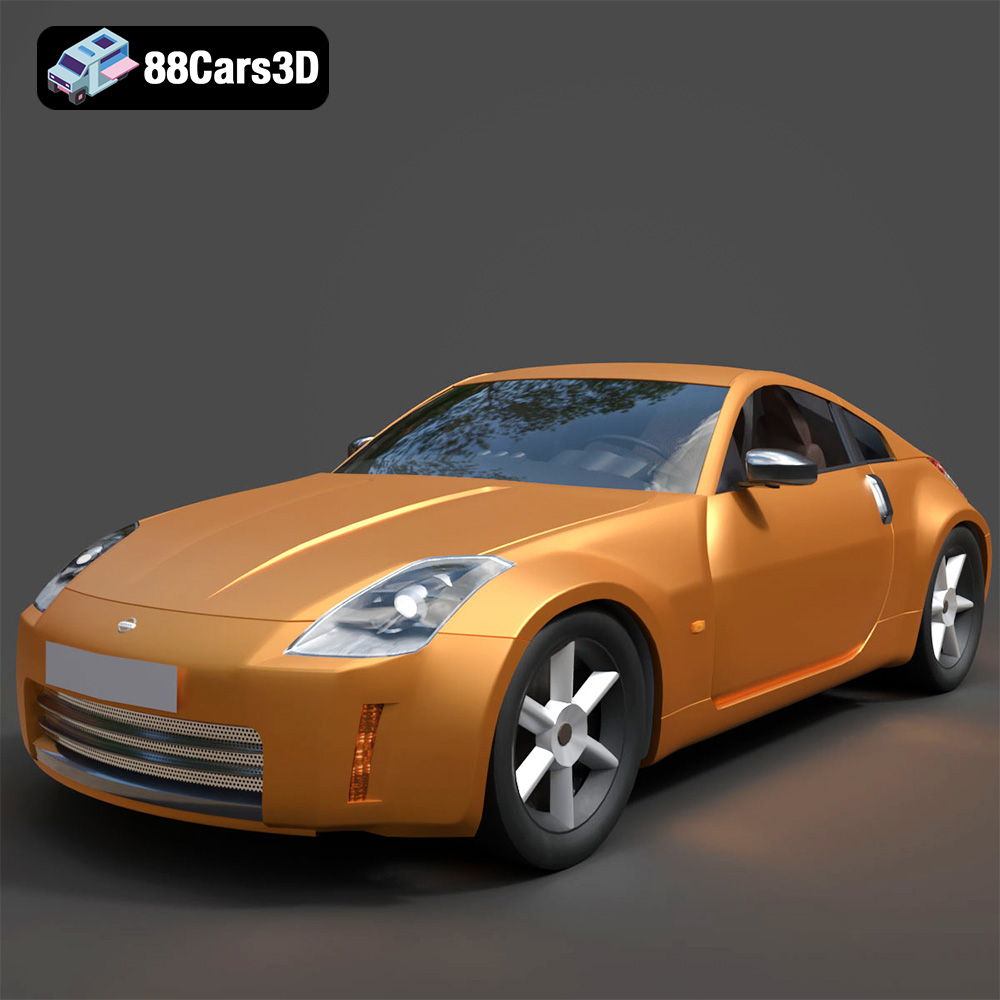
Texture: Yes
Material: Yes
Download the Nissan 350Z 3D Model featuring clean geometry, realistic detailing, and a fully modeled interior. Includes .blend, .fbx, .obj, .glb, .stl, .ply, .unreal, and .max formats for rendering, simulation, and game development.
Price: $4.99

Texture: Yes
Material: Yes
Download the Nissan Skyline V35 2001 3D Model featuring clean geometry, realistic detailing, and a fully modeled interior. Includes .blend, .fbx, .obj, .glb, .stl, .ply, .unreal, and .max formats for rendering, simulation, and game development.
Price: $4.99

Texture: Yes
Material: Yes
Download the Mercedes-Benz S-Klasse 221-007 3D Model featuring clean geometry, realistic detailing, and a fully modeled interior. Includes .blend, .fbx, .obj, .glb, .stl, .ply, .unreal, and .max formats for rendering, simulation, and game development.
Price: $4.99

Texture: Yes
Material: Yes
Download the Nissan Fuga 2003 3D Model featuring clean geometry, realistic detailing, and a fully modeled interior. Includes .blend, .fbx, .obj, .glb, .stl, .ply, .unreal, and .max formats for rendering, simulation, and game development.
Price: $4.99
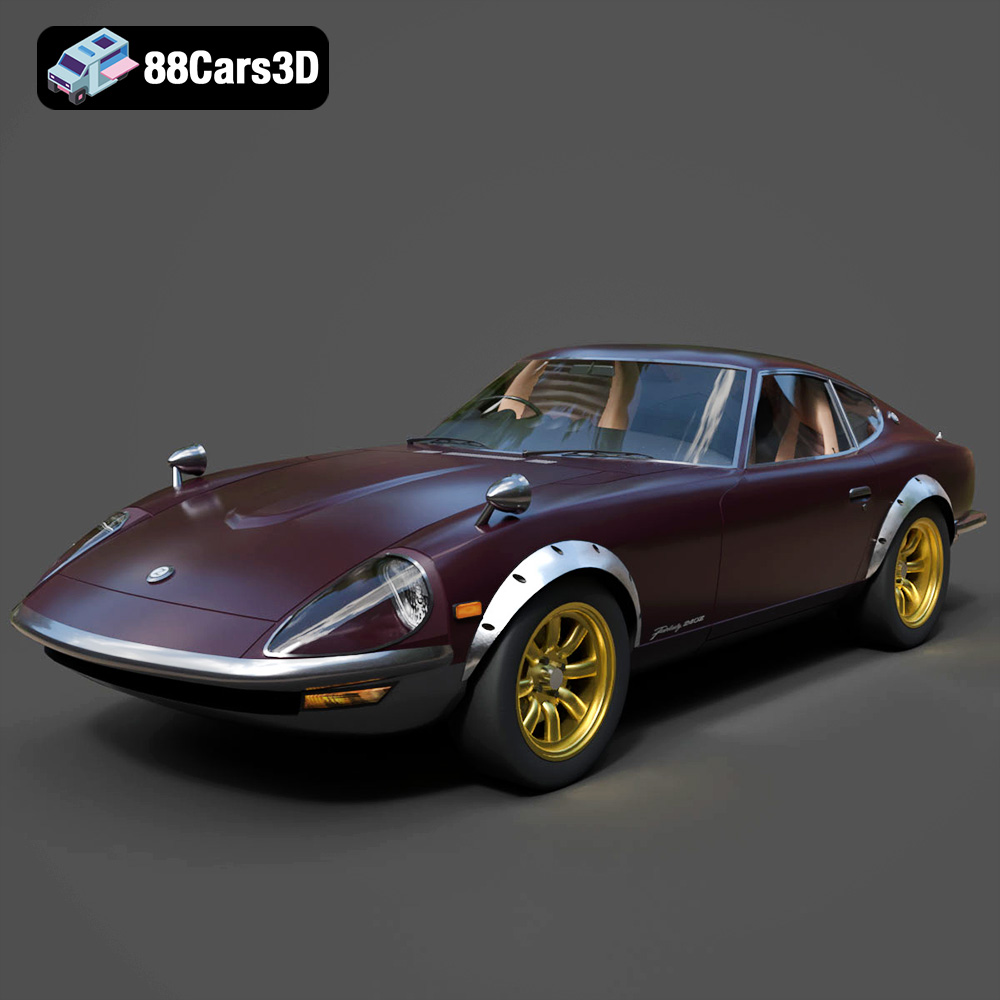
Texture: Yes
Material: Yes
Download the Nissan FairLady 240ZG 3D Model featuring clean geometry, realistic detailing, and a fully modeled interior. Includes .blend, .fbx, .obj, .glb, .stl, .ply, .unreal, and .max formats for rendering, simulation, and game development.
Price: $4.99
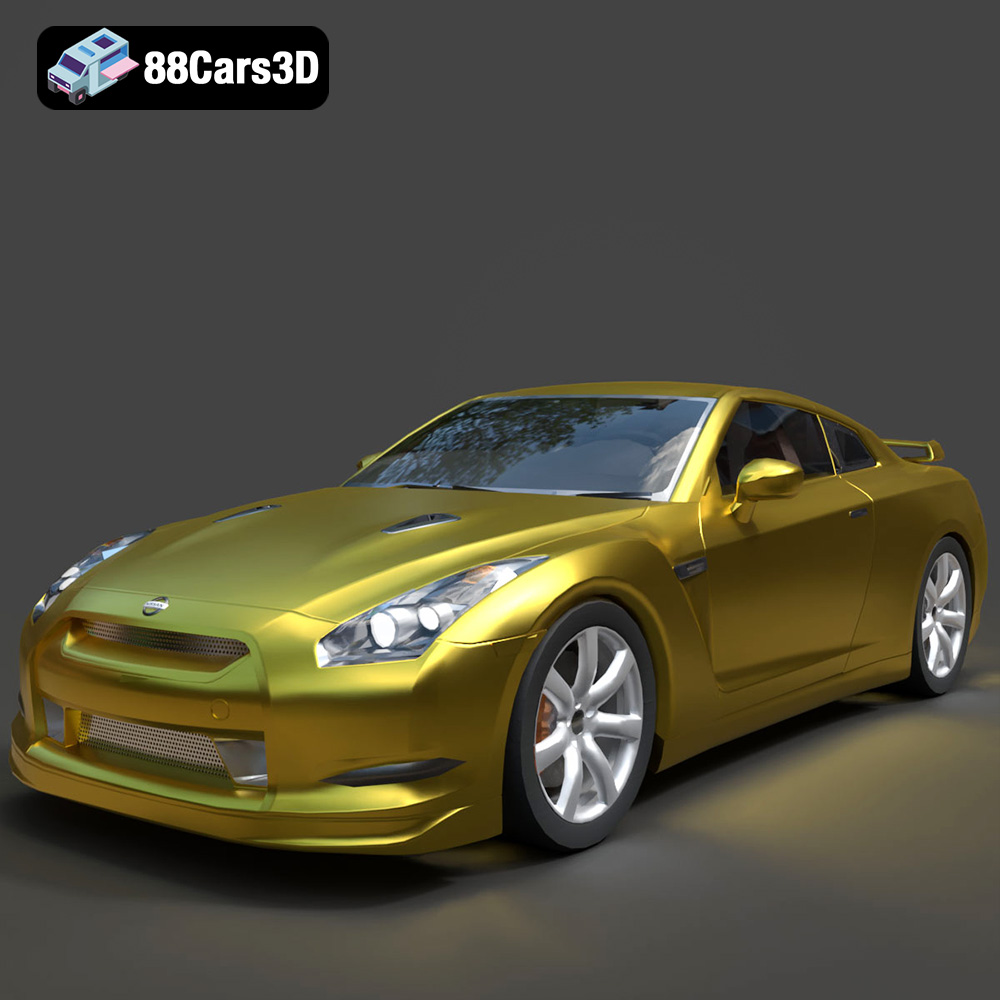
Texture: Yes
Material: Yes
Download the Nissan GT-R 2008 3D Model featuring clean geometry, realistic detailing, and a fully modeled interior. Includes .blend, .fbx, .obj, .glb, .stl, .ply, .unreal, and .max formats for rendering, simulation, and game development.
Price: $4.99

Texture: Yes
Material: Yes
Download the Nissan Cube 3D Model featuring clean geometry, realistic detailing, and a fully modeled interior. Includes .blend, .fbx, .obj, .glb, .stl, .ply, .unreal, and .max formats for rendering, simulation, and game development.
Price: $4.99

Texture: Yes
Material: Yes
Download the Nissan Cedric Y32 3D Model featuring clean geometry, realistic detailing, and a fully modeled interior. Includes .blend, .fbx, .obj, .glb, .stl, .ply, .unreal, and .max formats for rendering, simulation, and game development.
Price: $4.99

Texture: Yes
Material: Yes
Download the Nissan Cima Infiniti Q45 2007 3D Model featuring clean geometry, realistic detailing, and a fully modeled interior. Includes .blend, .fbx, .obj, .glb, .stl, .ply, .unreal, and .max formats for rendering, simulation, and game development.
Price: $4.99

Texture: Yes
Material: Yes
Download the Nissan Juke 2025 3D Model featuring clean geometry, realistic detailing, and a fully modeled interior. Includes .blend, .fbx, .obj, .glb, .stl, .ply, .unreal, and .max formats for rendering, simulation, and game development.
Price: $4.99

