Get 20% OFF All Premium 3D & STL Models!

The sleek lines, the intricate details, the sheer power embodied in a vehicle – bringing these elements to life in three dimensions is an art form that demands precision, technical prowess, and an unwavering eye for realism. In today’s dynamic digital landscape, high-quality 3D car models are indispensable assets across a multitude of industries, from blockbuster video games and cinematic visualizations to interactive AR/VR experiences and sophisticated automotive design processes. But what truly defines a ‘high-quality’ 3D car model, and what technical journey does an artist embark on to achieve such standards?
This comprehensive guide delves deep into the technical intricacies behind creating, optimizing, and deploying premium automotive rendering and game-ready car assets. We’ll explore the foundational principles of clean topology, demystify the art of UV mapping, dissect the science of PBR material creation, and navigate the complex world of rendering and real-time optimization. Whether you’re a seasoned 3D artist, a game developer, an automotive designer, or an aspiring student, understanding these advanced concepts is crucial for pushing the boundaries of realism and performance. Prepare to unlock the secrets to crafting compelling digital automotive experiences that captivate and immerse your audience, laying the groundwork for projects that stand out in a competitive visual market.
At the heart of any exceptional 3D car model lies impeccable topology. This isn’t just an aesthetic choice; it’s a fundamental engineering requirement that dictates how a model deforms, subdivides, and renders. For automotive surfaces, which are characterized by smooth, flowing curves and sharp, defined creases, clean topology is paramount. Poor topology can lead to artifacts like pinching, uneven reflections (especially noticeable on reflective car paint), and difficulties during animation or subdivision. The goal is to create a mesh that faithfully represents the car’s intricate design while remaining efficient and versatile.
Achieving this requires a strategic approach, often beginning with accurate blueprints or reference images to block out the primary shapes. Modelers typically start with a low-polygon base mesh, focusing on major forms and proportions before incrementally adding detail. The balance between polygon count and visual fidelity is a constant consideration. For high-fidelity renders, models might contain millions of polygons after subdivision, but for game engines, the base mesh needs to be significantly optimized. Platforms like 88cars3d.com prioritize models with clean, well-structured topology, ensuring they are suitable for diverse applications without requiring extensive rework.
The industry standard for modeling organic and hard-surface objects alike, including complex automotive forms, is to prioritize quad polygons. While triangles are unavoidable in some instances (especially during triangulation for game engines), a mesh predominantly composed of quads offers superior flexibility for subdivision surface modifiers (like TurboSmooth in 3ds Max or Subdivision Surface in Blender). Quads allow for predictable and smooth deformation, crucial for maintaining the integrity of a car’s surface when applying detail or animation.
Strategic edge loops are another critical aspect. These are continuous rings of edges that flow along the natural contours of the model, particularly around areas of curvature change, panel gaps, vents, and sharp creases. For instance, creating tight edge loops around window frames or door seams helps maintain crispness when the mesh is subdivided, preventing these details from softening into ambiguity. These loops also serve as guides for texturing and facilitate the creation of selection sets for material application or modifications. Mastering this technique is essential for achieving the distinct hard-surface look characteristic of real vehicles.
Balancing polygon density is a delicate act. While high polygon counts allow for extreme detail, they also increase file size, memory footprint, and rendering times. An experienced modeler will judiciously add polygons only where necessary to define shape or hold critical details. For large, flat surfaces, a lower polygon count is often sufficient, relying on normal maps to convey fine surface detail. Conversely, areas like wheel wells, grilles, or intricate interior components may require a higher density to capture their complexity accurately.
One common workflow involves modeling a mid-poly version that can be easily subdivided for high-resolution renders, or decimated and optimized for real-time applications. Techniques like using floating geometry for decals or small emblems can add detail without altering the base mesh’s topology. Furthermore, ensuring that edge flow supports potential animations, such as doors opening or suspension compression, is a forward-thinking practice. Good topology ensures that these movements look natural and artifact-free, reinforcing the model’s professional quality and versatility across different project requirements.
Once a 3D car model boasts impeccable topology, the next critical step for achieving photorealistic results is UV mapping. UVs are the 2D coordinates that tell your 3D software how to project a 2D texture image onto the 3D surface of your model. Without proper UVs, textures will appear stretched, distorted, or misaligned, completely undermining the visual quality of even the most detailed model. For complex, compound surfaces like those found on an automobile, UV mapping presents unique challenges that require careful planning and execution.
The goal of efficient UV mapping is to create a layout that minimizes seams, avoids stretching, and provides consistent texel density across the entire model. This ensures that the applied PBR materials and textures look uniform and realistic, without jarring inconsistencies. A well-UV’d model is not only visually superior but also easier to texture paint in applications like Substance Painter, as the 2D representation accurately reflects the 3D geometry. This foundational step is crucial for everything from basic color maps to complex normal maps and clear coat effects.
Unwrapping a complex car surface often involves a combination of techniques. Planar mapping might be used for flat panels, while cylindrical or spherical mapping could be suitable for wheels or rounded elements. However, for the compound curves of a car’s body, “peel” or LSCM (Least Squares Conformal Map) unwrapping, often found in tools like Blender’s UV Editor or 3ds Max’s Unwrap UVW modifier, is essential. These methods attempt to flatten complex surfaces with minimal distortion. The key is to strategically place seams in less visible areas, such as along panel gaps, under the chassis, or in crevices, to prevent them from breaking the illusion of a continuous surface.
For high-resolution projects, particularly those involving detailed custom liveries or intricate surface imperfections, the use of UDIMs (U-Dimension) is increasingly common. UDIMs allow you to spread the UVs of a single mesh across multiple texture files, each residing in its own UV tile (e.g., U1V1, U2V1). This enables significantly higher texture resolution for large, complex models without performance bottlenecks associated with a single massive texture map. For a full-scale automotive rendering project, a car body alone might utilize several UDIM tiles for its paint, allowing for incredible detail.
Once unwrapped, the arrangement of UV islands within the 0-1 UV space is critical. Maximizing UV space utilization means scaling islands appropriately and packing them efficiently to prevent wasted texture resolution. A common practice is to scale larger, more visible parts (like the hood or doors) to occupy more UV space than smaller, less important details (like small bolts or interior components), ensuring that more texture pixels are allocated to critical areas.
Consistent texel density across the model is paramount for visual realism. Texel density refers to the number of texture pixels per unit of 3D space. If different parts of a car have wildly varying texel densities, some textures will appear blurry while others are sharp, creating an inconsistent look. Many 3D software packages offer tools to visualize and unify texel density, ensuring a balanced distribution. Furthermore, for efficiency in game assets, overlapping UVs can be employed for identical, non-unique components such as tire treads, brake calipers, or interior buttons. This allows a single texture area to be applied to multiple instances of the same object, significantly reducing the total texture memory footprint.
With a perfectly modeled and UV-mapped 3D car model, the next frontier in achieving photorealism is the creation of Physically Based Rendering (PBR) materials. PBR is a modern approach to shading and rendering that aims to simulate the way light interacts with surfaces in the real world based on physical properties, rather than arbitrary artistic values. This results in incredibly consistent and realistic materials under any lighting conditions, making it an essential technique for high-end automotive rendering and visualization.
PBR materials rely on a set of standardized texture maps to define various surface characteristics. The most common maps include: Albedo/Base Color (the diffuse color without lighting information), Metallic (defines if a material is a metal or a dielectric), Roughness (controls the micro-surface detail affecting light scattering and reflections), Normal Map (adds surface detail without adding geometry), and Ambient Occlusion (simulates subtle self-shadowing in crevices). Understanding how these maps interact within a shader network is crucial for bringing a car model to life with believable paint, glass, rubber, and chrome finishes.
The workflow for creating PBR materials varies slightly depending on your chosen 3D software and renderer. In 3ds Max with Corona Renderer, for example, the Corona Physical Material is the go-to shader, intuitively integrating all standard PBR inputs. Users would connect their Albedo, Metallic, and Roughness maps, adjust IOR (Index of Refraction) for transparent materials like glass, and fine-tune parameters for realistic car paint clear coats. Similarly, V-Ray offers its own PBR-compatible V-Ray Material with analogous settings.
For open-source enthusiasts, Blender’s Cycles or Eevee renderers leverage the ‘Principled BSDF’ shader, which acts as a universal PBR shader. It consolidates a vast array of parameters into a single node, making it incredibly powerful and user-friendly for PBR material creation. Tools like Substance Painter or Quixel Mixer are invaluable for generating these texture maps. They allow artists to paint directly onto the 3D model, bake maps from high-poly sculpts, and export a complete set of PBR textures tailored for various renderers and game engines. This iterative process of material creation ensures accuracy and visual fidelity.
Automotive finishes, especially car paint, are notoriously complex due to their multi-layered nature. A realistic car paint shader often involves several layers: a base color (Albedo), metallic flakes that catch the light (simulated with a metallic map or procedural noise), and a clear coat that provides glossiness, reflections, and subtle depth. Advanced shaders might incorporate Fresnel effects to control reflection intensity based on viewing angle, making surfaces appear more reflective at grazing angles, just like real-world materials.
Procedural wear and tear, such as subtle scratches, dust accumulation, or even rust, can be added using blend masks and layered materials. This approach avoids needing unique textures for every imperfection and offers greater artistic control. For elements like headlights and taillights, emissive materials are crucial, allowing them to glow and interact with the scene’s lighting. Combining these techniques within a robust shader network allows for a truly dynamic and photorealistic appearance, elevating a good model to an exceptional one. When selecting models from marketplaces such as 88cars3d.com, look for descriptions highlighting detailed PBR setups and complex shader networks, indicating professional-grade assets.
Having meticulously modeled and textured a 3D car model, the final stage in bringing it to life for static images or animations is the rendering process. This is where all the technical groundwork pays off, transforming raw 3D data into stunning, high-resolution visuals. Automotive rendering is an art form in itself, requiring a deep understanding of lighting, camera composition, and render engine capabilities to achieve anything from hyper-realistic photorealism to striking stylized imagery. The choice of renderer – be it Corona, V-Ray, Cycles, or Arnold – significantly influences the workflow and final output.
Effective rendering involves more than just hitting the render button; it’s about crafting an immersive visual narrative. This includes carefully selecting the environment, positioning lights to highlight the car’s design, and configuring the camera to capture its essence. The details matter: the softness of shadows, the sharpness of reflections, the subtle play of light on the paintwork – all contribute to the overall impact. Mastering these aspects allows artists to showcase their 3D models in the most compelling way possible, whether for marketing, design reviews, or personal portfolios.
Lighting is arguably the most critical element in automotive rendering. For photorealistic results, High Dynamic Range Images (HDRIs) are indispensable. HDRIs capture real-world lighting information, including ambient light, direct sunlight, and reflections, providing incredibly accurate global illumination and reflections without needing to place numerous individual lights. A high-quality HDRI of an outdoor scene can instantly place a car model into a convincing environment, with realistic reflections dancing across its polished surfaces.
Beyond HDRIs, studio lighting setups are frequently used for product shots. Common techniques include three-point lighting (key, fill, and back lights) or using large softboxes and area lights to create diffused, flattering illumination that highlights the car’s curves and contours. Strategic placement of rim lights can define the silhouette, while specific accent lights can draw attention to intricate details like headlights or grilles. The environment itself, whether it’s a studio backdrop or a detailed 3D scene, must complement the car without distracting from it. Reflections on the car’s body should subtly reveal the environment, adding depth and realism to the render.
Each render engine offers a plethora of settings that can drastically impact render time and quality. Understanding parameters like sampling rates, ray depth, and global illumination algorithms is vital. For instance, in Corona Renderer, the LightMix feature allows artists to adjust light intensities and colors post-render, saving valuable time. V-Ray offers extensive render elements (passes) for compositing, providing separate layers for diffuse, reflection, refraction, and various lighting components.
Optimization is key, especially for animations or large batch renders. This involves balancing desired quality with acceptable render times. Strategies include using denoising algorithms (common in Corona, V-Ray, and Cycles) to clean up noise with fewer samples, optimizing material settings, and ensuring efficient scene geometry. For large scenes, proxy objects can be used for distant elements to reduce memory usage. Leveraging distributed rendering across multiple machines can also dramatically speed up the process, making complex projects more manageable.
The render isn’t truly finished until it has undergone post-processing and compositing. This stage, typically done in software like Adobe Photoshop, After Effects, or Blackmagic Fusion, allows for significant enhancement and correction. Render passes (like reflections, refractions, shadows, and object IDs) exported from the 3D software are layered and manipulated to achieve the final look.
Common post-processing techniques include color correction, contrast adjustments, and adding subtle effects like lens flares, depth of field, bloom, and chromatic aberration to mimic real-world camera optics. Motion blur can be added to dynamic elements in animations, enhancing the sense of speed. Compositing provides immense control, allowing artists to fine-tune every aspect of the image without re-rendering the entire scene. This iterative refinement ensures that the final image has the polished, professional quality expected from high-end automotive visualizations, making every pixel count.
Bringing a high-fidelity 3D car model from an offline renderer into a real-time game engine like Unity or Unreal Engine presents a unique set of challenges. While offline renderers can take minutes or hours per frame, game engines must render dozens or even hundreds of frames per second to provide a smooth, interactive experience. This demands rigorous optimization of geometry, textures, and materials. The goal is to retain as much visual quality as possible while adhering to strict performance budgets for polygon counts, draw calls, and memory usage. High-quality game assets are engineered from the ground up with these constraints in mind.
Optimization for real-time applications is a balance between visual fidelity and performance. Every polygon, every texture, and every material contributes to the computational load. For interactive experiences like those in AR/VR or simulations, the demands are even higher. Understanding how to efficiently manage these resources ensures that a stunning 3D car model not only looks great but also runs smoothly on the target hardware, providing an uncompromised user experience.
One of the most crucial optimization techniques for game assets is the implementation of Level of Detail (LODs). LODs involve creating multiple versions of a mesh, each with a progressively lower polygon count. The game engine then automatically switches between these versions based on the camera’s distance from the object. For example, a car might have a high-poly LOD0 for close-up views, a medium-poly LOD1 for mid-range, and a very low-poly LOD2 for distant views. This significantly reduces the polygon count of objects not directly in focus, freeing up GPU resources.
Reducing draw calls is another vital optimization. A draw call occurs every time the CPU instructs the GPU to render an object. Too many draw calls can bottleneck the CPU. Strategies to reduce them include merging meshes that share the same material into a single object, especially for static scene elements. Texture atlasing, where multiple smaller textures are combined into a single, larger texture map, also helps reduce draw calls by allowing multiple objects to share the same material and texture sheet. For example, all interior buttons could share one texture atlas and one material, rather than each having its own.
For interactive game assets, a dedicated collision mesh is essential. This is a simplified, often convex, version of the main mesh used purely for physics calculations. Using the high-resolution visual mesh for collision would be computationally prohibitive. Game engines typically support various primitive shapes (boxes, spheres, capsules) or custom convex hull meshes for efficient collision detection. This ensures accurate physics interactions without bogging down the simulation.
Material and texture optimization also plays a critical role. PBR texture maps (Albedo, Metallic, Roughness, Normal) can be consolidated and baked down into more efficient formats. For example, several grayscale maps might be packed into different channels (R, G, B, A) of a single texture, reducing the number of texture lookups. Texture resolutions should be power-of-two (e.g., 2048×2048, 1024×1024) and compressed using engine-specific formats (like BC1-BC7 for desktop, PVRTC/ETC2 for mobile). Material instancing, where multiple objects share the same base material but use different parameters (e.g., different colors of car paint), also minimizes overhead. Such meticulous optimization is why sourcing models from platforms like 88cars3d.com can be beneficial, as they often come pre-optimized for various real-time applications.
AR/VR environments impose even stricter performance targets, often requiring sustained framerates of 60-90 FPS per eye to prevent motion sickness. This means an even lower tolerance for high polygon counts and draw calls. Mobile AR/VR applications, in particular, demand extreme efficiency, as they run on less powerful hardware. Techniques like static batching (merging static meshes at runtime) and GPU instancing (rendering multiple identical objects with a single draw call) become critical.
Shader complexity must be kept to a minimum. Avoid expensive real-time reflections or complex lighting calculations unless absolutely necessary. Baking lighting into textures (lightmaps) for static objects can provide realistic illumination without the runtime cost. Understanding the capabilities of real-time ray tracing versus traditional rasterization, and when to leverage each, is also becoming increasingly important. For high-quality, pre-optimized 3D car models suitable for AR/VR, searching marketplaces like 88cars3d.com can save immense development time.
The utility of a meticulously crafted 3D car model extends far beyond static renders or interactive game environments. These digital assets are incredibly versatile tools, serving a multitude of purposes across various industries. From enabling immersive visualization experiences and interactive product configurators to facilitating intricate 3D printing projects, the applications are as diverse as the cars themselves. Understanding the specific requirements for different end-uses, especially concerning file formats and data preparation, is key to maximizing the value of your 3D assets.
A well-prepared 3D model is a flexible asset, capable of adapting to new technologies and workflows. This adaptability is what makes professional-grade 3D car models such a valuable investment. Whether the goal is to create a stunning marketing campaign, develop a new automotive prototype, or engage customers with cutting-edge interactive tools, the underlying quality and technical preparation of the 3D model are paramount to success.
The choice of file format can significantly impact a 3D model’s interoperability and suitability for different applications. Each format has its strengths and common use cases:
When exporting models, careful attention must be paid to export settings, ensuring that all necessary data (like embedded media, PBR texture paths, or animation keyframes) is correctly included for the target platform.
For 3D printing, a 3D car model requires a different kind of preparation. The digital model must be a “watertight” mesh, meaning it has no holes, non-manifold geometry (edges connected to more than two faces), or intersecting faces. These issues, often acceptable in rendering, can cause printing errors. Tools like Meshmixer, Netfabb, or specific modifiers in Blender (3D Print Toolbox addon) can be used to analyze and repair meshes, ensuring they are topologically sound and ready for slicing.
Considerations for 3D printing also include wall thickness (ensuring parts are thick enough to print without breaking), scale, and checking for unsupported overhangs that might require printing supports. For automotive models, intricate details like grilles or emblems might need to be slightly exaggerated or simplified to ensure they print successfully. The resolution of the mesh must also be appropriate for the printer’s capabilities; overly dense meshes can lead to excessively large file sizes and slower processing, while too low resolution will result in a blocky print. Professional models from sites like 88cars3d.com often provide clean meshes that serve as excellent starting points for 3D printing, though some specific preparation for printability might still be needed.
High-quality 3D car models are at the forefront of modern product visualization and marketing. They enable automotive manufacturers and designers to create stunning virtual showrooms, interactive online configurators, and compelling advertising campaigns long before a physical prototype exists. These models provide an unparalleled level of detail and flexibility, allowing customers to explore different paint colors, wheel options, interior trims, and accessories in real-time. This interactive experience enhances engagement and aids in the purchasing decision.
For configurators, models need to be modular, with interchangeable parts (wheels, bumpers, lights) and dynamically swappable materials. The optimization principles for game engines apply here, as these configurators often run in real-time within web browsers or dedicated applications. The consistency of brand image and fidelity of the virtual product are paramount. The ability to present a vehicle in various contexts – from an urban street to a rugged off-road environment – showcases its versatility and allows for powerful storytelling. Investing in premium 3D assets is thus a critical component for businesses aiming to deliver cutting-edge visual experiences and maintain a competitive edge in product presentation.
The journey through the creation, optimization, and application of high-quality 3D car models reveals a sophisticated interplay of artistic vision and technical mastery. From the foundational principles of clean topology and efficient UV mapping to the advanced techniques of PBR material authoring and meticulous game engine optimization, every stage demands precision and an understanding of industry best practices. We’ve explored how flawless edge flow enables smooth deformations, how strategic UV layouts facilitate pristine textures, and how intelligent shader networks breathe life into surfaces with photorealistic fidelity.
Furthermore, we’ve seen how render engines transform these digital constructs into captivating images and animations, and how dedicated optimization ensures seamless performance in demanding real-time environments like AR/VR. Beyond the screen, these versatile assets are revolutionizing 3D printing, professional visualization, and interactive product configurators, opening new avenues for design, marketing, and customer engagement. The pursuit of excellence in 3D automotive modeling is not merely about aesthetics; it’s about building robust, adaptable, and performant digital assets that empower creativity and innovation across diverse industries.
For artists and professionals seeking to elevate their projects, investing in meticulously crafted 3D car models is a smart strategic move. Leveraging platforms like 88cars3d.com, which specialize in providing high-quality, pre-optimized automotive assets, can significantly accelerate workflows and ensure your projects benefit from industry-standard quality from the outset. Continue to explore, experiment, and refine your skills, for in the world of 3D modeling, the road to hyper-realism and compelling digital experiences is always under construction.
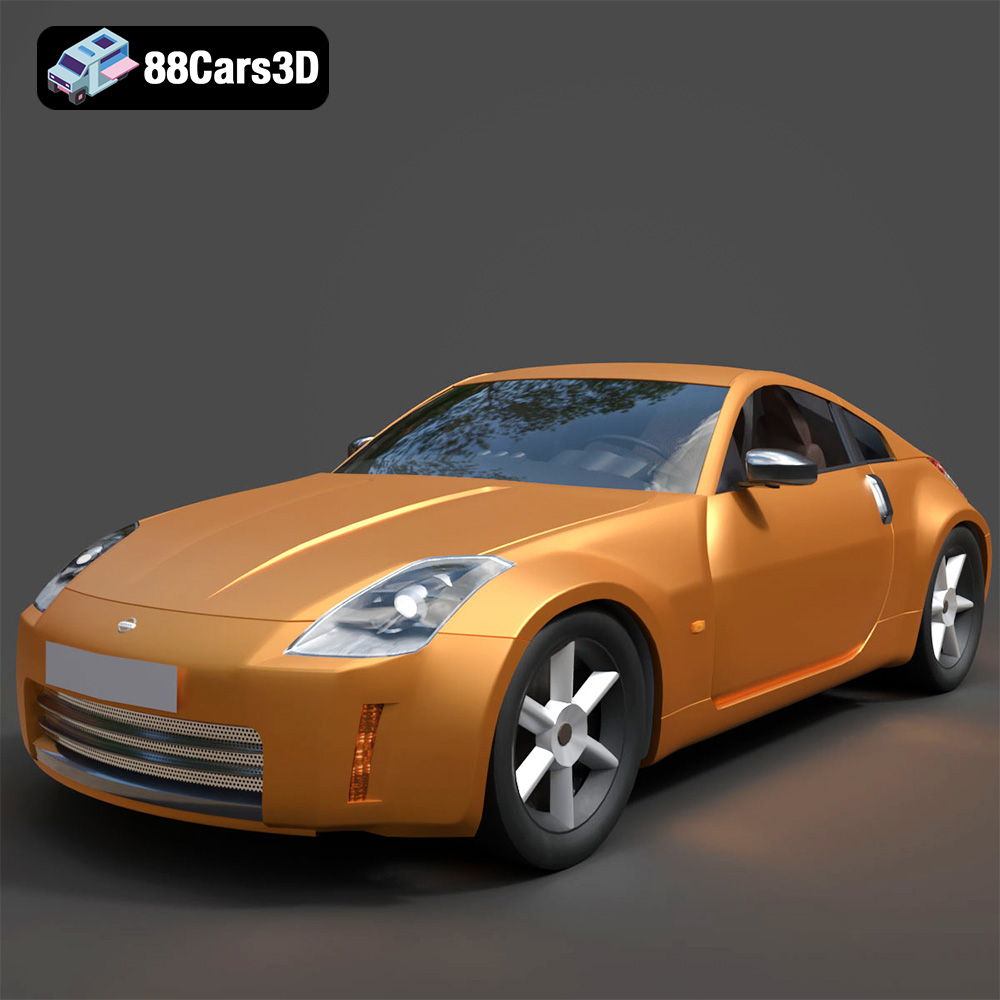
Texture: Yes
Material: Yes
Download the Nissan 350Z 3D Model featuring clean geometry, realistic detailing, and a fully modeled interior. Includes .blend, .fbx, .obj, .glb, .stl, .ply, .unreal, and .max formats for rendering, simulation, and game development.
Price: $4.99

Texture: Yes
Material: Yes
Download the Nissan Skyline V35 2001 3D Model featuring clean geometry, realistic detailing, and a fully modeled interior. Includes .blend, .fbx, .obj, .glb, .stl, .ply, .unreal, and .max formats for rendering, simulation, and game development.
Price: $4.99

Texture: Yes
Material: Yes
Download the Mercedes-Benz S-Klasse 221-007 3D Model featuring clean geometry, realistic detailing, and a fully modeled interior. Includes .blend, .fbx, .obj, .glb, .stl, .ply, .unreal, and .max formats for rendering, simulation, and game development.
Price: $4.99
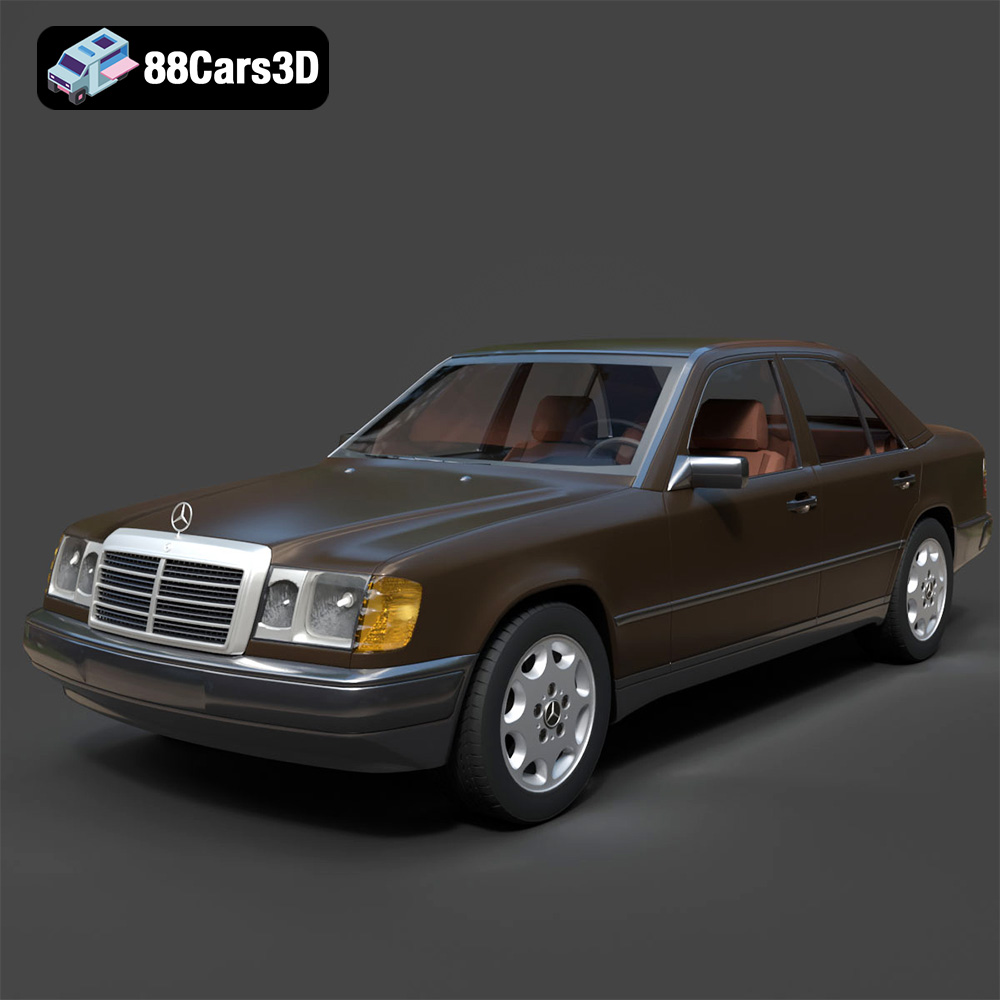
Texture: Yes
Material: Yes
Download the Mercedes W124 Sedan 3D Model featuring clean geometry, realistic detailing, and a fully modeled interior. Includes .blend, .fbx, .obj, .glb, .stl, .ply, .unreal, and .max formats for rendering, simulation, and game development.
Price: $4.99

Texture: Yes
Material: Yes
Download the Nissan Fuga 2003 3D Model featuring clean geometry, realistic detailing, and a fully modeled interior. Includes .blend, .fbx, .obj, .glb, .stl, .ply, .unreal, and .max formats for rendering, simulation, and game development.
Price: $4.99
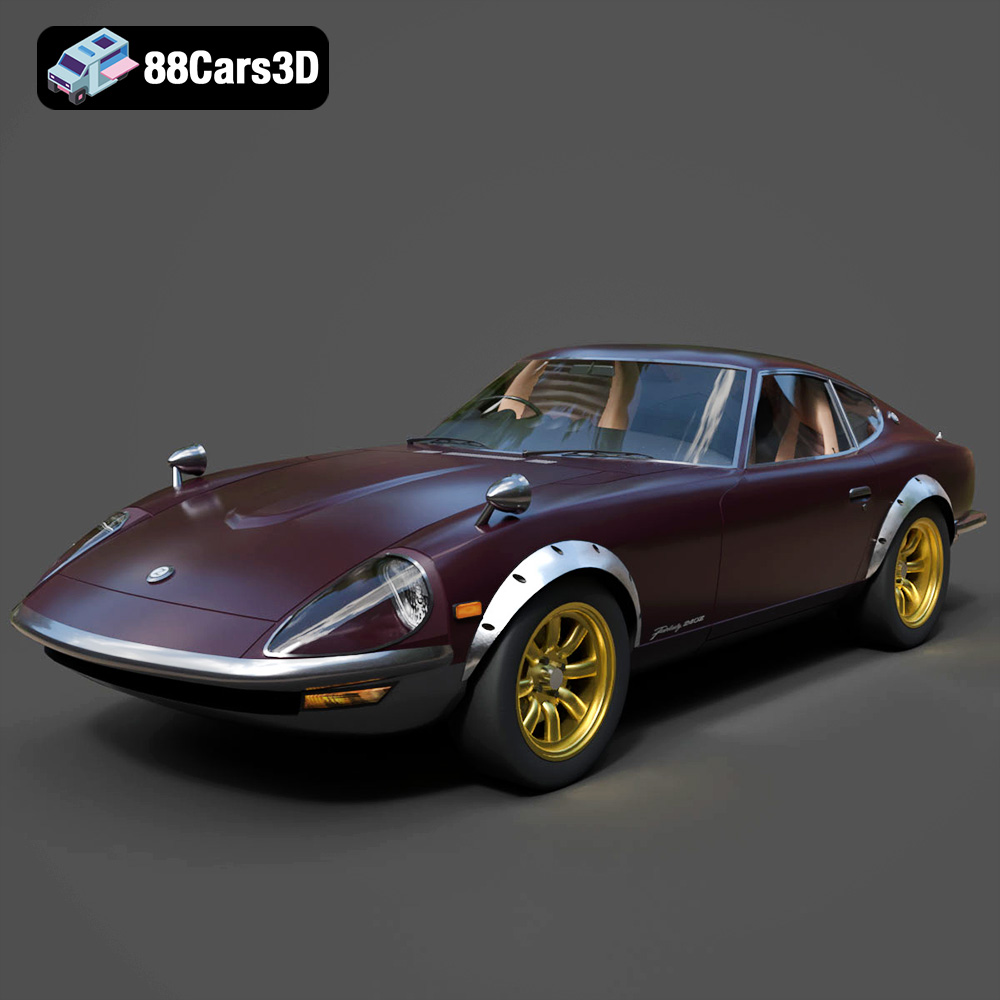
Texture: Yes
Material: Yes
Download the Nissan FairLady 240ZG 3D Model featuring clean geometry, realistic detailing, and a fully modeled interior. Includes .blend, .fbx, .obj, .glb, .stl, .ply, .unreal, and .max formats for rendering, simulation, and game development.
Price: $4.99
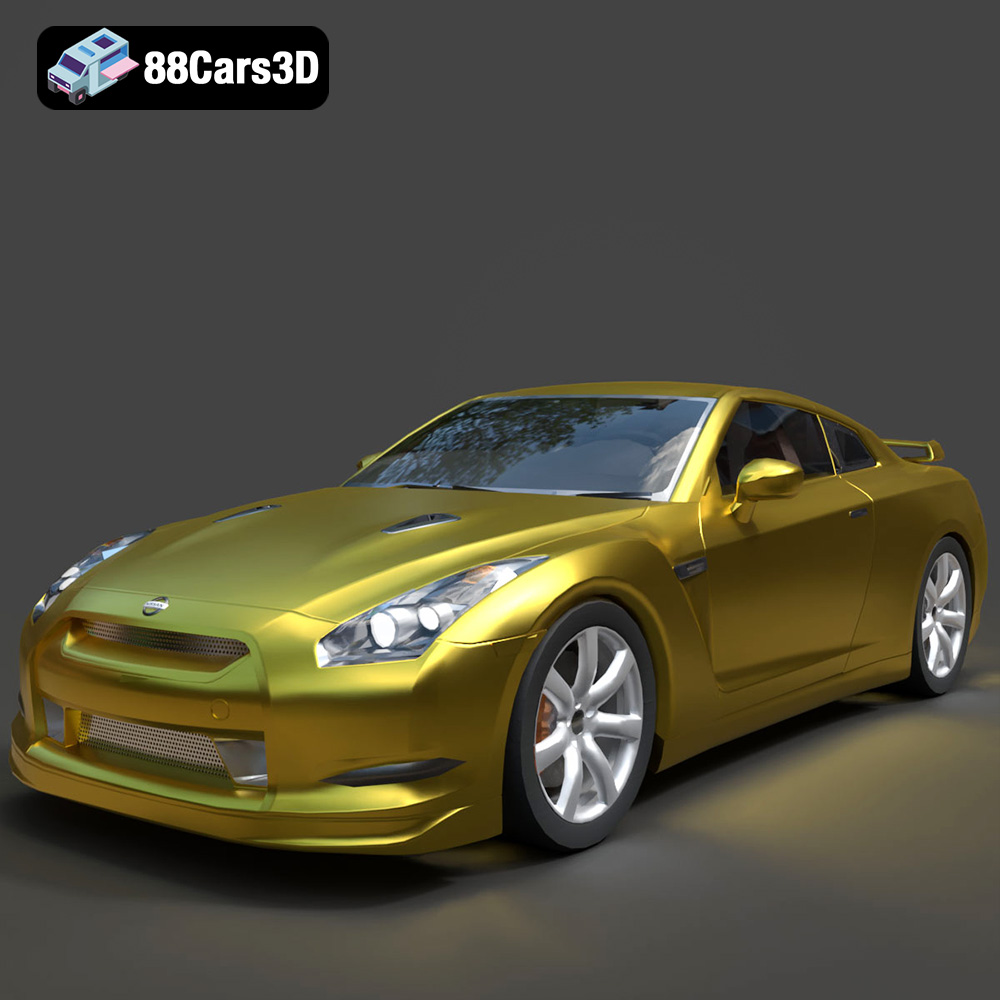
Texture: Yes
Material: Yes
Download the Nissan GT-R 2008 3D Model featuring clean geometry, realistic detailing, and a fully modeled interior. Includes .blend, .fbx, .obj, .glb, .stl, .ply, .unreal, and .max formats for rendering, simulation, and game development.
Price: $4.99

Texture: Yes
Material: Yes
Download the Nissan Cube 3D Model featuring clean geometry, realistic detailing, and a fully modeled interior. Includes .blend, .fbx, .obj, .glb, .stl, .ply, .unreal, and .max formats for rendering, simulation, and game development.
Price: $4.99

Texture: Yes
Material: Yes
Download the Nissan Cedric Y32 3D Model featuring clean geometry, realistic detailing, and a fully modeled interior. Includes .blend, .fbx, .obj, .glb, .stl, .ply, .unreal, and .max formats for rendering, simulation, and game development.
Price: $4.99

Texture: Yes
Material: Yes
Download the Nissan Cima Infiniti Q45 2007 3D Model featuring clean geometry, realistic detailing, and a fully modeled interior. Includes .blend, .fbx, .obj, .glb, .stl, .ply, .unreal, and .max formats for rendering, simulation, and game development.
Price: $4.99

