Get 20% OFF All Premium 3D & STL Models!

In the dynamic world of 3D visualization, few subjects captivate attention quite like automotive design. From sleek concepts to meticulously rendered classics, 3D car models are the unsung heroes powering everything from blockbuster games and cinematic advertisements to cutting-edge AR/VR experiences and hyper-realistic product configurators. The journey of transforming a vehicle concept into a breathtaking digital asset is an intricate blend of artistic vision and profound technical expertise. It demands an understanding of everything from polygon perfect topology and intricate UV layouts to physically accurate materials and optimized rendering pipelines.
This comprehensive guide delves deep into the technical intricacies of creating, optimizing, and deploying high-quality 3D car models. Whether you’re a seasoned 3D artist, an aspiring game developer, an automotive designer pushing the boundaries of digital prototyping, or a student eager to master the craft, understanding the underlying principles is paramount. We’ll navigate the complex landscape of automotive 3D, exploring advanced workflows, software-specific techniques, and industry best practices that elevate a model from good to exceptional. Prepare to unlock the secrets behind visually stunning and performance-efficient automotive assets, ensuring your creations are ready for any digital canvas.
The bedrock of any high-quality 3D car model is its topology – the arrangement of polygons (faces, edges, and vertices) that define its surface. For automotive assets, clean, quad-based topology is not just a preference; it’s a necessity. It dictates how smoothly the model subdivides, how effectively UVs can be laid out, and how well textures wrap around complex curves. A poorly constructed mesh can lead to artifacts, pinching, and rendering issues, compromising the entire visualization process. The goal is to achieve an even distribution of polygons, particularly in areas of high curvature, while maintaining efficient polygon counts.
Automotive topology demands meticulous attention to edge flow. Edge loops should follow the natural contours and creases of the car body, facilitating smooth transitions and allowing for precise control during sculpting or deformation. For instance, edge loops should run along panel gaps, around wheel arches, and define sharp creases without introducing unnecessary geometry. While striving for an all-quad mesh is ideal for subdivision surfacing and animation, judicious use of triangles can be acceptable in flat, non-deforming areas or for optimization, particularly for game assets. However, these should be carefully placed to avoid creating visual anomalies. When sourcing models from marketplaces such as 88cars3d.com, always scrutinize the wireframe to ensure this fundamental quality.
The optimal polygon count for a 3D car model is highly dependent on its intended application. For high-resolution offline rendering (e.g., product visualization, marketing), models can range from 150,000 to over 1,000,000 polygons, often leveraging subdivision surfaces to achieve ultra-smooth results. These models typically start from CAD data, which, while dimensionally accurate, often requires extensive retopology to convert into render-ready polygonal meshes. CAD models frequently feature complex NURBS surfaces or intricate tessellated meshes with excessive triangles and non-manifold geometry, necessitating a careful reconstruction process to achieve clean quad topology suitable for subdivision.
For real-time applications like games or AR/VR, polycount becomes a critical performance factor. A typical game-ready car model might range from 30,000 to 100,000 polygons for the main body, with additional polygons for wheels, interior, and undercarriage. This often involves a process of manual retopology or automated decimation tools, followed by meticulous cleanup. Tools like Blender’s Retopoflow, Maya’s Quad Draw, or 3ds Max’s Graphite Modeling Tools provide robust solutions for manual retopology, allowing artists to construct clean, efficient meshes over existing high-detail geometry. Mastering these techniques ensures your automotive assets are both visually stunning and computationally lightweight.
Once a car model boasts impeccable topology, the next crucial step is UV mapping – the process of flattening the 3D surface into a 2D space to apply textures. Proper UV mapping is essential for projecting high-quality textures without stretching, distortion, or visible seams. For complex automotive surfaces, this requires a strategic approach, segmenting the model into logical UV islands for different components like body panels, wheels, windows, and interior elements. Each island should be unwrapped with minimal distortion, ensuring that pixels on the texture map correspond accurately to the surface area on the 3D model.
Hard surface UV mapping for car models differs significantly from organic models. Edges should be kept as straight as possible in the UV layout, and cuts should ideally follow natural seams or panel lines on the car, making them less noticeable. Overlapping UVs can be utilized for mirrored parts (e.g., symmetrical headlights, wheels) to save texture space, provided these parts don’t require unique details. However, non-overlapping UVs are mandatory when baking ambient occlusion, normal maps, or other unique details from a high-poly sculpt onto a low-poly mesh. Efficient UV packing, often achieved using tools like RizomUV or the built-in UV editors in Blender, 3ds Max, or Maya, ensures optimal use of texture space, maximizing visual fidelity while minimizing VRAM consumption.
Modern automotive rendering relies heavily on Physically Based Rendering (PBR) workflows, which aim to simulate how light interacts with materials in the real world. This involves creating a suite of texture maps that define various surface properties. Key PBR maps for car models include:
For realistic car paint, additional layers are often employed to simulate the complex interplay of base coat, clear coat, and metallic flakes. Software like Substance Painter excels at creating these intricate PBR materials, allowing artists to procedurally generate scratches, dirt, and wear, or apply custom decals with precision. Texture resolutions typically range from 2K (2048×2048) for smaller components to 4K (4096×4096) or even 8K (8192×8192) for primary body panels, depending on the desired level of detail and target platform. Utilizing texture atlases, where multiple smaller textures are combined into a single larger one, can further optimize performance by reducing draw calls in game engines.
Achieving photorealism in 3D car models hinges critically on the accurate representation of materials. Physically Based Rendering (PBR) forms the cornerstone of this realism, adhering to the principle of energy conservation and simulating light interaction in a physically plausible manner. For automotive models, this means recreating the nuanced reflections of car paint, the delicate transparency of glass, the metallic sheen of chrome, and the subtle imperfections of rubber and plastic. PBR materials are typically implemented using either a Metallic-Roughness or Specular-Glossiness workflow, with Metallic-Roughness being the more prevalent standard in modern real-time and offline renderers.
The real magic happens within the shader network. A basic PBR setup for a car body might involve combining Albedo, Metallic, Roughness, and Normal maps into a standard material node. However, for advanced car paint, the shader becomes far more sophisticated. It often incorporates multiple layers: a base layer for the primary color and metallic flakes (controlled by a dedicated flake normal map), topped by a clear coat layer that adds a distinct specular highlight and Fresnel reflections. This clear coat layer simulates the glossy, protective finish found on real cars, accurately bending light and creating reflections that vary with viewing angle. Advanced shaders may also include subsurface scattering for translucent materials like headlights or tail lights, anisotropic reflections for brushed metals, and displacement maps for subtle surface imperfections that are too fine for normal maps alone. Creating these complex materials often involves dedicated material authoring tools like Substance Designer or directly within advanced node-based shader editors in renderers like Arnold, Cycles, or Corona.
Let’s break down some specific automotive material challenges and their solutions:
The interplay of these textures and shader properties, meticulously crafted for each component, is what truly brings a 3D car model to life. Platforms like 88cars3d.com provide models with professionally set up PBR materials, significantly accelerating workflows for artists needing ready-to-render assets.
Rendering is the process of generating an image from a 3D model, and for automotive visualization, the goal is often photorealism. Modern rendering engines, whether CPU-based or GPU-based, employ advanced algorithms to simulate the complex physics of light, creating stunningly lifelike results. Understanding the strengths and weaknesses of different renderers and optimizing their settings is paramount for efficient and high-quality output.
Offline renderers like V-Ray, Corona Renderer (for 3ds Max, Cinema 4D), Arnold (for Maya, 3ds Max, Houdini), and Cycles (for Blender) utilize sophisticated global illumination (GI) techniques such as Path Tracing or Irradiance Caching to accurately simulate indirect lighting, color bleeding, and soft shadows. These renderers can produce extremely high-fidelity images but often come with longer render times. Key considerations in these workflows include:
Choosing the right renderer often depends on the host software and the desired aesthetic. V-Ray and Corona are renowned for their ease of use and high-quality GI, while Arnold excels with complex shader networks and robust production rendering. Cycles offers a powerful integrated solution within Blender, constantly evolving with new features like hardware-accelerated ray tracing.
Efficient rendering of automotive scenes involves balancing quality with render time. Here’s a tactical approach:
By carefully configuring these settings and understanding how your chosen renderer processes light, you can achieve breathtaking automotive visualizations that truly stand out.
In real-time environments like game engines (Unity, Unreal Engine), augmented reality (AR), and virtual reality (VR), performance is king. A visually stunning 3D car model is useless if it causes frame rate drops or excessive load times. Optimizing automotive assets for game engines requires a meticulous approach to polycount, draw calls, texture usage, and material complexity. The goal is to deliver high visual fidelity within strict performance budgets.
One of the most critical optimization techniques is the implementation of Level of Detail (LODs). LODs are simplified versions of a 3D model that are swapped in dynamically as the camera moves further away. A high-quality car might have 3-5 LOD levels: LOD0 (full detail, 50k-100k polygons) for close-ups, LOD1 (20k-40k polygons) for medium distance, LOD2 (5k-15k polygons) for far distance, and potentially a billboard or very low-poly proxy (under 1k polygons) for extreme distances. These can be generated automatically using tools within Unity or Unreal Engine, or manually created and optimized in 3D DCC software. Unreal Engine’s Nanite virtualized geometry system, available for high-end platforms, revolutionizes this by allowing millions of polygons without traditional LODs, though it has its own considerations.
Draw calls are instructions sent from the CPU to the GPU to render an object. Minimizing draw calls is crucial for performance. Each unique material on a model typically incurs a separate draw call, as does each mesh. Strategies to reduce draw calls include:
Texture footprint is another major concern. Use appropriate texture resolutions (e.g., 2K for major body parts, 1K for wheels/tires, 512px for small details). Employ texture compression (e.g., DXT for desktop/console, ETC/PVRTC for mobile) and consider texture streaming, where textures are loaded into memory only when needed. Collision meshes, highly simplified versions of the car’s geometry, are essential for physics interactions without taxing the engine with complex collision calculations. Finally, bake lighting information into lightmaps or vertex colors for static elements, reducing the need for expensive real-time lighting calculations.
The utility of high-quality 3D car models extends far beyond traditional rendering. They are pivotal assets in emerging technologies like Augmented Reality (AR) and Virtual Reality (VR), and even in physical production through 3D printing. Each application presents unique technical challenges and specific requirements regarding model preparation and file formats.
AR/VR environments demand extreme performance optimization. Models must be lightweight, typically adhering to much stricter polycount budgets than even game-ready assets, often in the range of 10,000-50,000 polygons for an entire car, especially for mobile AR. Real-time PBR shaders are essential, but they must be efficient, often relying on simplified reflection probes and baked lighting rather than complex real-time global illumination. Texture sizes should be minimized (e.g., 1K or 512px) and heavily compressed. Draw calls are a critical bottleneck for mobile devices, making texture atlasing and material instancing even more crucial.
Specific file formats are favored for AR/VR deployment:
When preparing models for AR/VR, ensure all geometry is triangulated, normals are correctly oriented, and UVs are clean. Any interactivity (e.g., opening doors, changing paint color) must be implemented with efficient scripting and shader parameters.
3D printing transforms digital models into physical objects, but it requires a very different set of preparation rules. The primary concern is mesh integrity: the model must be “watertight” or “manifold,” meaning it has no holes, overlapping faces, or internal geometry. Every edge must connect exactly two faces, forming a continuous, enclosed volume. Common issues from CAD conversions or modeling errors (non-manifold edges, inverted normals, self-intersecting geometry) must be resolved. Software like Meshmixer, Netfabb, or the 3D Print Toolbox in Blender provides robust tools for mesh analysis and repair.
Key considerations for 3D printing:
Common file formats for 3D printing include:
Whether for game engines, AR, VR, or 3D printing, having a versatile model that can be easily converted and optimized for various formats is invaluable. This is where the high-quality, clean topology of models found on platforms like 88cars3d.com truly shines, as they provide a solid foundation for diverse applications.
Even the most meticulously modeled and textured 3D car can fall flat without proper lighting and a compelling environment. These elements are not mere afterthoughts; they are crucial components that define the mood, highlight design features, and ground the vehicle realistically within its scene. The final stages involve careful composition, lighting setup, and a layer of post-processing to achieve that “magazine cover” look.
Automotive lighting often focuses on highlighting reflections and contours. A popular technique is using High Dynamic Range Images (HDRIs) for image-based lighting. An HDRI acts as both a light source and a background, providing realistic global illumination and reflections that accurately capture the subtleties of real-world environments (e.g., a studio, a sunny day, a cloudy sky). Supplementing HDRIs with virtual area lights or spot lights allows for precise control over key reflections and shadow casting, emphasizing specific design lines or creating dramatic effects. A classic three-point lighting setup (key, fill, back/rim light) can be adapted for cars to create professional studio shots.
Environments can range from simple studio backdrops to complex 3D scenes or seamlessly integrated backplates (photographs). When using backplates, ensure the 3D car model’s perspective, lighting, and reflections perfectly match the photographic plate. This often involves careful camera matching, adjusting the HDRI’s rotation and intensity, and adding subtle shadow catchers in the 3D scene. For virtual environments, consider modeling simplified surroundings or using pre-made assets to contribute to ambient reflections and shadows, enhancing realism without excessive detail.
The raw render from a 3D software is rarely the final image. Post-processing in image editing software (like Adobe Photoshop or GIMP) or compositing applications (like Adobe After Effects, Nuke, or DaVinci Resolve) is where the final artistic touches are applied. This stage can dramatically enhance the mood, realism, and visual impact of your automotive renders. If you rendered using AOV passes, this is where they truly shine, giving you granular control over each element.
Key post-processing techniques include:
By expertly combining these elements – a strong model, compelling lighting, a suitable environment, and careful post-processing – you can transform a technical render into a captivating piece of automotive art.
The journey from a digital blueprint to a fully realized, high-quality 3D car model is an intricate process demanding a comprehensive understanding of both artistic principles and technical workflows. We’ve explored the critical importance of clean, quad-based topology for smooth subdivision and animation, the strategic necessity of precise UV mapping for distortion-free texturing, and the art of crafting physically accurate PBR materials that bring surfaces to life. We’ve delved into advanced rendering techniques, fine-tuning settings for photorealistic outputs, and dissected the crucial optimization strategies required for seamless performance in demanding real-time environments like game engines and AR/VR platforms.
Furthermore, we’ve highlighted the distinct preparation requirements for diverse applications, from watertight meshes for 3D printing to optimized GLB and USDZ formats for immersive experiences. Finally, we’ve emphasized the transformative power of expertly set up lighting, immersive environments, and the final polish of post-processing to elevate a technical asset into a stunning visual masterpiece. Mastering these advanced techniques ensures your 3D car models are not only visually impressive but also versatile, performant, and ready for any challenge the digital or physical world throws at them. Continuing to explore and refine these skills will empower you to push the boundaries of automotive visualization. For artists and developers seeking a head start, remember that high-quality, pre-optimized 3D car models are readily available on platforms like 88cars3d.com, providing a robust foundation for your next project.
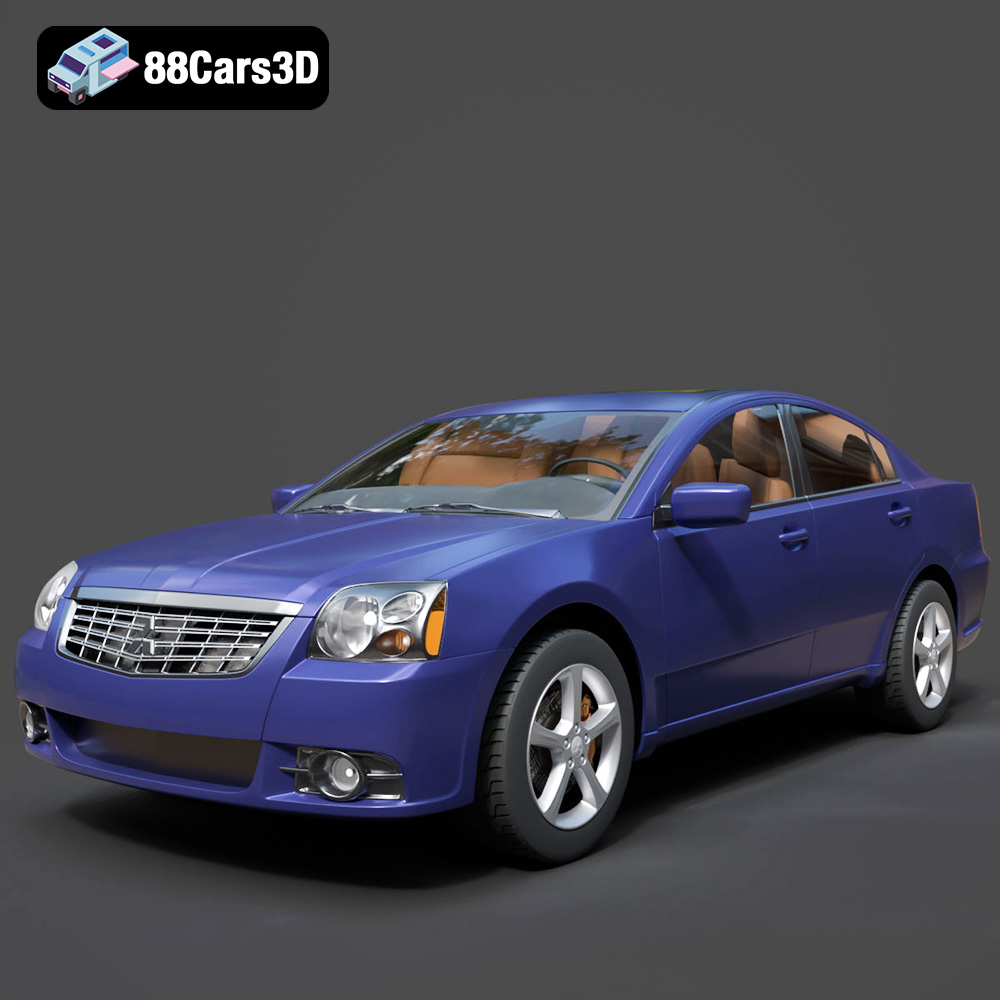
Texture: Yes
Material: Yes
Download the Mitsubishi Galant 2009 3D Model featuring clean geometry, realistic detailing, and a fully modeled interior. Includes .blend, .fbx, .obj, .glb, .stl, .ply, .unreal, and .max formats for rendering, simulation, and game development.
Price: $4.99
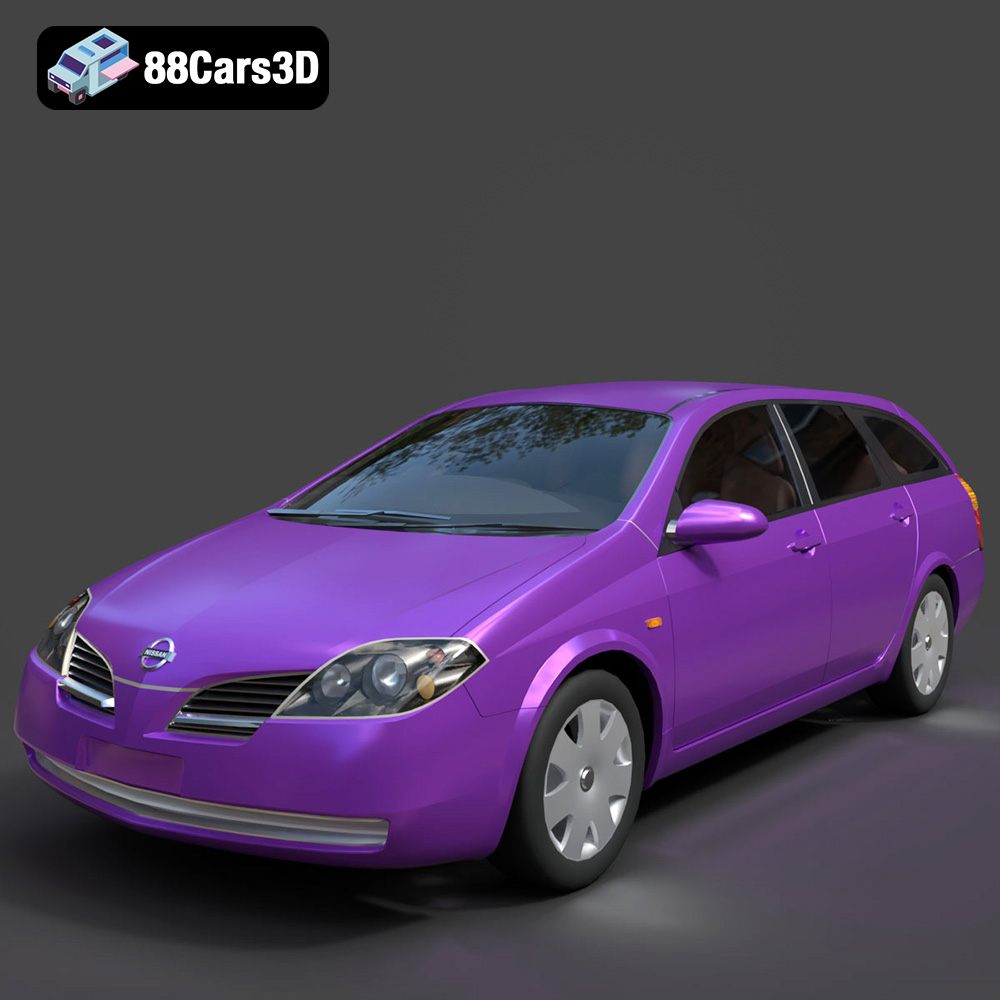
Texture: Yes
Material: Yes
Download the Nissan Primera Wagon 3D Model featuring clean geometry, realistic detailing, and a fully modeled interior. Includes .blend, .fbx, .obj, .glb, .stl, .ply, .unreal, and .max formats for rendering, simulation, and game development.
Price: $4.99
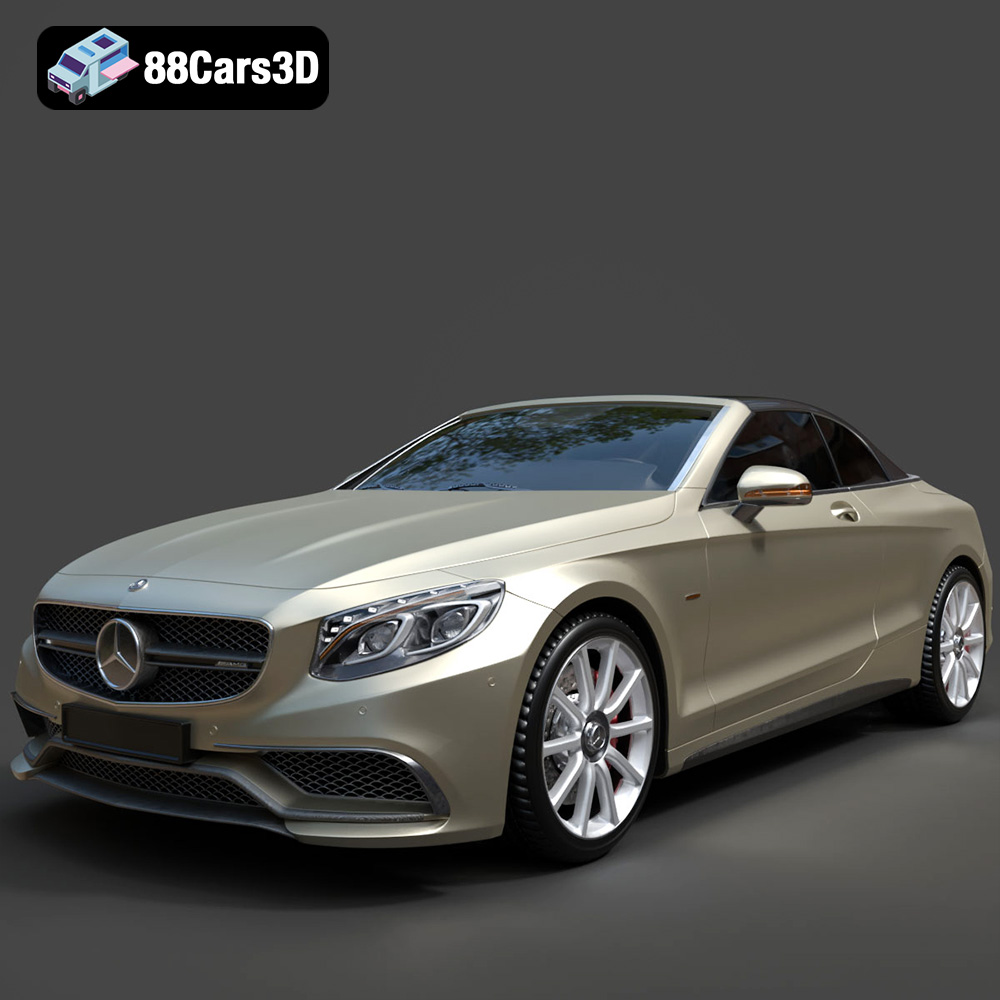
Texture: Yes
Material: Yes
Download the Mercedes-Benz S63 AMG Cabriolet 2017 3D Model featuring clean geometry, realistic detailing, and a fully modeled interior. Includes .blend, .fbx, .obj, .glb, .stl, .ply, .unreal, and .max formats for rendering, simulation, and game development.
Price: $20.99
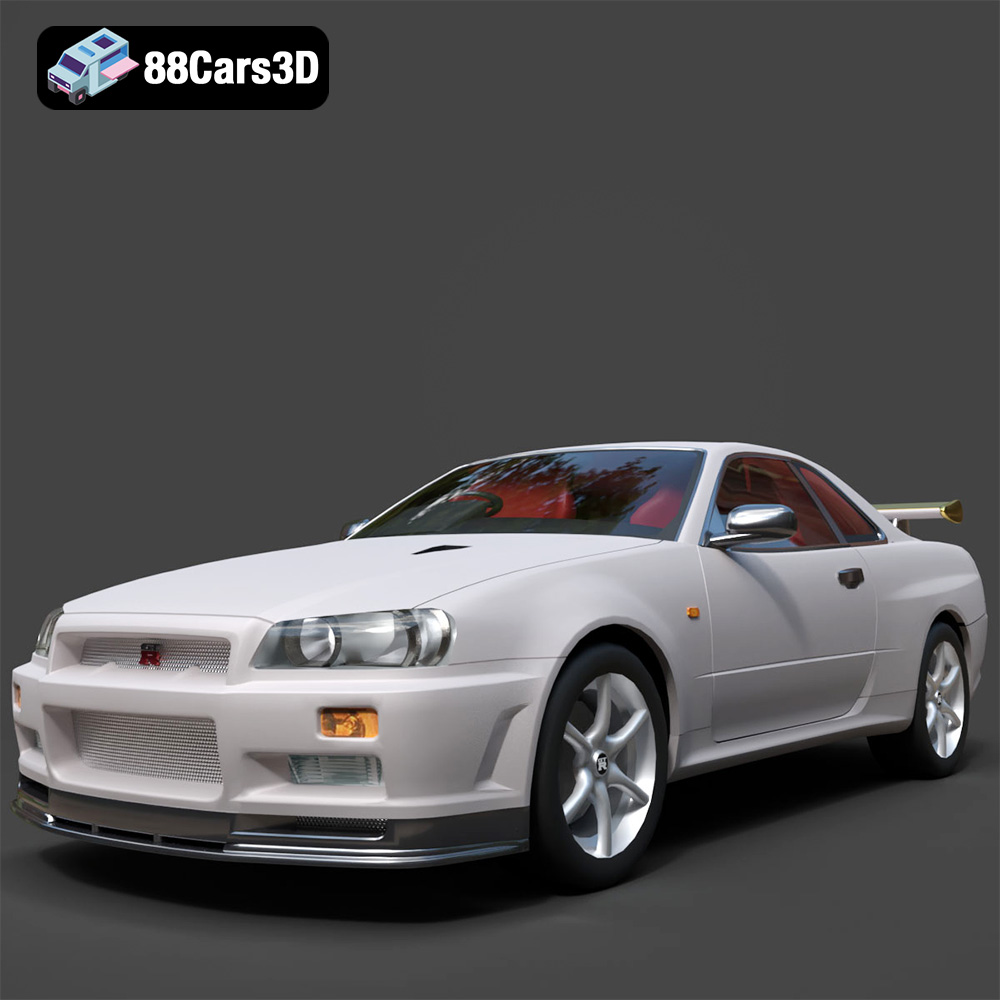
Texture: Yes
Material: Yes
Download the Nissan Skyline R34 2002 3D Model featuring clean geometry, realistic detailing, and a fully modeled interior. Includes .blend, .fbx, .obj, .glb, .stl, .ply, .unreal, and .max formats for rendering, simulation, and game development.
Price: $4.99
Texture: Yes
Material: Yes
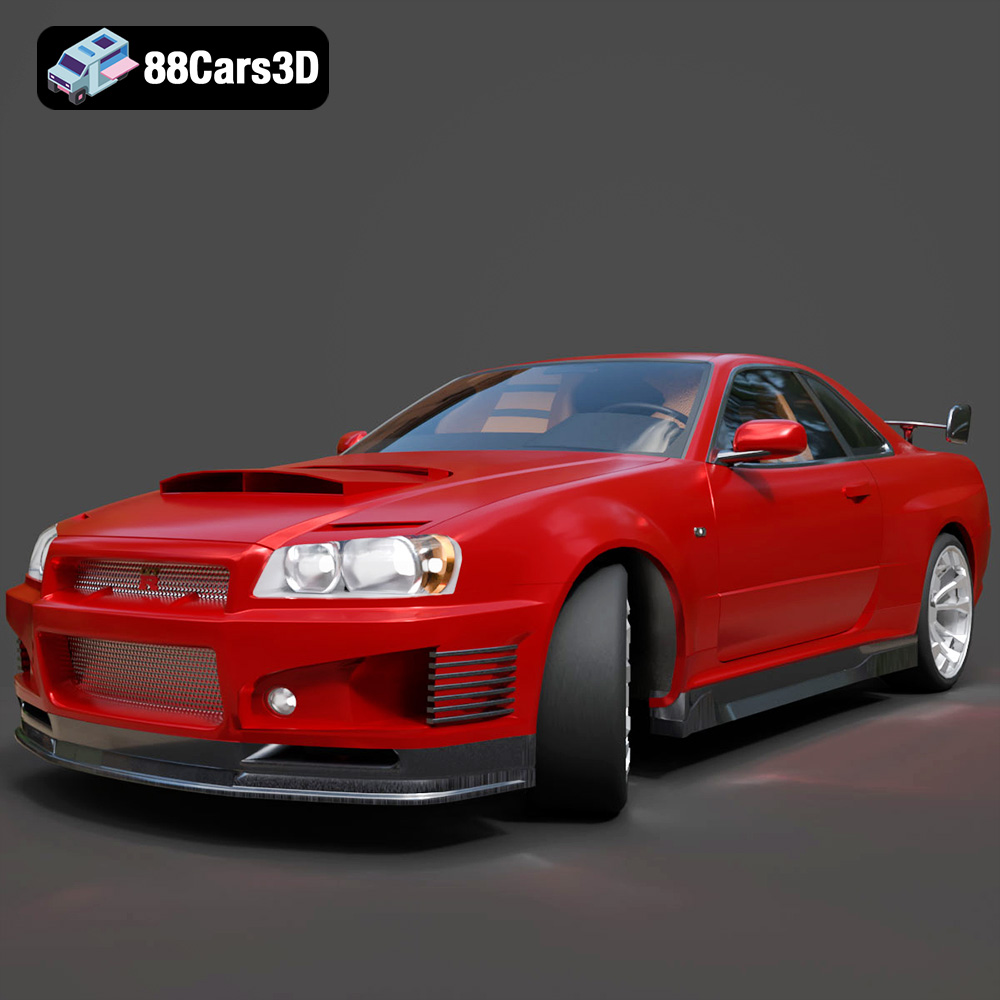
Download the Nissan Skyline 3D Model featuring clean geometry, realistic detailing, and a fully modeled interior. Includes .blend, .fbx, .obj, .glb, .stl, .ply, .unreal, and .max formats for rendering, simulation, and game development.
Price: $9.99
Texture: Yes
Material: Yes
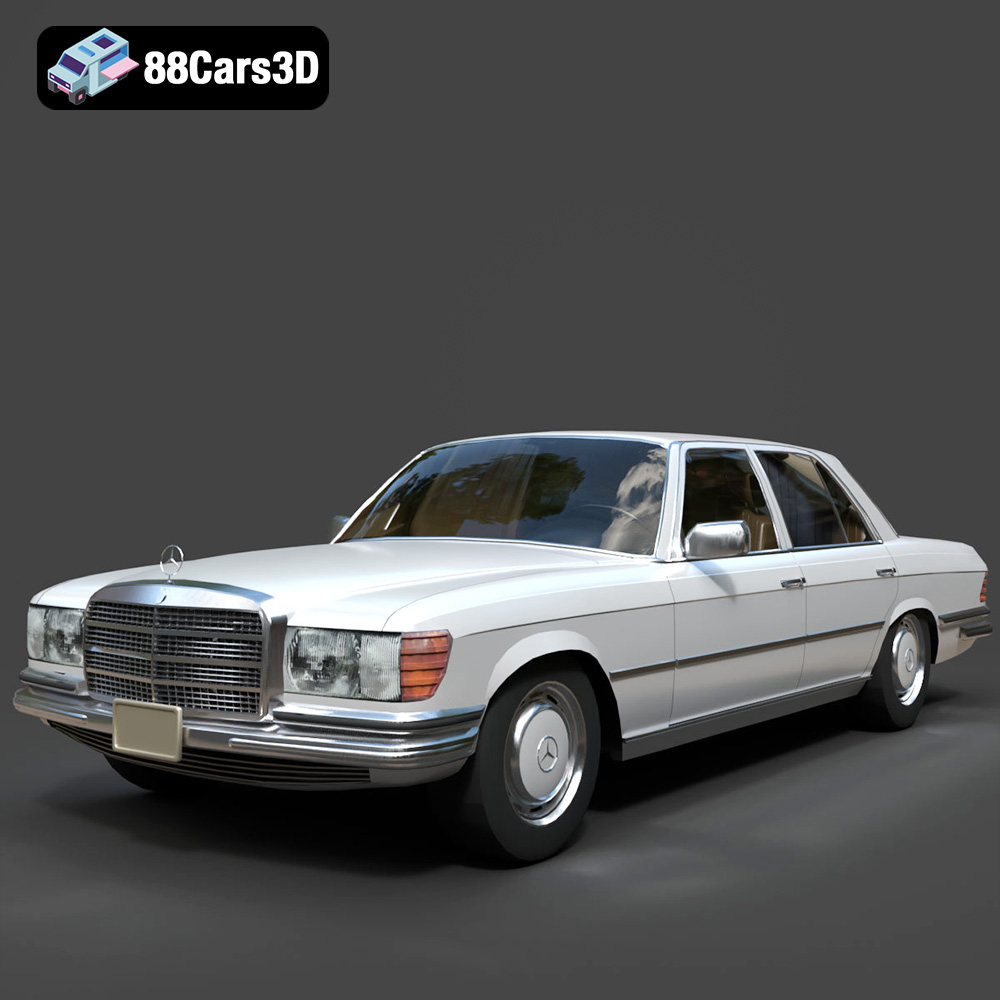
Download the Mercedes-Benz S-Klasse W116 3D Model featuring clean geometry, realistic detailing, and a fully modeled interior. Includes .blend, .fbx, .obj, .glb, .stl, .ply, .unreal, and .max formats for rendering, simulation, and game development.
Price: $4.99
Texture: Yes
Material: Yes
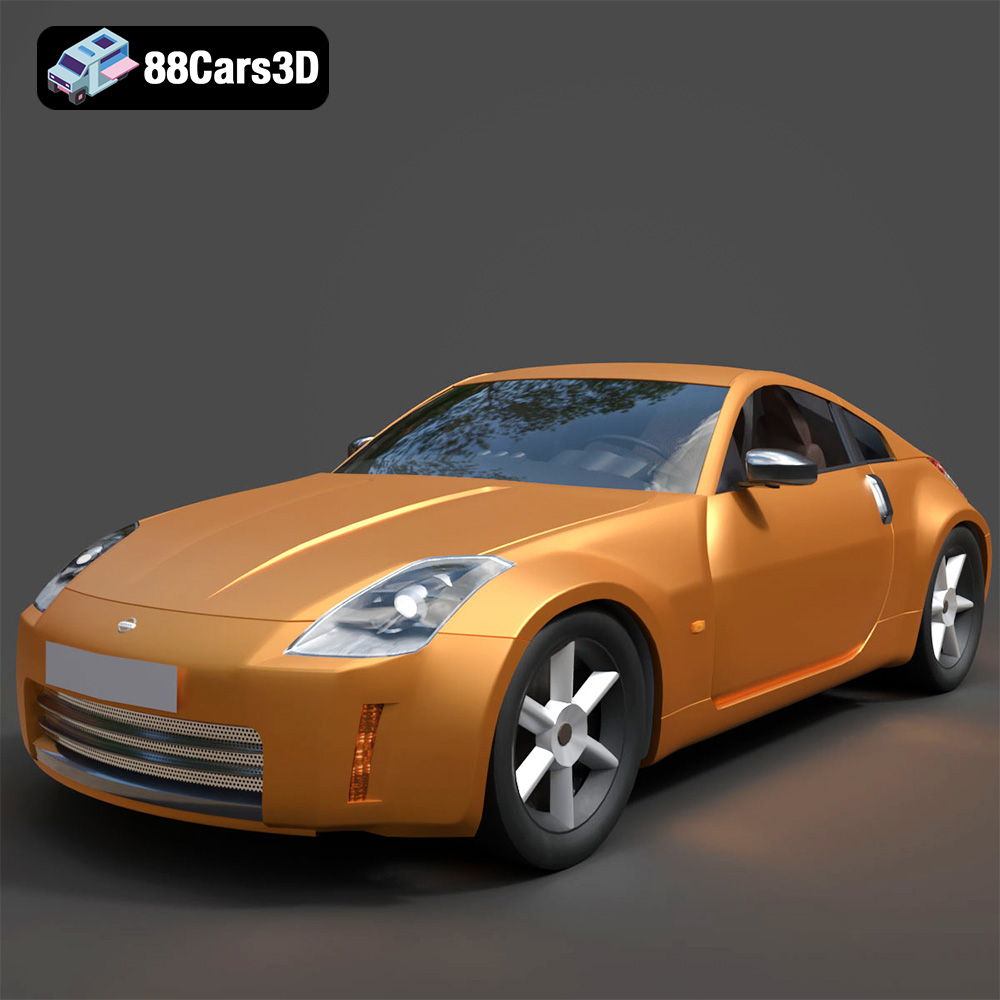
Download the Nissan 350Z 3D Model featuring clean geometry, realistic detailing, and a fully modeled interior. Includes .blend, .fbx, .obj, .glb, .stl, .ply, .unreal, and .max formats for rendering, simulation, and game development.
Price: $4.99

Texture: Yes
Material: Yes
Download the Nissan Skyline V35 2001 3D Model featuring clean geometry, realistic detailing, and a fully modeled interior. Includes .blend, .fbx, .obj, .glb, .stl, .ply, .unreal, and .max formats for rendering, simulation, and game development.
Price: $4.99

Texture: Yes
Material: Yes
Download the Mercedes-Benz S-Klasse 221-007 3D Model featuring clean geometry, realistic detailing, and a fully modeled interior. Includes .blend, .fbx, .obj, .glb, .stl, .ply, .unreal, and .max formats for rendering, simulation, and game development.
Price: $4.99
Texture: Yes
Material: Yes
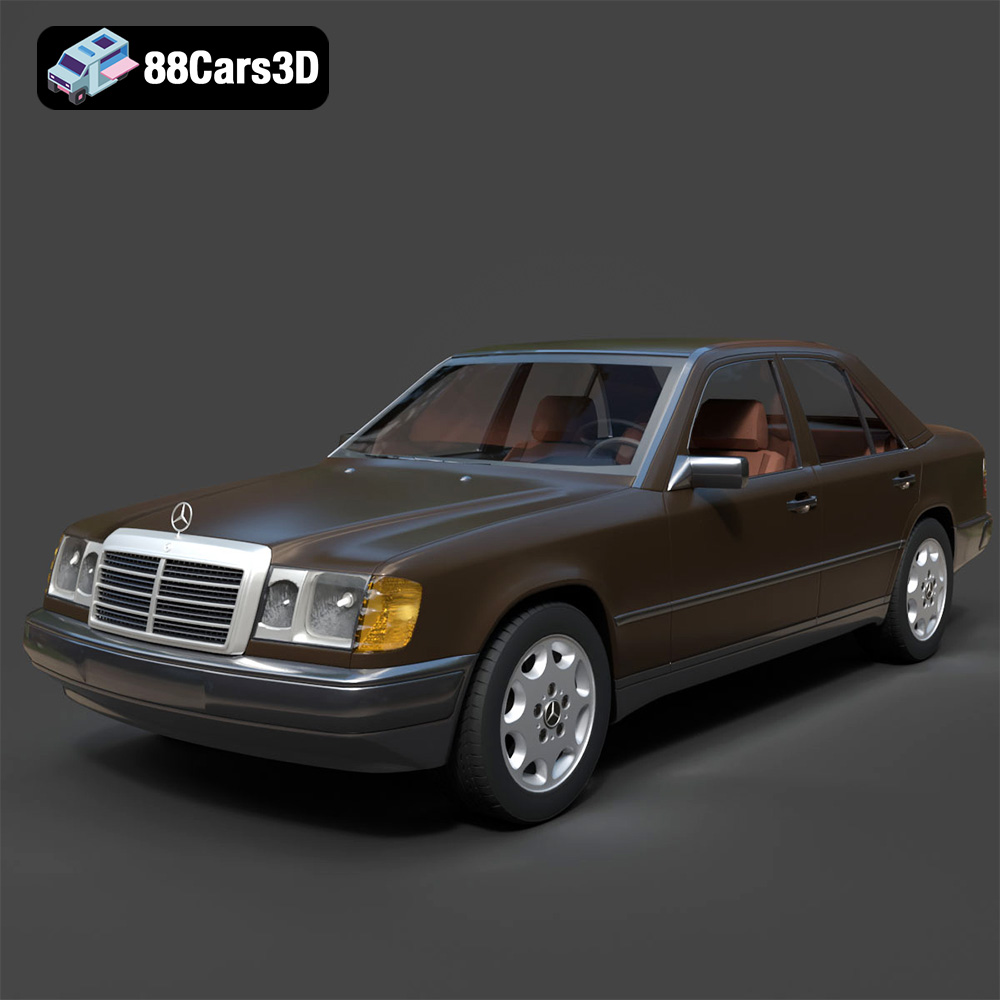
Download the Mercedes W124 Sedan 3D Model featuring clean geometry, realistic detailing, and a fully modeled interior. Includes .blend, .fbx, .obj, .glb, .stl, .ply, .unreal, and .max formats for rendering, simulation, and game development.
Price: $4.99

