Get 20% OFF All Premium 3D & STL Models!

The automotive industry has always been a beacon of design and engineering innovation, and in the digital realm, this translates into an insatiable demand for high-fidelity 3D car models. From breathtaking cinematic renders that fuel marketing campaigns to interactive experiences in cutting-edge video games and immersive AR/VR applications, the quality of a 3D car model is paramount. Creating these digital masterpieces is a complex blend of artistic vision and rigorous technical execution, requiring deep knowledge of 3D modeling workflows, rendering techniques, and optimization strategies.
This comprehensive guide delves into the intricate world of crafting and deploying professional-grade 3D car models. We will explore the foundational principles of perfect topology and edge flow, demystify advanced UV mapping and PBR material creation, and navigate the nuances of high-fidelity rendering. Furthermore, we’ll tackle the critical aspects of game engine optimization, explore diverse file formats, and uncover specialized techniques for AR/VR and 3D printing. Whether you’re a seasoned 3D artist, an aspiring game developer, an automotive designer, or a visualization professional, this article provides the insights and actionable knowledge to elevate your digital automotive creations. Prepare to unlock the secrets behind truly exceptional 3D car models that stand out in any digital landscape.
The foundation of any high-quality 3D car model lies in its topology and edge flow. These elements dictate not only the model’s visual smoothness and accuracy but also its performance during animation, deformation, and subdivision. For automotive models, which are characterized by complex curves, sharp edges, and precise panel gaps, impeccable topology is non-negotiable. It ensures that reflections glide smoothly across the surface, without unsightly pinches or distortions, a critical factor for achieving photorealism in renders.
Good topology primarily means using quad-based geometry wherever possible. Quads (four-sided polygons) deform predictably, allowing for clean subdivision smoothing and easier manipulation. While triangles are inevitable in some areas, particularly when optimizing for game engines, a clean base mesh should prioritize quads. For cars, this means carefully tracing the contours of the bodywork, ensuring that edge loops follow the natural curvature of the panels, wheel arches, and design lines. This disciplined approach prevents artifacts like “faceting” on curved surfaces and ensures that when the model is subdivided, it maintains its intended sleekness and accuracy. Understanding how light interacts with surfaces is key; perfectly distributed polygons ensure that reflections behave as they would on a real-world vehicle, providing crucial visual cues for realism.
Achieving clean edge flow involves a strategic placement of vertices and edges that guide the flow of light and deformation. For car panels, this often means creating concentric edge loops around details like headlights, grilles, and door handles. These loops help to isolate details while maintaining the overall smoothness of the surrounding surfaces. Crucially, maintaining consistent and accurate panel gaps is a challenge unique to automotive modeling. These gaps, often just a few millimeters wide in reality, need to be carefully modeled as distinct separations rather than relying solely on normal maps. This often involves duplicating and slightly offsetting edges to create separate geometry for each panel, then extruding inward to simulate depth. Best practice dictates modeling the *actual* separation between panels, even if it’s minimal, ensuring that ambient occlusion and lighting interact correctly. Techniques like using support edges (or “holding loops”) are vital for maintaining sharp creases and hard edges after subdivision, preventing unwanted softening. A common workflow begins with blocking out the primary forms using simple primitives, then incrementally adding detail and refining the edge flow, ensuring that each new edge serves a purpose in defining the shape or reinforcing a hard edge.
The optimal polygon count for a 3D car model is entirely dependent on its intended application. For high-resolution cinematic renders or detailed product visualizations, a poly count ranging from 500,000 to several million triangles is common, allowing for intricate details like engine components, realistic interiors, and highly subdivided body panels. Such models often utilize extensive subdivision surfaces (e.g., Catmull-Clark) to achieve absolute smoothness. In contrast, game assets require strict optimization. A typical game-ready car model might range from 50,000 to 150,000 triangles for a hero vehicle, decreasing significantly for background vehicles or mobile titles. This balance is achieved through smart modeling: focusing detail where it’s most visible, baking high-poly details onto low-poly meshes using normal maps, and strategically reducing polygons on less visible parts of the mesh. Knowing when to simplify and when to retain detail is a critical skill for any automotive 3D artist.
Once the geometry is perfected, the next crucial step is to prepare the model for texturing through meticulous UV mapping and then to create compelling, physically accurate materials. This process directly impacts the visual realism of the car, defining everything from the sheen of the paint to the texture of the tires and the subtle wear on the interior.
UV mapping is the process of flattening the 3D surface of a model into a 2D plane, allowing textures to be applied accurately. For complex automotive surfaces, strategic UV unwrapping is paramount to avoid distortion and ensure clean texture application. The goal is to create UV islands that are as uniform in density as possible, minimizing stretching and overlapping. For a car, this typically means separating panels into individual UV islands, carefully placing seams along natural creases or hidden edges (like the underside of trim or inside door jambs) to make them invisible. For intricate parts like interiors, engines, or undercarriages, a modular approach to UVs often works best, allowing for greater texture resolution where needed. Advanced techniques include using UDIMs (UV Dimension) for extremely high-resolution models, where multiple 0-1 UV spaces are used for different parts of the car, allowing for incredible texture fidelity without excessively large single texture files. Alternatively, for game assets, a single large UV atlas might be preferred to minimize draw calls, even if it means some compromise on individual texture resolution. Software like 3ds Max’s UVW Unwrap modifier, Blender’s UV Editor, or Maya’s UV Toolkit provide robust tools for this often-tedious but critical stage.
Physically Based Rendering (PBR) has become the industry standard for achieving photorealistic materials. PBR materials simulate how light interacts with surfaces in the real world, relying on properties like Base Color (Albedo), Metallic, Roughness, Normal, and Ambient Occlusion maps. For automotive models, crafting realistic PBR materials requires particular attention to:
* **Car Paint:** This is often the most complex shader. It typically involves a clear coat layer (specular, roughness) over a metallic base layer. Achieving the distinctive “flake” effect of metallic paint requires procedural noise or special texture maps, often layered to simulate depth. The clear coat itself needs to react to light with physically accurate reflections and refractions.
* **Tires:** Roughness maps are crucial here to simulate the matte, slightly rubbery texture. Normal maps add tread detail, while displacement maps can add further geometric fidelity for close-ups.
* **Glass:** Realistic car glass requires accurate transmission, refraction (using an Index of Refraction, or IOR, of ~1.52), and subtle reflections. Tinting can be applied via the base color or an absorption coefficient.
* **Chrome/Metals:** These are typically defined by a high metallic value and very low roughness, yielding sharp, clear reflections.
* **Plastics/Rubber/Leather:** These materials heavily rely on roughness and normal maps to convey their unique surface qualities.
Software like Substance Painter and Designer are industry staples for creating PBR textures, allowing artists to paint directly on the 3D model and generate all necessary PBR maps simultaneously. Alternatively, node-based material editors in renderers like Corona, V-Ray, Cycles, or Arnold allow for highly customized shader networks.
The choice of texture resolution directly impacts both visual quality and performance. For high-end renders, 4K (4096×4096) or even 8K (8192×8192) textures are common for major surfaces like the car body, ensuring incredible detail. For game engines and real-time applications, optimization is key. While hero assets might still use 4K textures, less prominent parts might use 2K or 1K. To optimize, texture atlasing (combining multiple smaller textures onto a single larger one) reduces draw calls, which is critical for performance. Channel packing is another advanced technique where different grayscale texture maps (e.g., Metallic, Roughness, Ambient Occlusion) are packed into the individual R, G, and B channels of a single RGB texture, saving memory and VRAM. For example, a single RGB texture could hold the Metallic in Red, Roughness in Green, and AO in Blue. Platforms like 88cars3d.com often provide models with carefully optimized textures, ensuring both visual fidelity and practical usability across various applications.
Bringing a 3D car model to life culminates in the rendering process, where lighting, materials, and environment converge to create a captivating image. Achieving photorealism in automotive rendering requires a deep understanding of lighting principles, renderer-specific techniques, and effective post-processing.
Lighting is arguably the most critical component of a realistic render, especially for highly reflective surfaces like car paint. High Dynamic Range Imagery (HDRI) is the backbone of most modern automotive rendering workflows. An HDRI provides both accurate environment reflections and realistic global illumination, making the car appear seamlessly integrated into its surroundings. Complementary to HDRIs, strategic studio lighting setups (e.g., a large softbox from above, smaller fill lights, and rim lights) are often used to accentuate curves, create dramatic reflections, and separate the car from the background. The placement of these lights is crucial for highlighting the intricate design lines and ensuring that the specular highlights gracefully follow the contours of the vehicle. For integration into real-world backplates, precise camera matching and careful adjustment of light intensity and color temperature are essential to blend the 3D model flawlessly with the photographic environment.
Each rendering engine offers unique strengths and workflows, though the core principles of PBR and global illumination remain consistent.
* **Corona Renderer & V-Ray (3ds Max/Cinema 4D):** These are popular choices for architectural and product visualization due to their ease of use and powerful physically based rendering capabilities. Key techniques include using the “LightMix” in Corona to adjust lights interactively after rendering, leveraging powerful material editors for complex car paint shaders, and optimizing render settings for speed and quality (e.g., noise limits, adaptive image sampling). V-Ray offers similar robust control over lighting, materials, and complex rendering effects like volumetric fog for atmospheric depth.
* **Cycles & Eevee (Blender):** Blender’s Cycles is a powerful path tracer, excellent for photorealistic results with its node-based material system allowing for intricate shader creation. Artists often focus on careful light path settings, adaptive sampling, and using the built-in denoiser to speed up renders. Eevee, Blender’s real-time renderer, is invaluable for rapid iteration and pre-visualization, capable of stunning results with clever use of screen-space reflections and ambient occlusion.
* **Arnold (Maya/Houdini):** Arnold is a high-end, CPU-based renderer favored in film and VFX for its robustness and realistic results. Its physically accurate sky and atmosphere shaders, combined with a comprehensive AOV (Arbitrary Output Variables) system, allow for unparalleled control during compositing. Artists leverage Arnold’s powerful shader graphs to build highly detailed car paint, glass, and rubber materials, often relying on its sophisticated ray tracing for accurate reflections and refractions.
Regardless of the renderer, understanding camera settings (F-stop, shutter speed, ISO) to mimic real-world photography is fundamental for achieving a convincing final image.
Rendering doesn’t end with the final image from the 3D software. Post-processing and compositing in tools like Adobe Photoshop, Affinity Photo, or Blackmagic Fusion are crucial steps to elevate a raw render into a professional-grade image. Key post-processing techniques include:
* **Color Grading:** Adjusting the overall color balance, saturation, and contrast to set the mood and enhance visual appeal.
* **Exposure and Levels Adjustment:** Fine-tuning the brightness and dynamic range.
* **Bloom and Glare:** Adding subtle light spill effects around bright areas for a more photographic feel.
* **Depth of Field:** Simulating real-world camera optics to draw attention to the car and blur the background.
* **Vignetting and Chromatic Aberration:** Subtle additions of these photographic imperfections can enhance realism.
* **Compositing with Render Passes (AOVs):** Professional workflows extensively utilize render passes (e.g., diffuse, specular, reflections, normal, depth, ambient occlusion) exported from the 3D renderer. These passes provide granular control over each element of the image, allowing for non-destructive adjustments and targeted enhancements in compositing software, leading to a polished, high-impact final render that captivates viewers.
The world of interactive media, from video games to configurators, demands highly optimized 3D car models that run smoothly in real-time environments. This requires a different set of priorities compared to offline rendering, focusing on efficiency without sacrificing visual quality.
Level of Detail (LOD) is a crucial optimization technique for game engines. Instead of rendering a single high-polygon model at all distances, LODs involve creating multiple versions of the same asset, each with progressively lower polygon counts and simpler materials. As the camera moves further away from the car, the engine automatically switches to a lower LOD, drastically reducing the computational load. Typically, an asset might have 3-5 LODs. For a hero car in a racing game, LOD0 might be 80,000-150,000 triangles, LOD1 around 30,000-50,000, LOD2 at 10,000-20,000, and LOD3 perhaps 2,000-5,000. LODs can be generated manually by simplifying the original high-poly mesh, or automatically using tools within software like Maya (Simplygon plugin) or the built-in LOD tools in Unity and Unreal Engine. Implementing LOD groups allows developers to precisely control when each LOD is rendered based on screen space percentage, ensuring a seamless transition without noticeable popping. This technique is indispensable for maintaining high frame rates in complex scenes with many vehicles.
Beyond polygon count, “draw calls” are a major performance bottleneck in real-time rendering. A draw call occurs every time the GPU is instructed to draw something. Each unique material, mesh, and shader typically results in a separate draw call. For a car model composed of many separate parts (body, wheels, interior components) and different materials (paint, glass, rubber, chrome), this can quickly add up. Strategies to reduce draw calls include:
* **Mesh Combining:** Merging separate mesh objects into a single mesh where possible. For instance, all small interior parts that use the same material could be combined.
* **Material Instancing:** Using instances of base materials with different parameters rather than entirely new materials. This allows for variations (e.g., different car colors) without incurring new draw calls.
* **Texture Atlasing:** As mentioned previously, combining multiple small textures into a single large texture for parts that share a material. This ensures that the engine only needs to bind one texture.
* **Occlusion Culling and Frustum Culling:** These techniques prevent the engine from rendering objects that are hidden behind other objects or outside the camera’s view, respectively, further optimizing performance.
Augmented Reality (AR) and Virtual Reality (VR) environments impose even stricter performance constraints, particularly on mobile devices. The demand for rendering two views (one for each eye) at very high frame rates (e.g., 90 FPS for comfortable VR) means every polygon and draw call counts.
* **Aggressive Poly Count Limits:** An entire car in mobile AR/VR might need to be below 50,000 triangles, sometimes even less. This often necessitates baking all high-poly details into normal maps and heavily simplifying geometry.
* **Single-Pass Stereo Rendering:** This optimization allows the GPU to render both eyes in a single pass, significantly reducing CPU overhead compared to multi-pass rendering.
* **Light Baking:** Instead of relying on expensive real-time global illumination, pre-baking lighting into texture maps (lightmaps) for static objects drastically reduces runtime computation, ideal for showroom-style AR/VR experiences.
* **Lightweight Shaders:** Using highly optimized, simple PBR shaders (e.g., Unity’s Universal Render Pipeline (URP) or Unreal Engine’s Mobile Shaders) is essential.
* **Efficient File Formats:** Formats like GLB (glTF Binary) and USDZ (Universal Scene Description Zip) are specifically designed for efficient delivery and rendering in AR/VR and web-based applications, bundling geometry, materials, and textures into a single, optimized file. When sourcing professional 3D car models, especially from platforms such as 88cars3d.com, ensuring they are provided in these optimized formats can significantly streamline AR/VR development.
The utility of high-quality 3D car models extends far beyond traditional rendering. From tangible 3D prints to immersive AR experiences, the versatility of these assets depends heavily on their structure and the chosen file formats. Understanding how to prepare models for these diverse applications is a valuable skill.
Converting a visual 3D model into a physical object via 3D printing introduces a new set of technical requirements centered around mesh integrity and physical properties.
* **Watertight Meshes:** For 3D printing, the model must be a “watertight” or “manifold” mesh, meaning it has no holes, gaps, or internal geometry that doesn’t contribute to the surface. Every edge must be shared by exactly two faces. Non-manifold geometry (e.g., edges shared by more than two faces, or floating vertices) will cause printing errors.
* **Wall Thickness:** The model must have sufficient wall thickness (typically 1-2mm minimum, depending on the material and printer) to ensure structural integrity. Thin, unsupported features can break easily during or after printing.
* **Mesh Repair:** Tools like Blender’s 3D Print Toolbox, Autodesk Meshmixer, or Netfabb are essential for identifying and repairing common 3D printing issues such as inverted normals, non-manifold edges, open boundaries, and self-intersecting geometry.
* **Scaling and Units:** Ensure the model is scaled correctly to real-world units (mm, cm, inches) before export, as print services rely on accurate dimensions.
* **Export Formats:** The most common file formats for 3D printing are STL (stereolithography), OBJ, and occasionally 3MF. STL is the de facto standard, representing only the surface geometry of a 3D object.
The digital ecosystem uses a plethora of 3D file formats, each with its strengths and intended uses. Understanding their compatibility and how to convert between them is crucial for any 3D artist.
* **FBX (Filmbox):** Developed by Autodesk, FBX is the industry standard for interoperability, particularly in game development and animation. It supports mesh data, materials, textures, animations, rigging, and camera information. It’s excellent for transferring models between DCC (Digital Content Creation) applications like 3ds Max, Maya, Blender, Unity, and Unreal Engine.
* **OBJ (Wavefront Object):** A universal, simpler format that primarily stores geometry (vertices, normals, UVs) and material references (MTL file). While robust for static meshes, it lacks support for animation or advanced scene data.
* **GLB/glTF (GL Transmission Format):** An open-standard, royalty-free format for 3D scenes and models, specifically designed for efficient transmission and loading in web-based and real-time applications, including AR/VR. GLB is the binary version, embedding all assets (geometry, textures, animations) into a single file.
* **USDZ (Universal Scene Description Zip):** Developed by Pixar and adopted by Apple, USDZ is an optimized format for AR experiences on iOS devices. It’s a single, zero-compression, unencrypted zip archive of USD files and associated assets.
* **Native Formats (MAX, BLEND, C4D, MB):** These are the proprietary project files of specific software (3ds Max, Blender, Cinema 4D, Maya). They contain all scene data, including lighting, cameras, render settings, and procedural materials, offering the most comprehensive project information.
When converting between formats, it’s vital to ensure that materials, UVs, hierarchies, and scaling are preserved correctly. Careful import/export settings are often required, and verifying the converted model in the target software is always recommended. High-quality marketplaces, like 88cars3d.com, typically offer 3D car models in multiple, carefully prepared formats, ensuring maximum compatibility for various professional workflows.
3D car models are indispensable tools in modern visualization and marketing, offering unparalleled flexibility and control compared to traditional photography.
* **High-Resolution Imagery for Product Launches:** Creating stunning, photorealistic images for brochures, websites, and advertisements without the need for physical prototypes or expensive photoshoots.
* **Interactive Configurators:** Allowing potential customers to customize a car’s color, wheels, interior options, and accessories in real-time on a website or in an app, enhancing the buying experience.
* **Architectural Visualization Integration:** Placing realistic 3D cars into architectural renders provides context, scale, and a sense of life to proposed buildings and urban environments.
* **Training and Simulation:** Developing realistic driving simulators or training modules for automotive technicians using accurate 3D vehicle models.
* **Exploded Views and Technical Illustrations:** Presenting complex internal components of a car in an understandable, engaging way for engineering, maintenance, or marketing purposes.
* **Virtual Showrooms:** Creating fully immersive digital environments where customers can explore and interact with cars as if they were physically present.
The ability to create, manipulate, and render these detailed 3D assets provides immense value, driving innovation across multiple industries and applications.
The journey of a high-quality 3D car model, from its foundational topology to its final deployment in diverse applications, is a testament to the blend of artistic skill and technical precision demanded by the digital age. We’ve explored the critical importance of clean geometry and edge flow for achieving photorealistic surfaces, dissected the intricacies of advanced UV mapping and PBR material creation, and delved into the powerful workflows of high-fidelity rendering. Moreover, we’ve covered the essential optimization strategies for game engines and real-time applications like AR/VR, emphasizing the nuanced requirements for performance-driven environments.
Mastering these techniques—from meticulous poly count management and texture atlasing to strategic lighting and post-processing—empowers artists and developers to create truly compelling automotive experiences. The choice of file format and a deep understanding of compatibility considerations are the final puzzle pieces, ensuring your meticulously crafted 3D car models can seamlessly transition between different software, engines, and platforms, whether for a cinematic render, an immersive game, or a precise 3D print.
The demand for expertly crafted 3D automotive assets will only continue to grow. By embracing these best practices and continuously honing your technical skills, you position yourself at the forefront of digital innovation. For those seeking to jumpstart their projects with professional-grade models, exploring platforms like 88cars3d.com offers a vast selection of meticulously prepared 3D car models, ready to integrate into your next groundbreaking visualization, game, or interactive experience. Continue to learn, experiment, and push the boundaries of what’s possible with digital automotive design.
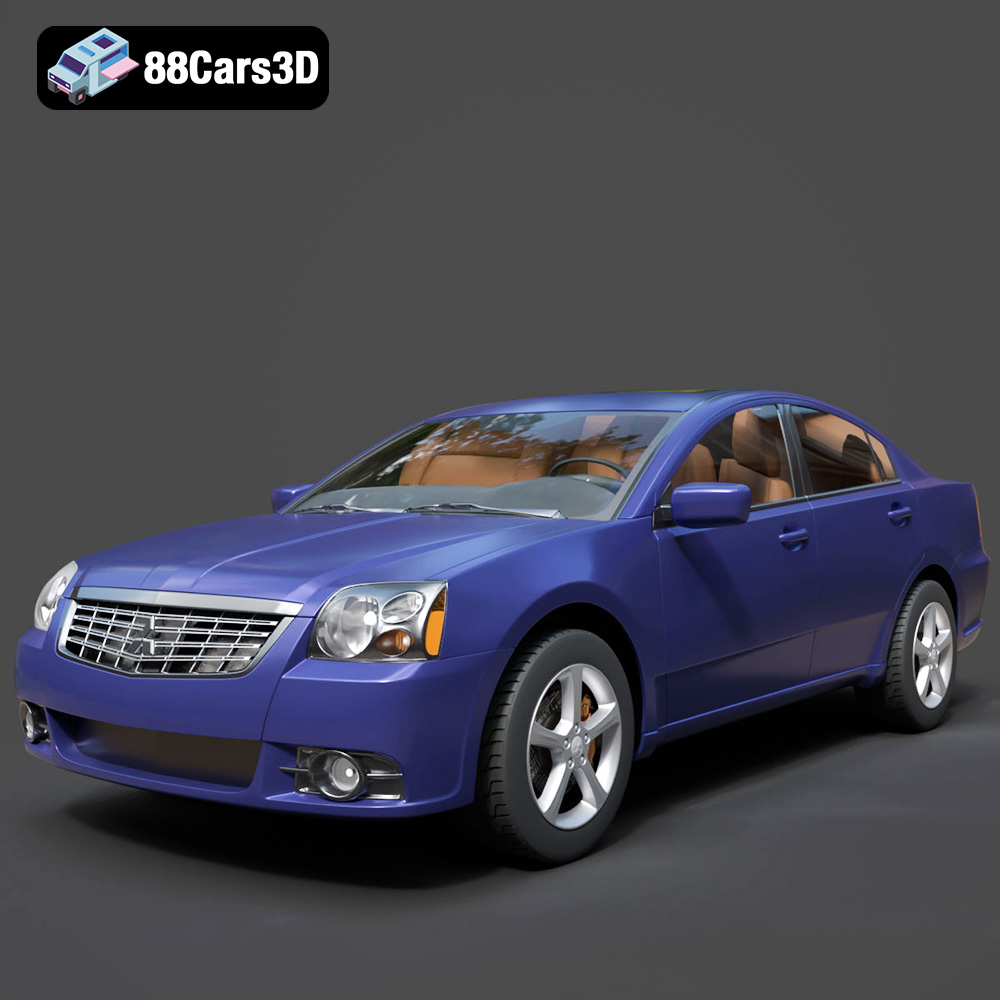
Texture: Yes
Material: Yes
Download the Mitsubishi Galant 2009 3D Model featuring clean geometry, realistic detailing, and a fully modeled interior. Includes .blend, .fbx, .obj, .glb, .stl, .ply, .unreal, and .max formats for rendering, simulation, and game development.
Price: $4.99
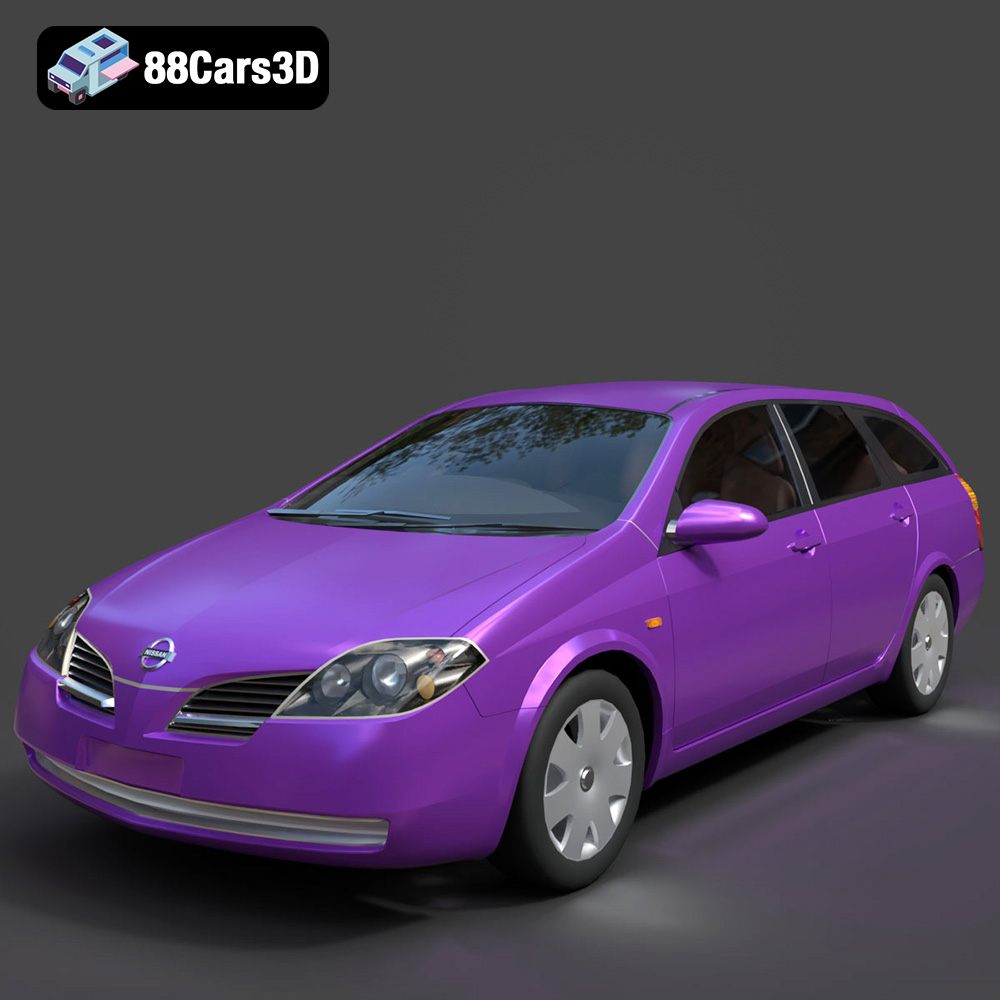
Texture: Yes
Material: Yes
Download the Nissan Primera Wagon 3D Model featuring clean geometry, realistic detailing, and a fully modeled interior. Includes .blend, .fbx, .obj, .glb, .stl, .ply, .unreal, and .max formats for rendering, simulation, and game development.
Price: $4.99
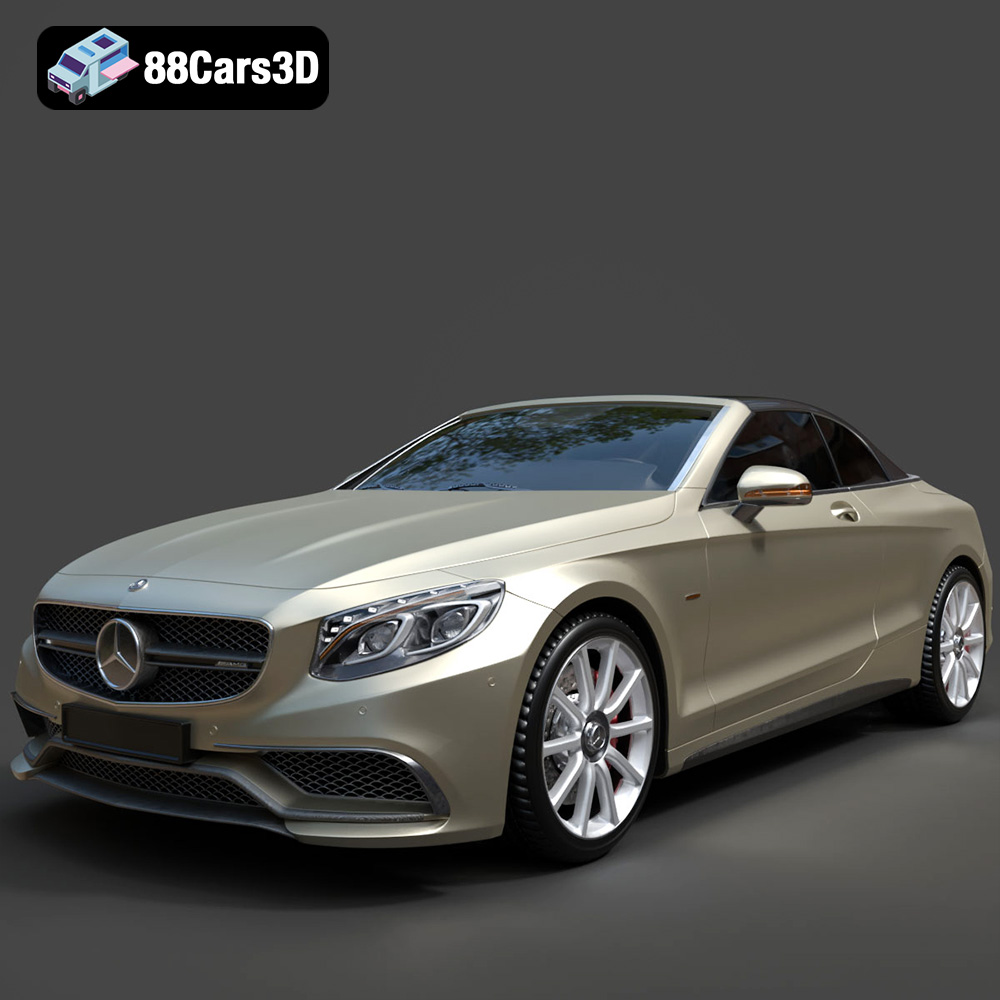
Texture: Yes
Material: Yes
Download the Mercedes-Benz S63 AMG Cabriolet 2017 3D Model featuring clean geometry, realistic detailing, and a fully modeled interior. Includes .blend, .fbx, .obj, .glb, .stl, .ply, .unreal, and .max formats for rendering, simulation, and game development.
Price: $20.99
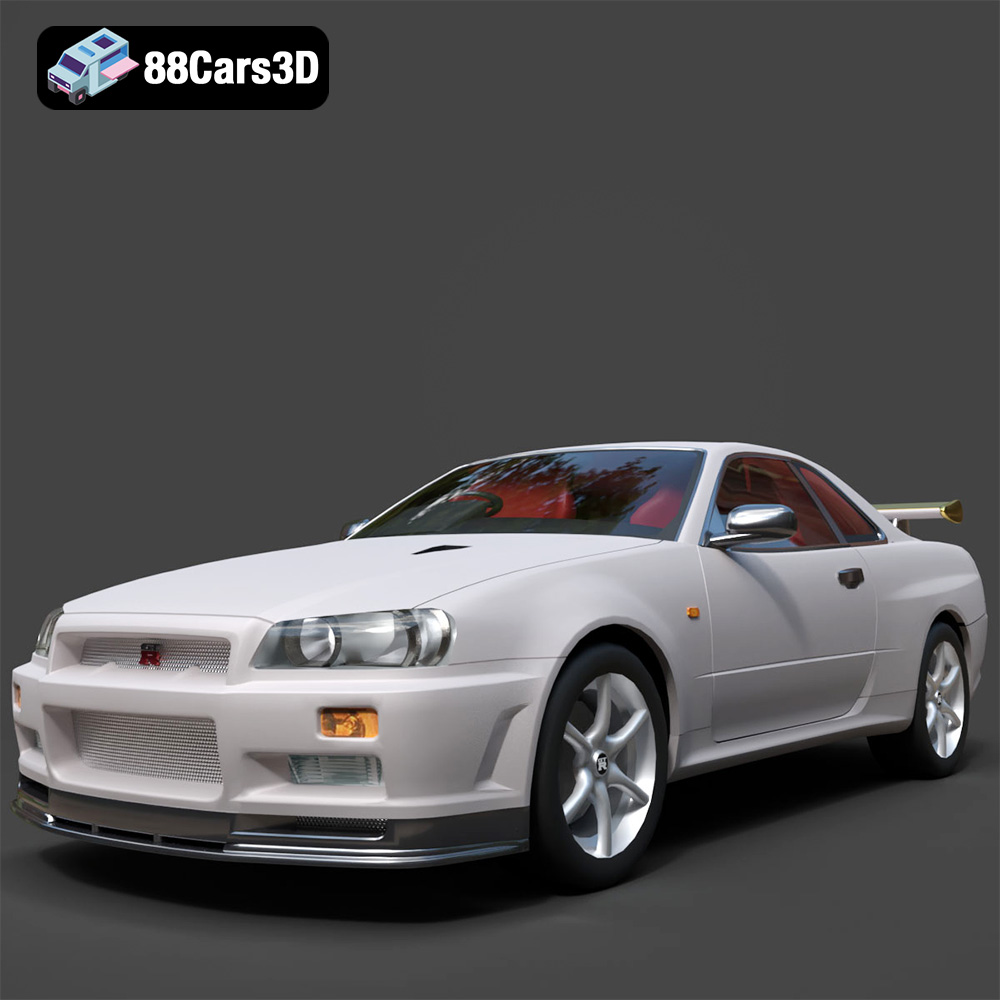
Texture: Yes
Material: Yes
Download the Nissan Skyline R34 2002 3D Model featuring clean geometry, realistic detailing, and a fully modeled interior. Includes .blend, .fbx, .obj, .glb, .stl, .ply, .unreal, and .max formats for rendering, simulation, and game development.
Price: $4.99
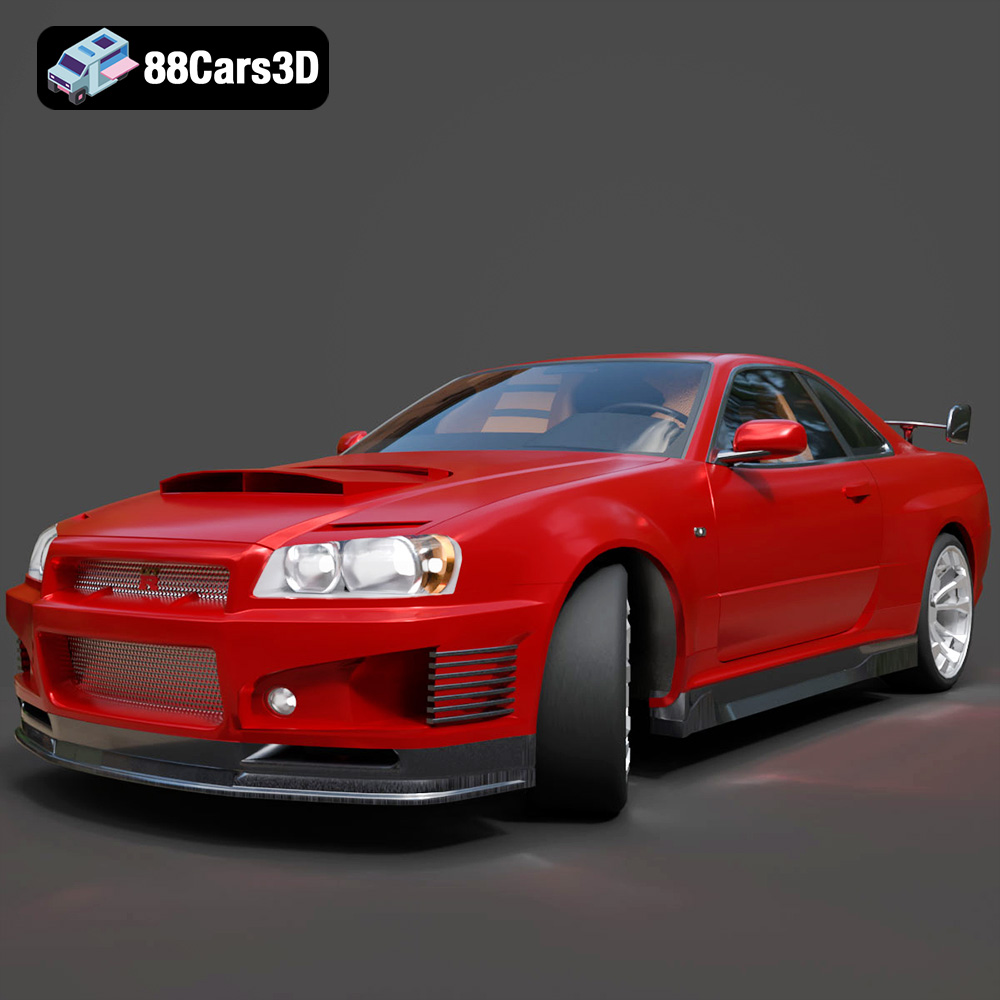
Texture: Yes
Material: Yes
Download the Nissan Skyline 3D Model featuring clean geometry, realistic detailing, and a fully modeled interior. Includes .blend, .fbx, .obj, .glb, .stl, .ply, .unreal, and .max formats for rendering, simulation, and game development.
Price: $9.99
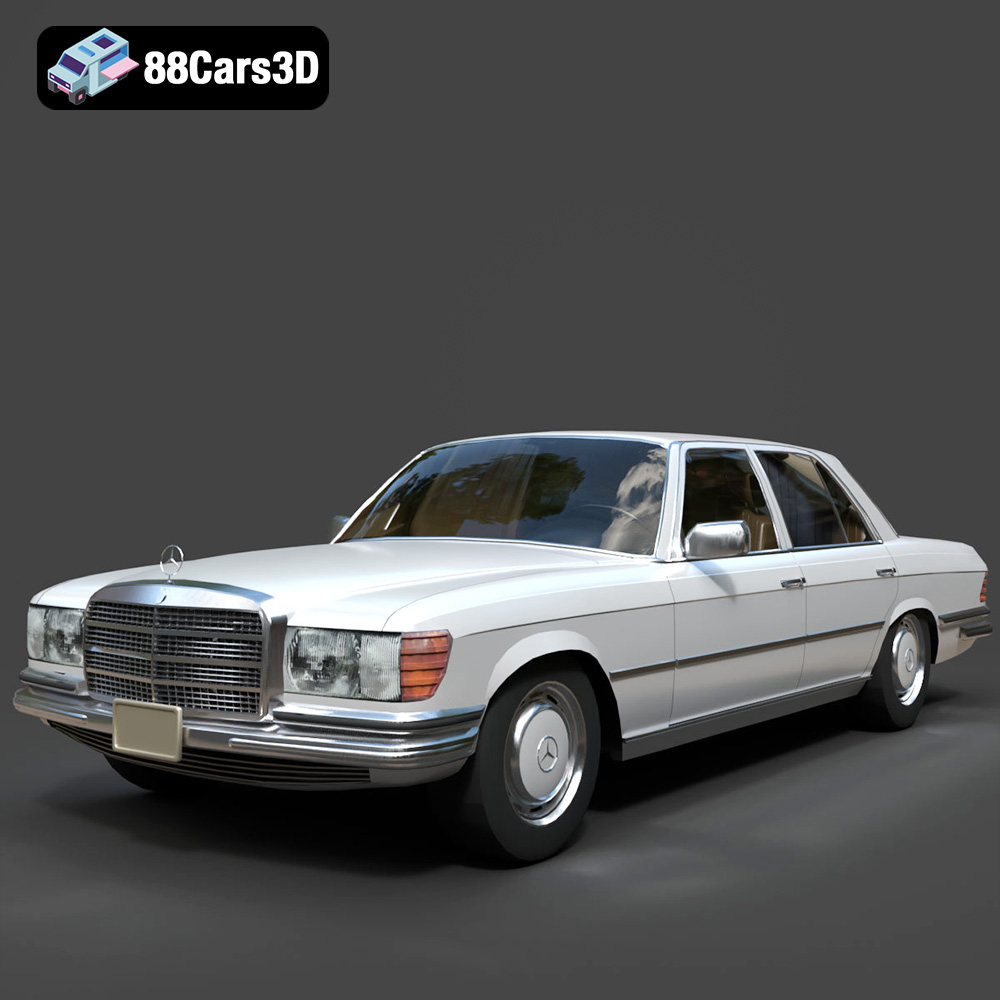
Texture: Yes
Material: Yes
Download the Mercedes-Benz S-Klasse W116 3D Model featuring clean geometry, realistic detailing, and a fully modeled interior. Includes .blend, .fbx, .obj, .glb, .stl, .ply, .unreal, and .max formats for rendering, simulation, and game development.
Price: $4.99
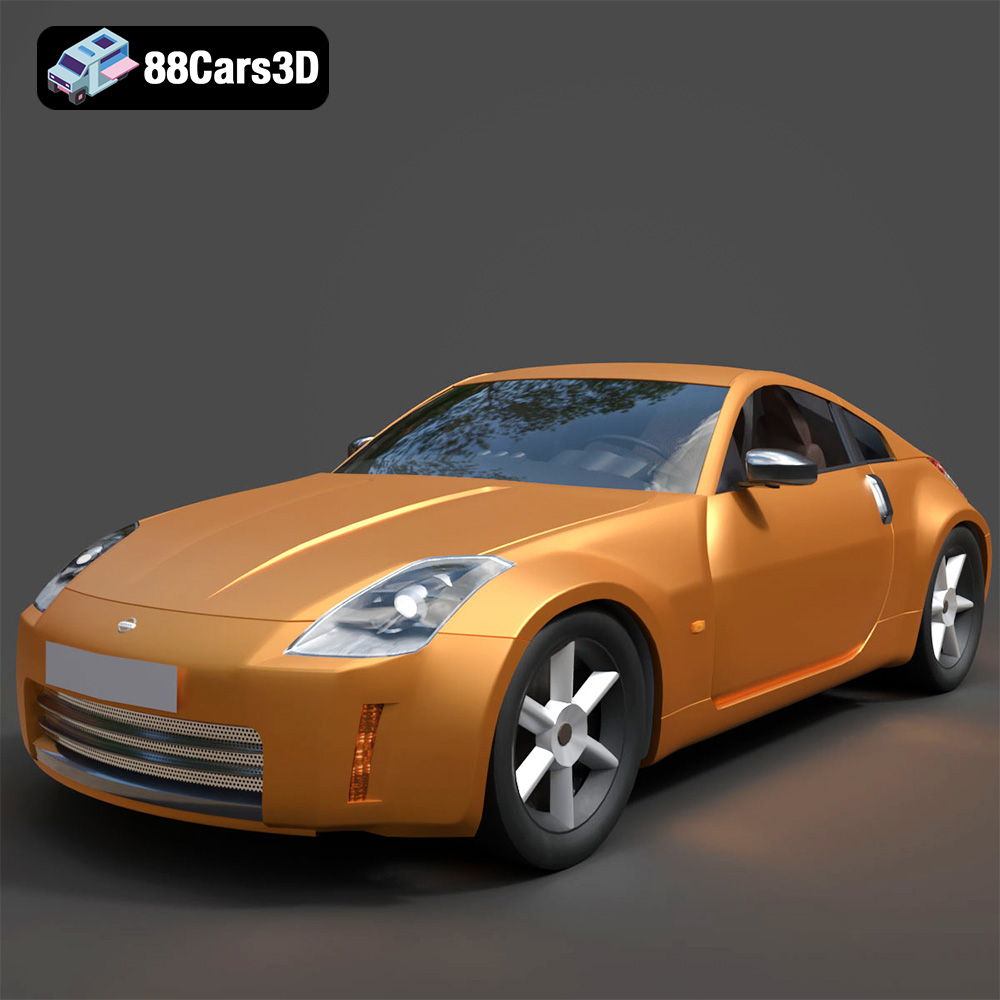
Texture: Yes
Material: Yes
Download the Nissan 350Z 3D Model featuring clean geometry, realistic detailing, and a fully modeled interior. Includes .blend, .fbx, .obj, .glb, .stl, .ply, .unreal, and .max formats for rendering, simulation, and game development.
Price: $4.99

Texture: Yes
Material: Yes
Download the Nissan Skyline V35 2001 3D Model featuring clean geometry, realistic detailing, and a fully modeled interior. Includes .blend, .fbx, .obj, .glb, .stl, .ply, .unreal, and .max formats for rendering, simulation, and game development.
Price: $4.99

Texture: Yes
Material: Yes
Download the Mercedes-Benz S-Klasse 221-007 3D Model featuring clean geometry, realistic detailing, and a fully modeled interior. Includes .blend, .fbx, .obj, .glb, .stl, .ply, .unreal, and .max formats for rendering, simulation, and game development.
Price: $4.99
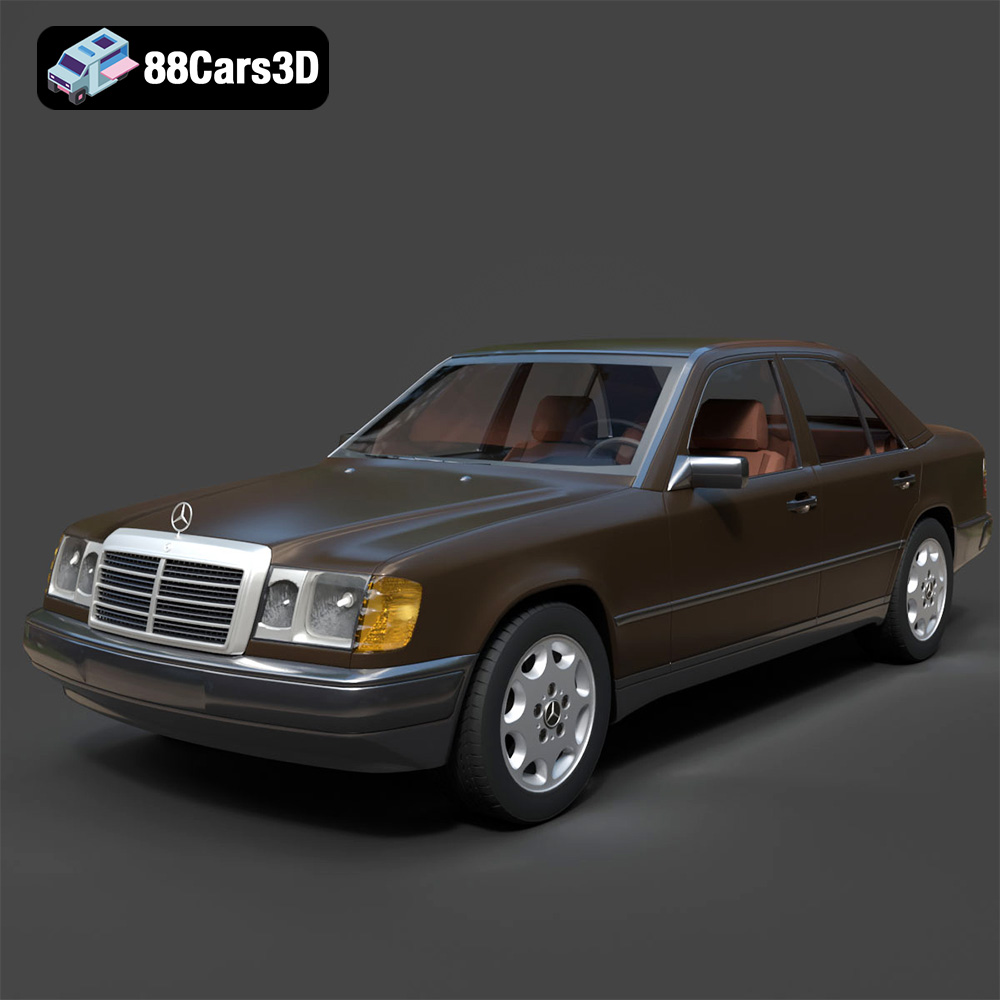
Texture: Yes
Material: Yes
Download the Mercedes W124 Sedan 3D Model featuring clean geometry, realistic detailing, and a fully modeled interior. Includes .blend, .fbx, .obj, .glb, .stl, .ply, .unreal, and .max formats for rendering, simulation, and game development.
Price: $4.99

