Get 20% OFF All Premium 3D & STL Models!

The automotive industry has always been at the forefront of design and innovation, and in the digital realm, this translates to an ever-growing demand for exceptionally high-quality 3D car models. Whether for cutting-edge marketing visualizations, immersive game experiences, interactive AR/VR applications, or precise 3D printing, the fidelity and technical integrity of a 3D car model are paramount. Artists, developers, and designers worldwide rely on models that are not only visually stunning but also meticulously engineered from a technical perspective.
This comprehensive guide delves deep into the intricate world of 3D car models, exploring the essential technical workflows and best practices that elevate a simple mesh into a professional-grade asset. We’ll navigate through the critical stages of creation and application, from understanding optimal topology and efficient UV mapping to crafting realistic PBR materials, setting up photorealistic renders, and optimizing models for real-time engines. Furthermore, we’ll touch upon preparing models for specialized uses like AR/VR and 3D printing, and mastering the nuances of various file formats. By the end of this journey, you’ll possess a robust understanding of what goes into a truly professional 3D car model and how to leverage it across diverse creative endeavors.
At the heart of any high-quality 3D car model lies its topology – the arrangement of vertices, edges, and faces that define its surface. For automotive designs, where sleek curves and sharp panel lines are essential, clean and efficient topology is not just a preference, but a necessity. Proper topology ensures that the model deforms predictably, subdivides smoothly without pinching, and facilitates seamless texturing and animation. A car’s complex curvature demands an approach primarily focused on quad-based polygon modeling, avoiding triangles or n-gons where possible, especially in areas that require deformation or subdivision.
When modeling a car, particular attention must be paid to areas like wheel arches, door lines, hood seams, and light enclosures. These regions often dictate the flow of edges, which should ideally follow the natural contours and design lines of the vehicle. Consistent edge loops running parallel to these features allow for precise control over surface tension and curvature. This meticulous approach prevents unwanted bumps or distortions when applying subdivision surface modifiers (like TurboSmooth in 3ds Max or Subdivision Surface in Blender/Maya), which are crucial for achieving the smooth, reflective surfaces characteristic of modern vehicles. Ignoring proper edge flow can lead to jagged edges, inconsistent reflections, and headaches down the line when attempting to UV map or texture the model.
Subdivision surface modifiers are indispensable tools for automotive modeling. They take a relatively low-polygon base mesh and smooth it out, adding detail and resolution while maintaining a manageable poly count during the modeling phase. Software like 3ds Max (with its TurboSmooth), Blender (Subdivision Surface), or Maya (Smooth Mesh Preview) all offer similar functionality. The key to using them effectively lies in understanding how to control the sharpness of edges. While the modifier naturally smooths everything, car bodies require many crisp lines, such as those along panel gaps or body creases.
This control is achieved through supporting edge loops or edge creasing. Supporting edge loops involve adding extra edge loops very close to the edges you want to keep sharp. These additional loops “hold” the sharpness when the subdivision modifier is applied, effectively telling the algorithm to smooth less aggressively in those areas. Alternatively, some software allows direct “creasing” of edges, assigning a weight that resists smoothing. For instance, in Blender, you can select edges and increase their ‘crease’ value. A typical high-quality automotive render model might have a base mesh of 100,000 to 200,000 polygons, which, when subdivided 2-3 times, could easily reach 1-2 million polygons for maximum detail and smoothness, especially for close-up shots.
Realistic panel gaps are a hallmark of a professional 3D car model. They define the separation between different body panels like doors, hoods, and fenders, and are crucial for visual authenticity. There are primarily two approaches for modeling panel gaps: using separate geometry or relying on normal maps. For high-fidelity rendering, separate geometry is always preferred. This involves duplicating edges along the intended gap, extruding them inwards slightly, and then adding supporting edge loops to maintain sharpness after subdivision. The resulting gap should be narrow and consistent, typically ranging from 0.5mm to 1.5mm in real-world scale.
The goal is to create distinct, individual panels that can be subtly separated, allowing for realistic ambient occlusion and reflections within the gaps. This prevents the “paper-thin” look that can occur if panel gaps are merely etched into a single mesh. When sourcing high-quality models from marketplaces like 88cars3d.com, ensure that the models feature properly modeled panel gaps, as this significantly contributes to realism and simplifies the texturing process, allowing for accurate dirt and grime accumulation within these crevices.
Once the geometry of a 3D car model is meticulously crafted, the next crucial step is UV mapping. UV mapping is the process of flattening the 3D surface of a model into a 2D space, allowing textures to be applied accurately without stretching or distortion. For complex automotive surfaces, with their multitude of curves, sharp angles, and intricate details, effective UV mapping is a highly technical skill. Poor UVs can ruin even the best model, leading to blurry, stretched, or misaligned textures that betray the realism of the asset.
The primary goal for automotive UVs is to create clean, organized UV islands (sections of the flattened mesh) that minimize seams and maximize texel density consistency across the entire model. This often involves a combination of mapping techniques. For example, large, relatively flat areas like the hood or roof might use planar projection. Cylindrical or spherical projections can be ideal for wheels and some curved body parts. Manual unwrapping and strategic placement of seams are almost always necessary for areas like fenders, bumpers, and intricate interior components. The challenge is to hide seams in less visible areas or along natural breaks in the geometry, such as panel lines or edges where different materials meet.
Achieving seamless UV layouts goes beyond simply unwrapping. It requires careful planning of UV island placement and scaling within the 0-1 UV space. Each UV island should be packed efficiently to maximize the use of texture space, thereby reducing the number of texture maps required and improving rendering performance. However, efficiency should not come at the expense of consistent texel density. Texel density refers to the number of texture pixels per unit of surface area on the model. It’s crucial that surfaces that will be seen up close, like the car body, have a high texel density, and that this density is relatively uniform across the visible parts of the model.
Inconsistent texel density leads to some areas appearing sharp while others are blurry. Tools within 3ds Max (Unwrap UVW), Blender (UV Editor), and Maya (UV Editor) provide features to visualize and normalize texel density. For instance, you can use a checkerboard pattern to spot stretching and density variations easily. For a typical hero car model, main body textures might require 4K or 8K resolution, while smaller details like emblems or interior buttons might use 1K or 2K. The UV layout must be optimized to accommodate these different resolutions efficiently without wasting space.
Beyond a single set of UVs for primary color and normal maps, advanced workflows often utilize multiple UV channels. A second UV channel, for example, might be dedicated to lightmap UVs for game engines, ensuring that baked lighting doesn’t overlap or cause artifacts. These lightmap UVs typically require more padding between islands and fewer, larger islands to prevent light bleeding. Some models might even have a third UV channel for custom decals or wear masks.
For extremely high-resolution texturing, especially in film or high-end visualization, UDIM (U-Dimension) workflows are indispensable. Instead of packing all UV islands into a single 0-1 UV space, UDIM allows UVs to span multiple UV tiles (e.g., 1001, 1002, 1003…). Each tile can then have its own texture map. This is particularly useful for large, complex models like full cars, where an 8K texture might not be sufficient for all details. A car body might be spread across 3-5 UDIM tiles, with each tile having its own 4K or 8K texture, providing unparalleled detail. Software like Mari, Substance Painter, and even Blender’s new UV editor fully support UDIMs, integrating seamlessly with renderers like Arnold, V-Ray, and Cycles.
The visual fidelity of a 3D car model largely hinges on its materials, and in modern rendering, Physically Based Rendering (PBR) is the industry standard. PBR materials simulate how light interacts with surfaces in a physically accurate way, resulting in incredibly realistic and consistent visuals across different lighting environments. Understanding PBR principles – energy conservation, Fresnel effect, and microfacet theory – is crucial for creating convincing automotive shaders.
A typical PBR material relies on several texture maps: Albedo (or Base Color), Metallic, Roughness, Normal, and often Ambient Occlusion. The Albedo map defines the base color without lighting information. The Metallic map indicates which parts are metallic (white) and which are dielectric (black). The Roughness map controls how diffuse or glossy a surface is (black is smooth/glossy, white is rough/matte). The Normal map adds fine surface detail without increasing polygon count. Automotive models introduce unique challenges and opportunities for PBR, especially with multi-layered car paint, reflective chrome, transparent glass, and realistic rubber.
Car paint is one of the most complex and visually distinctive materials in automotive rendering. A truly realistic car paint shader isn’t just a simple PBR material; it’s often a multi-layered shader network. It typically comprises a base coat, which gives the car its primary color and metallic flake appearance, followed by a clear coat layer. The base coat can incorporate a metallic map to simulate fine metallic or pearlescent flakes embedded within the paint, often driven by a noise texture or a dedicated flake map. The effect of these flakes should be subtle, catching highlights and scattering light as the viewing angle changes.
The clear coat layer is essential for that signature glossy, reflective finish. It functions as a dielectric (non-metallic) layer with very low roughness and high reflectivity, characterized by a strong Fresnel effect – meaning it reflects more light at glancing angles. Some advanced shaders might even include a slight ‘orange peel’ normal map effect on the clear coat to simulate minor imperfections. Additionally, parameters like ‘sheen’ or ‘anisotropy’ can be used to simulate directional reflections seen in certain metallic paints or brushed metals. Crafting such a shader requires a deep understanding of node-based material editors found in renderers like Corona, V-Ray, Cycles (Blender), and Arnold (Maya, 3ds Max).
Beyond the car body, interior materials and tires also demand sophisticated PBR approaches. For materials like leather seats, dashboard plastics, or fabric, a standard PBR setup works well, but for increased realism, effects like Subsurface Scattering (SSS) can be vital. SSS simulates light penetrating the surface, scattering within the material, and exiting at a different point, giving materials like thin plastic, rubber, or leather a softer, more translucent appearance, rather than a purely opaque one. While SSS might be too computationally expensive for real-time game engines, it significantly enhances realism in offline renders.
Tire rubber, especially the sidewall, often exhibits an anisotropic reflection pattern, where highlights stretch in a particular direction due to microscopic grooves or manufacturing processes. Anisotropy can be simulated in PBR shaders by providing a texture map or a procedural effect to control the direction and intensity of reflection stretching. For instance, the fine radial lines on a tire sidewall would cause reflections to stretch perpendicular to these lines. Chrome and other brushed metal components in the interior can also benefit from anisotropic shading. These details, though subtle, collectively contribute to a truly photorealistic automotive model, making platforms like 88cars3d.com invaluable for sourcing assets with these intricate material definitions.
Creating stunning photorealistic images of 3D car models is the ultimate goal for many visualization professionals. This involves a meticulous rendering workflow that encompasses lighting, camera setup, render settings, and post-processing. The choice of renderer – be it Corona Renderer, V-Ray, Cycles, or Arnold – significantly influences the workflow and the final output, but the core principles remain consistent: simulate reality as accurately as possible.
A successful automotive render starts with an environment that provides realistic lighting and reflections. High Dynamic Range Image (HDRI) environments are the cornerstone of modern automotive rendering, offering complex, physically accurate lighting and reflection data from real-world locations. Beyond HDRIs, strategic placement of virtual studio lights (softboxes, strip lights, area lights) is often employed to highlight specific design features, create dramatic reflections, and add artistic flair. The camera setup is equally critical; choosing the right focal length, aperture for depth of field, and framing can transform a mundane shot into a captivating image, mimicking professional photography techniques.
HDRI maps are essentially panoramic photographs with an immense range of light information, capturing everything from direct sunlight to subtle ambient bounces. When used as a light source and reflection environment in a 3D scene, they provide incredibly natural and nuanced illumination. For automotive renders, a high-quality HDRI is paramount. These can range from studio setups with perfectly controlled softboxes to outdoor environments like sunny car parks or cloudy industrial areas. The key is to select an HDRI that complements the car’s design and desired mood.
Implementing HDRI-based global illumination involves loading the HDRI into your renderer’s environment slot and ensuring it acts as both the light source and reflection source. In Corona Renderer or V-Ray, this is typically done via a CoronaBitmap/VrayBitmap node in the environment settings, with careful attention paid to exposure and rotation to achieve the desired lighting angle and reflection characteristics. For example, rotating the HDRI can dramatically change where highlights appear on the car body, emphasizing its contours. Additionally, sometimes a separate, lower-resolution HDRI is used just for lighting, while a higher-resolution, slightly blurred one is used for reflections to avoid pixelation in reflections while optimizing render times.
Achieving photorealistic results often comes with the cost of long render times. Optimizing render settings is about finding the sweet spot between image quality and computational efficiency. Each renderer has its unique set of parameters. For instance, in Corona Renderer, adjusting parameters like ‘Pass Limit’ (or time limit) and ‘Noise Limit’ can control render quality, while enabling the ‘Denoiser’ (either CPU-based or NVIDIA OptiX AI-based) can dramatically reduce noise without excessive render times. V-Ray offers similar controls with ‘Noise Threshold’ and adaptive sampling.
Key optimization strategies include: adjusting global illumination (GI) samples, setting appropriate anti-aliasing filters, and optimizing material sampling. For detailed renders, it’s often beneficial to use render passes (or AOV – Arbitrary Output Variables). These passes separate elements like reflections, refractions, ambient occlusion, raw lighting, and more. This allows for greater control in post-processing, where individual elements can be fine-tuned without re-rendering the entire image. For example, adjusting the intensity of reflections in Photoshop using a separate reflection pass is much faster than tweaking the material and re-rendering. This non-destructive approach is standard in professional visualization pipelines, and models found on platforms such as 88cars3d.com are typically designed to facilitate these advanced render setups.
While offline rendering prioritizes ultimate visual fidelity, real-time applications like video games, interactive configurators, and architectural visualizations demand a delicate balance between visual quality and performance. Optimizing 3D car models for game engines like Unity and Unreal Engine is a specialized art, requiring careful consideration of polygon budgets, draw calls, texture memory, and CPU/GPU processing capabilities. A high-poly model suitable for a film render would bring a game engine to its knees without significant optimization.
The core philosophy of real-time optimization is to achieve maximum visual impact with the lowest possible resource footprint. This typically involves reducing polygon counts where possible, consolidating materials and textures to minimize draw calls, and implementing efficient rendering techniques. Developers must decide which details can be represented by textures (normal maps) rather than geometry, and how to scale detail based on viewing distance. The target platform (PC, console, mobile, VR) heavily influences the strictness of these optimization requirements, with mobile and VR being the most demanding.
Level of Detail (LOD) is an essential optimization technique for game assets, especially for complex models like cars. LODs involve creating multiple versions of the same model, each with a progressively lower polygon count. The game engine then automatically switches between these versions based on the camera’s distance from the object. When the car is far away, a low-poly LOD is used; as the camera gets closer, a higher-poly version is swapped in, and finally, the full-detail model appears up close.
In Unity, you can create an LOD Group component and assign different mesh assets (e.g., Car_LOD0, Car_LOD1, Car_LOD2) to specific distance thresholds. Unreal Engine has a similar system where you can automatically generate LODs from a high-poly mesh or manually import pre-made LODs. A typical hero car in a modern game might have 3-5 LOD levels: LOD0 (full detail, ~80k-150k polygons), LOD1 (~30k-60k polygons), LOD2 (~10k-25k polygons), and LOD3/LOD4 (~2k-8k polygons for very distant or destroyed versions). The transition between LODs should be visually imperceptible. Pre-baked normal maps from the highest detail mesh are crucial for preserving fine surface details on lower-poly LODs, giving the illusion of more geometry than actually exists.
Beyond visual meshes, game engines require separate collision meshes for physics simulations and player interaction. Using the high-polygon visual mesh for collisions is incredibly inefficient and can lead to performance bottlenecks. Instead, simplified collision meshes are created, often using primitive shapes (boxes, spheres, capsules) or a convex hull approximation of the car body. These simplified meshes are invisible to the player but accurately define the car’s physical boundaries for interactions like hitting an obstacle or driving over terrain.
In Unity, you can assign Mesh Colliders with ‘Convex’ enabled or use a combination of primitive colliders. Unreal Engine utilizes Physics Assets, which consist of a hierarchy of simplified rigid bodies (collision shapes) linked by constraints. These physics assets are crucial for simulating realistic car behavior, from suspensions to crumple zones. For the wheels, separate collision geometry or simplified sphere colliders are used. The goal is to provide enough fidelity for accurate physics without overwhelming the physics engine, ensuring smooth gameplay and responsive vehicle control, which is vital for any driving game or interactive experience.
The versatility of 3D car models extends far beyond traditional rendering and game development. Augmented Reality (AR) and Virtual Reality (VR) platforms offer immersive experiences, while 3D printing brings digital designs into the physical world. Each of these applications comes with its own set of technical requirements and optimization strategies, and mastering the appropriate file formats is key to successful deployment across these diverse mediums.
For AR/VR, models need to be exceptionally optimized due to the extremely strict performance budgets and the need for high frame rates to prevent motion sickness. This means even lower polygon counts, fewer draw calls, and efficient texture usage than typical games. For 3D printing, the focus shifts entirely from visual fidelity to physical integrity: the model must be watertight, manifold, and structurally sound. Understanding the nuances of file formats like FBX, OBJ, GLB, and USDZ ensures compatibility and smooth asset pipelines across all these applications.
AR/VR environments impose some of the strictest optimization demands. A VR experience running at 90 frames per second (fps) or higher, rendered twice (once for each eye), means each frame has mere milliseconds to complete. Car models for AR/VR must, therefore, be ultra-lightweight. Polygon counts should be drastically reduced, often targeting below 50,000 polygons for an entire car, sometimes even lower for mobile AR. This usually involves aggressive LODs and baking most surface details into normal maps.
Texture atlasing is highly recommended to combine multiple smaller textures into one larger map, significantly reducing draw calls. Materials should be simplified, often using a single PBR shader for the entire car with masked texture sets. Transparency and complex shader effects should be used sparingly. Platforms like Apple’s ARKit (for iOS devices) and Google’s ARCore (for Android) typically prefer optimized formats like USDZ (Universal Scene Description Zip) and GLB (GL Transmission Format). These formats are self-contained, including geometry, materials, and textures, and are designed for efficient loading and rendering in real-time AR environments. When sourcing models from 88cars3d.com, ensure they offer AR/VR-optimized versions or formats like GLB/USDZ if your project targets these immersive experiences.
Preparing a 3D car model for 3D printing involves a completely different set of technical considerations. Unlike digital models, physical objects must conform to the laws of physics. The primary goal is to create a “watertight” or “manifold” mesh, meaning it has no holes, inversed normals, or intersecting faces. Every edge must connect exactly two faces, forming a completely enclosed volume. Non-manifold geometry will cause printing errors, as the printer won’t know where the inside and outside of the model are.
Mesh repair tools are essential in this process. Software like Blender’s 3D Print Toolbox, Autodesk Meshmixer, Netfabb, or ZBrush’s Dynamesh/Boolean features can be used to identify and fix common issues. Important aspects include:
The output format for 3D printing is typically STL (Stereolithography), though OBJ and AMF are also supported by some printers. Converting a detailed rendering model to a print-ready mesh often involves a significant amount of cleanup and re-topology to meet these stringent physical requirements.
The mastery of 3D car models is a multi-faceted discipline, demanding a blend of artistic vision and rigorous technical understanding. From the foundational principles of clean topology and efficient UV mapping to the intricate details of PBR material creation, rendering workflows, and performance optimization for real-time applications, every stage contributes to the overall quality and versatility of the asset. Furthermore, understanding the specific requirements for AR/VR and 3D printing, alongside the nuances of various file formats, unlocks a wider array of creative possibilities for these powerful digital creations.
By adhering to these best practices and continuously honing your skills, you ensure that your 3D car models are not just visually appealing but also robust, efficient, and ready for any challenge the modern digital landscape presents. Whether you’re a seasoned professional or an aspiring artist, investing in the technical excellence of your models will always pay dividends, elevating your projects to new heights of realism and functionality. Explore high-quality resources and keep experimenting with new techniques to stay at the cutting edge of automotive 3D design.
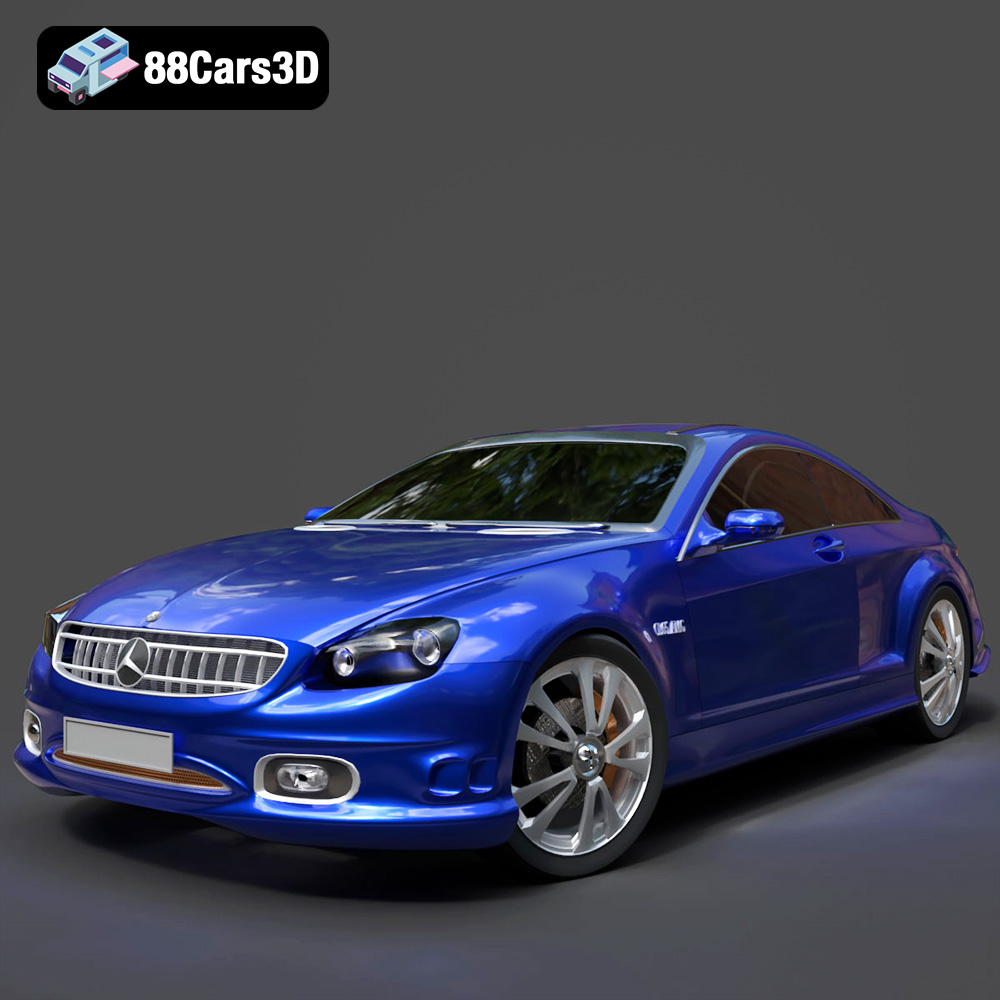
Texture: Yes
Material: Yes
Download the Mercedes-Benz CL6540-005 3D Model featuring clean geometry, realistic detailing, and a fully modeled interior. Includes .blend, .fbx, .obj, .glb, .stl, .ply, .unreal, and .max formats for rendering, simulation, and game development.
Price: $4.99
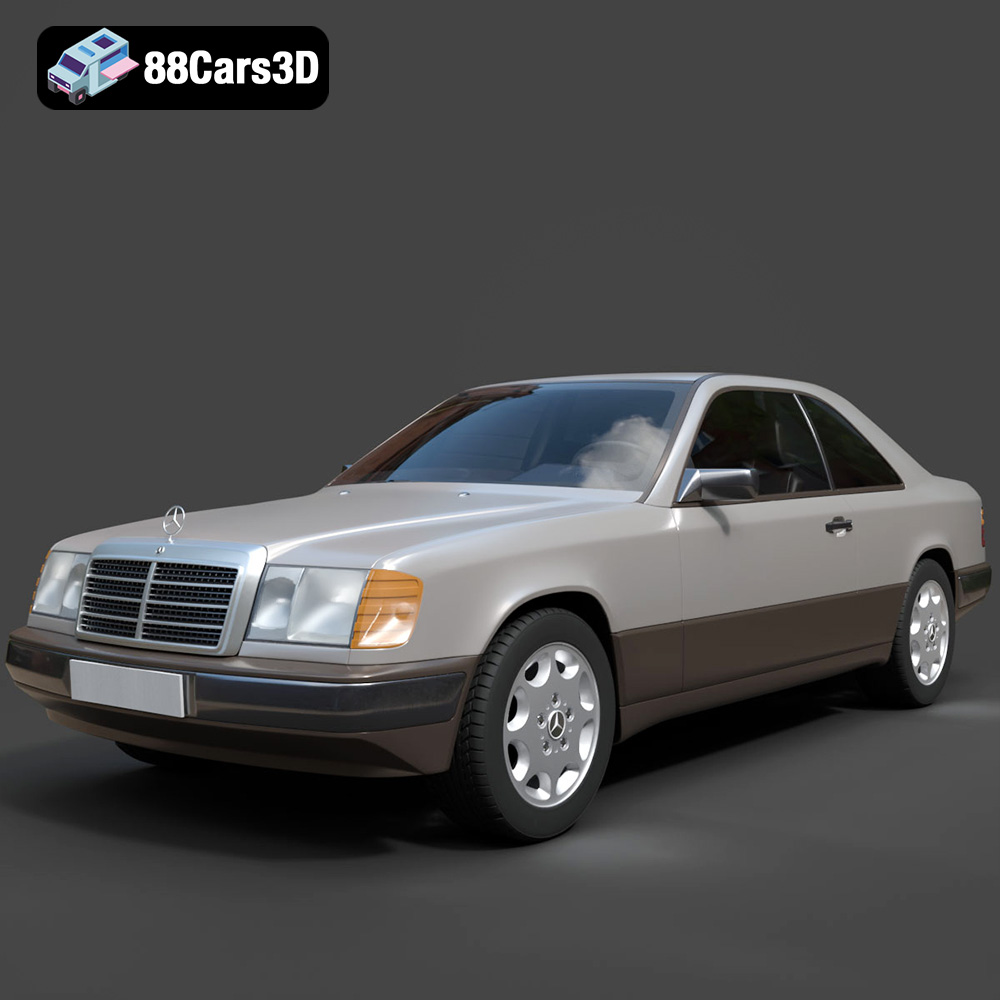
Texture: Yes
Material: Yes
Download the Mercedes E-Class w124 Coupe 3D Model featuring clean geometry, realistic detailing, and a fully modeled interior. Includes .blend, .fbx, .obj, .glb, .stl, .ply, .unreal, and .max formats for rendering, simulation, and game development.
Price: $4.99
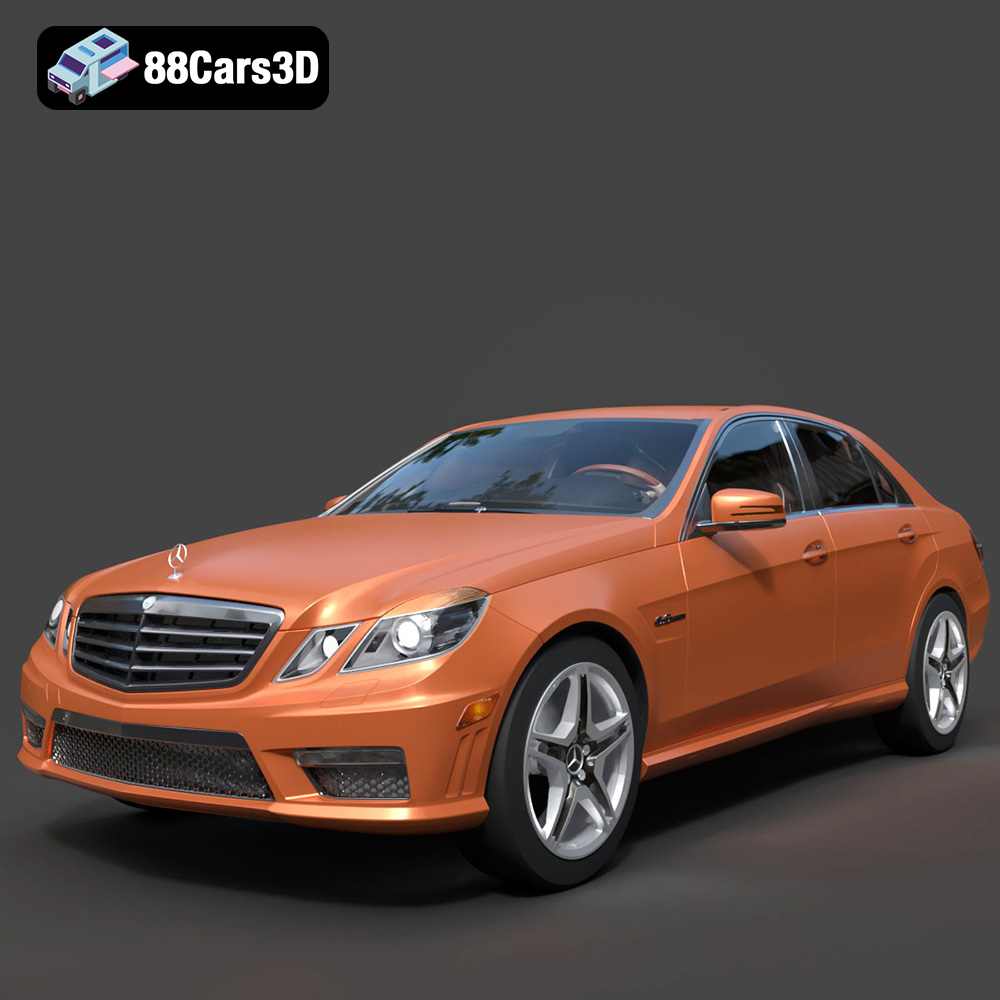
Texture: Yes
Material: Yes
Download the Mercedes-Benz E-Klasse 63 AMG 3D Model featuring clean geometry, realistic detailing, and a fully modeled interior. Includes .blend, .fbx, .obj, .glb, .stl, .ply, .unreal, and .max formats for rendering, simulation, and game development.
Price: $4.99
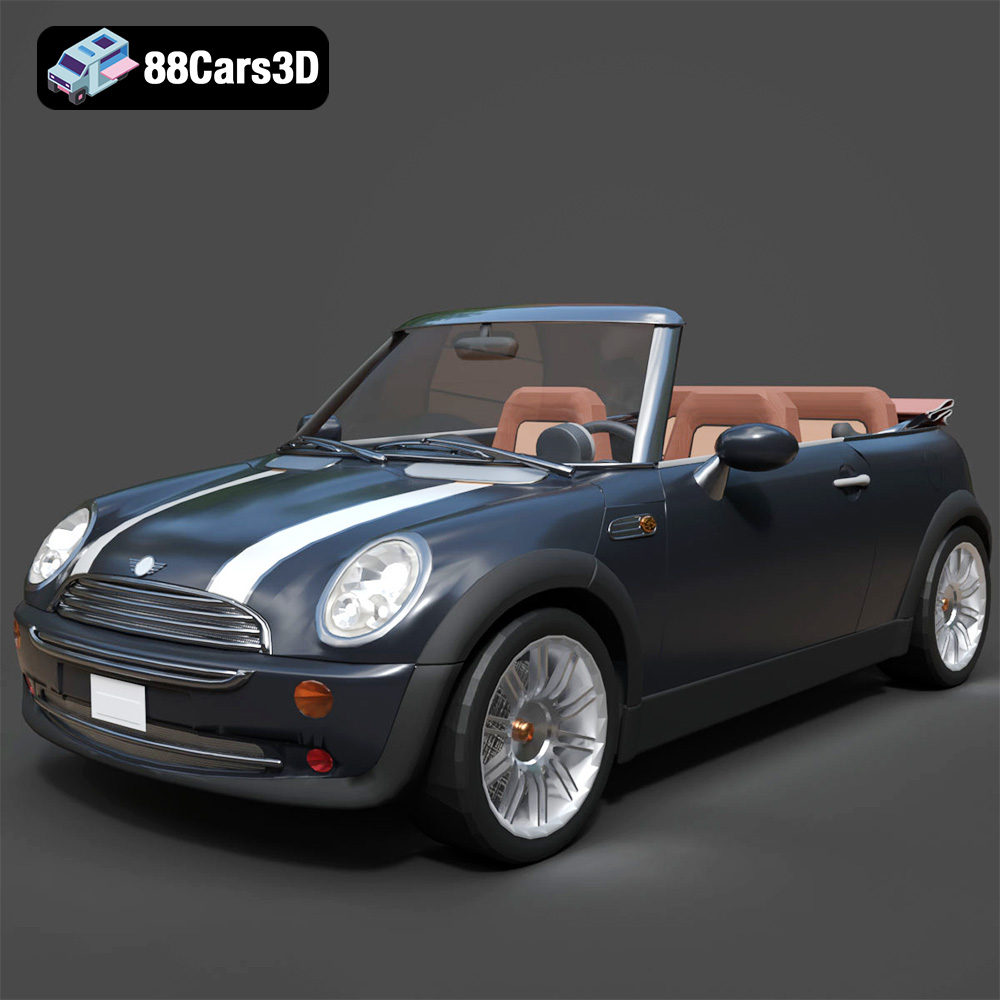
Texture: Yes
Material: Yes
Download the Mini Cabrio 2025 3D Model featuring clean geometry, realistic detailing, and a fully modeled interior. Includes .blend, .fbx, .obj, .glb, .stl, .ply, .unreal, and .max formats for rendering, simulation, and game development.
Price: $4.99
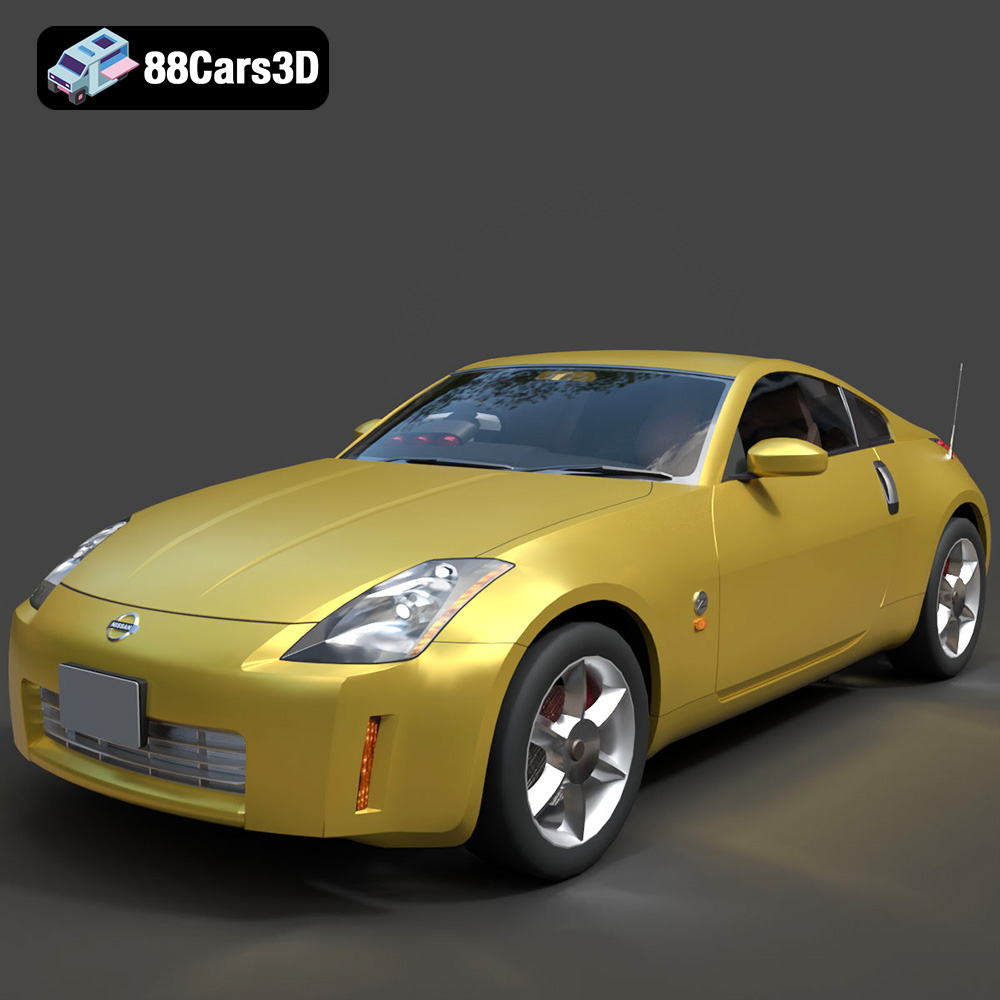
Texture: Yes
Material: Yes
Download the Nissan 350Z 3D Model featuring clean geometry, realistic detailing, and a fully modeled interior. Includes .blend, .fbx, .obj, .glb, .stl, .ply, .unreal, and .max formats for rendering, simulation, and game development.
Price: $4.99
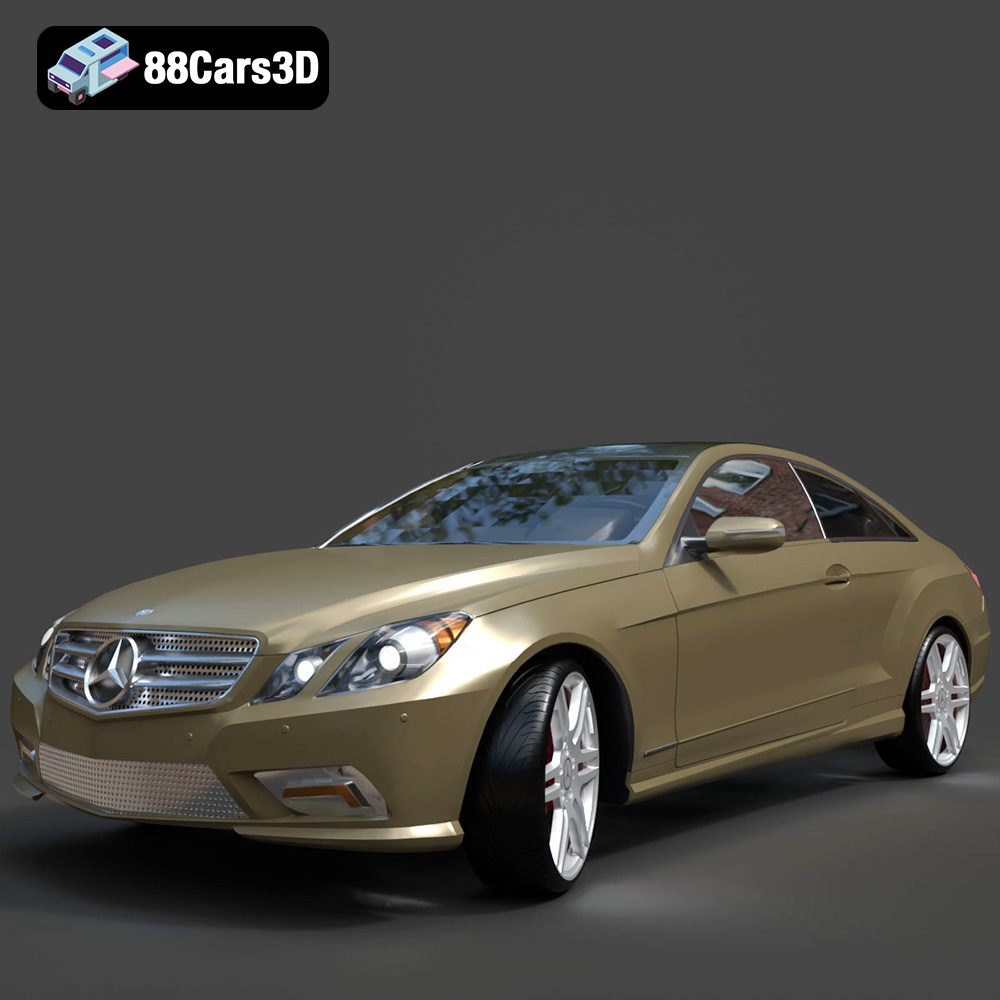
Texture: Yes
Material: Yes
Download the Mercedes-Benz E-Klasse Coupe 3D Model featuring clean geometry, realistic detailing, and a fully modeled interior. Includes .blend, .fbx, .obj, .glb, .stl, .ply, .unreal, and .max formats for rendering, simulation, and game development.
Price: $4.99
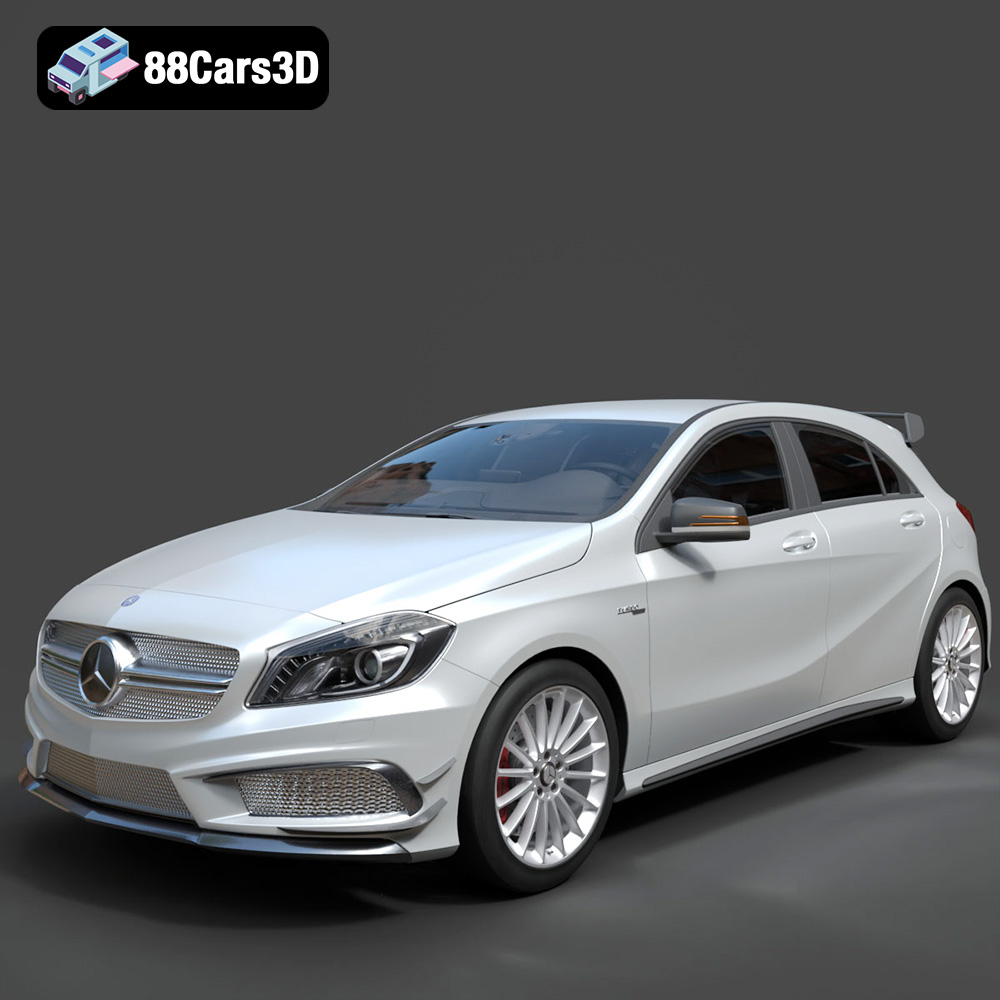
Texture: Yes
Material: Yes
Download the Benza MERS-007 3D Model featuring clean geometry, realistic detailing, and a fully modeled interior. Includes .blend, .fbx, .obj, .glb, .stl, .ply, .unreal, and .max formats for rendering, simulation, and game development.
Price: $4.99
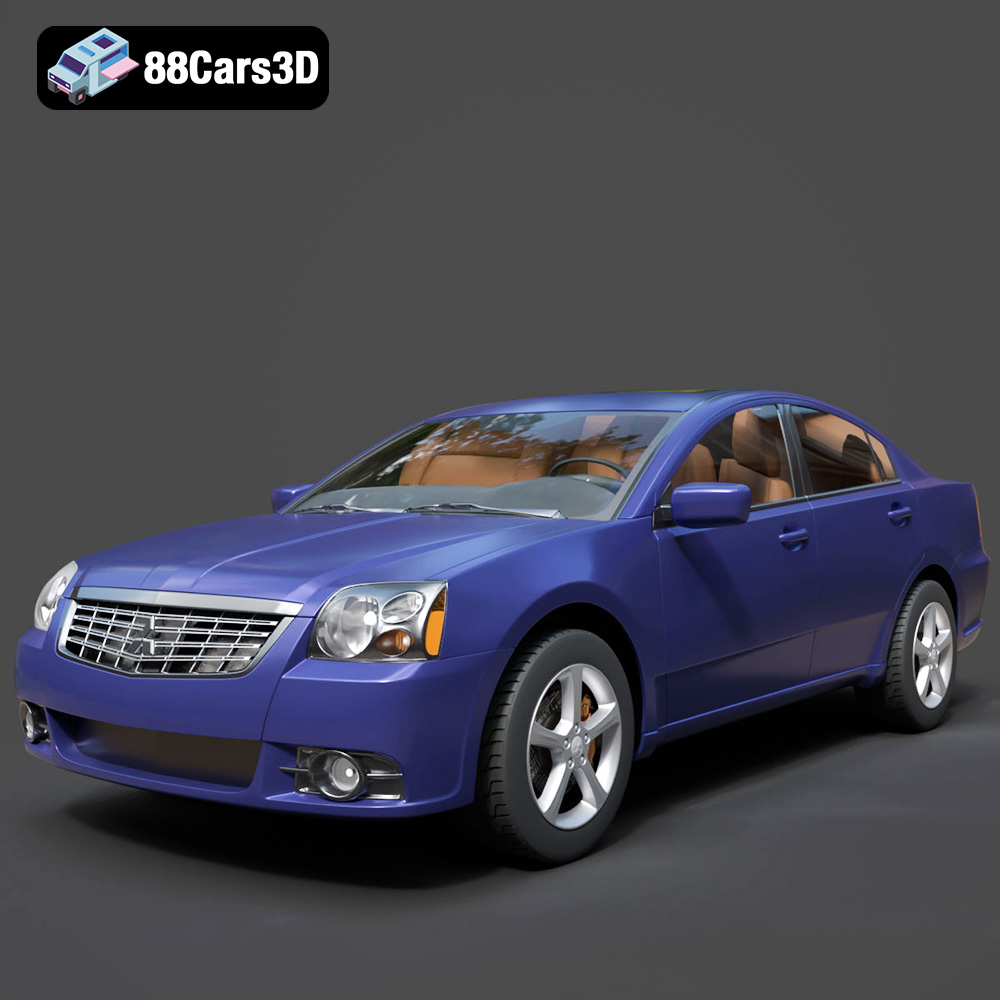
Texture: Yes
Material: Yes
Download the Mitsubishi Galant 2009 3D Model featuring clean geometry, realistic detailing, and a fully modeled interior. Includes .blend, .fbx, .obj, .glb, .stl, .ply, .unreal, and .max formats for rendering, simulation, and game development.
Price: $4.99
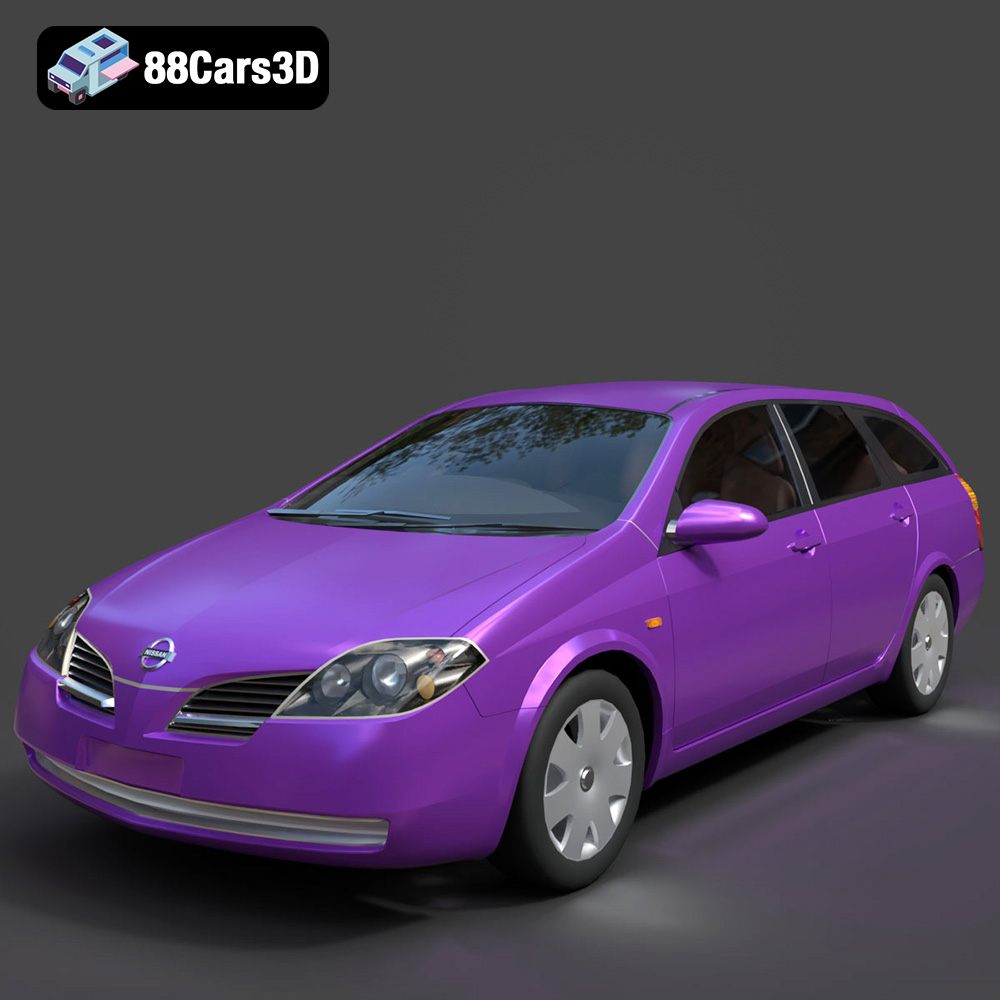
Texture: Yes
Material: Yes
Download the Nissan Primera Wagon 3D Model featuring clean geometry, realistic detailing, and a fully modeled interior. Includes .blend, .fbx, .obj, .glb, .stl, .ply, .unreal, and .max formats for rendering, simulation, and game development.
Price: $4.99
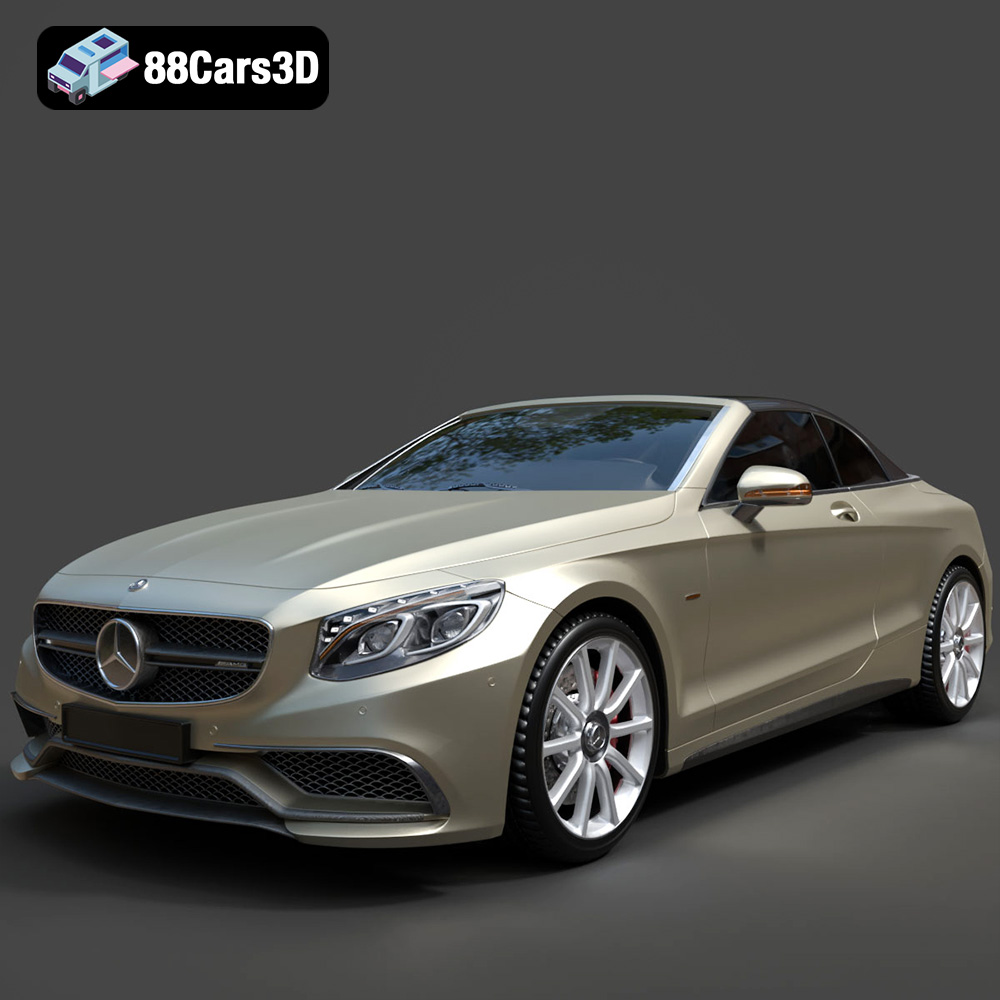
Texture: Yes
Material: Yes
Download the Mercedes-Benz S63 AMG Cabriolet 2017 3D Model featuring clean geometry, realistic detailing, and a fully modeled interior. Includes .blend, .fbx, .obj, .glb, .stl, .ply, .unreal, and .max formats for rendering, simulation, and game development.
Price: $20.99

