Get 20% OFF All Premium 3D & STL Models!

In the fast-evolving landscape of digital content creation, high-quality 3D car models stand as indispensable assets across numerous industries. Whether you’re an automotive designer visualizing a new concept, a game developer crafting immersive open worlds, an architect populating a scene, or a marketing professional creating compelling visuals, the demand for realistic, optimized, and versatile vehicle models is ever-present. Achieving professional-grade results, however, goes far beyond simply “making a car.” It requires a deep understanding of intricate workflows, technical specifications, and industry best practices.
This comprehensive guide will take you on a journey through the meticulous process of creating, optimizing, and deploying exceptional 3D car models. We’ll delve into the foundational principles of clean topology, demystify advanced UV mapping and PBR texturing, explore the nuances of photorealistic rendering, and unlock the secrets of game engine optimization. Furthermore, we’ll examine specialized applications like AR/VR and 3D printing, and navigate the complexities of file formats and pipeline integration. By the end of this read, you’ll possess a robust technical understanding and actionable insights to elevate your automotive 3D projects to the pinnacle of visual fidelity and performance, empowering you to source or create assets that truly excel in any digital environment.
The cornerstone of any high-quality 3D car model is its topology – the underlying structure of polygons and edges that defines its form. For automotive subjects, known for their sleek curves, sharp creases, and reflective surfaces, immaculate topology is not just a preference; it’s a critical requirement. Poor topology can lead to artifacts like pinching, unwanted distortions, and difficulties in UV mapping and animation. Conversely, clean, deliberate edge flow ensures smooth subdivision, accurate reflections, and efficient deformation, making the model versatile for various applications from high-fidelity rendering to real-time game engines. Understanding the flow of edges to accurately represent complex curvature and ensure smooth shading is paramount. This includes directing edge loops along contours, around holes (like headlights or grilles), and along body panel cut lines. Software like 3ds Max, Maya, and Blender offer powerful modeling tools, but it’s the artist’s eye for detail and understanding of poly-modeling principles that truly makes the difference.
For automotive models, the vast majority of surfaces are smooth and rely heavily on subdivision surface modeling. This technique, often referred to as Catmull-Clark subdivision, takes a low-polygon base mesh and interpolates it into a smoother, higher-polygon mesh. The success of this method hinges entirely on the underlying base mesh’s edge flow. Edges should follow the natural contours of the car’s panels, reinforcing sharp lines where needed (e.g., body creases, door gaps) and allowing smooth transitions over broad surfaces. A good practice is to create supporting edge loops near sharp creases to “hold” the sharpness after subdivision, preventing unwanted rounding. For instance, a door panel might require three or four edge loops running parallel to the panel gap to ensure it remains distinct. Avoiding Ngons (polygons with more than four sides) and T-junctions (where an edge ends in the middle of another edge) is crucial, as these can cause unpredictable shading and subdivision issues. The goal is to maintain an all-quad topology (four-sided polygons) as much as possible, as this provides the most predictable and cleanest subdivision results, particularly for animation and deformation, though automotive models rarely deform in the traditional sense.
While photorealistic renders often benefit from extremely high polygon counts after subdivision, real-time applications like games or AR/VR experiences demand strict polygon budgets. This necessitates a strategic approach to Level of Detail (LOD) modeling. An automotive model intended for diverse use cases will often require multiple versions: a high-poly (HP) model for close-up renders (which could be several million polygons after subdivision), a medium-poly (MP) version for general visualization or cinematic cutscenes (perhaps 100,000-500,000 polygons), and a low-poly (LP) version for in-game distant views or mobile AR/VR (potentially under 50,000 polygons). The process of creating LODs usually involves manually simplifying the high-poly mesh or using automated decimation tools with careful manual cleanup. When simplifying, prioritize maintaining the silhouette and key features. For instance, an MP version might have simpler geometry for the interior or undercarriage, while an LP version could merge smaller details like wipers or emblems directly into the main body mesh. Effective LODs reduce draw calls and memory footprint, significantly improving real-time performance without sacrificing perceived visual quality at appropriate viewing distances. This careful balance between detail and optimization is a hallmark of truly professional 3D car models, a standard consistently upheld by platforms like 88cars3d.com.
Once the 3D car model’s topology is solid, the next crucial step is to prepare it for texturing through UV mapping and then create realistic materials. UV mapping is the process of flattening the 3D surface of the model into a 2D space, allowing textures to be painted or applied without distortion. For the complex, often non-uniform surfaces of an automobile, strategic UV unwrapping is essential to avoid stretching or seams that break visual continuity. High-quality textures, particularly Physically Based Rendering (PBR) materials, are what truly sell the realism of a 3D car model, simulating how light interacts with different surfaces – from the glossy paintwork to the metallic trim, the rubber tires, and the intricate details of headlights. The precision involved in creating these maps and shaders can transform a geometrically sound model into a stunning visual asset, capable of captivating audiences whether rendered in a still image or interacting in a dynamic game environment.
Effective UV mapping for hard-surface models like cars focuses on minimizing distortion and hiding seams. For large, relatively flat panels (like doors or roofs), planar mapping or unwrapping tools in software like 3ds Max or Blender can be used, ensuring that polygons maintain their aspect ratio in UV space. For more complex, curved areas, utilizing pelt mapping or “peeling” techniques helps flatten the mesh while minimizing stretch. The key is to strategically place seams where they are least visible – along natural panel gaps, underneath the vehicle, or within recesses. Good practice dictates normalizing UV shells to occupy the 0-1 UV space efficiently, leaving enough padding (often 4-8 pixels) between shells to prevent texture bleeding. For a car, it’s common to have multiple UV sets: one for the main body panels, one for wheels/tires, one for interior elements, and perhaps one for specific details like emblems or lights. This modular approach allows for optimized texture resolutions and material assignments, making the model more versatile and manageable. For instance, the main body might occupy a 4K or 8K texture set, while smaller details might only need 1K or 2K.
Physically Based Rendering (PBR) has become the industry standard for creating realistic materials because it accurately simulates light interaction based on real-world physics. A typical PBR workflow involves several texture maps: Base Color (or Albedo), Normal, Roughness, Metallic, and Ambient Occlusion. The Base Color defines the diffuse color of the surface. The Normal map adds fine surface detail without increasing polygon count. Roughness controls how light scatters across the surface (a low value means shiny, high means matte). Metallic dictates whether a surface behaves like a metal or a dielectric. Ambient Occlusion simulates contact shadows. For a car, this means meticulously crafting separate PBR material sets for different components: the glossy, metallic flakes of the car paint; the dull, slightly bumpy rubber of the tires; the clear, refractive glass of the windows; the chrome or brushed metal of trim pieces; and the various fabrics and plastics of the interior. Software like Substance Painter is invaluable for authoring these PBR textures with precision, allowing artists to layer materials, add wear and tear, and export comprehensive texture sets compatible with virtually any modern renderer or game engine. Shader networks in rendering software (e.g., Arnold, V-Ray, Corona, Cycles) then combine these texture maps with specialized material nodes (e.g., Car Paint shaders, Glass shaders) to achieve breathtaking photorealism.
The journey to a photorealistic 3D car model culminates in the rendering phase. This is where all the meticulously crafted geometry, UVs, and PBR materials converge with sophisticated lighting, camera angles, and rendering algorithms to produce stunning, lifelike images. Achieving true photorealism requires more than just high-quality assets; it demands a deep understanding of light physics, compositional principles, and the specific capabilities of various rendering engines. Whether you’re aiming for a sleek studio shot, a dynamic outdoor scene, or a detailed interior view, the choices made in lighting, environment setup, and renderer settings will profoundly impact the final image’s believability and artistic impact. Artists often spend as much time perfecting their render setup as they do on modeling and texturing, recognizing that a mediocre render can detract from even the most expertly crafted model.
Effective lighting is the single most critical factor in achieving a compelling automotive render. For studio-style shots, an HDRI (High Dynamic Range Image) environment map is often combined with artificial area lights and reflectors to mimic professional photography setups. A good HDRI provides realistic ambient light and reflections, crucial for shiny car surfaces. Key lights emphasize the car’s form and highlights, fill lights soften shadows, and rim lights help separate the car from the background. For outdoor scenes, a dynamic physical sky system (e.g., Corona Sky, V-Ray Sun and Sky) paired with an HDRI for environmental reflections offers immense realism. Consider the time of day, weather, and geographical context. A sunset scene will have long, warm shadows and intense highlights, while an overcast day provides soft, diffused lighting. Placing visible and invisible light sources strategically to sculpt the car’s body lines and enhance its aesthetic appeal is an art form in itself. Ground planes with subtle textures and reflection properties are also essential to anchor the car in the scene and provide realistic light bounces.
Each rendering engine has its unique strengths and settings that need to be fine-tuned for automotive subjects.
* Corona Renderer (3ds Max, Cinema 4D): Known for its ease of use and physically accurate unbiased rendering. Key settings include optimizing noise limits (e.g., 3-5% for final renders), increasing passes, and using denoising tools (like NVIDIA AI Denoiser) for clean results. Its LightMix feature allows interactive adjustment of lights post-render, which is incredibly powerful for automotive studio setups.
* V-Ray (3ds Max, Maya, SketchUp): A highly versatile and widely used production renderer. It offers both biased and unbiased solutions. For cars, optimizing GI settings (e.g., Brute Force for primary bounces, Light Cache for secondary) and using adaptive sampling can balance speed and quality. V-Ray’s extensive material library and specialized shaders (like VRayCarPaintMtl) are invaluable.
* Cycles (Blender): Blender’s integrated path tracer, offering excellent physically based results. Leveraging GPU rendering (CUDA/OptiX) significantly speeds up render times. Important settings include sample counts (e.g., 500-2000 for final production), light bounces, and employing Blender’s built-in denoiser. Using the Principled BSDF shader for PBR materials is standard practice.
* Arnold (Maya, 3ds Max, Cinema 4D): Another robust, unbiased path tracer popular in film and VFX. Arnold excels at handling complex scenes and materials. For automotive, ensuring adequate sampling for lights and materials (especially reflective ones) is crucial. Increasing ray depth for transmission and reflection helps with realistic glass and metallic finishes.
Regardless of the renderer, post-processing in applications like Adobe Photoshop or DaVinci Resolve is often the final step. This involves color grading, adjusting contrast, adding lens effects (bloom, glare), and sharpening to give the render that polished, magazine-quality look.
The transition of a high-fidelity 3D car model from a rendering studio to a real-time game engine or interactive application presents a unique set of technical challenges and optimization requirements. Unlike static renders where computation time is less critical, game engines demand models that perform efficiently, maintaining high frame rates while still looking visually impressive. This means meticulously managing polygon counts, draw calls, texture memory, and overall asset complexity. Game developers must strike a delicate balance between visual fidelity and performance, ensuring that a beautifully detailed car model doesn’t bring the entire application to a crawl. The strategies employed here are fundamental for delivering smooth, immersive user experiences in titles developed with Unity, Unreal Engine, or other real-time platforms.
As discussed previously, LODs are paramount for game engines. A typical car in a game might have 3-5 LOD levels.
* **LOD0 (High-Poly):** For close-up views, inside the garage, or cinematics. Polygon count can range from 80,000 to 150,000 tris for a full car (exterior + interior).
* **LOD1 (Medium-Poly):** For general gameplay views. Around 30,000 to 60,000 tris. Simplifications might include less detailed interior, merged smaller parts.
* **LOD2 (Low-Poly):** For distant views. 10,000 to 20,000 tris. Drastically simplified interior, some small exterior details might be removed.
* **LOD3 (Very Low-Poly / Imposter):** For extremely distant views or large crowds of cars. 1,000 to 5,000 tris or even a 2D imposter texture.
Game engines like Unity and Unreal Engine have built-in LOD systems that automatically swap between these models based on camera distance. Each unique material or mesh object in a scene generates a “draw call,” which tells the GPU to render that specific element. Minimizing draw calls is crucial for performance. This is achieved by combining meshes (e.g., merging all car body panels into one mesh) and using texture atlases.
To further optimize performance and reduce draw calls, texture atlasing is a common technique. Instead of having multiple small textures for different parts of the car (e.g., one for the door, one for the hood, one for the fender), all these textures are combined into one large “atlas” texture. The UVs of the respective meshes are then adjusted to point to the correct section of this single atlas. This means the engine only needs to load one texture and make one draw call for all those combined parts. For a car, you might have one main body atlas (Base Color, Normal, Roughness, Metallic, AO combined), one interior atlas, and one wheel/tire atlas.
Material instancing takes this optimization further. If you have multiple cars using the same base material (e.g., the same car paint shader), instead of creating a unique material for each car (even if only the color differs), you create a “master” material and then create “instances” of it. These instances inherit all the properties of the master material but allow for overriding specific parameters, such as the Base Color, without incurring the performance cost of a completely new material. This is incredibly efficient for games with many vehicles or customization options. When sourcing models from marketplaces such as 88cars3d.com, always check for optimized versions suitable for real-time engines, often denoted by ‘game-ready’ or ‘low-poly’ tags, which often incorporate these optimization techniques.
The utility of high-quality 3D car models extends far beyond static renders and traditional video games. Augmented Reality (AR) and Virtual Reality (VR) applications, along with 3D printing, represent exciting frontiers where meticulously crafted vehicle assets find new life. Each of these emerging technologies presents its own unique set of technical considerations and optimization strategies. For AR/VR, the focus shifts to achieving high frame rates and maintaining immersion in real-time, often on mobile hardware. For 3D printing, the emphasis is on watertight meshes, physical integrity, and printability. Adapting 3D car models for these diverse applications requires specialized knowledge to ensure they perform flawlessly and accurately translate from the digital realm to physical reality or interactive virtual experiences.
Developing 3D car models for AR/VR environments requires an even stricter approach to optimization than traditional game development due to the demanding frame rate requirements (e.g., 90 FPS per eye for comfortable VR) and often limited mobile hardware in AR.
* **Ultra-Low Poly Counts:** Aggressive LODs are a must, with main car models often needing to be under 50,000 polygons, sometimes even closer to 10,000-20,000 for mobile AR.
* **Baked Textures:** Instead of complex PBR shader networks with multiple texture maps, many AR/VR applications bake lighting and ambient occlusion directly into the Base Color map (or use a combined PBR map) to reduce shader complexity and draw calls.
* **Single Material:** Wherever possible, combine all materials into a single texture atlas and material to minimize draw calls, which is critical for mobile performance.
* **Occlusion Culling:** Implement occlusion culling to prevent rendering objects that are hidden behind other objects, further saving performance.
* **Minimal Transparency:** Transparency and complex refraction (like car windows) can be expensive in real-time. Use simple transparent shaders or alpha masks, or even opaque glass with a subtle tint and reflections for distant views.
* **Scale and Orientation:** Ensure the model is correctly scaled (e.g., 1 unit = 1 meter) and oriented (e.g., +Z forward, +Y up) for seamless integration into AR/VR frameworks like Unity’s AR Foundation or Unreal Engine’s OpenXR. Maintaining a consistent coordinate system prevents common integration headaches.
Transforming a digital 3D car model into a physical object via 3D printing requires a different kind of technical scrutiny. The mesh must be “watertight,” meaning it has no holes, non-manifold geometry, or intersecting faces.
* **Watertight Mesh:** Every edge must connect to exactly two faces. All faces must have consistent normals (no flipped faces). Tools like Blender’s 3D Print Toolbox or Meshmixer can help detect and repair these issues.
* **Wall Thickness:** Ensure all parts of the model have sufficient wall thickness (typically 1-2mm minimum, depending on the print technology and material). Thin walls might break during printing or post-processing.
* **Manifold Geometry:** The model must represent a solid, enclosed volume. Any overlapping or internal geometry that doesn’t form a coherent solid can cause errors.
* **Scale and Units:** Confirm the model’s scale matches the desired print size and the units used by the 3D printer’s slicing software.
* **Detail Resolution:** High-polygon details that are smaller than the printer’s resolution will not be accurately reproduced. Consider simplifying or thickening such details for printability.
* **Hollowing and Drainage Holes:** For resin prints, hollowing out large solid models can save material and print time. If hollowed, add drainage holes to allow uncured resin to escape.
* **File Format:** Export the model in a suitable 3D print format like STL or OBJ. STL (stereolithography) is widely supported and represents geometry as a collection of triangles.
The journey of a 3D car model from concept to deployment involves numerous software applications and specialized tools. Ensuring seamless data exchange and compatibility across this diverse ecosystem is paramount for an efficient and productive workflow. This necessitates a solid understanding of various 3D file formats, their specific strengths, and how they facilitate (or sometimes hinder) pipeline integration. Whether you’re moving a model from a modeling package to a rendering engine, then to a game engine, or preparing it for specialized applications like AR/VR or 3D printing, choosing the correct file format and understanding its implications for geometry, materials, animations, and metadata can save countless hours of troubleshooting and rework. Platforms like 88cars3d.com prioritize offering models in multiple formats precisely for this reason, catering to varied professional pipelines.
* **FBX (Filmbox):** Developed by Autodesk, FBX is arguably the most common and robust interchange format, especially for models intended for animation and game development. It supports geometry (meshes, polygons, NURBS), materials (basic properties, but PBR textures usually need re-linking), textures, cameras, lights, skeletal animation, blend shapes, and scene hierarchy. It’s an excellent choice for moving models between 3ds Max, Maya, Unity, and Unreal Engine. When exporting, be mindful of embed media options and coordinate system settings.
* **OBJ (Wavefront Object):** A simpler, older, but still widely used format. OBJ primarily stores geometry (vertices, normals, UVs) and material assignments, often accompanied by an MTL file for basic material properties. It does not support animation, rigging, or complex scene hierarchies. It’s a reliable choice for static mesh data and is compatible with almost all 3D software, making it a good universal fallback, particularly when you need just the mesh.
* **GLB (GL Transmission Format Binary):** A relatively new, open-standard format specifically designed for efficient transmission and loading of 3D scenes and models for web, AR/VR, and mobile applications. GLB is a binary version of glTF, embedding all model data (geometry, PBR materials, textures, animations) into a single file. This “all-in-one” package makes it incredibly efficient for delivery and ideal for interactive online viewers, WebGL, and lightweight AR experiences.
* **USDZ (Universal Scene Description Zip):** Developed by Pixar and adopted by Apple, USDZ is a proprietary format optimized for AR experiences on Apple devices. Like GLB, it’s an archive file (a “zip” of USD assets) that packages geometry, PBR materials, textures, and animations into a single, highly efficient file, specifically designed for quick loading and smooth interaction in ARKit applications. Its focus on performance and visual quality in AR makes it a key format for delivering compelling automotive AR visualizations.
Converting between these formats often requires careful attention to detail. While most 3D software can import/export a variety of formats, the fidelity of material and animation data can vary.
* **Material Re-linking:** When converting, especially between FBX/OBJ and formats like GLB/USDZ, PBR textures often need to be re-linked or re-authored. GLB/USDZ specifically expect PBR material definitions. Using tools like Blender’s glTF exporter, Adobe Dimension, or online converters can help, but manual verification is often required.
* **Scale and Units:** Always confirm that the exported model’s scale and units (e.g., meters, centimeters) match the target software’s expectations. Inconsistencies can lead to models being tiny or enormous upon import.
* **Coordinate Systems:** Different software uses different coordinate systems (e.g., +Y up vs. +Z up). Ensure your export settings correctly transform the model’s orientation, or be prepared to adjust it post-import.
* **Baking:** For real-time applications, particularly AR/VR, baking complex lighting and environmental data into textures (ambient occlusion maps, lightmaps) before export can significantly improve performance and visual consistency across platforms, as these are universally understood by various file formats.
* **Validation Tools:** Utilize validation tools (e.g., glTF Validator for GLB files) to check for specification compliance and potential issues that could arise during loading or rendering in target applications. For critical projects, consider performing a test import into the final target environment (e.g., Unity, Unreal, an AR app) early in the workflow.
The creation and deployment of exceptional 3D car models represent a confluence of artistic vision and rigorous technical execution. From the foundational principles of clean topology that dictate a model’s underlying integrity, through the nuanced processes of UV mapping and PBR texturing that breathe life into surfaces, to the advanced rendering techniques that deliver photorealistic imagery, every stage demands precision and expertise. Furthermore, adapting these complex assets for diverse applications – be it optimized game engines, immersive AR/VR experiences, or tactile 3D prints – requires a deep understanding of performance metrics, specialized optimizations, and crucial file format considerations.
The journey we’ve explored highlights that a truly versatile and professional 3D car model is not merely a collection of polygons but a meticulously engineered digital product. By embracing industry best practices in modeling, texturing, rendering, and optimization, artists and developers can ensure their automotive assets are not only visually stunning but also highly functional and future-proof across an ever-expanding array of digital platforms. When seeking out the highest caliber assets for your projects, remember that platforms like 88cars3d.com specialize in providing models that meet these rigorous standards, empowering you to achieve unparalleled levels of realism and performance. Invest in quality, master the techniques, and drive your automotive 3D projects to new horizons of excellence.
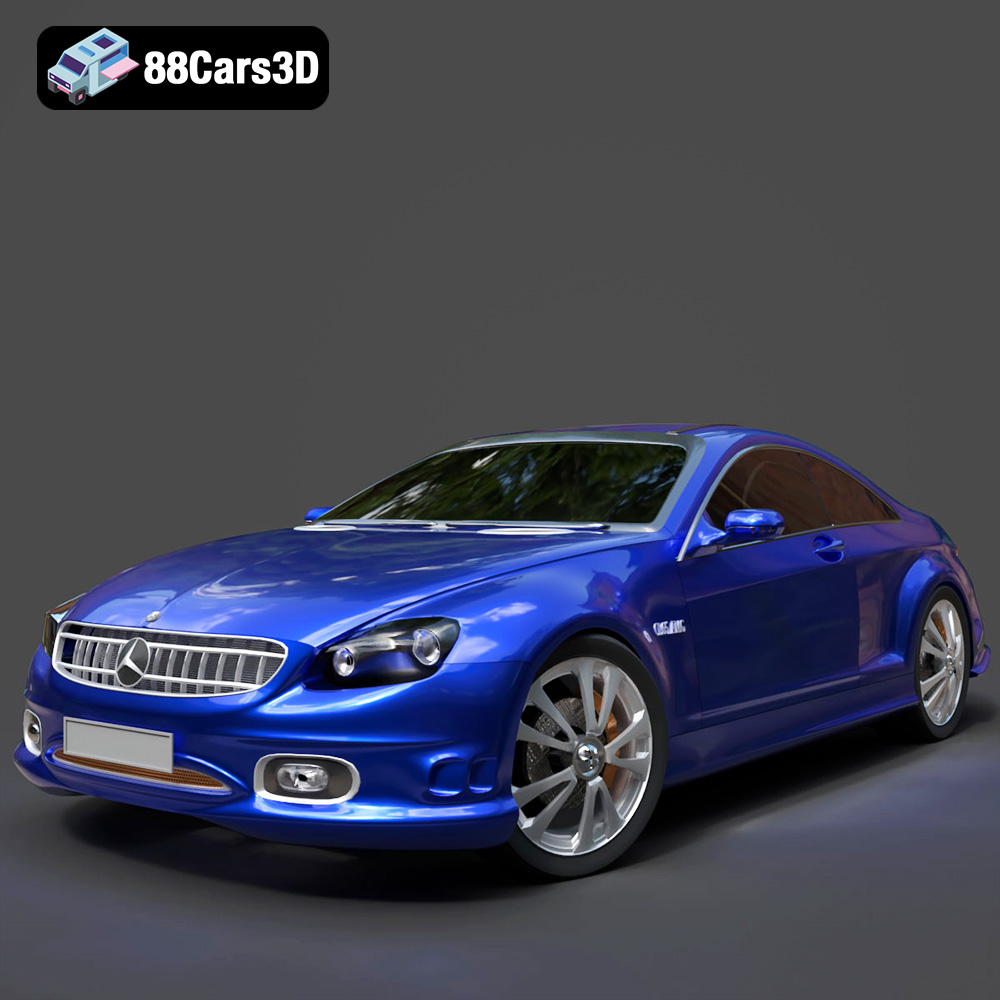
Texture: Yes
Material: Yes
Download the Mercedes-Benz CL6540-005 3D Model featuring clean geometry, realistic detailing, and a fully modeled interior. Includes .blend, .fbx, .obj, .glb, .stl, .ply, .unreal, and .max formats for rendering, simulation, and game development.
Price: $4.99
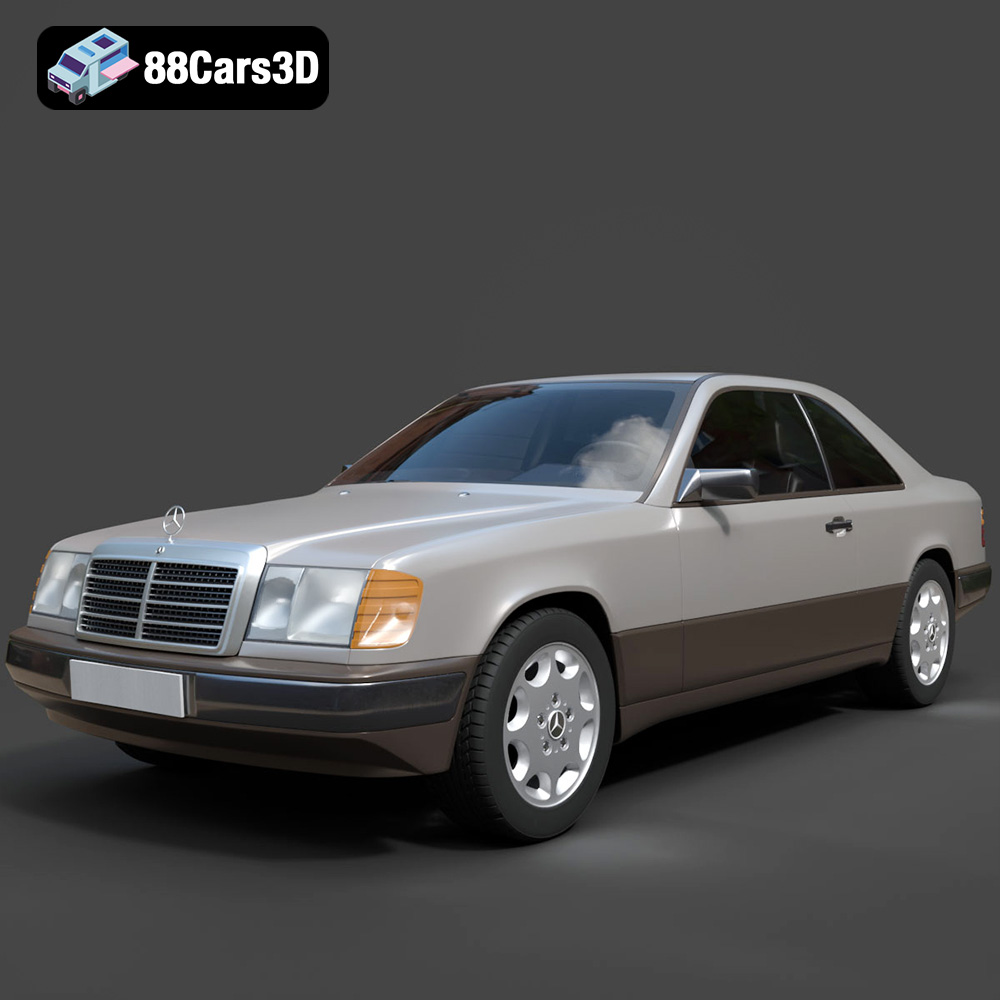
Texture: Yes
Material: Yes
Download the Mercedes E-Class w124 Coupe 3D Model featuring clean geometry, realistic detailing, and a fully modeled interior. Includes .blend, .fbx, .obj, .glb, .stl, .ply, .unreal, and .max formats for rendering, simulation, and game development.
Price: $4.99
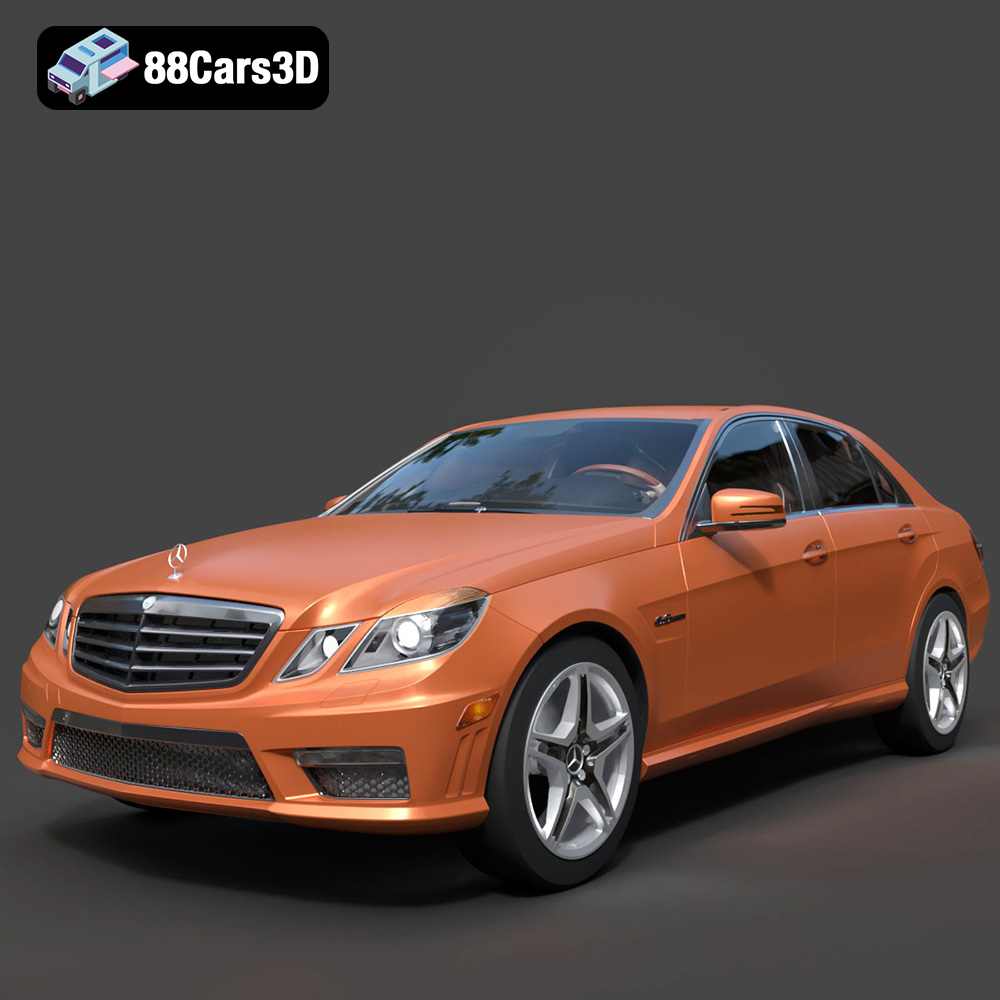
Texture: Yes
Material: Yes
Download the Mercedes-Benz E-Klasse 63 AMG 3D Model featuring clean geometry, realistic detailing, and a fully modeled interior. Includes .blend, .fbx, .obj, .glb, .stl, .ply, .unreal, and .max formats for rendering, simulation, and game development.
Price: $4.99
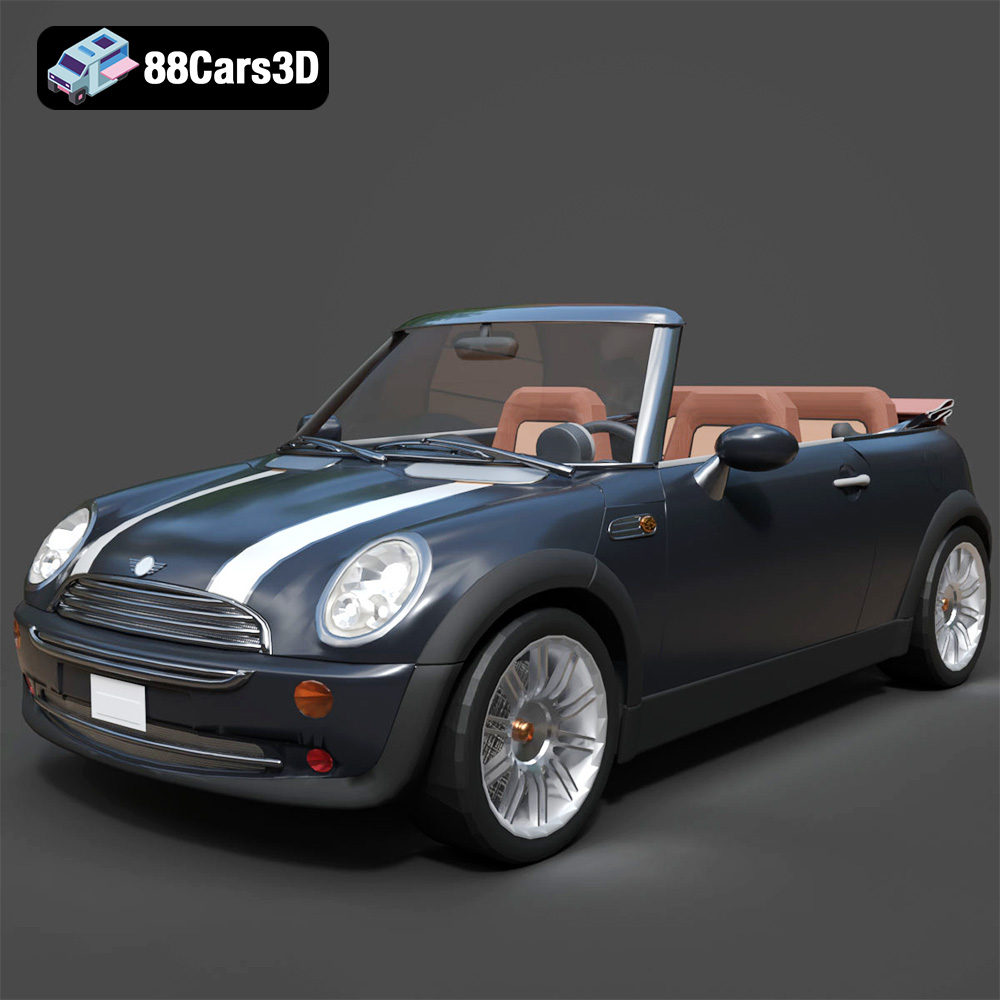
Texture: Yes
Material: Yes
Download the Mini Cabrio 2025 3D Model featuring clean geometry, realistic detailing, and a fully modeled interior. Includes .blend, .fbx, .obj, .glb, .stl, .ply, .unreal, and .max formats for rendering, simulation, and game development.
Price: $4.99
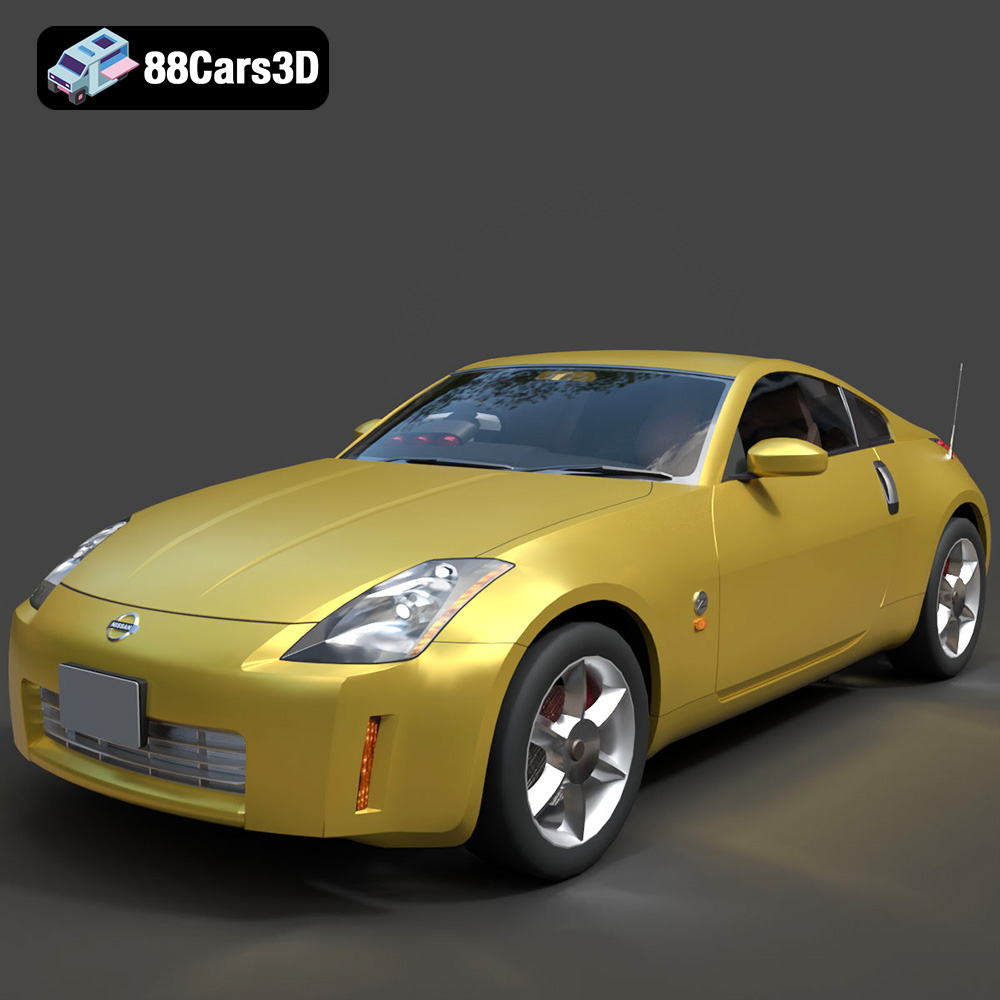
Texture: Yes
Material: Yes
Download the Nissan 350Z 3D Model featuring clean geometry, realistic detailing, and a fully modeled interior. Includes .blend, .fbx, .obj, .glb, .stl, .ply, .unreal, and .max formats for rendering, simulation, and game development.
Price: $4.99
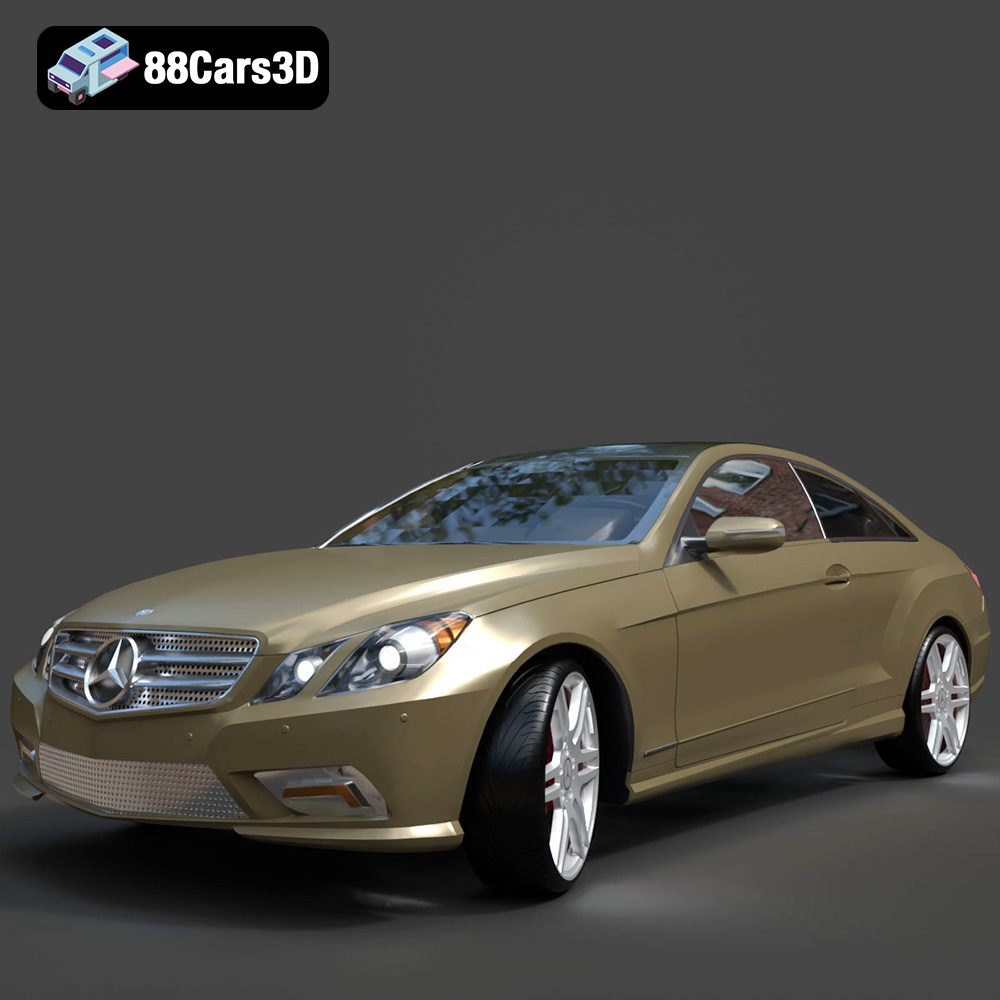
Texture: Yes
Material: Yes
Download the Mercedes-Benz E-Klasse Coupe 3D Model featuring clean geometry, realistic detailing, and a fully modeled interior. Includes .blend, .fbx, .obj, .glb, .stl, .ply, .unreal, and .max formats for rendering, simulation, and game development.
Price: $4.99
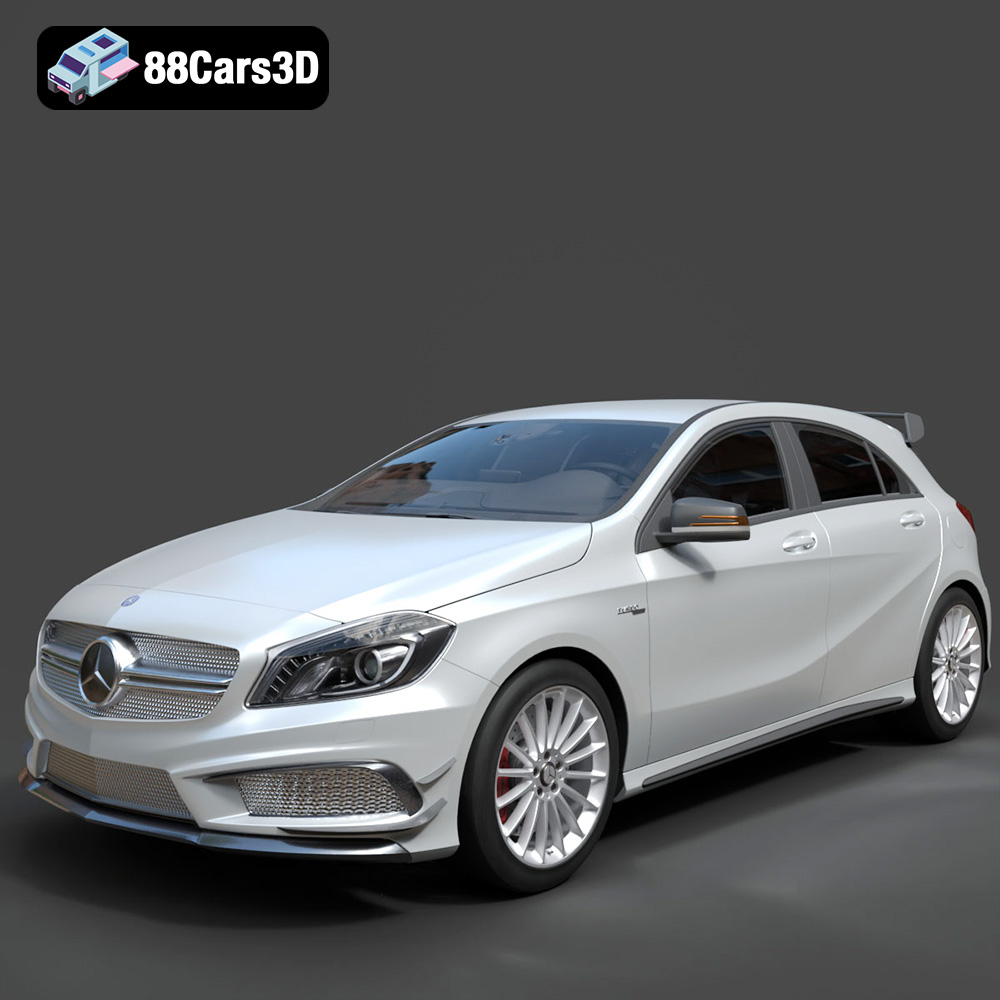
Texture: Yes
Material: Yes
Download the Benza MERS-007 3D Model featuring clean geometry, realistic detailing, and a fully modeled interior. Includes .blend, .fbx, .obj, .glb, .stl, .ply, .unreal, and .max formats for rendering, simulation, and game development.
Price: $4.99
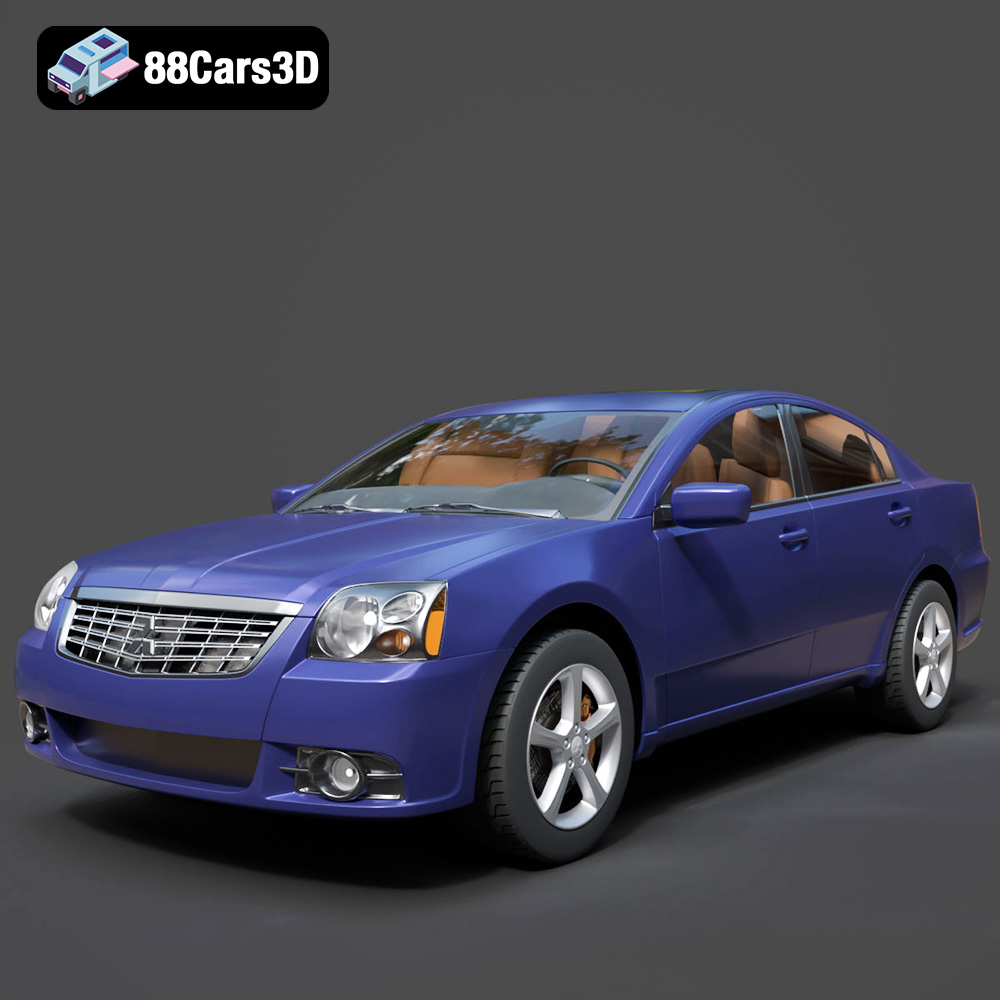
Texture: Yes
Material: Yes
Download the Mitsubishi Galant 2009 3D Model featuring clean geometry, realistic detailing, and a fully modeled interior. Includes .blend, .fbx, .obj, .glb, .stl, .ply, .unreal, and .max formats for rendering, simulation, and game development.
Price: $4.99
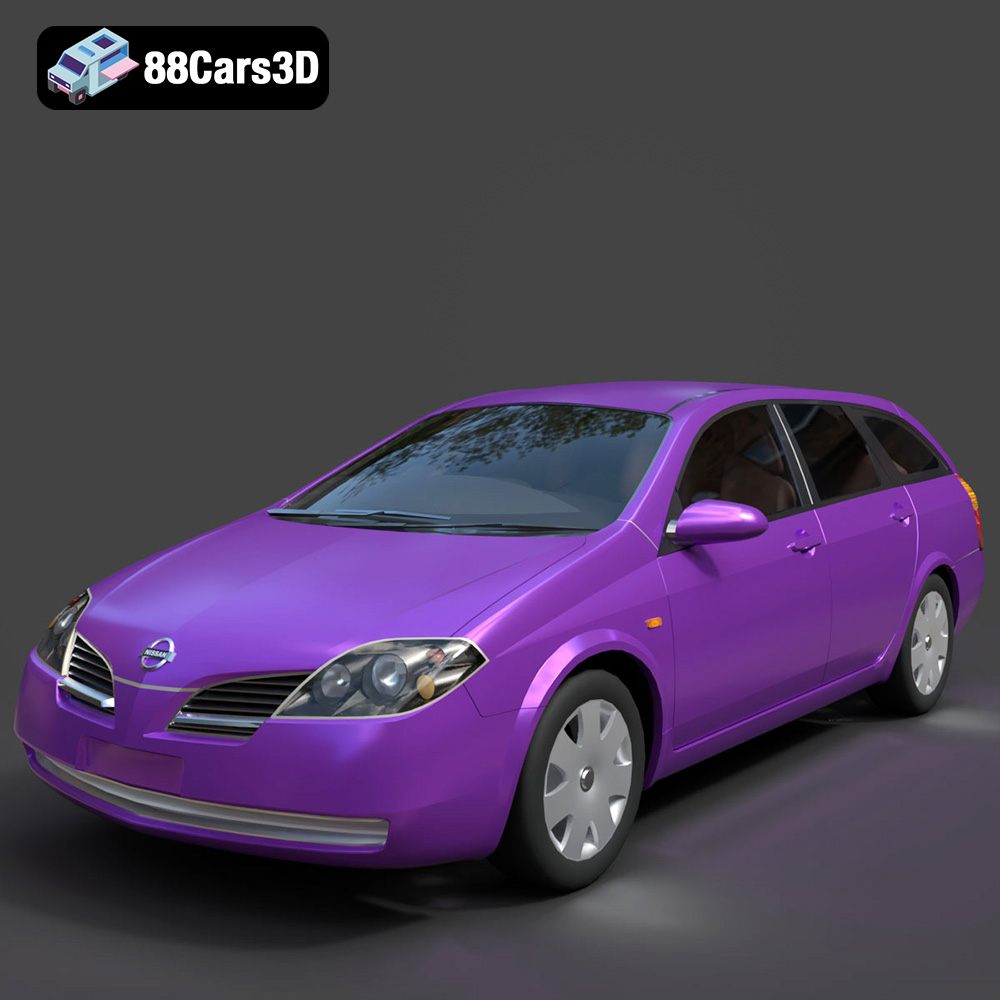
Texture: Yes
Material: Yes
Download the Nissan Primera Wagon 3D Model featuring clean geometry, realistic detailing, and a fully modeled interior. Includes .blend, .fbx, .obj, .glb, .stl, .ply, .unreal, and .max formats for rendering, simulation, and game development.
Price: $4.99
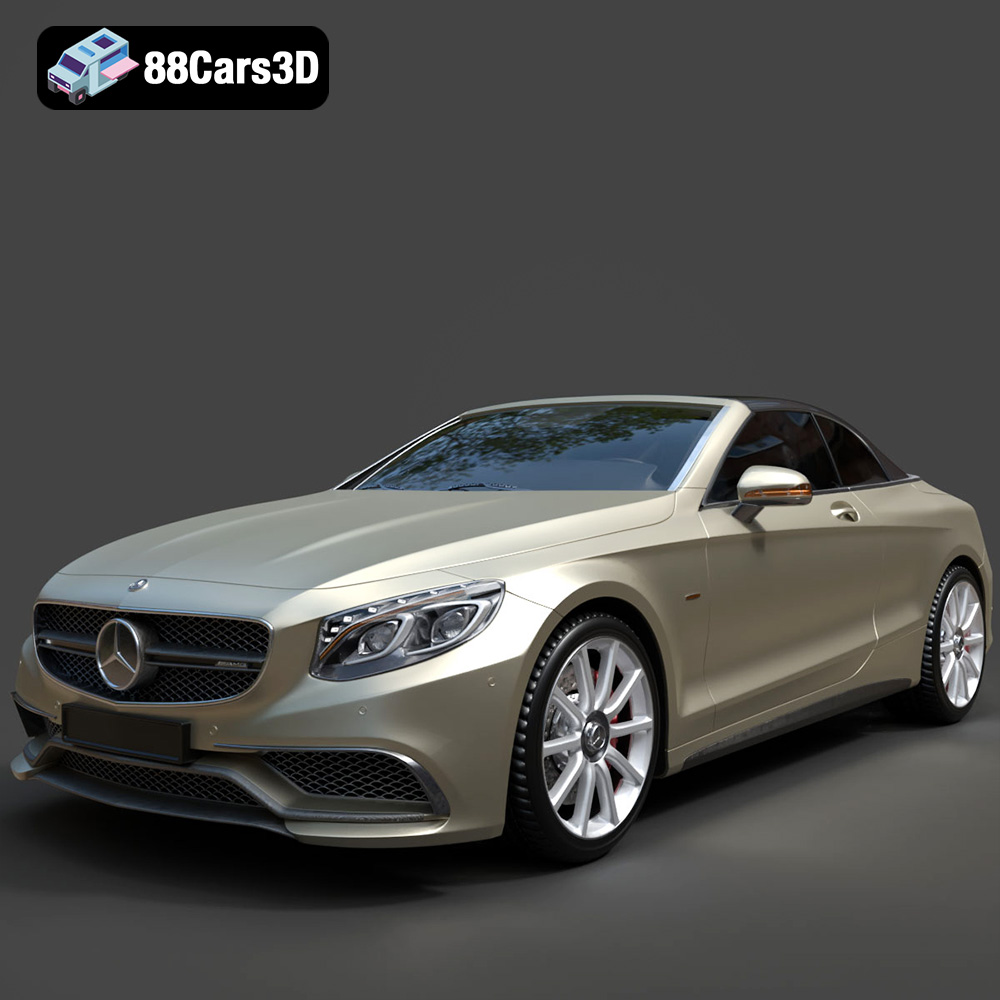
Texture: Yes
Material: Yes
Download the Mercedes-Benz S63 AMG Cabriolet 2017 3D Model featuring clean geometry, realistic detailing, and a fully modeled interior. Includes .blend, .fbx, .obj, .glb, .stl, .ply, .unreal, and .max formats for rendering, simulation, and game development.
Price: $20.99

