Get 20% OFF All Premium 3D & STL Models!

“`html
A high-quality 3D car model is a powerful digital asset, but its true potential is only unlocked when it’s properly prepared for its final destination. A model destined for a cinematic automotive rendering has vastly different technical requirements than one designed to be a high-performance game asset or an interactive AR experience. The difference between a stunning result and a technical failure often lies in the meticulous preparation of its topology, UVs, materials, and file structure. This process is a blend of artistic precision and deep technical understanding, ensuring the model not only looks incredible but also performs flawlessly across diverse pipelines.
This comprehensive guide will walk you through the entire workflow of transforming a raw 3D car model into a versatile, production-ready asset. We will dissect the foundational principles of clean topology and strategic UV mapping, essential for any application. We’ll then dive deep into creating photorealistic PBR materials for high-fidelity renders and explore the critical optimization techniques required for real-time game engines and AR/VR platforms. Whether you’re an automotive visualization artist aiming for hyperrealism, a game developer building the next great racing title, or a creative professional exploring new interactive mediums, this guide will provide you with the actionable knowledge to prepare your 3D car models for any challenge.
Topology, the structure and flow of polygons that form a 3D mesh, is the bedrock upon which every other step is built. For automotive models, with their blend of sweeping curves and sharp, manufactured edges, clean topology isn’t just a best practice—it’s a necessity. Poor topology leads to rendering artifacts, shading errors, difficulty in UV mapping, and unpredictable behavior when subdivided. A well-structured mesh, on the other hand, deforms cleanly, catches highlights beautifully, and serves as a perfect canvas for detailed texturing. When sourcing models from marketplaces such as 88cars3d.com, you’ll find that premium assets are built with this foundational principle in mind, saving you countless hours of cleanup and rework.
While triangles (tris) are the fundamental unit rendered by GPUs, modeling almost exclusively with quadrilaterals (quads) is the professional standard for hard-surface assets like cars. The primary reason is predictability and control. Quads allow for the creation of clean edge loops that define the shape and flow of a surface. These loops are crucial for several reasons:
Edge flow refers to the direction of the edge loops across the model’s surface. For a 3D car model, the edge flow should always follow the natural curvature and defining lines of the vehicle’s body. Think of the sharp crease running down the shoulder line of a car, the gentle curve of a roof, or the precise circle of a wheel arch. Your topology should mirror this design language. Good edge flow ensures that highlights travel smoothly and realistically across the surface, creating a believable and visually appealing result. When analyzing a mesh, look for evenly spaced, parallel edge loops that trace the primary contours of the car’s body panels. Any abrupt changes in direction or dense, jumbled areas can indicate a problem that will show up in the final render as a shading error or a “wobble” in the reflections.
The required polygon density depends entirely on the target application.
If topology is the skeleton of your model, UV mapping is its skin. It is the process of unwrapping the 3D mesh into a 2D space so that textures can be applied accurately. For a complex object like a car, with its countless individual parts and intricate surfaces, a strategic and clean UV layout is non-negotiable. Proper UVs prevent texture stretching and distortion, allow for high-resolution detailing, and make the texturing process in software like Substance Painter or Photoshop significantly more efficient. Without good UVs, even the best PBR materials will look warped and unprofessional.
A “seam” in UV mapping is where the 3D mesh is “cut” to allow it to be flattened into a 2D UV island. The key to professional UV mapping is placing these seams where they are least visible. For 3D car models, this means leveraging the natural construction of the vehicle:
Avoid placing seams in the middle of large, smooth, highly visible areas like the center of a hood or a door panel, as this can cause visible artifacts, especially with normal maps or fine surface details.
Texel density is a critical concept that refers to the number of texture pixels (texels) per unit of 3D surface area. Maintaining a consistent texel density across your entire model ensures that the texture resolution is uniform. You don’t want a highly detailed door handle right next to a blurry fender. Most 3D software has tools to visualize and equalize texel density. For a next-gen game asset, a common target might be 1024 pixels per square meter (10.24 px/cm).
For ultra-high-resolution assets used in film or photorealistic automotive rendering, a single 4K or 8K texture map may not provide enough detail for the entire car. This is where UDIMs (U-Dimension) come in. The UDIM workflow allows you to use multiple texture maps (tiles) for a single object, effectively multiplying the available texture resolution. You might assign one UDIM tile for the main body, another for the chassis and suspension, another for the interior, and so on, allowing every part of the vehicle to be textured with extreme detail.
Certain parts of a car pose unique UV unwrapping challenges. Wheels, for instance, with their intricate spoke designs and tires with complex tread patterns, require careful work. A common technique for tires is to unwrap the sidewall as a flattened ring (using a polar unwrap function) and the tread as a long, straight strip. This allows for easy application of tileable tread patterns and sidewall texturing. Similarly, complex honeycomb or mesh grilles are often best unwrapped using planar projections, ensuring the pattern doesn’t warp or stretch across the surface.
Physically Based Rendering (PBR) has revolutionized digital material creation. It’s a methodology that seeks to simulate the properties of light and surfaces based on real-world physics, resulting in materials that look realistic under any lighting condition. For automotive assets, a PBR workflow is essential for creating believable car paint, chrome, glass, rubber, and plastic. This involves creating a series of specialized texture maps that instruct the render engine how to interact with the model’s surface.
The standard PBR Metal/Roughness workflow, used by engines like Unreal and renderers like Corona, relies on a few key maps:
Modern car paint is a complex, multi-layered material. Recreating it convincingly requires a shader that can simulate these layers. Most modern renderers like Corona, V-Ray, and Arnold, as well as game engines, support layered shaders. A typical car paint material consists of:
In 3ds Max with Corona Renderer, for example, you would use the Corona Physical Material, setting the base color and roughness, and then enabling the “Clearcoat layer” with its own roughness and IOR (Index of Refraction) values to achieve this effect.
Perfectly clean, factory-fresh cars can look sterile and computer-generated. The key to photorealism is often in the subtle imperfections. Using tools like Substance Painter, you can add layers of realism by procedurally generating or hand-painting details. Consider adding a light layer of dust and dirt accumulating in crevices and on lower body panels. Add subtle smudges and fingerprints to the windows and door handle areas. For a race car, you might add rubber marks, stone chips on the front bumper, and exhaust soot around the tailpipes. These details should primarily affect the Roughness map, as dirt and dust are non-metallic and have a high roughness value.
With a perfectly modeled and textured car, the final step in creating a stunning image is the rendering process. This stage is all about light, shadow, and camera work. The goal is to simulate how a real car would be photographed in a real environment. The choice of lighting, camera setup, and render engine settings will define the final mood, drama, and realism of your automotive rendering. This process leverages the high-poly mesh and detailed PBR materials to produce showroom-quality visuals for advertising, film, or portfolio pieces.
There are two primary approaches to lighting a 3D car:
Often, the best results come from a hybrid approach: using an HDRI for overall ambient light and realistic reflections, and then adding a few key studio lights to add stylistic highlights and shape.
Treat your digital camera like a real one. Instead of just pointing and shooting, adjust its parameters to achieve a specific look.
Modern path-tracing render engines like Corona, V-Ray, Blender’s Cycles, and Arnold are capable of incredible realism. To get the most out of them, you need to understand a few key settings. Set your Global Illumination (GI) solvers to their highest quality settings (e.g., Path Tracing + UHD Cache in V-Ray). Instead of rendering for a fixed amount of time, use progressive rendering with a noise threshold (e.g., 2-3%) to ensure a clean final image. Furthermore, rendering in passes (e.g., reflections, lighting, shadows, ambient occlusion) gives you maximum control in post-processing software like Photoshop or After Effects, where you can fine-tune each element of the image independently.
Preparing a 3D car model for a real-time application like a video game, an AR app, or a VR simulation is a completely different discipline from preparing one for offline rendering. Here, the primary concern is performance. The goal is to maintain the highest possible visual fidelity while ensuring the application runs at a smooth, consistent frame rate (typically 60-90 FPS). This involves a series of aggressive optimization techniques designed to reduce the computational load on the GPU and CPU. High-quality base models, like those on 88cars3d.com, provide a fantastic starting point for this process as their clean topology makes retopology and optimization much easier.
You cannot simply place a multi-million polygon rendering model into a game engine. The first step is creating a low-polygon, game-ready mesh through a process called retopology. This can be done manually using tools in Blender, 3ds Max, or specialized software like TopoGun. The goal is to create a new mesh with a much lower polygon count (e.g., 50,000 polygons) that perfectly matches the silhouette and major forms of the original high-poly model.
Once the low-poly mesh is created, the fine details from the high-poly model are “baked” into a series of texture maps, most importantly a Normal Map. The normal map fakes the lighting of the high-poly details on the low-poly surface, creating the illusion of complexity with minimal performance cost. Other maps like Ambient Occlusion and Curvature are also baked to aid in the texturing process.
Even an optimized low-poly model can be too heavy when dozens of cars are on screen at once. This is where Levels of Detail (LODs) are used. An LOD system is a series of progressively lower-polygon versions of the same model.
The game engine automatically switches between these LODs based on the car’s distance from the camera, drastically reducing the total number of polygons that need to be rendered in any given frame.
In real-time rendering, every command the CPU sends to the GPU (a “draw call”) has a performance cost. One way to reduce draw calls is to combine multiple materials into one. Texture atlasing is the process of combining several smaller texture maps into a single, larger map. For example, instead of separate materials and textures for the headlights, taillights, and badges, their UVs can be arranged to share a single texture atlas and thus a single material, reducing three draw calls to one.
Additionally, textures must be compressed to reduce VRAM usage and loading times. Game engines like Unity and Unreal use specialized formats like DXT (for PC) or ASTC (for mobile) that are highly optimized for GPU hardware. It’s crucial to select the right compression settings to balance file size and visual quality, avoiding ugly compression artifacts.
The final, and often overlooked, step in preparing a 3D car model is choosing the correct file format. The format you export to determines what data (mesh, UVs, materials, animation) is preserved and how compatible it will be with your target software. Understanding the strengths and weaknesses of each format is crucial for a smooth and efficient pipeline, whether you’re moving a model from a modeling program to a render engine or preparing it for a web-based AR experience.
A common pipeline headache is importing a model only to find it’s a thousand times too large or rotated incorrectly. This is caused by mismatched system units and coordinate systems between software. Before exporting, always ensure your scene’s system units (e.g., centimeters) match the target application’s units. For example, both Unity and Unreal Engine use 1 unit = 1 centimeter. Also, be aware of the “up” axis. 3ds Max uses a Z-up axis by default, while Unreal Engine uses a Z-up and Unity uses a Y-up axis. Most FBX exporters have options to automatically convert the axis orientation upon export, which should always be enabled to ensure the model imports correctly.
The rise of Augmented Reality has made USDZ and GLB critical file formats. When a user on a mobile device clicks a link to one of these files, it can be displayed instantly as a 3D object in their real-world environment. For this to work flawlessly, the model must be highly optimized. A typical polycount for a detailed AR car model is between 50,000 and 150,000 polygons. Textures should be compressed and kept to a reasonable resolution (2K is common) to keep the final file size small (ideally under 10-15 MB) for fast loading over mobile networks. The PBR materials must be set up correctly within the glTF/USD material standard to render properly on the device.
We’ve journeyed through the entire lifecycle of a 3D car model, from the foundational importance of clean topology to the final export for a specific application. The key takeaway is that a 3D model is not a one-size-fits-all product. Its preparation is a deliberate process of technical and artistic choices tailored to a final goal. A model intended for a photorealistic close-up in an automotive rendering is built for detail and subdivision, while a game asset is meticulously optimized for real-time performance through retopology, LODs, and texture atlasing. An AR model must be a self-contained, lightweight package ready for instant mobile interaction.
By mastering these diverse workflows—understanding the ‘why’ behind quad-based modeling, strategic UV mapping, PBR material theory, and performance optimization—you elevate your work from simply creating models to engineering powerful, versatile digital assets. The next time you begin a project, start with the end in mind. Define your target platform, understand its technical constraints and requirements, and then apply the principles outlined in this guide. This methodical approach will not only produce superior results but also streamline your production pipeline, saving you invaluable time and effort and allowing you to push the boundaries of realism and interactivity in your work.
“`

Texture: Yes
Material: Yes
Download the Mercedes-Benz SLK 350 2005 3D Model featuring clean geometry, realistic detailing, and a fully modeled interior. Includes .blend, .fbx, .obj, .glb, .stl, .ply, .unreal, and .max formats for rendering, simulation, and game development.
Price: $9.99

Texture: Yes
Material: Yes
Download the Mercedes-Benz SL 65 AMG 3D Model featuring clean geometry, realistic detailing, and a fully modeled interior. Includes .blend, .fbx, .obj, .glb, .stl, .ply, .unreal, and .max formats for rendering, simulation, and game development.
Price: $9.99

Texture: Yes
Material: Yes
Download the Mercedes-Benz S500 3D Model featuring clean geometry, realistic detailing, and a fully modeled interior. Includes .blend, .fbx, .obj, .glb, .stl, .ply, .unreal, and .max formats for rendering, simulation, and game development.
Price: $9.99
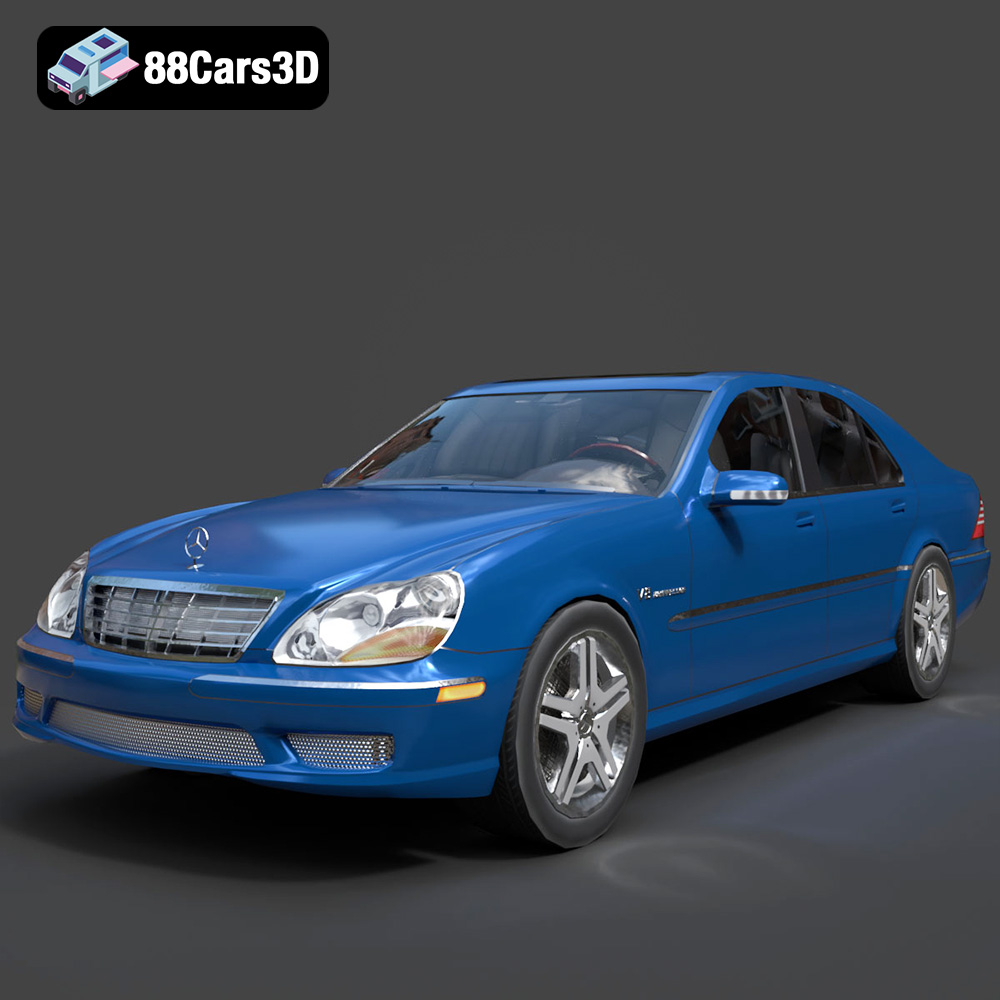
Texture: Yes
Material: Yes
Download the Mercedes-Benz S55 W220 AMG 1999 3D Model featuring clean geometry, realistic detailing, and a fully modeled interior. Includes .blend, .fbx, .obj, .glb, .stl, .ply, .unreal, and .max formats for rendering, simulation, and game development.
Price: $9.99
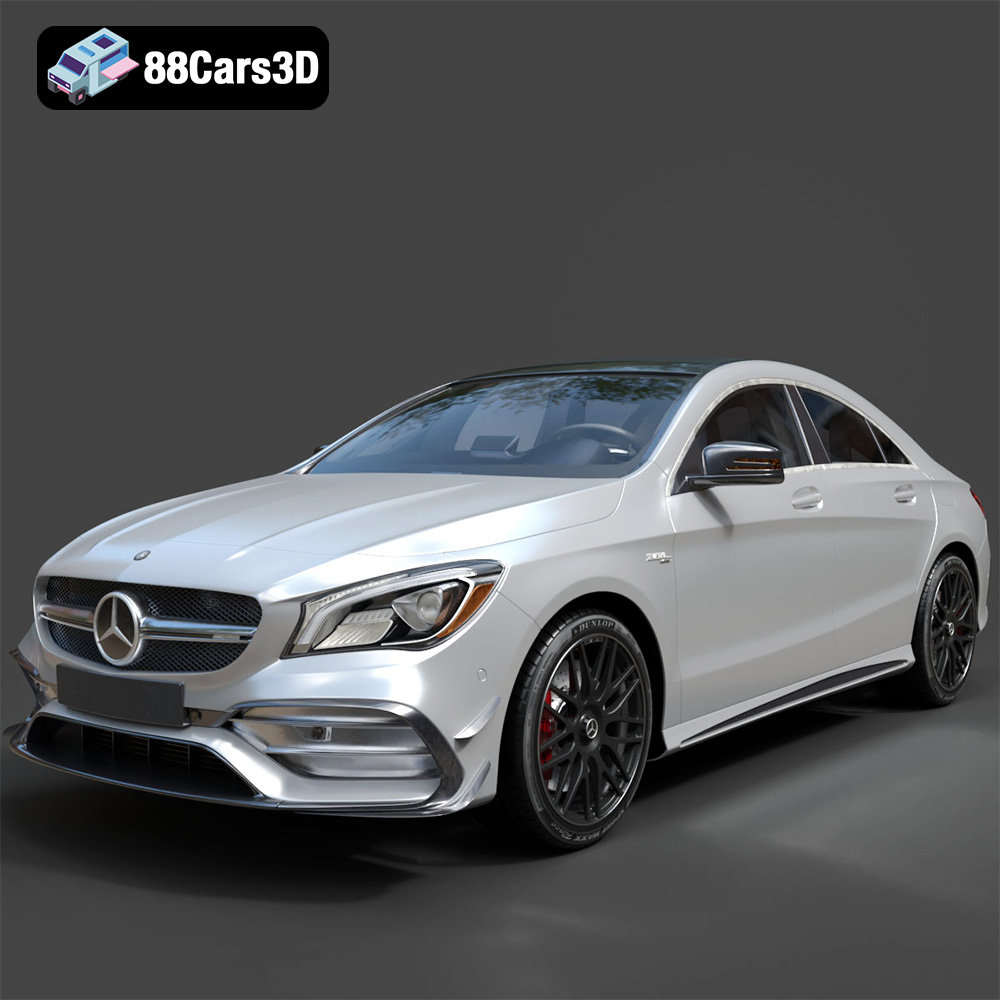
Texture: Yes
Material: Yes
Download the Mercedes-Benz CLA45 AMG 2017 3D Model featuring clean geometry, realistic detailing, and a fully modeled interior. Includes .blend, .fbx, .obj, .glb, .stl, .ply, .unreal, and .max formats for rendering, simulation, and game development.
Price: $29.99
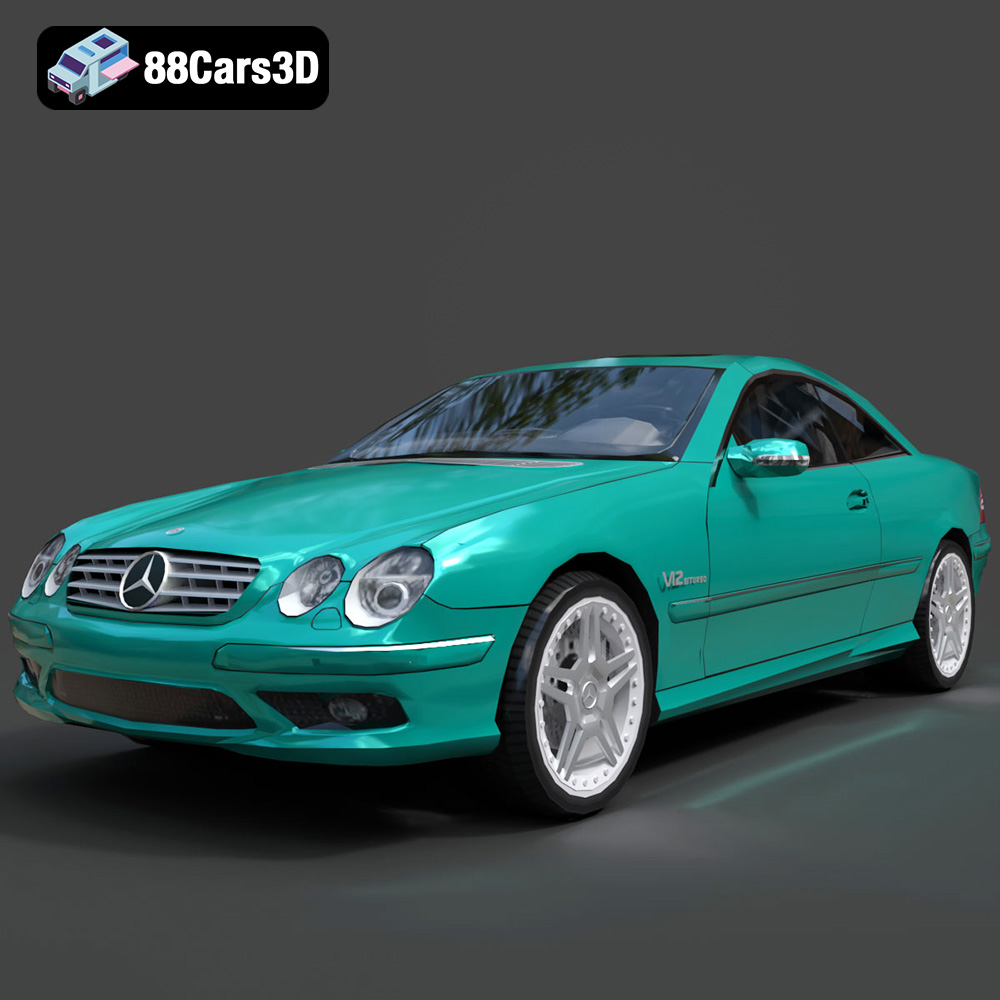
Texture: Yes
Material: Yes
Download the Mercedes-Benz CL65 C215 AMG 3D Model featuring clean geometry, realistic detailing, and a fully modeled interior. Includes .blend, .fbx, .obj, .glb, .stl, .ply, .unreal, and .max formats for rendering, simulation, and game development.
Price: $9.99
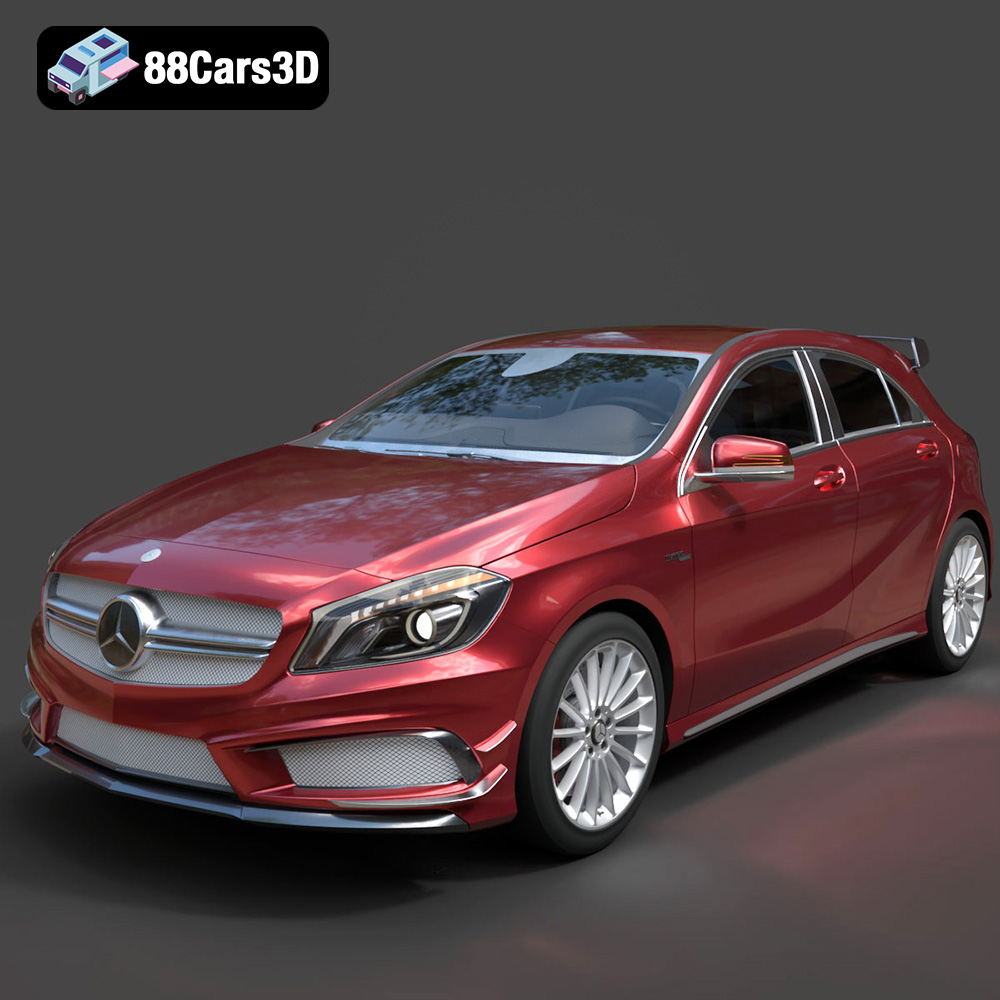
Texture: Yes
Material: Yes
Download the Mercedes-Benz A45 2021 3D Model featuring clean geometry, realistic detailing, and a fully modeled interior. Includes .blend, .fbx, .obj, .glb, .stl, .ply, .unreal, and .max formats for rendering, simulation, and game development.
Price: $9.99
Texture: Yes
Material: Yes
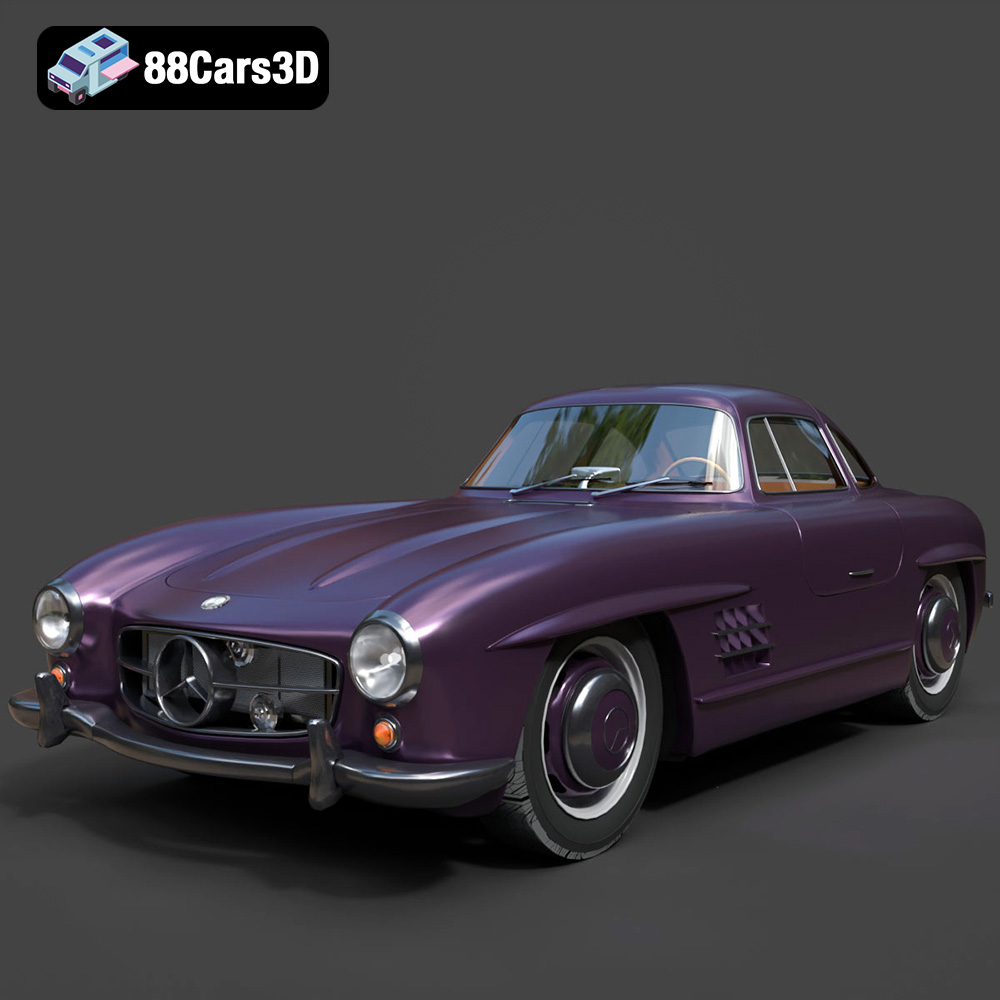
Download the Mercedes-Benz 300SL 1955 3D Model featuring clean geometry, realistic detailing, and a fully modeled interior. Includes .blend, .fbx, .obj, .glb, .stl, .ply, .unreal, and .max formats for rendering, simulation, and game development.
Price: $9.99
Texture: Yes
Material: Yes
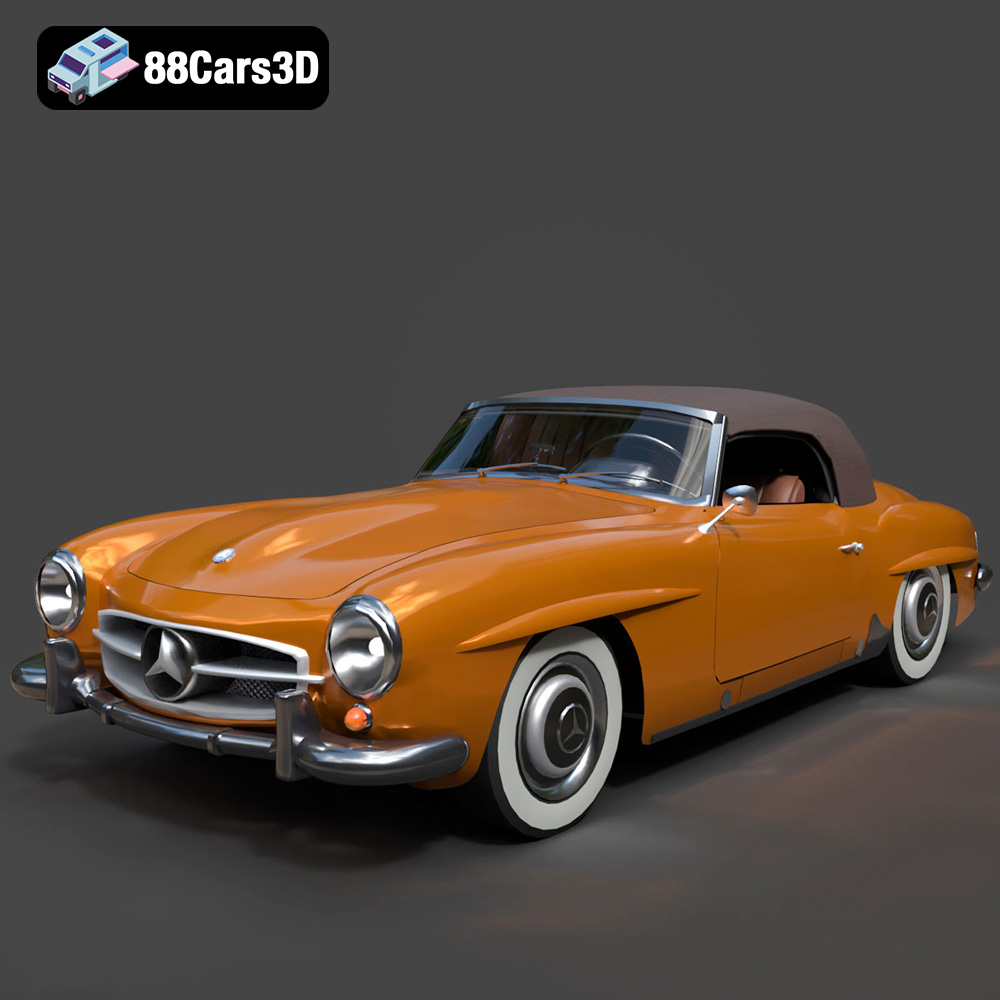
Download the Mercedes-Benz 190SL 1955 3D Model featuring clean geometry, realistic detailing, and a fully modeled interior. Includes .blend, .fbx, .obj, .glb, .stl, .ply, .unreal, and .max formats for rendering, simulation, and game development.
Price: $9.99
Texture: Yes
Material: Yes
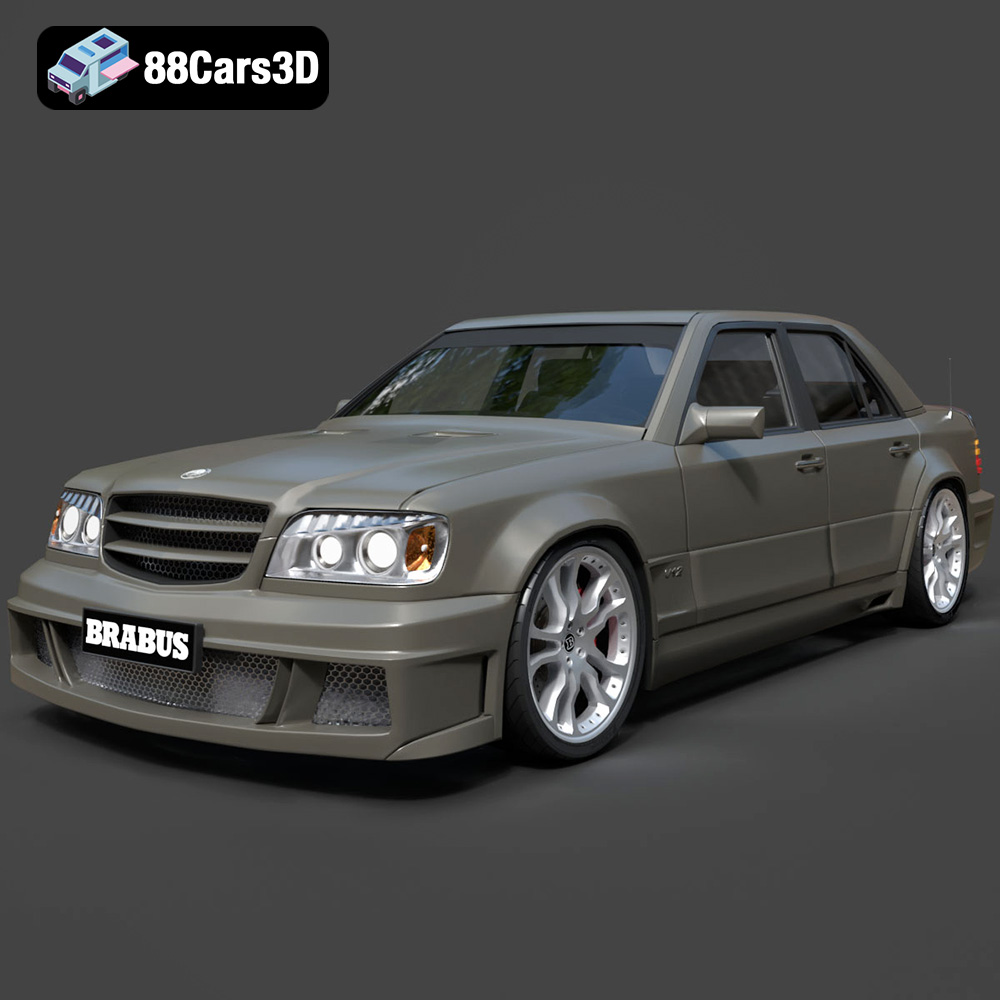
Download the Mercedes-Benz W124 Brabus V12 3D Model featuring clean geometry, realistic detailing, and a fully modeled interior. Includes .blend, .fbx, .obj, .glb, .stl, .ply, .unreal, and .max formats for rendering, simulation, and game development.
Price: $9.99

