Get 20% OFF All Premium 3D & STL Models!

“`html
From the gleaming reflections in a high-end automotive commercial to the adrenaline-pumping speed of a next-gen racing game, 3D car models are the backbone of modern digital experiences. But what does it take to transform a raw mesh into a versatile, production-ready asset? The journey is a masterclass in technical artistry, demanding a deep understanding of topology, texturing, optimization, and the unique requirements of each target platform. A model destined for a photorealistic 4K render has vastly different needs than one designed for a smooth 90fps virtual reality experience or a tangible 3D print. Misunderstanding these nuances can lead to broken shading, poor performance, or outright unusable files.
This comprehensive guide will demystify the entire process. We will journey from the foundational principles of clean topology and strategic UV mapping to the advanced techniques of creating hyper-realistic PBR materials. We’ll explore specialized workflows for cinematic rendering in Corona and V-Ray, dive deep into game engine optimization for Unity and Unreal, and uncover the specific preparations needed for the emerging worlds of AR/VR and 3D printing. Whether you are a seasoned 3D artist, a game developer pushing performance boundaries, or an automotive designer visualizing the future, this guide will equip you with the expert knowledge to prepare any 3D car model for any application.
Before any texture is applied or a render engine is fired up, the success of a 3D car model is determined by its underlying geometry—its topology. Topology refers to the arrangement of vertices, edges, and polygons that form the mesh. For hard-surface models like vehicles, clean, quad-based topology is not just an aesthetic preference; it is a technical necessity. It dictates how the surface deforms, how light reflects across its curves, and how smoothly it can be subdivided for higher levels of detail. Without a solid foundation, you will face a cascade of problems, from visible faceting and shading artifacts to difficulties in UV unwrapping and texturing.
The golden rule for automotive modeling is to use quadrilaterals (quads) wherever possible. Unlike triangles or n-gons (polygons with more than four sides), quads subdivide cleanly and predictably. When you apply a subdivision modifier like 3ds Max’s TurboSmooth or Blender’s Subdivision Surface, each quad is smoothly divided into four smaller quads. This process is essential for creating the high-resolution meshes required for close-up renders. Triangles and n-gons disrupt this flow, creating pinching, poles (vertices with more than five connecting edges), and visible artifacts that ruin the illusion of a perfect metal surface. While a few triangles are sometimes unavoidable in complex areas, they should be strategically placed in flat, hidden regions where they won’t interfere with surface curvature.
Edge flow is the directional logic of your topology. For vehicles, edge loops must follow the natural contours and character lines of the car’s design. Think of the sharp crease running down the side of a sports car or the curve of a wheel arch. Your edge loops should run parallel to these features. This technique, often reinforced with “holding edges” or “support loops,” ensures that these details remain crisp and defined after subdivision. Proper edge flow is critical for achieving realistic reflections. An uninterrupted flow allows highlights to travel smoothly and believably across a car’s body panels, mimicking the behavior of light on real-world stamped metal.
The ideal polygon count is entirely dependent on the final application. For a “hero” car in a cinematic render, the post-subdivision mesh can easily exceed several million polygons to capture every minute detail. However, for a real-time game asset, the base mesh (LOD0) might need to be between 80,000 and 200,000 polygons to ensure performance. The key is to model efficiently. Add polygons only where they contribute to the silhouette or surface curvature. A flat hood or roof requires far fewer polygons than a complex front bumper or headlight assembly. When sourcing models from marketplaces such as 88cars3d.com, look for clean base meshes that provide the flexibility to be subdivided for rendering or optimized for real-time use.
If topology is the skeleton of your model, UV mapping is its skin. The UV unwrapping process involves flattening the 3D mesh into a 2D space, creating a map that tells the software how to apply textures correctly. For a complex object like a car, with its mix of large, curved panels and small, intricate details, UV mapping is a significant challenge. A poor unwrap can result in stretched, distorted textures, visible seams, and inconsistent resolution, immediately destroying the realism of the model. A strategic and meticulous approach is essential for achieving professional-grade results.
Every UV island must be separated by a seam, but these seams can cause visible breaks in textures or lighting. The art of UV mapping lies in hiding these seams where they are least likely to be seen. Good places to place seams on a 3D car model include:
Avoid placing seams in the middle of large, smooth, highly visible areas like the hood or the side doors, as any slight mismatch in the texture or normal map will be immediately obvious under direct lighting.
Texel density is the measure of texture resolution on the surface of your model (e.g., pixels per meter). Maintaining a consistent texel density across the entire vehicle is crucial for a uniform appearance. If the door has a higher texel density than the fender next to it, the texture on the door will appear sharper and more detailed, creating a jarring inconsistency. To manage this, use a UV checkerboard pattern during the unwrapping process. The goal is to have the squares of the checkerboard be roughly the same size across all parts of the model that will be seen at a similar distance. For hero assets, you might intentionally increase texel density for interior elements like the dashboard, which will be seen in close-up shots.
For high-end automotive rendering and film projects, a single 4K or 8K texture map may not provide enough resolution for the entire car. This is where a UDIM (U-Dimension) workflow is invaluable. UDIMs allow you to spread your model’s UVs across multiple texture sets, or “tiles.” For example, you could assign the main body panels to one UDIM tile, the wheels and brakes to another, and the interior to a third, with each tile having its own 4K texture set. This approach provides enormous texture resolution without having to manage unwieldy 16K or 32K textures, and it is fully supported by modern texturing software like Substance Painter and Mari, as well as render engines like V-Ray and Arnold.
With a perfectly modeled and unwrapped car, the next step is to breathe life into it with realistic materials. The industry standard for this is the Physically Based Rendering (PBR) workflow, which aims to simulate the properties of real-world materials based on physics. For an automotive model, this means creating complex shaders for everything from multi-layered car paint to textured plastics, anisotropic chrome, and refractive glass. The quality of your PBR materials will make or break the final image, as they directly control how the model interacts with light.
Real-world car paint is not a simple color; it’s a complex layering of primer, a base paint coat, metallic flakes, and a protective clear coat. Replicating this in 3D requires a layered shader approach. In renderers like Corona or V-Ray, you can use a blend material to achieve this:
Adjusting the roughness of the clear coat and the size/density of the flakes allows you to create everything from a simple gloss finish to a deep candy apple red or a matte paint job.
Nothing in the real world is perfectly clean or flawless. To elevate your renders from “good” to “photorealistic,” you must add subtle imperfections. Using software like Substance Painter, you can procedurally or manually add layers of grime, dust, water spots, and micro-scratches. These are typically applied as subtle variations in the roughness map. A slightly dirtier or rougher area will diffuse reflections more, breaking up the perfect mirror-like surface. Pay special attention to areas where dirt would naturally accumulate: along the lower body panels, in panel gaps, and around the wheel wells. Even a brand-new car in a studio has fingerprints and a fine layer of dust.
Beyond the paint, other materials require specific attention.
Rendering is where all your hard work on modeling, UVs, and materials comes together. The goal of automotive rendering is often pure photorealism, whether for a static marketing shot, an animated commercial, or an interactive configurator. This requires a meticulous approach to lighting, camera setup, and render engine settings. The subtlest details in the environment and camera can dramatically impact the final perception of the vehicle’s design and quality.
Lighting is arguably the most critical element in a render. For cars, two primary methods are used:
Often, a hybrid approach is best, using an HDRI for general ambient light and reflections, supplemented by manual lights to add dramatic highlights.
Treat your 3D camera like a real-world DSLR. Professional automotive photographers often use specific focal lengths to capture cars in a flattering way. A focal length between 50mm and 85mm provides a natural, slightly compressed perspective that minimizes distortion and is great for “portrait” shots. For wider, more environmental shots, a 35mm lens can be used, but avoid going too wide as it can distort the car’s proportions. Crucially, enable depth of field (DoF) to create a soft, out-of-focus background, which draws the viewer’s eye to the car. Even a subtle DoF effect adds immense realism. For animation, adding motion blur to the wheels and background is essential for conveying speed and dynamism.
While most modern path-tracing render engines can produce stunning results, they have different strengths.
The choice often comes down to your preferred 3D software and workflow, but all are capable of producing world-class imagery when paired with a high-quality model.
Preparing a 3D car model for a real-time application like a video game or an interactive simulator is a completely different discipline from preparing one for rendering. In a real-time environment, every polygon and every texture read counts. The primary goal shifts from achieving absolute realism to achieving the *best possible visual quality* while maintaining a consistent target frame rate (e.g., 60 FPS). This is a delicate balancing act of simplification, clever tricks, and technical discipline.
A car seen from 200 meters away does not need the same level of detail as one seen in first-person view. This is the principle behind Level of Detail (LOD) meshes. A typical setup for a hero vehicle in a game would include:
Game engines like Unity and Unreal can automatically switch between these LODs based on the object’s distance from the camera, drastically improving performance.
A “draw call” is a command from the CPU to the GPU to draw an object on the screen. Too many draw calls can create a CPU bottleneck and lower the frame rate. Each object with a unique material generates at least one draw call. To optimize this, it’s crucial to consolidate materials. Instead of having separate materials for the rubber seals, plastic trim, and metal bolts, these can be combined into one material that uses a single set of textures. This is achieved through “texture atlasing,” where the UVs for many different parts are packed into a single UV space, allowing them to share a texture map. A well-optimized car might use only a handful of materials for the entire exterior.
Importing the model into the game engine is the final step. It’s vital to set up custom collision meshes. Using the high-poly visual mesh for physics calculations would be incredibly performance-intensive. Instead, a separate, very simple, low-poly convex mesh is created to approximate the car’s shape for collision detection. In the engine, you’ll set up the materials using the engine’s native shader system (e.g., Unreal’s PBR Material Editor or Unity’s HDRP Lit shader) and connect your exported PBR texture maps (Base Color, Normal, and a packed map for Ambient Occlusion, Roughness, and Metallic) to the correct shader inputs.
Beyond traditional rendering and gaming, 3D car models are finding new life in augmented reality (AR), virtual reality (VR), and 3D printing. Each of these applications presents a unique set of technical hurdles that require specific model preparation. For AR/VR, performance and file size are paramount, while for 3D printing, physical integrity and printability are the only things that matter.
Mobile-powered AR and standalone VR headsets have even tighter performance budgets than PCs or consoles. File size is a major concern, as assets are often downloaded over a network. The key formats here are GLB (for web and Android) and USDZ (for Apple’s ecosystem). Both formats are designed to be self-contained, packing the model, materials, and textures into a single file. Optimization is extreme:
The goal is to deliver a visually compelling experience that loads quickly and runs smoothly on low-power devices. Buying assets created for these platforms, or sourcing high-quality 3D car models that can be heavily optimized, is a common strategy for developers.
When preparing a model for 3D printing, all digital illusions are stripped away. The model must be a single, solid, “watertight” (or manifold) object. This means there can be no holes, no overlapping faces, and no internal geometry. Every edge must be connected to exactly two faces. Issues like floating parts (e.g., a non-connected side mirror) or paper-thin surfaces (like a single-polygon window) will cause the print to fail. Tools like Blender’s 3D-Print Toolbox, Meshmixer, or Netfabb are essential for automatically detecting and repairing these issues, ensuring the mesh is a valid, printable solid.
Once the mesh is manifold, it must be prepared in a “slicer” program (like Cura or PrusaSlicer). The slicer converts the 3D model into hundreds or thousands of thin horizontal layers (G-code) that the printer can understand. In this stage, you define the scale of the print, its orientation on the print bed (to minimize the need for support structures), and settings like layer height and infill density. For complex models like cars, it is often necessary to split the model into several parts (e.g., body, wheels, axles) that can be printed separately and assembled later. This allows for higher detail and avoids complex support structures that can be difficult to remove and mar the surface finish.
As we’ve seen, a 3D car model is not a one-size-fits-all asset. It is a piece of digital clay that must be skillfully molded to fit the specific technical and artistic demands of its final destination. The journey from a raw mesh to a finished product requires a holistic understanding of the entire production pipeline. A flawless topology is the bedrock upon which realistic materials are built. Strategic UVs ensure those materials are applied without distortion. Meticulous lighting and camera work elevate a good model into a stunning piece of automotive visualization. And aggressive, intelligent optimization is what allows that same model to perform flawlessly in an interactive game or an AR application.
The key takeaway is to always begin with the end in mind. Before you start modeling, texturing, or even purchasing an asset, clearly define your target platform’s constraints and requirements. By understanding the principles of quad-based modeling, PBR shading, LOD creation, and watertight geometry, you gain the power to adapt any high-quality model for any purpose. Investing time in this foundational knowledge, or starting with a professionally crafted asset from a marketplace like 88cars3d.com that adheres to these principles, will save countless hours of frustration and unlock the full potential of your creative vision, ensuring your digital vehicles look incredible wherever they appear.
“`

Texture: Yes
Material: Yes
Download the Mercedes-Benz SLK 350 2005 3D Model featuring clean geometry, realistic detailing, and a fully modeled interior. Includes .blend, .fbx, .obj, .glb, .stl, .ply, .unreal, and .max formats for rendering, simulation, and game development.
Price: $9.99

Texture: Yes
Material: Yes
Download the Mercedes-Benz SL 65 AMG 3D Model featuring clean geometry, realistic detailing, and a fully modeled interior. Includes .blend, .fbx, .obj, .glb, .stl, .ply, .unreal, and .max formats for rendering, simulation, and game development.
Price: $9.99

Texture: Yes
Material: Yes
Download the Mercedes-Benz S500 3D Model featuring clean geometry, realistic detailing, and a fully modeled interior. Includes .blend, .fbx, .obj, .glb, .stl, .ply, .unreal, and .max formats for rendering, simulation, and game development.
Price: $9.99
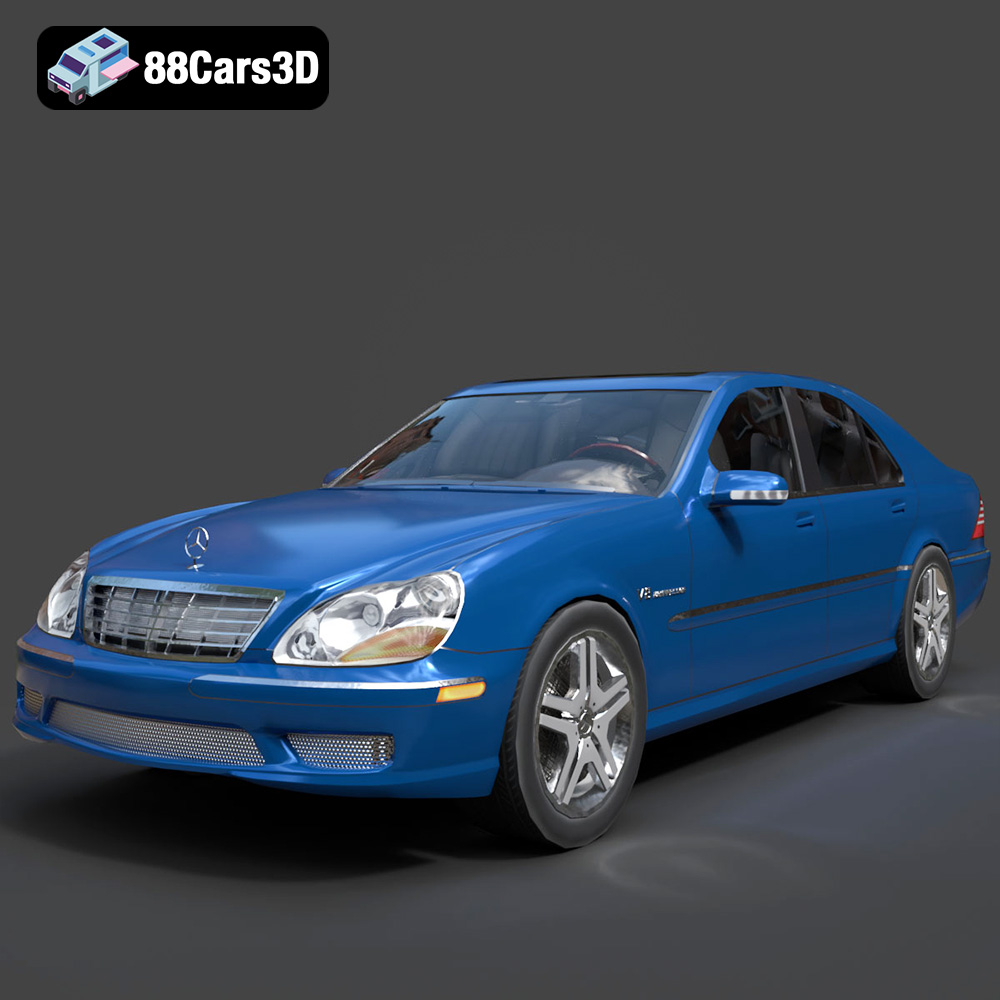
Texture: Yes
Material: Yes
Download the Mercedes-Benz S55 W220 AMG 1999 3D Model featuring clean geometry, realistic detailing, and a fully modeled interior. Includes .blend, .fbx, .obj, .glb, .stl, .ply, .unreal, and .max formats for rendering, simulation, and game development.
Price: $9.99
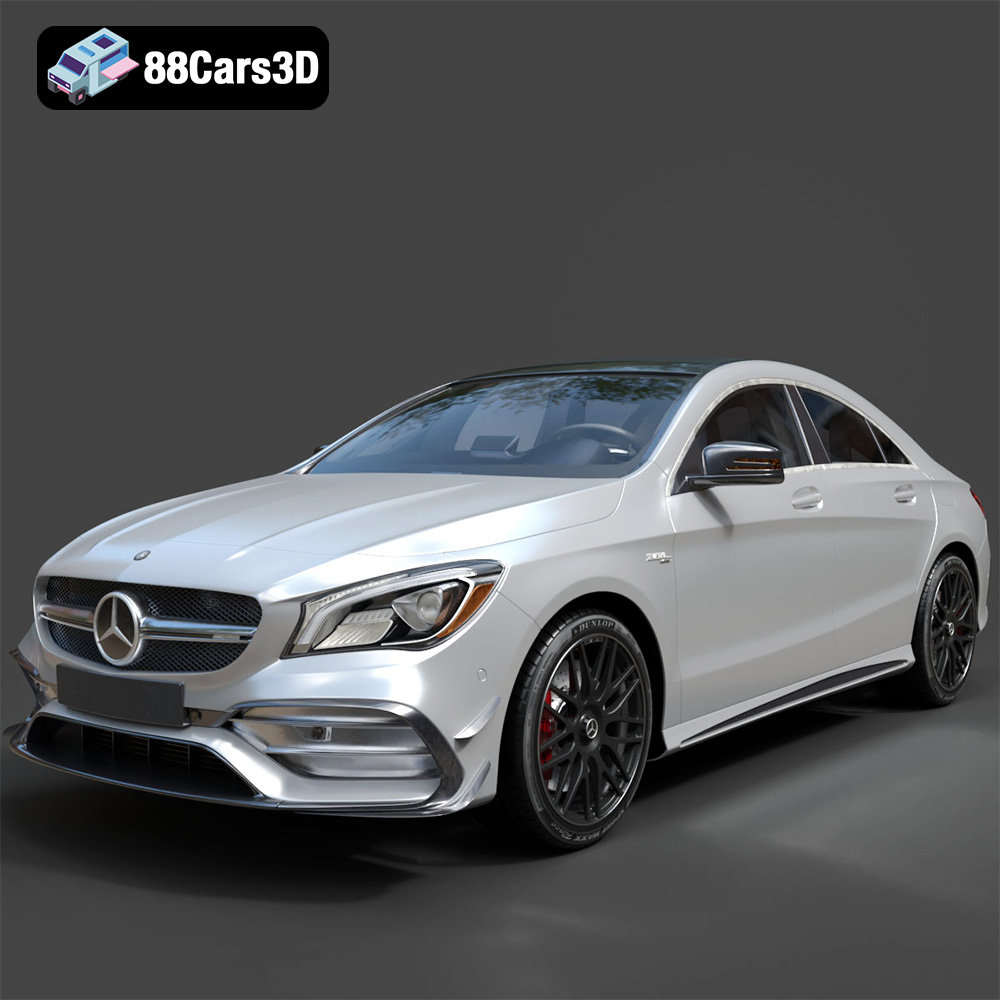
Texture: Yes
Material: Yes
Download the Mercedes-Benz CLA45 AMG 2017 3D Model featuring clean geometry, realistic detailing, and a fully modeled interior. Includes .blend, .fbx, .obj, .glb, .stl, .ply, .unreal, and .max formats for rendering, simulation, and game development.
Price: $29.99
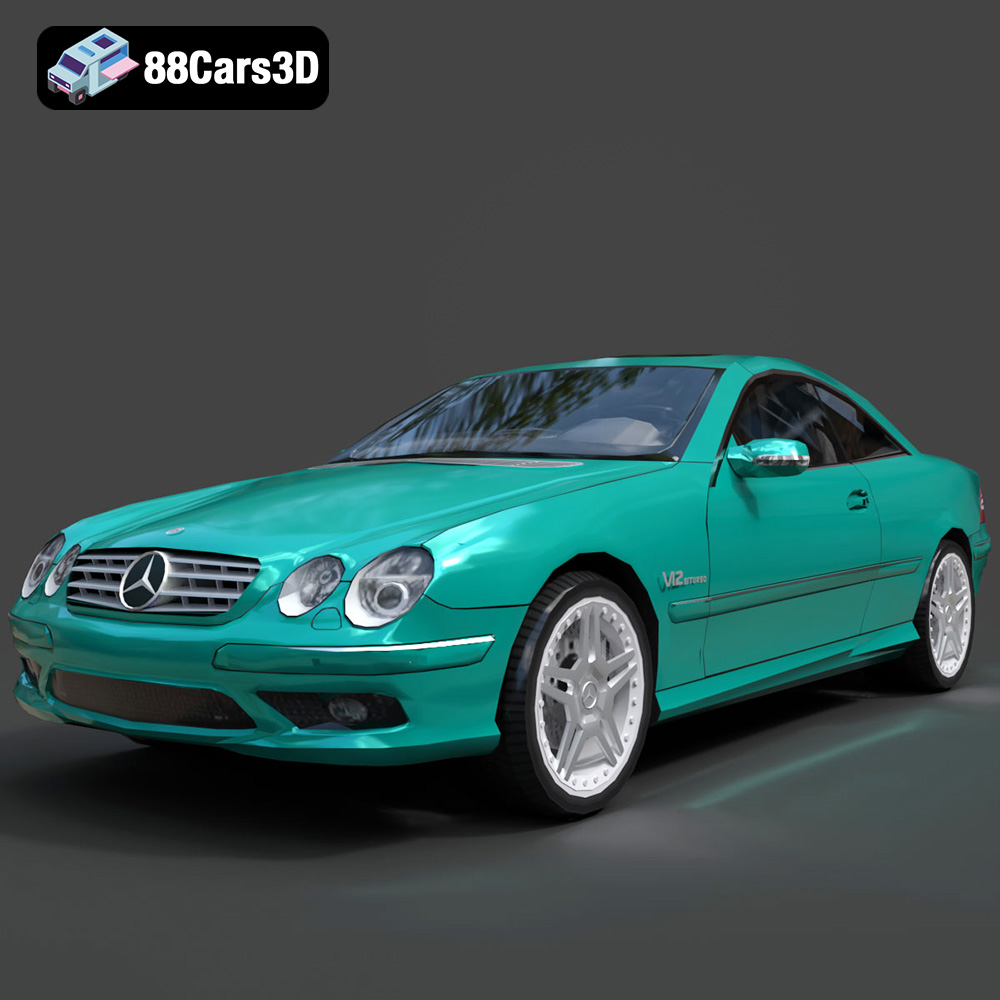
Texture: Yes
Material: Yes
Download the Mercedes-Benz CL65 C215 AMG 3D Model featuring clean geometry, realistic detailing, and a fully modeled interior. Includes .blend, .fbx, .obj, .glb, .stl, .ply, .unreal, and .max formats for rendering, simulation, and game development.
Price: $9.99
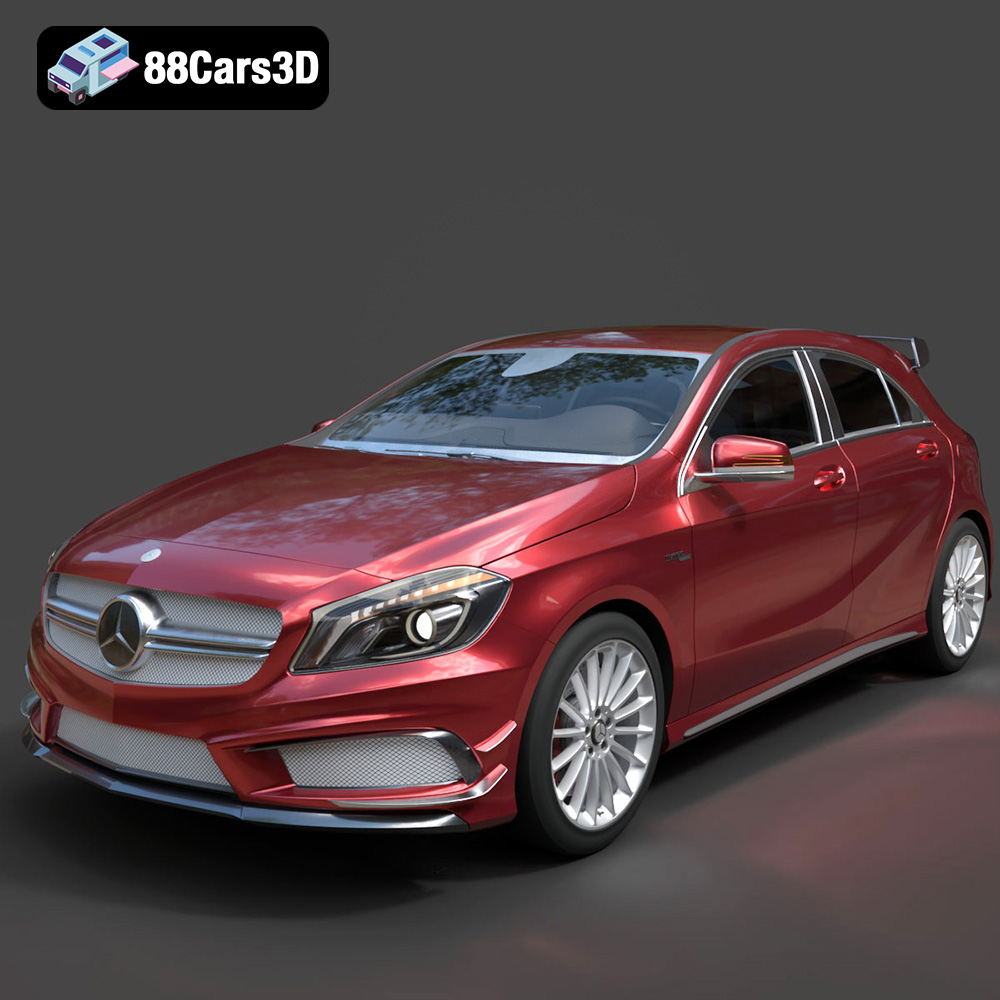
Texture: Yes
Material: Yes
Download the Mercedes-Benz A45 2021 3D Model featuring clean geometry, realistic detailing, and a fully modeled interior. Includes .blend, .fbx, .obj, .glb, .stl, .ply, .unreal, and .max formats for rendering, simulation, and game development.
Price: $9.99
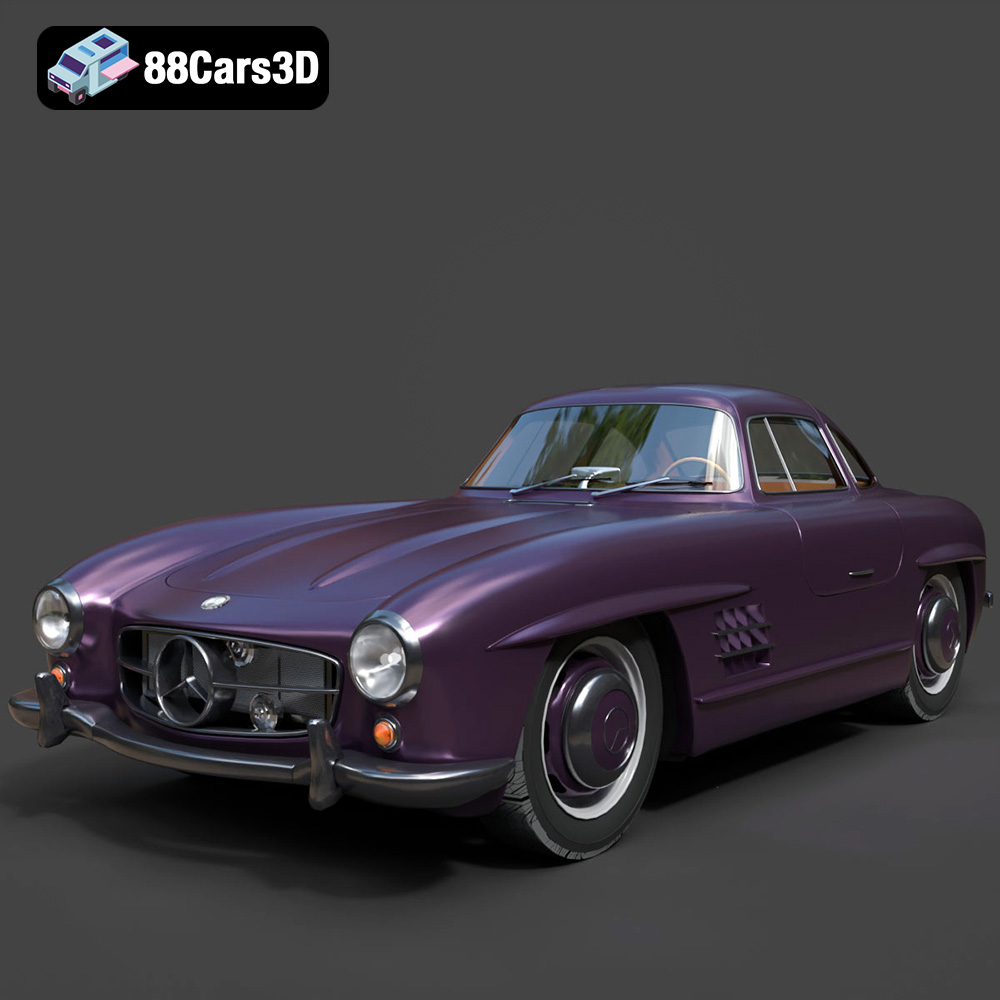
Texture: Yes
Material: Yes
Download the Mercedes-Benz 300SL 1955 3D Model featuring clean geometry, realistic detailing, and a fully modeled interior. Includes .blend, .fbx, .obj, .glb, .stl, .ply, .unreal, and .max formats for rendering, simulation, and game development.
Price: $9.99
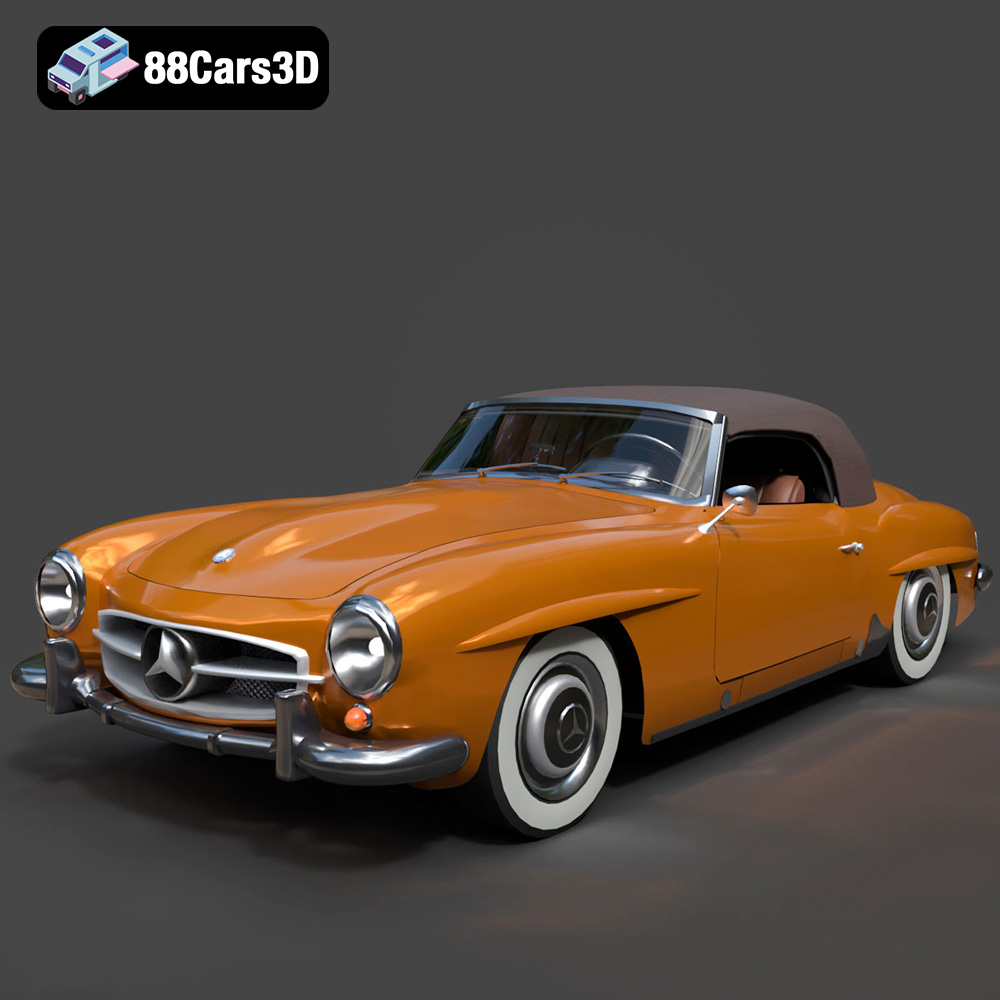
Texture: Yes
Material: Yes
Download the Mercedes-Benz 190SL 1955 3D Model featuring clean geometry, realistic detailing, and a fully modeled interior. Includes .blend, .fbx, .obj, .glb, .stl, .ply, .unreal, and .max formats for rendering, simulation, and game development.
Price: $9.99
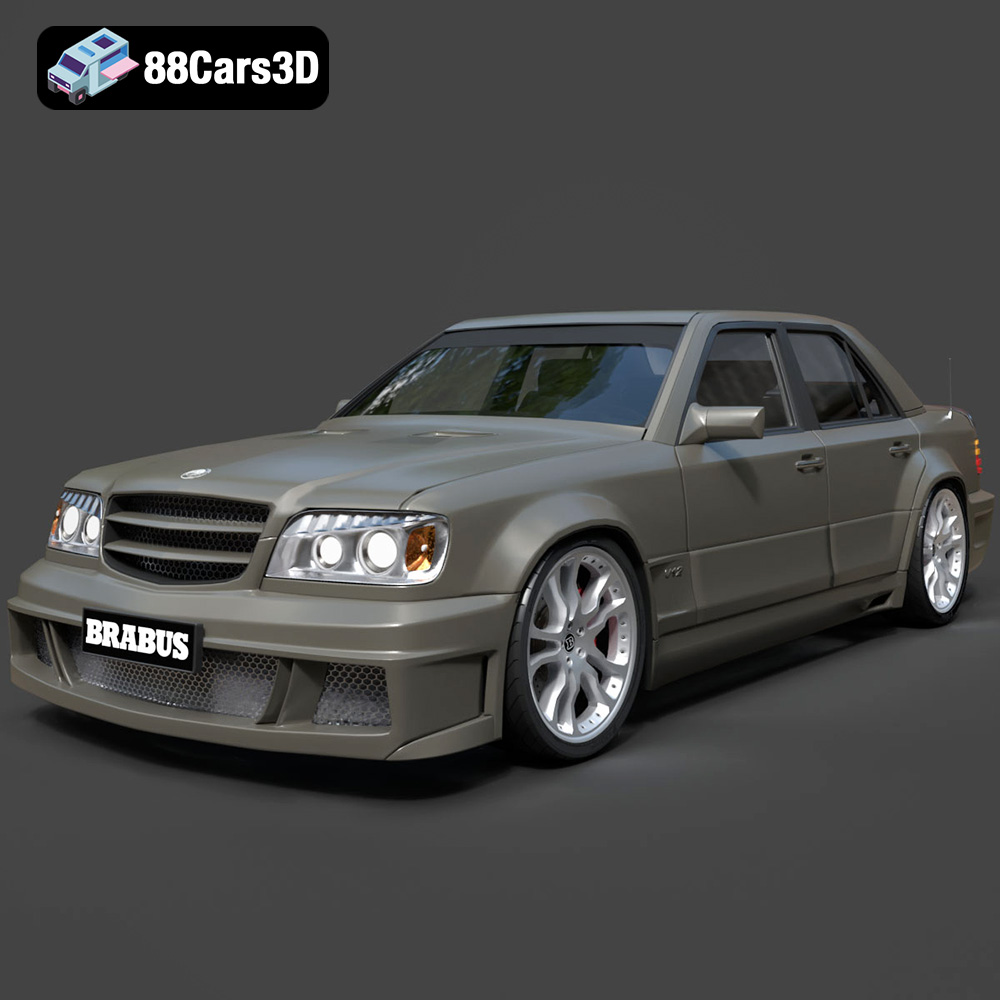
Texture: Yes
Material: Yes
Download the Mercedes-Benz W124 Brabus V12 3D Model featuring clean geometry, realistic detailing, and a fully modeled interior. Includes .blend, .fbx, .obj, .glb, .stl, .ply, .unreal, and .max formats for rendering, simulation, and game development.
Price: $9.99

