Get 20% OFF All Premium 3D & STL Models!

The digital world’s fascination with the automobile is as strong as in the physical one. From hyper-realistic automotive rendering that fuels marketing campaigns to high-octane video games and immersive AR/VR experiences, the 3D car model is a cornerstone of modern digital content. But what truly separates a stunning, production-ready vehicle from a clunky, amateur model? The answer lies in a deep understanding of the entire asset lifecycle—a journey that begins with a single polygon and ends in a breathtaking final image or a flawlessly optimized game asset. This isn’t just about making something that “looks like a car”; it’s about building a versatile, efficient, and technically sound digital product.
In this comprehensive guide, we will pull back the curtain on the professional workflows used to create and utilize high-quality 3D car models. We’ll navigate the critical importance of clean topology and edge flow, demystify the art of UV unwrapping complex automotive surfaces, and dive deep into creating photorealistic PBR materials. We’ll then explore advanced rendering techniques for visualization and pivot to the essential optimization strategies required for real-time game engines and AR/VR applications. Whether you are a 3D artist aiming to perfect your craft, a game developer in need of high-performance vehicles, or an automotive designer visualizing the next generation of transport, this guide will equip you with the expert knowledge to elevate your projects.
Before any stunning material or dramatic lighting, a 3D car model’s quality is defined by its topology—the underlying mesh structure that dictates its form, shading, and behavior under subdivision. For automotive models, with their blend of long, flowing curves and sharp, manufactured edges, perfect topology isn’t just a goal; it’s a requirement. It ensures smooth reflections, prevents shading artifacts, and provides a stable base for UV mapping and texturing. A model with poor topology will fall apart under scrutiny, exhibiting pinching, strange highlights, and an unprofessional finish.
The golden rule of automotive modeling is that edge flow must follow the form. This means the lines connecting vertices (edges) should trace the natural contours and design lines of the car’s body. Think of the sharp crease along the shoulder line of a sports car or the gentle curve of a fender. Your edge loops should run parallel to these features. This practice achieves two critical things:
The required polygon count for a 3D car model varies dramatically based on its intended use. A “hero” car for a cinematic shot might exceed millions of polygons after subdivision, while a background car in a game might be under 20,000. The professional approach is to work non-destructively. Model the base mesh with the lowest possible polygon count that still accurately defines the shape. This is your “control cage.” Then, use a modifier to add subdivisions. To control the sharpness of edges, you don’t add dense geometry; you add support loops or holding edges. These are loops placed very close to an edge you want to keep sharp. The closer the support loop, the tighter the resulting crease will be upon subdivision. This technique gives you maximum control over the final surface with a minimal and efficient base mesh.
Several topological traps can ruin an otherwise good model. Understanding them is key to clean modeling.
If topology is the skeleton, UV mapping is the skin. A UV map is a 2D representation of your 3D mesh, which tells the software how to apply a 2D texture image onto the model’s surface. For a complex object like a car, with its mix of large metal panels, intricate grilles, and detailed interiors, a strategic and clean UV unwrap is essential for high-quality texturing and material work. Rushing this stage will lead to stretched textures, visible seams, and inconsistent detail.
The first step in unwrapping is defining seams, which are edges on the 3D model where the UV map will be “cut” so it can be laid flat. The art is in placing these seams where they are least visible. For a car, ideal locations for seams include:
By placing seams intelligently, you create logical UV “islands” (e.g., one island for the hood, one for the driver-side door) that can be laid out cleanly in the UV space.
Texel density is a measure of how many texture pixels (texels) are used per unit of 3D surface area. Maintaining a consistent texel density across your entire model is critical for realism. If the door has a higher texel density than the fender next to it, any applied texture (like dirt or a decal) will appear sharper on the door and blurrier on the fender, instantly breaking the illusion. Tools in Blender, 3ds Max, and Maya can help you measure and normalize texel density across all your UV islands.
For ultra-high-resolution assets intended for film or close-up renders, a single texture map may not be enough. This is where a UDIM (U-Dimension) workflow comes in. UDIMs allow you to spread your UV islands across multiple texture sets (or tiles), enabling you to use many 4K or 8K textures on a single object. You could assign one UDIM tile for the main body, another for the interior, and a third for the wheels, ensuring every part of the vehicle receives incredible detail.
Different parts of a car require different unwrapping approaches. Large, relatively flat panels like the roof or hood can often be unwrapped using a simple Planar Projection method, followed by minor manual adjustments. Cylindrical parts like the exhaust pipe or steering column are perfect candidates for Cylindrical Projection. However, more complex organic shapes like leather seats require a more manual approach, carefully placing seams to relieve surface tension and using relaxation algorithms to flatten the UV island with minimal distortion. The key is to use the right tool for the job to ensure the final UV map is straight, efficient, and free of stretching.
A perfectly modeled and unwrapped car is just a canvas. The magic of realism happens at the material stage. Modern real-time and offline renderers rely on Physically Based Rendering (PBR) principles to simulate how light interacts with surfaces in the real world. Creating convincing PBR materials for a car involves breaking down each surface—from the multi-layered car paint to the textured dashboard plastic—into its fundamental physical properties.
The PBR workflow primarily uses a set of texture maps to define a material. The most common workflow is the Metallic/Roughness workflow, which consists of:
Car paint is one ofthe most complex materials to replicate digitally because it’s a layered material. A professional car paint shader is rarely a single layer. It’s typically built using a layered shader approach (like CoronaLayeredMtl in Corona or a Clear Coat channel in other shaders):
The interior is just as important for a believable result. Each material has its own signature characteristics. For leather seats, a high-quality normal or bump map is essential to capture the fine grain, and the roughness map should have subtle variations to simulate wear. For dashboard plastics, the roughness value is key; most car plastics are not perfectly glossy but have a slight sheen (a roughness value of 0.2-0.4 is a good starting point). For chrome trim, the setup is simple but must be precise: a white Base Color, a full white Metallic value, and a very low Roughness value (0.0 to 0.05).
With a meticulously crafted model and realistic materials, the final step in creating a stunning visualization is the rendering itself. This stage is all about light, shadow, and camera work. How you light a car dramatically affects how its design lines, surface curvature, and materials are perceived. The goal is to use light to accentuate the car’s form and create a mood, whether it’s a clean studio shot or a dynamic environmental portrait.
There are two primary methods for lighting automotive rendering projects:
Your virtual camera settings are just as important as your lighting. To replicate a professional automotive photoshoot, pay close attention to the focal length. A wide-angle lens (e.g., 18mm) will distort the car’s proportions, making it look bulbous. A very long telephoto lens (e.g., 200mm) can flatten the image too much. The sweet spot for automotive work is typically between 35mm and 85mm, which provides a natural perspective with minimal distortion. Using a shallow depth of field (low f-stop number) can help draw the viewer’s eye to a specific detail, like a headlight or a wheel badge, adding a layer of artistic polish.
While most modern render engines can produce amazing results, they have different strengths. Corona Renderer is renowned for its ease of use and incredibly fast, beautiful results with minimal tweaking, making it a favorite for studio visualizations. V-Ray is a production powerhouse, offering immense control over every aspect of the render, and is a staple in high-end VFX and automotive advertising. Blender’s Cycles is a powerful, physically-based path tracer that is deeply integrated into Blender’s ecosystem, making it a fantastic and free option for artists of all levels. Whichever you choose, focus on mastering its Global Illumination (GI) settings and its noise reduction (denoising) tools to get clean, fast, and physically accurate results.
The requirements for a game asset or an AR/VR experience are fundamentally different from a cinematic render. Performance is paramount. A model with millions of polygons that renders beautifully in V-Ray would cripple a real-time engine like Unity or Unreal. The process of converting a high-detail model into a performance-friendly asset is a craft in its own right, centered on reducing complexity while preserving visual fidelity.
The core of game asset creation is the high-poly to low-poly workflow. You start with a detailed, high-polygon source model (this could be your subdivision-based render model). Then, you create a new, clean, low-polygon mesh over the top of it. This process is called retopology. The goal of the low-poly mesh is to match the silhouette of the high-poly model with the fewest polygons possible (e.g., reducing a 2-million-poly model to 80,000 polys).
All the fine details—panel gaps, vents, bolts, and emblems—are then “baked” from the high-poly model into a normal map. When this normal map is applied to the low-poly model in the game engine, it fakes the lighting information of that lost detail, creating the illusion of a highly detailed surface on a performance-friendly mesh.
Even an optimized low-poly model can be too heavy to render hundreds of times in a busy scene. This is where Levels of Detail (LODs) come in. An LOD system uses multiple versions of the same model at decreasing levels of complexity. The game engine automatically switches between them based on the car’s distance from the camera.
This ensures that the GPU’s resources are spent on the details that the player can actually see, drastically improving performance.
In a game engine, every time the CPU has to tell the GPU to draw an object with a different material, it’s called a draw call. Too many draw calls can create a CPU bottleneck and lower the frame rate. A car model might have separate materials for the body, glass, tires, rims, brake calipers, and lights—that’s at least 6 draw calls. To optimize this, artists use a technique called texture atlasing. This involves combining the textures for multiple parts onto a single, larger texture sheet (the atlas). By doing this, the rims, calipers, and lights could all share one material and one texture set, reducing 3 draw calls to 1. This is a critical optimization strategy for any complex game asset.
A 3D model is useless if you can’t get it into your software of choice. Understanding the common file formats and the pipeline considerations that go with them is crucial for a smooth workflow, especially when collaborating with a team or sourcing assets from online marketplaces. High-quality vendors, such as marketplaces like 88cars3d.com, typically provide models in multiple formats to ensure maximum compatibility for their customers.
Not all formats are created equal. Each is designed with a specific purpose in mind:
Sourcing your 3D car models from a professional provider like 88cars3d.com can save significant time, as they often come pre-converted and tested in these essential formats.
Two of the most common—and frustrating—problems when importing a 3D model are incorrect scale and orientation. One program might use centimeters as its default unit, while another uses meters. If this isn’t handled correctly on export, your car could import 100 times too large or too small. Similarly, 3D software can have different “up” axes (Y-up for 3ds Max, Z-up for Blender). A good pipeline involves setting your system units correctly before you begin modeling and ensuring your export settings are configured to match the target application. Always perform a test import to verify that the scale, orientation, and materials have transferred as expected before committing to the asset.
The journey of a 3D car model from a collection of vertices to a photorealistic render or a high-performance game asset is a testament to both artistic vision and technical precision. As we’ve explored, excellence at every stage is non-negotiable. It begins with the disciplined foundation of clean, quad-based topology that respects the vehicle’s form. It builds upon that with strategic UV mapping that allows for flawless texturing. This is brought to life with physically-based materials that accurately simulate the nuances of car paint, leather, and chrome. Finally, the model is either presented through masterful lighting and rendering or meticulously optimized through retopology, LODs, and texture atlasing to perform seamlessly in the most demanding real-time applications.
Whether you are building these complex assets from scratch or integrating them into your projects, a deep appreciation for these principles is what separates mediocre results from breathtaking ones. The next time you see a stunning automotive visualization or race a digital car in a game, you’ll have a clearer understanding of the immense skill and effort involved. By applying these professional workflows, you can ensure your own projects meet the highest standards of quality, realism, and performance.

Texture: Yes
Material: Yes
Download the Mercedes-Benz SLK 350 2005 3D Model featuring clean geometry, realistic detailing, and a fully modeled interior. Includes .blend, .fbx, .obj, .glb, .stl, .ply, .unreal, and .max formats for rendering, simulation, and game development.
Price: $9.99

Texture: Yes
Material: Yes
Download the Mercedes-Benz SL 65 AMG 3D Model featuring clean geometry, realistic detailing, and a fully modeled interior. Includes .blend, .fbx, .obj, .glb, .stl, .ply, .unreal, and .max formats for rendering, simulation, and game development.
Price: $9.99

Texture: Yes
Material: Yes
Download the Mercedes-Benz S500 3D Model featuring clean geometry, realistic detailing, and a fully modeled interior. Includes .blend, .fbx, .obj, .glb, .stl, .ply, .unreal, and .max formats for rendering, simulation, and game development.
Price: $9.99
Texture: Yes
Material: Yes
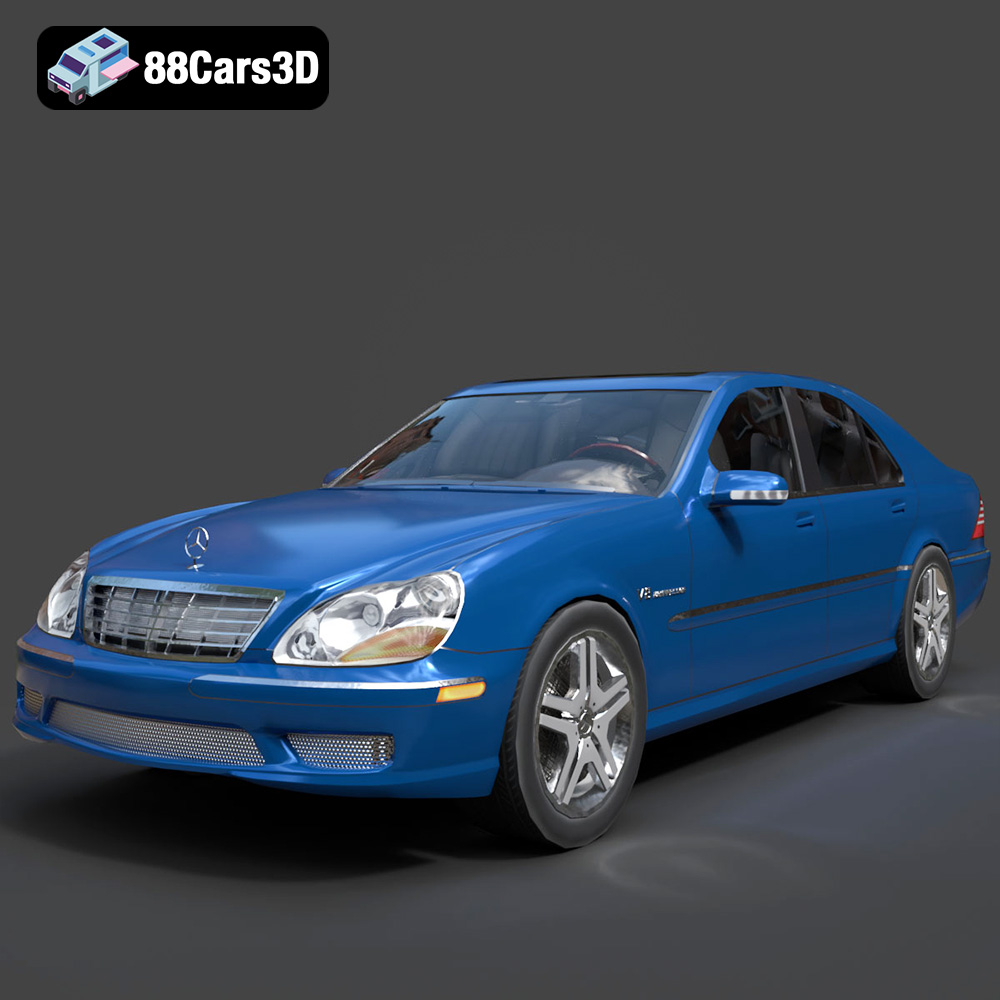
Download the Mercedes-Benz S55 W220 AMG 1999 3D Model featuring clean geometry, realistic detailing, and a fully modeled interior. Includes .blend, .fbx, .obj, .glb, .stl, .ply, .unreal, and .max formats for rendering, simulation, and game development.
Price: $9.99

Texture: Yes
Material: Yes
Download the Mercedes-Benz CLA45 AMG 2017 3D Model featuring clean geometry, realistic detailing, and a fully modeled interior. Includes .blend, .fbx, .obj, .glb, .stl, .ply, .unreal, and .max formats for rendering, simulation, and game development.
Price: $29.99
Texture: Yes
Material: Yes
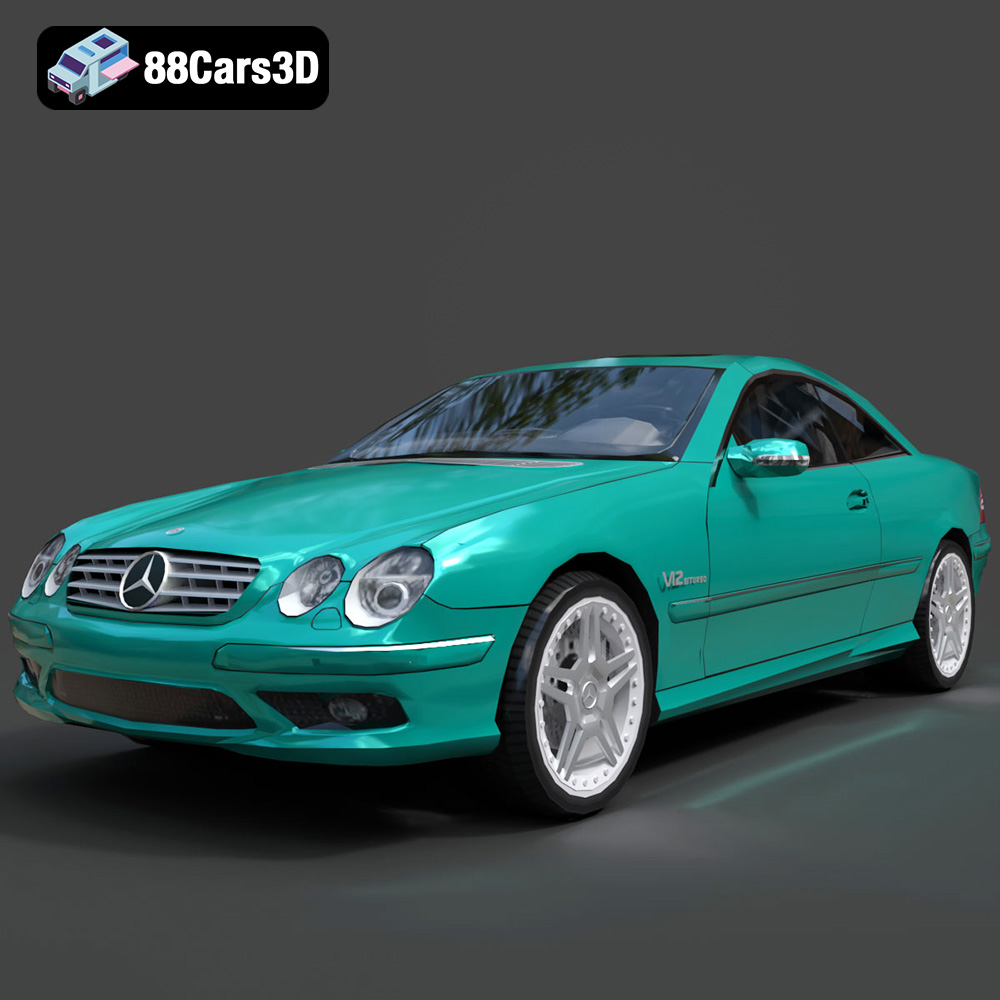
Download the Mercedes-Benz CL65 C215 AMG 3D Model featuring clean geometry, realistic detailing, and a fully modeled interior. Includes .blend, .fbx, .obj, .glb, .stl, .ply, .unreal, and .max formats for rendering, simulation, and game development.
Price: $9.99
Texture: Yes
Material: Yes
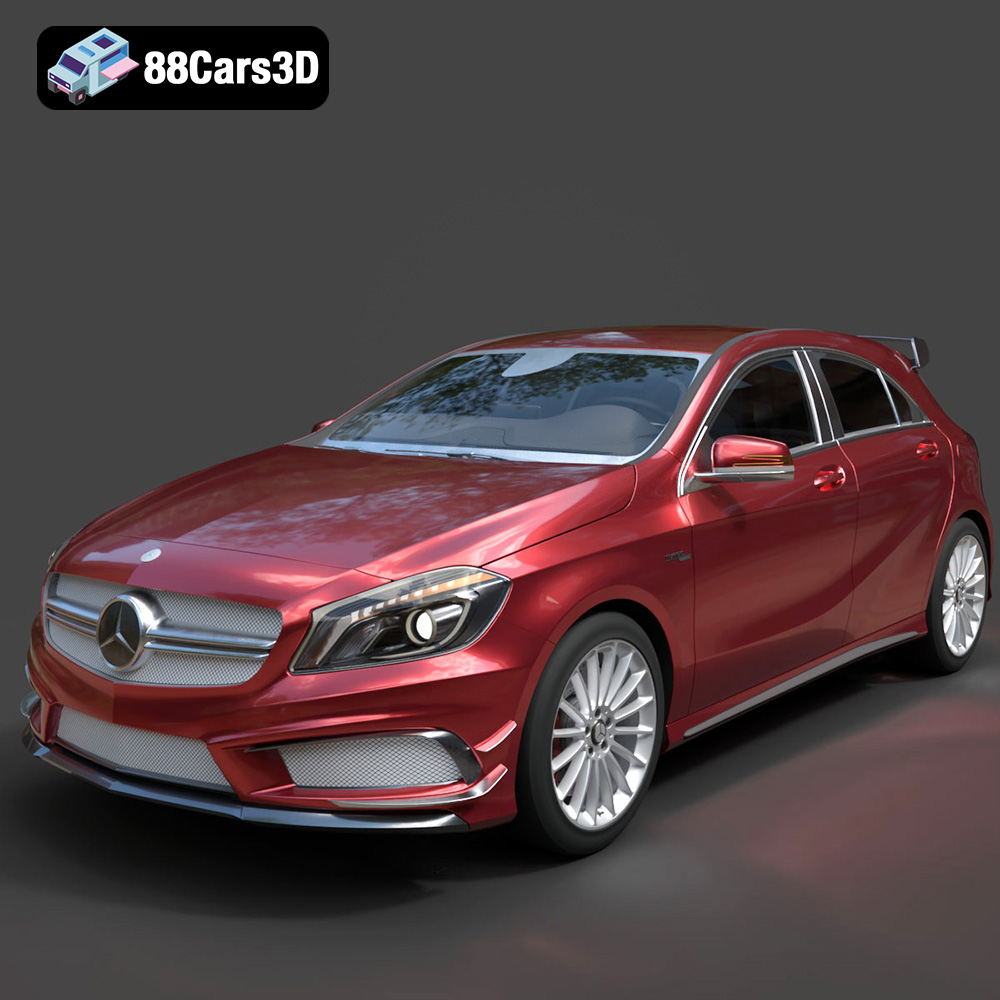
Download the Mercedes-Benz A45 2021 3D Model featuring clean geometry, realistic detailing, and a fully modeled interior. Includes .blend, .fbx, .obj, .glb, .stl, .ply, .unreal, and .max formats for rendering, simulation, and game development.
Price: $9.99
Texture: Yes
Material: Yes
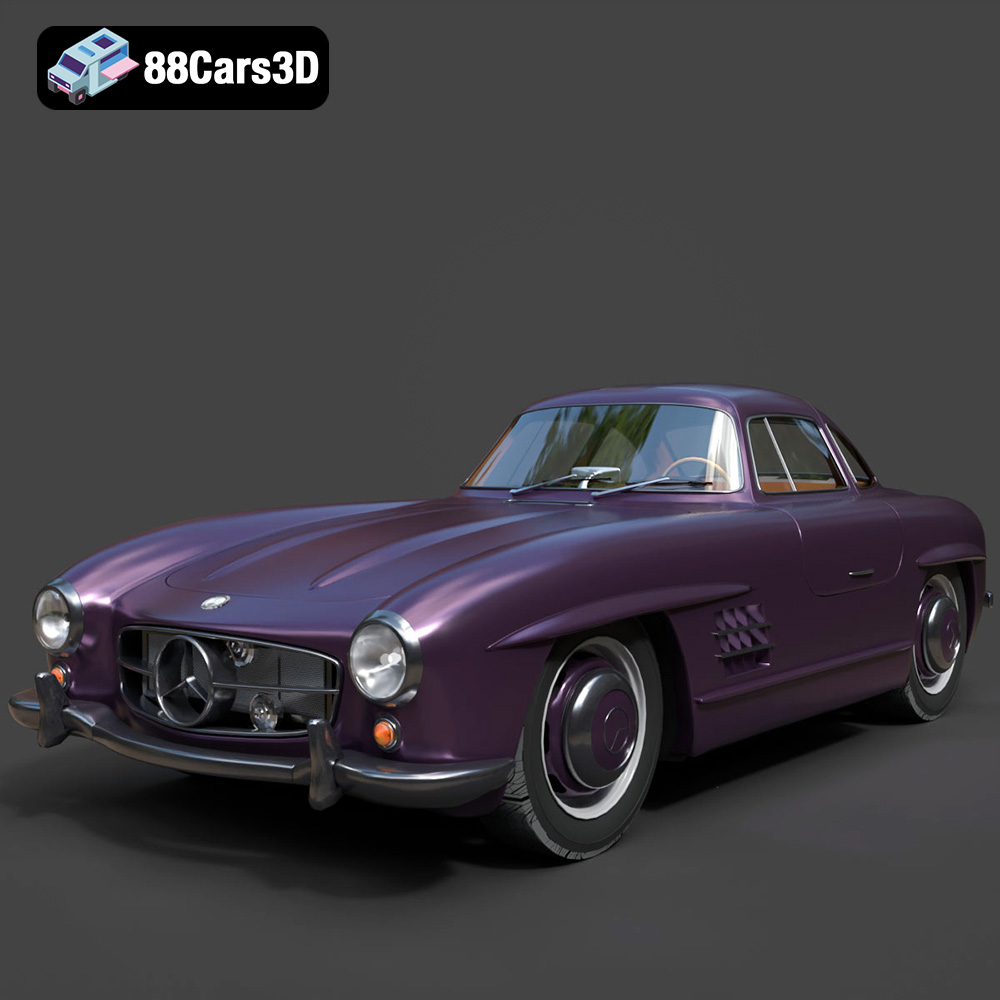
Download the Mercedes-Benz 300SL 1955 3D Model featuring clean geometry, realistic detailing, and a fully modeled interior. Includes .blend, .fbx, .obj, .glb, .stl, .ply, .unreal, and .max formats for rendering, simulation, and game development.
Price: $9.99
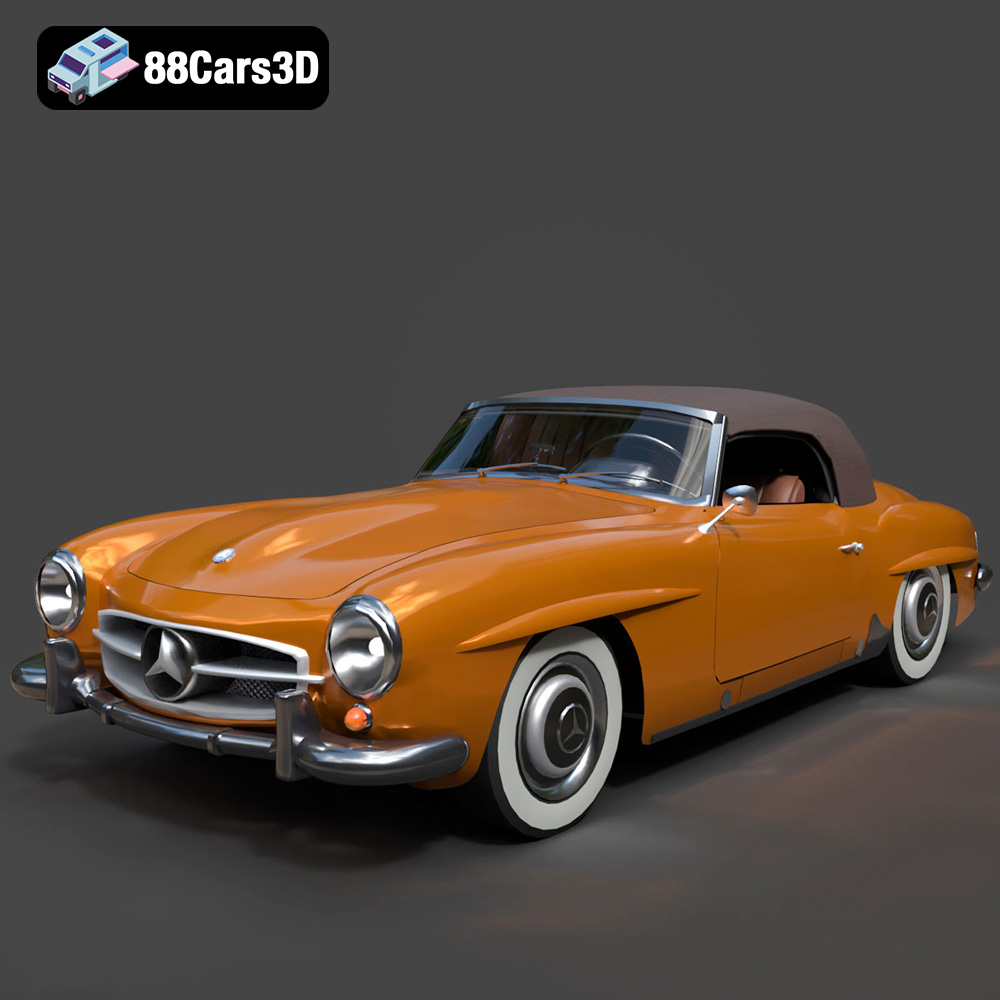
Texture: Yes
Material: Yes
Download the Mercedes-Benz 190SL 1955 3D Model featuring clean geometry, realistic detailing, and a fully modeled interior. Includes .blend, .fbx, .obj, .glb, .stl, .ply, .unreal, and .max formats for rendering, simulation, and game development.
Price: $9.99
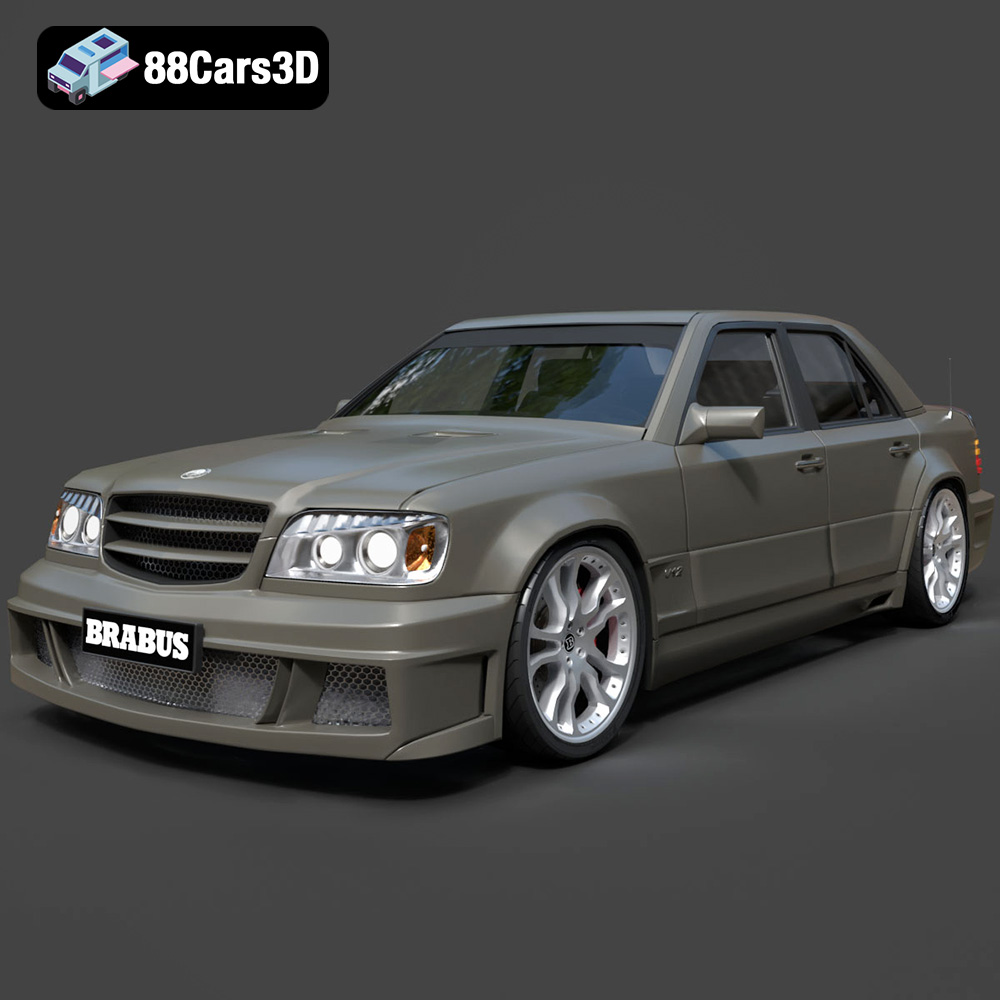
Texture: Yes
Material: Yes
Download the Mercedes-Benz W124 Brabus V12 3D Model featuring clean geometry, realistic detailing, and a fully modeled interior. Includes .blend, .fbx, .obj, .glb, .stl, .ply, .unreal, and .max formats for rendering, simulation, and game development.
Price: $9.99

