Get 20% OFF All Premium 3D & STL Models!

“`html
A high-quality 3D car model is more than just a collection of polygons and textures; it’s a versatile digital asset, a foundational canvas for a vast spectrum of creative and technical projects. From a hyperrealistic marketing visual that could be mistaken for a photograph, to a customizable vehicle in a blockbuster video game, to an interactive augmented reality showroom, a single model holds immense potential. However, the path from a raw 3D file to a perfectly optimized asset is rarely a straight line. A model meticulously crafted for a cinematic render in Corona will bring a game engine to its knees, and a game-ready asset will lack the fidelity needed for a close-up 8K shot.
This comprehensive guide is your technical roadmap to mastering the art of 3D car model preparation. We will deconstruct the essential workflows for tailoring your automotive assets for any pipeline. You’ll learn the deep technical considerations required for photorealistic rendering, the non-negotiable optimization techniques for real-time game engines, the unique constraints of AR/VR development, and the precise steps needed to transform a digital file into a physical 3D print. Whether you’re a seasoned 3D artist, a game developer pushing performance limits, or an automotive designer exploring new visualization frontiers, this guide will equip you with the knowledge to unlock the full potential of your 3D car models.
Before you can optimize a model for a specific purpose, you must first understand its fundamental construction. The quality of your source file dictates the success of every subsequent step. Rushing this initial analysis is a common mistake that leads to hours of frustrating rework down the line. A professional-grade model, whether created in-house or sourced from a specialized marketplace like 88cars3d.com, will exhibit specific characteristics that make it a robust starting point for any application.
Topology refers to the structure and flow of polygons (quads and triangles) that form the model’s surface. For automotive models, clean, quad-based topology is the gold standard. Quads (four-sided polygons) subdivide cleanly and predictably, which is essential for creating the smooth, high-resolution surfaces required for rendering. Look for an even distribution of polygons across the surface, avoiding tightly packed clusters or large, stretched-out faces. The edge flow—the direction of the polygon edges—should follow the natural contours and lines of the car’s body panels. This ensures that when the model is subdivided, highlights and reflections travel smoothly and realistically across the surface without pinching or distortion. A model with poor edge flow will reveal ugly artifacts, especially on curved surfaces like fenders and hoods.
UV mapping is the process of unwrapping the 3D model’s surface into a 2D space so textures can be applied. For high-end rendering, you’ll often encounter models using UDIMs (U-Dimension), a workflow that allows for multiple texture maps for a single object, enabling incredibly high resolutions. For game engines and real-time applications, the entire car is typically mapped into a single 0-to-1 UV space to be covered by one set of textures. The most critical factor is that the UV islands (the unwrapped pieces) are non-overlapping. Overlapping UVs will cause textures to bake incorrectly and display artifacts. Additionally, check for well-defined Material IDs. This means the model is pre-organized into logical material groups (e.g., ‘car_paint’, ‘glass’, ‘chrome_trim’, ‘rubber_tires’), which drastically simplifies the process of assigning different shaders in your rendering or game engine.
A professionally prepared 3D car model is not a single, monolithic mesh. It should have a logical and clean scene hierarchy. Look for a parent object (e.g., an empty or dummy named `Vehicle_Root`) with child objects neatly organized beneath it. For example: `Wheel_FL`, `Wheel_FR`, `Doors`, `Interior`, `Body`. This structure is vital for animation, rigging, and easily selecting and hiding parts. Proper naming conventions are equally important. Vague names like `Box001` or `Cylinder023` are a red flag. Clear, descriptive names (`Brake_Caliper_L`, `Side_Mirror_Housing_R`) save immense time and make the asset easily understandable for other artists or developers on your team.
When the goal is photorealism, performance constraints take a backseat to detail and accuracy. This pipeline is used for marketing materials, automotive configurators, and cinematic shots where every nuance of the car’s design must be flawlessly represented. Here, we push the model’s fidelity to its absolute limit, leveraging high polygon counts and advanced material shaders to achieve a result indistinguishable from reality.
The clean, quad-based topology of your source model serves as the perfect base mesh for subdivision. Using modifiers like TurboSmooth in 3ds Max or the Subdivision Surface modifier in Blender, you can increase the polygon density exponentially, creating perfectly smooth surfaces. A typical base model might be 200,000-500,000 polygons, but after 2-3 levels of subdivision for a hero shot, this can easily reach 5 to 15 million polygons. The key to maintaining the car’s sharp, designed features during subdivision is the use of support loops or edge creasing. These are extra edge loops placed close to panel gaps, trim edges, and character lines that “hold” the geometry in place, preventing it from becoming overly soft and rounded. This technique is what gives high-end car renders their crisp, manufactured look.
Photorealism is born from the interplay of light and materials. A complex automotive paint shader is often composed of multiple layers. In render engines like Corona or V-Ray, this involves:
Other materials require similar attention. Realistic glass needs the correct IOR (~1.52) and a slight tint. Chrome is achieved with a fully metallic material and very low roughness. Tire rubber should have high roughness and use 4K or 8K textures for sidewall details like branding and wear indicators.
A perfect model and material will look flat in poor lighting. The industry standard for realistic automotive lighting is Image-Based Lighting (IBL) using a High Dynamic Range Image (HDRI). An HDRI is a 360-degree panoramic image that contains a massive range of light intensity data. When used in a V-Ray Dome Light or Corona Sky, it projects realistic lighting and, crucially, detailed reflections onto the car’s surface. Choosing the right HDRI is an artistic decision: a studio HDRI with softboxes provides clean, commercial highlights, while an outdoor HDRI of a mountain road will ground the vehicle in a natural environment. Often, the HDRI is supplemented with a traditional 3-point light setup (key, fill, and rim lights) to further sculpt the car’s form and create dramatic highlights.
When preparing a 3D car for a game engine, the entire paradigm shifts from “absolute quality” to “maximum quality within a strict performance budget.” Every polygon, texture, and material must be ruthlessly optimized to ensure the game runs at a smooth framerate (typically 60 FPS or higher). The goal is to create the illusion of detail, not to replicate it with raw geometry.
The multi-million polygon mesh used for rendering is unusable in a game. The first step is to create a low-poly version, often targeting a budget of 80,000 to 200,000 triangles for the main hero vehicle (LOD0). This can be done through manual retopology or by using automated tools like ProOptimizer in 3ds Max or the Decimate modifier in Blender. The skill lies in removing polygons from flat or less visible areas while preserving the car’s overall silhouette.
Beyond the base model, you must create Levels of Detail (LODs). These are even lower-resolution versions of the mesh that the engine swaps in as the car gets further from the camera. A typical LOD chain might be:
This technique is fundamental to managing scene complexity in any open-world or racing game.
How do you retain detail on a low-poly model? Through texture baking. Details from the high-poly subdivision model—like panel gaps, vents, bolts, and emblems—are “baked” into a Normal Map. This special texture map tricks the game engine’s lighting system into thinking the flat surface of the low-poly model has all that intricate detail. Ambient Occlusion (AO) maps are also baked to create soft, contact shadows, adding depth. To further optimize, we use Texture Atlasing. Instead of having separate small textures for the dashboard, seats, and door panels, these individual UV islands are packed together into a single, larger UV space and share one texture set (e.g., a single 4K texture for the entire interior). This dramatically reduces draw calls—the number of times the CPU has to tell the GPU to draw something—which is a major performance bottleneck.
The game’s physics engine doesn’t interact with the detailed visual mesh. Doing so would be computationally prohibitive. Instead, we create a separate, ultra-low-poly collision mesh. This is often a series of simple, convex shapes (known as convex hulls) that approximate the car’s shape. For example, the main body might be a single large box, and the wheels are simple cylinders. These primitive shapes allow the physics engine to calculate collisions and reactions very quickly and efficiently, providing believable vehicle dynamics without sacrificing performance.
Augmented Reality (AR) and Virtual Reality (VR) represent the frontier of real-time 3D, but they operate under the most severe performance constraints, especially on standalone mobile headsets like the Meta Quest or on smartphones. Preparation for AR/VR is an exercise in extreme optimization, where every decision must prioritize a rock-solid, high framerate to prevent motion sickness and maintain immersion.
If a desktop game has a performance budget, a mobile VR application has a performance shoestring. The target framerate is often higher (72, 90, or even 120 Hz), and the mobile GPUs are significantly less powerful. A detailed 3D car model intended for a VR showroom on a standalone headset should ideally be under 100,000 triangles, and for mobile AR, the target can be as low as 50,000 triangles. Draw calls are an even bigger enemy here. The goal should be to get the entire car down to as few materials as possible. A common professional target is to have one material for the car’s exterior, one for the interior, one for the glass, and one for the wheels—just four draw calls for the entire vehicle.
Unlike traditional game development that uses proprietary engine formats, the AR world has rallied around specific, web-friendly 3D formats. The two dominant standards are:
Modern 3D software like Blender has excellent built-in exporters for GLB, while tools and converters exist to create USDZ files. Ensuring your final output is in one of these formats is crucial for deployment.
High-resolution 4K textures are often overkill for the screen resolutions of mobile devices and can strain memory bandwidth. For AR/VR, it’s best practice to downscale textures to 2K (2048×2048) or even 1K for smaller components. Using texture compression formats like ASTC is critical, as it significantly reduces the memory footprint on the GPU. Furthermore, complex shaders must be avoided. Features like transparency, refraction (for glass), and clear coats are extremely computationally expensive on mobile GPUs. A common trick is to simulate glass with a standard opaque PBR material that has low roughness, high metallicness, and a dark base color. This gives the appearance of reflective glass without the performance cost of true transparency.
Transforming a digital 3D car model into a physical object via 3D printing requires a completely different set of preparations. Here, concerns about polygons and textures are replaced by the physical realities of gravity, material strength, and printer limitations. The goal is to create a “watertight” and printable mesh that will result in a successful physical print.
A 3D model for rendering can have intersecting parts and invisible inner surfaces, but a 3D printer needs a single, continuous, enclosed volume. The mesh must be “watertight” or “manifold.” This means it has no holes, no overlapping faces, no internal geometry, and every edge is connected to exactly two faces. Non-manifold geometry confuses the printer’s slicing software. You must meticulously check for and repair these issues using tools like Meshmixer or Blender’s 3D-Print Toolbox add-on. Common steps include merging all separate parts into a single object, welding vertices to close gaps, and deleting any faces hidden inside the model.
Printing a car model as a solid block of plastic or resin is incredibly wasteful, time-consuming, and can lead to print failures like warping. The solution is to hollow the model, creating an empty interior with a defined outer shell. This process, often called shelling, can be done in most 3D printing prep software (e.g., ChiTuBox, Lychee Slicer). When hollowing, you must establish a minimum wall thickness to ensure the model is structurally sound—typically 1.5mm to 3mm is a safe range, depending on the scale. For resin (SLA) printing, it’s also vital to add small “escape holes” in inconspicuous locations to allow uncured resin to drain out from the hollow interior.
Most desktop 3D printers have a limited build volume. A detailed car model, especially at a larger scale, will need to be strategically split into multiple parts for printing. A good approach is to separate the components logically: print the main body, the four wheels, and delicate parts like side mirrors and spoilers separately. When splitting the model in your 3D software, it’s a professional best practice to add keys or registration pins to the cuts. These are simple geometric shapes (like cubes or cylinders and corresponding holes) that ensure the parts align perfectly during post-print assembly, making gluing and finishing a much more precise process.
We’ve journeyed through four distinct, highly specialized workflows, each starting from the same point—a quality 3D car model—but ending with a vastly different final asset. The key takeaway is that a 3D model is not a one-size-fits-all product. Its true power and value are unlocked through careful, purpose-driven preparation. The meticulous subdivision and layered shaders of a photorealistic render are a world away from the aggressive polygon reduction and baked textures of a game-ready asset. The lightweight, single-file efficiency required for AR/VR demands different optimizations than the watertight, manifold geometry needed for a physical 3D print.
By understanding these fundamental differences, you can approach any project with confidence, knowing precisely how to transform your source file into a high-performing, perfectly suited asset. The next time you begin a project, remember to analyze your source, define your target platform, and apply the specific techniques we’ve covered. Starting your journey with a meticulously crafted model from a professional source like 88cars3d.com provides you with the clean topology and logical structure necessary to make every one of these preparation pipelines smoother, faster, and more effective.
“`

Texture: Yes
Material: Yes
Download the Mercedes-Benz SLK 350 2005 3D Model featuring clean geometry, realistic detailing, and a fully modeled interior. Includes .blend, .fbx, .obj, .glb, .stl, .ply, .unreal, and .max formats for rendering, simulation, and game development.
Price: $9.99
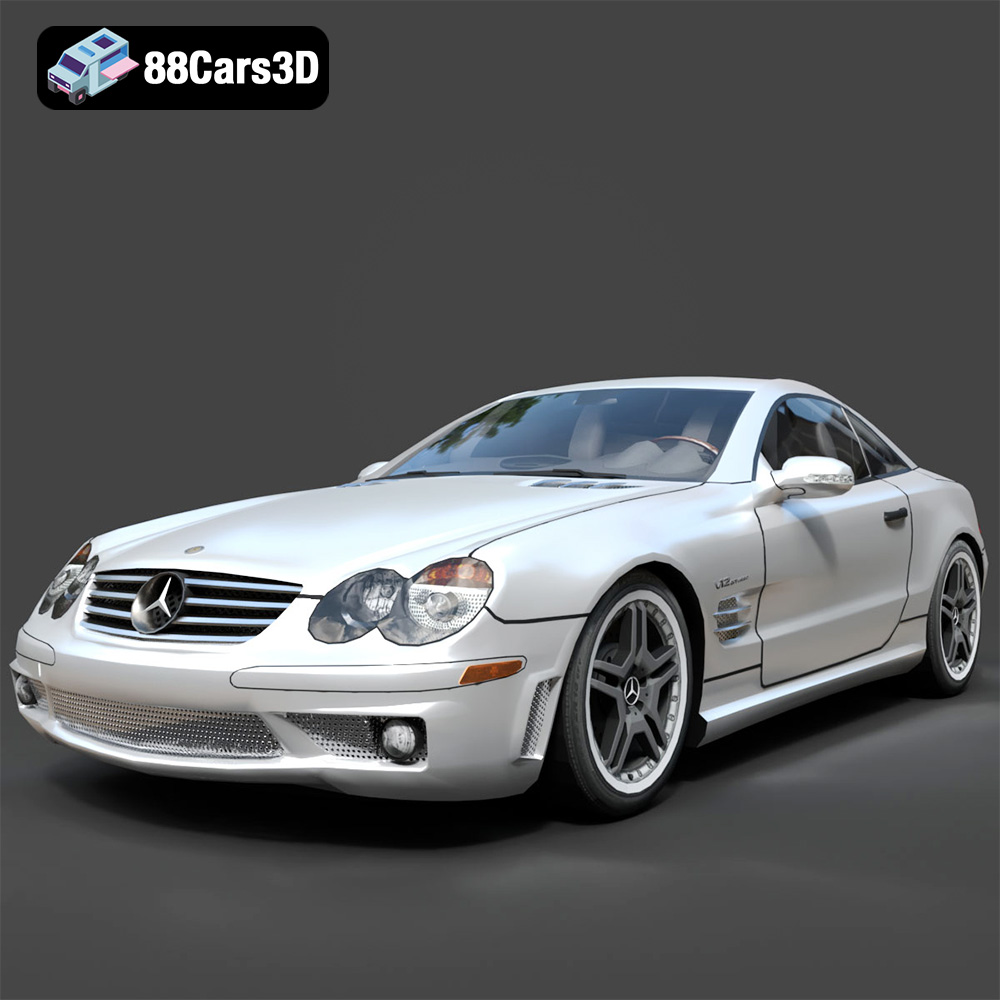
Texture: Yes
Material: Yes
Download the Mercedes-Benz SL 65 AMG 3D Model featuring clean geometry, realistic detailing, and a fully modeled interior. Includes .blend, .fbx, .obj, .glb, .stl, .ply, .unreal, and .max formats for rendering, simulation, and game development.
Price: $9.99
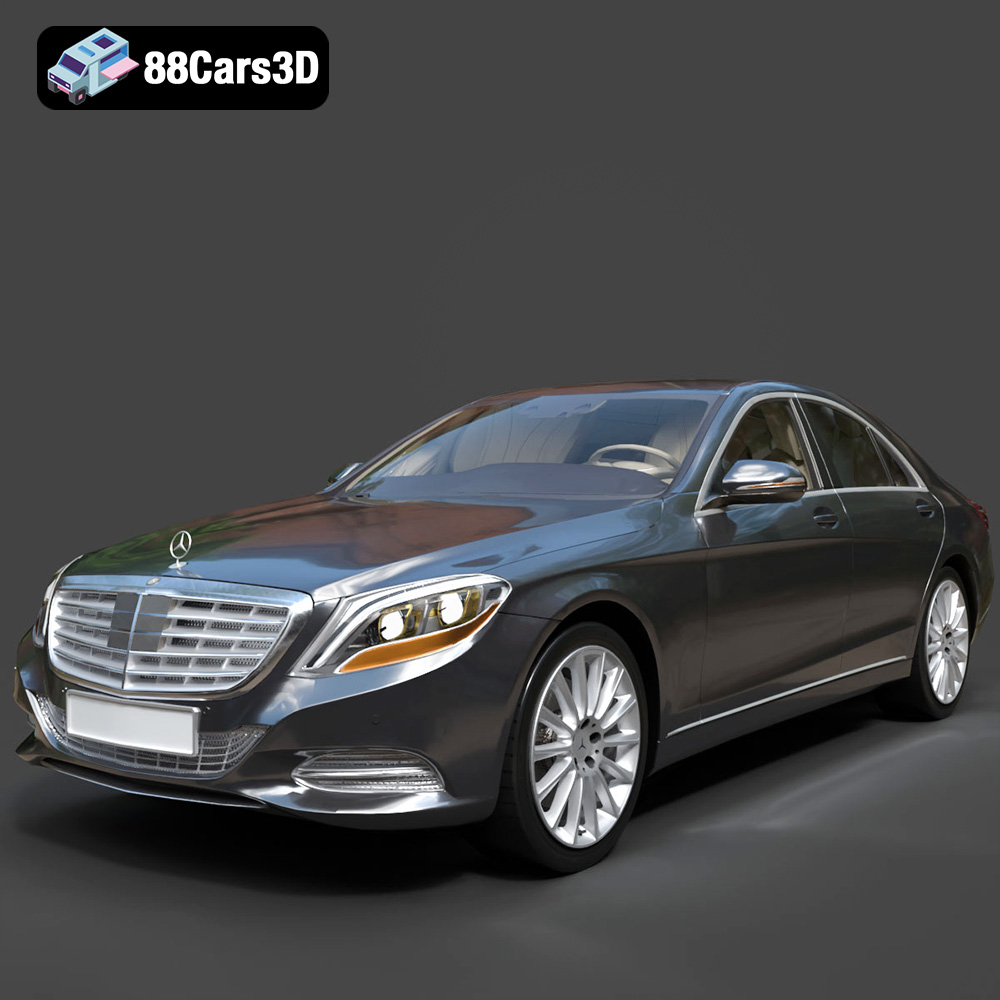
Texture: Yes
Material: Yes
Download the Mercedes-Benz S500 3D Model featuring clean geometry, realistic detailing, and a fully modeled interior. Includes .blend, .fbx, .obj, .glb, .stl, .ply, .unreal, and .max formats for rendering, simulation, and game development.
Price: $9.99
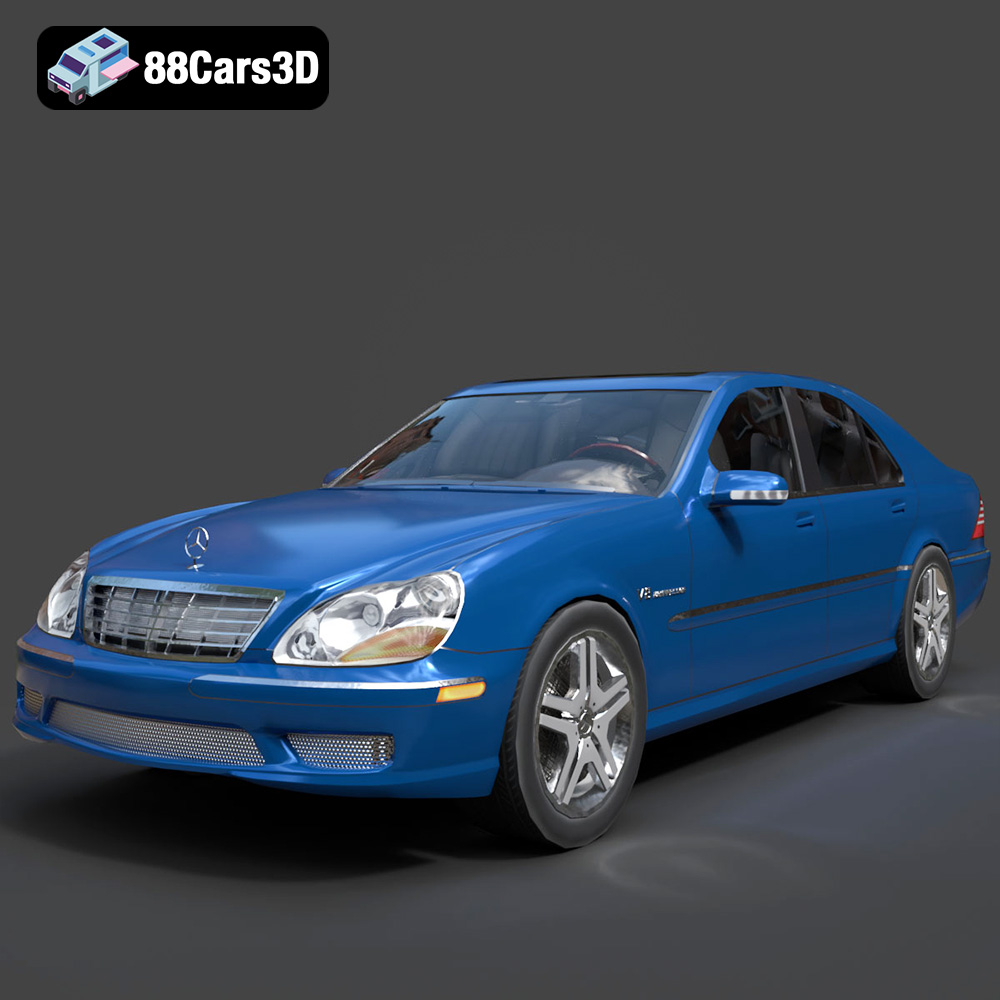
Texture: Yes
Material: Yes
Download the Mercedes-Benz S55 W220 AMG 1999 3D Model featuring clean geometry, realistic detailing, and a fully modeled interior. Includes .blend, .fbx, .obj, .glb, .stl, .ply, .unreal, and .max formats for rendering, simulation, and game development.
Price: $9.99
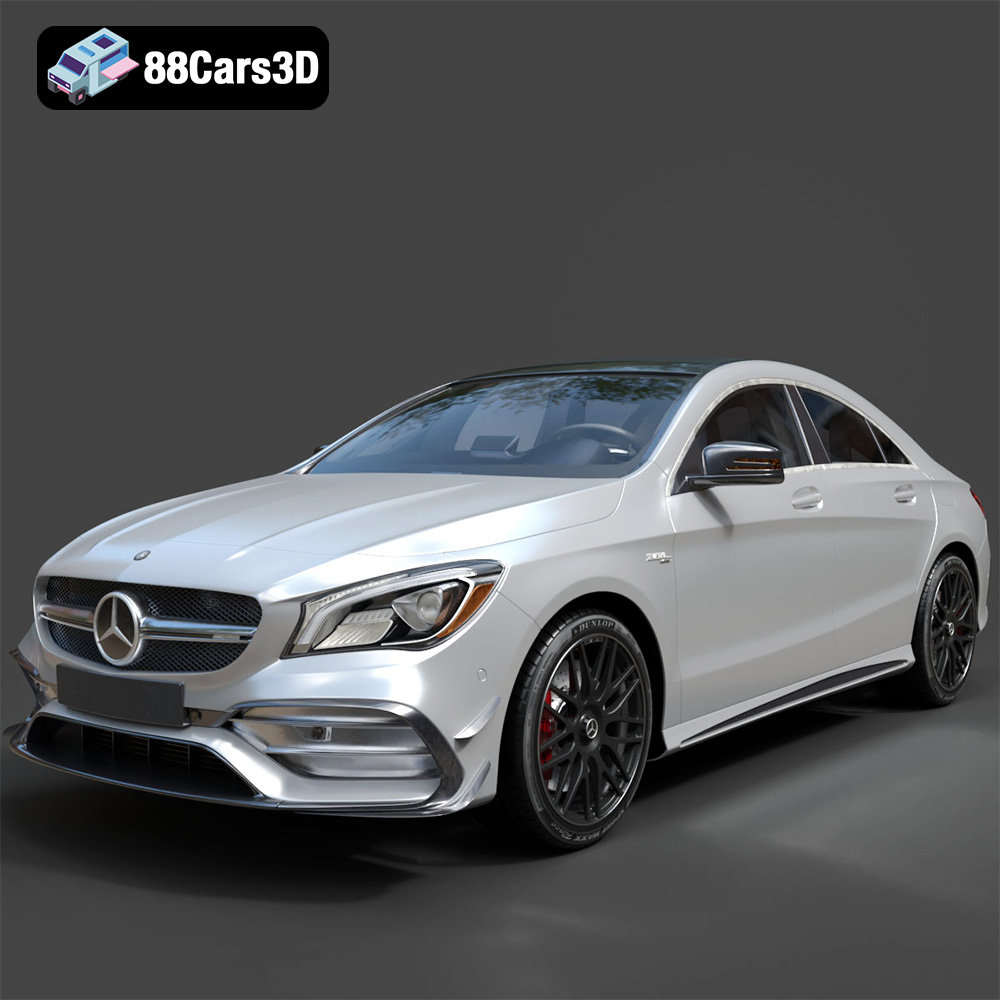
Texture: Yes
Material: Yes
Download the Mercedes-Benz CLA45 AMG 2017 3D Model featuring clean geometry, realistic detailing, and a fully modeled interior. Includes .blend, .fbx, .obj, .glb, .stl, .ply, .unreal, and .max formats for rendering, simulation, and game development.
Price: $29.99
Texture: Yes
Material: Yes
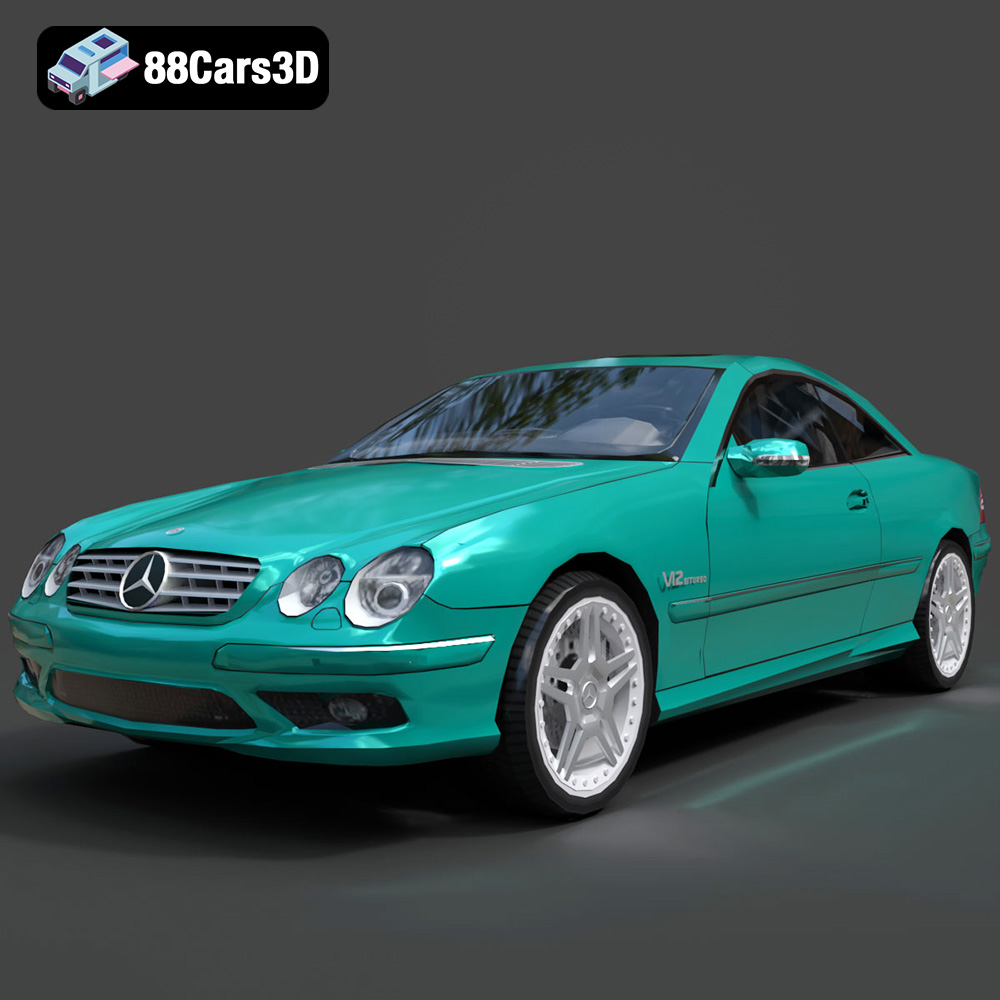
Download the Mercedes-Benz CL65 C215 AMG 3D Model featuring clean geometry, realistic detailing, and a fully modeled interior. Includes .blend, .fbx, .obj, .glb, .stl, .ply, .unreal, and .max formats for rendering, simulation, and game development.
Price: $9.99
Texture: Yes
Material: Yes
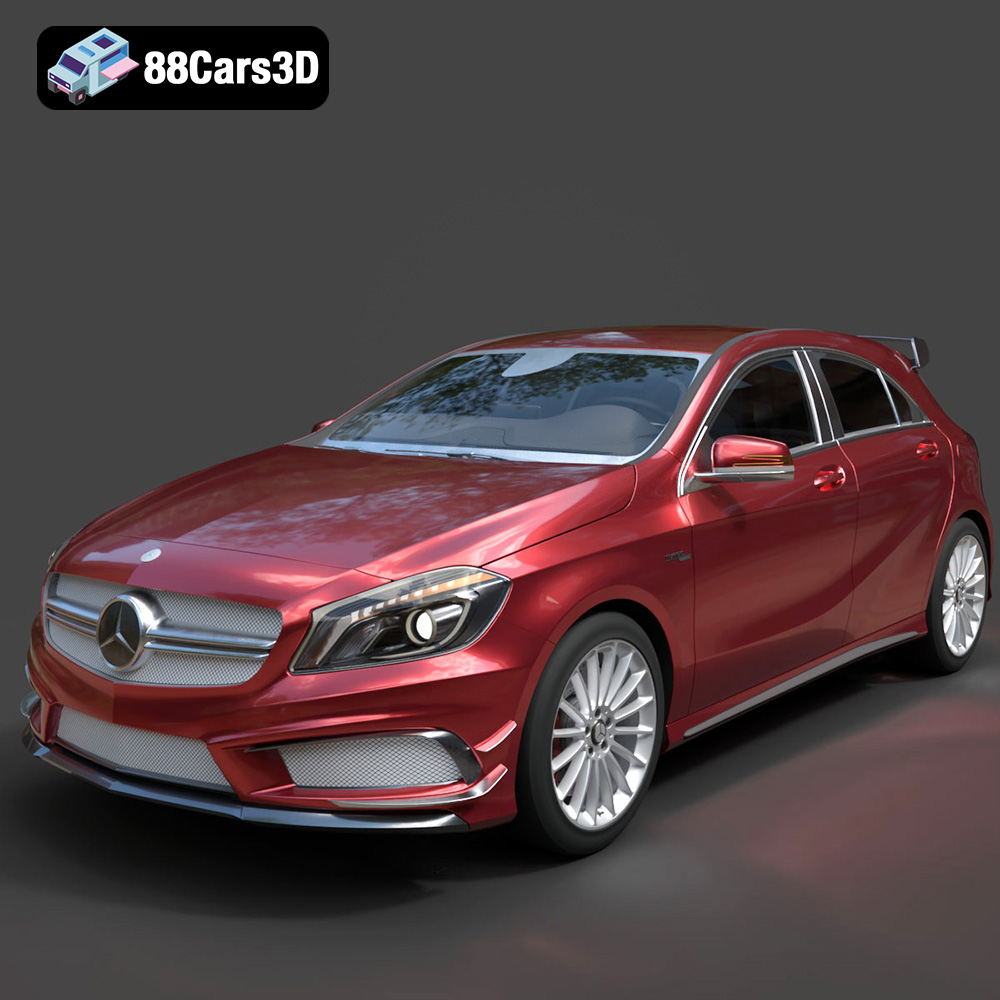
Download the Mercedes-Benz A45 2021 3D Model featuring clean geometry, realistic detailing, and a fully modeled interior. Includes .blend, .fbx, .obj, .glb, .stl, .ply, .unreal, and .max formats for rendering, simulation, and game development.
Price: $9.99
Texture: Yes
Material: Yes
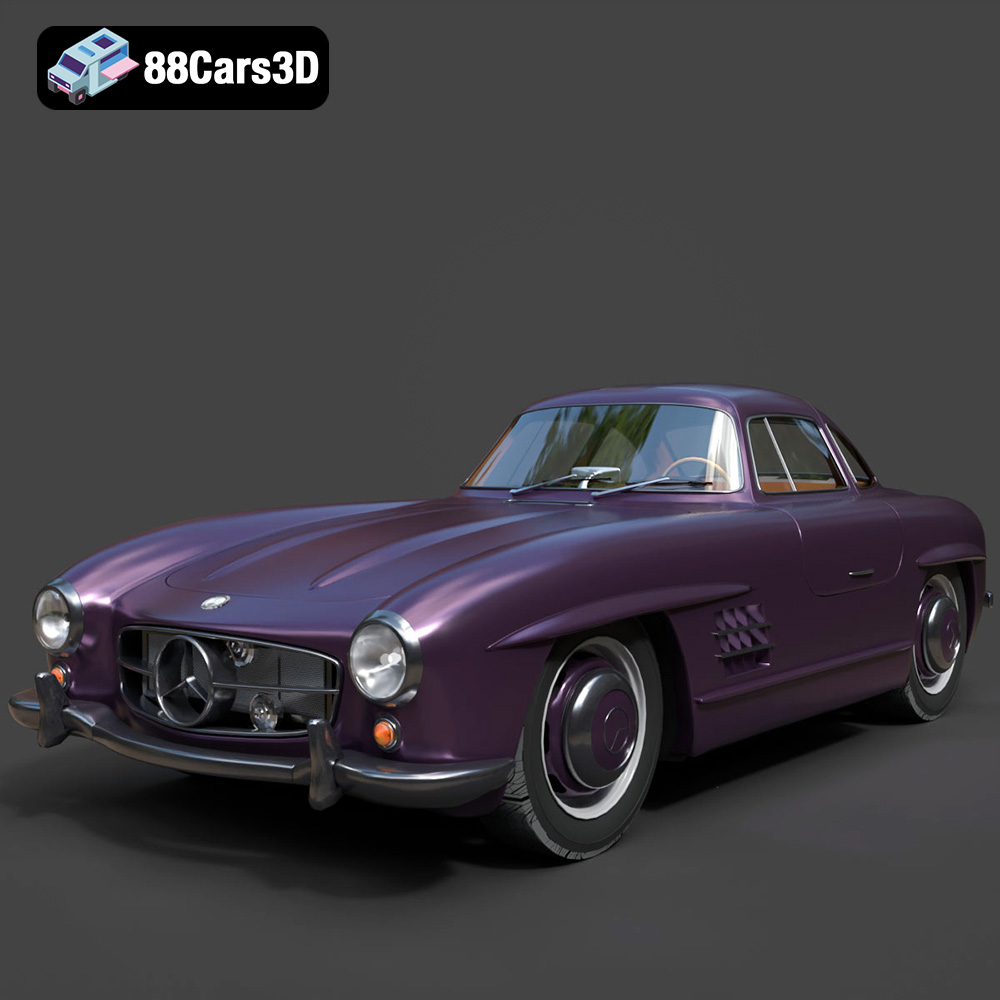
Download the Mercedes-Benz 300SL 1955 3D Model featuring clean geometry, realistic detailing, and a fully modeled interior. Includes .blend, .fbx, .obj, .glb, .stl, .ply, .unreal, and .max formats for rendering, simulation, and game development.
Price: $9.99
Texture: Yes
Material: Yes
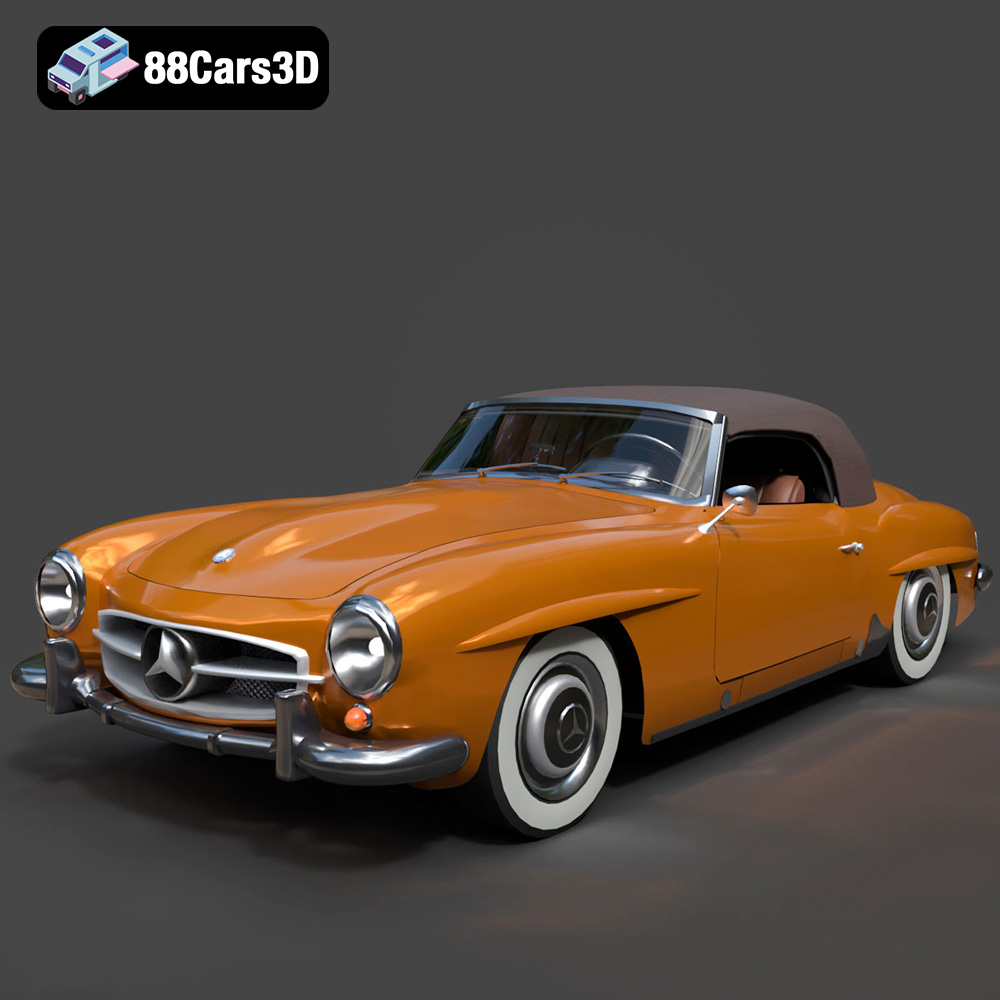
Download the Mercedes-Benz 190SL 1955 3D Model featuring clean geometry, realistic detailing, and a fully modeled interior. Includes .blend, .fbx, .obj, .glb, .stl, .ply, .unreal, and .max formats for rendering, simulation, and game development.
Price: $9.99
Texture: Yes
Material: Yes
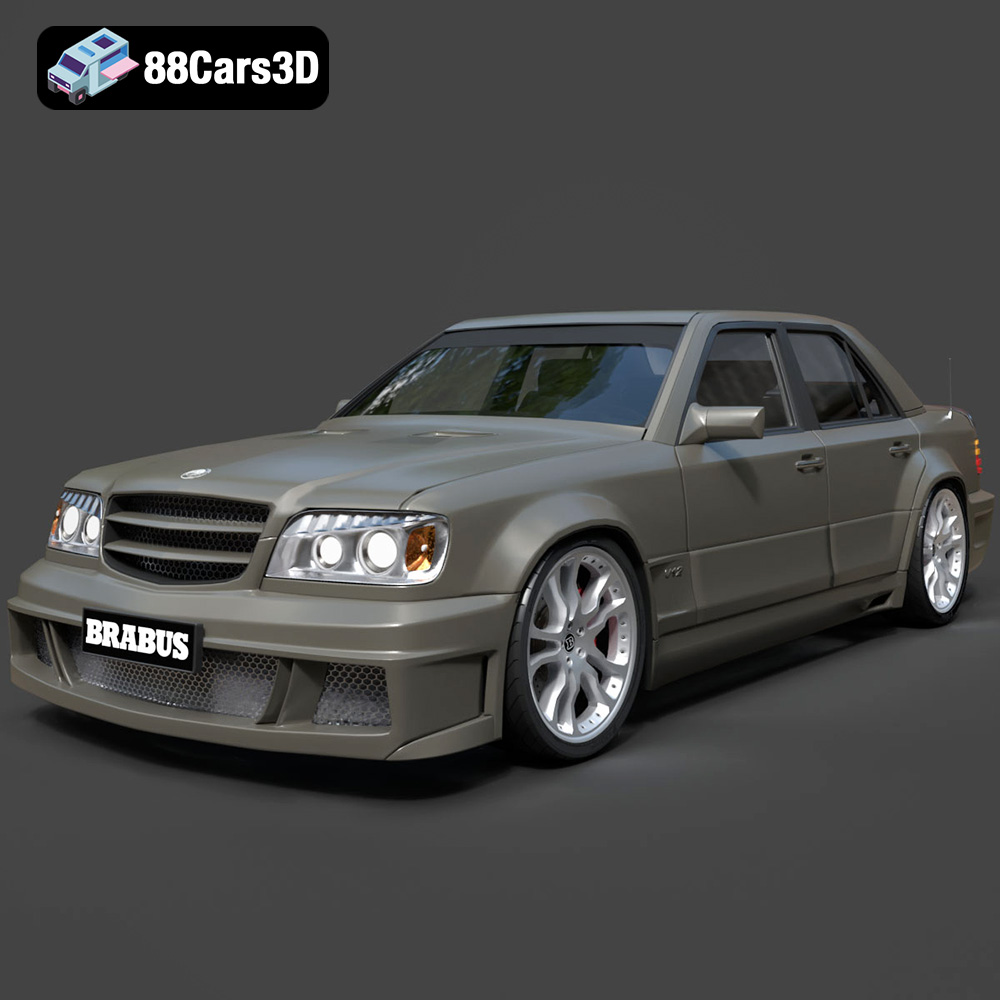
Download the Mercedes-Benz W124 Brabus V12 3D Model featuring clean geometry, realistic detailing, and a fully modeled interior. Includes .blend, .fbx, .obj, .glb, .stl, .ply, .unreal, and .max formats for rendering, simulation, and game development.
Price: $9.99

