Get 20% OFF All Premium 3D & STL Models!

There’s an undeniable magic to a photorealistic automotive render. The way light dances across the perfectly sculpted curves of a fender, the intricate detail within a headlight assembly, the subtle imperfections that sell the illusion of reality—these are the elements that separate a good 3D model from a truly breathtaking digital masterpiece. Whether you’re an automotive designer visualizing the next supercar, a game developer building an immersive racing experience, or a VFX artist integrating a vehicle into a live-action scene, the quality of your 3D car model is paramount. But achieving this level of quality is a complex, multi-faceted process that demands both artistic vision and deep technical expertise.
This comprehensive guide will pull back the curtain on the professional workflows used to create and utilize high-end 3D car models. We will journey through the entire pipeline, starting with the foundational principles of clean topology and edge flow, essential for capturing those iconic automotive shapes. We’ll then dive into the meticulous art of UV mapping, the science of creating believable PBR materials for everything from car paint to tire rubber, and the techniques for staging and lighting your model for stunning automotive rendering. Finally, we’ll explore the critical optimization strategies required for real-time applications like game development and AR/VR, as well as preparation for 3D printing. Get ready to elevate your automotive 3D work from standard to spectacular.
Before a single texture is applied or a light is placed, the success of a 3D car model is determined by its underlying geometry—its topology. For hard-surface models like vehicles, topology isn’t just about defining a shape; it’s about controlling how that shape subdivides, reflects light, and deforms. Clean, deliberate topology is the invisible framework that supports photorealism. Without it, you’ll face a cascade of problems, including shading artifacts, pinching at render time, and difficulties in the UV mapping and texturing stages. Investing time in perfecting the mesh is the single most important step in the entire process.
The golden rule of automotive modeling is to work almost exclusively with four-sided polygons, or quads. Quads offer predictable, clean subdivision, which is essential when using modifiers like TurboSmooth or OpenSubdiv to create the smooth, high-resolution surfaces required for close-up shots. The arrangement of these quads, known as edge flow, is equally critical. Your edge loops should follow the natural contours and character lines of the car’s body panels. For example, a sharp crease running down the side of a door should be defined by a tight, controlling edge loop. This ensures that when the mesh is smoothed, the crease remains crisp and defined, rather than softening into an indistinct blob. Proper edge flow ensures that reflections travel smoothly and realistically across the surface, without wobbles or distortions.
A common mistake for beginners is to add detail indiscriminately, resulting in an unnecessarily heavy mesh. Professional modelers manage polygon density with intent. Use a lower density on large, flat, or gently curving panels like the roof or doors, and concentrate polygons in areas of high curvature or intricate detail, such as the wheel arches, grilles, and light housings. A typical high-end model destined for cinematic or marketing renders might range from 500,000 to over 2 million polygons after subdivision. When beginning, block out the primary forms with as few polygons as possible, focusing on silhouette and proportion. Only after the main shapes are perfect should you begin adding control loops and cutting in details like panel gaps and vents. This hierarchical approach keeps the mesh manageable and ensures a clean final result.
While quads are ideal, you will inevitably encounter triangles (tris) and polygons with more than four sides (n-gons). While a few tris in flat, hidden areas are acceptable, n-gons should be avoided at all costs. They cause unpredictable subdivision and often lead to severe shading errors. Another concept to master is the “pole”—a vertex where five or more edges meet. While unavoidable, poles should be placed strategically on flatter parts of the mesh, away from curved surfaces where they can cause pinching or visible artifacts in reflections. Carefully planning your edge loops to terminate in less visible areas is a hallmark of an expert modeler.
Once you have a pristine model, the next technical hurdle is UV mapping. This is the process of flattening the 3D model’s surface into a 2D space so that textures can be applied correctly. For a complex object like a car, with its mix of large panels and intricate components, a strategic and meticulous approach to UV mapping is essential for achieving professional-grade results. Poor UVs can result in stretched textures, visible seams, and inconsistent detail, instantly breaking the illusion of realism. Professional assets, like those found on marketplaces such as 88cars3d.com, are distinguished by their clean, logical, and distortion-free UV layouts.
The key to good UVs is intelligent seam placement. The goal is to hide seams along natural breaks in the object’s surface. For a car, this means placing UV seams along panel gaps, on the inside edges of door jambs, or where different materials meet. For a car door, you would cut seams along the hard edges of the panel, allowing it to unfold flat like a piece of cardboard. Use a “checker” or “UV grid” texture throughout the process to visually inspect for stretching and distortion. The squares on the grid should appear uniform and consistently sized across the entire model. Modern tools in 3ds Max, Blender, and Maya offer powerful “Pelt” or “Unfold” algorithms that can relax the UV shells to minimize distortion after the initial seams are cut.
Texel density refers to the resolution of your texture map relative to the size of the model’s surface area. For a photorealistic result, it’s crucial to maintain a consistent texel density across all parts of the car. This ensures that a bolt on the wheel has the same level of texture sharpness as the door handle. A common target for a hero asset might be 10.24 pixels/cm. For an object as large and detailed as a car, cramming all the UV shells into a single 4K or 8K texture map is often insufficient for close-up shots. This is where the UDIM (U-Dimension) workflow comes in. UDIMs allow you to spread your UV shells across multiple texture maps (tiles), all managed as a single material. You could dedicate one UDIM tile for the main body, another for the wheels, one for the interior, and so on, allowing you to use ultra-high-resolution textures where they matter most without being limited by a single map.
Components like headlights, grilles, and complex alloy wheels present unique challenges. These often require a multi-pronged approach.
With a perfectly modeled and unwrapped car, the next stage is to breathe life into it with realistic materials. The modern standard for this is the Physically Based Rendering (PBR) workflow, which aims to simulate how light interacts with materials in the real world. Creating convincing PBR materials for a car involves more than just plugging in textures; it requires a deep understanding of shader properties and the subtle nuances that define different surfaces, from multi-layered car paint to gritty tire rubber. This is where the model truly begins to look real.
A realistic car paint material is arguably the most complex and important shader on the vehicle. It’s not a single surface but a composite of multiple layers, which high-end render engines like Corona, V-Ray, and Arnold can simulate. A typical car paint shader consists of:
Perfection is the enemy of realism. A factory-new car is sterile; a car that feels real has a history. This story is told through subtle imperfections. Use high-resolution textures (4K or higher) to add these details. For tires, this means adding grime to the treads and slight discoloration or scuffing on the sidewalls. For brake discs, it means adding subtle scoring marks and a light layer of brake dust near the calipers. Windows should have faint smudges or water spots, best achieved with a very subtle roughness map. These details, when combined, create a subconscious sense of authenticity that pristine, mathematically perfect surfaces lack.
Beyond the paint, a car features a wide array of materials. Glass requires high transparency, a correct IOR (around 1.52), and, critically, thickness. Modeling the glass with actual thickness allows the light to refract realistically as it passes through. Chrome is simpler: it’s essentially a perfect mirror. In PBR terms, this means a base color of pure white, a metalness value of 1, and a roughness value very close to 0. For plastics, like those used on dashboards, trim, and bumpers, the key is the roughness map. A single piece of plastic trim often has varying levels of wear and texture, which can be captured with a detailed roughness map derived from procedural noise or photographic sources. For taillight covers, a translucent plastic material with some subsurface scattering can produce incredibly realistic results when light shines through it.
Your meticulously crafted 3D car model is now ready for its close-up. The lighting and rendering stage is where all your hard work on modeling, UVs, and materials comes together. The goal here is not just to illuminate the model, but to sculpt it with light, accentuate its form, and create a specific mood. Whether you’re aiming for a clean studio product shot or a dynamic environmental scene, the principles of lighting, camera setup, and post-processing are universal and crucial for a jaw-dropping final image in your automotive rendering portfolio.
There are two primary approaches to lighting a 3D car:
Your virtual camera is just as important as your lighting. Focal length plays a huge role in the composition and feel of the shot. A wide-angle lens (e.g., 24-35mm) can create dramatic, aggressive shots but can also introduce perspective distortion. A longer lens (e.g., 85-200mm) compresses the perspective, which is often more flattering for showcasing a car’s design lines and proportions, making it ideal for hero shots. Depth of Field (DoF) is another powerful tool. A shallow DoF (a blurry background) helps to isolate the car, draw the viewer’s eye to a specific detail like a badge or headlight, and adds a layer of photographic realism. Use it subtly; an overly blurred background can look artificial.
For ultimate control, professionals rarely use the “raw” render straight out of the engine. Instead, they render multiple passes, or Arbitrary Output Variables (AOVs). Common passes include Diffuse, Specular, Reflection, Ambient Occlusion (AO), Z-Depth (for DoF), and masks for specific objects. These passes are then layered and composited in software like Adobe Photoshop or Foundry Nuke. This workflow allows for non-destructive editing. You can precisely adjust the intensity of reflections, deepen shadows with the AO pass, add lens flares, perform color grading, and apply sharpening without having to re-render the entire image, which can save hours or even days of work.
Creating a car for a cinematic render is one thing; preparing it to run smoothly at 60 frames per second in a game engine or on a mobile device for an AR/VR experience is an entirely different challenge. Real-time rendering budgets are strict, and performance is king. This requires a process of heavy optimization, transforming a multi-million polygon “hero” model into a lean, efficient game asset that retains its visual fidelity through clever techniques and technical artistry.
The first step is to drastically reduce the polygon count through a process called retopology. This involves creating a new, clean, low-polygon mesh that traces the silhouette and key features of the original high-poly model. The goal is to capture the shape with the absolute minimum number of polygons. A high-end game asset for a modern console might have a primary model (LOD0) of around 80,000 to 150,000 triangles. To further optimize performance, artists create several Levels of Detail (LODs). These are progressively lower-resolution versions of the model:
The game engine automatically swaps these models based on the player’s distance from the car, ensuring that processing power isn’t wasted rendering detail that can’t be seen.
How does a low-poly model look so detailed? The magic is in the bake. Artists use a process to project and “bake” the surface detail from the high-poly model onto a special texture called a normal map. This map stores lighting information, tricking the game engine’s shaders into rendering the low-poly surface as if it had all the intricate details of the high-poly original—panel gaps, vents, bolts, and subtle curves are all simulated. A good bake is clean, free of errors (like skewing or artifacts), and is the single most important step in making a real-time car model look convincing.
In a game engine, every time the CPU has to tell the GPU to draw an object with a different material, it’s called a draw call. Too many draw calls can cripple performance. To minimize them, artists use a technique called texture atlasing. Instead of having separate materials and textures for the brake calipers, the badges, the window trim, and the grille, the UVs for all these small parts are combined and laid out onto a single texture sheet (the atlas). This allows many different parts of the car to be rendered in a single draw call, dramatically improving performance in engines like Unity and Unreal Engine. It’s a critical optimization for all AR/VR and game development projects.
The utility of a high-quality 3D car model doesn’t end on the screen. The rise of accessible and high-resolution 3D printing has opened up new possibilities for automotive designers, hobbyists, and collectors to bring digital models into the physical world. However, preparing a model for 3D printing is not as simple as clicking “export.” A model designed for rendering is often just a collection of surfaces, whereas a 3D-printable model must be a solid, “watertight” object with considerations for wall thickness and printability.
The most critical requirement for 3D printing is that the mesh must be manifold, or “watertight.” This means it must be a completely enclosed volume with no holes. Imagine the model has to be filled with water—if there are any gaps, the water would leak out. A render model can have floating parts (like badges not quite touching the body) or be made of single-sided planes (like the window glass), but a 3D printer needs a single, continuous, solid shell. You must go through the model and manually weld vertices, bridge gaps between parts, and ensure all normals are facing outwards. Tools like Meshmixer or the 3D-Print Toolbox in Blender are invaluable for automatically detecting and helping to fix non-manifold errors.
A 3D print cannot have infinitely thin surfaces. Every part of the model must have a minimum wall thickness to be physically stable and printable. This value depends on the printing technology (e.g., FDM vs. SLA resin) and the scale of the print, but a safe starting point is often 1-2mm. This means you may need to “shell” or add thickness to parts that were single polygons in the render model, such as the body panels and window glass. When scaling the model for printing, it’s crucial to ensure that even the smallest details, like side mirrors or spoilers, still meet this minimum thickness requirement at the final print size. For larger scale models, hollowing the main body can save a significant amount of material and reduce printing time.
Before printing, the final model is run through a “slicer” program (like Cura or PrusaSlicer). This software slices the digital model into hundreds or thousands of thin horizontal layers and generates the toolpath the printer will follow. The slicer is also where you add support structures. These are disposable scaffolds that the printer builds to hold up any overhanging parts of the model (like bumpers, mirrors, or spoilers) during the printing process. For very complex models, it’s often best practice to separate the car into multiple parts (e.g., body, wheels, chassis) that can be printed individually in their optimal orientation and then assembled after printing. This approach can drastically reduce the need for supports and result in a cleaner final product.
The journey of a 3D car model is a testament to the fusion of technical precision and artistic creativity. We’ve seen how a successful project is built upon a foundation of clean, purposeful topology, which dictates the flow of light and the smoothness of every curve. We’ve explored the meticulous process of UV mapping and the creation of layered, realistic PBR materials that bring the digital surfaces to life. From there, the model can be placed into a virtual studio for a stunning automotive rendering, optimized with LODs and baked normal maps to become a high-performance game asset, or solidified into a watertight mesh ready for the physical world of 3D printing.
Each discipline requires a unique set of skills and considerations, but they all share a common starting point: a high-quality, professionally constructed 3D model. Whether you are building from scratch or accelerating your workflow, understanding these core principles is the key to producing world-class results. For artists and studios looking to jumpstart their projects with production-ready assets, sourcing models from specialized marketplaces like 88cars3d.com can provide an exceptional foundation, allowing you to focus your creative energy on lighting, composition, and bringing your unique vision to life. The next time you see a stunning car render or drive a virtual vehicle, you’ll have a deeper appreciation for the immense skill and effort invested in every polygon, texture, and pixel.

Texture: Yes
Material: Yes
Download the Mercedes-Benz SL500 AMG (R129) 3D Model featuring clean geometry, realistic detailing, and a fully modeled interior. Includes .blend, .fbx, .obj, .glb, .stl, .ply, .unreal, and .max formats for rendering, simulation, and game development.
Price: $9.99

Texture: Yes
Material: Yes
Download the Mercedes-Benz SLK 350 2005 3D Model featuring clean geometry, realistic detailing, and a fully modeled interior. Includes .blend, .fbx, .obj, .glb, .stl, .ply, .unreal, and .max formats for rendering, simulation, and game development.
Price: $9.99

Texture: Yes
Material: Yes
Download the Mercedes-Benz SL 65 AMG 3D Model featuring clean geometry, realistic detailing, and a fully modeled interior. Includes .blend, .fbx, .obj, .glb, .stl, .ply, .unreal, and .max formats for rendering, simulation, and game development.
Price: $9.99

Texture: Yes
Material: Yes
Download the Mercedes-Benz S500 3D Model featuring clean geometry, realistic detailing, and a fully modeled interior. Includes .blend, .fbx, .obj, .glb, .stl, .ply, .unreal, and .max formats for rendering, simulation, and game development.
Price: $9.99
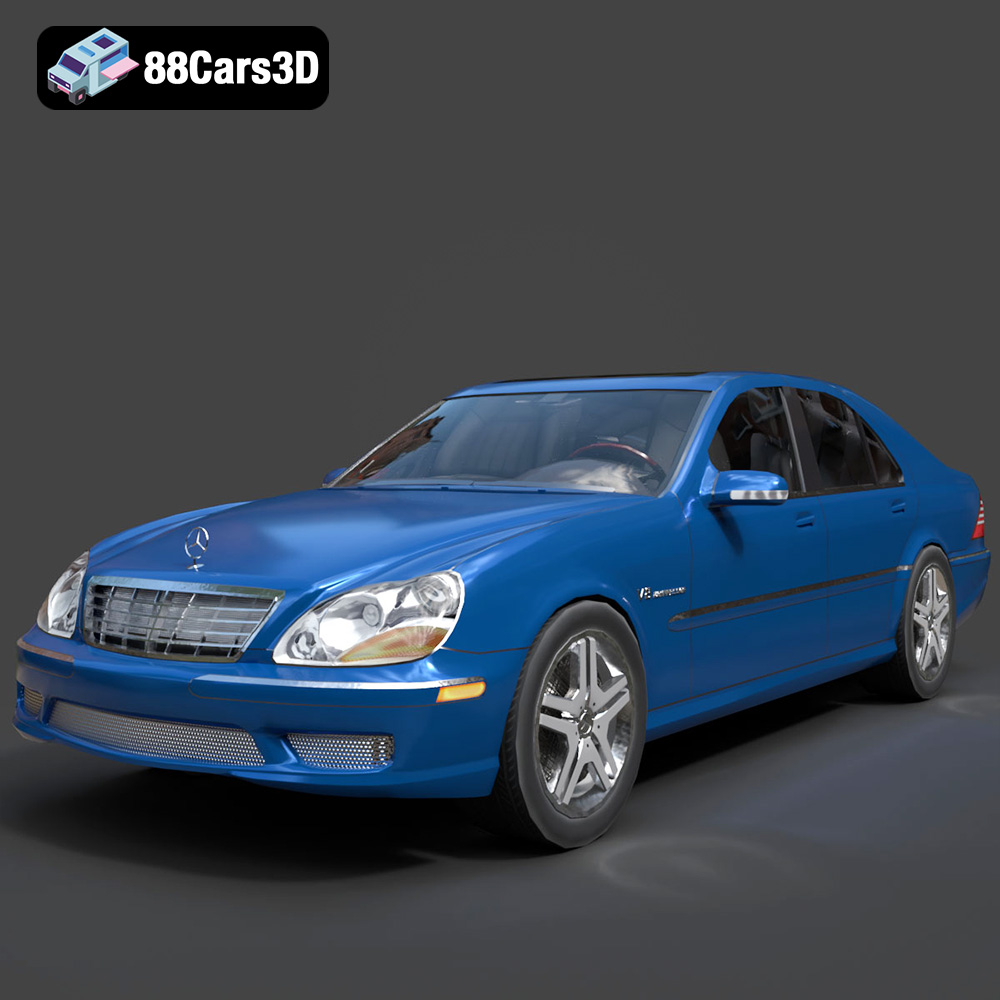
Texture: Yes
Material: Yes
Download the Mercedes-Benz S55 W220 AMG 1999 3D Model featuring clean geometry, realistic detailing, and a fully modeled interior. Includes .blend, .fbx, .obj, .glb, .stl, .ply, .unreal, and .max formats for rendering, simulation, and game development.
Price: $9.99

Texture: Yes
Material: Yes
Download the Mercedes-Benz CLA45 AMG 2017 3D Model featuring clean geometry, realistic detailing, and a fully modeled interior. Includes .blend, .fbx, .obj, .glb, .stl, .ply, .unreal, and .max formats for rendering, simulation, and game development.
Price: $29.99
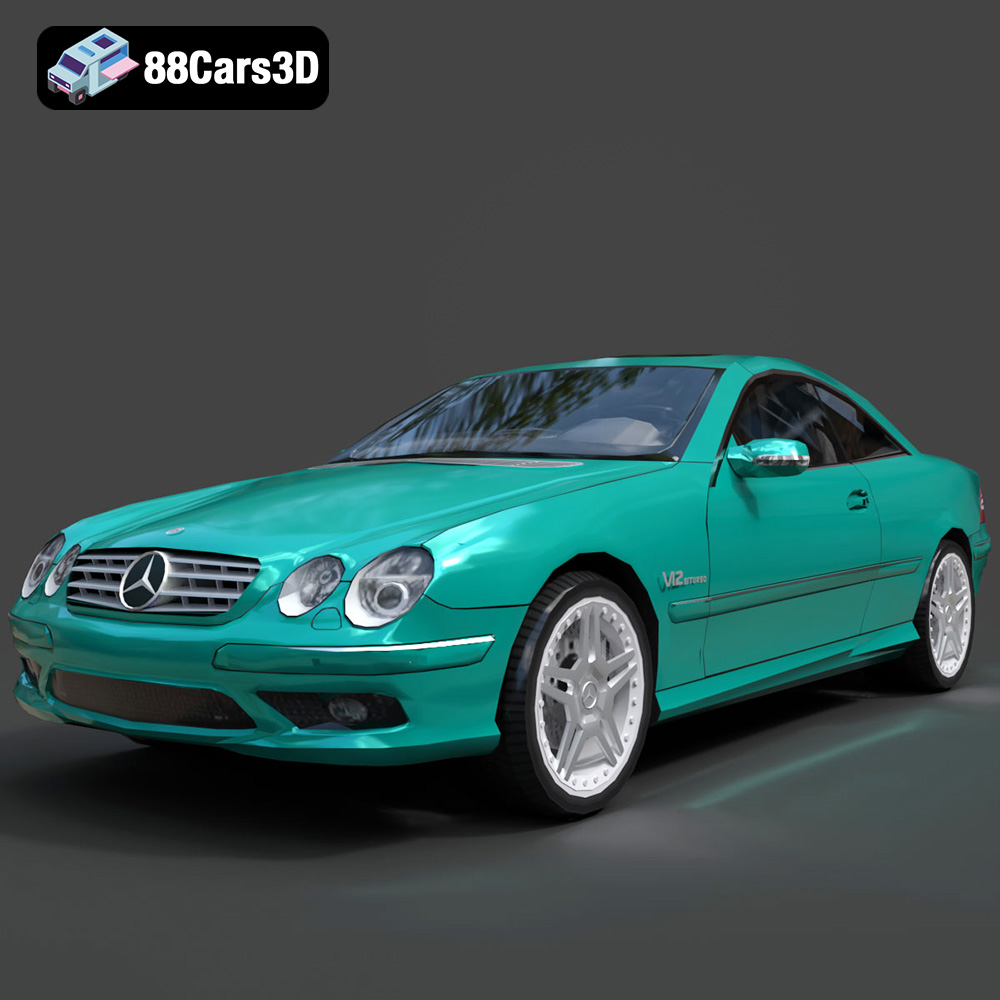
Texture: Yes
Material: Yes
Download the Mercedes-Benz CL65 C215 AMG 3D Model featuring clean geometry, realistic detailing, and a fully modeled interior. Includes .blend, .fbx, .obj, .glb, .stl, .ply, .unreal, and .max formats for rendering, simulation, and game development.
Price: $9.99
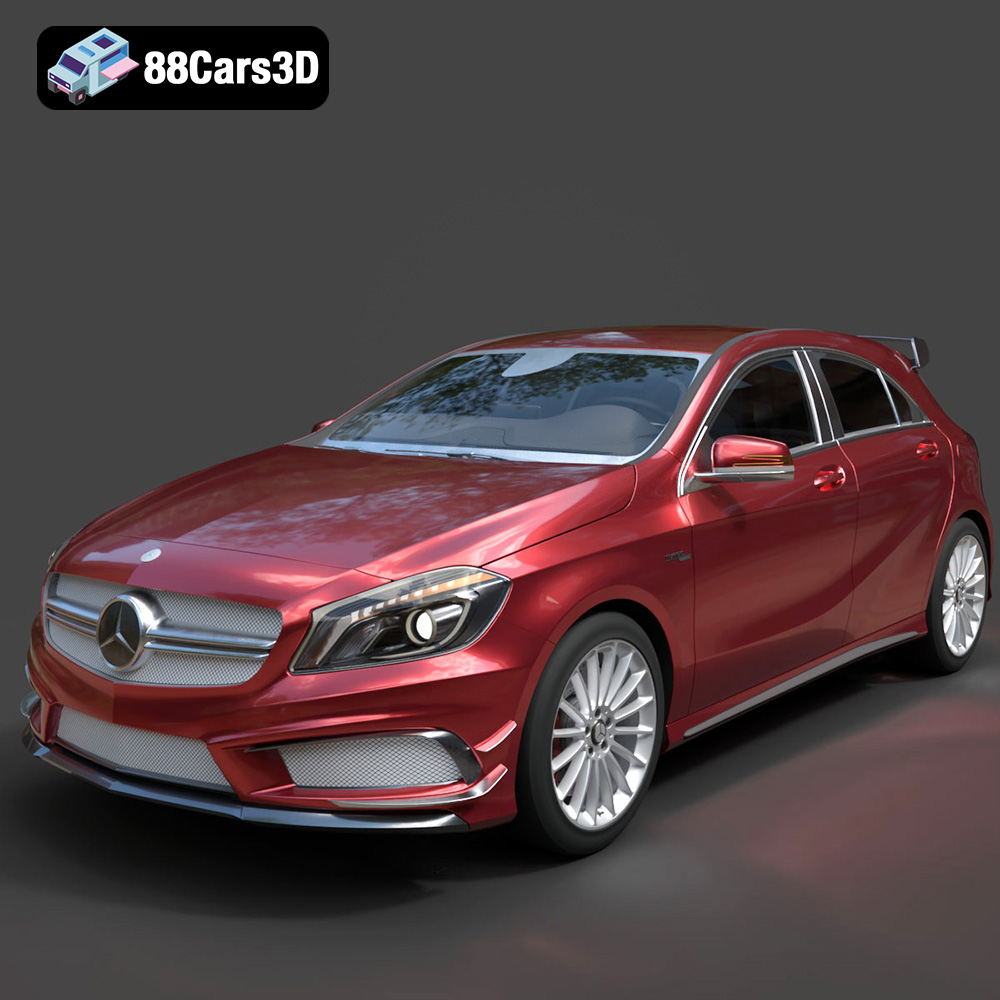
Texture: Yes
Material: Yes
Download the Mercedes-Benz A45 2021 3D Model featuring clean geometry, realistic detailing, and a fully modeled interior. Includes .blend, .fbx, .obj, .glb, .stl, .ply, .unreal, and .max formats for rendering, simulation, and game development.
Price: $9.99
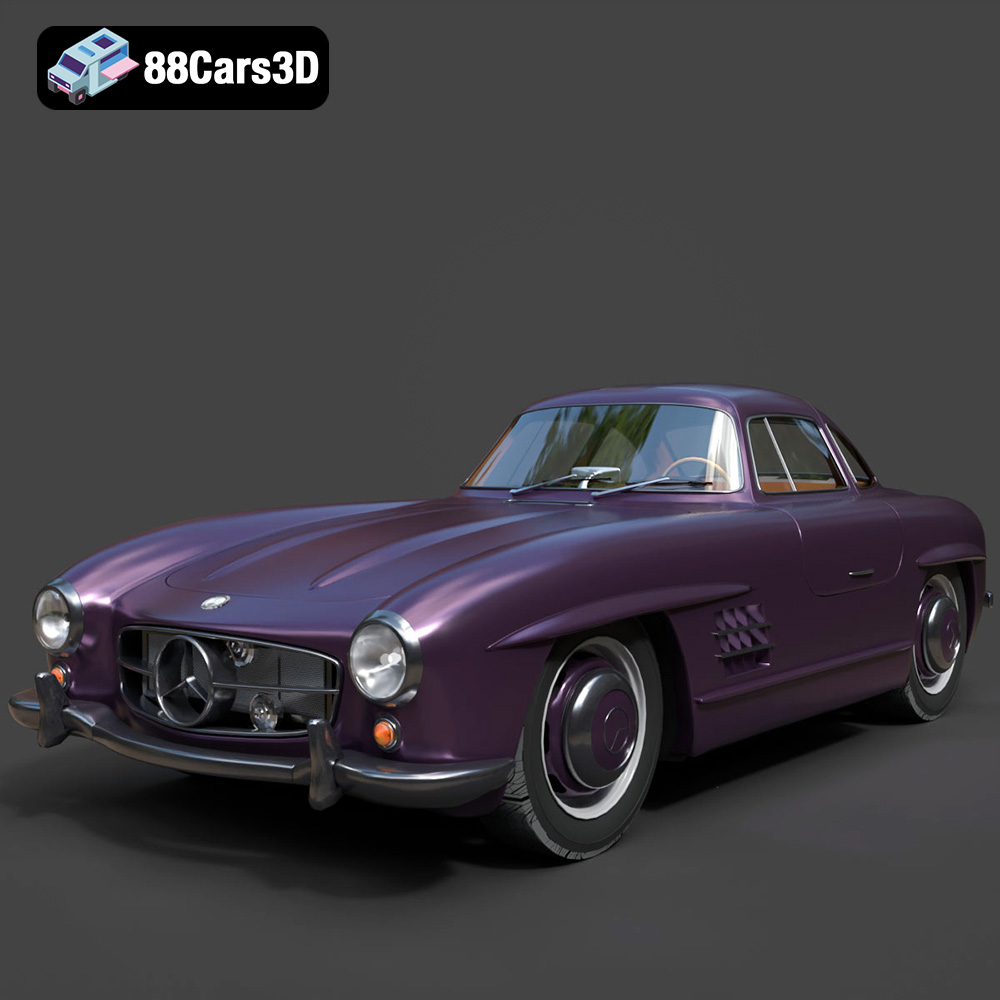
Texture: Yes
Material: Yes
Download the Mercedes-Benz 300SL 1955 3D Model featuring clean geometry, realistic detailing, and a fully modeled interior. Includes .blend, .fbx, .obj, .glb, .stl, .ply, .unreal, and .max formats for rendering, simulation, and game development.
Price: $9.99
Texture: Yes
Material: Yes
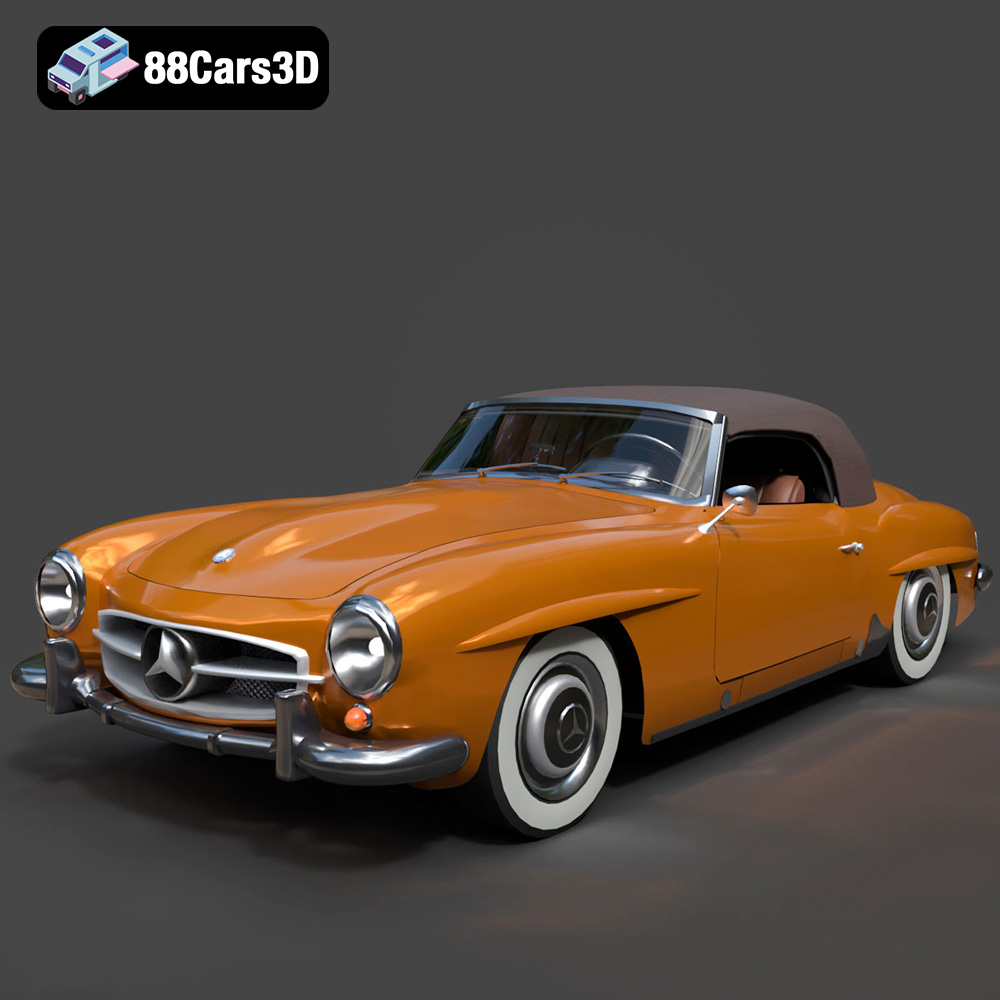
Download the Mercedes-Benz 190SL 1955 3D Model featuring clean geometry, realistic detailing, and a fully modeled interior. Includes .blend, .fbx, .obj, .glb, .stl, .ply, .unreal, and .max formats for rendering, simulation, and game development.
Price: $9.99

