Get 20% OFF All Premium 3D & STL Models!

“`html
High-quality 3D car models are more than just digital replicas; they are versatile assets that power a vast range of creative and technical industries. From the jaw-dropping realism of an automotive commercial to the interactive thrill of a racing game, and the immersive experience of an AR vehicle configurator, a single, well-crafted model is the foundational element. However, unlocking the full potential of these complex assets requires a deep understanding of the entire production pipeline. It’s a journey that spans meticulous model evaluation, sophisticated material creation, advanced rendering techniques, and rigorous optimization for real-time performance. For artists, designers, and developers, mastering this workflow is the key to transforming a static 3D file into a compelling final product.
This comprehensive guide will walk you through every critical stage of working with professional 3D car models. We will dissect the anatomy of a superior model, from its topology to its UVs. We will dive deep into the art and science of creating photorealistic materials and lighting setups. Furthermore, we’ll explore the distinct and demanding pipelines for optimizing these assets for game engines, AR/VR applications, and even physical 3D printing. Whether you are an architectural visualization artist aiming for hyper-realism or a game developer balancing quality with performance, this guide provides the technical insights and actionable steps needed to elevate your automotive 3D projects.
The success of any project hinges on the quality of its foundational assets. A poorly constructed 3D car model can introduce countless problems downstream, from rendering artifacts to performance bottlenecks. Investing time in selecting and evaluating a model from the outset is the single most effective way to ensure a smooth and efficient production process. When browsing marketplaces like 88cars3d.com, it’s crucial to look beyond the beauty renders and scrutinize the underlying technical specifications of the asset. A truly professional model is a blend of artistic accuracy and technical excellence, built with flexibility and performance in mind.
Topology refers to the structure and flow of polygons (quads and triangles) that form the model’s surface. For automotive models, this is paramount. Clean, quad-based topology is essential for achieving smooth, accurate reflections and highlights, which are the soul of automotive rendering. Look for wireframes where the edge loops follow the natural curvature and contour lines of the car’s body panels. This ensures that when subdivision modifiers (like TurboSmooth in 3ds Max or a Subdivision Surface in Blender) are applied, the surface holds its shape without pinching or distortion. Key things to look for include:
UV mapping is the process of flattening a 3D model’s surface into a 2D space so that textures can be applied correctly. For a complex object like a car, this is a painstaking process that separates professional models from amateur ones. A well-unwrapped model will have UV shells that are logically laid out with minimal distortion. This is critical for applying decals, dirt maps, scratches, or livery designs without stretching or seams. Check for UV layouts that are neatly packed into the 0-1 UV space to maximize texture resolution (texel density). For game assets, multiple UV channels are often used: one for general materials and another for baked ambient occlusion or lightmaps.
High-quality models should be available in multiple formats to ensure compatibility with your preferred software. Common formats include .MAX (3ds Max), .MB (Maya), .BLEND (Blender), .FBX (a versatile standard for games and rendering), and .OBJ (a universal, though older, format). When you first import a model, take a moment to organize the scene. A professional asset will typically have its components logically named (e.g., “wheel_FL,” “door_driver,” “brake_caliper_RR”) and grouped or parented correctly. This organization is vital for rigging the car for animation or setting up separate materials for different parts.
Once you have a solid 3D model, the next step is to breathe life into it with realistic materials. The industry standard for this is the Physically Based Rendering (PBR) workflow, which aims to simulate how light interacts with surfaces in the real world. This approach provides consistent and predictable results across different lighting conditions and rendering engines. Creating convincing car materials—from the complex multi-layered paint to the subtle grain of the interior leather—is an art form that balances technical knowledge with a keen observational eye.
The most common PBR workflow is Metal/Roughness. It relies on a set of texture maps to define a surface’s properties:
Standard PBR materials often fall short when recreating modern car paint. A convincing car paint shader is typically a layered material. In software like 3ds Max with Corona/V-Ray or Blender with Cycles, you can build this using a layered shader node.
Nothing breaks realism faster than a perfectly clean object. Even showroom cars have subtle imperfections. To add that final layer of believability, use procedural masks and textures to introduce subtle variations. Use an Ambient Occlusion (AO) map or curvature map to generate masks that place dirt and grime in crevices where it would naturally accumulate. Use grunge maps multiplied over the base roughness map to create subtle variations in specularity, simulating light scuffs or oily residue. These details should be subtle for a studio render but can be dialed up significantly for a post-apocalyptic or rally car scene.
Lighting is not just about illumination; it’s about telling a story, defining form, and creating a mood. In automotive visualization, lighting is everything. It’s what reveals the carefully modeled curves of the body, highlights the complexity of the materials, and places the vehicle in a believable context. The techniques for lighting a car for a studio shot are vastly different from those used for an environmental render, but both demand a meticulous approach to achieve photorealism.
There are two primary methods for lighting 3D cars:
Treat your virtual camera like a real-world DSLR. Focal length is critical. Wide-angle lenses (e.g., 24-35mm) can create a dynamic, aggressive look but will distort the car’s proportions. Longer lenses (e.g., 85-135mm) compress the perspective, producing a more flattering and true-to-life representation often used in car commercials. Use depth of field (controlled by the aperture or F-stop) to draw the viewer’s eye to a specific part of the car, blurring the background and foreground. Finally, apply compositional rules like the Rule of Thirds to create a visually balanced and engaging image.
Your choice of render engine will influence your workflow and final output.
– Corona Renderer: Known for its ease of use and photorealistic results with minimal tweaking. Its interactive light mixing and material editor make it a favorite in the architectural and automotive visualization industries.
– V-Ray: An industry powerhouse, V-Ray offers incredible flexibility and speed. It has a slightly steeper learning curve but provides granular control over every aspect of the rendering process, making it a staple for high-end VFX and commercial work.
– Blender Cycles: A powerful, free, and open-source path-tracing engine built into Blender. It is capable of producing stunningly realistic results and has a massive community and ecosystem of add-ons and assets.
Regardless of the engine, always render to a high-bit-depth format like 32-bit EXR. This preserves the maximum amount of lighting information, giving you far more flexibility in post-processing.
The requirements for a real-time game asset are fundamentally different from those of a pre-rendered visualization. In a game, every polygon, texture, and material must be calculated and displayed in a fraction of a second (typically 16.67ms for 60 FPS). This demands a rigorous optimization process to balance visual fidelity with performance. A high-poly model designed for V-Ray renders would bring even the most powerful gaming PC to its knees if imported directly into Unreal Engine or Unity.
LODs are the cornerstone of game asset optimization. This technique involves creating multiple versions of the car model, each with a progressively lower polygon count.
– LOD0: The highest quality version, visible when the player is close to the car. This might range from 100,000 to 300,000 triangles for a hero vehicle. Details like interior, engine bay, and undercarriage are fully modeled.
– LOD1: A mid-range version, visible from a short distance. Polycount might be reduced by 40-50% (e.g., 50k – 150k triangles). Smaller details are removed, and complex curves are simplified.
– LOD2/LOD3: Low-poly versions for medium-to-far distances. The interior might be replaced with a simple dark texture, and the wheels become simple cylinders. Polycounts can drop to 5,000 – 25,000 triangles.
– LOD4 (Optional): An extremely low-poly “imposter” or billboard for when the car is a mere speck on the horizon.
Game engines like Unreal Engine can automatically switch between these LODs based on the object’s screen size, drastically reducing the rendering load.
In game engines, a “draw call” is a command sent from the CPU to the GPU to draw an object. Each object with a unique material generates at least one draw call. Too many draw calls can create a CPU bottleneck, crippling performance. To combat this, multiple textures are combined into a single, larger texture sheet called a texture atlas. For example, textures for the dashboard, seats, and door panels could be combined into one “Interior_Atlas” texture. This allows the entire interior to be rendered with a single material and one draw call, a huge performance saving. The same principle applies to the exterior, with smaller parts like lights, grilles, and badges being atlased together.
A game engine’s physics system cannot calculate collisions against a 300,000-triangle render mesh in real-time. Instead, a separate, extremely low-poly collision mesh is created. This mesh is a simplified, convex “cage” that roughly matches the car’s shape. It is invisible during gameplay but is used by the physics engine to handle collisions with the environment and other objects. Similarly, setting up vehicle physics in engines like Unreal Engine involves assigning invisible physics bodies to the wheels and connecting them with constraints and suspension settings to simulate realistic driving behavior.
The utility of 3D car models extends beyond traditional screens into the realms of augmented reality, virtual reality, and physical manufacturing. Each of these applications has its own unique set of technical constraints and preparation requirements, demanding further optimization and file conversion. A model destined for an AR app on a smartphone has different needs than one being sent to a high-resolution resin printer.
AR and VR applications run on a wide spectrum of hardware, from powerful PC-tethered headsets to standalone devices like the Meta Quest and everyday smartphones. Performance is paramount. The key is to deliver a visually compelling experience within a very tight performance budget (often 72-90 FPS to avoid motion sickness).
Preparing a 3D car model for printing is a completely different challenge. The focus shifts from visual appearance to structural integrity and physical manufacturability.
– Watertight (Manifold) Geometry: The 3D mesh must be a completely sealed, “watertight” volume with no holes. Tools like Meshmixer or the 3D-Print Toolbox in Blender can be used to identify and repair non-manifold edges.
– Wall Thickness: Every part of the model must have a minimum thickness to be printable. Paper-thin surfaces like wing mirrors or spoilers need to be artificially thickened.
– Model Simplification and Hollowing: For larger scale prints, the model can be hollowed out to save on material (especially resin), with drainage holes added to let excess material escape.
– File Format: The universal standard for 3D printing is the .STL (Stereolithography) format, which represents the model’s surface as a collection of simple triangles.
Starting with a clean, high-quality base model, such as those available from 88cars3d.com, makes this conversion process significantly easier, as the initial geometry is already clean and well-structured.
The raw output from a render engine is rarely the final image. Just as a photographer develops a RAW photo, a 3D artist uses post-processing to refine and enhance their render. This final stage is where you can correct colors, add atmospheric effects, and integrate the rendered vehicle seamlessly into a background plate. It’s the last 10% of the effort that contributes 50% of the final impact.
Instead of rendering a single “beauty” image, professionals render multiple passes, also known as Arbitrary Output Variables (AOVs). These are separate images that isolate different components of the final render. Common passes for automotive rendering include:
By layering these passes in software like Adobe Photoshop, Affinity Photo, or Blackmagic Fusion, you gain immense control. You can adjust the intensity of reflections, change the color of bounce light, or enhance shadows without having to re-render the entire scene.
This is where the artistic touches are applied. Color grading is the process of altering the color and tone of the image to create a specific mood. You can use adjustment layers like Curves and Levels to perfect the contrast, and tools like Color Balance or Selective Color to shift the hues of the shadows, midtones, and highlights to achieve a cinematic look (e.g., a cool, blueish tint in the shadows and a warm, orange tint in the highlights). Adding subtle effects like a vignette to darken the image corners, a slight lens flare, or a touch of chromatic aberration can significantly boost the image’s photorealism and draw the viewer’s focus to the car.
Working with 3D car models is a multifaceted discipline that merges technical precision with artistic vision. As we’ve explored, the journey from a raw digital file to a stunning final product is a series of deliberate, interconnected stages. It begins with the critical selection of a well-structured model with clean topology and meticulous UVs. It progresses through the nuanced creation of physically-based materials and the strategic application of light to define form and mood. Finally, it culminates in platform-specific optimization, whether for the uncompromised detail of a cinematic render, the real-time efficiency of a game engine, or the tangible reality of a 3D print. Each step requires a unique skillset, but they all share a common principle: quality in, quality out.
By understanding and mastering this complete pipeline, you empower yourself to tackle any automotive 3D project with confidence. Whether you are rendering a portfolio piece, developing the next great racing simulator, or building an innovative AR experience, the principles of proper evaluation, texturing, lighting, and optimization remain constant. Remember that the initial investment in a high-quality asset is an investment in your entire project, saving you invaluable time and preventing technical headaches. Now, armed with this knowledge, you are ready to take these incredible digital assets and push the boundaries of what’s possible in your chosen field.
“`

Texture: Yes
Material: Yes
Download the Mercedes-Benz SL500 AMG (R129) 3D Model featuring clean geometry, realistic detailing, and a fully modeled interior. Includes .blend, .fbx, .obj, .glb, .stl, .ply, .unreal, and .max formats for rendering, simulation, and game development.
Price: $9.99

Texture: Yes
Material: Yes
Download the Mercedes-Benz S-Class W221 2005 3D Model featuring clean geometry, realistic detailing, and a fully modeled interior. Includes .blend, .fbx, .obj, .glb, .stl, .ply, .unreal, and .max formats for rendering, simulation, and game development.
Price: $9.99

Texture: Yes
Material: Yes
Download the Mercedes-Benz E-Class W212 2009 3D Model featuring clean geometry, realistic detailing, and a fully modeled interior. Includes .blend, .fbx, .obj, .glb, .stl, .ply, .unreal, and .max formats for rendering, simulation, and game development.
Price: $9.99

Texture: Yes
Material: Yes
Download the Mercedes-Benz SLK 350 2005 3D Model featuring clean geometry, realistic detailing, and a fully modeled interior. Includes .blend, .fbx, .obj, .glb, .stl, .ply, .unreal, and .max formats for rendering, simulation, and game development.
Price: $9.99

Texture: Yes
Material: Yes
Download the Mercedes-Benz SL 65 AMG 3D Model featuring clean geometry, realistic detailing, and a fully modeled interior. Includes .blend, .fbx, .obj, .glb, .stl, .ply, .unreal, and .max formats for rendering, simulation, and game development.
Price: $9.99
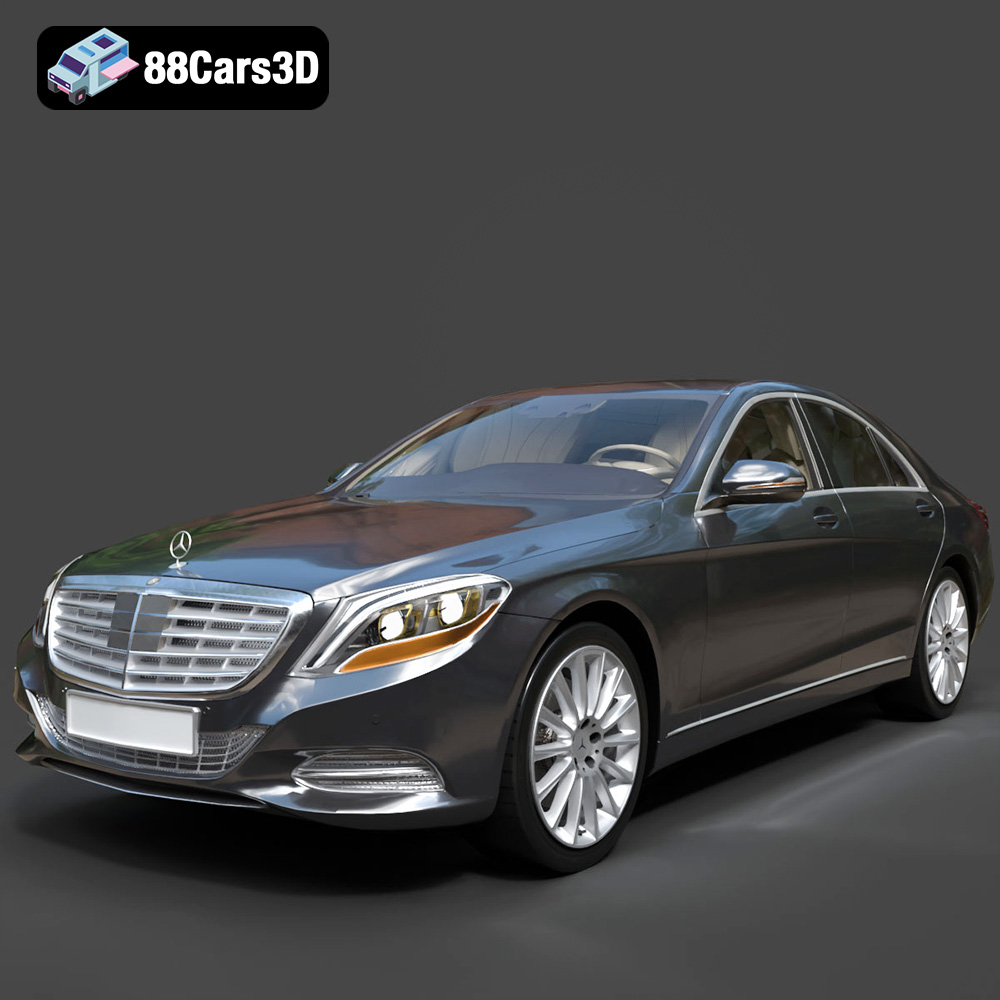
Texture: Yes
Material: Yes
Download the Mercedes-Benz S500 3D Model featuring clean geometry, realistic detailing, and a fully modeled interior. Includes .blend, .fbx, .obj, .glb, .stl, .ply, .unreal, and .max formats for rendering, simulation, and game development.
Price: $9.99
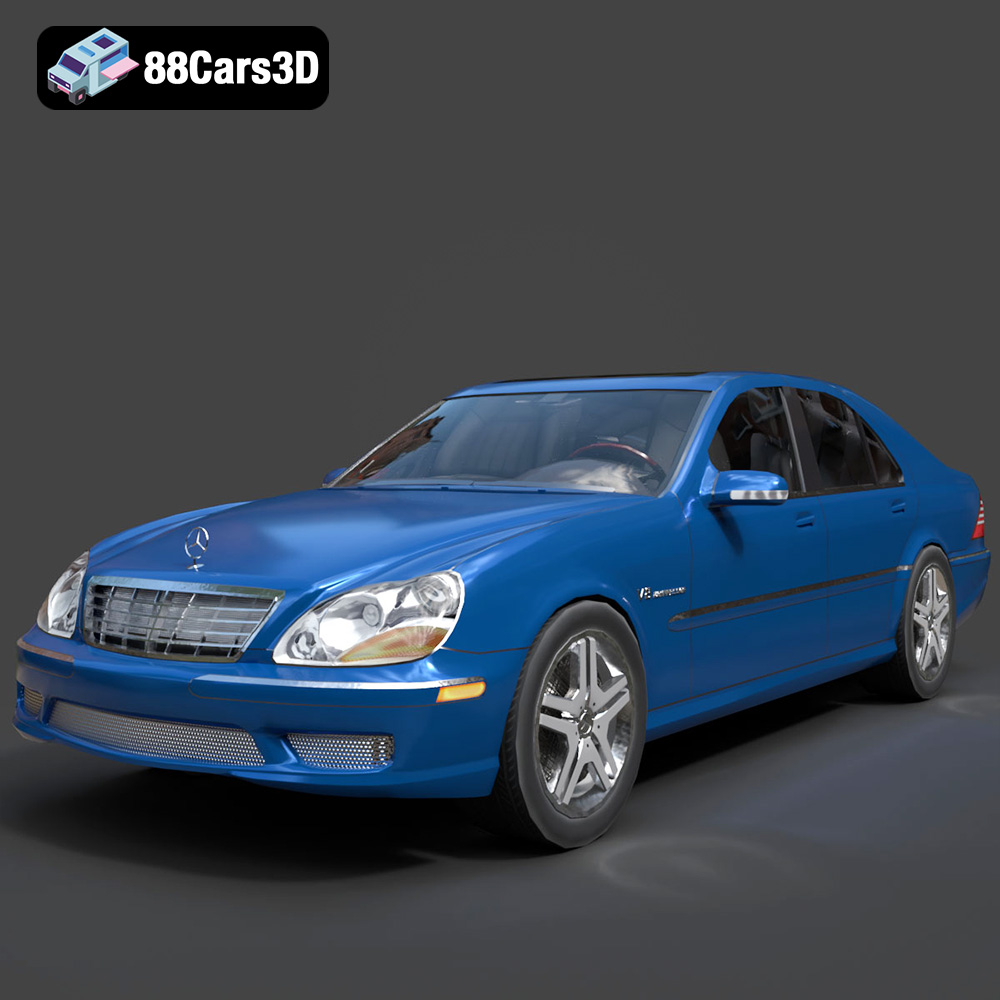
Texture: Yes
Material: Yes
Download the Mercedes-Benz S55 W220 AMG 1999 3D Model featuring clean geometry, realistic detailing, and a fully modeled interior. Includes .blend, .fbx, .obj, .glb, .stl, .ply, .unreal, and .max formats for rendering, simulation, and game development.
Price: $9.99
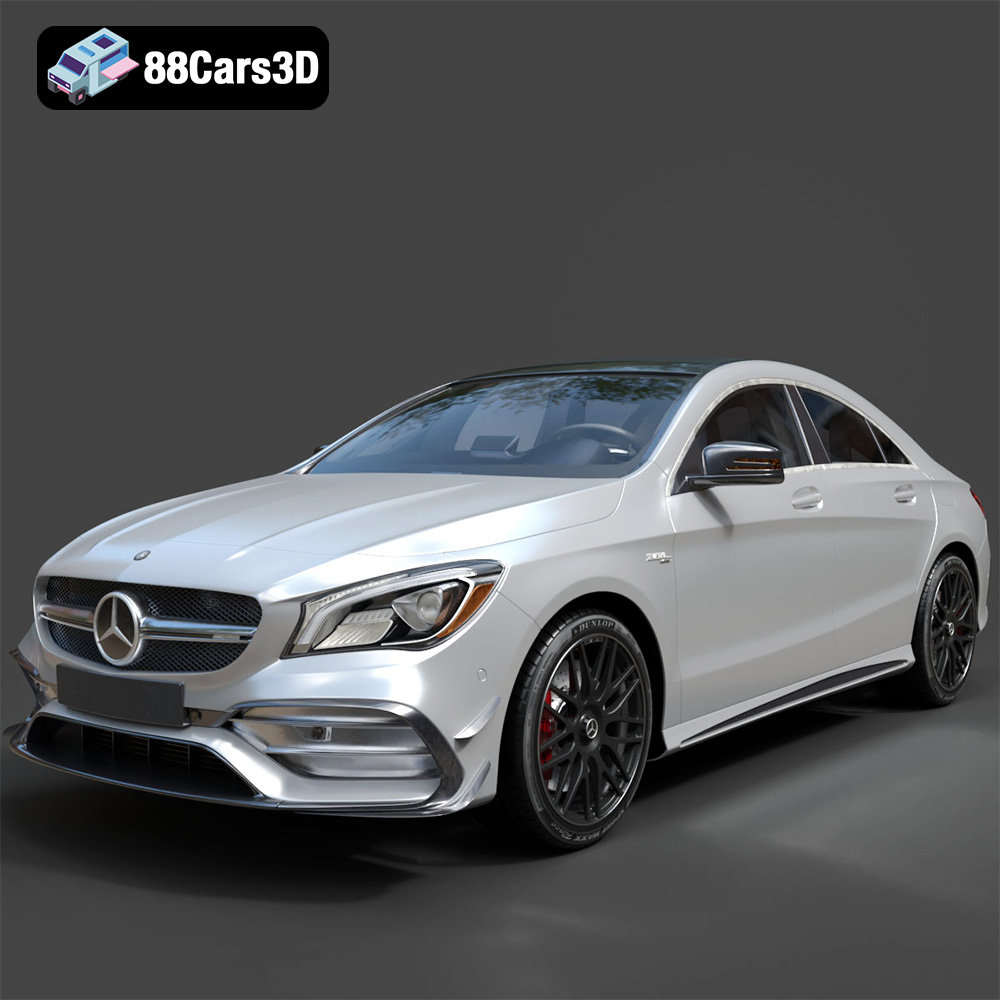
Texture: Yes
Material: Yes
Download the Mercedes-Benz CLA45 AMG 2017 3D Model featuring clean geometry, realistic detailing, and a fully modeled interior. Includes .blend, .fbx, .obj, .glb, .stl, .ply, .unreal, and .max formats for rendering, simulation, and game development.
Price: $29.99
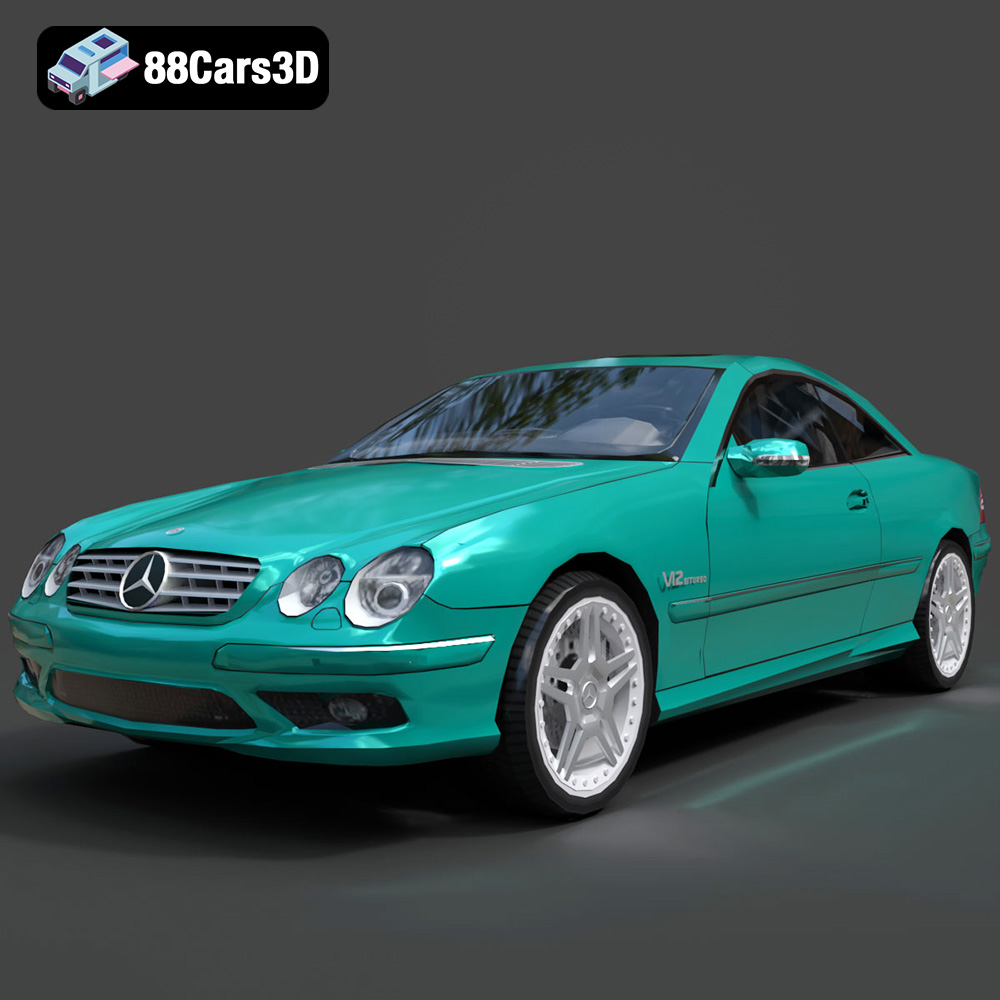
Texture: Yes
Material: Yes
Download the Mercedes-Benz CL65 C215 AMG 3D Model featuring clean geometry, realistic detailing, and a fully modeled interior. Includes .blend, .fbx, .obj, .glb, .stl, .ply, .unreal, and .max formats for rendering, simulation, and game development.
Price: $9.99
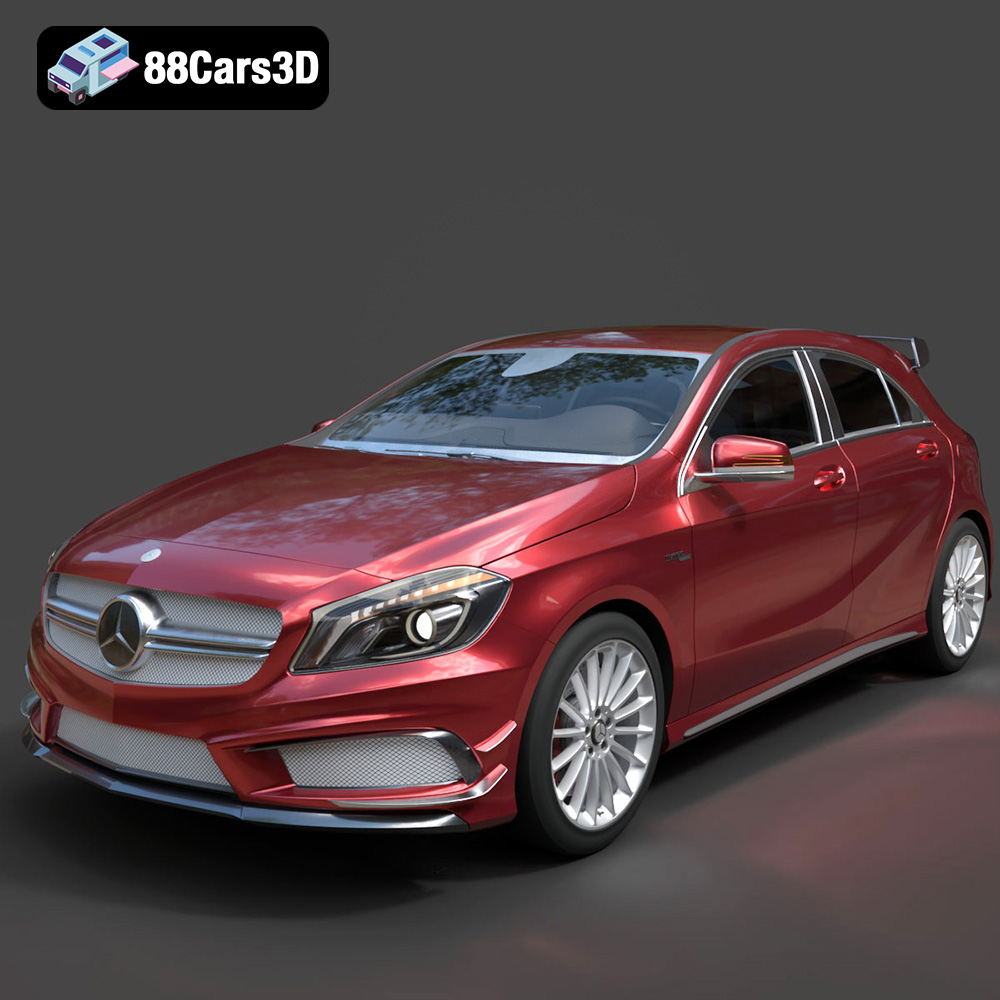
Texture: Yes
Material: Yes
Download the Mercedes-Benz A45 2021 3D Model featuring clean geometry, realistic detailing, and a fully modeled interior. Includes .blend, .fbx, .obj, .glb, .stl, .ply, .unreal, and .max formats for rendering, simulation, and game development.
Price: $9.99

