Get 50% OFF All Premium 3D & STL Models!

The allure of a perfectly rendered automobile goes beyond intricate modeling; it lies in the captivating interplay of light and surface. For 3D artists, automotive designers, and game developers, creating truly photorealistic vehicle materials is often the ultimate test of skill. While a showroom-quality 3D car model is impressive, it’s the shader work that breathes life into its digital form, making it indistinguishable from reality.
Achieving that hyper-realistic sheen, the deep reflections, and the subtle metallic sparkle seen on high-end vehicles is an art form rooted in technical understanding. It’s about meticulously recreating the complex optical properties of real-world digital automotive paint. This isn’t just about picking a color; it’s about constructing a multi-layered material that accurately simulates how light interacts with every aspect of the finish. In this comprehensive guide, we’ll dive deep into mastering car paint shaders, transforming your renders from good to breathtaking.
Before we can build a compelling PBR car paint shader, we must understand the physical construction of automotive paint. It’s far more than a single layer of color. Modern vehicle finishes are sophisticated systems, each layer contributing to the final look, durability, and optical properties that we aim to replicate in 3D. Understanding these layers is the bedrock of crafting truly convincing photorealistic vehicle materials.
The journey begins with the primer, a foundational layer applied directly to the car’s body. Its primary purpose is adhesion and corrosion protection. While not directly visible in the final finish, a consistent, smooth primer allows the subsequent layers to look their best. On top of the primer comes the base coat, which is where the primary color of the car resides. This layer defines the hue and basic saturation. Importantly, the base coat itself is often quite diffuse or matte before the application of the clear coat. In 3D, this translates to the base color or albedo texture for our shader.
One of the most distinctive features of modern digital automotive paint is the presence of special effect pigments. These are typically metallic flakes (tiny aluminum particles) or pearlescent pigments (mica flakes coated with titanium dioxide). When suspended within the base coat, these flakes reflect and refract light in myriad directions, creating the characteristic sparkle, depth, and color shift that makes car paint so dynamic. The angle at which light hits these flakes, and the viewer’s perspective, dramatically influences the perceived brightness and color. Replicating this metallic flake effect is crucial for authenticity.
The final and perhaps most visually impactful layer is the clear coat layer. This transparent, durable urethane or acrylic coating is applied over the base coat and metallic flakes. It provides gloss, protection against UV rays and scratches, and most importantly for our purposes, it’s responsible for the deep, mirror-like reflections that define a new car’s finish. The clear coat acts as a distinct reflective surface, separate from the underlying color, and its properties – particularly its smoothness and thickness – dictate the quality of reflections and the overall ‘wet’ look. Without a proper clear coat simulation, even the most beautiful base color will fall flat.
Physically Based Rendering (PBR) is the industry standard for achieving realism, and it’s absolutely essential for crafting high-quality PBR car paint shaders. PBR workflows ensure that materials react to light in a physically plausible way, regardless of the lighting environment. This consistency is key to creating believable photorealistic vehicle materials that hold up under any angle or light source. Let’s break down the core PBR principles applicable to car paint.
The albedo map, often referred to as the base color, represents the inherent color of the material, free from any lighting information. For car paint, this is the color of the base coat before any reflections or specular highlights are applied. It should be a desaturated, neutral representation of the paint’s primary hue. Avoid baking shadows or highlights into your albedo texture. For a deep red car, your albedo might be a rich, but not overly bright, red. If your base coat contains metallic or pearl flakes, the albedo often captures the average color of the underlying paint, with the flakes handled by other parameters.
The roughness map dictates how scattered or focused reflections appear on a surface. A value of 0 (black) indicates a perfectly smooth, mirror-like surface, while a value of 1 (white) represents a completely rough, diffuse surface. For car paint, especially the clear coat, roughness values will typically be very low, often in the 0.01 to 0.05 range for a highly polished surface. Subtle variations in roughness can simulate dust, scratches, or wear, adding to the realism. Remember that the clear coat’s roughness will be the primary driver of reflection quality.
In PBR, the metallic parameter distinguishes between dielectric (non-metallic) and metallic surfaces. Metallic surfaces reflect light by absorbing certain wavelengths and reflecting others, leading to colored reflections. Dielectric surfaces, like plastic or glass, reflect light uniformly across all wavelengths, resulting in uncolored specular reflections. Car paint, despite having metallic flakes, is overwhelmingly a dielectric material because of its thick clear coat. Therefore, for your main PBR car paint shader, the metallic value should typically be set to 0. The metallic flakes themselves are a separate consideration, often introduced through custom shader logic rather than the core metallic PBR channel.
The Index of Refraction (IOR) describes how much light bends when passing through a material. For dielectric materials like the clear coat of car paint, the IOR also dictates the intensity of reflections. A common IOR for clear coats and plastics is around 1.4-1.5. Energy conservation is a fundamental PBR principle stating that a surface cannot reflect more light than it receives. This means that as reflections become more intense (due to lower roughness or higher IOR), less light is scattered diffusely, and vice-versa. Modern render engines handle this automatically, ensuring physically accurate results when you correctly set your albedo, roughness, metallic, and IOR values.
The clear coat layer is the undisputed hero of convincing car paint. It’s what gives automotive finishes their signature depth, shine, and the stunning ability to reflect the environment. Without a meticulously crafted clear coat, your car paint will look flat and lifeless. This layer needs to be treated almost as a separate, transparent material on top of your base coat and flakes.
Functionally, the clear coat is a thin, smooth, dielectric layer sitting on top of the colored base and metallic flakes. Its primary role in a shader is to provide a highly reflective, glossy surface that interacts with environment maps and light sources. This means it will have its own set of PBR parameters, distinct from the underlying base. The clear coat’s roughness will be very low, leading to sharp, defined reflections. Its IOR will also be crucial in determining the intensity and falloff of these reflections. Thinking of it as a transparent shell over your car is a good mental model.
While often described as “perfectly smooth,” even a factory-fresh clear coat has microscopic imperfections. These can be simulated with a very subtle roughness map, perhaps a fine noise pattern, to break up perfect reflections and add a touch of realism. More importantly, the clear coat can exhibit subtle anisotropic reflections, especially on curved surfaces or where directional polishing might have occurred. While the primary anisotropy often comes from the metallic flakes or brushed metal components, a subtle anisotropic component in the clear coat can enhance the sense of form and premium finish. This might require blending anisotropic reflection properties into your clear coat shader, making sure the effect is subtle and believable.
The Fresnel effect is paramount for realistic clear coats. It describes how the reflectivity of a surface changes based on the viewing angle. Surfaces viewed head-on (perpendicular to the normal) will reflect less light, while surfaces viewed at glancing angles (parallel to the normal) will reflect significantly more. This phenomenon is why you see strong reflections on the sides of a car, but often more of the underlying color when looking straight down onto a panel. For car paint, the Fresnel effect gives the clear coat its characteristic depth and sheen, causing reflections to intensify gracefully towards the edges of curved panels. Most modern PBR shaders include a Fresnel component automatically tied to the IOR, but understanding its role is key to fine-tuning.
For ultimate realism, some advanced shaders employ a multi-layered clear coat approach. This involves simulating two or even three distinct clear coat layers, each with slightly different roughness values. A slightly rougher ‘top’ layer could represent micro-scratches or dust, while a cleaner ‘inner’ layer provides the primary deep reflections. This technique adds an incredible sense of depth and complexity to the surface, mimicking the thickness and protective properties of real-world clear coats. While computationally more expensive, it can push your photorealistic vehicle materials to the highest possible standard. Many resources, including high-quality models from 88cars3d.com, demonstrate this level of detail.
The subtle sparkle and depth provided by metallic or pearlescent flakes are signature characteristics of high-end car paint. Recreating this metallic flake effect accurately is one of the biggest challenges and rewards in developing digital automotive paint shaders. It’s about simulating millions of tiny, reflective particles without crushing render performance.
The simplest approach involves using a noise texture to represent the distribution of flakes. This noise texture, often a fine Perlin or Voronoi noise, can modulate the reflection intensity or even the normal direction of the base coat. By applying a very high-frequency, low-amplitude normal map derived from such a noise, you can simulate tiny bumps that catch the light, mimicking individual flakes. The color of these ‘reflections’ can be subtly tinted to match the metallic nature of the flakes. This method is performance-friendly and works well for distant views or less extreme close-ups.
For truly convincing close-ups and more dynamic flake behavior, more advanced techniques are required. One common approach involves using a specialized procedural noise or a custom texture that generates ‘points’ or ‘streaks’ of reflection. These patterns are then used to drive a very localized specular highlight or even influence a custom normal map. The key is often to introduce a slight rotational component to these flakes, so they appear to glint independently as the camera or light moves. This leads to the characteristic ‘pop’ and shimmer of real metallic paint.
Another powerful technique involves using a layered approach within your shader. You might have a base layer, and then on top, a separate layer dedicated solely to the flakes. This flake layer could have its own metallic and roughness properties, making it truly metallic, and its reflections would be driven by a highly detailed, often anisotropic, normal map. This allows for greater control over the flake’s individual appearance and response to light.
The metallic flake effect often ties directly into anisotropic reflections. Individual flakes are essentially tiny, flat mirrors, and their collective orientation can create an anisotropic effect. For example, if the flakes are somewhat aligned or stretched due to the painting process, they will cause reflections to stretch in a particular direction. By applying a carefully crafted anisotropic normal map or by using a directional noise for the flakes, you can simulate this directional stretching of highlights. This adds a crucial layer of realism, especially on large, curved panels where the light streaks would naturally appear.
Controlling the visual characteristics of your flakes is critical for achieving different paint finishes. Parameters for flake size (how large each individual sparkle appears), density (how many flakes are visible per unit area), and color (whether they are silver, gold, or even rainbow-hued for pearl paints) are essential. These parameters allow you to create a vast array of paint types, from fine metallic finishes to coarse glitter. Often, these are exposed as adjustable parameters in your shader graph setup, allowing for artistic iteration and variation.
Anisotropic reflections are a critical visual cue for high-quality photorealistic vehicle materials. Unlike isotropic reflections, which are uniform in all directions, anisotropic reflections stretch or blur along a particular axis. This effect is commonly seen on brushed metals, hair, and, significantly, on the clear coat and metallic flakes of automotive paint. Mastering this phenomenon adds a layer of sophistication and realism that sets renders apart.
Anisotropy occurs when a surface has microscopic grooves or a directional grain that causes light to scatter more along one axis than another. Imagine a record player’s grooves or brushed metal – the highlights appear stretched. For car paint, this manifests in two primary ways:
This stretching of highlights helps define the curvature of panels and adds a dynamic quality to the reflections, making the car feel more substantial and “real.”
While often associated with brushed aluminum trim or engine components, the principle of anisotropy extends to the paint itself. The orientation of metallic flakes within the paint can lead to directional reflections. Furthermore, the application and polishing process of the clear coat can introduce subtle directional micro-scratches or an overall “flow” to the surface. Capturing these subtle nuances is vital for advanced digital automotive paint. For example, on a smoothly curved hood, you might see subtle streaks of light that follow the contour, rather than perfectly round specular highlights.
Implementing anisotropic reflections in a shader graph setup typically involves manipulating the surface’s tangent space. The tangent map (or tangent space normal map) defines the local orientation of the surface. By providing a custom tangent direction, you can control the direction in which reflections stretch. Most render engines and shader graphs offer nodes or parameters to control anisotropy:
It’s common to blend multiple anisotropic layers – perhaps a subtle one for the clear coat and a more pronounced one driven by the flake simulation.
For car paint, anisotropy isn’t usually a standalone effect but rather an integrated part of the clear coat and flake layers. The reflections seen through the clear coat layer will inherently pick up any anisotropic properties from the flakes below or micro-scratches within the clear coat itself. This means that your clear coat shader should be capable of combining its default PBR reflections with an anisotropic component. The Fresnel effect will still apply, modulating the intensity of these stretched reflections based on the viewing angle. This intricate blending is where the true mastery of photorealistic vehicle materials lies, requiring careful iteration and artistic judgment.
Now that we’ve explored the individual components, it’s time to assemble them into a cohesive shader graph setup. This is where the theoretical understanding translates into practical application within your chosen 3D software or game engine. Whether you’re using Unreal Engine’s Material Editor, Unity’s Shader Graph, Blender’s Shader Editor, or a renderer like V-Ray or Corona, the underlying principles remain consistent, even if the node names differ.
The most effective approach for PBR car paint is a layered shader. Think of it as building a stack:
Each layer contributes to the final look, and the magic happens in how they are blended and interact with light.
A good car paint shader isn’t just physically accurate; it’s also artist-friendly. This means exposing key parameters in your shader graph setup that allow for easy iteration and customization without diving into complex node networks. Examples of crucial exposed parameters include:
These controls enable artists to create a vast range of digital automotive paint finishes, from showroom new to subtly worn, without rebuilding the shader from scratch.
While the principles are universal, the implementation varies by software.
Regardless of the tool, the goal is to break down the material into its physical components and represent them with appropriate nodes and connections. For artists seeking to create stunning automotive scenes quickly, high-quality models from 88cars3d.com often come with expertly pre-configured materials, providing an excellent starting point for further customization.
Creating a hyper-realistic PBR car paint shader is one thing; ensuring it performs efficiently in a production environment is another. High-end automotive renders, especially for animation or interactive applications, demand a balance between visual fidelity and computational cost. Strategic optimization is key to delivering stunning photorealistic vehicle materials without crippling render times or frame rates.
The most complex shaders with multiple layers, intricate noise patterns for flakes, and advanced anisotropic calculations can be very demanding. It’s crucial to identify where simplification can occur without a noticeable drop in quality.
Always profile your shaders to pinpoint performance bottlenecks.
Leverage Level of Detail (LODs) for your car paint materials. As the camera moves further away, you can swap to a less complex shader that uses simpler calculations for flakes and reflections. This is especially vital for game engines. Material instances (or shader instances/material overrides) are invaluable. Create a master car paint shader graph, then derive instances from it. These instances inherit the logic but allow you to change exposed parameters (color, roughness, flake size) without recompiling the entire shader. This speeds up iteration and reduces memory footprint for a fleet of vehicles with different paint jobs.
Developing truly convincing digital automotive paint is an iterative process. It requires constant testing under various lighting conditions and viewing angles.
Don’t be afraid to tweak small values and re-render. Tiny adjustments can make a huge difference.
Even the most exquisite paint shader won’t salvage a poorly modeled car. For your shader to truly shine, it needs to be applied to a clean, accurately unwrapped, and high-fidelity 3D model. Models with clean topology, correct normal directions, and proper UV mapping are essential. Resources like 88cars3d.com offer professional, production-ready 3D car models that provide the perfect canvas for your hyper-realistic paint shaders. Starting with a solid foundation allows you to focus your efforts on the intricate details of material creation, rather than fighting with mesh issues.
Mastering hyper-realistic car paint shaders is a journey that demands both artistic vision and a deep technical understanding of how light interacts with materials. We’ve deconstructed the layers of real-world automotive paint, applied fundamental PBR principles, and dived into advanced techniques for crafting a stunning clear coat layer, mesmerizing metallic flake effects, and compelling anisotropic reflections. We’ve also explored the practicalities of a robust shader graph setup and the critical importance of optimization for production.
The pursuit of photorealistic vehicle materials is an ongoing challenge, but with the knowledge gained here, you’re well-equipped to elevate your 3D automotive renders beyond the showroom floor. Remember that practice, observation, and meticulous attention to detail are your greatest allies. Experiment with different parameters, study real-world car finishes, and don’t be afraid to push the boundaries of your digital automotive paint.
To truly bring your automotive visions to life, start with a solid foundation. Explore the extensive collection of high-quality, production-ready 3D car models available at 88cars3d.com. These models provide the perfect canvas for you to apply your newfound shader mastery, ensuring your creations are not only technically accurate but also visually breathtaking. Dive in, experiment, and let your passion for automotive design shine through every pixel of your renders!

Texture: Yes
Material: Yes
Download the Skoda Superb 2009 3D Model featuring clean geometry, realistic detailing, and a fully modeled interior. Includes .blend, .fbx, .obj, .glb, .stl, .ply, .unreal, and .max formats for rendering, simulation, and game development.
Price: $10

Texture: Yes
Material: Yes
Download the Skoda Superb 2006 3D Model featuring clean geometry, realistic detailing, and a fully modeled interior. Includes .blend, .fbx, .obj, .glb, .stl, .ply, .unreal, and .max formats for rendering, simulation, and game development.
Price: $10

Texture: Yes
Material: Yes
Download the Ford Mustang Shelby Super Snake Concept 2018 3D Model featuring clean geometry, realistic detailing, and a fully modeled interior. Includes .blend, .fbx, .obj, .glb, .stl, .ply, .unreal, and .max formats for rendering, simulation, and game development.
Price: $18.99

Texture: Yes
Material: Yes
Download the Porsche Cayenne Turbo 2018 3D Model featuring clean geometry, realistic detailing, and a fully modeled interior. Includes .blend, .fbx, .obj, .glb, .stl, .ply, .unreal, and .max formats for rendering, simulation, and game development.
Price: $10

Texture: Yes
Material: Yes
Download the Chevrolet Lacetti Sedan 2004 3D Model featuring clean geometry, realistic detailing, and a fully modeled interior. Includes .blend, .fbx, .obj, .glb, .stl, .ply, .unreal, and .max formats for rendering, simulation, and game development.
Price: $10

Texture: Yes
Material: Yes
Download the Skoda Rapid 2013 3D Model featuring clean geometry, realistic detailing, and a fully modeled interior. Includes .blend, .fbx, .obj, .glb, .stl, .ply, .unreal, and .max formats for rendering, simulation, and game development.
Price: $10

Texture: Yes
Material: Yes
Download the Skoda Octavia A5-007 3D Model featuring clean geometry, realistic detailing, and a fully modeled interior. Includes .blend, .fbx, .obj, .glb, .stl, .ply, .unreal, and .max formats for rendering, simulation, and game development.
Price: $10

Texture: Yes
Material: Yes
Download the Skoda Fabia 2023 3D Model featuring clean geometry, realistic detailing, and a fully modeled interior. Includes .blend, .fbx, .obj, .glb, .stl, .ply, .unreal, and .max formats for rendering, simulation, and game development.
Price: $10

Texture: Yes
Material: Yes
Download the Skoda Fabia 2007 3D Model featuring clean geometry, realistic detailing, and a fully modeled interior. Includes .blend, .fbx, .obj, .glb, .stl, .ply, .unreal, and .max formats for rendering, simulation, and game development.
Price: $10

Texture: Yes
Material: Yes
Download the Honda VFR 1200 F 2015 3D Model featuring clean geometry, realistic detailing, and a fully modeled interior. Includes .blend, .fbx, .obj, .glb, .stl, .ply, .unreal, and .max formats for rendering, simulation, and game development.
Price: $10

Texture: Yes
Material: Yes
Download the Subaru BRZ 2025 3D Model featuring clean geometry, realistic detailing, and a fully modeled interior. Includes .blend, .fbx, .obj, .glb, .stl, .ply, .unreal, and .max formats for rendering, simulation, and game development.
Price: $10

Texture: Yes
Material: Yes
Download the SsangYong Rodius 2007 3D Model featuring clean geometry, realistic detailing, and a fully modeled interior. Includes .blend, .fbx, .obj, .glb, .stl, .ply, .unreal, and .max formats for rendering, simulation, and game development.
Price: $10

Texture: Yes
Material: Yes
Download the Subaru Impreza 1992 3D Model featuring clean geometry, realistic detailing, and a fully modeled interior. Includes .blend, .fbx, .obj, .glb, .stl, .ply, .unreal, and .max formats for rendering, simulation, and game development.
Price: $10

Texture: Yes
Material: Yes
Download the Subaru Impreza 2005 3D Model featuring clean geometry, realistic detailing, and a fully modeled interior. Includes .blend, .fbx, .obj, .glb, .stl, .ply, .unreal, and .max formats for rendering, simulation, and game development.
Price: $10

Texture: Yes
Material: Yes
Download the Spyker C8-007 2004 3D Model featuring clean geometry, realistic detailing, and a fully modeled interior. Includes .blend, .fbx, .obj, .glb, .stl, .ply, .unreal, and .max formats for rendering, simulation, and game development.
Price: $10

Texture: Yes
Material: Yes
Download the Smart Roadster 2003 3D Model featuring clean geometry, realistic detailing, and a fully modeled interior. Includes .blend, .fbx, .obj, .glb, .stl, .ply, .unreal, and .max formats for rendering, simulation, and game development.
Price: $10

Texture: Yes
Material: Yes
Download the Skoda Roomster 2007 3D Model featuring clean geometry, realistic detailing, and a fully modeled interior. Includes .blend, .fbx, .obj, .glb, .stl, .ply, .unreal, and .max formats for rendering, simulation, and game development.
Price: $10

Texture: Yes
Material: Yes
Download the Subaru Impreza Sport Wagon 3D Model featuring clean geometry, realistic detailing, and a fully modeled interior. Includes .blend, .fbx, .obj, .glb, .stl, .ply, .unreal, and .max formats for rendering, simulation, and game development.
Price: $10

Texture: Yes
Material: Yes
Download the Skoda Octavia A7 2017 3D Model featuring clean geometry, realistic detailing, and a fully modeled interior. Includes .blend, .fbx, .obj, .glb, .stl, .ply, .unreal, and .max formats for rendering, simulation, and game development.
Price: $10

Texture: Yes
Material: Yes
Download the Suzuki SX4-002 3D Model featuring clean geometry, realistic detailing, and a fully modeled interior. Includes .blend, .fbx, .obj, .glb, .stl, .ply, .unreal, and .max formats for rendering, simulation, and game development.
Price: $10

Texture: Yes
Material: Yes
Download the Tesla Model S 2024 3D Model featuring clean geometry, realistic detailing, and a fully modeled interior. Includes .blend, .fbx, .obj, .glb, .stl, .ply, .unreal, and .max formats for rendering, simulation, and game development.
Price: $10

Texture: Yes
Material: Yes
Download the Subaru Impreza WRX STi-002 3D Model featuring clean geometry, realistic detailing, and a fully modeled interior. Includes .blend, .fbx, .obj, .glb, .stl, .ply, .unreal, and .max formats for rendering, simulation, and game development.
Price: $10

Texture: Yes
Material: Yes
Download the Subaru Impreza WRX STi Sedan 3D Model featuring clean geometry, realistic detailing, and a fully modeled interior. Includes .blend, .fbx, .obj, .glb, .stl, .ply, .unreal, and .max formats for rendering, simulation, and game development.
Price: $10

Texture: Yes
Material: Yes
Download the Subaru Legacy 2009 3D Model featuring clean geometry, realistic detailing, and a fully modeled interior. Includes .blend, .fbx, .obj, .glb, .stl, .ply, .unreal, and .max formats for rendering, simulation, and game development.
Price: $10

Texture: Yes
Material: Yes
Download the Suzuki Swift 2024 3D Model featuring clean geometry, realistic detailing, and a fully modeled interior. Includes .blend, .fbx, .obj, .glb, .stl, .ply, .unreal, and .max formats for rendering, simulation, and game development.
Price: $10

Texture: Yes
Material: Yes
Download the Suzuki Liana Sedan 2004 3D Model featuring clean geometry, realistic detailing, and a fully modeled interior. Includes .blend, .fbx, .obj, .glb, .stl, .ply, .unreal, and .max formats for rendering, simulation, and game development.
Price: $10

Texture: Yes
Material: Yes
Download the Subaru Outback 2024 3D Model featuring clean geometry, realistic detailing, and a fully modeled interior. Includes .blend, .fbx, .obj, .glb, .stl, .ply, .unreal, and .max formats for rendering, simulation, and game development.
Price: $10

Texture: Yes
Material: Yes
Download the Subaru Legacy 2003 3D Model featuring clean geometry, realistic detailing, and a fully modeled interior. Includes .blend, .fbx, .obj, .glb, .stl, .ply, .unreal, and .max formats for rendering, simulation, and game development.
Price: $10

Texture: Yes
Material: Yes
Download the Subaru Legacy Touring Wagon 3D Model featuring clean geometry, realistic detailing, and a fully modeled interior. Includes .blend, .fbx, .obj, .glb, .stl, .ply, .unreal, and .max formats for rendering, simulation, and game development.
Price: $10

Texture: Yes
Material: Yes
Download the Toyota Mark II (X100) 3D Model featuring clean geometry, realistic detailing, and a fully modeled interior. Includes .blend, .fbx, .obj, .glb, .stl, .ply, .unreal, and .max formats for rendering, simulation, and game development.
Price: $10

Texture: Yes
Material: Yes
Download the Toyota Corona 1985 3D Model featuring clean geometry, realistic detailing, and a fully modeled interior. Includes .blend, .fbx, .obj, .glb, .stl, .ply, .unreal, and .max formats for rendering, simulation, and game development.
Price: $10

Texture: Yes
Material: Yes
Download the Toyota Mark II X81 1990 3D Model featuring clean geometry, realistic detailing, and a fully modeled interior. Includes .blend, .fbx, .obj, .glb, .stl, .ply, .unreal, and .max formats for rendering, simulation, and game development.
Price: $10

Texture: Yes
Material: Yes
Download the Toyota iQ EV 2012 3D Model featuring clean geometry, realistic detailing, and a fully modeled interior. Includes .blend, .fbx, .obj, .glb, .stl, .ply, .unreal, and .max formats for rendering, simulation, and game development.
Price: $10

Texture: Yes
Material: Yes
Download the Toyota Aygo 2013 3D Model featuring clean geometry, realistic detailing, and a fully modeled interior. Includes .blend, .fbx, .obj, .glb, .stl, .ply, .unreal, and .max formats for rendering, simulation, and game development.
Price: $10

Texture: Yes
Material: Yes
Download the Toyota Crown S180 2005 3D Model featuring clean geometry, realistic detailing, and a fully modeled interior. Includes .blend, .fbx, .obj, .glb, .stl, .ply, .unreal, and .max formats for rendering, simulation, and game development.
Price: $10

Texture: Yes
Material: Yes
Download the Toyota Celica 2004 3D Model featuring clean geometry, realistic detailing, and a fully modeled interior. Includes .blend, .fbx, .obj, .glb, .stl, .ply, .unreal, and .max formats for rendering, simulation, and game development.
Price: $10

Texture: Yes
Material: Yes
Download the Toyota Corolla AE100 1992 3D Model featuring clean geometry, realistic detailing, and a fully modeled interior. Includes .blend, .fbx, .obj, .glb, .stl, .ply, .unreal, and .max formats for rendering, simulation, and game development.
Price: $10

Texture: Yes
Material: Yes
Download the Toyota Mark II X110 2000 3D Model featuring clean geometry, realistic detailing, and a fully modeled interior. Includes .blend, .fbx, .obj, .glb, .stl, .ply, .unreal, and .max formats for rendering, simulation, and game development.
Price: $10

Texture: Yes
Material: Yes
Download the Toyota Corolla 2020 3D Model featuring clean geometry, realistic detailing, and a fully modeled interior. Includes .blend, .fbx, .obj, .glb, .stl, .ply, .unreal, and .max formats for rendering, simulation, and game development.
Price: $10

Texture: Yes
Material: Yes
Download the Toyota Yaris 2020 3D Model featuring clean geometry, realistic detailing, and a fully modeled interior. Includes .blend, .fbx, .obj, .glb, .stl, .ply, .unreal, and .max formats for rendering, simulation, and game development.
Price: $9.9

Texture: Yes
Material: Yes
Download the Volkswagen Beetle 2012 3D Model featuring clean geometry, realistic detailing, and a fully modeled interior. Includes .blend, .fbx, .obj, .glb, .stl, .ply, .unreal, and .max formats for rendering, simulation, and game development.
Price: $9.9

Texture: Yes
Material: Yes
Download the Toyota Matrix 2005 3D Model featuring clean geometry, realistic detailing, and a fully modeled interior. Includes .blend, .fbx, .obj, .glb, .stl, .ply, .unreal, and .max formats for rendering, simulation, and game development.
Price: $9.9

Texture: Yes
Material: Yes
Download the Toyota Yaris Sedan 3D Model featuring clean geometry, realistic detailing, and a fully modeled interior. Includes .blend, .fbx, .obj, .glb, .stl, .ply, .unreal, and .max formats for rendering, simulation, and game development.
Price: $9.9

Texture: Yes
Material: Yes
Download the Volkswagen Golf R-004 2024 3D Model featuring clean geometry, realistic detailing, and a fully modeled interior. Includes .blend, .fbx, .obj, .glb, .stl, .ply, .unreal, and .max formats for rendering, simulation, and game development.
Price: $9.9

Texture: Yes
Material: Yes
Download the Volkswagen Golf 5 Door 2010 3D Model featuring clean geometry, realistic detailing, and a fully modeled interior. Includes .blend, .fbx, .obj, .glb, .stl, .ply, .unreal, and .max formats for rendering, simulation, and game development.
Price: $9.9

Texture: Yes
Material: Yes
Download the Toyota Premio 2010 3D Model featuring clean geometry, realistic detailing, and a fully modeled interior. Includes .blend, .fbx, .obj, .glb, .stl, .ply, .unreal, and .max formats for rendering, simulation, and game development.
Price: $9.9

Texture: Yes
Material: Yes
Download the Toyota Opa 2000 3D Model featuring clean geometry, realistic detailing, and a fully modeled interior. Includes .blend, .fbx, .obj, .glb, .stl, .ply, .unreal, and .max formats for rendering, simulation, and game development.
Price: $9.9

Texture: Yes
Material: Yes
Download the Volkswagen Polo 5 Door 2010 3D Model featuring clean geometry, realistic detailing, and a fully modeled interior. Includes .blend, .fbx, .obj, .glb, .stl, .ply, .unreal, and .max formats for rendering, simulation, and game development.
Price: $9.9

Texture: Yes
Material: Yes
Download the Toyota Prius 2024 3D Model featuring clean geometry, realistic detailing, and a fully modeled interior. Includes .blend, .fbx, .obj, .glb, .stl, .ply, .unreal, and .max formats for rendering, simulation, and game development.
Price: $9.9

Texture: Yes
Material: Yes
Download the Toyota Yaris 1999 3D Model featuring clean geometry, realistic detailing, and a fully modeled interior. Includes .blend, .fbx, .obj, .glb, .stl, .ply, .unreal, and .max formats for rendering, simulation, and game development.
Price: $9.9

Texture: Yes
Material: Yes
Download the Toyota Supra 2020 3D Model featuring clean geometry, realistic detailing, and a fully modeled interior. Includes .blend, .fbx, .obj, .glb, .stl, .ply, .unreal, and .max formats for rendering, simulation, and game development.
Price: $9.9

Texture: Yes
Material: Yes
Download the Volkswagen New Beetle 2000 3D Model featuring clean geometry, realistic detailing, and a fully modeled interior. Includes .blend, .fbx, .obj, .glb, .stl, .ply, .unreal, and .max formats for rendering, simulation, and game development.
Price: $14.99

Texture: Yes
Material: Yes
Download the Volkswagen Jetta 2005 3D Model featuring clean geometry, realistic detailing, and a fully modeled interior. Includes .blend, .fbx, .obj, .glb, .stl, .ply, .unreal, and .max formats for rendering, simulation, and game development.
Price: $18.99

Texture: Yes
Material: Yes
Download the Volkswagen Golf 3-Door 3D Model featuring clean geometry, realistic detailing, and a fully modeled interior. Includes .blend, .fbx, .obj, .glb, .stl, .ply, .unreal, and .max formats for rendering, simulation, and game development.
Price: $14.99

Texture: Yes
Material: Yes
Download the Volvo V70 2005 3D Model featuring clean geometry, realistic detailing, and a fully modeled interior. Includes .blend, .fbx, .obj, .glb, .stl, .ply, .unreal, and .max formats for rendering, simulation, and game development.
Price: $14.99

Texture: Yes
Material: Yes
Download the Volkswagen Bora 2004 3D Model featuring clean geometry, realistic detailing, and a fully modeled interior. Includes .blend, .fbx, .obj, .glb, .stl, .ply, .unreal, and .max formats for rendering, simulation, and game development.
Price: $14.99

Texture: Yes
Material: Yes
Download the Volkswagen Lupo 3D Model featuring clean geometry, realistic detailing, and a fully modeled interior. Includes .blend, .fbx, .obj, .glb, .stl, .ply, .unreal, and .max formats for rendering, simulation, and game development.
Price: $19.99

Texture: Yes
Material: Yes
Download the Volkswagen Passat B5 2000 3D Model featuring clean geometry, realistic detailing, and a fully modeled interior. Includes .blend, .fbx, .obj, .glb, .stl, .ply, .unreal, and .max formats for rendering, simulation, and game development.
Price: $19.99

Texture: Yes
Material: Yes
Download the Volkswagen Passat CC 3D Model featuring clean geometry, realistic detailing, and a fully modeled interior. Includes .blend, .fbx, .obj, .glb, .stl, .ply, .unreal, and .max formats for rendering, simulation, and game development.
Price: $19.99

Texture: Yes
Material: Yes
Download the Volkswagen Golf V 2006 3D Model featuring clean geometry, realistic detailing, and a fully modeled interior. Includes .blend, .fbx, .obj, .glb, .stl, .ply, .unreal, and .max formats for rendering, simulation, and game development.
Price: $19.99

Texture: Yes
Material: Yes
Download the Volvo S60 R-Design 3D Model featuring clean geometry, realistic detailing, and a fully modeled interior. Includes .blend, .fbx, .obj, .glb, .stl, .ply, .unreal, and .max formats for rendering, simulation, and game development.
Price: $19.99

Texture: Yes
Material: Yes
Download the Volkswagen Passat 2025 3D Model featuring clean geometry, realistic detailing, and a fully modeled interior. Includes .blend, .fbx, .obj, .glb, .stl, .ply, .unreal, and .max formats for rendering, simulation, and game development.
Price: $25.99

Texture: Yes
Material: Yes
Download the Volkswagen Passat Variant B6 2005 3D Model featuring clean geometry, realistic detailing, and a fully modeled interior. Includes .blend, .fbx, .obj, .glb, .stl, .ply, .unreal, and .max formats for rendering, simulation, and game development.
Price: $25.99

Texture: Yes
Material: Yes
Download the Volkswagen Phaeton W12 2004 3D Model featuring clean geometry, realistic detailing, and a fully modeled interior. Includes .blend, .fbx, .obj, .glb, .stl, .ply, .unreal, and .max formats for rendering, simulation, and game development.
Price: $25.99

Texture: Yes
Material: Yes
Download the Volkswagen Scirocco 2015 3D Model featuring clean geometry, realistic detailing, and a fully modeled interior. Includes .blend, .fbx, .obj, .glb, .stl, .ply, .unreal, and .max formats for rendering, simulation, and game development.
Price: $25.99

Texture: Yes
Material: Yes
Download the Volvo S60 2024 3D Model featuring clean geometry, realistic detailing, and a fully modeled interior. Includes .blend, .fbx, .obj, .glb, .stl, .ply, .unreal, and .max formats for rendering, simulation, and game development.
Price: $25.99

Texture: Yes
Material: Yes
Download the Volkswagen Polo 3D Model featuring clean geometry, realistic detailing, and a fully modeled interior. Includes .blend, .fbx, .obj, .glb, .stl, .ply, .unreal, and .max formats for rendering, simulation, and game development.
Price: $25.99

Texture: Yes
Material: Yes
Download the Volkswagen Golf 5-Doors 3D Model featuring clean geometry, realistic detailing, and a fully modeled interior. Includes .blend, .fbx, .obj, .glb, .stl, .ply, .unreal, and .max formats for rendering, simulation, and game development.
Price: $25.99

Texture: Yes
Material: Yes
Download the Volvo C70 T5 2000 3D Model featuring clean geometry, realistic detailing, and a fully modeled interior. Includes .blend, .fbx, .obj, .glb, .stl, .ply, .unreal, and .max formats for rendering, simulation, and game development.
Price: $23.99

Texture: Yes
Material: Yes
Download the Volvo S40 Sedan 2004 3D Model featuring clean geometry, realistic detailing, and a fully modeled interior. Includes .blend, .fbx, .obj, .glb, .stl, .ply, .unreal, and .max formats for rendering, simulation, and game development.
Price: $23.99

Texture: Yes
Material: Yes
Download the Volvo C30 BEV 2012 3D Model featuring clean geometry, realistic detailing, and a fully modeled interior. Includes .blend, .fbx, .obj, .glb, .stl, .ply, .unreal, and .max formats for rendering, simulation, and game development.
Price: $23.99

Texture: Yes
Material: Yes
Download the Volvo C70 1998 3D Model featuring clean geometry, realistic detailing, and a fully modeled interior. Includes .blend, .fbx, .obj, .glb, .stl, .ply, .unreal, and .max formats for rendering, simulation, and game development.
Price: $23.99

Texture: Yes
Material: Yes
Download the Mazda B-Series 3D Model featuring clean geometry, realistic detailing, and a fully modeled interior. Includes .blend, .fbx, .obj, .glb, .stl, .ply, .unreal, and .max formats for rendering, simulation, and game development.
Price: $23.99

Texture: Yes
Material: Yes
Download the Mercsedes Benz Z3-006 3D Model featuring clean geometry, realistic detailing, and a fully modeled interior. Includes .blend, .fbx, .obj, .glb, .stl, .ply, .unreal, and .max formats for rendering, simulation, and game development.
Price: $23.99

Texture: Yes
Material: Yes
Download the Mazda RX-7 3D Model featuring clean geometry, realistic detailing, and a fully modeled interior. Includes .blend, .fbx, .obj, .glb, .stl, .ply, .unreal, and .max formats for rendering, simulation, and game development.
Price: $23.99

Texture: Yes
Material: Yes
Download the Volvo VCC-003 3D Model featuring clean geometry, realistic detailing, and a fully modeled interior. Includes .blend, .fbx, .obj, .glb, .stl, .ply, .unreal, and .max formats for rendering, simulation, and game development.
Price: $23.99

Texture: Yes
Material: Yes
Download the Mercedes-Benz SLR McLaren 2005 3D Model featuring clean geometry, realistic detailing, and a fully modeled interior. Includes .blend, .fbx, .obj, .glb, .stl, .ply, .unreal, and .max formats for rendering, simulation, and game development.
Price: $23.99

Texture: Yes
Material: Yes
Download the GAZ 3110 Pickup 3D Model featuring clean geometry, realistic detailing, and a fully modeled interior. Includes .blend, .fbx, .obj, .glb, .stl, .ply, .unreal, and .max formats for rendering, simulation, and game development.
Price: $23.99

Texture: Yes
Material: Yes
Download the Mazda 626 GF 1997 3D Model featuring clean geometry, realistic detailing, and a fully modeled interior. Includes .blend, .fbx, .obj, .glb, .stl, .ply, .unreal, and .max formats for rendering, simulation, and game development.
Price: $23.99

Texture: Yes
Material: Yes
Download the Volvo S80 2011 3D Model featuring clean geometry, realistic detailing, and a fully modeled interior. Includes .blend, .fbx, .obj, .glb, .stl, .ply, .unreal, and .max formats for rendering, simulation, and game development.
Price: $23.99

Texture: Yes
Material: Yes
Download the Volkswagen Touran restyle-006 3D Model featuring clean geometry, realistic detailing, and a fully modeled interior. Includes .blend, .fbx, .obj, .glb, .stl, .ply, .unreal, and .max formats for rendering, simulation, and game development.
Price: $23.99

Texture: Yes
Material: Yes
Download the Skoda Octavia Scout 3D Model featuring clean geometry, realistic detailing, and a fully modeled interior. Includes .blend, .fbx, .obj, .glb, .stl, .ply, .unreal, and .max formats for rendering, simulation, and game development.
Price: $23.99

Texture: Yes
Material: Yes
Download the Volkswagen Golf V 2006 3D Model featuring clean geometry, realistic detailing, and a fully modeled interior. Includes .blend, .fbx, .obj, .glb, .stl, .ply, .unreal, and .max formats for rendering, simulation, and game development.
Price: $23.99

Texture: Yes
Material: Yes
Download the Mazda CX-7 3D Model featuring clean geometry, realistic detailing, and a fully modeled interior. Includes .blend, .fbx, .obj, .glb, .stl, .ply, .unreal, and .max formats for rendering, simulation, and game development.
Price: $23.99

Texture: Yes
Material: Yes
Download the Mazda Familia 3D Model featuring clean geometry, realistic detailing, and a fully modeled interior. Includes .blend, .fbx, .obj, .glb, .stl, .ply, .unreal, and .max formats for rendering, simulation, and game development.
Price: $23.99

Texture: Yes
Material: Yes
Download the GAS 21 3D Model featuring clean geometry, realistic detailing, and a fully modeled interior. Includes .blend, .fbx, .obj, .glb, .stl, .ply, .unreal, and .max formats for rendering, simulation, and game development.
Price: $23.99

Texture: Yes
Material: Yes
Download the Mercedes-Benz SL500 AMG (R129) 3D Model featuring clean geometry, realistic detailing, and a fully modeled interior. Includes .blend, .fbx, .obj, .glb, .stl, .ply, .unreal, and .max formats for rendering, simulation, and game development.
Price: $23.99

Texture: Yes
Material: Yes
Download the Mercedes-Benz S-Class W221 2005 3D Model featuring clean geometry, realistic detailing, and a fully modeled interior. Includes .blend, .fbx, .obj, .glb, .stl, .ply, .unreal, and .max formats for rendering, simulation, and game development.
Price: $23.99

Texture: Yes
Material: Yes
Download the Mercedes-Benz E-Class W212 2009 3D Model featuring clean geometry, realistic detailing, and a fully modeled interior. Includes .blend, .fbx, .obj, .glb, .stl, .ply, .unreal, and .max formats for rendering, simulation, and game development.
Price: $23.99

Texture: Yes
Material: Yes
Download the Mercedes-Benz E-class Estate S212 2009 3D Model featuring clean geometry, realistic detailing, and a fully modeled interior. Includes .blend, .fbx, .obj, .glb, .stl, .ply, .unreal, and .max formats for rendering, simulation, and game development.
Price: $23.99

Texture: Yes
Material: Yes
Download the Mercedes-Benz 190 W201 3D Model featuring clean geometry, realistic detailing, and a fully modeled interior. Includes .blend, .fbx, .obj, .glb, .stl, .ply, .unreal, and .max formats for rendering, simulation, and game development.
Price: $23.99

Texture: Yes
Material: Yes
Download the Mercedes-Benz C230 SportCoupé 2005 3D Model featuring clean geometry, realistic detailing, and a fully modeled interior. Includes .blend, .fbx, .obj, .glb, .stl, .ply, .unreal, and .max formats for rendering, simulation, and game development.
Price: $23.99

Texture: Yes
Material: Yes
Download the Mercedes-Benz SLK 3D Model featuring clean geometry, realistic detailing, and a fully modeled interior. Includes .blend, .fbx, .obj, .glb, .stl, .ply, .unreal, and .max formats for rendering, simulation, and game development.
Price: $23.99

Texture: Yes
Material: Yes
Download the Mercedes 600 SEC W140 1992 3D Model featuring clean geometry, realistic detailing, and a fully modeled interior. Includes .blend, .fbx, .obj, .glb, .stl, .ply, .unreal, and .max formats for rendering, simulation, and game development.
Price: $23.99

Texture: Yes
Material: Yes
Download the Mercedes S-Class 2010 3D Model featuring clean geometry, realistic detailing, and a fully modeled interior. Includes .blend, .fbx, .obj, .glb, .stl, .ply, .unreal, and .max formats for rendering, simulation, and game development.
Price: $23.99

Texture: Yes
Material: Yes
Download the McLaren MP4-12C-001 3D Model featuring clean geometry, realistic detailing, and a fully modeled interior. Includes .blend, .fbx, .obj, .glb, .stl, .ply, .unreal, and .max formats for rendering, simulation, and game development.
Price: $23.99

Texture: Yes
Material: Yes
Download the Mercedes-Benz SLK 350 2005 3D Model featuring clean geometry, realistic detailing, and a fully modeled interior. Includes .blend, .fbx, .obj, .glb, .stl, .ply, .unreal, and .max formats for rendering, simulation, and game development.
Price: $23.99

Texture: Yes
Material: Yes
Download the Mercedes-Benz SL 65 AMG 3D Model featuring clean geometry, realistic detailing, and a fully modeled interior. Includes .blend, .fbx, .obj, .glb, .stl, .ply, .unreal, and .max formats for rendering, simulation, and game development.
Price: $23.99

Texture: Yes
Material: Yes
Download the Mercedes-Benz S500 3D Model featuring clean geometry, realistic detailing, and a fully modeled interior. Includes .blend, .fbx, .obj, .glb, .stl, .ply, .unreal, and .max formats for rendering, simulation, and game development.
Price: $23.99
Texture: Yes
Material: Yes
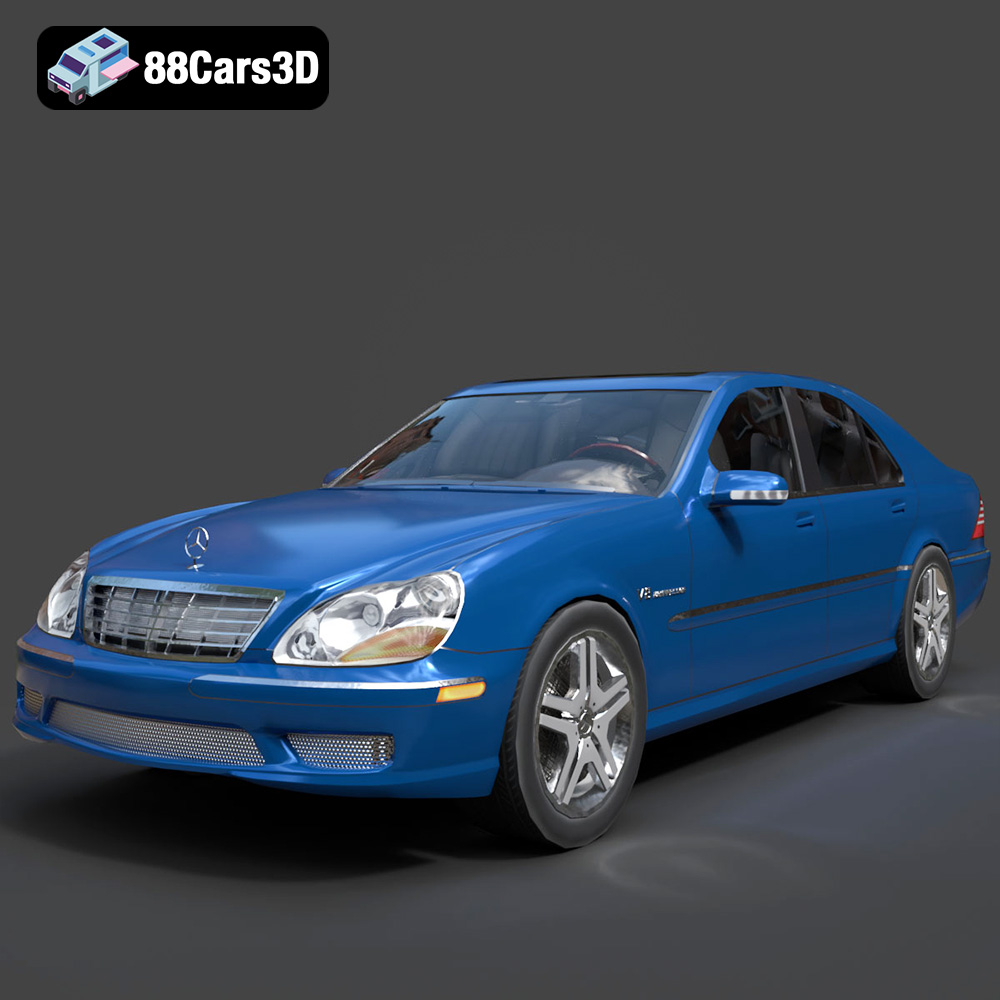
Download the Mercedes-Benz S55 W220 AMG 1999 3D Model featuring clean geometry, realistic detailing, and a fully modeled interior. Includes .blend, .fbx, .obj, .glb, .stl, .ply, .unreal, and .max formats for rendering, simulation, and game development.
Price: $23.99

