Get 50% OFF All Premium 3D & STL Models!

“`html
The world of 3D car models is a fascinating intersection of art and technology. Whether you’re aiming for photorealistic automotive rendering, creating immersive game environments, developing AR/VR experiences, or even preparing models for 3D printing, understanding the nuances of 3D car modeling is crucial. This comprehensive guide will delve into the intricacies of crafting high-quality 3D car models, covering everything from topology and UV mapping to PBR materials, rendering techniques, and game engine optimization. We’ll explore industry best practices and provide actionable tips to elevate your skills, helping you create visually stunning and technically sound 3D car models.
In this article, you’ll learn:
Topology, the underlying structure of your 3D model’s mesh, is arguably the most critical aspect of creating a high-quality 3D car model. Clean and efficient topology ensures smooth surfaces, predictable deformation during animation (if needed), and optimized performance in rendering and game engines. Poor topology leads to visual artifacts, shading errors, and increased processing time. Platforms like 88cars3d.com understand the importance of good topology and often ensure their models meet high standards.
When modeling a car, prioritize flowing, continuous edge loops. These loops should follow the natural contours of the car’s body, particularly around areas of curvature like the fenders, hood, and roof. Avoid long, stretched polygons (ngons) and triangles wherever possible, as they can cause shading issues. Quadrangles (quads) are generally preferred, as they provide the most predictable and manageable topology. Polygon count is also critical; find a balance between visual fidelity and performance. A good starting point for a detailed car model might be between 200,000 and 500,000 polygons, but this depends heavily on the intended use.
One common challenge is dealing with complex intersections, such as where the hood meets the fenders or where the doors meet the body. These areas often require careful planning and execution to avoid pinching or creasing. Use techniques like edge weighting or crease angles to define sharp edges and prevent them from being smoothed out during subdivision. Another challenge is creating smooth transitions between different surface types, such as going from a flat panel to a curved surface. Employ gradual edge loop adjustments to achieve a seamless transition. Finally, internal structures such as engine bays or detailed interiors can significantly increase polygon count; consider optimizing or simplifying these areas if performance is a major concern.
UV mapping is the process of unwrapping a 3D model’s surface onto a 2D plane, allowing you to apply textures to it. For complex car surfaces, effective UV mapping is essential for minimizing distortion and ensuring that textures appear correctly. Poor UV mapping can result in stretched or warped textures, leading to an unrealistic and unprofessional look. When sourcing models from marketplaces such as 88cars3d.com, you can often find models that already have well-crafted UV maps, saving you significant time and effort.
Strategic placement of UV seams is crucial. Consider the car’s geometry and identify areas where you can make cuts that will minimize distortion. Common areas for seams include along the edges of panels, around door frames, and along the underside of the car. Aim to keep UV islands (the individual pieces of the unwrapped surface) as large and uniform as possible to maximize texture resolution. Avoid overlapping UV islands, as this will cause textures to be applied incorrectly. Tools like pelt mapping and LSCM (Least Squares Conformal Mapping) can help to reduce distortion during the unwrapping process.
Texture resolution and texel density (the number of texels per unit of surface area) are directly related. Higher texel density results in sharper and more detailed textures, but it also requires larger texture files. Determine the appropriate texture resolution based on the viewing distance and the importance of the object in the scene. For example, a car in the foreground will typically require higher resolution textures than a car in the background. Common texture resolutions for car models range from 2048×2048 to 4096×4096 pixels. Strive for consistent texel density across all UV islands to ensure that textures appear equally sharp on all parts of the car.
Physically Based Rendering (PBR) is a shading technique that aims to simulate the way light interacts with real-world materials. PBR materials are defined by a set of parameters that describe the material’s surface properties, such as its color, roughness, and metalness. Using PBR materials is crucial for achieving realistic and believable automotive renders.
The key PBR parameters include: Base Color (the fundamental color of the material), Metallic (determines whether the material is metallic or non-metallic), Roughness (controls the surface smoothness and reflectivity), Normal Map (adds surface detail and simulates bumps and wrinkles), and Ambient Occlusion (AO) (simulates indirect lighting and adds depth to crevices). Experiment with different values for these parameters to achieve the desired look. For example, car paint typically has a low roughness value (high gloss) and a metallic value close to 0 (non-metallic), while chrome has a high metallic value and a very low roughness value.
Shader networks are used to combine different textures and mathematical operations to create complex and realistic materials. Most 3D software packages provide a node-based shader editor that allows you to visually build shader networks. Start with the base color texture and connect it to the base color input of the PBR shader. Then, add a roughness texture to control the surface smoothness, and a normal map to add surface detail. Use mathematical nodes like multiply and add to combine different textures and effects. For example, you can use a dirt map to reduce the roughness value in certain areas, simulating the accumulation of dirt and grime. A clear coat layer can be simulated by layering another shader with a high IOR and fresnel values. When creating car paint, ensure you incorporate a clear coat layer for that signature reflective quality.
Rendering is the process of generating a 2D image from a 3D scene. The choice of rendering engine and techniques can significantly impact the realism and visual quality of your automotive renders. Several popular rendering engines are commonly used in the industry, including Corona Renderer, V-Ray, Blender Cycles, and Arnold.
Corona Renderer is known for its ease of use and ability to produce photorealistic results. It is particularly well-suited for architectural and product visualization, including automotive rendering. V-Ray is another industry-standard rendering engine that offers a wide range of features and options. It is often used in film and visual effects, as well as architectural visualization. Blender Cycles is a free and open-source rendering engine that is integrated into Blender. It is a physically based path tracer that produces high-quality results. Arnold is a powerful rendering engine developed by Autodesk. It is widely used in film and animation due to its ability to handle complex scenes and produce physically accurate results. Regardless of the engine you choose, experiment with different settings, such as the number of samples, the render resolution, and the GI (Global Illumination) settings, to optimize the render quality and performance. Aim for a balance between visual fidelity and rendering time.
Lighting is crucial for creating realistic and engaging automotive renders. Use a variety of light sources, such as area lights, HDRIs (High Dynamic Range Images), and spotlights, to illuminate the scene. HDRIs are particularly useful for creating realistic ambient lighting and reflections. They provide a full 360-degree view of the environment, capturing the lighting information from all directions. Experiment with different HDRIs to find one that complements the car’s design and the overall mood of the scene. Consider using a three-point lighting setup, consisting of a key light, a fill light, and a back light, to create depth and dimension. Pay attention to the shadows, as they play a significant role in defining the shape and form of the car. Soft shadows tend to look more realistic than hard shadows. Ensure that your scene’s scale is accurate for proper light behavior.
Integrating 3D car models into game engines requires careful optimization to ensure smooth performance. High-polygon models and complex materials can quickly bog down a game engine, leading to low frame rates and a poor user experience. Therefore, it’s essential to employ various optimization techniques to reduce the polygon count, minimize draw calls, and optimize textures.
LODs (Level of Detail) are different versions of the same model with varying levels of detail. The game engine automatically switches between these LODs based on the distance of the object from the camera. When the car is close to the camera, the high-polygon LOD is used, providing maximum visual fidelity. As the car moves further away, the engine switches to lower-polygon LODs, reducing the rendering load. Manually create LODs using polygon reduction tools, or use automatic LOD generation features within the game engine. Aim for a significant reduction in polygon count between each LOD level. For example, you might have LODs with 500,000 polygons, 250,000 polygons, and 100,000 polygons. Consider removing or simplifying interior details for distant LODs to further optimize performance.
Draw calls are commands sent to the graphics card to render each object in the scene. Minimizing the number of draw calls is crucial for optimizing performance. One way to reduce draw calls is to combine multiple materials into a single material using texture atlasing. Texture atlasing involves combining multiple textures into a single large texture. This allows you to render multiple objects with different materials using a single draw call. Another technique is to combine multiple static meshes into a single mesh. However, be careful not to combine too many meshes, as this can lead to other performance issues. Instancing, where the same mesh is reused multiple times with different transformations, can also drastically reduce draw calls for elements like wheels or lights.
3D car models can be used in a variety of applications, from rendering and game development to AR/VR and 3D printing. Each application may require a different file format. Understanding the strengths and weaknesses of different file formats is crucial for ensuring compatibility and optimizing performance.
FBX is a widely supported file format developed by Autodesk. It is commonly used for exchanging 3D data between different software packages. FBX supports a wide range of features, including meshes, materials, textures, animations, and cameras. OBJ is a simpler file format that only supports meshes, materials, and textures. It is a good choice for exporting static models. GLB is a binary file format that is designed for efficient transmission and loading of 3D models in web and mobile applications. It is often used for AR/VR applications. USDZ is a file format developed by Apple that is optimized for AR applications on iOS devices. When choosing a file format, consider the features that you need and the compatibility with the target application.
Converting between different file formats can sometimes introduce issues, such as lost data or corrupted meshes. Before converting a file, it’s always a good idea to clean up the model and ensure that it is error-free. Use mesh repair tools to fix any issues with the geometry, such as non-manifold edges or flipped normals. When exporting a model, pay attention to the export settings and choose the options that are most appropriate for the target application. For example, you may need to bake textures or triangulate the mesh. After converting the file, always inspect the model in the target application to ensure that it looks correct. If you encounter any issues, try adjusting the export settings or using a different file format.
Optimizing 3D car models for AR/VR and 3D printing requires specific considerations. AR/VR applications demand highly optimized models that can be rendered in real-time on mobile devices. 3D printing, on the other hand, requires models that are watertight and have sufficient detail to capture the desired features.
In addition to the general optimization techniques discussed earlier, there are several specific strategies for optimizing car models for AR/VR. Use aggressive polygon reduction to minimize the model’s complexity. Simplify the materials and use mobile-friendly shaders. Bake lighting into textures to reduce the rendering load. Use texture compression to reduce the size of the textures. Consider using imposters for distant objects. Imposters are 2D images that are used to represent 3D objects. They can significantly reduce the rendering load, especially for complex scenes with many objects. Aim for a polygon count of less than 100,000 polygons for AR/VR models. Also, ensure that the model’s file size is small enough to be easily downloaded and deployed to mobile devices.
Before printing a 3D car model, it’s essential to prepare the model and ensure that it is suitable for 3D printing. The model must be watertight, meaning that it has no holes or gaps in the mesh. Use mesh repair tools to fix any non-manifold edges, flipped normals, or other issues that could cause problems during printing. Thicken thin walls to ensure that they are strong enough to withstand the printing process. Add support structures to prevent the model from collapsing during printing. Consider the orientation of the model during printing to minimize the amount of support material required. Finally, slice the model using a slicing software and choose the appropriate print settings, such as the layer height, the infill density, and the printing speed. Consider the type of printer you intend to use and make adjustments accordingly.
Creating stunning automotive renders and game assets requires a combination of artistic skill and technical knowledge. Mastering the techniques discussed in this guide, from topology and UV mapping to PBR materials, rendering, and game engine optimization, will enable you to create visually impressive and technically sound 3D car models. Remember to prioritize clean topology, effective UV mapping, realistic PBR materials, and optimized performance. By continuously learning and experimenting, you can hone your skills and create truly exceptional 3D car models. Platforms like 88cars3d.com are great resources for inspiration and to find high-quality models to study and learn from.
Actionable next steps:
“`

Texture: Yes
Material: Yes
Download the Toyota Mark 2 2001 3D Model featuring clean geometry, realistic detailing, and a fully modeled interior. Includes .blend, .fbx, .obj, .glb, .stl, .ply, .unreal, and .max formats for rendering, simulation, and game development.
Price: $10

Texture: Yes
Material: Yes
Download the Toyota Celica 2000 3D Model featuring clean geometry, realistic detailing, and a fully modeled interior. Includes .blend, .fbx, .obj, .glb, .stl, .ply, .unreal, and .max formats for rendering, simulation, and game development.
Price: $10

Download the Toyota Camry US 2012 3D Model featuring clean geometry, realistic detailing, and a fully modeled interior. Includes .blend, .fbx, .obj, .glb, .stl, .ply, .unreal, and .max formats for rendering, simulation, and game development.
Price: $10

Texture: Yes
Material: Yes
Download the Toyota GT 86 2013 3D Model featuring clean geometry, realistic detailing, and a fully modeled interior. Includes .blend, .fbx, .obj, .glb, .stl, .ply, .unreal, and .max formats for rendering, simulation, and game development.
Price: $10

Texture: Yes
Material: Yes
Download the Toyota Mark X 2010 3D Model featuring clean geometry, realistic detailing, and a fully modeled interior. Includes .blend, .fbx, .obj, .glb, .stl, .ply, .unreal, and .max formats for rendering, simulation, and game development.
Price: $10

Texture: Yes
Material: Yes
Download the Toyota Allion 2008 3D Model featuring clean geometry, realistic detailing, and a fully modeled interior. Includes .blend, .fbx, .obj, .glb, .stl, .ply, .unreal, and .max formats for rendering, simulation, and game development.
Price: $10

Texture: Yes
Material: Yes
Download the Toyota Avensis 2005 3D Model featuring clean geometry, realistic detailing, and a fully modeled interior. Includes .blend, .fbx, .obj, .glb, .stl, .ply, .unreal, and .max formats for rendering, simulation, and game development.
Price: $10
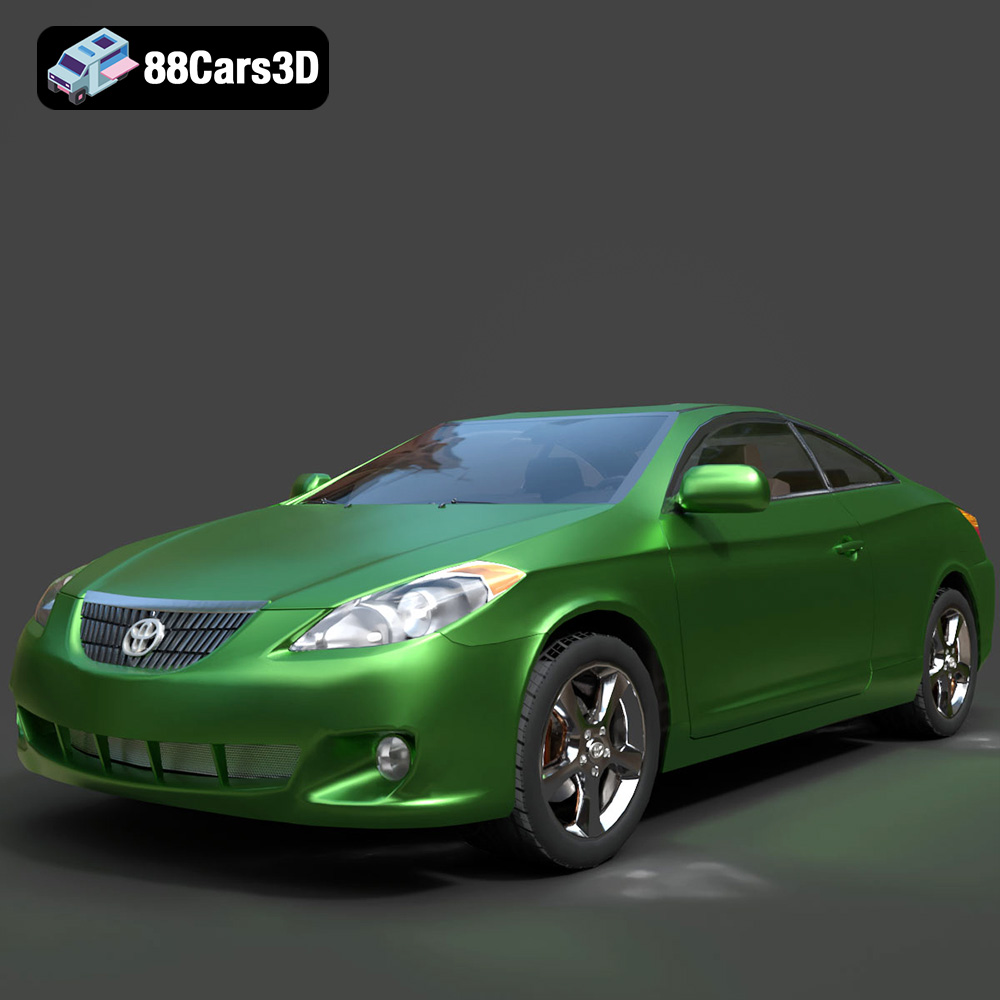
Texture: Yes
Material: Yes
Download the Toyota Camry Solara 2006 3D Model featuring clean geometry, realistic detailing, and a fully modeled interior. Includes .blend, .fbx, .obj, .glb, .stl, .ply, .unreal, and .max formats for rendering, simulation, and game development.
Price: $10

Texture: Yes
Material: Yes
Download the Skoda Superb 2009 3D Model featuring clean geometry, realistic detailing, and a fully modeled interior. Includes .blend, .fbx, .obj, .glb, .stl, .ply, .unreal, and .max formats for rendering, simulation, and game development.
Price: $10

Texture: Yes
Material: Yes
Download the Skoda Superb 2006 3D Model featuring clean geometry, realistic detailing, and a fully modeled interior. Includes .blend, .fbx, .obj, .glb, .stl, .ply, .unreal, and .max formats for rendering, simulation, and game development.
Price: $10

