Get 50% OFF All Premium 3D & STL Models!

“`html
The world of 3D printing offers incredible opportunities, and few projects are as rewarding as bringing detailed car models to life. Whether you’re a seasoned hobbyist, a burgeoning engineer, or simply a car enthusiast, 3D printing allows you to create tangible replicas of your favorite vehicles. However, achieving professional-quality results requires more than just a 3D printer. It demands a thorough understanding of STL files, meticulous slicing techniques, optimized printer settings, and strategic post-processing. This comprehensive guide will equip you with the knowledge and skills necessary to navigate the complexities of 3D printing car models, from preparing your files to applying the finishing touches. We’ll delve into the nuances of FDM and resin printing, explore the crucial role of support structures, and provide actionable tips for troubleshooting common printing issues. By the end of this guide, you’ll be well-equipped to transform digital designs into stunning physical realities.
The STL (Stereolithography) file format serves as the bedrock of 3D printing. It represents the surface geometry of a 3D object using a collection of triangles. Understanding the structure and limitations of STL files is crucial for successful 3D printing, especially when dealing with intricate car models.
An STL file approximates a 3D object using a mesh of interconnected triangles. The density of this mesh directly impacts the smoothness and detail of the printed model. A higher triangle count results in a more accurate representation but also increases file size and processing time. When downloading models from marketplaces such as 88cars3d.com, pay attention to the file size and preview the model to assess the level of detail. For car models, prioritize areas with curves and fine details like the hood, fenders, and roof. Aim for a balance between detail and file size to avoid overwhelming your slicing software and printer.
A “manifold” mesh is a closed, watertight surface, essential for 3D printing. Non-manifold edges (edges shared by more than two triangles) and holes in the mesh can lead to printing errors. Before printing, it’s vital to inspect your STL file for such errors. Software like Meshmixer and Netfabb can automatically detect and repair these issues. A simple check involves loading the STL into your slicing software and observing if any sections appear missing or distorted. Running a mesh repair tool often resolves these problems, ensuring a smooth and successful print. Tools like these are often crucial in ensuring that more complex printable car models are actually printable.
Slicing is the process of converting an STL file into a set of instructions (G-code) that your 3D printer can understand. The slicer software divides the 3D model into thin horizontal layers and generates toolpaths for the printer to follow. The settings you choose in your slicer directly impact the quality, strength, and printing time of your car model.
Layer height is arguably the most critical slicing parameter. It determines the thickness of each printed layer. Lower layer heights (e.g., 0.1mm) result in smoother surfaces and finer details, but they also increase printing time significantly. Higher layer heights (e.g., 0.3mm) are faster but produce more visible layer lines. For car models, a layer height of 0.15mm to 0.2mm often strikes a good balance between quality and speed. Experiment with different layer heights to find the optimal setting for your specific printer and model. Remember, reducing the layer height by half doubles the print time.
Infill refers to the internal structure of the 3D printed object. It provides strength and support while reducing material consumption. Infill density is expressed as a percentage, representing the amount of material used inside the model. A higher infill density (e.g., 50%) results in a stronger but heavier and more material-intensive print. Common infill patterns include rectilinear, grid, and gyroid. For car models, an infill density of 15-25% is often sufficient for most parts. Complex parts or load-bearing components may require higher infill. Gyroid infill offers excellent strength-to-weight ratio and is a good choice for critical components.
Support structures are temporary scaffolds that are printed to support overhanging features in your car model. Without supports, these features would collapse during printing. Generating and removing supports effectively is a crucial aspect of 3D printing complex models.
Most slicing software offers automatic support generation. This feature analyzes the model and automatically places supports where needed. While convenient, automatic supports may not always be optimal. Manual support generation allows you to precisely control the placement and type of supports, minimizing material usage and improving surface finish. For car models with complex geometries, consider using a combination of automatic and manual supports. Strategically placed manual supports can prevent warping and ensure critical features are properly supported. Focus on areas like the underside of the chassis, the roof, and any protruding details.
Choosing the right support material and interface layers is crucial for easy support removal and a clean surface finish. Some materials, like HIPS (High Impact Polystyrene), can be used as soluble support material in dual-extrusion printers, dissolving away in a solvent bath after printing. Interface layers, often printed with a lower density or different material, create a weaker bond between the support and the model, facilitating easier removal. Experiment with different support settings and materials to find the best combination for your printer and filament. A gap of 0.1-0.2mm between the support and the model can also aid in clean removal.
The choice of material significantly impacts the strength, appearance, and functionality of your 3D printed car model. FDM (Fused Deposition Modeling) printers typically use filaments like PLA, ABS, and PETG, while resin printers use liquid resins.
PLA (Polylactic Acid) is a biodegradable thermoplastic known for its ease of printing and low warping. It’s a good choice for beginners and for models that don’t require high heat resistance. ABS (Acrylonitrile Butadiene Styrene) is stronger and more heat-resistant than PLA but is more prone to warping and requires a heated bed. PETG (Polyethylene Terephthalate Glycol-modified) combines the best of both worlds, offering good strength, heat resistance, and ease of printing. For car models, PETG is often a good compromise, providing sufficient strength and durability. If you plan to paint your model, ABS might be preferred due to its better adhesion properties for certain paints.
Resin printing offers significantly higher resolution and detail compared to FDM printing. SLA (Stereolithography), DLP (Digital Light Processing), and MSLA (Masked Stereolithography) are common resin printing technologies. Each uses a light source to cure liquid resin layer by layer. Different resin types offer varying properties, such as high strength, flexibility, or heat resistance. For intricate car models, resin printing is ideal for capturing fine details like panel lines and emblems. However, resin prints tend to be more brittle than FDM prints and require post-curing to achieve optimal strength.
A properly calibrated and maintained 3D printer is essential for consistent and high-quality prints. Regular maintenance can prevent printing failures and extend the lifespan of your printer.
Proper bed leveling is crucial for ensuring the first layer adheres properly to the build plate. An uneven bed can lead to warping, poor adhesion, and ultimately, a failed print. Most printers offer manual or automatic bed leveling procedures. Regularly check and adjust the bed level as needed. Bed adhesion can be further improved by using adhesion aids like glue sticks, painter’s tape, or specialized bed adhesives. For materials like ABS that are prone to warping, a heated bed is essential. Experiment with different bed temperatures to find the optimal setting for your chosen material. For example, PLA typically prints well at 60°C, while ABS requires 100-110°C.
Clogged nozzles can lead to inconsistent extrusion and printing failures. Regularly clean your nozzle using a nozzle cleaning kit or by performing a “cold pull” (heating the nozzle, inserting filament, and quickly pulling it out to remove debris). Proper filament management is also important. Store filament in a dry environment to prevent moisture absorption, which can lead to printing problems. Use filament dryers or airtight containers with desiccant packs to keep your filament in optimal condition. These are particularly important for hygroscopic materials like nylon.
Post-processing is the final stage of 3D printing, where you refine the appearance and functionality of your car model. This may involve sanding, painting, assembling multiple parts, and applying finishing touches.
Sanding is used to remove layer lines and imperfections from the surface of the 3D printed model. Start with a coarse grit sandpaper (e.g., 220 grit) and gradually work your way up to finer grits (e.g., 400, 600, 800 grit). Wet sanding (using water with the sandpaper) can help to create a smoother surface and prevent clogging. For resin prints, sanding can be challenging due to the material’s brittleness. Use caution and avoid applying excessive pressure. Chemical smoothing methods, using solvents like acetone (for ABS) or vapor smoothing devices, can also be used to achieve a smooth, glossy finish. Always wear appropriate safety gear when using solvents.
Painting can transform a 3D printed car model into a stunning replica. Use primer to prepare the surface for paint and improve adhesion. Apply thin, even coats of paint using an airbrush or spray can. Multiple coats may be necessary to achieve full coverage. After painting, apply a clear coat to protect the paint and add a glossy finish. Consider using masking tape to create intricate paint schemes and details. Techniques like weathering and dry brushing can add realism to your model. Many printable car models available on platforms like 88cars3d.com are designed with separate parts, allowing for easy painting before assembly.
Even with meticulous preparation, 3D printing is not always flawless. Understanding common printing issues and how to troubleshoot them is essential for a smooth printing experience.
Warping occurs when the corners of the print lift off the build plate. This is often caused by uneven bed temperature, poor bed adhesion, or insufficient cooling. Ensure the bed is properly leveled and heated to the recommended temperature for your chosen material. Use bed adhesion aids like glue sticks or painter’s tape. Enclosing the printer can also help to maintain a consistent temperature and prevent warping. Adjusting the fan speed and printing slower for the first few layers can also improve bed adhesion.
Stringing occurs when the printer extrudes filament while traveling between different parts of the print, leaving thin strands of plastic. Blobs are small accumulations of plastic that can appear on the surface of the print. These issues are often caused by incorrect temperature settings, retraction settings, or travel speed. Lowering the printing temperature, increasing retraction distance and speed, and optimizing travel moves can help to reduce stringing and blobs. Experiment with different settings to find the optimal configuration for your printer and filament. A well-calibrated e-step value can also significantly improve print quality.
3D printing car models is a rewarding but challenging endeavor that combines technical skill, artistic vision, and a touch of patience. By mastering the fundamentals of STL files, slicing techniques, material selection, and post-processing, you can transform digital designs into stunning physical replicas. Platforms like 88cars3d.com offer a wide range of high-quality, print-ready STL files that can serve as a foundation for your projects. Remember to continuously experiment with different settings and techniques to refine your skills and achieve optimal results. Armed with this knowledge, you’re now ready to embark on your 3D printing journey and bring your favorite car models to life. Start with a simple model, gradually increase complexity, and document your successes and failures along the way. Happy printing!
“`

**Meta Description:**
Texture: Yes
Material: Yes
Download the Toyota Crown Majesta 2009 3D Model with luxury detailing, clean topology, and a fully modeled interior. Available in .blend, .fbx, .obj, .glb, .stl, .ply, .unreal, and .max formats for rendering, simulation, and game development.
Price: $13.9

**Meta Description:**
Texture: Yes
Material: Yes
Download the Toyota AE86 Levin 1983 1987 3D Model featuring realistic exterior and interior detailing. Includes .blend, .fbx, .obj, .glb, .stl, .ply, .unreal, and .max formats for rendering, simulation, and game development.
Price: $29.99

Texture: Yes
Material: Yes
Download the Toyota Mark 2 2001 3D Model featuring clean geometry, realistic detailing, and a fully modeled interior. Includes .blend, .fbx, .obj, .glb, .stl, .ply, .unreal, and .max formats for rendering, simulation, and game development.
Price: $10

Texture: Yes
Material: Yes
Download the Toyota Celica 2000 3D Model featuring clean geometry, realistic detailing, and a fully modeled interior. Includes .blend, .fbx, .obj, .glb, .stl, .ply, .unreal, and .max formats for rendering, simulation, and game development.
Price: $10

Download the Toyota Camry US 2012 3D Model featuring clean geometry, realistic detailing, and a fully modeled interior. Includes .blend, .fbx, .obj, .glb, .stl, .ply, .unreal, and .max formats for rendering, simulation, and game development.
Price: $10

Texture: Yes
Material: Yes
Download the Toyota GT 86 2013 3D Model featuring clean geometry, realistic detailing, and a fully modeled interior. Includes .blend, .fbx, .obj, .glb, .stl, .ply, .unreal, and .max formats for rendering, simulation, and game development.
Price: $10

Texture: Yes
Material: Yes
Download the Toyota Mark X 2010 3D Model featuring clean geometry, realistic detailing, and a fully modeled interior. Includes .blend, .fbx, .obj, .glb, .stl, .ply, .unreal, and .max formats for rendering, simulation, and game development.
Price: $10

Texture: Yes
Material: Yes
Download the Toyota Allion 2008 3D Model featuring clean geometry, realistic detailing, and a fully modeled interior. Includes .blend, .fbx, .obj, .glb, .stl, .ply, .unreal, and .max formats for rendering, simulation, and game development.
Price: $10

Texture: Yes
Material: Yes
Download the Toyota Avensis 2005 3D Model featuring clean geometry, realistic detailing, and a fully modeled interior. Includes .blend, .fbx, .obj, .glb, .stl, .ply, .unreal, and .max formats for rendering, simulation, and game development.
Price: $10
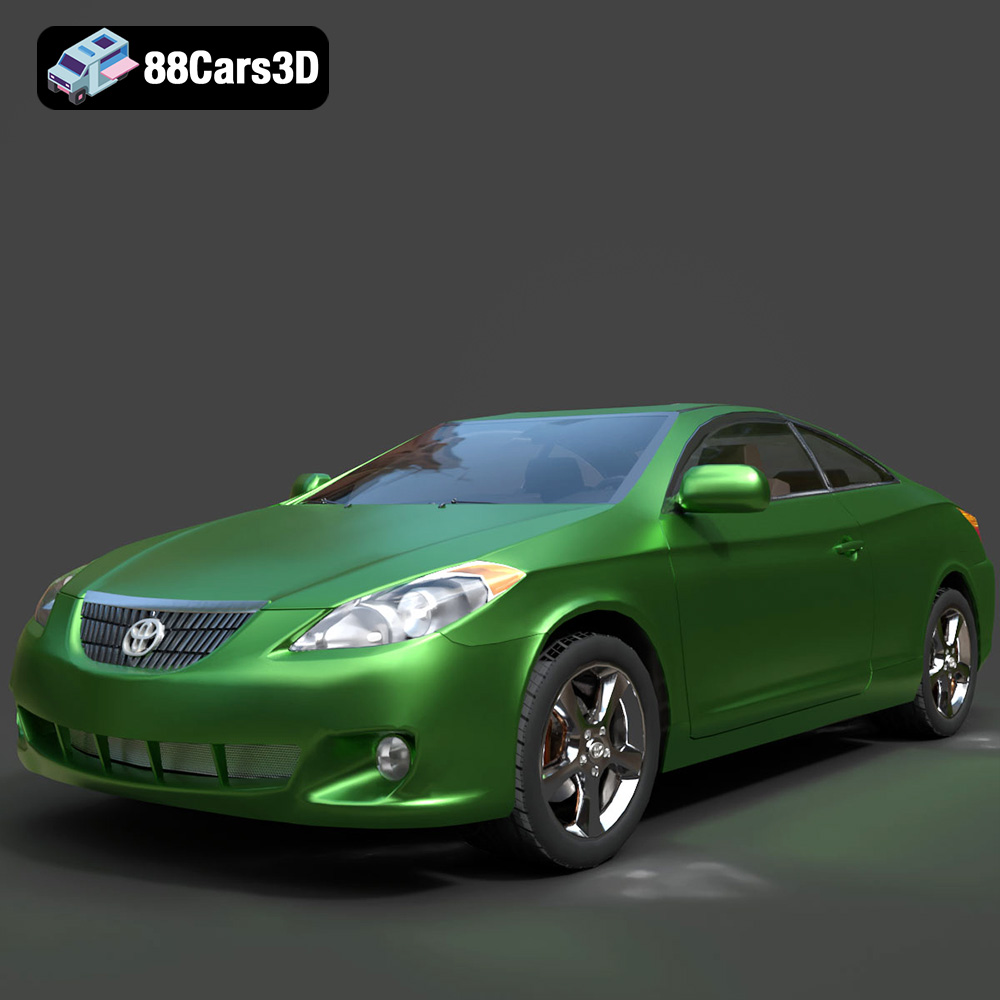
Texture: Yes
Material: Yes
Download the Toyota Camry Solara 2006 3D Model featuring clean geometry, realistic detailing, and a fully modeled interior. Includes .blend, .fbx, .obj, .glb, .stl, .ply, .unreal, and .max formats for rendering, simulation, and game development.
Price: $10

