Get 50% OFF All Premium 3D & STL Models!

The world of automotive visualization has undergone a seismic shift. Gone are the days of long-winded offline renders that took hours, or even days, to produce a single image. Today, real-time rendering engines like Unreal Engine have democratized the creation of photorealistic, interactive experiences that were once the exclusive domain of major film studios and automotive OEMs. For developers, artists, and designers, this presents an incredible opportunity to create stunning car configurators, marketing cinematics, virtual showrooms, and immersive training simulations with unprecedented speed and fidelity. However, harnessing the full power of Unreal Engine requires a deep understanding of its complex ecosystem, from asset preparation and material creation to dynamic lighting and performance optimization.
This comprehensive guide will serve as your roadmap to mastering automotive visualization in Unreal Engine. We will move beyond the basics and dive deep into the professional workflows and technical nuances required to transform a high-quality 3D car model into a breathtaking, interactive digital twin. You will learn how to set up your project for success, import and optimize complex vehicle geometry using features like Nanite, craft hyper-realistic PBR materials for car paint and glass, illuminate your scene with the revolutionary Lumen global illumination system, and build interactive functionality using Blueprints. Whether you are a seasoned 3D artist or a game developer looking to enter the automotive space, this article will equip you with the knowledge to bring your vehicular visions to life in real-time.
A successful automotive visualization project begins long before you import your first 3D model. Establishing a solid foundation with the correct project settings, plugins, and organizational structure is critical for maintaining performance, scalability, and visual quality. A poorly configured project can lead to lighting artifacts, performance bottlenecks, and workflow inefficiencies down the line. Taking the time to set up your environment correctly will save you countless hours of troubleshooting later.
When creating a new project in Unreal Engine, the template you choose configures a host of default settings. While you can start with a Blank template, for automotive visualization, the Automotive, Film, or Virtual Production templates are highly recommended. These templates pre-configure the engine for high-fidelity rendering by:
Even if you start with a blank template, you can manually configure these settings under Project Settings > Rendering. A key setting to ensure is “Support Hardware Ray Tracing,” which unlocks the highest quality modes for Lumen and reflections.
Beyond the template, you should enable several plugins to streamline your workflow. Navigate to Edit > Plugins and ensure the following are active:
In your Project Settings, also consider setting your Default RHI (Rendering Hardware Interface) to DirectX 12, as it is required for hardware ray tracing on Windows.
A clean folder structure is the hallmark of a professional project. It allows for easy navigation, collaboration, and management of assets. A logical convention for an automotive project might look like this:
Content/
└── _Project/
    ├── Maps/
    │   ├── M_Showroom_P (Persistent Level)
    │   └── M_Lighting_L (Lighting Sublevel)
    ├── Cinematics/
    ├── Blueprints/
    │   └── BP_Car_Configurator
    ├── Materials/
    │   ├── M_CarPaint_Master
    │   └── MI_CarPaint_Red (Material Instance)
    └── Assets/
        └── Vehicles/
            └── [VehicleName]/
                ├── Geometries/
                ├── Textures/
                └── Materials/
This structure separates project-specific logic (Blueprints, Maps) from imported assets, making the project easier to maintain and migrate. Using sublevels for lighting also allows you to easily switch between different lighting scenarios (e.g., day, night, studio) without duplicating the entire scene.
The quality of your final render is fundamentally tied to the quality of your source 3D car model. A meticulously crafted asset will not only look better but will also be far easier to work with in the engine. This section explores what constitutes a high-quality model and the best practices for importing and optimizing it within Unreal Engine, with a special focus on the groundbreaking Nanite virtualized geometry system.
When sourcing 3D car models, especially from marketplaces such as 88cars3d.com, look for assets that are built with real-time rendering in mind. Key characteristics include:
Unreal Engine offers two primary workflows for importing 3D assets: the traditional FBX format and the more modern Universal Scene Description (USD). For a single, static car model, the FBX import process is straightforward. When importing, you will be presented with an options dialog where you should ensure “Build Nanite” is checked for all opaque meshes. This will automatically prepare your model for Unreal’s virtualized geometry system. For more complex scenes or collaborative pipelines, USD offers a powerful, non-destructive alternative, allowing you to reference scene data from your DCC tool directly in Unreal.
Nanite is arguably one of the most significant advancements in real-time graphics in the last decade. It’s a virtualized micropolygon geometry system that allows Unreal Engine to render scenes with massive amounts of geometric detail by intelligently streaming and rendering only the detail that can be perceived. For automotive visualization, this is a complete game-changer. You no longer need to spend days creating multiple Levels of Detail (LODs) or baking normal maps to fake surface detail.
To leverage Nanite:
With Nanite, you can import cinematic-quality models—often exceeding 10-20 million polygons for a full exterior and interior—and render them in real-time without significant performance loss. This means the subtle curvature of a fender or the intricate mesh of a front grille can be represented with actual geometry, leading to perfect highlights and reflections that were previously impossible in real-time.
It’s important to note Nanite’s current limitations. It does not yet support transparent materials, skinned meshes, or certain vertex manipulation techniques in materials. Therefore, you will still need to use traditional geometry for elements like car glass and potentially complex wheel spokes if you plan to use material-based effects on them.
A perfect 3D model is only half the battle; bringing it to life requires meticulously crafted materials. Unreal Engine’s node-based Material Editor is an incredibly powerful tool for creating physically-based rendering (PBR) materials that accurately simulate how light interacts with real-world surfaces. For automotive assets, mastering materials for car paint, glass, chrome, and rubber is paramount.
The Material Editor allows you to visually script shaders by connecting nodes. The core principle of PBR materials revolves around a few key inputs on the main material node:
For more detailed information on the Material Editor’s capabilities, the official Unreal Engine documentation is an excellent resource, which can be found at https://dev.epicgames.com/community/unreal-engine/learning.
Modern car paint is a complex, multi-layered material, and simulating it accurately requires a specific approach. In the Material Editor, select the main material node and in the Details panel, change the Shading Model to Clear Coat. This adds two new inputs specifically for simulating a layer of varnish over a base coat.
A professional car paint material setup includes:
By converting these settings into parameters, you can create a single master material and then generate numerous Material Instances to quickly create a whole palette of car colors without duplicating material logic.
Beyond paint, other materials are crucial for a convincing vehicle:
Lighting is what breathes life and emotion into a scene. Unreal Engine 5’s Lumen Global Illumination and Reflections system provides fully dynamic, real-time bounced light and reflections, eliminating the need for slow static light baking and enabling a far more iterative and creative process. Understanding how to leverage Lumen in different scenarios is key to achieving photorealism.
Lumen works by tracing rays against a simplified representation of the scene to calculate indirect lighting and reflections. For automotive visualization, its primary benefits are:
To ensure the highest quality, navigate to your PostProcessVolume and under the “Lumen” section, set the Final Gather Quality to a higher value (e.g., 2 or 4) and ensure “Use Hardware Ray Tracing when available” is enabled for the best reflection quality.
The approach to lighting varies depending on the desired setting:
On a car, reflections are everything. While Lumen’s hardware ray-traced reflections are excellent, there are scenarios where you might need more control. For a perfect, mirror-like reflection on a showroom floor, the Planar Reflection actor is an invaluable tool. It captures a perfect, non-distorted reflection from a specific plane’s perspective. By placing one on the floor beneath the car, you can achieve crystal-clear ground reflections. However, be aware that Planar Reflections are computationally expensive, so they should be used sparingly. In most other cases, Lumen’s reflections combined with Screen Space Reflections (SSR) will provide a high-quality and performant solution.
The true power of real-time rendering lies in interactivity. With Unreal Engine’s Blueprint visual scripting system, you can create compelling experiences like car configurators, interactive service manuals, or design reviews without writing a single line of code. Blueprint allows you to script logic visually by connecting nodes, making it accessible to artists and designers.
A car configurator is a classic application of interactive real-time 3D. The basic principle involves creating a central Blueprint Actor for the vehicle and then creating functions to swap its properties. Here’s a conceptual workflow:
Beyond colors, you can animate parts of the vehicle. For something like opening a car door, the Timeline node in Blueprint is perfect. A timeline allows you to animate a value (e.g., the door’s rotation angle) over a set period. You can create a timeline that animates a float value from 0 to -70 (degrees) over 1.5 seconds. On each “Update” tick of the timeline, you use a `Set Relative Rotation` node on the door’s mesh component to drive the animation smoothly. This same principle can be applied to hoods, trunks, and windows. For headlights and taillights, you can use Blueprints to change a scalar parameter in an emissive material, allowing you to turn the lights on and off dynamically.
To allow the user to trigger these changes, you need a user interface. Unreal’s UI framework is called Unreal Motion Graphics (UMG). You can design a UI with buttons for each color or interactive feature. In the UMG widget’s graph, you can use the `OnClicked` event for a button to get a reference to your `BP_Car_Configurator` in the world and call the corresponding event (e.g., `SetPaintColor`). This creates a direct link between your UI and the 3D world, forming the basis of a fully functional configurator.
Even with powerful hardware and systems like Nanite, performance optimization is a non-negotiable step for any real-time project, especially if you are targeting AR/VR or less powerful machines. Furthermore, once your scene is built, you need a robust pipeline for exporting the highest quality images and videos. The Movie Render Queue is the professional tool for this final step.
Before you can optimize, you must identify the bottlenecks. Unreal Engine provides powerful built-in profiling tools. While playing in the editor, press the `~` key to open the console and use these commands:
For an even deeper analysis, the GPU Visualizer (Ctrl+Shift+,) provides a frame-by-frame breakdown of every single render pass. This tool can help you identify, for example, that a single translucent material is costing 5ms of your frame budget, allowing you to focus your optimization efforts precisely.
While Nanite handles geometric optimization for opaque meshes automatically, other elements still require manual attention. Any object with a translucent material (like glass) or one using World Position Offset cannot use Nanite and will need traditional Levels of Detail (LODs). Unreal can auto-generate LODs for these meshes, reducing their polygon count as they get further from the camera.
Draw calls are another key metric. Every object with a unique material in the scene adds to the draw call count. You can reduce this by merging meshes that share the same material or using texture atlases where appropriate. Setting proper culling distances on smaller details also helps, ensuring the engine doesn’t waste resources rendering objects that are too far away to be seen.
For creating cinematic videos or high-resolution stills, the Movie Render Queue (MRQ) is the definitive tool. Unlike a simple screen capture, MRQ renders your scene frame-by-frame, allowing for far superior quality. Key features include:
The journey from a static 3D model to a fully interactive, photorealistic automotive experience in Unreal Engine is a multi-faceted process that blends artistic vision with technical expertise. We’ve seen that success hinges on a series of crucial pillars: a well-structured project foundation, the use of high-quality and highly-detailed game assets, the meticulous crafting of PBR materials, a nuanced approach to dynamic lighting with Lumen, and a steadfast commitment to performance optimization. By mastering these core areas, you can unlock the full potential of real-time rendering and create visualizations that rival traditional offline methods in quality while offering the unparalleled benefit of interactivity.
The techniques discussed here—from leveraging Nanite for unprecedented geometric detail to scripting configurators with Blueprint—are the building blocks of modern automotive visualization. As technology continues to evolve, the line between the real and the virtual will only continue to blur. The key is to start with the best possible ingredients. Utilizing professionally made, engine-ready 3D car models from a dedicated marketplace like 88cars3d.com can significantly accelerate your workflow, allowing you to focus more on the creative aspects of lighting, rendering, and interaction. Now, it’s time to take these principles, open Unreal Engine, and begin building the next generation of automotive experiences.
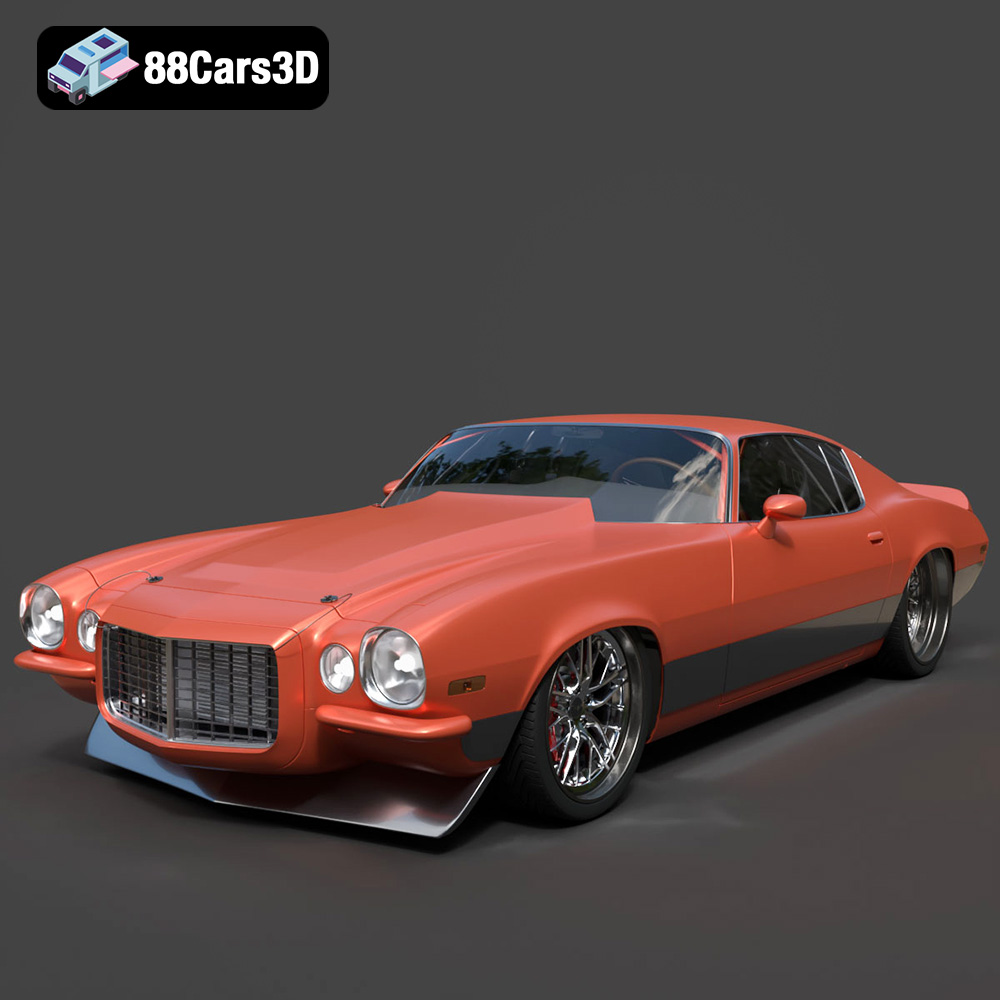
Texture: Yes
Material: Yes
Download the Chevrolet Camaro 1970 3D Model featuring clean geometry, realistic detailing, and a fully modeled interior. Includes .blend, .fbx, .obj, .glb, .stl, .ply, .unreal, and .max formats for rendering, simulation, and game development.
Price: $10
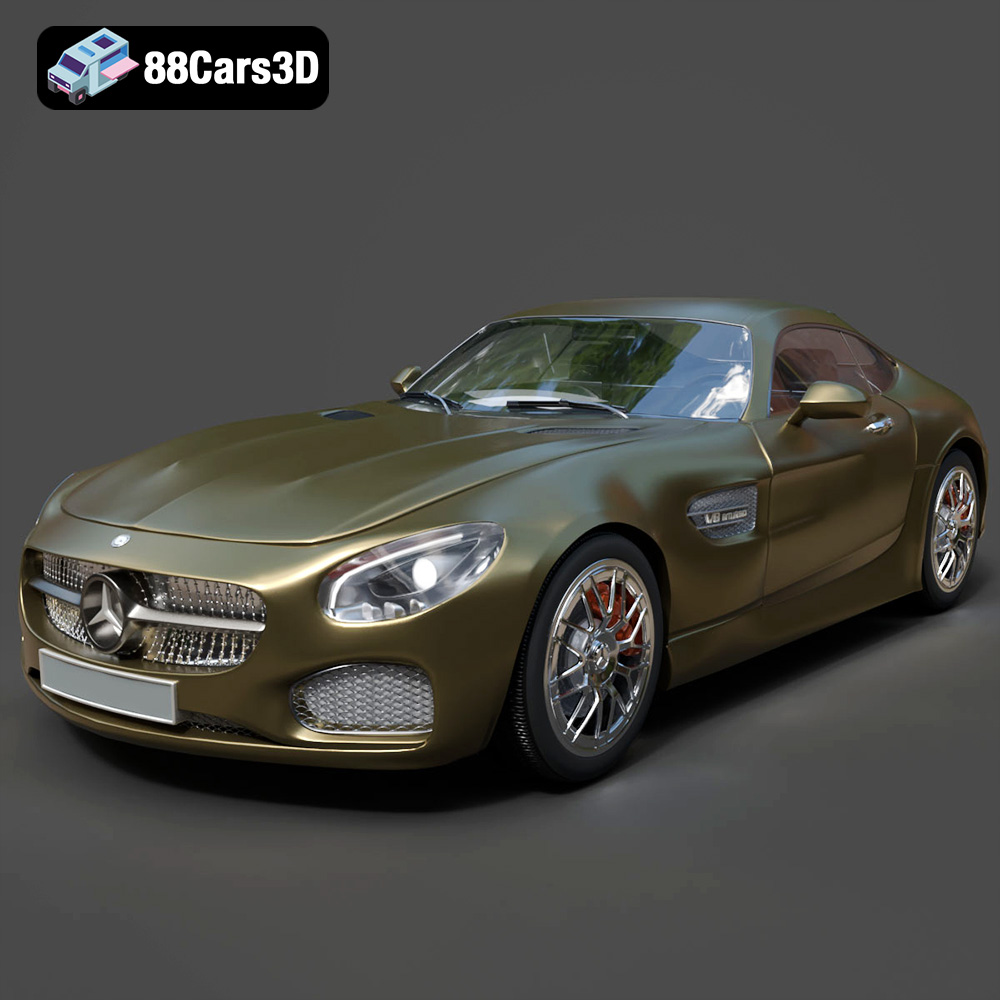
Texture: Yes
Material: Yes
Download the Mercedes-AMG GT 2015 3D Model featuring clean geometry, realistic detailing, and a fully modeled interior. Includes .blend, .fbx, .obj, .glb, .stl, .ply, .unreal, and .max formats for rendering, simulation, and game development.
Price: $88.99
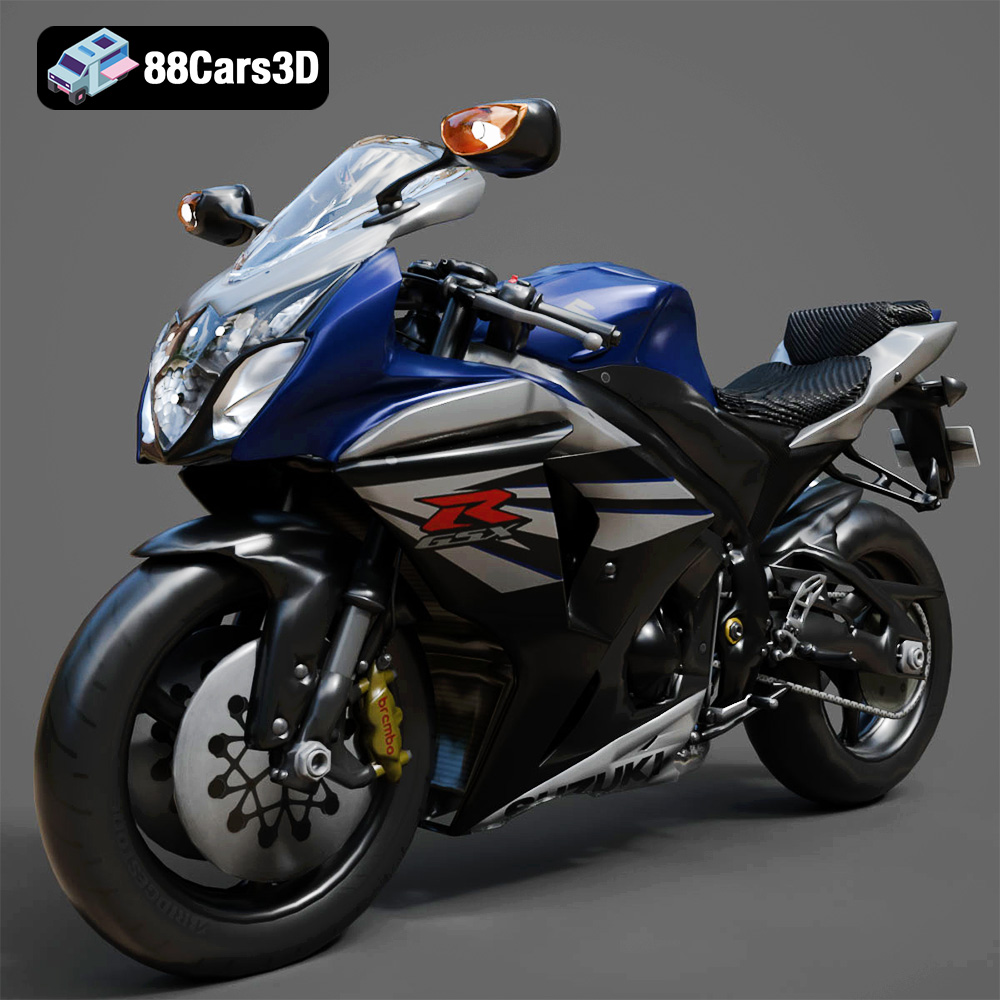
Texture: Yes
Material: Yes
Download the Suzuki GSX-R 1000 3D Model featuring clean geometry, realistic detailing, and a fully modeled interior. Includes .blend, .fbx, .obj, .glb, .stl, .ply, .unreal, and .max formats for rendering, simulation, and game development.
Price: $10
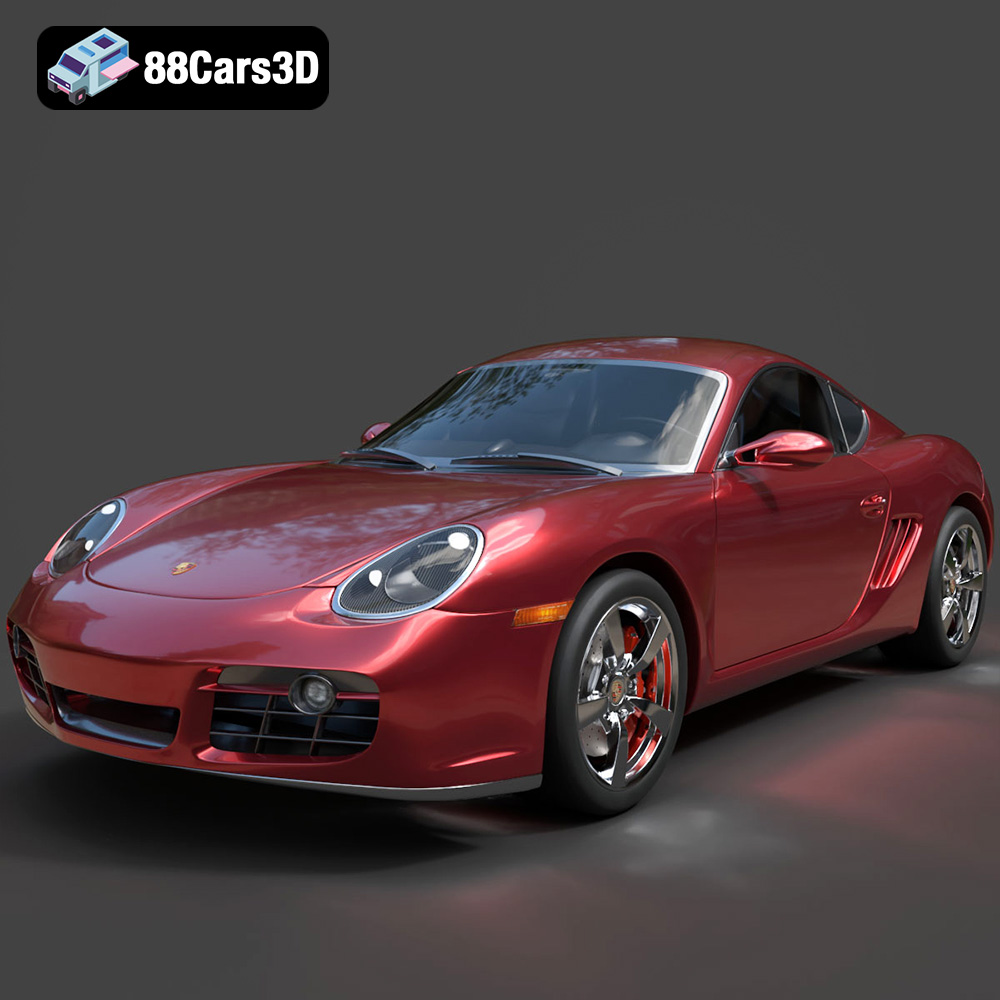
Texture: Yes
Material: Yes
Download the Porsche Cayman S 2024 3D Model featuring clean geometry, realistic detailing, and a fully modeled interior. Includes .blend, .fbx, .obj, .glb, .stl, .ply, .unreal, and .max formats for rendering, simulation, and game development.
Price: $10
Texture: Yes
Material: Yes
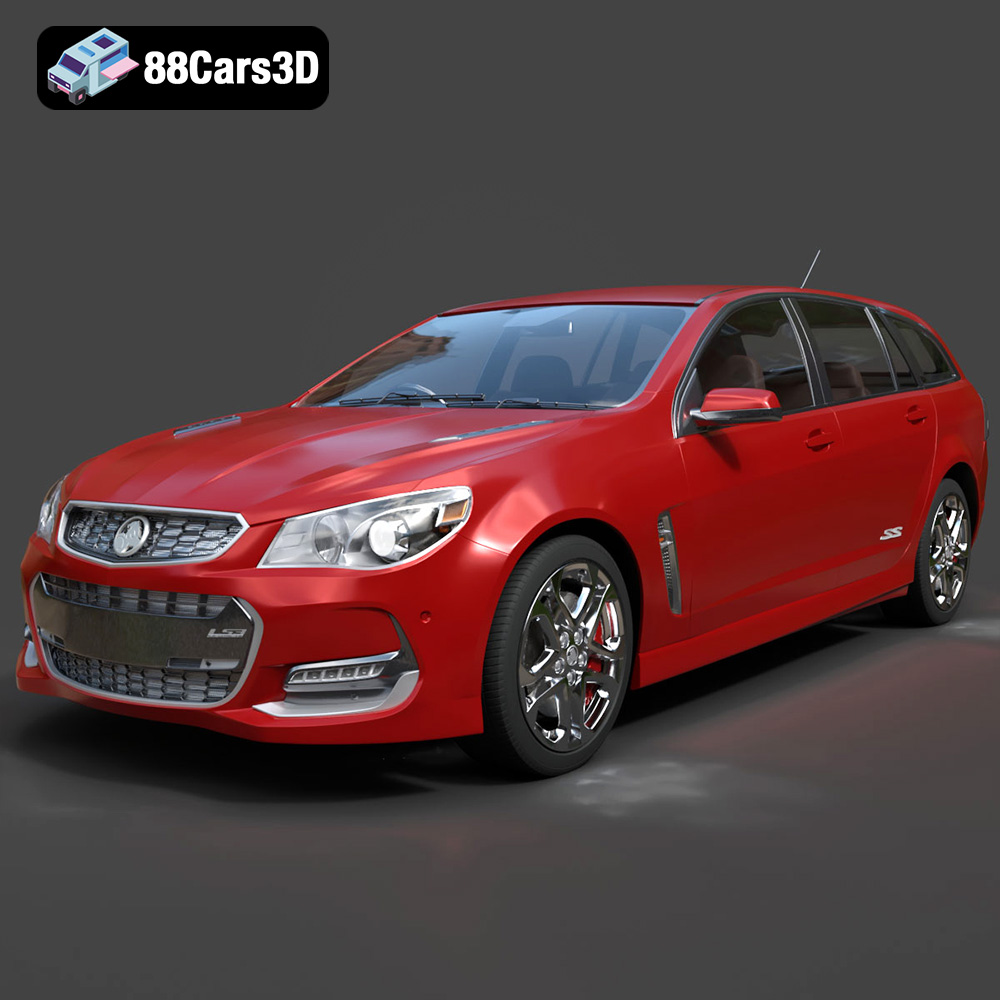
Download the Holden Commodore Sportwagon 2017 3D Model featuring clean geometry, realistic detailing, and a fully modeled interior. Includes .blend, .fbx, .obj, .glb, .stl, .ply, .unreal, and .max formats for rendering, simulation, and game development.
Price: $10

**Meta Description:**
Texture: Yes
Material: Yes
Download the Toyota Crown Majesta 2009 3D Model with luxury detailing, clean topology, and a fully modeled interior. Available in .blend, .fbx, .obj, .glb, .stl, .ply, .unreal, and .max formats for rendering, simulation, and game development.
Price: $4.99

**Meta Description:**
Texture: Yes
Material: Yes
Download the Toyota AE86 Levin 1983 1987 3D Model featuring realistic exterior and interior detailing. Includes .blend, .fbx, .obj, .glb, .stl, .ply, .unreal, and .max formats for rendering, simulation, and game development.
Price: $9.99

Texture: Yes
Material: Yes
Download the Toyota Mark 2 2001 3D Model featuring clean geometry, realistic detailing, and a fully modeled interior. Includes .blend, .fbx, .obj, .glb, .stl, .ply, .unreal, and .max formats for rendering, simulation, and game development.
Price: $4.99

Texture: Yes
Material: Yes
Download the Toyota Celica 2000 3D Model featuring clean geometry, realistic detailing, and a fully modeled interior. Includes .blend, .fbx, .obj, .glb, .stl, .ply, .unreal, and .max formats for rendering, simulation, and game development.
Price: $4.99

Download the Toyota Camry US 2012 3D Model featuring clean geometry, realistic detailing, and a fully modeled interior. Includes .blend, .fbx, .obj, .glb, .stl, .ply, .unreal, and .max formats for rendering, simulation, and game development.
Price: $4.99

