Get 50% OFF All Premium 3D & STL Models!

The world of automotive visualization has been revolutionized by real-time rendering. Gone are the days of waiting hours, or even days, for a single photorealistic image. With Unreal Engine, automotive brands, filmmakers, and game developers can now create stunning, interactive, and dynamic experiences at a fraction of the time. This powerful engine, once solely the domain of game development, is now the industry standard for creating everything from online car configurators to virtual showrooms and blockbuster film sequences. However, harnessing its full potential requires a deep understanding of its core systems, from asset preparation and material creation to lighting and optimization. This guide will serve as your roadmap, providing a comprehensive walkthrough of the professional workflow for creating state-of-the-art automotive visualizations in Unreal Engine.
Whether you are a 3D artist aiming to produce breathtaking portfolio pieces, a developer building an interactive configurator, or a visualization specialist working for a major automotive brand, this article will equip you with the knowledge you need. We will dive deep into setting up your project for success, leveraging next-generation features like Nanite and Lumen, crafting complex PBR materials for realistic car paint, and adding interactive elements using Blueprint visual scripting. By the end, you will understand how to transform a high-quality 3D car model into a truly immersive, real-time experience.
A successful automotive visualization project begins long before you import your first 3D model. Establishing a robust project structure and properly preparing your assets is the foundation upon which everything else is built. A well-organized project is easier to manage, scale, and troubleshoot, saving you countless hours down the line. This initial phase involves configuring Unreal Engine for high-fidelity rendering and ensuring your 3D car models are optimized for a real-time workflow.
When creating a new project in Unreal Engine, the template you choose can pre-configure many settings for your specific needs. For automotive visualization, the Games > Blank template is often a great starting point, as it provides a clean slate. Alternatively, the Architecture, Engineering, and Construction > Blank template is also an excellent choice, as it enables many high-fidelity rendering features by default.
Once your project is created, you must enable a few key plugins:
In your Project Settings (Edit > Project Settings), navigate to the Rendering section and ensure that “Dynamic Global Illumination Method” is set to Lumen and “Reflection Method” is also set to Lumen. This enables Unreal Engine’s cutting-edge real-time global illumination and reflection system.
The quality of your final render is directly tied to the quality of your source asset. For automotive visualization, you need 3D car models with clean topology, accurate proportions, and PBR-ready UV layouts. Marketplaces like 88cars3d.com provide professional-grade, pre-optimized automotive assets that are ready for direct use in Unreal Engine, saving you significant preparation time.
When importing your model (typically as an FBX file), the import settings are critical. For modern workflows, you should almost always check “Build Nanite”. This converts the mesh into Unreal Engine’s virtualized geometry format, allowing you to use incredibly high-polygon models without traditional performance constraints. Ensure “Generate Lightmap UVs” is unchecked if you are using a fully dynamic lighting solution like Lumen. Under the material section, you can choose to “Create New Materials” or leave them unassigned if you plan to build custom materials from scratch.
Organization is paramount. Before you start importing dozens of assets, establish a clear and logical folder structure within the Content Browser. A professional convention looks something like this:
This separation ensures that project-specific assets (like the car) are distinct from shared or environmental assets, making the project easier for a team to navigate and maintain.
One of the most transformative features in modern Unreal Engine versions is Nanite, its virtualized micropolygon geometry system. Nanite fundamentally changes how we approach 3D assets in real-time environments, especially for hard-surface models like vehicles. It effectively removes the constraints of polygon counts and traditional Level of Detail (LOD) systems, allowing artists to use film-quality assets directly in the engine without worrying about performance bottlenecks.
Traditionally, real-time rendering required artists to create multiple, lower-polygon versions of a model (LODs) that would be swapped in and out as the camera moved further away. This process was time-consuming and often resulted in noticeable visual “popping.” Nanite works differently. It analyzes the 3D model and breaks it down into intelligent clusters of triangles. At runtime, it streams and renders only the clusters necessary to represent the detail visible on screen for that specific frame, down to the individual pixel. This means a 10-million-polygon car model can run just as efficiently as a 100,000-polygon model, as the engine is only ever rendering the detail it actually needs. This process is incredibly efficient and allows for geometric detail that was previously impossible in real-time applications.
The beauty of Nanite is its simplicity to implement. As mentioned, you can enable it directly upon importing an FBX file by ticking the “Build Nanite” checkbox. If you have an existing Static Mesh in your project, you can enable Nanite by opening the Static Mesh Editor, navigating to the Details panel, and checking the “Enable Nanite Support” box. You can visualize the Nanite geometry by using the viewport’s visualization modes (Lit > Nanite Visualization > Triangles).
For 3D car models, this is a game-changer. Intricate details like brake calipers, grille meshes, interior stitching, and headlight components can be modeled in full detail without compromise. The smooth, curved surfaces of a car’s bodywork are rendered perfectly without the faceting seen on lower-polygon models. This eliminates the need for baking normal maps from a high-poly to a low-poly model for many hard-surface details, streamlining the asset creation pipeline.
While powerful, Nanite has a few considerations. As of Unreal Engine 5.3, it does not support skeletal meshes (used for complex character animation), and it has limited support for materials using World Position Offset or transparency. For automotive visualization, this is rarely an issue. Car bodies, wheels, and interiors are typically static meshes. For elements like spinning wheels, it’s better to animate them by rotating the Static Mesh Component within a Blueprint rather than rigging them with a skeleton. For transparent materials like glass, you can simply disable Nanite for those specific mesh elements and use a traditional Static Mesh, as they are typically low-poly anyway.
A high-detail model is only half the story; bringing it to life requires meticulously crafted materials. Unreal Engine’s node-based Material Editor is an incredibly powerful tool for creating physically-based rendering (PBR) materials that accurately simulate how light interacts with real-world surfaces. For automotive visualization, mastering materials for car paint, glass, chrome, and rubber is essential for achieving photorealism.
The Material Editor is where you define the appearance of a surface. The core principle of PBR is to use a set of textures and parameters to describe the physical properties of a material. The key inputs are:
By combining these inputs, you can create nearly any type of real-world material.
Standard car paint is a complex, multi-layered material, and Unreal Engine provides a dedicated shading model to replicate it accurately. To create a car paint material, select the main material node and change the “Shading Model” in the Details panel to “Clear Coat”.
This provides two new inputs: Clear Coat and Clear Coat Roughness. This simulates a layer of glossy varnish over a base layer.
For an advanced “candy” or “flake” effect, you can add a Normal map with fine-grained noise to the main Normal input, which will catch the light and create a sparkling appearance.
Beyond the paint, other materials complete the vehicle.
Lighting is what breathes life and emotion into a scene. It reveals form, defines mood, and is the final, critical element in achieving photorealism. Unreal Engine’s Lumen global illumination and reflection system provides fully dynamic, real-time bounce lighting and reflections, enabling artists to create stunningly realistic scenes without the long baking times of traditional workflows.
Global Illumination (GI) is the simulation of indirect lighting—how light bounces off one surface and illuminates another. Lumen calculates this in real time, meaning if you move a light or an object, the bounced light and shadows update instantly. It also powers reflections, ensuring that objects are accurately reflected in surrounding surfaces. This is a massive leap forward from older techniques like Screen Space Reflections (SSR), which could only reflect what was visible on screen, or baked lighting, which was static and unforgiving of changes. With Lumen, you can iterate on lighting design in real time and create fully dynamic scenes.
A classic studio lighting setup is perfect for showcasing a car model. Here’s a professional workflow:
While Lumen is the default and recommended system for most real-time scenarios, Unreal Engine also supports hardware-accelerated Ray Tracing. Lumen uses a screen-space trace combined with other methods and is highly optimized. Hardware Ray Tracing, when enabled, can offer even greater precision, particularly for reflections and shadows, resulting in physically perfect, sharp results. For a real-time car configurator, Lumen is the ideal choice for its balance of quality and performance. For producing the absolute highest-quality cinematic stills or videos using the Movie Render Queue, enabling Hardware Ray Tracing can provide that final 10% of visual fidelity, at the cost of real-time performance.
Modern automotive visualization is often more than just static images; it’s about creating interactive experiences. Whether it’s a customer-facing online car configurator or a design review tool, interactivity is key. Unreal Engine’s Blueprint visual scripting system empowers artists and designers to create complex interactive logic without writing a single line of code, making it the perfect tool for automotive applications.
Blueprint is a node-based system where you connect visual nodes representing functions, events, and variables to create gameplay and interactive logic. It’s a powerful yet accessible way to add functionality to objects in your scene. For automotive projects, you can use Blueprints to script everything from changing a car’s paint color with a button click to opening doors, turning on headlights, or even creating a simple driving simulation.
A material and color changer is a foundational element of any car configurator. Here’s a high-level overview of how to build one:
This simple logic is the core of a powerful configurator. You can expand it to swap wheel styles, interior trims, and more.
For creating cinematic sequences or pre-scripted animations, Sequencer is Unreal Engine’s professional-grade timeline editor. You can use it to animate the car’s position, camera movements, and lighting changes to create stunning films. For interactive animations, like opening a car door when the player clicks on it, you can use a Blueprint Timeline node. A timeline allows you to play a short animation curve over time, which you can use to drive the rotation of the door mesh from its closed to open position, creating a smooth and dynamic interaction.
Even with powerful features like Nanite and Lumen, optimization is a critical step in any real-time project. Ensuring a smooth and consistent frame rate is essential for interactive applications like configurators, games, and VR/AR experiences. A well-optimized project delivers a better user experience and can run on a wider range of hardware.
Before you can optimize, you need to know where the performance bottlenecks are. Unreal Engine provides built-in profiling tools to help. In the editor console (accessed with the `~` key), you can use commands to see detailed performance data:
By analyzing this data, you can focus your optimization efforts where they will have the most impact.
While Nanite handles the geometry of the main car body, other elements in your scene (like the environment, foliage, or transparent objects) may not be Nanite-compatible. For these meshes, you need to manage performance with traditional methods. A “draw call” is a command from the CPU to the GPU to draw an object. Too many draw calls can bottleneck the CPU. To reduce them, you can merge multiple small meshes into a single larger one. Additionally, you should create Levels of Detail (LODs) for these assets, which are lower-polygon versions that are displayed when the object is far from the camera. Sourcing high-quality game assets from platforms like 88cars3d.com can be a major advantage, as they often come with pre-built LODs suitable for a range of applications.
High-resolution textures are a major consumer of video memory (VRAM). It’s crucial to use resolutions appropriate for the asset. A 4K texture might be necessary for the main car body, but smaller components or distant environment props can use 2K or 1K textures. Unreal Engine’s Texture Editor allows you to set compression settings and maximum in-game resolutions for each texture. Additionally, enabling Virtual Texture Streaming in your project settings allows the engine to intelligently stream in only the parts of textures that are needed, significantly reducing memory consumption for large, open-world scenes.
For more in-depth guidance on these advanced features and workflows, the official Unreal Engine documentation at https://dev.epicgames.com/community/unreal-engine/learning is an invaluable resource for developers at all skill levels.
We’ve journeyed through the complete professional workflow for creating stunning automotive visualizations in Unreal Engine. From the critical first steps of project setup and asset preparation to harnessing the power of Nanite for infinite detail and Lumen for breathtaking dynamic lighting, you now have a solid framework for success. We explored the artistry of crafting photorealistic PBR materials and the technical skill of adding interactivity with Blueprint scripting. Finally, we covered the essential discipline of performance optimization to ensure your creations run flawlessly in real time.
The key takeaway is that incredible results are achieved through a combination of high-quality assets and a mastery of the engine’s powerful tools. The foundation of any great render is a meticulously crafted 3D model. By starting with a professional-grade asset, you can focus your energy on the creative aspects of lighting, material refinement, and interactive design. We encourage you to take these techniques and apply them to your own projects. Experiment with different lighting setups, build your own custom materials, and explore the limitless possibilities of interactive configurators. The world of real-time rendering is at your fingertips, and the road ahead is wide open.

Texture: Yes
Material: Yes
Download the Chevrolet Camaro 1970 3D Model featuring clean geometry, realistic detailing, and a fully modeled interior. Includes .blend, .fbx, .obj, .glb, .stl, .ply, .unreal, and .max formats for rendering, simulation, and game development.
Price: $10

Texture: Yes
Material: Yes
Download the Mercedes-AMG GT 2015 3D Model featuring clean geometry, realistic detailing, and a fully modeled interior. Includes .blend, .fbx, .obj, .glb, .stl, .ply, .unreal, and .max formats for rendering, simulation, and game development.
Price: $88.99

Texture: Yes
Material: Yes
Download the Suzuki GSX-R 1000 3D Model featuring clean geometry, realistic detailing, and a fully modeled interior. Includes .blend, .fbx, .obj, .glb, .stl, .ply, .unreal, and .max formats for rendering, simulation, and game development.
Price: $10

Texture: Yes
Material: Yes
Download the Porsche Cayman S 2024 3D Model featuring clean geometry, realistic detailing, and a fully modeled interior. Includes .blend, .fbx, .obj, .glb, .stl, .ply, .unreal, and .max formats for rendering, simulation, and game development.
Price: $10

Texture: Yes
Material: Yes
Download the Holden Commodore Sportwagon 2017 3D Model featuring clean geometry, realistic detailing, and a fully modeled interior. Includes .blend, .fbx, .obj, .glb, .stl, .ply, .unreal, and .max formats for rendering, simulation, and game development.
Price: $10
Texture: Yes
Material: Yes
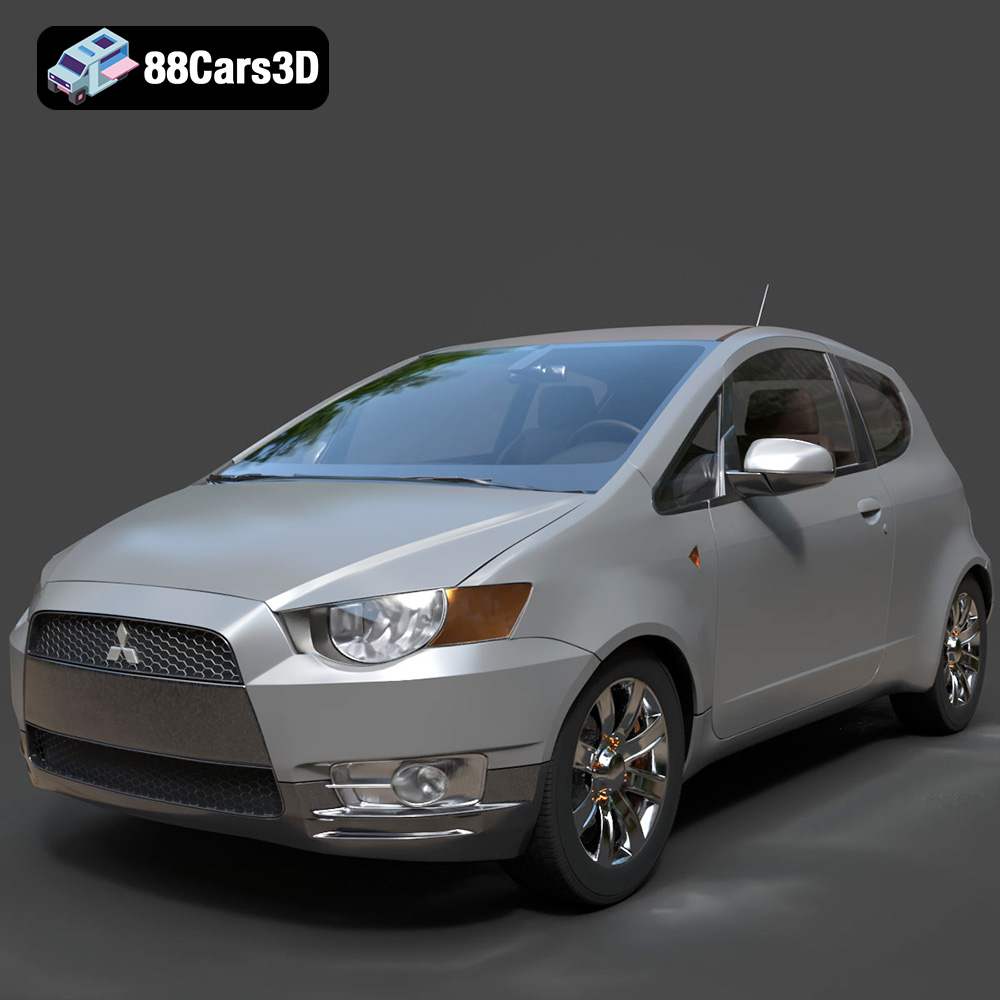
Download the Mitsubishi Colt 3 Door 2008 3D Model featuring clean geometry, realistic detailing, and a fully modeled interior. Includes .blend, .fbx, .obj, .glb, .stl, .ply, .unreal, and .max formats for rendering, simulation, and game development.
Price: $10
Texture: Yes
Material: Yes
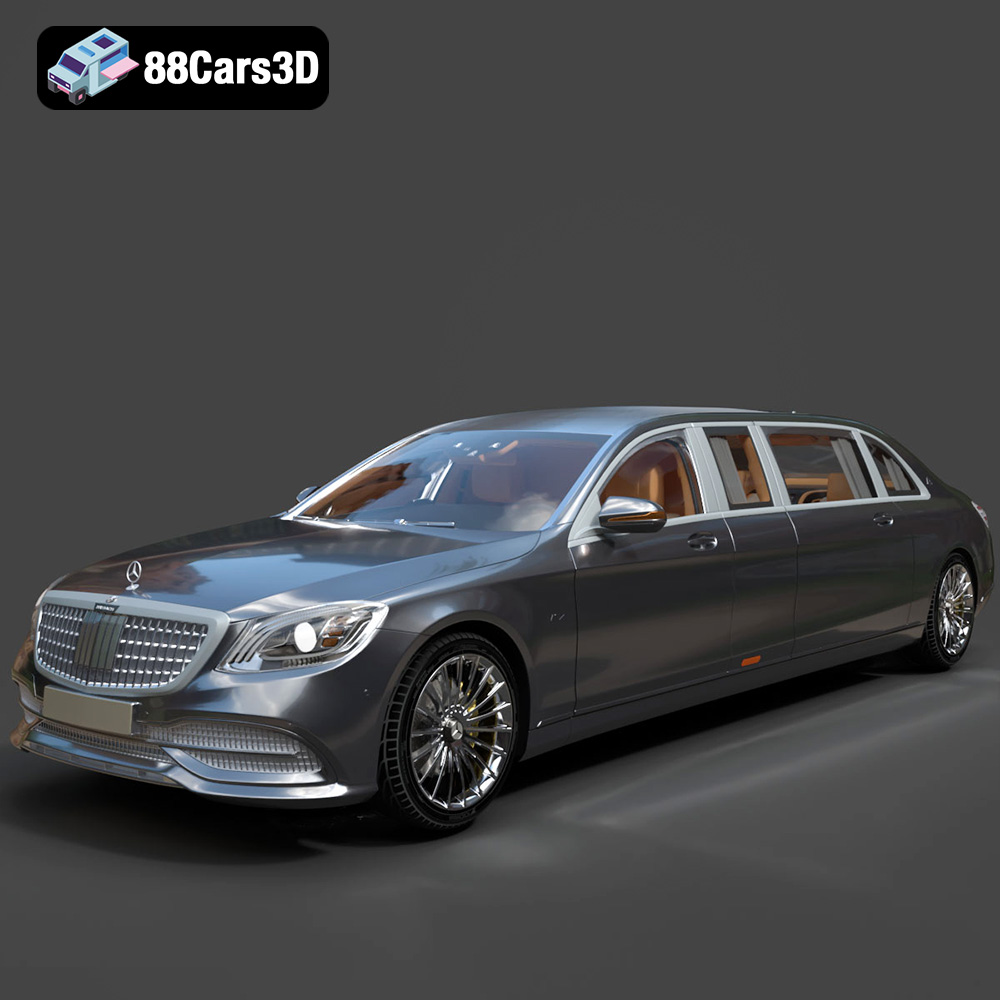
Download the Mercedes-Benz S650 Pullman 3D Model featuring clean geometry, realistic detailing, and a fully modeled interior. Includes .blend, .fbx, .obj, .glb, .stl, .ply, .unreal, and .max formats for rendering, simulation, and game development.
Price: $10

**Meta Description:**
Texture: Yes
Material: Yes
Download the Toyota Crown Majesta 2009 3D Model with luxury detailing, clean topology, and a fully modeled interior. Available in .blend, .fbx, .obj, .glb, .stl, .ply, .unreal, and .max formats for rendering, simulation, and game development.
Price: $4.99

**Meta Description:**
Texture: Yes
Material: Yes
Download the Toyota AE86 Levin 1983 1987 3D Model featuring realistic exterior and interior detailing. Includes .blend, .fbx, .obj, .glb, .stl, .ply, .unreal, and .max formats for rendering, simulation, and game development.
Price: $9.99

Texture: Yes
Material: Yes
Download the Toyota Mark 2 2001 3D Model featuring clean geometry, realistic detailing, and a fully modeled interior. Includes .blend, .fbx, .obj, .glb, .stl, .ply, .unreal, and .max formats for rendering, simulation, and game development.
Price: $4.99

