Get 50% OFF All Premium 3D & STL Models!

The world of automotive visualization has been revolutionized. Gone are the days of waiting hours, or even days, for a single photorealistic render. The power of real-time rendering, spearheaded by Unreal Engine, has brought cinematic quality, interactivity, and unprecedented speed to automotive designers, marketing agencies, and game developers. This shift allows for the creation of everything from dynamic car configurators and immersive VR showrooms to high-octane virtual production shoots. However, harnessing the full potential of Unreal Engine requires a deep understanding of its powerful features and a professional workflow. Starting with a high-quality 3D asset is the foundation, but knowing how to import, optimize, light, and present that asset is what separates an amateur render from a breathtaking, professional-grade interactive experience.
In this comprehensive guide, we will walk you through the entire process of creating stunning automotive visualization projects in Unreal Engine 5. We’ll cover everything from initial project setup and asset preparation to advanced techniques using Nanite, Lumen, and Blueprints. You will learn the best practices for creating hyper-realistic PBR materials, setting up dynamic lighting, building interactive experiences, and optimizing your project for flawless real-time performance. Whether you’re a 3D artist new to Unreal or a seasoned developer looking to refine your automotive workflow, this article will provide you with the technical knowledge to bring your virtual vehicles to life.
A successful project begins with a solid foundation. Before you can import your 3D car models, it’s crucial to configure your Unreal Engine project correctly and ensure your assets are properly prepared. This initial setup phase will save you significant time and prevent technical headaches down the line, establishing a streamlined pipeline for all your automotive visualization work.
When creating a new project in Unreal Engine, you’re presented with several templates. For automotive work, the “Games > Blank” template is often a great starting point, as it provides a clean slate without unnecessary game-specific features. Alternatively, the “Automotive, Product Design, and Manufacturing” category offers templates pre-configured with useful plugins and settings, like the “Photo Studio” or “Product Configurator.” For this guide, we’ll assume a Blank project to build from the ground up, ensuring you understand each component we add. Select “Blueprint” as the scripting language and choose “Maximum” for quality presets to enable features like Lumen and Nanite by default.
Unreal Engine’s power is extended through its robust plugin system. For high-end automotive work, a few are indispensable. Navigate to Edit > Plugins and enable the following:
Restart the editor after enabling these plugins to ensure they are active in your project.
The quality of your final render is directly tied to the quality of your initial asset. Sourcing pre-optimized game assets from platforms like 88cars3d.com can save you countless hours of cleanup. A well-prepared model should have clean topology, proper UV mapping, and a logical object hierarchy. Before exporting from your 3D software (e.g., Blender, 3ds Max), ensure your model is separated into logical components (body, wheels, windows, interior) with meaningful names. Set the object’s pivot point to the origin (0,0,0) or the center of the wheel base. Export as an FBX file, which is a versatile and widely supported format for Unreal Engine.
With your project set up and your model prepared, the next step is to import it into Unreal Engine. This is a critical stage where you can leverage powerful engine features like Nanite to handle incredible geometric detail without sacrificing performance. A methodical import process and organized project structure are key to an efficient workflow.
To import your car model, simply drag and drop the FBX file into the Content Browser or use the “Import” button. This will open the FBX Import Options window. Here are the crucial settings for an automotive model:
Click “Import All” and let the engine process the file. This may take a moment for a high-detail model.
Nanite is a revolutionary technology in Unreal Engine 5 that allows you to render film-quality, high-polygon assets in real-time. By enabling “Build Nanite” during import, you’ve instructed Unreal to create a Nanite-enabled mesh. This means your 3D car model, which could be millions of polygons, can be rendered with incredible efficiency. Nanite intelligently streams and renders only the detail you can perceive, eliminating the need for traditional Level of Detail (LOD) creation for the main body. You can verify Nanite is active by opening the Static Mesh Editor and checking the “Nanite Settings” panel. This technology is a game-changer for automotive visualization, allowing for perfect reflections on curved surfaces without visible polygon faceting.
Once imported, your assets will appear in the Content Browser. A disorganized project quickly becomes unmanageable. Create a clear folder structure to keep everything tidy. A good starting point is:
Content
└── Car_Model_Name
    ├── Meshes
    ├── Textures
    ├── Materials
    ├── Blueprints
    └── Sequencer
Move your imported static meshes into the `Meshes` folder, textures into `Textures`, and the auto-generated materials into `Materials`. This organization makes it easy to find and manage assets as your project grows in complexity.
An incredible model deserves incredible materials. Unreal Engine’s Material Editor is a powerful node-based system for creating physically-based rendering (PBR) materials that realistically simulate how light interacts with surfaces. For automotive assets, creating convincing car paint, glass, chrome, and leather is paramount to achieving photorealism.
The materials automatically created during import are a good starting point, but for true realism, we need to create our own. A common professional practice is to create a “Master Material” for each material type (e.g., M_CarPaint_Master, M_Chrome_Master) and then create Material Instances from these. Material Instances allow you to change parameters (like color or roughness) without recompiling the entire shader, which is incredibly efficient. To explore all the possibilities within the Material Editor, the official Unreal Engine documentation provides an exhaustive breakdown of every node and setting, serving as an essential reference for any technical artist.
Car paint is one of the most complex materials to replicate. Unreal’s Material Editor has a dedicated Shading Model for it. Create a new material and in the Details panel, change the Shading Model to “Clear Coat.” This adds two new inputs: `Clear Coat` and `Clear Coat Roughness`.
For added realism, you can add a subtle noise texture (a “normal map” with a fine, orange-peel-like pattern) to the `Normal` input of both the base layer and the clear coat layer to simulate the imperfect surface of real car paint.
Beyond car paint, other materials complete the look.
By creating master PBR materials for each surface type, you build a reusable library for any automotive project.
Lighting can make or break the realism of your scene. Unreal Engine 5’s Lumen is a fully dynamic global illumination and reflections system that provides stunning, real-time results without the need for light baking. This is ideal for automotive visualization, where accurate reflections and soft shadows are critical.
Lumen works by simulating how light bounces from one surface to another (global illumination) and provides high-quality reflections on both glossy and diffuse surfaces. It should be enabled by default in new projects with Maximum quality settings. You can verify it’s active by going to Project Settings > Engine > Rendering and ensuring “Dynamic Global Illumination Method” and “Reflection Method” are both set to “Lumen.” Lumen allows you to move lights and objects in real-time and see immediate, physically accurate lighting updates, which is revolutionary for look development and interactive experiences.
A classic automotive studio look can be easily achieved. First, drag an HDRI Backdrop actor into your scene. Assign a high-quality EXR or HDR image of a studio environment to its “Cubemap” slot. This will provide the bulk of your ambient light and reflections. To add definition and highlights, use Rect Lights.
Adjust the intensity and temperature of each light to sculpt the look and feel of your render. The beauty of real-time rendering is that you can do this interactively.
While Lumen is highly optimized, it is still computationally intensive. You can adjust its quality in the Post Process Volume settings. Under “Global Illumination” and “Reflections,” you can change the “Quality” setting. Lowering this from the default Epic setting can improve performance on lower-end hardware. For reflections, increasing the “Max Roughness” for Lumen reflections (e.g., from 0.4 to 0.6) can allow more surfaces to use the high-quality Lumen reflection system instead of falling back to lower-quality screen-space reflections, often at a minimal performance cost.
Static renders are beautiful, but interactive experiences are engaging. Unreal Engine’s Blueprint visual scripting system allows artists and designers to add complex functionality without writing a single line of code. This is perfect for creating automotive configurators, interactive demos, or simple animations.
Blueprints are node-based graphs where you can create game logic. The core concepts are the Event Graph, where you respond to events like a button click or key press, and the Construction Script, which runs when an object is created or moved in the editor. By creating a new Blueprint Actor, you can create self-contained interactive objects. For our car, we could create a single “BP_Car” actor that contains all the separate car part meshes as components.
Let’s create a simple color-changing system.
This simple setup is the foundation of a powerful automotive configurator, which can be expanded to swap wheels, interiors, and more using the Variant Manager plugin.
Using similar Blueprint logic, you can add more interactivity. By setting up input events (like pressing the “E” key), you can trigger a Timeline node in your Blueprint. A Timeline allows you to animate values over time. You can use this to drive the rotation of a door mesh component, moving it from a closed to an open position smoothly. You could also use a timeline to control the emissive power of a headlight material, creating a simple light toggle function. This level of interactivity transforms a static scene into a dynamic and explorable product showcase.
For creating high-quality video content, advertisements, or cutscenes, Unreal Engine’s Sequencer is the tool of choice. It is a full-featured, non-linear cinematic editor that lives inside the engine, allowing you to animate objects, cameras, and more to create stunning, film-quality sequences rendered in real-time.
Sequencer allows you to create and animate specialized Cine Camera Actors. These actors provide properties that mimic real-world cameras, such as Focal Length, Aperture (F-stop), and Sensor Size, giving you precise control over depth of field and perspective. You can add a camera to a Level Sequence and keyframe its transform to create sweeping pans, dramatic zooms, and complex tracking shots around your vehicle. For even more control, you can attach the camera to a Camera Crane or Camera Rig Rail actor, allowing you to create perfectly smooth, professional camera movements that would be difficult to keyframe by hand.
Sequencer is not just for cameras. You can add any actor from your level, including your 3D car model, into the sequence. Once added, you can “track” its various components and animate their properties. For example, you can add a transform track to each wheel and keyframe their rotation to make them spin. You can animate the rotation of the doors to have them open and close, or even animate the material parameters to have the brake lights turn on. This allows you to create detailed, choreographed animations that showcase the vehicle’s features in a dynamic and engaging way.
Creating a beautiful scene is only half the battle. You must also ensure it runs smoothly on your target hardware. Performance optimization is a critical final step, especially for interactive applications like VR experiences or web-based configurators. Unreal Engine provides a suite of tools to help you identify and fix performance bottlenecks.
Before optimizing, you need to know what’s slowing you down. Use the console command `stat unit` to see the overall time being spent on the Game Thread, Draw Thread, and GPU. This tells you which part of the pipeline is your bottleneck. For a deeper dive, `stat gpu` shows a detailed breakdown of what the graphics card is spending its time on (e.g., shadows, post-processing, Lumen). For the most in-depth analysis, the Unreal Insights tool provides a powerful way to capture and analyze performance data over time, helping you pinpoint exactly which actors or materials are the most expensive to render.
While Nanite handles the geometric complexity of your main car body, other components like wheels, interior props, or transparent objects (which Nanite doesn’t support) may still need traditional Level of Detail (LOD) meshes. You can generate these automatically within the Static Mesh Editor under “LOD Settings.” This creates lower-polygon versions of your mesh that the engine will automatically switch to as the object gets further from the camera. Properly configured LODs are essential for maintaining high frame rates in complex scenes, working alongside Nanite to ensure optimal performance across the board.
We’ve journeyed from an empty project to a fully-lit, interactive, and optimized automotive scene in Unreal Engine. You now have the foundational knowledge to set up your projects professionally, import and manage high-detail 3D car models, and craft the photorealistic PBR materials that bring them to life. By leveraging the groundbreaking power of Lumen for dynamic lighting and reflections, and the incredible performance of Nanite for geometric detail, you can achieve a level of visual fidelity that was once the exclusive domain of offline rendering, all in real-time. Adding interactivity with Blueprint and creating cinematic narratives with Sequencer elevates your work from a simple render to an immersive and engaging experience.
The world of real-time rendering is vast and constantly evolving, but the workflows and best practices outlined here provide a powerful roadmap for success. The combination of Unreal Engine’s cutting-edge features and meticulously crafted assets, such as the optimized 3D car models found on 88cars3d.com, empowers creators to push the boundaries of visual storytelling. Now it’s your turn. Open Unreal Engine, import your favorite vehicle, and start creating the future of automotive visualization today.

Texture: Yes
Material: Yes
Download the Chevrolet Camaro 1970 3D Model featuring clean geometry, realistic detailing, and a fully modeled interior. Includes .blend, .fbx, .obj, .glb, .stl, .ply, .unreal, and .max formats for rendering, simulation, and game development.
Price: $10

Texture: Yes
Material: Yes
Download the Mercedes-AMG GT 2015 3D Model featuring clean geometry, realistic detailing, and a fully modeled interior. Includes .blend, .fbx, .obj, .glb, .stl, .ply, .unreal, and .max formats for rendering, simulation, and game development.
Price: $88.99

Texture: Yes
Material: Yes
Download the Suzuki GSX-R 1000 3D Model featuring clean geometry, realistic detailing, and a fully modeled interior. Includes .blend, .fbx, .obj, .glb, .stl, .ply, .unreal, and .max formats for rendering, simulation, and game development.
Price: $10

Texture: Yes
Material: Yes
Download the Porsche Cayman S 2024 3D Model featuring clean geometry, realistic detailing, and a fully modeled interior. Includes .blend, .fbx, .obj, .glb, .stl, .ply, .unreal, and .max formats for rendering, simulation, and game development.
Price: $10

Texture: Yes
Material: Yes
Download the Holden Commodore Sportwagon 2017 3D Model featuring clean geometry, realistic detailing, and a fully modeled interior. Includes .blend, .fbx, .obj, .glb, .stl, .ply, .unreal, and .max formats for rendering, simulation, and game development.
Price: $10
Texture: Yes
Material: Yes
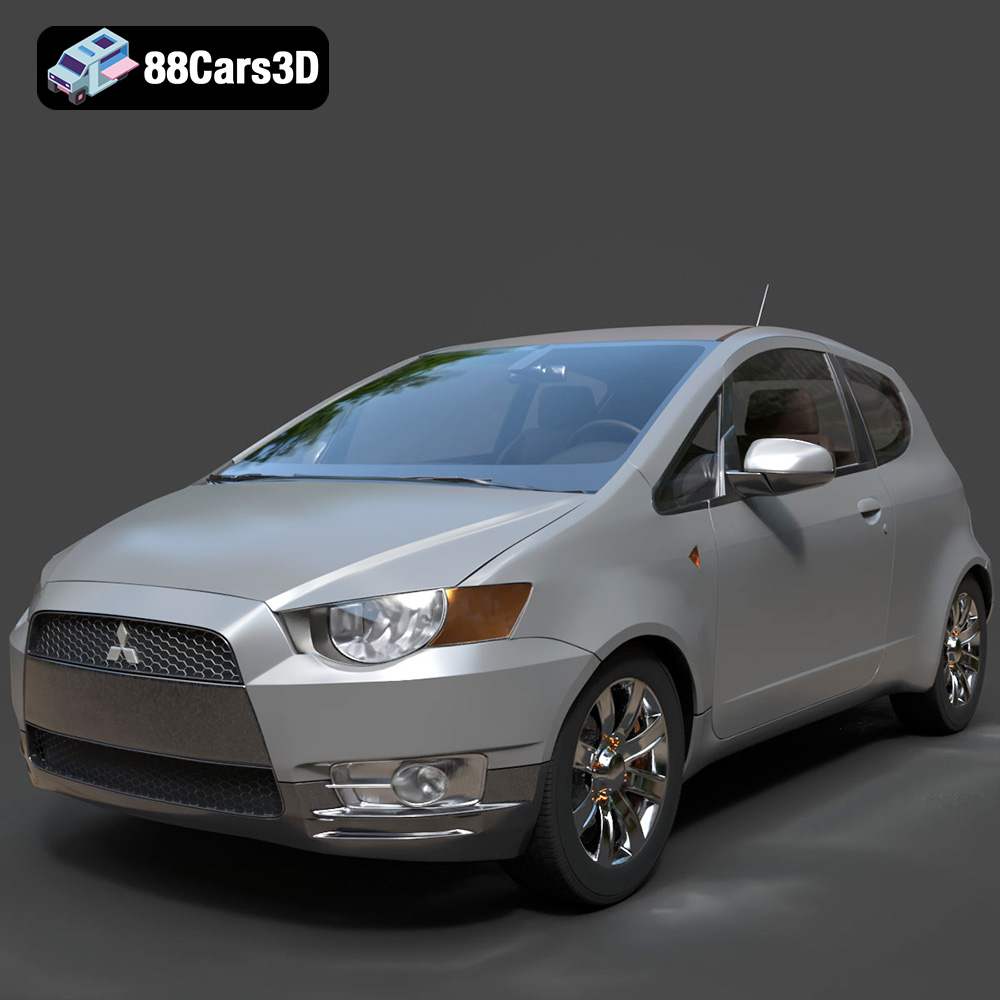
Download the Mitsubishi Colt 3 Door 2008 3D Model featuring clean geometry, realistic detailing, and a fully modeled interior. Includes .blend, .fbx, .obj, .glb, .stl, .ply, .unreal, and .max formats for rendering, simulation, and game development.
Price: $10
Texture: Yes
Material: Yes
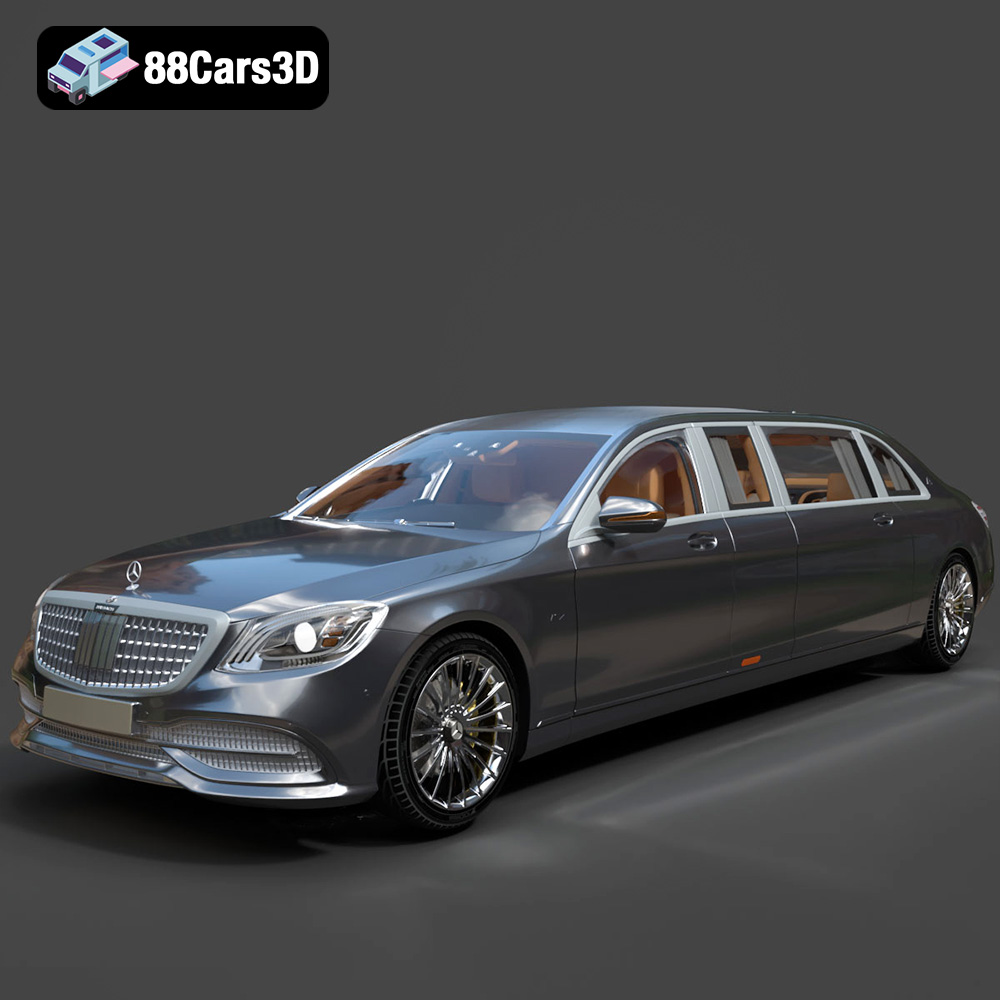
Download the Mercedes-Benz S650 Pullman 3D Model featuring clean geometry, realistic detailing, and a fully modeled interior. Includes .blend, .fbx, .obj, .glb, .stl, .ply, .unreal, and .max formats for rendering, simulation, and game development.
Price: $10

**Meta Description:**
Texture: Yes
Material: Yes
Download the Toyota Crown Majesta 2009 3D Model with luxury detailing, clean topology, and a fully modeled interior. Available in .blend, .fbx, .obj, .glb, .stl, .ply, .unreal, and .max formats for rendering, simulation, and game development.
Price: $4.99

**Meta Description:**
Texture: Yes
Material: Yes
Download the Toyota AE86 Levin 1983 1987 3D Model featuring realistic exterior and interior detailing. Includes .blend, .fbx, .obj, .glb, .stl, .ply, .unreal, and .max formats for rendering, simulation, and game development.
Price: $9.99

Texture: Yes
Material: Yes
Download the Toyota Mark 2 2001 3D Model featuring clean geometry, realistic detailing, and a fully modeled interior. Includes .blend, .fbx, .obj, .glb, .stl, .ply, .unreal, and .max formats for rendering, simulation, and game development.
Price: $4.99

