Get 50% OFF All Premium 3D & STL Models!

The world of automotive visualization has been revolutionized. Gone are the days of long overnight renders for a single static image. Today, real-time rendering engines like Unreal Engine 5 have shattered the barriers between photorealism and interactivity, empowering artists, designers, and developers to create breathtaking, dynamic automotive experiences. Whether you’re building an interactive car configurator, producing a cinematic commercial, developing a racing game, or creating an immersive VR showroom, Unreal Engine provides a powerful, all-in-one solution. However, harnessing this power requires a deep understanding of its core systems and a workflow optimized for performance and visual fidelity.
This comprehensive guide will walk you through the entire process of taking a high-quality 3D car model and transforming it into a stunning, interactive masterpiece within Unreal Engine. We will cover everything from initial project setup and asset preparation to advanced material creation, lighting with Lumen and Nanite, interactive scripting with Blueprints, and performance optimization. You will learn the industry best practices needed to push the boundaries of real-time rendering and unlock the full potential of your automotive visualization projects. Prepare to move beyond static renders and start creating experiences that engage, impress, and convert.
Before you can create stunning visuals, you must lay a solid foundation. This begins with correctly configuring your Unreal Engine project and ensuring your 3D car model is primed for real-time performance. A small oversight at this stage can lead to significant headaches down the line, so investing time in proper setup is crucial. The quality of your final output is directly proportional to the quality of your input assets. This is why sourcing meticulously crafted 3D car models is paramount for professional results. Marketplaces like 88cars3d.com offer assets that are already optimized with clean topology and proper UV layouts, saving you valuable time in the preparation phase.
When creating a new project in Unreal Engine, you are presented with several templates. While the Games templates are viable, the “Architecture, Engineering, and Construction” category offers a better starting point for visualization. The Automotive Configurator template is an excellent choice as it comes with pre-configured settings and plugins ideal for our needs, such as the Variant Manager.
Regardless of your template, ensure the following settings are enabled for maximum visual quality:
Not all 3D models are created equal. For a smooth workflow in Unreal Engine, your model must possess key characteristics:
The two primary formats for bringing models into Unreal are FBX and USD. For automotive assets, FBX is the traditional and robust choice. When importing an FBX, use the following settings for best results:
The USD (Universal Scene Description) workflow is a more modern approach, particularly powerful for collaborative projects. It allows for non-destructive edits and a more streamlined pipeline from DCC applications like Maya or 3ds Max. As this workflow matures, it is becoming an increasingly popular choice for complex scene assembly.
Unreal Engine 5’s most groundbreaking features are arguably Nanite and Lumen. This powerful duo completely changes the game for real-time visualization, allowing for unprecedented geometric detail and fully dynamic global illumination without the performance cost traditionally associated with such features. For automotive visualization, this means you can use film-quality, high-polygon models directly in the engine and see them lit realistically in real-time.
Nanite is a virtualized micropolygon geometry system that allows you to import and render 3D models with millions or even billions of polygons. It intelligently streams and processes only the detail you can perceive, eliminating the need for traditional Level of Detail (LOD) meshes and normal map baking for geometric detail. You can now use your source-of-truth, high-poly CAD or sculpted models directly in your scenes.
To enable Nanite on a 3D car model, simply select the static mesh in the Content Browser, right-click, and choose “Nanite > Enable.” You can verify it’s working by using the “Nanite Visualization” view modes in the level editor. While Nanite is revolutionary, it has some limitations to be aware of, such as limited support for deformable meshes and certain material types. However, for a rigid object like a car body, it is a perfect solution for achieving maximum geometric fidelity.
Lumen is Unreal Engine’s fully dynamic global illumination and reflections system. It provides believable, time-of-day lighting that reacts instantly to changes in geometry or light sources. This is a massive leap forward from static baked lighting, which was time-consuming and inflexible.
With Lumen, light bounces realistically around the scene. A red car placed on a white floor will cast soft red light onto the floor. Reflections are equally dynamic, capturing the environment with stunning accuracy. Lumen is enabled by default in new UE5 projects. You can fine-tune its quality and performance in the Project Settings under “Dynamic Global Illumination Method” and “Reflection Method.” For automotive showcases, using Lumen with Hardware Ray Tracing (when available) often produces the highest quality results, especially for sharp, accurate reflections on the car’s surface.
The final touch for lighting comes from the Post Process Volume. This powerful tool acts like a set of camera and color grading controls for your entire scene. By adding a Post Process Volume and setting its “Infinite Extent (Unbound)” property, you can control:
Experimenting with these settings is key to transforming a technically correct render into a visually stunning, emotionally resonant image.
A car’s visual appeal is defined by its materials. The way light reflects off a multi-layered car paint, the subtle texture of leather seats, and the rough grain of tire rubber are all critical details. Unreal Engine’s Material Editor is an incredibly powerful node-based system that gives you complete control over creating physically accurate PBR materials that bring your game assets and visualization models to life.
Physically Based Rendering (PBR) is a methodology that seeks to simulate the properties of light in the real world. The core inputs for most PBR materials are:
Standard materials are not sufficient for a convincing car paint. You need to use Unreal’s special Clear Coat shading model. This simulates a layer of transparent varnish over a base layer of paint, which is exactly how real car paint is constructed.
To create a car paint material:
A perfectly clean car can look sterile. Realism comes from imperfection. You can add this detail using two primary methods. First, Decals can be used to project logos, racing stripes, or text onto the car’s surface non-destructively. Simply create a Decal Actor in your scene and assign it a material with a transparent background. Second, you can add subtle dirt and grime by using masks in your material graph. By multiplying a “grunge map” (a black and white texture of dirt or smudges) with your Base Color or blending it into your Roughness, you can create realistic wear and tear that makes the vehicle feel grounded in the world.
The true power of real-time rendering lies in interactivity. With Unreal Engine’s Blueprint visual scripting system, you don’t need to be a traditional programmer to bring your automotive scenes to life. Blueprints allow you to create complex logic using a node-based interface, making it accessible for artists and designers to build features like car configurators, interactive showcases, and dynamic camera systems. This is where you transform a static digital object into an engaging product experience.
A Blueprint is essentially a container that combines components (like static meshes, lights, and cameras) with visual scripting logic. For a car, you would typically use a Blueprint of the “Actor” class. You can drag all the static mesh components of your car (body, wheels, doors) into the Blueprint’s viewport to assemble them. From there, the Event Graph is where the magic happens. Here, you can react to events like player input (“when the ‘P’ key is pressed”), timers, or other gameplay triggers to execute a chain of actions.
One of the most common interactive features is a color changer. Here’s a simplified workflow for creating one using Blueprints:
This same principle can be applied to change wheels, interior trims, or any other customizable part of the vehicle.
Blueprints are also perfect for creating dynamic camera sequences. You can place several “Cine Camera Actors” around your car at specific points of interest. Using Blueprint, you can create logic that smoothly blends the view from one camera to another when the user clicks a button corresponding to “Exterior,” “Interior,” or “Wheels.” This creates a guided, cinematic tour of the vehicle. Furthermore, you can use Blueprints to toggle the visibility of different lighting setups or background environments (HDRI domes), allowing the user to see the car in a desert, a city, or a studio environment at the click of a button.
While interactivity is key, sometimes you need to deliver a polished, linear story—a high-impact commercial, a product reveal video, or a stunning portfolio piece. For this, Unreal Engine provides Sequencer, its professional-grade, non-linear cinematic editing tool. Sequencer gives you the power to direct and film your virtual car just as a director would on a real film set, with complete control over cameras, object animation, lighting, and post-processing.
To get started, you create a “Level Sequence” asset. This is your timeline. When you open it, you are presented with an interface similar to video editing software like Adobe Premiere Pro. You can add “Tracks” to control different elements of your scene. The most important track is the “Camera Cuts” track. By adding a Cine Camera Actor from your scene to Sequencer, you can take control of it. You can now add keyframes to its transform track to animate its position and rotation over time, creating sweeping crane shots, smooth dolly zooms, or dynamic handheld movements.
p>
Animating a camera is just the beginning. You can add any actor from your scene to Sequencer, including the car Blueprint itself. By exposing variables in your Blueprint (like a float for “Headlight Brightness”), you can keyframe them directly in Sequencer. This allows you to animate doors opening, headlights turning on, or even the suspension compressing as the car moves. For vehicle motion, you can animate the car’s transform directly or attach it to a “Rail Rig” or “Crane Rig” for perfectly smooth, repeatable camera and vehicle movements. These tools provide a level of precision that is difficult to achieve manually.
When it’s time to export your masterpiece, avoid the simple “Render Movie” button. Instead, use the more powerful Movie Render Queue plugin. This tool provides a robust pipeline for rendering high-quality image sequences with features essential for professional output:
Mastering Sequencer and the Movie Render Queue elevates you from a real-time artist to a virtual cinematographer.
While Nanite and Lumen allow for incredible visual fidelity, performance is still king, especially when developing applications that need to run smoothly on a wide range of hardware, such as games, VR experiences, or web-based configurators. Optimization is the process of balancing visual quality with frame rate, ensuring a fluid and responsive user experience. A beautiful scene that runs at 10 frames per second is ultimately a failure. Unreal Engine provides a suite of powerful tools to diagnose and fix performance bottlenecks.
You can’t optimize what you can’t measure. Unreal’s built-in profiling tools are your best friend. In the console (accessible with the `~` key), you can use commands like:
stat fps: Displays your current frames per second (FPS) and frame time in milliseconds (ms). This is your primary performance metric.stat unit: Shows the time taken by the Game thread, Draw thread, and GPU. This helps you identify whether your bottleneck is CPU-bound or GPU-bound.stat gpu: Breaks down the GPU time by category, showing you exactly what is most expensive—shadows, post-processing, lighting, etc.For a deeper dive, the Unreal Insights tool provides an incredibly detailed trace of everything happening in every frame, allowing you to hunt down the most subtle performance issues. Learning these tools is fundamental to any professional Unreal Engine workflow. For more advanced tutorials and deep dives, the official Unreal Engine documentation at https://dev.epicgames.com/community/unreal-engine/learning is an invaluable resource.
Even with Nanite, some assets might not be compatible or suitable for it (e.g., animated parts, translucent objects). For these, traditional Level of Detail (LOD) meshes are crucial. LODs are lower-polygon versions of your mesh that are swapped in as the object gets further from the camera. Unreal can automatically generate these for you, but for best results, creating them manually in a DCC application gives you more control. Reducing the number of unique objects being rendered is also key. Where possible, merge smaller meshes (like nuts and bolts on a wheel) into a single mesh to reduce “draw calls,” which are commands sent from the CPU to the GPU.
Textures are often a major consumer of video memory (VRAM). Use the “Statistics” tool in the Content Browser to see which textures are the largest. Ensure your texture resolutions are appropriate for the object’s size on screen—a tiny screw doesn’t need a 4K texture map. Use texture compression settings wisely. For materials, complexity matters. A material with dozens of texture lookups and complex math will be more expensive to render than a simple one. Use the “Shader Complexity” view mode in the editor to visualize which materials in your scene are the most performance-intensive (red is bad, green is good) and focus your optimization efforts there.
We have journeyed from the foundational steps of project setup to the cutting-edge frontiers of real-time ray tracing and interactive scripting. You now have a comprehensive roadmap for transforming high-quality 3D car models into dynamic, photorealistic experiences with Unreal Engine 5. We’ve seen how the revolutionary power of Nanite and Lumen removes old limitations on geometry and lighting, allowing for unprecedented realism. We’ve explored the artistry of crafting believable PBR materials and the logic of building interactive configurators with Blueprint. Finally, we’ve covered the cinematic techniques in Sequencer and the critical importance of performance optimization.
The world of automotive visualization is no longer just about creating beautiful images; it’s about creating immersive worlds and engaging experiences. The skills you’ve learned here are the key to unlocking that potential. The journey starts with a great asset, and sourcing production-ready vehicles from platforms such as 88cars3d.com gives you a significant head start. Now, it’s time to take this knowledge, fire up Unreal Engine, and start building. Experiment, push the boundaries, and create the next generation of real-time automotive content.

Texture: Yes
Material: Yes
Download the Chevrolet Camaro 1970 3D Model featuring clean geometry, realistic detailing, and a fully modeled interior. Includes .blend, .fbx, .obj, .glb, .stl, .ply, .unreal, and .max formats for rendering, simulation, and game development.
Price: $10

Texture: Yes
Material: Yes
Download the Mercedes-AMG GT 2015 3D Model featuring clean geometry, realistic detailing, and a fully modeled interior. Includes .blend, .fbx, .obj, .glb, .stl, .ply, .unreal, and .max formats for rendering, simulation, and game development.
Price: $88.99

Texture: Yes
Material: Yes
Download the Suzuki GSX-R 1000 3D Model featuring clean geometry, realistic detailing, and a fully modeled interior. Includes .blend, .fbx, .obj, .glb, .stl, .ply, .unreal, and .max formats for rendering, simulation, and game development.
Price: $10

Texture: Yes
Material: Yes
Download the Porsche Cayman S 2024 3D Model featuring clean geometry, realistic detailing, and a fully modeled interior. Includes .blend, .fbx, .obj, .glb, .stl, .ply, .unreal, and .max formats for rendering, simulation, and game development.
Price: $10

Texture: Yes
Material: Yes
Download the Holden Commodore Sportwagon 2017 3D Model featuring clean geometry, realistic detailing, and a fully modeled interior. Includes .blend, .fbx, .obj, .glb, .stl, .ply, .unreal, and .max formats for rendering, simulation, and game development.
Price: $10

Texture: Yes
Material: Yes
Download the Mitsubishi Colt 3 Door 2008 3D Model featuring clean geometry, realistic detailing, and a fully modeled interior. Includes .blend, .fbx, .obj, .glb, .stl, .ply, .unreal, and .max formats for rendering, simulation, and game development.
Price: $10

Texture: Yes
Material: Yes
Download the Mercedes-Benz S650 Pullman 3D Model featuring clean geometry, realistic detailing, and a fully modeled interior. Includes .blend, .fbx, .obj, .glb, .stl, .ply, .unreal, and .max formats for rendering, simulation, and game development.
Price: $10

Texture: Yes
Material: Yes
Download the Mercedes G-Class SUV 2024 3D Model featuring clean geometry, realistic detailing, and a fully modeled interior. Includes .blend, .fbx, .obj, .glb, .stl, .ply, .unreal, and .max formats for rendering, simulation, and game development.
Price: $10
Texture: Yes
Material: Yes
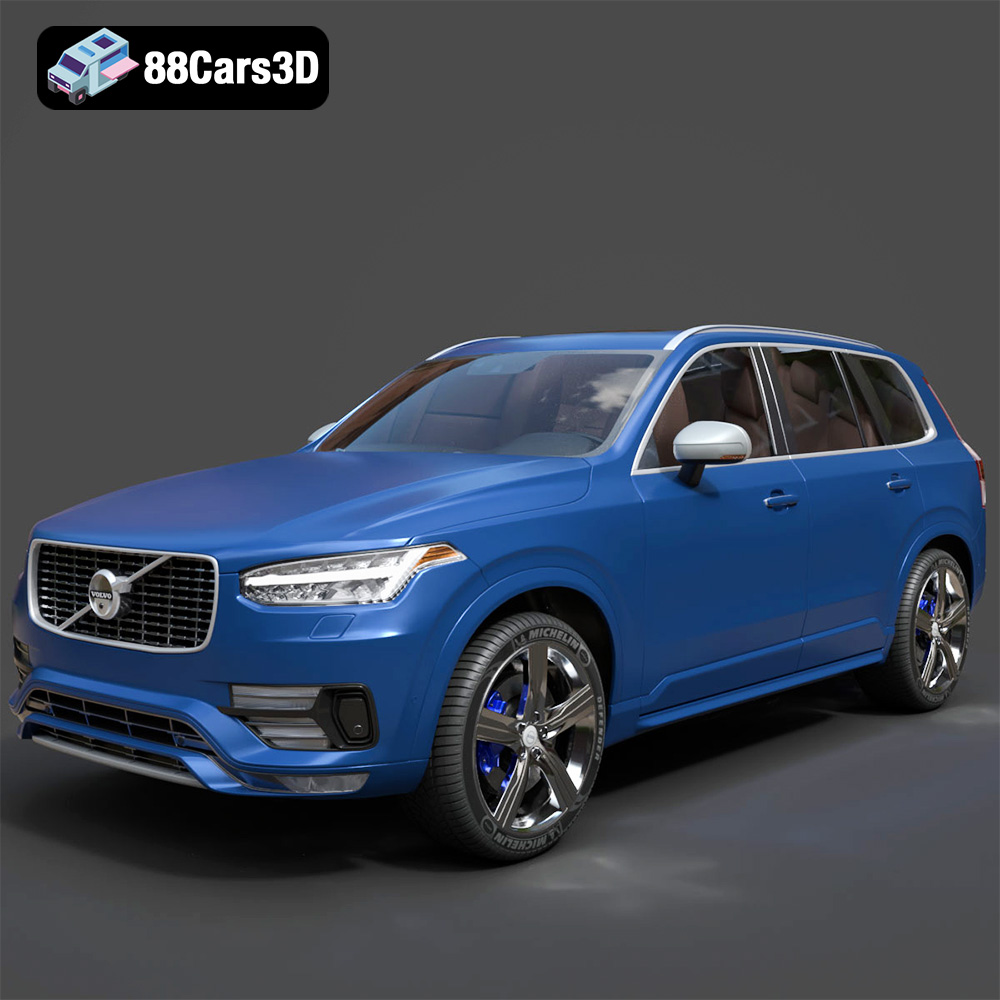
Download the Volvo XC90 R-Design 2015 3D Model featuring clean geometry, realistic detailing, and a fully modeled interior. Includes .blend, .fbx, .obj, .glb, .stl, .ply, .unreal, and .max formats for rendering, simulation, and game development.
Price: $10

**Meta Description:**
Texture: Yes
Material: Yes
Download the Toyota Crown Majesta 2009 3D Model with luxury detailing, clean topology, and a fully modeled interior. Available in .blend, .fbx, .obj, .glb, .stl, .ply, .unreal, and .max formats for rendering, simulation, and game development.
Price: $4.99

