Get 50% OFF All Premium 3D & STL Models!

“`html
The world of 3D printing has revolutionized how we create and interact with physical objects. For automotive enthusiasts and model builders, this technology opens exciting possibilities. From crafting intricate replicas to designing custom modifications, 3D printing empowers you to bring your automotive visions to life. However, achieving professional-quality results requires a deep understanding of the entire 3D printing workflow – from selecting the right STL file to fine-tuning printer settings and mastering post-processing techniques. This comprehensive guide will delve into the essential aspects of 3D printing car models, covering everything from STL file preparation and slicing to material selection and troubleshooting common printing issues. Whether you’re a seasoned 3D printing expert or just starting your journey, this guide will provide you with the knowledge and skills necessary to create stunning 3D printed car models.
In this article, you’ll learn how to:
The STL (Stereolithography) file format is the backbone of 3D printing. It represents the surface geometry of a 3D object using a collection of triangles. Understanding the structure and properties of STL files is crucial for achieving successful and high-quality 3D prints. When downloading models from marketplaces such as 88cars3d.com, you’re essentially acquiring STL files ready for printing. The quality of these files directly impacts the final result, so understanding what to look for is paramount.
The density of the triangle mesh determines the level of detail and smoothness in the printed model. A higher triangle count results in a smoother surface but also increases file size and processing time. Finding the right balance is crucial. For car models, areas with complex curves, like fenders and bumpers, benefit from a higher triangle density to accurately capture the shape. Conversely, flat surfaces can be represented with fewer triangles without significant loss of detail. STL files from 88cars3d.com are typically optimized for a balance between detail and printability.
A “manifold” mesh is a closed, watertight surface with no holes or self-intersections. This is a fundamental requirement for 3D printing. Non-manifold meshes can cause slicing errors, unexpected print failures, or incomplete models. Common errors include:
Software like MeshLab, Netfabb Basic (free version), or the repair tools in PrusaSlicer can be used to identify and fix these errors. PrusaSlicer, for example, automatically detects and offers to repair many common mesh issues upon importing an STL file.
Large STL files can strain your slicing software and printer’s memory, leading to slower processing times and potential crashes. Optimizing the file size without sacrificing detail is essential. Techniques include:
Slicing is the process of converting the 3D model into a series of 2D layers that the 3D printer can understand. The slicing software takes the STL file as input and generates G-code, a machine-readable language that instructs the printer on how to move, extrude material, and control temperature. Choosing the correct slicing parameters is crucial for achieving optimal print quality, strength, and dimensional accuracy. Incorrect settings can lead to warping, poor layer adhesion, stringing, and other printing defects. The type of 3D printer you use (FDM or resin) will greatly influence the slicer and settings you’ll need to use.
Layer height is the thickness of each individual layer printed. A smaller layer height results in smoother surfaces and finer details, but also increases print time and the risk of clogging. A larger layer height reduces print time but can result in a “stair-stepping” effect, where the layers are more visible. For detailed car models, a layer height of 0.1mm to 0.2mm is generally recommended for FDM printing. For resin printing, layer heights can be significantly smaller, often in the range of 0.025mm to 0.05mm, allowing for incredibly detailed prints. Finding the right balance between detail and print time is key, and this is often achieved through experimentation. It’s good practice to start with recommended settings for your material and printer and then adjust based on the results.
Infill refers to the internal structure of the 3D printed object. It provides strength and support to the outer shell. Infill density is the percentage of the interior volume that is filled with material. A higher infill density results in a stronger and heavier model, while a lower infill density saves material and reduces print time. For car models, the required infill density depends on the intended use. For purely aesthetic models, a low infill density of 10-15% may be sufficient. For models that need to withstand stress or load, such as functional prototypes, a higher infill density of 25-50% is recommended. Common infill patterns include:
Print speed and temperature settings are crucial for proper layer adhesion and preventing warping. The optimal settings depend on the material being used. PLA typically prints at lower temperatures (190-220°C) and moderate speeds (40-60mm/s), while ABS requires higher temperatures (230-260°C) and may benefit from slower speeds (30-50mm/s). PETG falls somewhere in between. Too high a temperature can cause stringing and blobbing, while too low a temperature can result in poor layer adhesion. Print speed also affects layer adhesion and detail. Printing too fast can cause under-extrusion and weak layers, while printing too slow can lead to overheating and deformation. Experimentation is key to finding the optimal settings for your specific printer and material. Keep detailed notes of your tests.
Support structures are temporary structures that are printed to support overhanging features and bridges in a 3D model. They prevent these features from collapsing or deforming during printing. Generating and removing support structures effectively is a critical skill for 3D printing car models, especially those with intricate designs. Poorly designed supports can be difficult to remove, leaving behind unsightly marks or even damaging the model. Platforms like 88cars3d.com often provide models with pre-designed supports or recommendations on how to add them effectively.
There are several types of support structures commonly used in 3D printing:
The choice of support structure depends on the geometry of the model and the material being used. Tree supports are often preferred for car models due to their ability to provide targeted support in hard-to-reach areas.
Slicing software offers a variety of settings for customizing support structures. Key settings include:
Experimenting with these settings is crucial for finding the optimal balance between support strength and ease of removal.
Removing support structures without damaging the model requires patience and the right tools. Common techniques include:
Always start with the gentlest approach and gradually increase the force as needed. Post-processing techniques, such as sanding and filling, can be used to smooth out any remaining marks or imperfections after support removal.
Print orientation and bed adhesion are critical factors that influence the success of 3D prints, especially for complex car models. The orientation in which the model is printed affects the strength, surface finish, and support requirements. Proper bed adhesion ensures that the model remains firmly attached to the build plate throughout the printing process, preventing warping, shifting, or complete print failures. These are particularly important considerations when printing larger models.
The optimal print orientation depends on several factors, including:
For car models, it is often beneficial to print the body shell upside down, with the roof facing down, to minimize support requirements and improve the surface finish of the roof.
Poor bed adhesion is a common cause of print failures. Several techniques can be used to improve bed adhesion:
Warping occurs when the corners or edges of the model lift off the build plate due to uneven cooling and contraction. To prevent warping:
Choosing the right material is crucial for achieving the desired properties and appearance for your 3D printed car model. The four most common materials for 3D printing are PLA, PETG, ABS, and resin, each with its own strengths and weaknesses. The best choice depends on the specific requirements of the project, such as strength, flexibility, heat resistance, and surface finish. The type of printer available is also a limiting factor in material selection as FDM printers typically use filament (PLA, PETG, ABS) and resin printers use liquid resin.
PLA is a biodegradable thermoplastic derived from renewable resources such as cornstarch or sugarcane. It is known for its ease of use, low printing temperature, and minimal warping. PLA is a good choice for beginners and for printing models that do not require high strength or heat resistance. However, PLA is relatively brittle and has a low glass transition temperature, meaning it can soften and deform at relatively low temperatures (around 60°C). It’s available in a very wide range of colors and finishes. Consider PLA for aesthetic car models and practice prints.
PETG is a strong and durable thermoplastic with good chemical resistance and moderate flexibility. It is more heat resistant than PLA and less prone to warping than ABS. PETG is a good choice for functional parts and models that require some degree of impact resistance. It is also food-safe, making it suitable for printing containers and other items that come into contact with food. PETG is a good all-around material for car models that need to withstand some stress, such as RC car parts.
ABS is a strong and heat-resistant thermoplastic commonly used in automotive and consumer products. It has a high glass transition temperature (around 105°C) and can withstand high temperatures without deforming. ABS is a good choice for functional parts that need to withstand high temperatures or stress. However, ABS is more difficult to print than PLA and PETG, as it is prone to warping and requires a heated bed and an enclosure. It also emits fumes during printing, so proper ventilation is required. ABS is suitable for car models that will be exposed to high temperatures, such as engine components or dashboards.
Resin printing (SLA or DLP) uses liquid resin that is cured by UV light. Resin printing is capable of producing highly detailed models with smooth surfaces, making it ideal for printing intricate car models with fine details. Resin prints are typically more brittle than FDM prints and may not be suitable for functional parts that require high strength or impact resistance. There are various types of resins available, each with its own properties, such as standard resin, tough resin, and flexible resin. Resin printing requires careful handling of the resin and proper ventilation, as the resin can be toxic. Resin printing is excellent for creating display models of cars with exceptional detail, such as scale models for collectors.
Even with careful preparation and optimized settings, 3D printing failures can occur. Understanding the common causes of these failures and how to troubleshoot them is essential for achieving successful prints. This section covers some of the most frequent issues encountered when 3D printing car models and provides practical solutions.
As mentioned earlier, warping occurs when the corners or edges of the model lift off the build plate. Solutions include:
Stringing occurs when thin strands of plastic are left between different parts of the model. Blobs are small clumps of plastic that appear on the surface of the model. Solutions include:
Layer shifting occurs when the layers of the model are misaligned, resulting in a noticeable shift in the printed object. Solutions include:
Under-extrusion occurs when the printer is not extruding enough material, resulting in weak or incomplete layers. Clogging occurs when the nozzle becomes blocked with filament. Solutions include:
Mastering the art of 3D printing car models requires a blend of technical knowledge, hands-on experience, and a keen eye for detail. This comprehensive guide has provided you with the essential knowledge and techniques to navigate the entire 3D printing workflow, from understanding STL files and slicing parameters to mastering support structures, optimizing print orientation, selecting the right materials, and troubleshooting common printing failures. By applying these principles and continuously experimenting with different settings and techniques, you can unlock the full potential of 3D printing and create stunning, professional-quality car models. Remember to leverage resources like 88cars3d.com for high-quality STL files and inspiration for your next automotive masterpiece.
Your next steps should include:
With dedication and continuous learning, you can transform your automotive passions into tangible reality through the power of 3D printing. Happy printing!
“`

Texture: Yes
Material: Yes
Download the Mercedes S-Class 2024 3D Model featuring clean geometry, realistic detailing, and a fully modeled interior. Includes .blend, .fbx, .obj, .glb, .stl, .ply, .unreal, and .max formats for rendering, simulation, and game development.
Price: $10

Texture: Yes
Material: Yes
Download the Chevrolet Camaro 1970 3D Model featuring clean geometry, realistic detailing, and a fully modeled interior. Includes .blend, .fbx, .obj, .glb, .stl, .ply, .unreal, and .max formats for rendering, simulation, and game development.
Price: $10

Texture: Yes
Material: Yes
Download the Mercedes-AMG GT 2015 3D Model featuring clean geometry, realistic detailing, and a fully modeled interior. Includes .blend, .fbx, .obj, .glb, .stl, .ply, .unreal, and .max formats for rendering, simulation, and game development.
Price: $88.99

Texture: Yes
Material: Yes
Download the Suzuki GSX-R 1000 3D Model featuring clean geometry, realistic detailing, and a fully modeled interior. Includes .blend, .fbx, .obj, .glb, .stl, .ply, .unreal, and .max formats for rendering, simulation, and game development.
Price: $10

Texture: Yes
Material: Yes
Download the Porsche Cayman S 2024 3D Model featuring clean geometry, realistic detailing, and a fully modeled interior. Includes .blend, .fbx, .obj, .glb, .stl, .ply, .unreal, and .max formats for rendering, simulation, and game development.
Price: $10

Texture: Yes
Material: Yes
Download the Holden Commodore Sportwagon 2017 3D Model featuring clean geometry, realistic detailing, and a fully modeled interior. Includes .blend, .fbx, .obj, .glb, .stl, .ply, .unreal, and .max formats for rendering, simulation, and game development.
Price: $10

Texture: Yes
Material: Yes
Download the Mitsubishi Colt 3 Door 2008 3D Model featuring clean geometry, realistic detailing, and a fully modeled interior. Includes .blend, .fbx, .obj, .glb, .stl, .ply, .unreal, and .max formats for rendering, simulation, and game development.
Price: $10

Texture: Yes
Material: Yes
Download the Mercedes-Benz S650 Pullman 3D Model featuring clean geometry, realistic detailing, and a fully modeled interior. Includes .blend, .fbx, .obj, .glb, .stl, .ply, .unreal, and .max formats for rendering, simulation, and game development.
Price: $95.99
Texture: Yes
Material: Yes
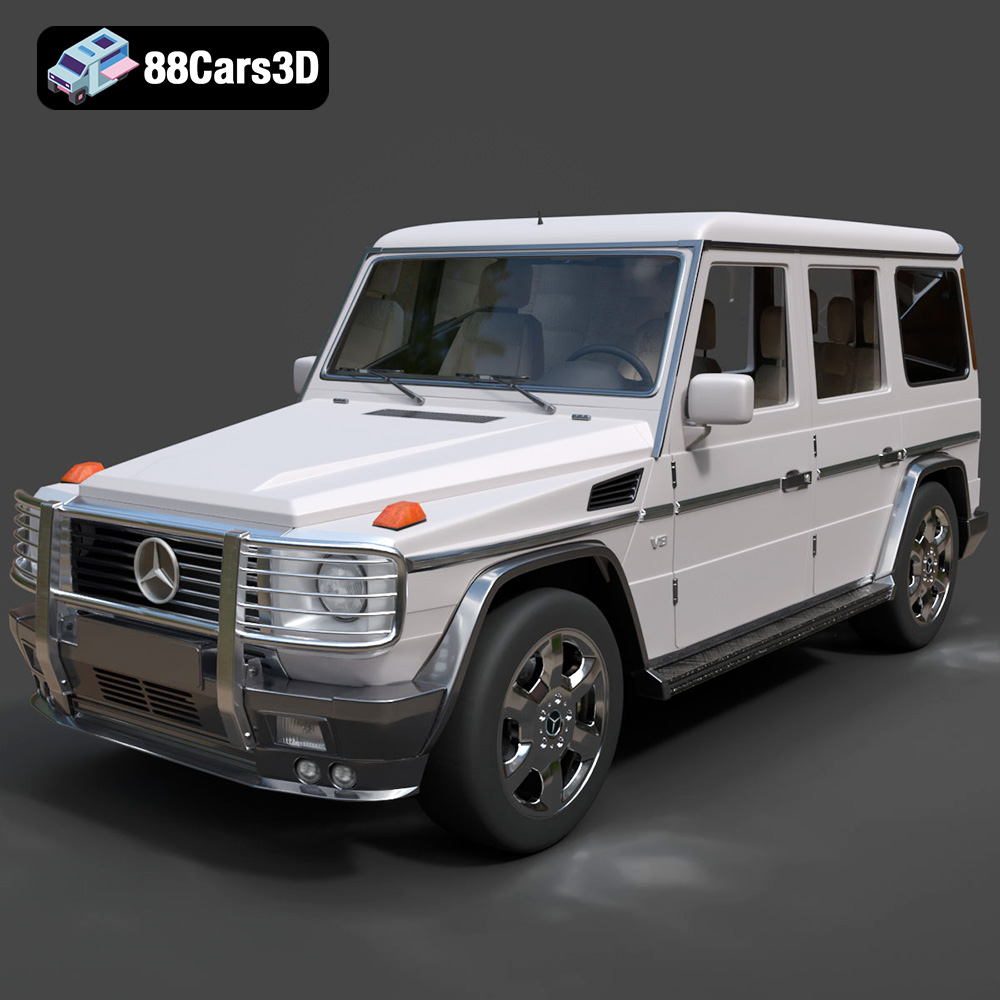
Download the Mercedes G-Class SUV 2024 3D Model featuring clean geometry, realistic detailing, and a fully modeled interior. Includes .blend, .fbx, .obj, .glb, .stl, .ply, .unreal, and .max formats for rendering, simulation, and game development.
Price: $10

Texture: Yes
Material: Yes
Download the Volvo XC90 R-Design 2015 3D Model featuring clean geometry, realistic detailing, and a fully modeled interior. Includes .blend, .fbx, .obj, .glb, .stl, .ply, .unreal, and .max formats for rendering, simulation, and game development.
Price: $10

