Get 50% OFF All Premium 3D & STL Models!

“`html
In the digital world, the automobile is more than just a mode of transportation; it’s a star. From blockbuster films and hyper-realistic video games to cutting-edge automotive advertising and immersive AR/VR experiences, high-quality 3D car models are indispensable assets. Creating these digital masterpieces is a sophisticated process that blends technical precision with artistic vision. It requires a deep understanding of form, materials, light, and the specific technical pipelines for different applications. A convincing 3D car is not just a collection of polygons; it’s a story told through gleaming reflections, perfectly sculpted curves, and immaculate details that stand up to the closest scrutiny.
This comprehensive guide will take you on a journey through the entire production pipeline of a professional-grade automotive 3D asset. We will dissect the fundamental stages, starting with the meticulous process of 3D modeling where topology and accuracy are paramount. We’ll then dive into the art of UV mapping and PBR texturing to create materials that mimic reality with stunning fidelity. From there, we will explore the nuances of setting up photorealistic renders in industry-standard software and demystify the critical optimization workflows required to make these beautiful models perform efficiently in real-time game engines. Whether you are a 3D artist aiming for portfolio-quality renders, a game developer building the next great racing simulator, or a visualization professional, this article will provide the technical insights and best practices you need to elevate your automotive 3D work.
The creation of any high-fidelity 3D car model begins with a rock-solid foundation: the modeling process. This stage is less about raw speed and more about precision, patience, and a thorough understanding of surface topology. The goal is to build a digital replica that is not only visually accurate but also structurally sound for all subsequent stages, whether it’s for subdivision-based rendering, game engine optimization, or even 3D printing. A model built with clean, deliberate geometry will texture, light, and deform predictably, while a poorly constructed one will cause persistent headaches throughout the pipeline. This initial investment in quality modeling is non-negotiable for achieving professional results.
At the heart of a great car model is its topology—the arrangement of vertices, edges, and polygons that form the mesh. For automotive surfaces, the standard is to use a predominantly quadrilateral (quad) mesh. Quads subdivide cleanly and are easier to manage when creating complex curved surfaces. The most critical concept here is edge flow, which refers to how the edge loops follow the contours of the car’s body. Proper edge flow is essential for defining the sharp character lines, rounded fenders, and subtle surface transitions that give a car its unique identity. When a model is subdivided (using modifiers like TurboSmooth in 3ds Max or the Subdivision Surface modifier in Blender), a clean edge flow ensures that these defining lines remain crisp and highlights flow smoothly and realistically across the surface without pinching or visual artifacts. A common technique is to use holding edges—extra edge loops placed close to a primary edge—to control the tightness of a crease or corner during subdivision.
Accuracy begins with excellent reference material. The standard practice is to use high-resolution blueprints or schematics showing the top, front, side, and rear views of the vehicle. These images must be carefully aligned and scaled within the 3D software’s viewports to serve as a precise guide. Before starting, it’s crucial to verify the blueprints’ accuracy, as many freely available online can have perspective distortions or inconsistencies between views. Supplement blueprints with a large collection of photographic references from various angles and in different lighting conditions. These photos are invaluable for understanding complex surface transitions, material details, and intricate parts like grilles, lights, and interior components that are often simplified in blueprints. Pay close attention to scale; setting the model to its real-world dimensions (e.g., using meters or centimeters) from the very beginning ensures that lighting, physics simulations, and integrations with other assets will behave correctly later on.
The difference between an amateur and a professional car model often lies in the details. One of the most important features is the presence of clean, consistent panel gaps between body parts like doors, hoods, and bumpers. These are not simply black lines drawn on a texture map; they are physically modeled gaps. A common workflow is to model the main body as a single, continuous surface first to ensure smooth curvature, and then to detach the different panels. Once separated, the edges of each panel can be slightly beveled and extruded inward to create the illusion of thickness and produce the gap. The polygon budget for a high-poly render model can range from 500,000 to over 2 million polygons, allowing for extreme detail in areas like headlight interiors, brake calipers, tire treads, and badges. Every bolt, vent, and seam contributes to the final photorealism of the asset.
Once the geometry is finalized, the model is essentially a colorless, featureless sculpture. The texturing and shading phase is where this sculpture is brought to life with realistic surfaces. This process involves creating a 2D representation of the 3D model’s surface (UV unwrapping) and then applying a set of specialized texture maps that define its material properties based on the principles of Physically Based Rendering (PBR). For an object as complex as a car, with its diverse materials ranging from multi-layered paint to textured plastics and clear glass, this stage demands both technical skill and an artistic eye. High-quality PBR materials are the key to achieving believable interactions between the car’s surfaces and the light in your scene.
UV mapping is the process of flattening a 3D model’s surface into a 2D space so that textures can be applied correctly. For a car, this requires a strategic approach. It’s inefficient and impractical to unwrap the entire car onto a single UV map. Instead, the model should be unwrapped based on material types or object parts. For instance, all rubber parts (tires, window seals) might share one UV layout and texture set, while chrome parts share another, and the interior dashboard components a third. This keeps texture resolutions manageable and the workflow organized. When unwrapping, the artist must strategically place “seams” to “cut” the mesh apart for flattening, aiming to hide these seams in less visible areas. The goal is to minimize texture distortion and maintain a consistent texel density—the amount of texture resolution per unit of geometry—across the model. More important areas, like logos or the dashboard, can be given more UV space to ensure they remain sharp.
Physically Based Rendering (PBR) is a shading methodology that aims to simulate how light behaves in the real world. This approach leads to more consistent and realistic results across different lighting conditions. The most common PBR workflow is the Metallic/Roughness workflow, which uses several key texture maps:
Standard PBR textures are great for many surfaces, but car paint requires a more advanced, layered approach to look truly authentic. A typical car paint shader consists of three distinct layers:
With a meticulously modeled and textured car, the next step is to place it in a virtual studio or environment to create a stunning final image. This is where automotive rendering comes in, a discipline that is as much about photography and lighting theory as it is about software settings. The goal is to use virtual lights, cameras, and environments to showcase the vehicle in the most compelling way possible, highlighting its design, form, and materials. Choosing the right render engine and understanding its settings are crucial for balancing visual quality with render time, while post-processing adds the final layer of polish that separates a good render from a great one.
The single most important element for realistic renders is lighting. For automotive visualization, the most common technique is Image-Based Lighting (IBL), which uses a High Dynamic Range Image (HDRI). An HDRI is a 360-degree panoramic photograph that contains a vast range of light intensity data. When used as an environment map in a 3D scene, it projects light from all directions, creating incredibly realistic and nuanced reflections, shadows, and ambient illumination that are difficult to achieve with manual light setups. For studio-style shots, artists often supplement the HDRI with a traditional three-point lighting setup: a strong Key light to define the primary shadows, a softer Fill light to illuminate details in the shadows, and one or more Rim lights from behind to highlight the car’s silhouette and separate it from the background.
The choice of render engine significantly impacts the workflow and final look.
Corona Renderer, a popular choice for 3ds Max users, is renowned for its ease of use and photorealistic results with minimal tweaking. Its Interactive Rendering (IPR) provides real-time feedback in the viewport, making look development for materials and lighting incredibly fast and intuitive. Corona’s layered material system is perfectly suited for creating complex shaders like the multi-coat car paint described earlier.
Blender Cycles is a powerful, physically-based path tracing engine that is fully integrated into Blender and is a fantastic, open-source option for achieving photorealism. As detailed in the official Blender 4.4 documentation, Cycles excels at calculating complex light interactions, such as global illumination and caustics, which are essential for realistic results. Its Principled BSDF shader is an all-in-one node that makes creating PBR materials straightforward. Cycles also leverages modern hardware with robust GPU rendering support for NVIDIA (OptiX) and AMD (HIP) cards, and its high-quality denoising options, like OpenImageDenoise, are indispensable for producing clean images in shorter times.
The virtual camera should be treated like a real-world camera. Choosing an appropriate focal length is key; wide-angle lenses (below 35mm) can distort the car’s proportions, while telephoto lenses (above 85mm) can flatten the perspective. A range of 35-85mm is often ideal for natural-looking shots. Enabling depth of field (DoF) with a wide aperture (low f-stop number) creates a pleasingly soft, out-of-focus background that draws the viewer’s eye to a specific part of the car. After the render is complete, a final post-processing pass is essential. This can be done in Photoshop, Affinity Photo, or Blender’s own Compositor. Common adjustments include:
Creating a 3D car for a film or a high-resolution print is one thing; preparing it for a real-time game engine like Unity or Unreal Engine is an entirely different challenge. In a game, the model must be rendered 60 times per second or more, meaning every polygon and texture map counts. The process of optimization involves reducing the model’s complexity while cleverly faking detail to maintain a high level of visual fidelity. This balance of quality and performance is crucial for creating smooth, immersive gaming experiences. Assets designed for real-time applications, often referred to as game assets, must adhere to strict technical budgets for polygon counts, material complexity, and memory usage.
A high-poly render model with millions of polygons is unusable in a game engine. The first step is to create a low-poly, game-ready version through a process called retopology. This involves building a new, much simpler mesh that perfectly matches the silhouette and form of the original high-poly model. The target polygon count, or “poly budget,” varies drastically depending on the target platform. A main “hero” car in a modern AAA console game might have a budget of 100,000 to 300,000 triangles, while a car for a mobile game might need to be under 20,000 triangles. During retopology, artists focus on creating clean, efficient geometry that preserves the car’s shape with the fewest polygons possible, paying special attention to areas with high curvature like wheel arches and body lines.
How does a low-poly model look just as detailed as its high-poly counterpart? The magic lies in texture baking. This process projects the surface details from the high-poly model onto the UV layout of the low-poly model, storing that information in texture maps. The most important of these is the Normal map, which tricks the game engine’s lighting system into thinking the flat surface of the low-poly model has all the bumps, dents, and panel lines of the high-poly version. Other maps, like Ambient Occlusion (AO), are also baked to add contact shadows and depth. This technique allows a model with only 50,000 polygons to display a level of surface complexity that would otherwise require millions, making it the cornerstone of modern game asset creation.
Even an optimized low-poly model can be too detailed when it’s far away from the camera. To solve this, game developers use Level of Detail (LODs). This involves creating several versions of the car model, each with a progressively lower polygon count and simpler textures (e.g., LOD0: 100k triangles, LOD1: 40k, LOD2: 15k, LOD3: 5k). The game engine automatically switches to a simpler LOD as the car moves further from the player’s view, drastically reducing the rendering workload without a noticeable drop in visual quality. Another key optimization is reducing draw calls, which are commands sent from the CPU to the GPU to draw an object. Each material on an object typically requires a separate draw call. To minimize this, artists often use texture atlasing—the technique of combining textures for multiple different parts onto a single, larger texture sheet. This allows large sections of the car to be rendered in a single draw call, significantly improving performance.
A beautifully crafted 3D model is only useful if it can be reliably transferred between different software and platforms. The 3D industry relies on a variety of standardized file formats, each with its own strengths, weaknesses, and ideal use cases. Understanding the differences between formats like FBX, OBJ, GLB, and STL is essential for any 3D artist or developer. Choosing the correct format ensures that your model’s geometry, materials, textures, and animations are preserved as it moves from your modeling software to a render engine, a game engine, an AR/VR application, or a 3D printer. This final step in asset preparation is critical for a seamless and predictable production pipeline.
For decades, OBJ (.obj) has been a universally supported format for 3D geometry. Its simplicity is its strength; it reliably stores vertex positions, UV coordinates, and normals, making it an excellent choice for exporting static models for rendering or 3D printing. However, it does not support more complex data like animations, rigs, or advanced materials. This is where FBX (.fbx), developed by Autodesk, comes in. FBX is the undisputed industry standard for transferring complex 3D assets between applications like 3ds Max, Maya, Blender, Unity, and Unreal Engine. It can package geometry, materials, textures, skeletal rigs, animations, and even camera and light information into a single file, making it indispensable for game development and animation pipelines.
With the rise of web-based 3D, augmented reality, and virtual reality, new formats have emerged that are optimized for efficient, real-time delivery. glTF (.gltf, .glb) is often called the “JPEG of 3D.” It’s an open standard designed to be compact and fast to load, making it perfect for displaying 3D models on websites or in mobile apps. The GLB format is a binary version that packages all the necessary data (mesh, materials, textures) into a single, easy-to-distribute file. Similarly, USDZ (.usdz) is a format developed by Apple specifically for AR applications on iOS devices. It’s based on Pixar’s Universal Scene Description (USD) technology and is optimized for sharing and experiencing 3D content in AR. For projects targeting these modern platforms, sourcing pre-made models in these formats from marketplaces like 88cars3d.com can save significant development time and ensure compatibility.
Taking a digital model into the physical world via 3D printing requires a specific type of preparation. The most common file format for this is STL (.stl), which describes the surface geometry of a 3D object using a collection of triangles. The most critical requirement for a 3D printable model is that it must be a “watertight” or manifold mesh. This means the model must have no holes, inverted faces, or non-connecting edges; it must represent a single, enclosed volume. A render model with floating parts or paper-thin surfaces will fail to print correctly. Artists must often go through a mesh repair process, using tools like Blender’s 3D-Print Toolbox or standalone software like Meshmixer, to check for errors, close holes, and ensure the model has sufficient wall thickness to be physically printed.
The journey from a blank viewport to a stunningly realistic 3D car is a testament to the power of modern digital tools and the skill of the artist. We’ve navigated the complete workflow, starting with the unyielding precision required in the modeling stage, where clean topology and accurate edge flow set the stage for success. We then imbued our model with life through strategic UV mapping and the creation of sophisticated, multi-layered PBR materials. We explored the art of light and shadow in the rendering phase, leveraging powerful engines like Corona and Blender Cycles to capture that perfect shot. Finally, we delved into the critical world of real-time optimization, learning to balance visual fidelity with performance for game engines and interactive applications. Each stage is a craft in itself, demanding both technical knowledge and creative problem-solving.
Mastering automotive 3D is an ongoing pursuit of perfection. The key takeaway is that excellence is born from a holistic understanding of the entire pipeline; a great modeler understands the needs of the texture artist, who in turn understands the demands of the render engine or game engine. Your next steps should be focused on practice and observation. Study the work of leading automotive artists, analyze real-world car photography to understand how light interacts with complex surfaces, and don’t be afraid to experiment. For those looking to accelerate their learning, exploring professionally crafted models from marketplaces such as 88cars3d.com can be an invaluable resource. By deconstructing these assets, you can gain deep insights into expert topology, efficient UV layouts, and masterful shader construction, providing a clear roadmap to elevate your own work to the next level.
“`

Texture: Yes
Material: Yes
Download the Mercedes S-Class 2024 3D Model featuring clean geometry, realistic detailing, and a fully modeled interior. Includes .blend, .fbx, .obj, .glb, .stl, .ply, .unreal, and .max formats for rendering, simulation, and game development.
Price: $10

Texture: Yes
Material: Yes
Download the Chevrolet Camaro 1970 3D Model featuring clean geometry, realistic detailing, and a fully modeled interior. Includes .blend, .fbx, .obj, .glb, .stl, .ply, .unreal, and .max formats for rendering, simulation, and game development.
Price: $10

Texture: Yes
Material: Yes
Download the Mercedes-AMG GT 2015 3D Model featuring clean geometry, realistic detailing, and a fully modeled interior. Includes .blend, .fbx, .obj, .glb, .stl, .ply, .unreal, and .max formats for rendering, simulation, and game development.
Price: $88.99

Texture: Yes
Material: Yes
Download the Suzuki GSX-R 1000 3D Model featuring clean geometry, realistic detailing, and a fully modeled interior. Includes .blend, .fbx, .obj, .glb, .stl, .ply, .unreal, and .max formats for rendering, simulation, and game development.
Price: $10

Texture: Yes
Material: Yes
Download the Porsche Cayman S 2024 3D Model featuring clean geometry, realistic detailing, and a fully modeled interior. Includes .blend, .fbx, .obj, .glb, .stl, .ply, .unreal, and .max formats for rendering, simulation, and game development.
Price: $10

Texture: Yes
Material: Yes
Download the Holden Commodore Sportwagon 2017 3D Model featuring clean geometry, realistic detailing, and a fully modeled interior. Includes .blend, .fbx, .obj, .glb, .stl, .ply, .unreal, and .max formats for rendering, simulation, and game development.
Price: $10
Texture: Yes
Material: Yes
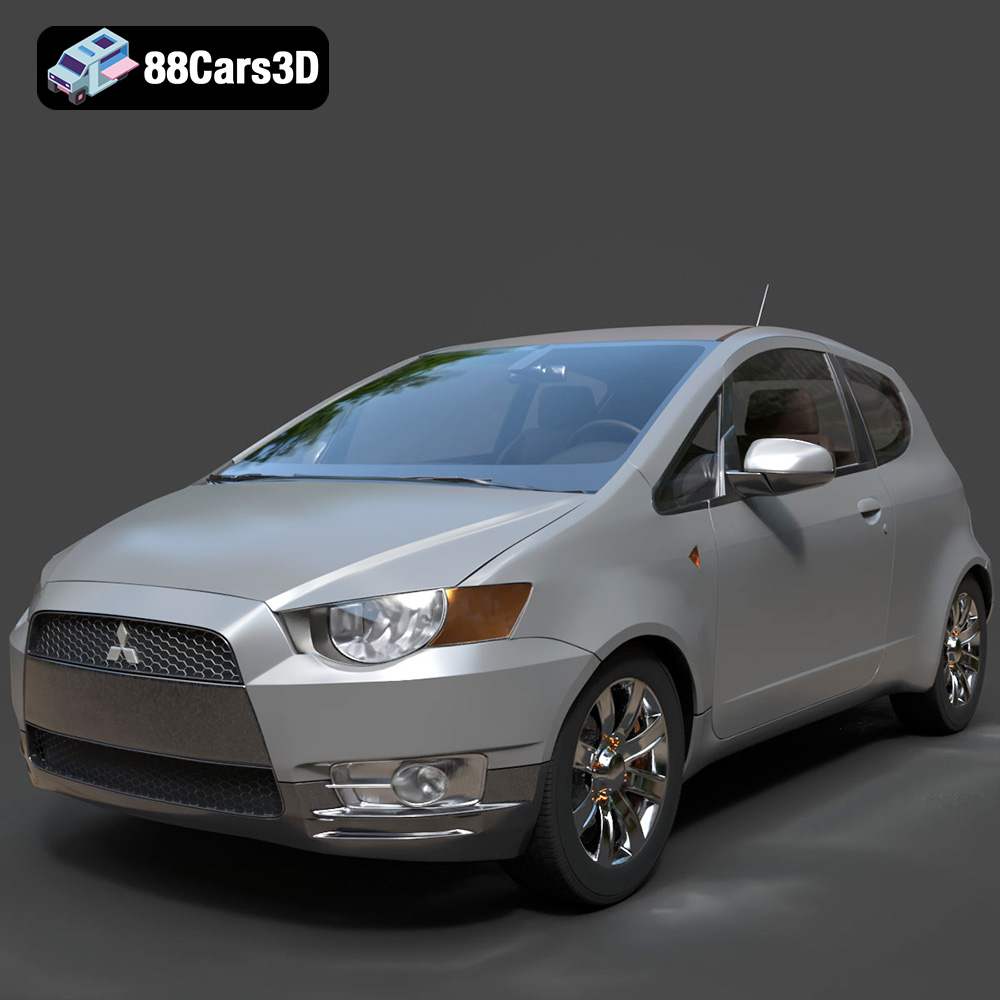
Download the Mitsubishi Colt 3 Door 2008 3D Model featuring clean geometry, realistic detailing, and a fully modeled interior. Includes .blend, .fbx, .obj, .glb, .stl, .ply, .unreal, and .max formats for rendering, simulation, and game development.
Price: $10
Texture: Yes
Material: Yes
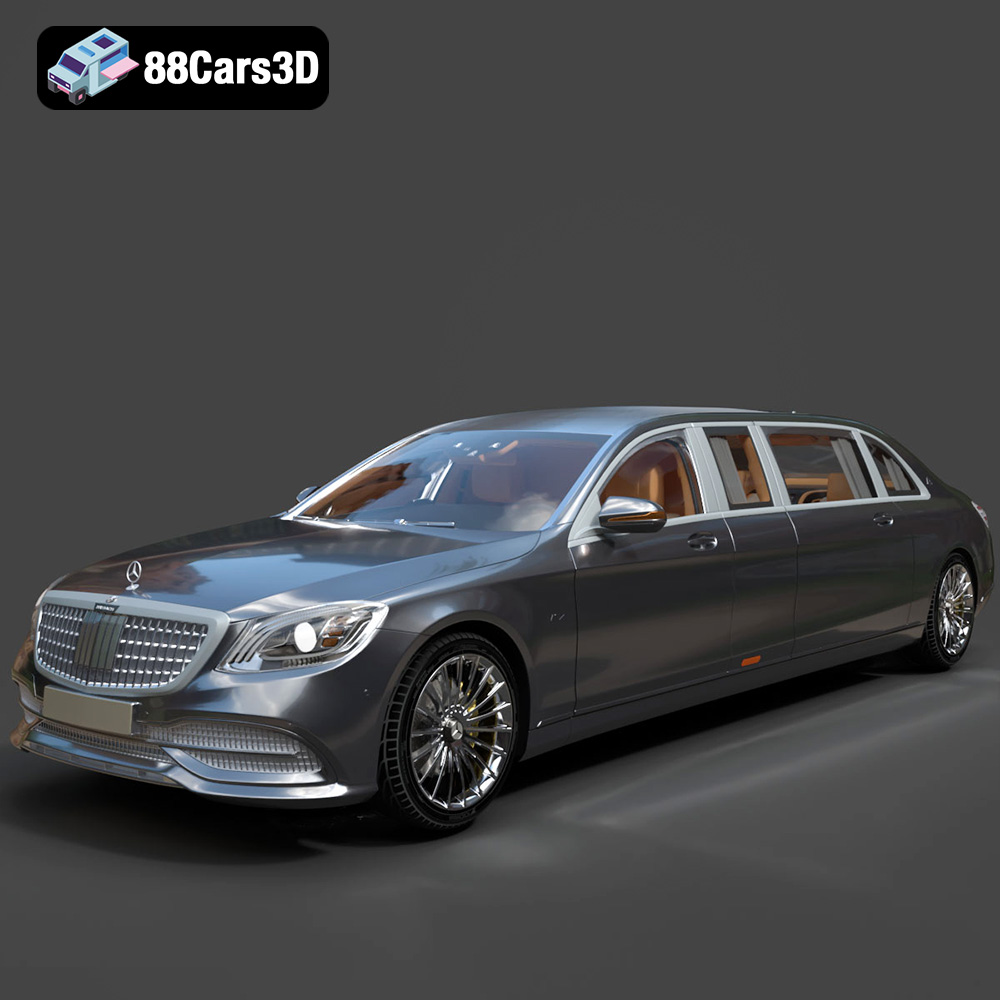
Download the Mercedes-Benz S650 Pullman 3D Model featuring clean geometry, realistic detailing, and a fully modeled interior. Includes .blend, .fbx, .obj, .glb, .stl, .ply, .unreal, and .max formats for rendering, simulation, and game development.
Price: $95.99
Texture: Yes
Material: Yes
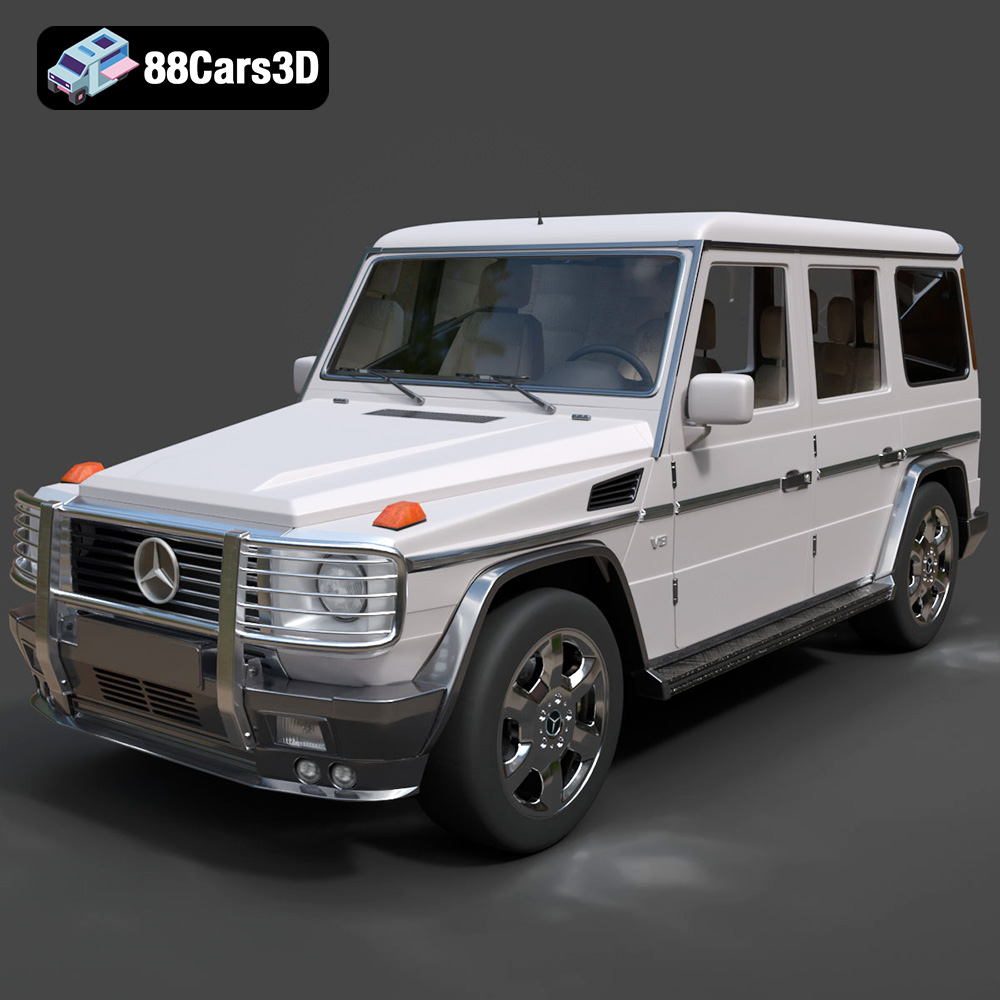
Download the Mercedes G-Class SUV 2024 3D Model featuring clean geometry, realistic detailing, and a fully modeled interior. Includes .blend, .fbx, .obj, .glb, .stl, .ply, .unreal, and .max formats for rendering, simulation, and game development.
Price: $10
Texture: Yes
Material: Yes
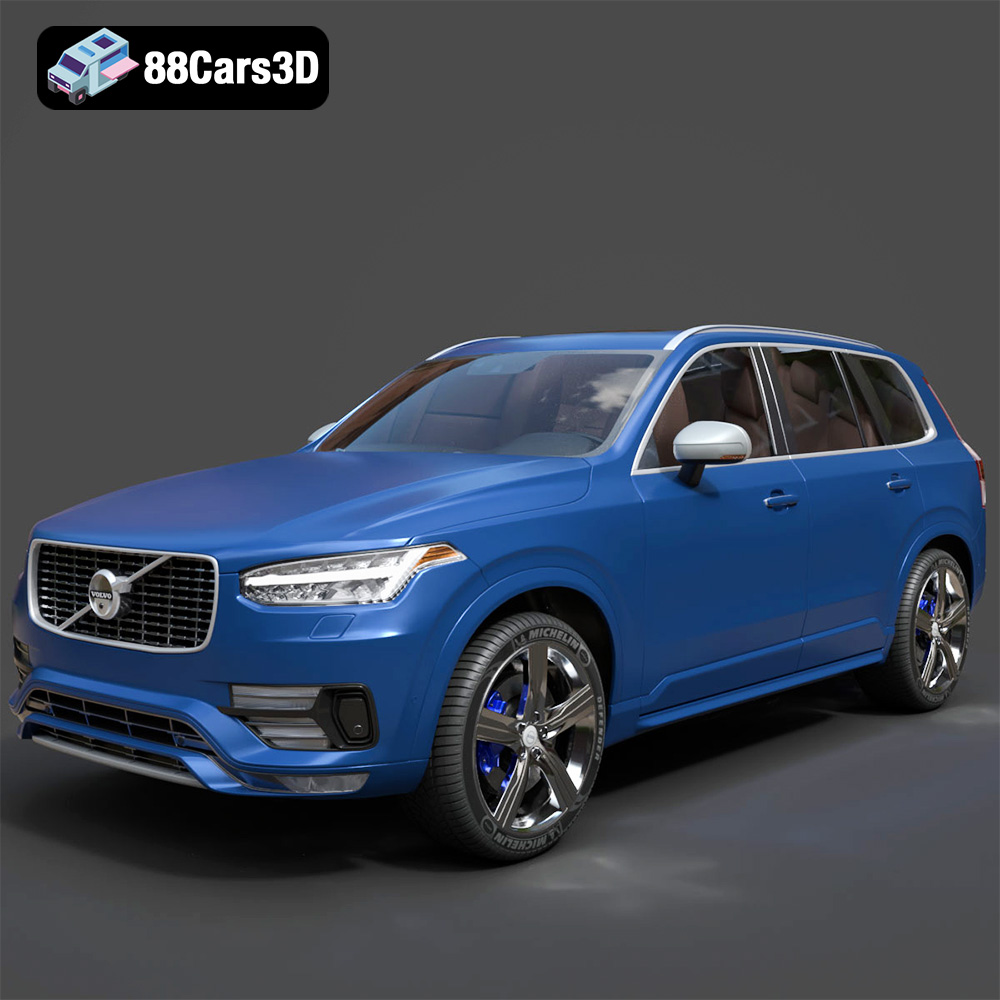
Download the Volvo XC90 R-Design 2015 3D Model featuring clean geometry, realistic detailing, and a fully modeled interior. Includes .blend, .fbx, .obj, .glb, .stl, .ply, .unreal, and .max formats for rendering, simulation, and game development.
Price: $10

