Get 50% OFF All Premium 3D & STL Models!

“`html
The world of 3D printing has revolutionized countless industries, and the automotive modeling space is no exception. Whether you’re a hobbyist crafting a miniature collection, an engineer prototyping a new design, or simply an automotive enthusiast looking to bring your dream car to life, 3D printing offers unparalleled possibilities. But achieving high-quality results requires a deep understanding of the technology, especially when working with STL files. This comprehensive guide will walk you through every stage of the process, from understanding STL file structure to mastering printer settings and post-processing techniques. We’ll cover everything you need to know to transform digital designs into stunning physical models, offering insights applicable to both FDM and resin printing. Get ready to dive deep into the technical details and elevate your 3D printing game!
The STL (stereolithography) file format is the backbone of 3D printing. It represents the surface geometry of a 3D object using a collection of triangles. The density and arrangement of these triangles directly impact the smoothness and accuracy of your final print. Understanding the nuances of STL files is crucial for optimizing your models for 3D printing.
An STL file essentially contains a list of triangles, where each triangle is defined by the coordinates of its three vertices and a normal vector indicating its orientation. The finer the mesh (the more triangles), the smoother the resulting 3D print will be. However, a denser mesh also means a larger file size and potentially longer slicing and printing times. It’s a balancing act! Issues like non-manifold geometry (where edges are shared by more than two triangles or where there are gaps in the mesh) can cause significant problems during slicing and printing. When downloading models from marketplaces such as 88cars3d.com, ensure the files are checked for manifold geometry and errors.
Before sending your STL file to the slicer, it’s essential to check for errors and optimize the mesh. Software like Meshmixer, Netfabb, and even online services can help you identify and repair common issues like holes, flipped normals, and intersecting faces. Reducing the number of triangles while maintaining the overall shape can also improve print performance. Tools like mesh decimation algorithms can achieve this. Aim for a balance between detail and file size. A common workflow involves importing the STL into Meshmixer, using the “Make Solid” tool to correct non-manifold geometry, and then applying a “Reduce” operation to simplify the mesh.
Slicing software acts as the translator between your 3D model (STL file) and your 3D printer. It takes the STL file, slices it into layers, and generates G-code, a language that the printer understands. The slicer is where you define crucial printing parameters like layer height, infill density, support structures, and print speed. Mastering your slicer is paramount to achieving high-quality prints.
When printing car models, precision and detail are often paramount. Here’s a breakdown of essential slicing parameters:
* Layer Height: Lower layer heights (e.g., 0.1mm or 0.05mm) produce smoother surfaces and finer details, but increase print time. A good starting point is 0.15mm for FDM and 0.05mm for resin.
* Infill Density: Infill provides internal support. For car models, a density of 15-25% is typically sufficient, depending on the size and complexity of the model.
* Print Speed: Slower speeds generally result in better print quality. A speed of 40-60mm/s is a good starting point for FDM, while resin printing speeds are determined by the resin’s specifications.
* Temperature: The optimal temperature depends on the material. PLA typically prints around 200-220°C, while ABS requires higher temperatures (230-250°C) and a heated bed.
* Support Structures: Generated automatically by the slicer to support overhanging features. We will discuss this in depth later.
* Bed Adhesion: Crucial for preventing warping. Techniques include using a brim or raft.
Cura and PrusaSlicer are two of the most popular and powerful slicing software options. Cura is known for its user-friendly interface and extensive plugin library, while PrusaSlicer offers advanced features like variable layer height and adaptive infill. In Cura, you can adjust parameters like “Wall Line Count” to increase the strength of the outer shell. In PrusaSlicer, the “Seam Position” setting allows you to control where the Z-seam (the starting and ending point of each layer) is located, minimizing its visibility. Experiment with different settings to find what works best for your printer and the specific car model you are printing.
Support structures are temporary scaffolding that helps your 3D printer overcome gravity when printing overhanging features. They are essential for printing complex car models with intricate details, such as side mirrors, spoilers, and wheel arches. However, generating and removing supports effectively is a crucial skill to master.
There are various types of support structures, including:
* Linear Supports: Simple vertical supports, suitable for basic overhangs.
* Tree Supports: Branch-like structures that use less material and are easier to remove.
* Hybrid Supports: Combine different types of supports for optimal strength and ease of removal.
In Cura, you can customize support settings such as “Support Overhang Angle” to control when supports are generated. In PrusaSlicer, the “Paint-on Supports” feature allows you to manually add supports in specific areas. The goal is to provide sufficient support without overdoing it, which can lead to scarring on the model’s surface.
Removing support structures can be challenging, especially for delicate car models. Here are some tips:
* Use flush cutters or a sharp knife: Carefully cut the supports close to the model’s surface.
* Heat the supports slightly: A heat gun or hairdryer can soften the supports, making them easier to remove.
* Consider using dissolvable support material: For dual-extrusion printers, PVA (polyvinyl alcohol) is a dissolvable support material that can be easily removed with water.
* Adjust the “Support Z Distance”: Increasing the distance between the supports and the model can make removal easier, but may also compromise support strength.
After removing the supports, you may need to sand or polish the surface to remove any remaining traces.
The choice of material and the calibration of your 3D printer are fundamental to achieving high-quality car models. Different materials offer different properties in terms of strength, flexibility, and surface finish. Proper calibration ensures that your printer is accurately extruding material and maintaining consistent layer adhesion.
Here’s a comparison of common 3D printing materials:
* PLA (Polylactic Acid): Easy to print, biodegradable, and suitable for beginners. Ideal for aesthetic models and prototypes. However, it has low heat resistance.
* PETG (Polyethylene Terephthalate Glycol): Stronger and more heat-resistant than PLA. A good all-around material for functional parts and models.
* ABS (Acrylonitrile Butadiene Styrene): Durable and heat-resistant. Suitable for parts that need to withstand high temperatures. Requires a heated bed and good ventilation due to fumes.
* Resin: Offers exceptional detail and smooth surfaces. Ideal for highly detailed car models. Requires post-processing, such as washing and curing. Platforms like 88cars3d.com offer models optimized for both resin and FDM printing technologies.
The best material depends on the intended use of the car model. If you’re primarily concerned with aesthetics, PLA or resin might be the best choice. If you need a more durable model, PETG or ABS would be more suitable.
A well-calibrated printer is essential for consistent and accurate prints. Here are some key calibration steps:
* Bed Leveling: Ensure that the print bed is perfectly level. This is crucial for good bed adhesion.
* Extruder Calibration: Calibrate the extruder to ensure that it’s extruding the correct amount of filament.
* Temperature Calibration: Adjust the nozzle and bed temperatures to optimize layer adhesion and prevent warping.
* Flow Rate Calibration: Fine-tune the flow rate to prevent over- or underextrusion.
Regular maintenance, such as cleaning the nozzle, lubricating moving parts, and tightening belts, is also essential for maintaining printer performance. Refer to your printer’s manual for specific calibration and maintenance instructions.
Post-processing is the final step in transforming your 3D printed car model from a raw print to a polished masterpiece. It involves a range of techniques, including sanding, filling, painting, and assembly. These techniques can significantly enhance the appearance and durability of your model.
Sanding is used to remove layer lines and other surface imperfections. Start with a coarse grit sandpaper (e.g., 220 grit) and gradually move to finer grits (e.g., 400, 600, 800 grit) for a smooth finish. For larger imperfections or gaps, use a filler primer or putty. Apply the filler in thin layers, let it dry completely, and then sand it smooth. Consider wet sanding for an even smoother finish. For resin prints, sanding is often less necessary due to the inherently smoother surface, but light polishing can further enhance the shine.
Painting can add color, detail, and realism to your car model. Start with a primer to provide a good base for the paint. Use multiple thin coats of paint for even coverage. Masking tape can be used to create intricate paint schemes. After painting, apply a clear coat to protect the paint and add a glossy or matte finish. If your car model consists of multiple parts, carefully assemble them using glue or screws. Test fit all parts before applying glue. Consider using specialized modeling glues for optimal adhesion and a clean finish. Pay attention to the assembly sequence to avoid damaging painted surfaces.
Even with careful planning and execution, 3D printing is not always perfect. Common issues like warping, layer adhesion problems, stringing, and elephant’s foot can arise. Understanding the causes of these issues and knowing how to troubleshoot them is essential for successful 3D printing.
Warping occurs when the corners of the print lift off the bed due to uneven cooling. To prevent warping:
* Use a heated bed: Maintain a consistent bed temperature (e.g., 60°C for PLA, 100°C for ABS).
* Apply a bed adhesion aid: Use a glue stick, hairspray, or blue painter’s tape.
* Enclose the printer: An enclosure helps to maintain a consistent ambient temperature.
* Increase the brim or raft size: A brim or raft provides a larger surface area for adhesion.
If warping does occur, try adjusting the bed temperature, applying a fresh layer of bed adhesion, or re-leveling the bed.
Layer adhesion problems occur when the layers of the print don’t bond properly. To fix this:
* Increase the nozzle temperature: A higher temperature can improve layer adhesion.
* Decrease the print speed: Slower speeds allow more time for the layers to bond.
* Increase the flow rate: More material can improve layer adhesion.
Stringing occurs when the printer extrudes filament while moving between parts, leaving thin strands of plastic. To prevent stringing:
* Reduce the nozzle temperature: A lower temperature can reduce oozing.
* Increase retraction settings: Retraction pulls the filament back into the nozzle when the printer is moving.
* Adjust travel speed: Faster travel speeds can minimize stringing.
Experiment with these settings to find the optimal balance for your printer and material.
Mastering the art of 3D printing car models requires a combination of technical knowledge, practical experience, and a dash of patience. From understanding STL file structure to fine-tuning printer settings and mastering post-processing techniques, each step contributes to the final outcome. Remember to experiment with different materials, slicing parameters, and support structures to find what works best for your printer and the specific car model you are printing. Don’t be afraid to troubleshoot and learn from your mistakes. The 3D printing community is a wealth of knowledge, so don’t hesitate to seek advice and share your experiences. With the right tools, techniques, and a passion for automotive modeling, you can transform digital designs into stunning physical creations. Whether you source your STL files from online marketplaces or create your own designs, the possibilities are endless. Happy printing!
Actionable Next Steps:
“`

Texture: Yes
Material: Yes
Download the Mercedes S-Class 2024 3D Model featuring clean geometry, realistic detailing, and a fully modeled interior. Includes .blend, .fbx, .obj, .glb, .stl, .ply, .unreal, and .max formats for rendering, simulation, and game development.
Price: $10

Texture: Yes
Material: Yes
Download the Chevrolet Camaro 1970 3D Model featuring clean geometry, realistic detailing, and a fully modeled interior. Includes .blend, .fbx, .obj, .glb, .stl, .ply, .unreal, and .max formats for rendering, simulation, and game development.
Price: $10

Texture: Yes
Material: Yes
Download the Mercedes-AMG GT 2015 3D Model featuring clean geometry, realistic detailing, and a fully modeled interior. Includes .blend, .fbx, .obj, .glb, .stl, .ply, .unreal, and .max formats for rendering, simulation, and game development.
Price: $88.99

Texture: Yes
Material: Yes
Download the Suzuki GSX-R 1000 3D Model featuring clean geometry, realistic detailing, and a fully modeled interior. Includes .blend, .fbx, .obj, .glb, .stl, .ply, .unreal, and .max formats for rendering, simulation, and game development.
Price: $10

Texture: Yes
Material: Yes
Download the Porsche Cayman S 2024 3D Model featuring clean geometry, realistic detailing, and a fully modeled interior. Includes .blend, .fbx, .obj, .glb, .stl, .ply, .unreal, and .max formats for rendering, simulation, and game development.
Price: $10

Texture: Yes
Material: Yes
Download the Holden Commodore Sportwagon 2017 3D Model featuring clean geometry, realistic detailing, and a fully modeled interior. Includes .blend, .fbx, .obj, .glb, .stl, .ply, .unreal, and .max formats for rendering, simulation, and game development.
Price: $10

Texture: Yes
Material: Yes
Download the Mitsubishi Colt 3 Door 2008 3D Model featuring clean geometry, realistic detailing, and a fully modeled interior. Includes .blend, .fbx, .obj, .glb, .stl, .ply, .unreal, and .max formats for rendering, simulation, and game development.
Price: $10

Texture: Yes
Material: Yes
Download the Mercedes-Benz S650 Pullman 3D Model featuring clean geometry, realistic detailing, and a fully modeled interior. Includes .blend, .fbx, .obj, .glb, .stl, .ply, .unreal, and .max formats for rendering, simulation, and game development.
Price: $95.99
Texture: Yes
Material: Yes
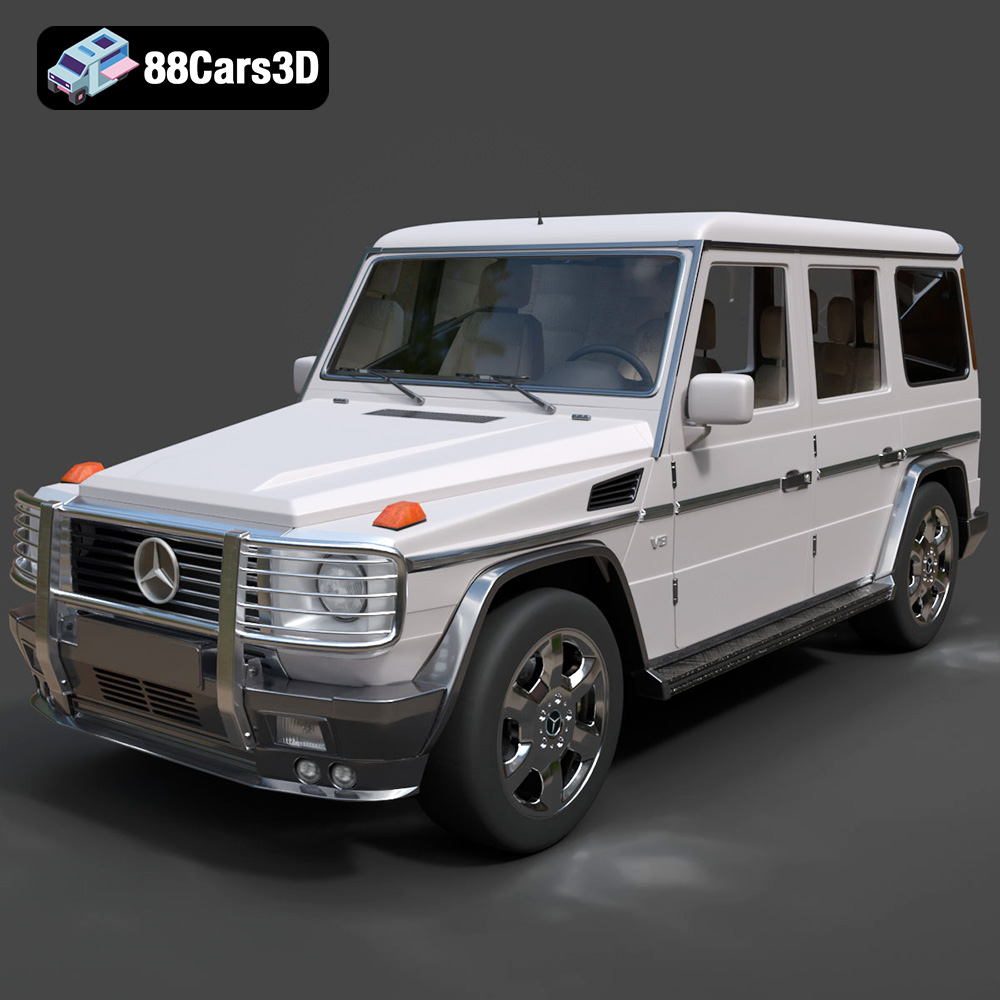
Download the Mercedes G-Class SUV 2024 3D Model featuring clean geometry, realistic detailing, and a fully modeled interior. Includes .blend, .fbx, .obj, .glb, .stl, .ply, .unreal, and .max formats for rendering, simulation, and game development.
Price: $10

Texture: Yes
Material: Yes
Download the Volvo XC90 R-Design 2015 3D Model featuring clean geometry, realistic detailing, and a fully modeled interior. Includes .blend, .fbx, .obj, .glb, .stl, .ply, .unreal, and .max formats for rendering, simulation, and game development.
Price: $10

