Get 50% OFF All Premium 3D & STL Models!

“`html
The world of 3D printing has revolutionized model making, offering enthusiasts the power to create intricate and accurate replicas of their favorite vehicles. Whether you’re a hobbyist, engineer, or automotive aficionado, 3D printing unlocks a new level of customization and detail. This guide provides a comprehensive overview of the 3D printing process for car models, from understanding STL files to mastering post-processing techniques. We’ll delve into the nuances of FDM and resin printing, explore crucial slicer settings, and address common challenges to ensure your prints are nothing short of spectacular. Get ready to transform digital designs into tangible masterpieces!
In this deep dive, you’ll learn:
The STL (Stereolithography) file format is the cornerstone of 3D printing. It represents the surface geometry of a 3D object as a collection of triangles. The quality of an STL file directly influences the quality of your final print. A poorly designed STL can lead to errors, artifacts, and structural weaknesses. When downloading models from marketplaces such as 88cars3d.com, you can typically rely on a high standard of quality. However, it’s still crucial to understand the underlying principles to ensure optimal printing.
The number of triangles in an STL file determines its resolution. More triangles mean a smoother surface and finer details, but also a larger file size and potentially longer processing times. A low triangle count can result in a faceted appearance, particularly on curved surfaces. Balancing detail and file size is crucial. For car models, a higher resolution is generally preferred for intricate details like grilles, lights, and badges. A good rule of thumb is to aim for a triangle count that captures the key features without unnecessarily bloating the file size. Consider using adaptive meshing techniques, where areas of high curvature have more triangles, and flat surfaces have fewer.
A “manifold” mesh is a closed, watertight surface with no holes or self-intersections. Non-manifold meshes are a common source of 3D printing errors. Slicing software can sometimes handle minor errors, but it’s best to repair the STL file before printing. Tools like Meshmixer, Netfabb, and even the repair functions within PrusaSlicer and Cura can automatically detect and fix common issues, such as flipped normals, holes, and overlapping triangles. Before slicing any STL file, always run it through a repair tool to ensure it’s manifold and free of errors. This will save you time and frustration in the long run.
Slicing is the process of converting a 3D model into a series of layers that a 3D printer can understand. The slicing software translates the STL file into G-code, a set of instructions that control the printer’s movements, temperature, and extrusion. The slicing parameters you choose have a profound impact on the print quality, strength, and overall aesthetics of your car model. Fine-tuning these settings is essential for achieving professional-looking results.
Layer height is the thickness of each individual layer of plastic. Lower layer heights produce smoother surfaces and finer details, but also increase print time. Higher layer heights print faster but result in a more stepped appearance. For car models, a layer height between 0.1mm and 0.2mm is generally recommended for FDM printing. For resin printing, layer heights can be significantly lower, typically between 0.025mm and 0.05mm, allowing for exceptional detail. Experiment with different layer heights to find the optimal balance between quality and speed for your specific model and printer.
Infill is the internal structure of the 3D print. Infill density determines the amount of material used inside the model, affecting its strength, weight, and print time. For car models, a moderate infill density (15-25%) is usually sufficient for structural integrity. Common infill patterns include rectilinear, grid, gyroid, and honeycomb. Gyroid infill offers excellent strength-to-weight ratio and is often preferred for functional parts. Consider using a higher infill density for areas that require extra strength, such as axles or mounting points. You can adjust infill settings locally within the slicer to optimize specific regions of the model.
Support structures are temporary scaffolding that supports overhangs and complex geometries during the 3D printing process. They prevent sagging and deformation of unsupported areas. Generating appropriate support structures is crucial for successfully printing car models, which often have intricate details and overhanging features like spoilers, mirrors, and wheel arches. Understanding different support types and how to optimize them is key to achieving clean and accurate prints.
There are two main types of support structures: tree supports and linear supports. Tree supports are more efficient in terms of material usage and often leave fewer marks on the printed surface. Linear supports are stronger but can be more difficult to remove. The placement of support structures is critical. Focus on supporting overhangs that exceed 45 degrees. Carefully analyze the model to identify areas that require support and strategically place them to minimize their impact on the final print. Most slicers offer automatic support generation, but manual adjustments are often necessary for optimal results.
Removing support structures can be a delicate process. The goal is to remove them cleanly without damaging the printed model. Tools like pliers, flush cutters, and scalpels can be used for support removal. For FDM prints, heat from a heat gun or hairdryer can soften the supports, making them easier to remove. For resin prints, soaking the model in warm water can help to loosen the supports. Take your time and be patient. Removing supports carefully will prevent breakage and ensure a clean finish. Consider using dissolvable support materials for complex geometries, although this requires a multi-extruder printer.
The choice of material is a critical factor in determining the properties of your 3D printed car model. Different materials offer varying levels of strength, flexibility, temperature resistance, and surface finish. Understanding the characteristics of common 3D printing materials will allow you to select the best option for your specific needs.
For FDM printing, the most common materials are PLA, PETG, and ABS. PLA (Polylactic Acid) is a biodegradable thermoplastic known for its ease of printing and low warping. It’s a good choice for beginners and for models that don’t require high temperature resistance. PETG (Polyethylene Terephthalate Glycol) is stronger and more flexible than PLA, with better temperature resistance. It’s a versatile material suitable for a wide range of applications. ABS (Acrylonitrile Butadiene Styrene) is a strong and durable thermoplastic with good impact resistance. However, it’s more prone to warping and requires a heated bed and enclosure for optimal printing. Choose the material that best suits your desired properties and printing capabilities.
For resin printing, there are various types of resins available, each with its own unique properties. Standard resin is ideal for high-detail models and prototypes. Tough resin offers increased strength and impact resistance, making it suitable for functional parts. Flexible resin allows for the creation of flexible and pliable components. When choosing a resin, consider the intended use of the car model and select a resin that offers the appropriate combination of detail, strength, and flexibility. Always follow the manufacturer’s recommendations for printing and post-processing.
Post-processing is the final stage in the 3D printing process, where you refine the printed model to achieve a desired finish. This can involve removing support marks, sanding, filling, priming, and painting. Effective post-processing techniques can transform a raw 3D print into a stunning and professional-looking replica.
Sanding is used to smooth out layer lines and remove support marks. Start with a coarse grit sandpaper (e.g., 220 grit) and gradually move to finer grits (e.g., 400, 600, 800 grit) to achieve a smooth surface. For larger imperfections, use a filler primer to fill in gaps and scratches. Apply the filler primer in thin coats and allow it to dry completely before sanding. Wet sanding can also be used to reduce dust and achieve a smoother finish. Sanding requires patience and attention to detail, but the results are well worth the effort.
Priming provides a uniform surface for painting and helps the paint adhere properly. Apply a thin coat of primer and allow it to dry completely before painting. Choose a paint that is compatible with the material you’re using. Acrylic paints are a popular choice for 3D printed models due to their ease of use and wide range of colors. Apply the paint in thin, even coats to avoid runs and drips. Multiple thin coats are better than one thick coat. Consider using an airbrush for a professional-looking finish. After painting, apply a clear coat to protect the paint and add a glossy or matte finish. You can find amazing printable car models on platforms like 88cars3d.com, allowing you to create highly detailed replicas.
Even with careful preparation and meticulous settings, 3D printing can sometimes present challenges. Common issues include warping, poor bed adhesion, stringing, and layer shifting. Understanding the causes of these problems and how to address them is essential for a smooth and successful 3D printing experience.
Warping occurs when the corners of the print lift off the build plate. This is often caused by poor bed adhesion or uneven cooling. To improve bed adhesion, ensure that the build plate is clean and level. Use a bed adhesive such as glue stick, hairspray, or painter’s tape. Increasing the bed temperature can also help. For materials like ABS that are prone to warping, use a heated enclosure to maintain a consistent temperature around the print. Consider adding a brim or raft to increase the surface area in contact with the build plate.
Stringing is when thin strands of plastic are left between different parts of the print. This is usually caused by excessive retraction distance or temperature. Adjust the retraction settings in your slicing software to minimize stringing. Lowering the printing temperature can also help. Layer shifting occurs when the layers of the print are misaligned. This can be caused by loose belts, stepper motor issues, or vibrations. Ensure that your printer is properly calibrated and maintained. Tighten the belts, check the stepper motors, and place the printer on a stable surface.
3D printing car models is a rewarding endeavor that combines technical skill with creative expression. By understanding STL files, mastering slicing parameters, selecting the right materials, and perfecting post-processing techniques, you can create stunning and accurate replicas of your favorite vehicles. Remember that practice makes perfect, so don’t be afraid to experiment with different settings and materials. Explore online resources, join 3D printing communities, and share your experiences with other enthusiasts. With dedication and perseverance, you’ll be well on your way to becoming a 3D printing car model master.
Here’s a quick recap of actionable steps:
Now go forth and create your dream car in 3D!
“`

Texture: Yes
Material: Yes
Download the Mercedes S-Class 2024 3D Model featuring clean geometry, realistic detailing, and a fully modeled interior. Includes .blend, .fbx, .obj, .glb, .stl, .ply, .unreal, and .max formats for rendering, simulation, and game development.
Price: $10

Texture: Yes
Material: Yes
Download the Chevrolet Camaro 1970 3D Model featuring clean geometry, realistic detailing, and a fully modeled interior. Includes .blend, .fbx, .obj, .glb, .stl, .ply, .unreal, and .max formats for rendering, simulation, and game development.
Price: $10

Texture: Yes
Material: Yes
Download the Mercedes-AMG GT 2015 3D Model featuring clean geometry, realistic detailing, and a fully modeled interior. Includes .blend, .fbx, .obj, .glb, .stl, .ply, .unreal, and .max formats for rendering, simulation, and game development.
Price: $88.99

Texture: Yes
Material: Yes
Download the Suzuki GSX-R 1000 3D Model featuring clean geometry, realistic detailing, and a fully modeled interior. Includes .blend, .fbx, .obj, .glb, .stl, .ply, .unreal, and .max formats for rendering, simulation, and game development.
Price: $10

Texture: Yes
Material: Yes
Download the Porsche Cayman S 2024 3D Model featuring clean geometry, realistic detailing, and a fully modeled interior. Includes .blend, .fbx, .obj, .glb, .stl, .ply, .unreal, and .max formats for rendering, simulation, and game development.
Price: $10

Texture: Yes
Material: Yes
Download the Holden Commodore Sportwagon 2017 3D Model featuring clean geometry, realistic detailing, and a fully modeled interior. Includes .blend, .fbx, .obj, .glb, .stl, .ply, .unreal, and .max formats for rendering, simulation, and game development.
Price: $10

Texture: Yes
Material: Yes
Download the Mitsubishi Colt 3 Door 2008 3D Model featuring clean geometry, realistic detailing, and a fully modeled interior. Includes .blend, .fbx, .obj, .glb, .stl, .ply, .unreal, and .max formats for rendering, simulation, and game development.
Price: $10

Texture: Yes
Material: Yes
Download the Mercedes-Benz S650 Pullman 3D Model featuring clean geometry, realistic detailing, and a fully modeled interior. Includes .blend, .fbx, .obj, .glb, .stl, .ply, .unreal, and .max formats for rendering, simulation, and game development.
Price: $95.99
Texture: Yes
Material: Yes
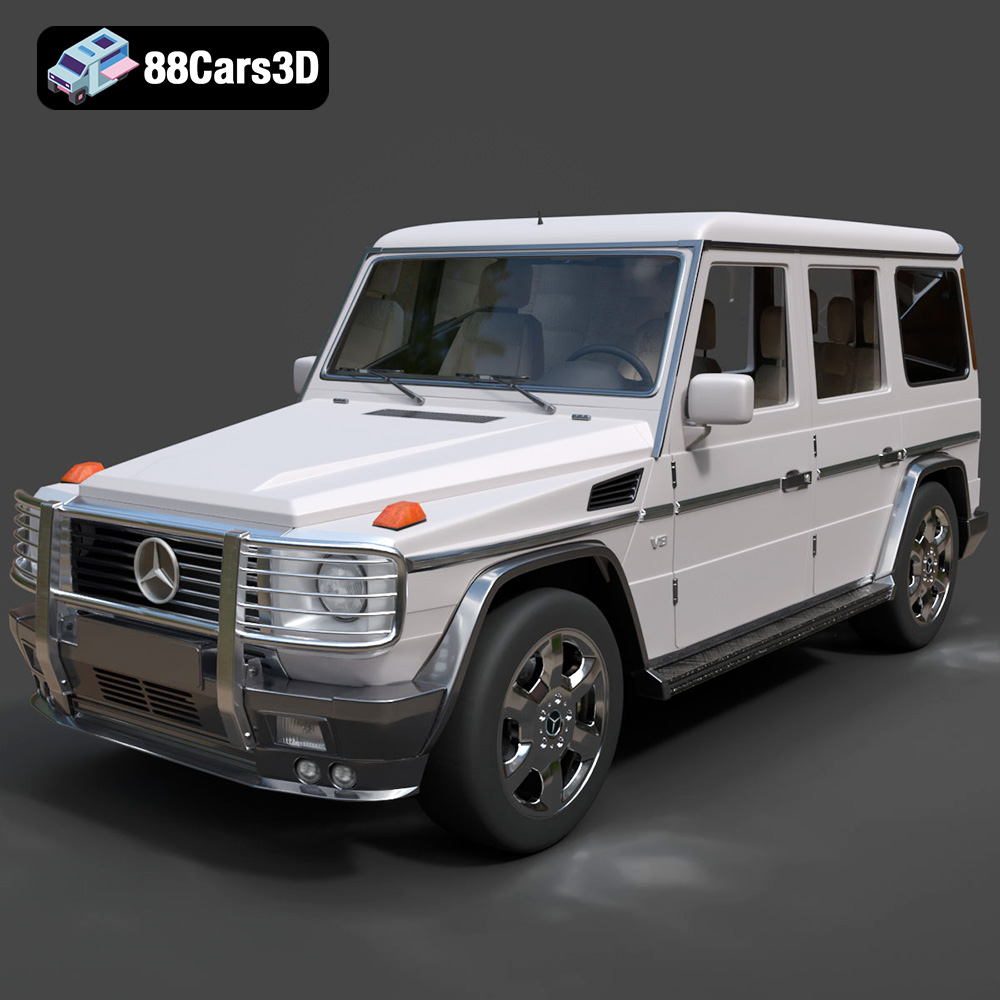
Download the Mercedes G-Class SUV 2024 3D Model featuring clean geometry, realistic detailing, and a fully modeled interior. Includes .blend, .fbx, .obj, .glb, .stl, .ply, .unreal, and .max formats for rendering, simulation, and game development.
Price: $10

Texture: Yes
Material: Yes
Download the Volvo XC90 R-Design 2015 3D Model featuring clean geometry, realistic detailing, and a fully modeled interior. Includes .blend, .fbx, .obj, .glb, .stl, .ply, .unreal, and .max formats for rendering, simulation, and game development.
Price: $10

