Get 50% OFF All Premium 3D & STL Models!

The world of automotive visualization is undergoing a seismic shift. Gone are the days of long, costly offline rendering cycles for every marketing shot or design review. Today, real-time rendering engines, led by the formidable Unreal Engine 5, have democratized photorealism, empowering artists, designers, and developers to create stunning, interactive, and dynamic automotive experiences. With groundbreaking features like Lumen for global illumination and Nanite for virtualized geometry, Unreal Engine has become the industry standard for everything from next-gen car configurators to virtual production in car commercials. However, harnessing this power requires a deep understanding of the proper workflows, from asset preparation to final optimization. This guide will serve as your roadmap, taking you step-by-step through the process of transforming a high-quality 3D car model into a breathtaking, interactive visualization inside Unreal Engine 5. We will cover project setup, advanced material creation, dynamic lighting, interactive scripting, and crucial performance optimization techniques to ensure your projects run smoothly and look spectacular.
Before you can even think about creating cinematic renders or interactive experiences, a solid foundation is paramount. A well-configured Unreal Engine project and a properly prepared 3D model are the cornerstones of a successful automotive visualization. This initial phase prevents countless headaches down the line, ensuring that your assets import correctly and the engine is primed for high-fidelity rendering. Neglecting these steps can lead to performance issues, visual artifacts, and frustrating workflow bottlenecks.
When you launch Unreal Engine, the first choice you’ll make is the project template. While starting with a Blank or Games template is possible, Unreal Engine provides specialized templates that are pre-configured for specific use cases. For automotive visualization, the Automotive, Film & Live Events category is your best starting point. The Automotive Configurator template is particularly powerful, as it includes pre-built Blueprints for camera orbiting, a basic UI, and material-switching logic. This provides a fantastic head start, allowing you to focus on the creative aspects rather than building foundational systems from scratch.
Once your project is created, you need to ensure the rendering settings are dialed in for maximum quality. Navigate to Project Settings > Engine > Rendering. Here are the critical settings to verify:
These settings prime the engine for the photorealistic results we are aiming for. Remember to restart the editor after changing these settings for them to take full effect.
The quality of your final render is directly proportional to the quality of your source model. Using professionally crafted assets from marketplaces like 88cars3d.com is a crucial first step, as they typically feature clean topology, proper scale, and well-laid-out UVs. Before importing, ensure the model is prepared:
With your project configured and your model prepped, it’s time to bring your automotive asset into the engine. Unreal Engine offers several robust pipelines for importing 3D models, each with its own strengths. The two most common methods for assets like vehicles are the standard FBX workflow and the more advanced Universal Scene Description (USD) pipeline. Understanding which to use and how to configure the import settings is key to a seamless transition from your modeling software to the real-time environment.
The FBX format has been the industry workhorse for years. It’s a versatile format that reliably transfers geometry, UVs, materials, and even animations. For most automotive visualization projects where you are importing a final, static model, the FBX workflow is straightforward and efficient. You export the car as a single FBX file and import it directly into the Content Browser.
The USD (Universal Scene Description) pipeline offers a more flexible, non-destructive workflow. It allows you to treat your scene as a collection of layers. This is incredibly powerful for collaborative projects or when you need to iterate on the model frequently without re-importing the entire asset. For example, a modeling artist could update the car’s body geometry in a separate USD file, and it would automatically update in the Unreal scene without overwriting your material or lighting setup. While more complex to set up, it’s the future of collaborative 3D pipelines.
When you drag your FBX file into the Unreal Content Browser, a detailed import options dialog appears. Here are the key settings for a 3D car model:
For users working with CAD data from applications like SolidWorks, Rhino, or CATIA, or for importing entire pre-built scenes from 3ds Max or Cinema 4D, Unreal’s Datasmith plugin is a game-changer. It’s designed to translate entire scenes—including geometry, materials, lighting, and cameras—with high fidelity. Datasmith intelligently preserves object hierarchies and material assignments, saving an immense amount of time compared to manually exporting and re-assembling dozens or hundreds of individual FBX files. This is particularly useful for complex engineering visualizations or digital twins of automotive showrooms.
A perfect 3D model is nothing without believable materials. Physically Based Rendering (PBR) is the standard for creating materials that react to light in a physically accurate way. Unreal Engine’s Material Editor is an incredibly powerful node-based system that gives you complete control over every aspect of a surface’s appearance. For automotive visualization, mastering materials for car paint, glass, chrome, and rubber is essential for achieving a photorealistic result.
The Material Editor is where you define how a surface looks and behaves. You work by connecting nodes that represent mathematical operations, texture maps, and parameters. The main output node has several inputs that correspond to PBR properties:
Car paint is one of the most complex materials to replicate. It’s not just a colored, metallic surface; it’s a layered material with a base paint layer and a protective clear coat on top. Unreal Engine has a specific shading model for this.
By using this shading model, you can create a deep, lustrous car paint material where you see reflections from both the base metallic paint layer and the top clear coat layer, creating a realistic sense of depth.
Beyond car paint, other materials require specific techniques.
Lighting is what breathes life into your scene. It dictates mood, defines shape, and is the final ingredient for photorealism. Unreal Engine 5’s Lumen system provides an incredible out-of-the-box solution for real-time dynamic global illumination, eliminating the need for time-consuming light baking. Combined with other tools like HDRI backdrops and post-processing, you can create any lighting scenario imaginable, from a clean studio environment to a dramatic outdoor landscape.
Lumen works by calculating the indirect lighting in your scene in real-time. This means that light from your sky, directional light, or any emissive surface will bounce off objects and illuminate other objects realistically. For an automotive scene, this is critical. It’s the soft, bounced light from the ground that subtly illuminates the undercarriage of the car. It’s the red from the tail lights “bleeding” onto the floor in a dark garage. With Lumen enabled in your project settings, this behavior happens automatically. You can place and move lights in your scene, and the global illumination will update instantly, providing incredible creative freedom.
A common scenario for automotive visualization is a studio setup. The fastest way to achieve this is with the HDRI Backdrop actor.
For more control, you can supplement the HDRI with traditional lights like Rect Lights (rectangular area lights) to create soft, controllable highlights on the car’s body panels, mimicking the softboxes used in real automotive photography.
The final polish on your lighting and rendering comes from a Post Process Volume. Add one to your scene and enable the Infinite Extent (Unbound) option to make its effects global. Inside the volume’s details, you can control:
If you have hardware ray tracing enabled, you can also push the quality of your reflections and ambient occlusion even further within the Post Process Volume settings, though this comes at a higher performance cost.
The true power of real-time rendering lies in interactivity. Instead of a static image, you can create dynamic experiences like automotive configurators where users can change paint colors, swap wheel designs, or explore the vehicle’s interior. Unreal Engine’s Blueprint visual scripting system makes this possible without writing a single line of code, while the Sequencer tool provides a robust timeline for creating stunning cinematic animations.
Blueprint is Unreal Engine’s visual scripting language. It uses a node-based interface to create game logic and interactivity. A simple car configurator is a perfect beginner project. Here’s a conceptual overview of changing a car’s paint color:
This same logic can be applied to swap out entire static meshes (for different wheels or bumpers) or to trigger animations like opening doors or raising a spoiler.
For creating pre-rendered animations, marketing videos, or in-game cutscenes, Sequencer is Unreal’s cinematic editing tool. It functions like a non-linear video editor, allowing you to animate objects, cameras, materials, and more on a timeline.
Learning Sequencer is a fantastic skill, and you can find extensive guides and tutorials on the official Unreal Engine documentation at https://dev.epicgames.com/community/unreal-engine/learning to dive deeper.
For projects that require a drivable car, Unreal’s Chaos Vehicle system provides a robust physics-based solution. This is a more advanced topic that involves setting up a Skeletal Mesh for the car, configuring a Physics Asset, and creating Blueprints to handle player input for acceleration, braking, and steering. While complex, it opens the door to creating driving simulators, games, or interactive experiences where the user can actually get behind the wheel.
Photorealism is only half the battle; achieving it at a smooth, real-time frame rate is the ultimate goal, especially for interactive applications like games or VR experiences. Automotive models are notoriously complex, often containing millions of polygons. Unreal Engine 5 provides powerful tools, most notably Nanite, to handle this complexity, but understanding optimization principles is still vital for delivering a polished final product.
Nanite is arguably the most revolutionary feature in Unreal Engine 5. It is a virtualized micropolygon geometry system that intelligently streams and renders only the detail you can perceive. This effectively removes the constraints of polygon counts and draw calls. You can import a multi-million polygon CAD model of a car, enable Nanite on it, and it will render with incredible performance. Platforms like 88cars3d.com offer highly detailed models that are perfect candidates for the Nanite pipeline.
To enable Nanite on a static mesh, simply open the asset editor for that mesh and check the “Enable Nanite Support” box. Unreal will process the mesh, and from that point on, you won’t have to worry about creating manual Levels of Detail (LODs) for it. You can visualize Nanite’s efficiency by using the console command `r.Nanite.Visualize.Triangles` in the editor viewport.
While Nanite is a game-changer, it doesn’t currently support everything. As of now, it does not work with Skeletal Meshes (used for animated objects) or meshes that use certain Material features like World Position Offset or pixel depth offset. For these cases, you still need to rely on traditional Level of Detail (LOD) meshes. LODs are a series of lower-polygon versions of your main model that the engine automatically swaps to as the object gets further from the camera. Unreal can auto-generate these for you, or you can create and import them manually for maximum control.
When your scene isn’t running as fast as you’d like, you need to identify the bottleneck. Is it the CPU (game logic) or the GPU (rendering)? Unreal Engine provides built-in profiling tools. The simplest is the GPU Visualizer (console command: `ProfileGPU`). This gives you a detailed frame-by-frame breakdown of every rendering pass, showing you exactly how many milliseconds are being spent on shadows, lighting, post-processing, etc. For deeper analysis, Unreal Insights is a standalone tool that can capture and display vast amounts of performance data from your application, helping you pinpoint the exact functions or assets that are causing performance drops.
We’ve journeyed through the complete workflow of bringing a high-quality 3D car model into Unreal Engine 5, transforming it from a static asset into a photorealistic, interactive, and optimized visualization. We covered the critical foundational steps of project setup and model preparation, the technical nuances of importing assets, the artistry of crafting PBR materials for car paint and glass, and the power of Lumen for dynamic lighting. We also touched on the exciting possibilities of interactivity with Blueprints, cinematic creation with Sequencer, and the revolutionary performance gains offered by Nanite.
The key takeaway is that creating state-of-the-art automotive visualizations is more accessible than ever, but it requires a methodical approach that blends technical knowledge with artistic vision. The process always begins with a superior asset. Sourcing detailed, clean, and optimized 3D car models is non-negotiable, as it lays the groundwork for every subsequent step. By following the principles outlined in this guide—proper setup, meticulous material work, dynamic lighting, and intelligent optimization—you are well-equipped to push the boundaries of real-time rendering and create truly captivating automotive experiences. Now, it’s time to open the engine, import your first model, and start creating.

Texture: Yes
Material: Yes
Download the Mercedes S-Class 2024 3D Model featuring clean geometry, realistic detailing, and a fully modeled interior. Includes .blend, .fbx, .obj, .glb, .stl, .ply, .unreal, and .max formats for rendering, simulation, and game development.
Price: $10

Texture: Yes
Material: Yes
Download the Chevrolet Camaro 1970 3D Model featuring clean geometry, realistic detailing, and a fully modeled interior. Includes .blend, .fbx, .obj, .glb, .stl, .ply, .unreal, and .max formats for rendering, simulation, and game development.
Price: $10

Texture: Yes
Material: Yes
Download the Mercedes-AMG GT 2015 3D Model featuring clean geometry, realistic detailing, and a fully modeled interior. Includes .blend, .fbx, .obj, .glb, .stl, .ply, .unreal, and .max formats for rendering, simulation, and game development.
Price: $88.99

Texture: Yes
Material: Yes
Download the Suzuki GSX-R 1000 3D Model featuring clean geometry, realistic detailing, and a fully modeled interior. Includes .blend, .fbx, .obj, .glb, .stl, .ply, .unreal, and .max formats for rendering, simulation, and game development.
Price: $10

Texture: Yes
Material: Yes
Download the Porsche Cayman S 2024 3D Model featuring clean geometry, realistic detailing, and a fully modeled interior. Includes .blend, .fbx, .obj, .glb, .stl, .ply, .unreal, and .max formats for rendering, simulation, and game development.
Price: $10

Texture: Yes
Material: Yes
Download the Holden Commodore Sportwagon 2017 3D Model featuring clean geometry, realistic detailing, and a fully modeled interior. Includes .blend, .fbx, .obj, .glb, .stl, .ply, .unreal, and .max formats for rendering, simulation, and game development.
Price: $10

Texture: Yes
Material: Yes
Download the Mitsubishi Colt 3 Door 2008 3D Model featuring clean geometry, realistic detailing, and a fully modeled interior. Includes .blend, .fbx, .obj, .glb, .stl, .ply, .unreal, and .max formats for rendering, simulation, and game development.
Price: $10

Texture: Yes
Material: Yes
Download the Mercedes-Benz S650 Pullman 3D Model featuring clean geometry, realistic detailing, and a fully modeled interior. Includes .blend, .fbx, .obj, .glb, .stl, .ply, .unreal, and .max formats for rendering, simulation, and game development.
Price: $95.99

Texture: Yes
Material: Yes
Download the Mercedes G-Class SUV 2024 3D Model featuring clean geometry, realistic detailing, and a fully modeled interior. Includes .blend, .fbx, .obj, .glb, .stl, .ply, .unreal, and .max formats for rendering, simulation, and game development.
Price: $10
Texture: Yes
Material: Yes
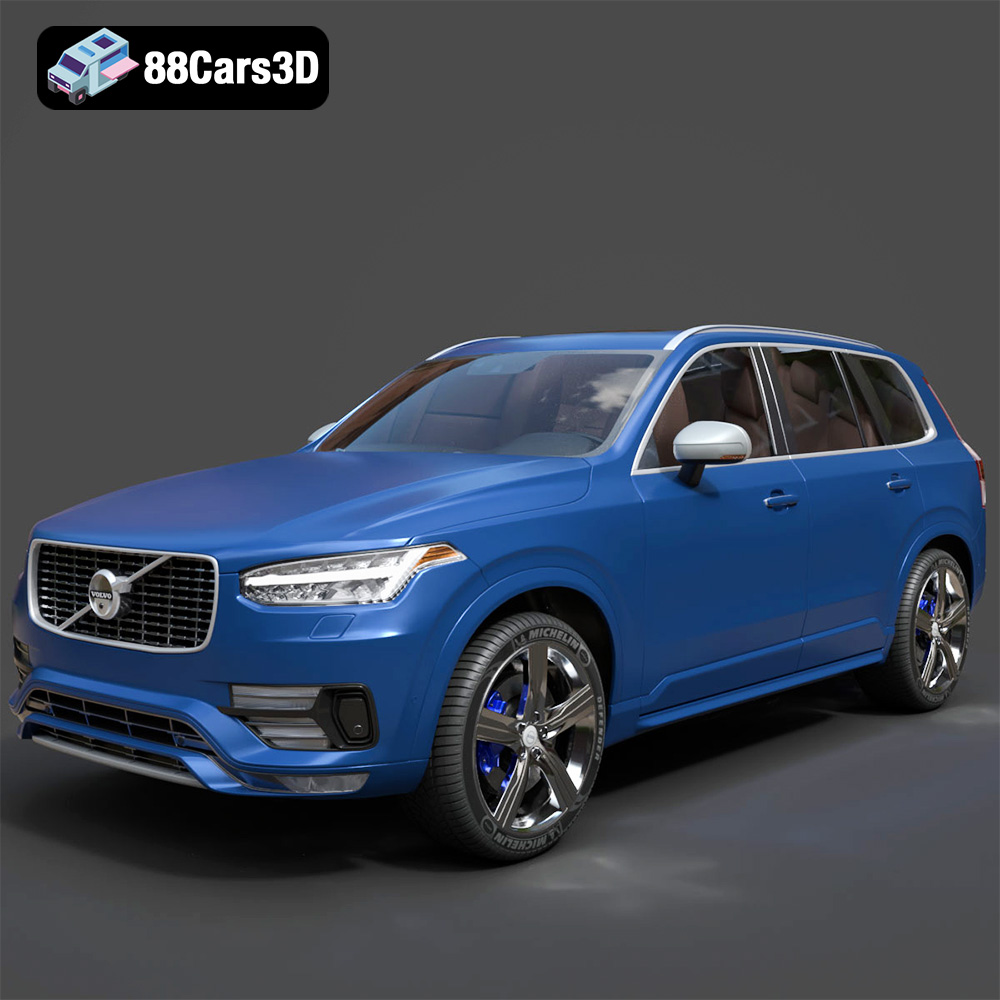
Download the Volvo XC90 R-Design 2015 3D Model featuring clean geometry, realistic detailing, and a fully modeled interior. Includes .blend, .fbx, .obj, .glb, .stl, .ply, .unreal, and .max formats for rendering, simulation, and game development.
Price: $10

