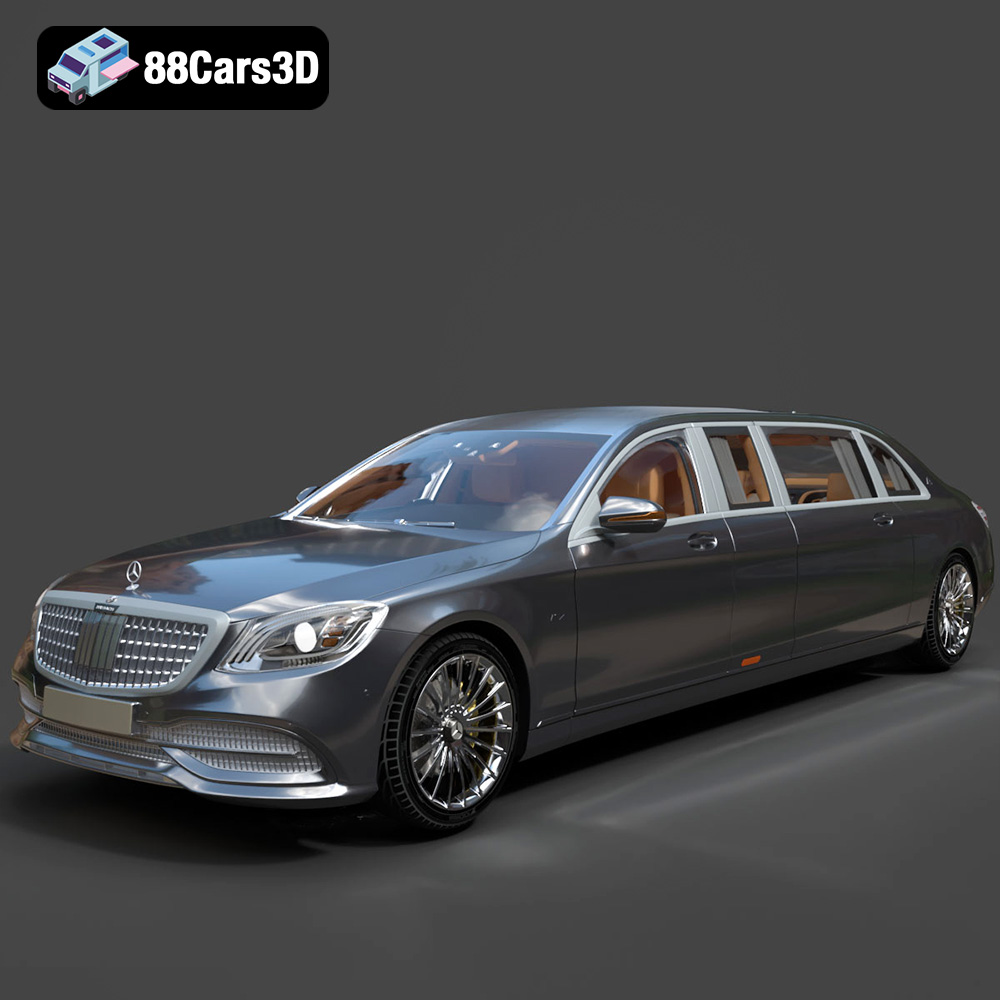
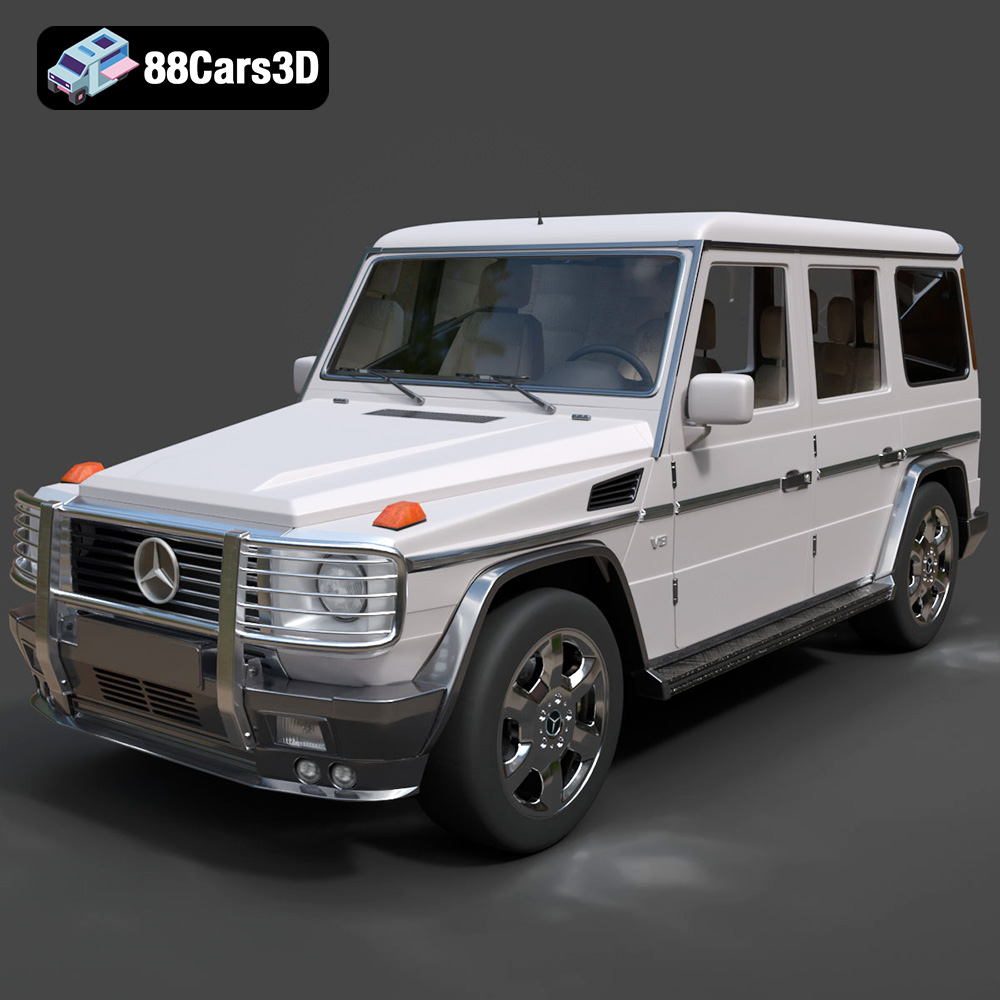
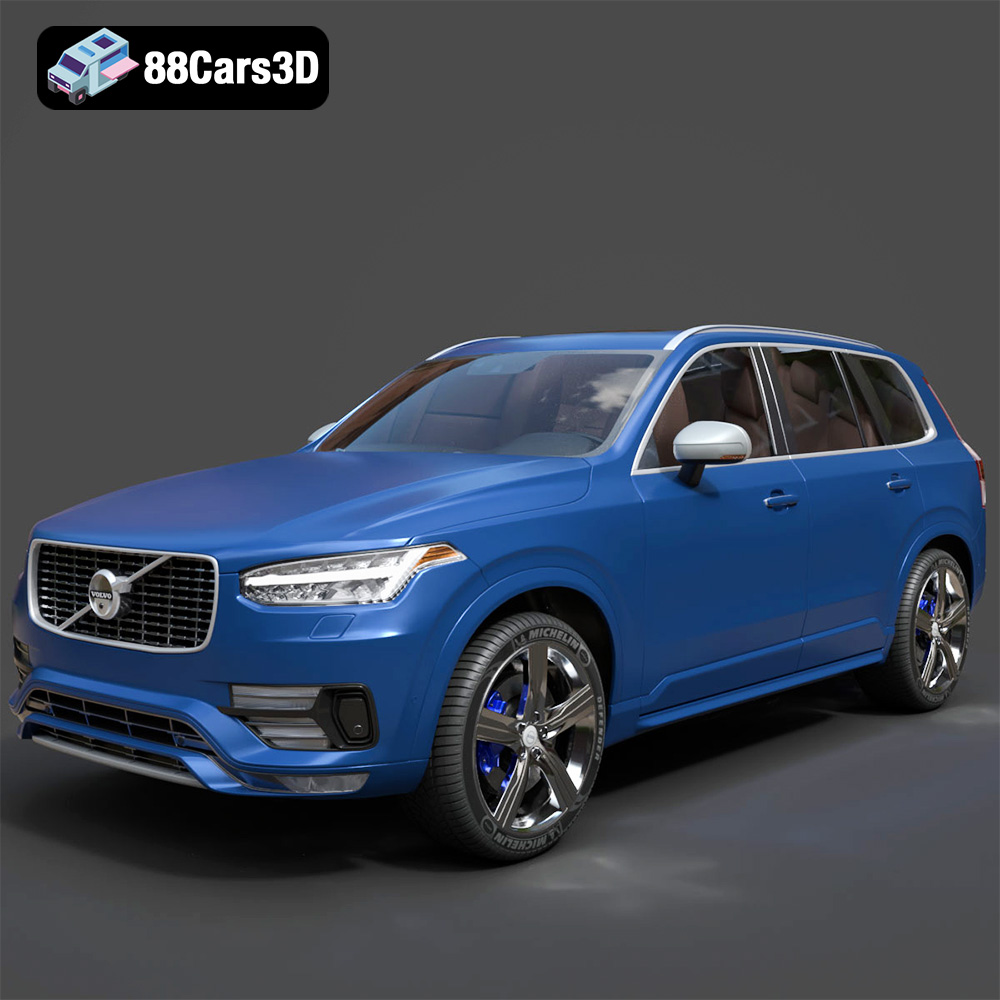
Get 50% OFF All Premium 3D & STL Models!

In the digital age, the journey of a car from a designer’s concept to a consumer’s screen is paved with polygons, textures, and meticulous data. High-quality 3D car models are no longer just a niche asset for visual effects artists; they are the cornerstone of modern automotive advertising, the heroes of blockbuster video games, and the interactive core of virtual reality showrooms. Yet, for all their utility, navigating the technical landscape of using these complex assets can be daunting. The difference between a stunning photorealistic render and a glitchy, low-resolution mess often lies in understanding the fundamentals: topology, file formats, and workflow-specific optimization. This guide will serve as your technical roadmap, demystifying the process and empowering you to leverage professional-grade assets for any project, whether it’s for cinematic automotive rendering or real-time game assets.
Before importing a model into your software of choice, it’s crucial to understand what separates a premium, production-ready asset from a basic one. The quality is not just about visual appeal; it’s about the underlying structure that enables flexibility, realism, and performance. When sourcing models from a specialized marketplace like 88cars3d.com, you are investing in this foundational quality.
Topology refers to the flow and structure of polygons (quads and triangles) that form the model’s surface. Clean topology, primarily using quadrilaterals, is essential for smooth deformations and predictable reflections. A well-constructed model will have edge loops that follow the car’s natural curves and panel lines. Polygon count is another critical factor. A model intended for high-fidelity cinematic rendering might feature several million polygons to capture every minute detail. In contrast, a primary Level of Detail (LOD0) model for a video game might be optimized to under 100,000 polygons to ensure smooth real-time performance.
A 3D model is a grayscale sculpture until textures are applied. This is made possible by UV unwrapping—the process of flattening the 3D surface into a 2D map. Professional models feature clean, non-overlapping UV layouts that maximize texture space (texel density). Many high-end models now use UDIMs (U-Dimension), a tiling UV system that allows for incredibly high-resolution textures across different parts of the car. These models are typically bundled with a set of PBR (Physically Based Rendering) textures, such as Base Color, Metallic, Roughness, and Normal maps, which realistically simulate how light interacts with different materials like paint, chrome, and rubber.
A static model has limited use. A professional 3D car model is built for motion. This means its components—doors, wheels, hood, trunk, steering wheel, and suspension elements—are separated as distinct objects. They are grouped logically, and their pivot points are correctly placed to allow for realistic rotation and animation. For example, a car door’s pivot will be placed exactly where its physical hinges would be. This meticulous setup saves hours of prep work for animators and game developers.
Choosing the right file format is one of the most critical decisions in any 3D pipeline. It dictates compatibility, editability, and final output quality. A single 3D asset can exist in numerous formats, each tailored for a specific task. Understanding their strengths and weaknesses is fundamental to an efficient workflow. Marketplaces focused on professional users often provide a wide array of formats to cater to diverse industry needs.
These formats are the native project files for their respective software, Blender and 3ds Max. They are the “master” files containing the most data.
When you need to move an asset between different software applications, interchange formats are your go-to solution.
These formats are optimized for specific end-use applications, from web browsers to 3D printers.
Creating jaw-dropping, photorealistic renders is a primary use case for high-quality 3D car models. This workflow prioritizes visual fidelity over real-time performance, allowing artists to push the boundaries of realism.
The first step is creating a believable environment. For studio shots, this often involves a simple cyclorama or ground plane with carefully placed area lights to create soft highlights and shadows. The key to realistic lighting, however, is often Image-Based Lighting (IBL) using an HDRI (High Dynamic Range Image). An HDRI map of a real-world photo studio or outdoor location wraps around the scene, providing incredibly nuanced and accurate reflections and ambient light that are nearly impossible to replicate with manual lighting alone.
Once the scene is lit, the focus shifts to materials and rendering. Using the source `.blend` or `.max` file allows for full control over the PBR shaders. An artist might tweak the car paint’s clearcoat roughness, add subtle imperfections like dust or fingerprints, or adjust the tire’s normal map for a more worn look. Path-tracing render engines like Blender’s Cycles or Chaos Group’s V-Ray are used to simulate the physics of light with incredible accuracy. Render settings are dialed up—high sample counts, full global illumination, and caustic effects—to produce a final image that is often indistinguishable from a real photograph.
An advertising agency needs a hero shot of a new SUV for a magazine cover. They purchase a high-poly model. Using 3ds Max and V-Ray, the artist places the model on a wet asphalt plane and lights it with an HDRI of a dramatic sunset sky. They adjust the car paint material, increasing its metallic flake density and adding a subtle “orange peel” effect to the clearcoat normal map for ultimate realism. After a multi-hour render, the final image is taken into a post-processing application to adjust color grading, add a lens flare, and enhance the reflections, resulting in a flawless, compelling marketing image.
In game development, performance is king. The goal is to adapt a highly detailed model for a real-time engine, ensuring it looks great while maintaining a high and stable frame rate. This process is all about optimization.
A 500,000-polygon model is not viable for a game. The first step is creating a game-ready mesh, typically around 50,000-80,000 polygons for the main player vehicle (LOD0). From there, several lower-resolution versions (LOD1, LOD2, LOD3) are created. As the car gets further from the player’s camera, the game engine automatically swaps in a lower-poly LOD, saving precious processing power. Textures are also optimized. Multiple 4K UDIM textures might be baked down into a single, efficient 2K or 4K texture atlas for the entire vehicle.
Using the `.fbx` format, the optimized model and its LODs are imported into Unreal Engine. The real magic happens in the material editor. A “master material” is created for the car paint, exposing parameters like color, metallicness, roughness, and clearcoat intensity. This allows designers to create hundreds of different paint variations by simply creating material instances and changing parameters, rather than creating new textures. This is an incredibly efficient workflow for offering car customization options in a game. The high-quality assets from a vendor like 88cars3d.com provide an excellent base for this optimization process.
A development team is building a new racing title. They license a set of 3D car models. Their technical artist takes the high-poly source model and creates four LODs. They bake ambient occlusion and normal maps from the high-poly model onto the low-poly LOD0 to retain visual detail. The car is imported into Unreal Engine, and a complex master material is set up with parameters for paint damage, dirt accumulation, and customizable colors. The separated wheels and steering wheel are then linked to the game’s physics and input systems, bringing the vehicle to life as a fully playable asset.
The utility of 3D car models extends far beyond traditional screens. Immersive technologies and additive manufacturing have opened new frontiers for these versatile assets.
Augmented Reality (AR) apps, which overlay digital objects onto the real world via a smartphone, require hyper-optimized models. The `.glb` format is perfect for this. A detailed car model must be heavily reduced in polygon count (often to under 20,000 polygons) and its textures compressed. The goal is to create a lightweight asset that downloads quickly and runs smoothly on mobile hardware, allowing a customer to view a new car in their own driveway.
Virtual Reality (VR) allows users to step inside a virtual car showroom and interact with vehicles at a 1:1 scale. For VR, performance is even more critical than for standard games, as a low frame rate can induce motion sickness. Models must be well-optimized, but they also need detailed, high-resolution interiors since the user can lean in and inspect every button and stitch. It’s a delicate balance between visual fidelity and maintaining the high, stable frame rate (typically 90 FPS) required for a comfortable VR experience.
With a 3D printer, a digital model can become a physical object. The model must first be converted to the `.stl` format. Crucially, the mesh must be made “watertight,” meaning all holes are sealed to create a single, continuous, solid volume. This can involve significant mesh repair work. Once the model is prepared, it’s sent to “slicing” software, which cuts the model into hundreds of thin horizontal layers and generates the G-code that instructs the 3D printer how to build the object, layer by layer.
A 3D car model is not a single, static entity. It is a versatile digital foundation that can be adapted, optimized, and deployed across a staggering range of applications. Whether you are crafting a breathtaking piece of automotive rendering, developing the next hit racing game, or building an immersive AR product configurator, your final result is only as good as your source asset. Understanding the technical principles of topology, the specific use cases for each file format, and the demands of your target platform are the keys to unlocking the full potential of these complex models. By starting with a professionally crafted asset, you save invaluable time and ensure your project is built on a foundation of quality, accuracy, and technical excellence.