Get 50% OFF All Premium 3D & STL Models!

The world of automotive visualization has been revolutionized by real-time rendering. Gone are the days of waiting hours, or even days, for a single photorealistic image. With Unreal Engine 5, creators can now build stunning, interactive, and cinematic experiences with unparalleled fidelity and speed. The engine’s groundbreaking features, such as Nanite virtualized geometry and Lumen dynamic global illumination, have opened the door for using incredibly detailed assets, like high-poly 3D car models, directly in a real-time environment without the traditional performance trade-offs. This shift empowers artists, designers, and developers to create everything from dynamic car configurators and marketing cinematics to immersive VR showrooms and virtual production sets.
This comprehensive guide will walk you through the entire professional workflow of bringing a high-quality 3D car model into Unreal Engine and creating a stunning visualization. We will cover everything from initial project setup and asset preparation to advanced material creation, dynamic lighting, interactive scripting with Blueprint, and cinematic rendering. Whether you are an automotive designer showcasing your latest concept, a game developer building a racing simulator, or a visualization artist creating marketing content, this article will provide you with the technical knowledge and best practices to achieve world-class results. Let’s start the engine and dive in.
A successful project begins with a solid foundation. Properly configuring your Unreal Engine project and preparing your 3D assets are critical first steps that will save you significant time and prevent technical headaches down the line. This phase is about optimizing the engine’s settings for high-fidelity automotive visualization and ensuring your 3D model is structured for a smooth import process.
When creating a new project in Unreal Engine, you are presented with several templates. For automotive work, the most common choices are:
For this guide, we’ll assume a workflow starting with the AEC or Automotive template, as they provide the best foundation for our goals.
After creating your project, a few settings must be verified to unlock Unreal Engine’s full visual potential. Navigate to Edit > Project Settings to configure the following:
These settings establish the core rendering pipeline for a photorealistic outcome. For a deeper dive into all available rendering options, the official Unreal Engine documentation is an invaluable resource for learning directly from the source.
The quality of your final render is directly tied to the quality of your source asset. Sourcing well-prepared 3D car models from marketplaces like 88cars3d.com can save you hundreds of hours, as they typically feature clean topology, proper UV mapping, and a logical material structure. Before importing, ensure your model is correctly prepared:
– Mesh Hierarchy: Organize your model logically in your DCC (Digital Content Creation) tool like Blender, 3ds Max, or Maya. Group objects by material or function (e.g., “Body_Exterior,” “Wheels,” “Interior_Leather,” “Glass”). This makes material assignment and animation in Unreal much easier.
– Pivot Points: Set the pivot points correctly for interactive elements. For example, the pivot for a door should be at its hinge, and the pivot for a wheel should be at its center for proper rotation.
– Naming Conventions: Use clear and consistent naming for all objects and materials (e.g., `SM_CarName_Door_L` for static mesh, `M_CarName_Paint_Red` for material). This organizational discipline is a hallmark of professional workflows.
With a prepared model and a configured project, it’s time to bring your asset into Unreal Engine. This stage involves choosing the right import method and leveraging powerful engine features like Nanite to handle high-polygon geometry efficiently. The goal is to preserve maximum detail while ensuring smooth real-time performance.
Unreal Engine offers two primary methods for importing models:
Regardless of the method, after import, you will find Static Meshes, Materials, and Textures in your Content Browser. It’s good practice to organize these into respective folders (e.g., `Meshes`, `Materials`, `Textures`) to keep your project tidy.
Nanite is arguably one of the most significant advancements in real-time graphics. It’s a virtualized geometry system that allows you to render film-quality assets with millions of polygons in real time without traditional performance constraints like polygon budgets or manual LOD generation. This is a game-changer for automotive visualization, where smooth, curved surfaces demand high polygon counts.
To use Nanite:
With Nanite enabled, you can use a car model with 5, 10, or even 20 million polygons, and the engine will intelligently stream and render only the detail that is visible on screen. This eliminates the tedious process of creating multiple Levels of Detail (LODs) for the car body. However, Nanite has limitations; it does not yet support skeletal animation, morph targets, or, in many cases, transparency. Therefore, it’s best used for opaque, rigid surfaces like the car body, wheels, and interior dashboard.
For components that cannot use Nanite, such as glass, transparent light covers, or potentially animated parts, traditional optimization techniques are still essential for maintaining high frame rates, especially in interactive applications or games.
– Draw Call Reduction: For smaller, non-interactive parts that share the same material (like nuts and bolts on a wheel), consider combining them into a single mesh to reduce the number of draw calls, which is a key performance metric.
A great model needs great materials to look convincing. Unreal Engine’s powerful node-based Material Editor allows for the creation of incredibly realistic surfaces. For automotive visualization, mastering materials like multi-layered car paint, brushed metal, rubber, and glass is key to achieving photorealism. This is where PBR materials (Physically Based Rendering) shine, as they simulate how light interacts with real-world surfaces.
The Material Editor is a visual graph where you connect nodes to define a surface’s properties. Key inputs include:
A key concept is creating Material Instances. You build one complex master material (e.g., a “Master_CarPaint” material) and then create instances from it. These instances allow you to change parameters (like color or roughness) without recompiling the entire material, which is incredibly efficient for creating variations.
Standard car paint is one of the most complex materials to replicate. It consists of a base paint layer, metallic flakes, and a glossy top clear coat. Unreal’s “Clear Coat” shading model is designed specifically for this.
Here’s a simplified workflow for a high-quality car paint material:
By making these inputs parameters, your Material Instance will have simple sliders to control the paint color, flake intensity, and clear coat glossiness in real time.
Other common automotive materials are simpler but require attention to detail:
– Chrome: This is a very simple PBR material. Set the Base Color to white (or a very light grey), the Metallic to 1.0, and the Roughness to a very low value like 0.05 for a mirror-like finish. For brushed chrome, increase the Roughness and use a subtle, linear normal map.
– Tires/Rubber: Set the Metallic value to 0. The Base Color should be a dark grey (not pure black). The key to realistic rubber is the Roughness value, which is typically high (0.8-0.9). You can use a texture map in the Roughness slot to add variation and wear, and a normal map for the sidewall details and tread pattern.
Lighting is what breathes life into a scene. It reveals form, defines mood, and makes materials look believable. Unreal Engine 5’s Lumen system provides stunning dynamic global illumination and reflections, which is perfect for showcasing the intricate curves and reflective surfaces of a car. A professional lighting setup, whether in a studio or an outdoor environment, is essential for high-quality real-time rendering.
Lumen works by simulating how light bounces from one surface to another (global illumination) and by providing accurate reflections of the scene. This means that light from a bright floor will realistically illuminate the underside of your car, and the car’s chrome trim will accurately reflect other parts of the vehicle and the environment. In your Project Settings, we already enabled Lumen. You can fine-tune its quality in a Post Process Volume under the Global Illumination and Reflections sections. Increasing the “Final Gather Quality” will produce cleaner results at a higher performance cost.
A virtual photo studio is a classic setup for automotive marketing shots.
For outdoor renders, Unreal’s Sun and Sky system is a powerful, all-in-one solution. You can add it to your level by dragging it in from the “Lights” tab. This actor creates a directional light (the sun), a sky atmosphere, and volumetric clouds. You can control the time of day simply by rotating the directional light actor; the sky color, clouds, and atmospheric haze will all update realistically in real time. Placing your 3D car model in this dynamic environment allows you to capture dramatic shots during sunrise, golden hour, or high noon with incredible realism.
One of the most powerful aspects of real-time rendering is the ability to create interactive experiences. Instead of a static image, you can build a fully functional car configurator or an explorable virtual showroom. Unreal Engine’s Blueprint visual scripting system allows artists and designers to create complex interactivity without writing a single line of code.
A Blueprint is a node-based system that allows you to create game logic and functionality visually. For an automotive project, we can create a single “master” Blueprint for our car. This Blueprint would contain all the car’s meshes (body, wheels, interior, etc.) as components and also the logic for controlling them.
To start, right-click in the Content Browser, select Blueprint Class, and choose Actor as the parent class. Name it something like `BP_CarConfigurator`. Inside this Blueprint, you can add your Static Mesh components from the imported car model.
The most common feature in a car configurator is changing the paint color. This is remarkably easy to set up with Blueprints.
Now you can trigger this event from anywhere (like a UI button) and pass in a new Material Instance to change the car’s color instantly. You can expand this logic to create functions for changing wheels, interior trim, and more.
Beyond material swapping, you can script physical interactions. For example, to make a door open:
This same principle can be used to open the trunk, turn on the headlights (by swapping a “lights off” material for an emissive “lights on” material), or even script a simple driving mechanic.
For creating high-quality video content, advertisements, or short films, Unreal Engine’s Sequencer is the go-to tool. It is a powerful, non-linear editing and animation tool that operates directly within the engine, allowing you to create cinematic sequences in real time.
To begin, click the “Cinematics” button on the main toolbar and select “Add Level Sequence.” This creates a new Sequence asset and opens the Sequencer editor at the bottom of the viewport. From here, you can add actors from your scene to the sequence by dragging them in or using the “+ Track” button. For an automotive cinematic, you will want to add your car Blueprint, any cameras you’ve placed, and potentially light actors you wish to animate.
Sequencer works with a keyframe-based workflow familiar to any animator.
High-quality assets are essential for compelling cinematics. Models from platforms like 88cars3d.com are often built with separate wheel components, allowing you to add a secondary rotation animation to the wheels to make them spin realistically as the car moves forward.
The final polish for any cinematic comes from post-processing. While you can use the main Post Process Volume in your scene, Sequencer allows you to override these settings and animate them over time. You can add a Post Process track within Sequencer to control:
Once your sequence is complete, you can export it as a high-resolution video or image sequence directly from the Sequencer interface using the Movie Render Queue, which offers superior quality over real-time screen capture.
Unreal Engine 5 has fundamentally transformed the pipeline for automotive visualization. By combining the engine’s powerful features with high-quality 3D car models, creators can achieve a level of realism and interactivity that was once exclusive to offline rendering. We’ve journeyed through the entire professional workflow: establishing a solid project foundation, importing and optimizing complex geometry with Nanite, crafting believable PBR materials, lighting scenes dynamically with Lumen, building interactive experiences with Blueprint, and producing cinematic content with Sequencer.
The key takeaway is that success lies in the synergy between high-quality assets and a deep understanding of the engine’s tools. Starting with a well-prepared, detailed model is half the battle, saving you invaluable time on cleaning, fixing, and optimizing. As you become more comfortable with the tools, you can begin to explore more advanced topics like physics-based vehicle dynamics with the Chaos Vehicle system, AR/VR implementation for immersive showrooms, and virtual production workflows for real-time commercial shoots. The possibilities are virtually limitless. Now is the time to take these techniques, find a great asset, and start creating your own stunning real-time automotive experiences.

Texture: Yes
Material: Yes
Download the Mercedes S-Class 2024 3D Model featuring clean geometry, realistic detailing, and a fully modeled interior. Includes .blend, .fbx, .obj, .glb, .stl, .ply, .unreal, and .max formats for rendering, simulation, and game development.
Price: $10

Texture: Yes
Material: Yes
Download the Chevrolet Camaro 1970 3D Model featuring clean geometry, realistic detailing, and a fully modeled interior. Includes .blend, .fbx, .obj, .glb, .stl, .ply, .unreal, and .max formats for rendering, simulation, and game development.
Price: $10

Texture: Yes
Material: Yes
Download the Mercedes-AMG GT 2015 3D Model featuring clean geometry, realistic detailing, and a fully modeled interior. Includes .blend, .fbx, .obj, .glb, .stl, .ply, .unreal, and .max formats for rendering, simulation, and game development.
Price: $88.99

Texture: Yes
Material: Yes
Download the Suzuki GSX-R 1000 3D Model featuring clean geometry, realistic detailing, and a fully modeled interior. Includes .blend, .fbx, .obj, .glb, .stl, .ply, .unreal, and .max formats for rendering, simulation, and game development.
Price: $10

Texture: Yes
Material: Yes
Download the Porsche Cayman S 2024 3D Model featuring clean geometry, realistic detailing, and a fully modeled interior. Includes .blend, .fbx, .obj, .glb, .stl, .ply, .unreal, and .max formats for rendering, simulation, and game development.
Price: $10

Texture: Yes
Material: Yes
Download the Holden Commodore Sportwagon 2017 3D Model featuring clean geometry, realistic detailing, and a fully modeled interior. Includes .blend, .fbx, .obj, .glb, .stl, .ply, .unreal, and .max formats for rendering, simulation, and game development.
Price: $10

Texture: Yes
Material: Yes
Download the Mitsubishi Colt 3 Door 2008 3D Model featuring clean geometry, realistic detailing, and a fully modeled interior. Includes .blend, .fbx, .obj, .glb, .stl, .ply, .unreal, and .max formats for rendering, simulation, and game development.
Price: $10

Texture: Yes
Material: Yes
Download the Mercedes-Benz S650 Pullman 3D Model featuring clean geometry, realistic detailing, and a fully modeled interior. Includes .blend, .fbx, .obj, .glb, .stl, .ply, .unreal, and .max formats for rendering, simulation, and game development.
Price: $95.99
Texture: Yes
Material: Yes
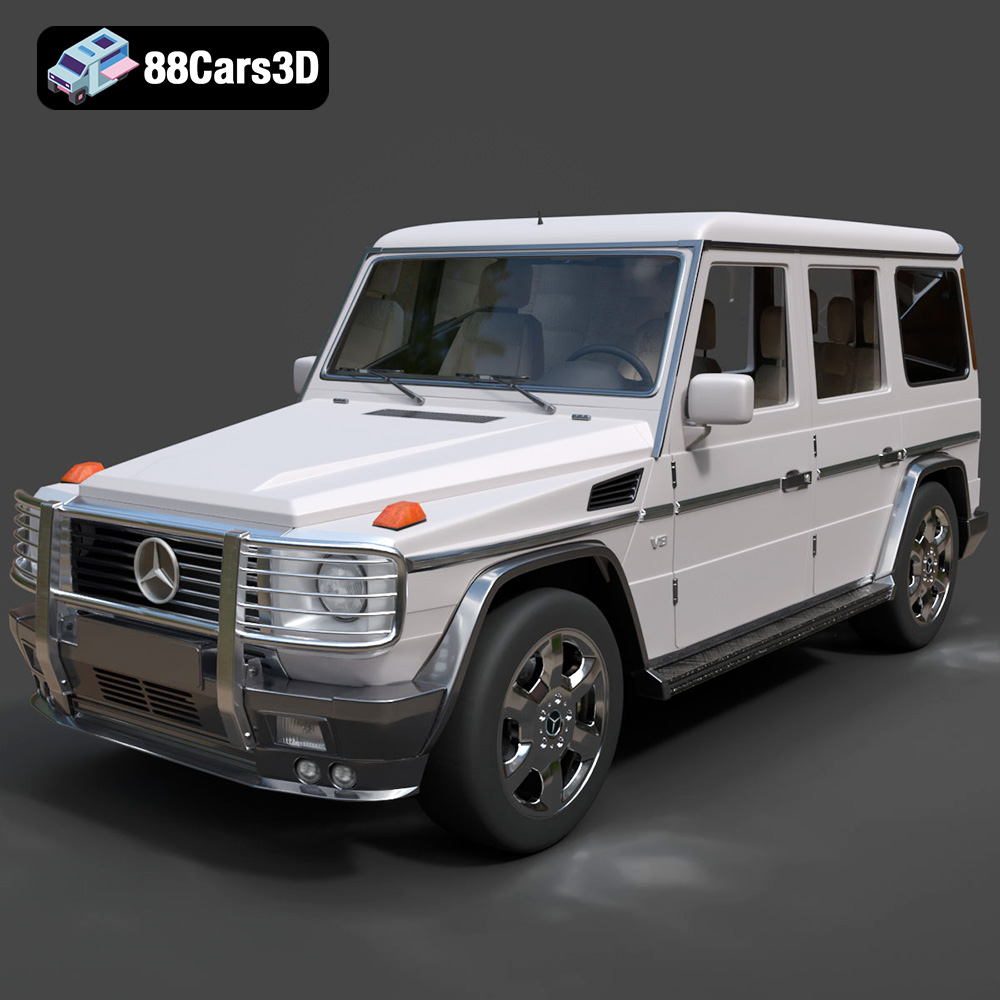
Download the Mercedes G-Class SUV 2024 3D Model featuring clean geometry, realistic detailing, and a fully modeled interior. Includes .blend, .fbx, .obj, .glb, .stl, .ply, .unreal, and .max formats for rendering, simulation, and game development.
Price: $10
Texture: Yes
Material: Yes
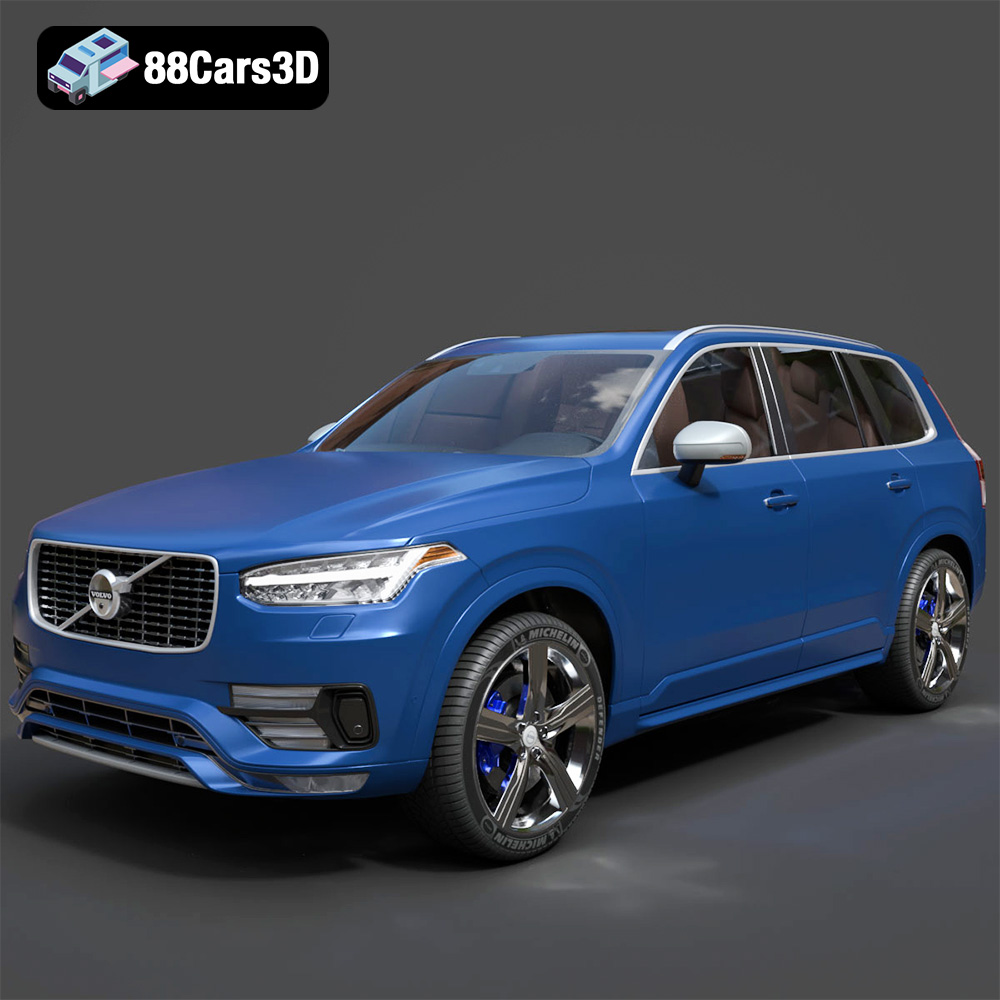
Download the Volvo XC90 R-Design 2015 3D Model featuring clean geometry, realistic detailing, and a fully modeled interior. Includes .blend, .fbx, .obj, .glb, .stl, .ply, .unreal, and .max formats for rendering, simulation, and game development.
Price: $10

