Get 50% OFF All Premium 3D & STL Models!

“`html
There’s an undeniable thrill in acquiring a new, high-quality 3D car model. The perfect curves, intricate details, and pristine surfaces represent a world of creative potential. Whether you’re an architectural visualization artist aiming for a stunning driveway render, a game developer building an immersive racing experience, or a designer prototyping the next generation of vehicles, that initial model is your key. However, a professional-grade asset is more than just a pretty picture; it’s a complex collection of data that must be meticulously prepared and optimized for its final application. A model destined for a 4K cinematic render has vastly different requirements than one designed to run smoothly on a mobile VR headset.
This comprehensive guide will walk you through the entire professional workflow, transforming a beautiful but raw 3D car model into a versatile, high-performance asset ready for any pipeline. We will dive deep into the technical foundations of mesh topology and edge flow, master the art of UV unwrapping for complex automotive surfaces, and build photorealistic PBR materials from the ground up. From there, we’ll explore advanced rendering workflows in industry-standard engines, tackle the critical performance optimizations for game engines like Unity and Unreal, and finally, prepare your model for the exciting frontiers of Augmented Reality (AR), Virtual Reality (VR), and even physical 3D printing. By the end, you’ll have a complete roadmap for taking any 3D car model from the showroom to showtime.
The underlying mesh structure, or topology, is the bedrock upon which all subsequent work is built. Clean, efficient, and logical topology is not just about aesthetics; it directly impacts shading, deformation, performance, and the ease of future edits. When you first acquire a model, perhaps from a specialized marketplace like 88cars3d.com, the first step is always a thorough evaluation of its geometric foundation. A poorly constructed mesh can introduce countless problems down the line, from rendering artifacts to performance bottlenecks, so a careful initial assessment is a crucial time-saver.
Upon opening a new model, perform a quick technical audit. First, check the polygon composition. The industry standard for high-quality subdivision surfaces is all-quad geometry. Quads (four-sided polygons) subdivide cleanly and are easier to work with for creating smooth, flowing surfaces. Triangles (tris) are acceptable, and in fact necessary for real-time game engines, but a source model intended for high-fidelity rendering should be predominantly quads. Look out for n-gons (polygons with more than four sides), as they can cause significant shading and subdivision errors. Next, assess the mesh integrity. Is it “watertight,” with no holes or gaps? Are there any self-intersecting faces or non-manifold edges? These issues can wreak havoc on everything from UV unwrapping to 3D printing. Finally, examine the scene hierarchy. A well-organized model will have components logically separated and named (e.g., `chassis`, `wheel_FL`, `door_L`, `interior_details`), often parented to an empty or root object for easy transformation.
Edge flow refers to the directional lines the polygon edges follow across a model’s surface. For automotive models, with their blend of large, sweeping panels and sharp, precise details, proper edge flow is paramount. It governs how light reflects off the surface, creating the characteristic highlights that define a car’s shape. Good edge flow follows the natural curvature of the body, with edge loops running parallel to key feature lines. Holding edges, which are extra edge loops placed close to a hard edge, are essential for maintaining sharp panel gaps and crisp details when a subdivision modifier (like TurboSmooth in 3ds Max or Subdivision Surface in Blender) is applied. Without them, edges would become overly soft and unrealistic. A common area to scrutinize is around complex intersections, such as where the A-pillar meets the hood and fender, or the intricate geometry of modern headlights and grilles.
In some cases, the source mesh may be too dense or have topology unsuitable for your specific needs, necessitating retopology. This process involves creating a new, cleaner mesh over the surface of the original high-poly model. While time-consuming, it provides complete control over the edge flow and polygon density. Tools like the Freeform tools in 3ds Max, Quad Draw in Maya, or Blender’s snapping tools combined with poly-building are standard for manual retopology. For a faster workflow, automated solutions like Quad Remesher can produce excellent results. More commonly, you’ll need to optimize an existing mesh. This could involve using a tool like 3ds Max’s ProOptimizer or Blender’s Decimate modifier, which intelligently reduce the polygon count while preserving the model’s silhouette. This is a fundamental step for creating different Levels of Detail (LODs) for game engines or preparing a model for AR/VR applications.
UV unwrapping is the process of flattening a 3D model’s surface into a 2D space so that textures can be accurately applied. For a complex object like a car, this is one of the most critical and skill-intensive stages. Poorly planned UVs can result in visible seams, texture stretching, and inefficient use of texture space, all of which compromise the final quality of the asset. The goal is to create a UV map—often called a “pelt”—that is distortion-free and logically laid out, making the texturing process intuitive and effective. For automotive models, this requires a combination of strategic thinking and technical precision.
The first step in unwrapping is defining seams, which are edges on the 3D model that will be “cut” to allow the mesh to unfold. Where you place these seams is crucial. The best practice is to hide them along natural boundaries or in areas that are less visible to the camera. For cars, this is straightforward: place seams along the panel gaps of the doors, hood, trunk, and fenders. This approach perfectly mirrors real-world construction and makes the seams virtually invisible. For continuous surfaces like a roof or a large hood panel, seams can be placed on the underside or inside edges. For components like tires, a seam can be run along the inner circumference where it’s least likely to be seen. The key is to think like a manufacturer and deconstruct the vehicle into its core components, using those boundaries as your guide.
Different software offers powerful tools for this task. In Blender, the workflow typically involves selecting edges in Edit Mode and using the `Mark Seam` operator. Once seams are marked, you select the mesh faces and use the `Unwrap` tool (`U` key) to generate the UV islands. Blender’s unwrapping algorithm is excellent at minimizing stretch, and you can immediately check for distortion by enabling a checkerboard pattern in the UV Editor. For more mechanical or complex parts without obvious seams, the `Smart UV Project` tool offers a quick, angle-based solution. For a comprehensive overview of these tools, the official Blender 4.4 documentation provides detailed explanations of each unwrapping method and its options. In 3ds Max, the `Unwrap UVW` modifier is your primary tool. It offers powerful options like `Peel`, which is fantastic for unfolding complex shapes, and robust tools for packing UV islands efficiently. Standard planar, box, and cylindrical projections are still invaluable for simpler, geometric parts like wheel rims, grilles, or brake calipers.
Texel density refers to the resolution of your texture map relative to the size of the model’s surface area. Maintaining a consistent texel density across the entire vehicle is essential for ensuring that details appear uniformly sharp. For example, a door handle should not have visibly more texture resolution than the door panel it’s attached to. Most UV tools have features to help you manage this, allowing you to scale UV islands to match a target density. For hero assets requiring extremely high-resolution textures (e.g., 8K or higher), a single UV map is often insufficient. This is where the UDIM (U-Dimension) workflow comes in. UDIMs allow you to spread your UVs across multiple texture sets, or tiles. This means you can assign an entire 4K map just to the main body, another to the interior, one for the wheels, and so on. This professional technique, supported by most modern renderers and texturing software like Substance Painter, is the standard for achieving cinematic-quality detail on complex 3D car models.
With a perfectly unwrapped model, the next stage is to create materials that mimic the properties of their real-world counterparts. The modern standard for this is Physically Based Rendering (PBR), a methodology that simulates the behavior of light in a physically plausible way. Using a PBR workflow ensures that your materials will look correct and realistic under any lighting conditions, which is crucial for automotive visualization where reflections and surface response are everything. Creating a convincing car requires building several complex shaders, from the multi-layered car paint to the subtle nuances of rubber, glass, and metal.
The PBR workflow simplifies material definition down to a set of core, intuitive parameters that describe a surface. The two main PBR workflows are Metalness/Roughness and Specular/Glossiness. The Metalness workflow is the most common and is built around these key texture maps:
– Metalness: A black-and-white map that tells the shader if a surface is a metal (white) or a non-metal/dielectric (black). There are rarely in-between values.
– Roughness: A grayscale map that defines how rough or smooth a surface is. A value of black (0.0) creates a perfectly smooth, mirror-like surface, while a value of white (1.0) creates a completely diffuse, matte surface. This is arguably the most important map for conveying realism.
– Normal: An RGB map that simulates fine surface detail without adding extra geometry, such as leather grain, tire treads, or the orange-peel effect on paint.
By using these maps, you can accurately recreate almost any material found on a vehicle.
Car paint is famously one of the most complex PBR materials to create due to its multi-layered nature. A typical car paint shader consists of three distinct layers:
Adding subtle imperfections, like a very faint grunge map in the clear coat roughness, can push the realism even further.
Beyond the paint, other materials complete the vehicle. Here are some quick technical tips:
A masterfully modeled and textured car deserves a presentation that does it justice. Photorealistic rendering is the art and science of simulating light to create an image that is indistinguishable from a photograph. This process involves more than just hitting the “render” button; it requires careful setup of lighting, cameras, and render engine parameters. The final image is often a composite of multiple render passes, tweaked and refined in post-processing to achieve the perfect look. For automotive rendering, the interplay between the car’s reflective surfaces and the surrounding environment is the key to a successful image.
The single most important element for realistic automotive renders is the lighting. The go-to solution for this is image-based lighting using a High Dynamic Range Image (HDRI). An HDRI is a 360-degree panoramic image that contains a massive range of light intensity data, far beyond that of a standard photograph. When used as an environment map in a 3D scene, it provides both realistic, nuanced lighting and detailed reflections for the car’s bodywork. For studio shots, you can supplement the HDRI with a traditional three-point lighting setup:
This combination of an HDRI for global reflections and area lights for specific shaping provides the ultimate level of control.
Your choice of render engine will influence your workflow and final output.
Other excellent options include Arnold, known for its stability in complex VFX pipelines, and Redshift, a popular GPU-accelerated engine prized for its speed.
The final 20% of work that adds 80% of the impact often happens in post-processing. Never consider your raw render the final product. By rendering out separate layers, or render passes, you gain immense control. Common passes for automotive work include:
– Z-Depth Pass: A black-and-white image representing distance from the camera, used to add atmospheric haze or depth of field effects.
These passes can be composited in software like Adobe Photoshop, After Effects, or Blackmagic Fusion to fine-tune colors with curves, add lens flares, enhance shadows, and perfect the final image.
Preparing a 3D car model for a real-time game engine is a completely different challenge than preparing it for a cinematic render. In gaming, every polygon and every texture pixel counts. The primary goal is to maintain the highest visual quality possible while adhering to a strict performance budget to ensure the game runs at a smooth framerate (typically 60 frames per second). This involves a series of aggressive optimization techniques, transforming the high-resolution source model into a lean, efficient game asset.
Unlike cinematic renders where polygon counts can run into the millions, game assets must operate within a tight “polygon budget.” A player vehicle in a modern AAA racing game might have a budget of 100,000 to 200,000 triangles for its highest quality version. To manage this, developers use a system called Levels of Detail (LODs). An LOD system uses multiple versions of the same model, each with a progressively lower polygon count. The game engine automatically switches between them based on the car’s distance from the camera. A typical setup might look like this:
This ensures that processing power is only spent on detail that the player can actually perceive.
A “draw call” is a command sent from the CPU to the GPU to draw an object on the screen. Each object with a unique material typically requires its own draw call. Too many draw calls can create a CPU bottleneck and severely impact performance. Therefore, a key optimization is to reduce them as much as possible. One of the most effective techniques for this is texture atlasing. An atlas is a single, large texture sheet that contains the textures for multiple different parts of the car. For example, instead of having separate small textures for the dashboard gauges, air vents, steering wheel logo, and center console buttons, their UVs are all arranged and packed into a single UV space, which uses one larger texture map. This means all those components can be rendered in a single draw call, dramatically improving efficiency.
The two leading game engines have their own specific workflows and features for handling automotive assets.
Both engines require models to be imported in formats like FBX, which preserves the mesh, UVs, hierarchy, and material assignments.
Beyond traditional rendering and gaming, 3D car models are increasingly used in emerging technologies like Augmented/Virtual Reality and for creating physical objects via 3D printing. Each of these applications has a unique set of technical requirements that demand specific preparation steps. Optimizing for the extreme performance constraints of a mobile headset is a world away from preparing a digital file for a physical printer, but both require careful attention to mesh structure and file formats.
AR and VR applications, especially those running on mobile devices or standalone headsets, operate under the most severe performance constraints. Polygon counts must be drastically reduced, often targeting under 75,000 triangles for a detailed object. Texture resolutions are also capped, usually at 2K (2048×2048), and must be heavily compressed. The PBR material workflow is still used, but shaders are simplified, and effects like clear coat or complex refraction are often faked or omitted. The two dominant file formats for this space are:
Many asset stores, including 88cars3d.com, provide models in these formats, but they often require further optimization in a 3D application before being deployed in a final app.
Preparing a model for 3D printing shifts the focus from visual appearance to physical viability. The rules are absolute: the mesh must be manifold and watertight. A manifold mesh is one that a 3D printer can understand as a solid object; it has no holes, no internal faces, and every edge is connected to exactly two faces. A typical render-ready car model will fail this test spectacularly. For example, car panels are often modeled as single-sided planes, and window glass is a simple plane. For 3D printing, every part must be given real-world thickness. The body panels need to be solidified, and the window glass must be modeled as a solid, thick object. All individual components (body, wheels, windows, interior) must be properly booleaned or welded together to form a single, continuous, watertight shell.
Even after careful modeling, small errors can leave a mesh non-manifold. Specialized tools are used to diagnose and fix these problems. Blender’s 3D-Print Toolbox add-on is excellent for this, as it can highlight non-manifold edges, intersections, and distorted faces. Other programs like Meshmixer or Windows’ 3D Builder also offer robust mesh repair functions. Once you have a clean, solid STL or OBJ file, the final step is to process it with a slicer program. Slicers like Ultimaker Cura, PrusaSlicer, or ChiTuBox take the 3D model and “slice” it into hundreds or thousands of thin horizontal layers. It then generates a file of G-code, which contains the precise coordinate instructions that the 3D printer will follow to build the physical object, layer by layer.
The journey from a pristine, high-polygon 3D car model to a fully optimized, project-ready asset is a multi-faceted and technically demanding process. As we’ve seen, there is no one-size-fits-all solution. A successful outcome hinges on a deep understanding of the final destination, whether it be a breathtaking 4K render, a high-octane game, an interactive AR experience, or a tangible 3D print. Each application dictates its own set of rules for topology, UVs, materials, and performance.
By internalizing the workflows for mesh evaluation, strategic UV unwrapping, layered PBR material creation, and platform-specific optimization, you equip yourself with the skills to tackle any professional challenge. The key takeaway is that a great model is not just about the quality of the source file, but about the thoughtful and precise preparation that adapts it for its purpose. Starting with a high-quality, well-structured model from a professional source like 88cars3d.com gives you a significant head start. We encourage you to apply these techniques to your next automotive project, transforming that digital sculpture into a functional, beautiful, and performant asset that truly shines in its final environment.
“`
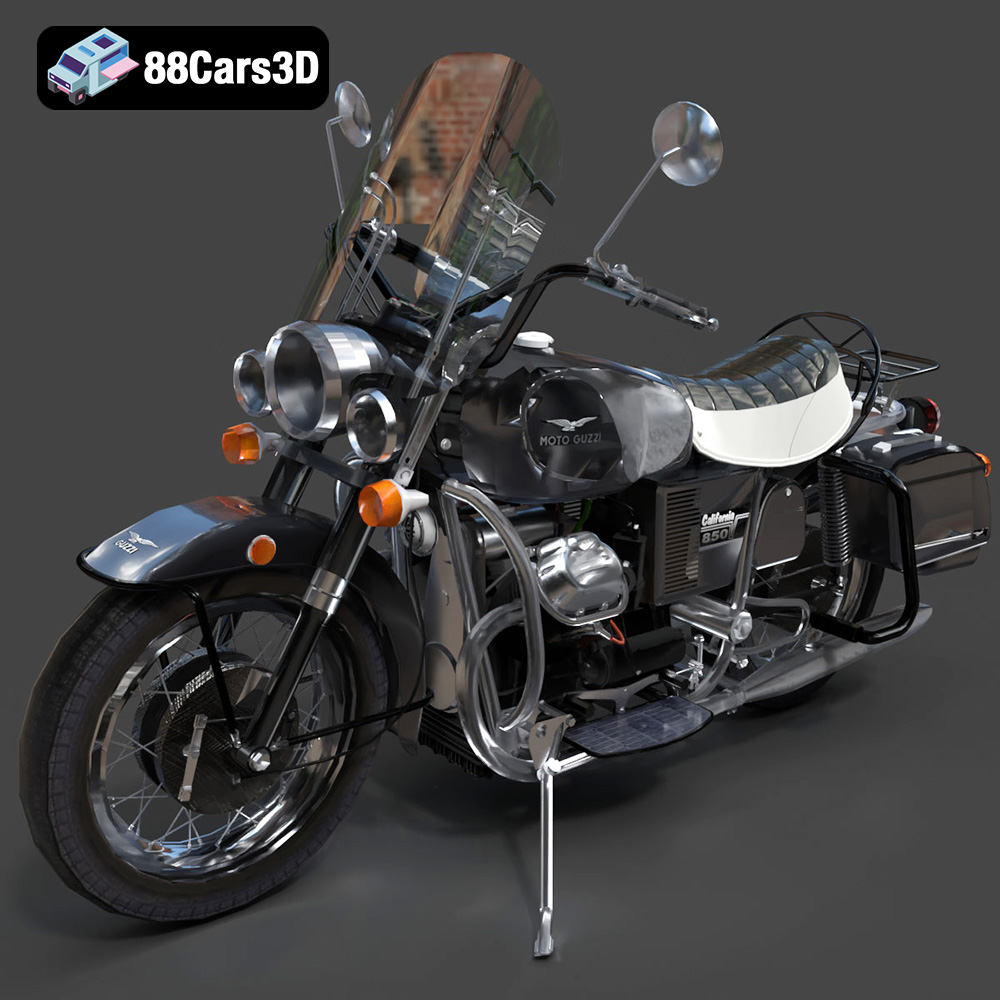
Texture: Yes
Material: Yes
Download the Moto Guzzi Classic Motorcycle 2024 3D Model featuring clean geometry, realistic detailing, and a fully modeled interior. Includes .blend, .fbx, .obj, .glb, .stl, .ply, .unreal, and .max formats for rendering, simulation, and game development.
Price: $10

Texture: Yes
Material: Yes
Download the Mercedes S-Class 2024 3D Model featuring clean geometry, realistic detailing, and a fully modeled interior. Includes .blend, .fbx, .obj, .glb, .stl, .ply, .unreal, and .max formats for rendering, simulation, and game development.
Price: $10

Texture: Yes
Material: Yes
Download the Chevrolet Camaro 1970 3D Model featuring clean geometry, realistic detailing, and a fully modeled interior. Includes .blend, .fbx, .obj, .glb, .stl, .ply, .unreal, and .max formats for rendering, simulation, and game development.
Price: $10

Texture: Yes
Material: Yes
Download the Mercedes-AMG GT 2015 3D Model featuring clean geometry, realistic detailing, and a fully modeled interior. Includes .blend, .fbx, .obj, .glb, .stl, .ply, .unreal, and .max formats for rendering, simulation, and game development.
Price: $88.99

Texture: Yes
Material: Yes
Download the Suzuki GSX-R 1000 3D Model featuring clean geometry, realistic detailing, and a fully modeled interior. Includes .blend, .fbx, .obj, .glb, .stl, .ply, .unreal, and .max formats for rendering, simulation, and game development.
Price: $10

Texture: Yes
Material: Yes
Download the Porsche Cayman S 2024 3D Model featuring clean geometry, realistic detailing, and a fully modeled interior. Includes .blend, .fbx, .obj, .glb, .stl, .ply, .unreal, and .max formats for rendering, simulation, and game development.
Price: $10

Texture: Yes
Material: Yes
Download the Holden Commodore Sportwagon 2017 3D Model featuring clean geometry, realistic detailing, and a fully modeled interior. Includes .blend, .fbx, .obj, .glb, .stl, .ply, .unreal, and .max formats for rendering, simulation, and game development.
Price: $10
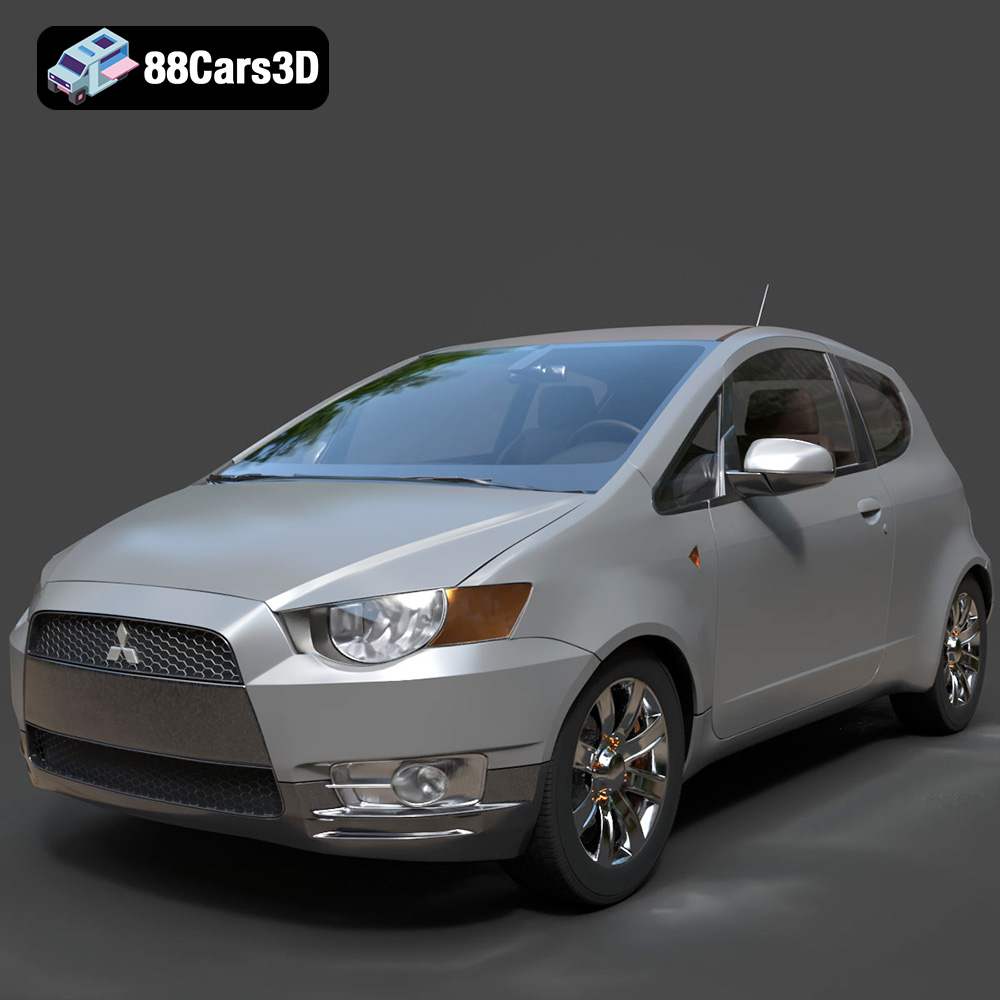
Texture: Yes
Material: Yes
Download the Mitsubishi Colt 3 Door 2008 3D Model featuring clean geometry, realistic detailing, and a fully modeled interior. Includes .blend, .fbx, .obj, .glb, .stl, .ply, .unreal, and .max formats for rendering, simulation, and game development.
Price: $10
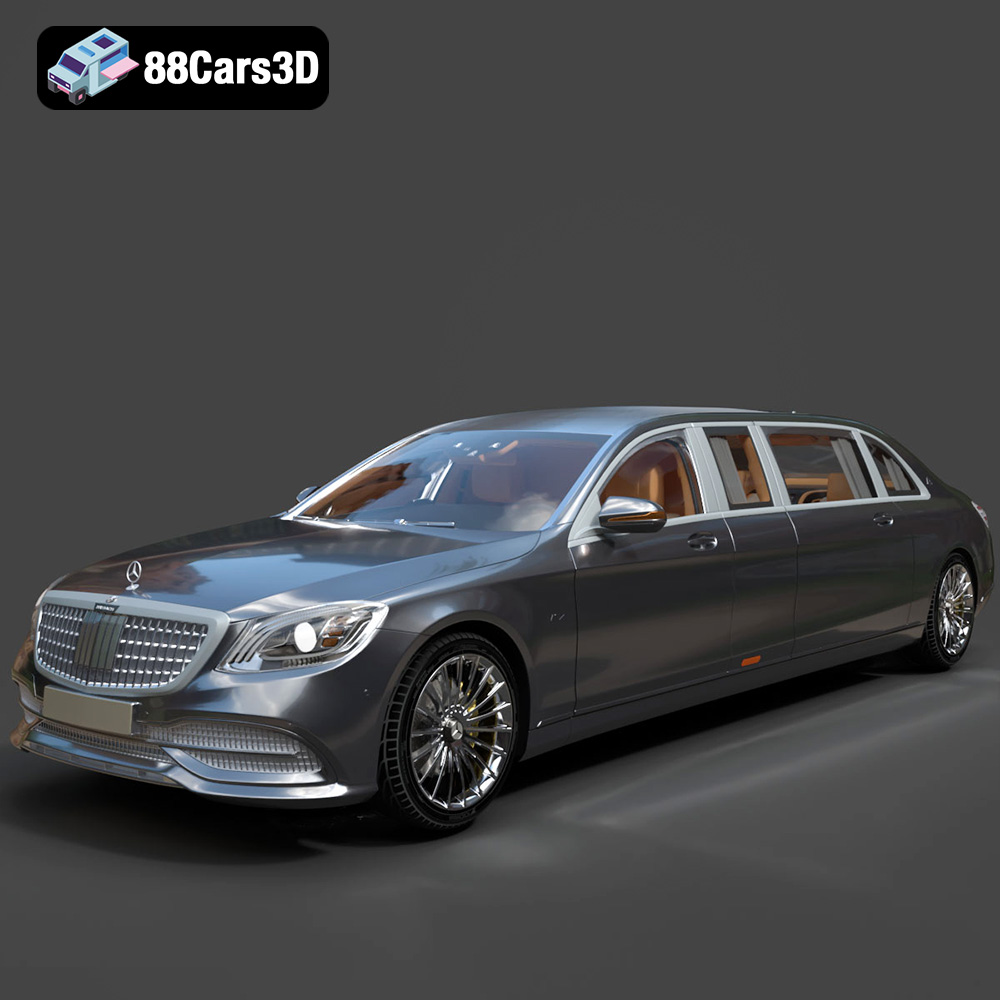
Texture: Yes
Material: Yes
Download the Mercedes-Benz S650 Pullman 3D Model featuring clean geometry, realistic detailing, and a fully modeled interior. Includes .blend, .fbx, .obj, .glb, .stl, .ply, .unreal, and .max formats for rendering, simulation, and game development.
Price: $95.99
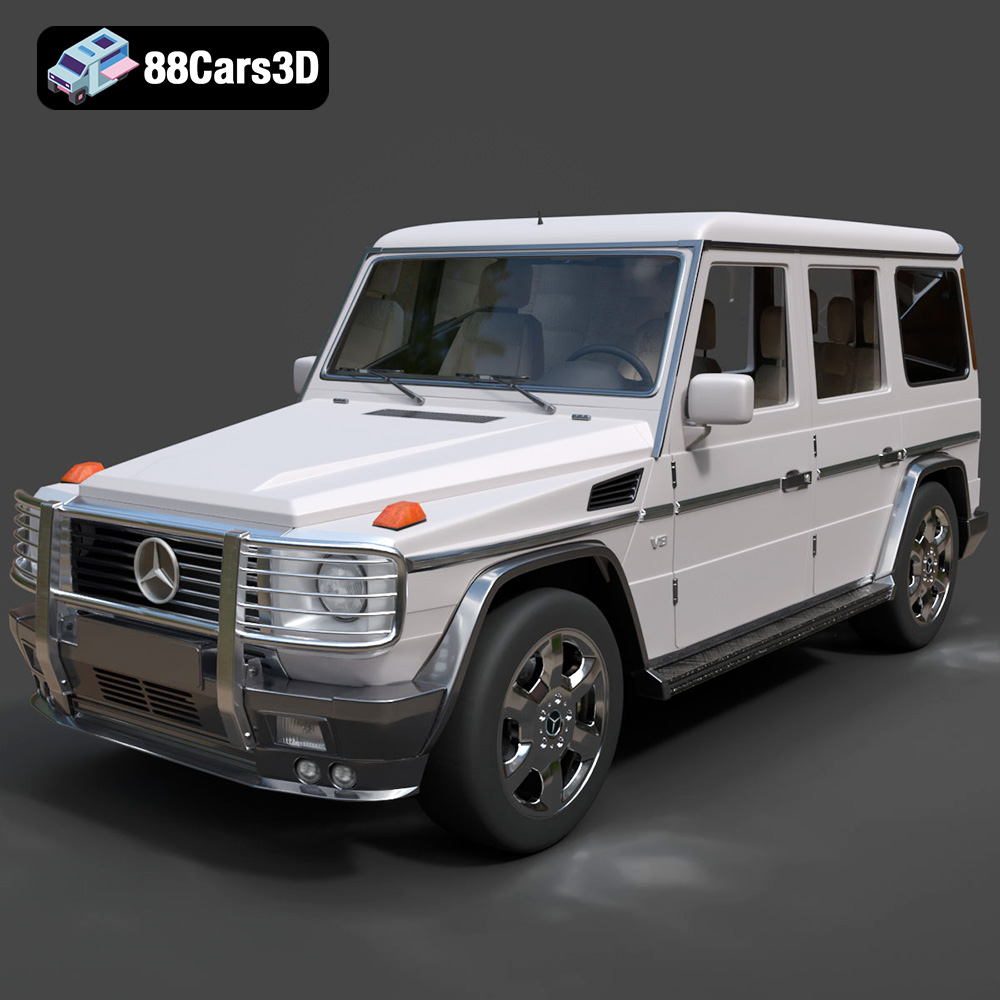
Texture: Yes
Material: Yes
Download the Mercedes G-Class SUV 2024 3D Model featuring clean geometry, realistic detailing, and a fully modeled interior. Includes .blend, .fbx, .obj, .glb, .stl, .ply, .unreal, and .max formats for rendering, simulation, and game development.
Price: $10

