Get 50% OFF All Premium 3D & STL Models!

“`html
The allure of crafting intricate car models through 3D printing is undeniable. It’s a fascinating intersection of digital design and physical creation, allowing enthusiasts and hobbyists to bring their dream cars to life with remarkable detail. This comprehensive guide delves into the technical aspects of 3D printing car models, covering everything from understanding STL files to optimizing printer settings and mastering post-processing techniques. Whether you’re a seasoned 3D printing veteran or just starting your journey, this article will provide the knowledge and insights needed to produce high-quality, eye-catching car replicas. We’ll explore best practices for FDM and resin printing, discuss essential slicing parameters, and address common challenges, equipping you with the tools to achieve professional-level results. Let’s embark on this exciting journey and transform digital blueprints into tangible automotive masterpieces!
The foundation of any successful 3D print lies in the quality of the STL (Stereolithography) file. This file format represents the surface geometry of a 3D object using a mesh of triangles. For car models, intricate details and smooth curves are crucial, demanding a well-optimized STL file to ensure accurate reproduction.
Mesh density directly impacts the smoothness and detail of your printed model. A higher mesh density (more triangles) results in a smoother surface but increases file size and processing time during slicing. For car models, focus on areas with curves (e.g., fenders, roofline) and fine details (e.g., grilles, emblems). A good starting point is to ensure that curved surfaces appear smooth when zoomed in on the digital model. Remember, excessively high mesh density can strain your 3D printer and slicer software without providing a noticeable improvement in print quality. Finding the right balance is key. Many CAD programs allow you to control the mesh export resolution, balancing detail with file size. A general guideline is to aim for a triangle size that’s approximately equal to your desired layer height. This will help minimize the “stair-stepping” effect on curved surfaces.
An STL file essentially contains a list of triangles, each defined by three vertices and a normal vector (indicating the outward-facing direction of the triangle). Problems can arise if the file contains errors such as non-manifold geometry (e.g., holes, overlapping triangles, inverted normals). These errors can lead to printing failures or unexpected results. Before printing, it’s crucial to inspect and repair STL files using software like Meshmixer, Netfabb, or the built-in repair tools in your slicer. These tools can automatically detect and fix common issues. Often, simply running the “make solid” or “close holes” function in Meshmixer can resolve many problems. Platforms like 88cars3d.com offer print-ready STL files which drastically reduces the amount of pre-processing needed.
Slicing is the process of converting your 3D model into a series of layers that the 3D printer can understand. The slicer software takes the STL file and generates G-code, the language of 3D printers, based on your chosen parameters. Understanding these parameters is critical for achieving the desired print quality.
Layer height is perhaps the most influential setting. Lower layer heights (e.g., 0.1mm or 0.05mm) produce smoother surfaces and finer details, ideal for intricate car models. However, they also increase print time significantly. Higher layer heights (e.g., 0.2mm or 0.3mm) are faster but result in more visible layer lines. Print speed also affects print quality; slower speeds generally improve detail and reduce the risk of errors, especially with complex geometries. A good starting point is a layer height of 0.15mm and a print speed of 40-60mm/s. Experiment with these values to find the optimal balance between speed and quality for your specific printer and material.
Infill refers to the internal structure of the 3D print. It provides strength and support while reducing material usage. Infill density is expressed as a percentage; higher percentages mean more internal material and greater strength. For car models, a moderate infill density (15-25%) is usually sufficient, especially if the model is primarily for display. The infill pattern also plays a role. Common patterns include grid, gyroid, and honeycomb. Gyroid infill offers excellent strength-to-weight ratio and is a good choice for parts that require structural integrity. For models with large flat surfaces, rectilinear infill can help prevent warping. For purely aesthetic models, a lighter infill like lightning or sparse infill can save significant print time and material.
Support structures are temporary scaffolding that supports overhanging features during printing. Without them, gravity would cause these features to collapse. Generating and removing supports effectively is crucial for achieving clean and accurate prints, especially for complex car models with intricate curves and overhangs.
Careful consideration must be given to support placement. Ideally, supports should be placed in locations that are easy to access for removal and that minimize the impact on visible surfaces. Slicer software offers various options for support generation, including automatic placement and manual editing. For car models, focus on supporting areas like the underside of the roof, wheel arches, and any protruding details. Increasing support density provides more robust support but makes removal more difficult. Conversely, lower density supports are easier to remove but may not provide adequate support for heavy overhangs. Experiment with support settings such as support angle, support distance, and support interface to optimize for your specific model and material. Consider using tree supports, which are more material-efficient and often easier to remove than traditional linear supports.
Removing supports cleanly without damaging the model requires patience and the right tools. Start by carefully breaking away the bulk of the support structure using pliers or cutters. For finer details, use a hobby knife or sandpaper to remove any remaining support material. The key is to work slowly and methodically, avoiding excessive force. The type of support material also affects removal. Some filaments, like HIPS (High Impact Polystyrene), can be dissolved in a solvent (D-Limonene), making support removal effortless. This is particularly useful for models with intricate internal supports. When downloading models from marketplaces such as 88cars3d.com, check if the models are pre-supported and optimized for easy support removal.
The choice of material significantly impacts the appearance, strength, and durability of your 3D printed car model. Different materials possess distinct properties that make them suitable for various applications.
For FDM (Fused Deposition Modeling) printing, the most common materials are PLA (Polylactic Acid), PETG (Polyethylene Terephthalate Glycol), and ABS (Acrylonitrile Butadiene Styrene). PLA is biodegradable, easy to print, and offers good surface finish, making it ideal for aesthetic models. However, it’s less heat-resistant and durable than other options. PETG is a stronger and more heat-resistant alternative to PLA, offering a good balance between printability and performance. ABS is known for its high strength and heat resistance, making it suitable for functional parts that may be exposed to higher temperatures. However, it’s more prone to warping and requires a heated bed and enclosure for optimal results. When choosing a filament, consider factors such as dimensional accuracy, color options, and ease of post-processing.
Resin printing (SLA/DLP) offers superior detail and surface finish compared to FDM printing, making it ideal for highly detailed car models. Resin printers use liquid photopolymer resin that is cured by a UV light source. Different types of resin are available, each with varying properties. Standard resin is suitable for general-purpose printing, while tough resin offers higher impact resistance. Flexible resin can be used to create flexible parts like tires or rubber components. Water-washable resin simplifies the cleaning process, eliminating the need for isopropyl alcohol (IPA). When working with resin, always wear gloves and eye protection, as the resin can be irritating to the skin and eyes. Ensure proper ventilation in your workspace.
Post-processing enhances the appearance and functionality of your 3D printed car model, transforming a raw print into a polished masterpiece. Common post-processing techniques include sanding, priming, painting, and assembly.
Sanding removes layer lines and imperfections, creating a smooth surface for painting. Start with coarse sandpaper (e.g., 220 grit) to remove major imperfections and gradually move to finer grits (e.g., 400, 600, 800 grit) to achieve a smooth finish. Wet sanding can help reduce dust and improve the smoothness of the surface. For resin prints, sanding is typically less necessary due to the finer layer resolution. After sanding, clean the model thoroughly to remove any dust or debris.
Priming provides a uniform surface for paint to adhere to, improving the paint’s durability and appearance. Apply several thin coats of primer, allowing each coat to dry completely before applying the next. After the primer has dried, lightly sand the surface with fine-grit sandpaper (e.g., 800 grit) to remove any imperfections. Painting can be done using spray paint or an airbrush. Spray paint is convenient for larger surfaces, while an airbrush allows for finer control and more detailed work. Apply several thin coats of paint, allowing each coat to dry completely before applying the next. Consider using automotive-grade paints and clear coats for a professional finish.
Many car models consist of multiple parts that need to be assembled after printing. Use glue or epoxy to bond the parts together. For small details like emblems, trim, and lights, consider using decals or photo-etched parts for added realism. Adding details such as window tint, mirrors, and license plates can further enhance the model’s appearance. For example, a thin layer of transparent blue paint on the inside of clear printed windows can simulate window tint. Chrome paint markers can be used to simulate shiny trim and accents.
3D printing, while rewarding, can present various challenges. Understanding and addressing common issues is crucial for achieving consistent results.
Warping occurs when the corners of the print lift off the print bed due to uneven cooling. Ensure the print bed is properly leveled and heated to the recommended temperature. Use a bed adhesion aid like glue stick, hairspray, or painter’s tape. Enclosing the printer can also help reduce warping by maintaining a consistent temperature. Layer separation occurs when layers fail to bond properly. Increase the printing temperature, reduce the print speed, and ensure proper cooling settings. Check that your filament is dry, as moisture can cause layer separation. Make sure the z-axis is properly calibrated, as incorrect z-axis height can lead to weak layer adhesion.
Stringing occurs when the printer extrudes filament while moving between different parts of the print. Increase retraction distance and speed, reduce the printing temperature, and enable travel move avoidance in your slicer settings. Blobs and zits are small imperfections on the surface of the print caused by inconsistent extrusion. Adjust the retraction settings, reduce the printing temperature, and ensure that the filament is feeding smoothly. Check for clogs in the nozzle and clean it if necessary. For resin printing, insufficient exposure time can cause surface defects. Increase the exposure time and ensure that the resin is properly mixed.
Mastering the art of 3D printing car models requires a combination of technical knowledge, attention to detail, and a willingness to experiment. By understanding STL file structure, optimizing slicing parameters, selecting the right materials, and mastering post-processing techniques, you can transform digital designs into stunning automotive replicas. This guide has provided a comprehensive overview of the key aspects of 3D printing car models, equipping you with the knowledge and tools to achieve professional-level results. Remember to always prioritize safety, experiment with different settings and materials, and continuously refine your techniques. Platforms like 88cars3d.com can be invaluable resources for finding high-quality STL files and inspiration for your next project. Now, armed with this knowledge, go forth and bring your dream cars to life!
“`
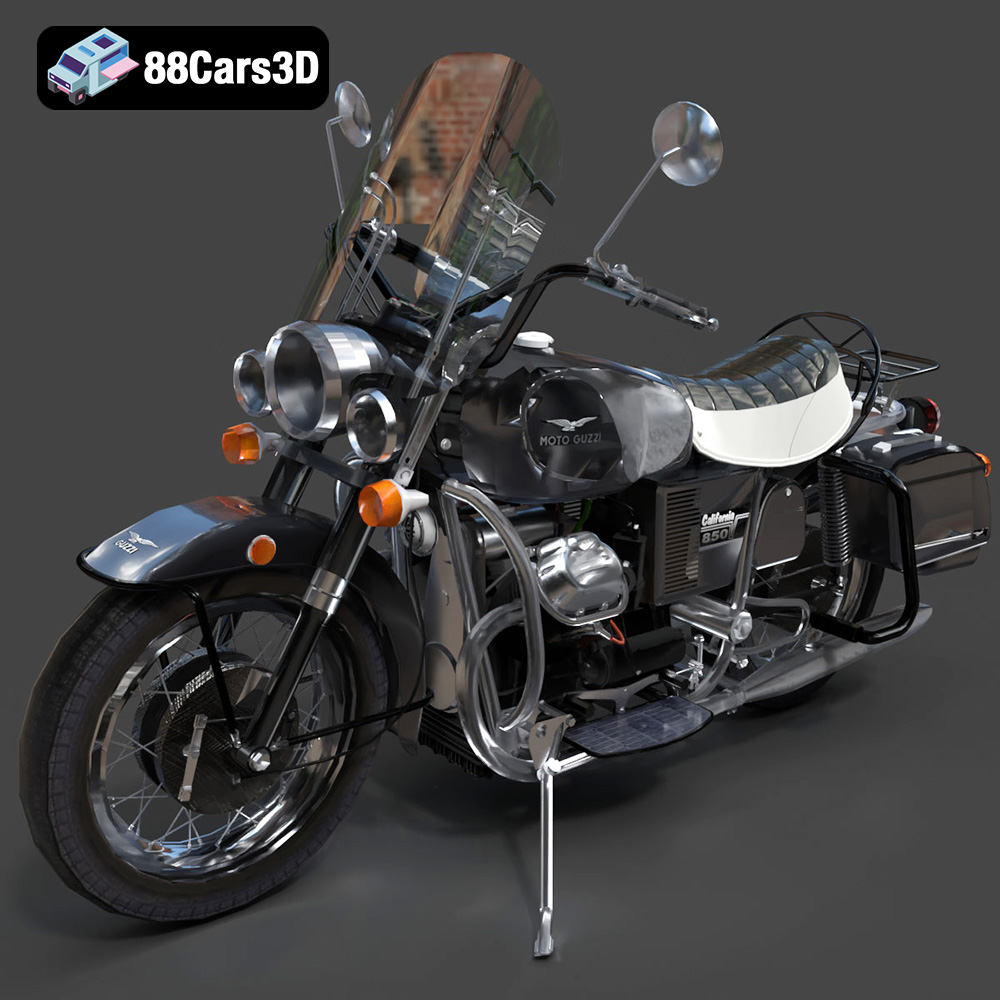
Texture: Yes
Material: Yes
Download the Moto Guzzi Classic Motorcycle 2024 3D Model featuring clean geometry, realistic detailing, and a fully modeled interior. Includes .blend, .fbx, .obj, .glb, .stl, .ply, .unreal, and .max formats for rendering, simulation, and game development.
Price: $10

Texture: Yes
Material: Yes
Download the Mercedes S-Class 2024 3D Model featuring clean geometry, realistic detailing, and a fully modeled interior. Includes .blend, .fbx, .obj, .glb, .stl, .ply, .unreal, and .max formats for rendering, simulation, and game development.
Price: $10

Texture: Yes
Material: Yes
Download the Chevrolet Camaro 1970 3D Model featuring clean geometry, realistic detailing, and a fully modeled interior. Includes .blend, .fbx, .obj, .glb, .stl, .ply, .unreal, and .max formats for rendering, simulation, and game development.
Price: $10

Texture: Yes
Material: Yes
Download the Mercedes-AMG GT 2015 3D Model featuring clean geometry, realistic detailing, and a fully modeled interior. Includes .blend, .fbx, .obj, .glb, .stl, .ply, .unreal, and .max formats for rendering, simulation, and game development.
Price: $88.99

Texture: Yes
Material: Yes
Download the Suzuki GSX-R 1000 3D Model featuring clean geometry, realistic detailing, and a fully modeled interior. Includes .blend, .fbx, .obj, .glb, .stl, .ply, .unreal, and .max formats for rendering, simulation, and game development.
Price: $10

Texture: Yes
Material: Yes
Download the Porsche Cayman S 2024 3D Model featuring clean geometry, realistic detailing, and a fully modeled interior. Includes .blend, .fbx, .obj, .glb, .stl, .ply, .unreal, and .max formats for rendering, simulation, and game development.
Price: $10

Texture: Yes
Material: Yes
Download the Holden Commodore Sportwagon 2017 3D Model featuring clean geometry, realistic detailing, and a fully modeled interior. Includes .blend, .fbx, .obj, .glb, .stl, .ply, .unreal, and .max formats for rendering, simulation, and game development.
Price: $10

Texture: Yes
Material: Yes
Download the Mitsubishi Colt 3 Door 2008 3D Model featuring clean geometry, realistic detailing, and a fully modeled interior. Includes .blend, .fbx, .obj, .glb, .stl, .ply, .unreal, and .max formats for rendering, simulation, and game development.
Price: $10

Texture: Yes
Material: Yes
Download the Mercedes-Benz S650 Pullman 3D Model featuring clean geometry, realistic detailing, and a fully modeled interior. Includes .blend, .fbx, .obj, .glb, .stl, .ply, .unreal, and .max formats for rendering, simulation, and game development.
Price: $95.99

Texture: Yes
Material: Yes
Download the Mercedes G-Class SUV 2024 3D Model featuring clean geometry, realistic detailing, and a fully modeled interior. Includes .blend, .fbx, .obj, .glb, .stl, .ply, .unreal, and .max formats for rendering, simulation, and game development.
Price: $10

