Get 50% OFF All Premium 3D & STL Models!

“`html
Modern video games, from sprawling open-world RPGs to fast-paced action titles, are defined by the depth and responsiveness of their combat and interaction systems. Players expect complex mechanics like ability cooldowns, status effects, intricate combos, and resource management. Building these systems from scratch is a monumental task, often leading to tightly-coupled, hard-to-maintain code that stifles creativity and iteration. This is where Unreal Engine’s Gameplay Ability System (GAS) comes in. GAS is a powerful, flexible, and data-driven framework designed specifically to handle the complex interactions between characters and the game world. It’s the same system Epic Games uses for blockbuster titles like Fortnite and the Lyra Starter Game, providing a production-proven foundation for any project.
In this comprehensive technical guide, we will dissect the core components of the Gameplay Ability System. We’ll move beyond theory and into practical application, covering everything from the initial C++ and Blueprint setup to crafting a complete melee attack with costs, cooldowns, and status effects. You will learn how to manage character attributes like health and mana, apply buffs and debuffs, and leverage gameplay tags for sophisticated state management. By the end of this article, you will have a solid understanding of how to architect scalable, maintainable, and dynamic combat mechanics using GAS, empowering you to build the complex gameplay experiences you envision.
Before diving into implementation, it’s crucial to understand the fundamental building blocks of the Gameplay Ability System. GAS is not a single object but a collection of interacting classes that, when combined, create a robust framework for gameplay logic. Its design philosophy emphasizes data-driven development, allowing designers to tweak, balance, and create new abilities without ever needing to modify the underlying code. At its heart, the system is composed of four primary concepts that work in concert.
The AbilitySystemComponent, or ASC, is the central nervous system for any actor using GAS. It’s a component that you add to your characters, enemies, or even interactive objects. The ASC is responsible for owning and managing almost everything related to GAS for that actor. It holds references to all the abilities the actor knows, actively tracks all applied GameplayEffects (like buffs, debuffs, or damage-over-time), and is the container for the actor’s AttributeSet. When one actor wants to affect another—for instance, dealing damage—it will find the target’s ASC and apply a GameplayEffect to it. Essentially, any interaction with an actor’s abilities or stats goes through its ASC.
A GameplayAbility represents a single action an actor can perform. This could be anything from a sword swing, casting a fireball, drinking a potion, sprinting, or even a passive ability like health regeneration. Each ability is its own self-contained object, encapsulating its entire lifecycle:
GameplayEffects.GameplayEffects.This modular design is incredibly powerful. You can create a base `GA_MeleeAttack` class and then create dozens of child Blueprints for different weapon types, each with unique animations and effects, all while sharing the same core logic.
While `GameplayAbilities` define the “what,” GameplayEffects (GE) and GameplayAttributes define the “how” and the “consequences.”
GameplayAttributeSet: This is a simple C++ struct that contains all the numerical properties of an actor, such as Health, MaxHealth, Stamina, AttackPower, and Defense. You define these as FGameplayAttributeData properties. The ASC manages this set, ensuring the values are properly replicated for multiplayer.GameplayEffect: A GE is a data asset that modifies attributes. It’s the payload of an ability. For example, a “Damage” GE would contain a modifier that subtracts from the `Health` attribute. A “Strength Buff” GE would add to the `AttackPower` attribute for a set duration. GEs come in three main flavors: Instant (applied immediately, like damage), Duration (applied for a limited time, like a buff), and Infinite (applied until explicitly removed, like a poison that needs a cure).This separation is key to a data-driven workflow. A game designer can easily create a new “Greater Healing Potion” by duplicating the standard healing GE and simply changing the magnitude of the `Health` modifier, without any programmer intervention.
The Gameplay Ability System is a powerful engine plugin, but it requires some initial setup before you can start creating abilities. Unlike some other systems, GAS relies heavily on a C++ foundation, even if you plan to do most of your implementation in Blueprints. This is primarily because core classes like `GameplayAttributeSet` cannot be created in Blueprints and must be defined in C++ code.
Your first step is to enable the plugin itself.
Next, you’ll need to ensure your project is a C++ project. If you started with a Blueprint-only project, you can easily add a C++ class via Tools > New C++ Class to generate the necessary project files. Once C++ is enabled, you need to add the GAS module to your project’s dependency list. Open your `[ProjectName].Build.cs` file (found in the `Source/[ProjectName]` directory) and add “GameplayAbilities”, “GameplayTags”, and “GameplayTasks” to your `PublicDependencyModuleNames` array. This ensures the engine compiles and links the necessary code for GAS to function.
With the project configured, you must equip your character class with the core components. You will need a character class that inherits from `ACharacter` and implements the `IAbilitySystemInterface`. In your character’s header file (`.h`), you will declare pointers for your `UAbilitySystemComponent` and your custom `UGameplayAttributeSet`.
UPROPERTY(VisibleAnywhere, BlueprintReadOnly, Category = "Abilities")
class UMyAbilitySystemComponent* AbilitySystemComponent;

UPROPERTY()
class UMyAttributeSet* Attributes;
In the character’s constructor (`.cpp` file), you will create these components. The ASC is typically created as a standard component, while the Attribute Set is created as a subobject of the ASC. Crucially, your character class must also override the `GetAbilitySystemComponent()` function from the `IAbilitySystemInterface` to return your ASC. This is how other parts of the engine and GAS itself will find the component on your actor.
Once your character possesses an ASC, you need to give it abilities and initialize its attributes. This is often done in the `BeginPlay` or `PossessedBy` functions. To grant an ability, you call `AbilitySystemComponent->GiveAbility()`, passing in a `FGameplayAbilitySpec`. This spec contains the ability’s class (the `TSubclassOf
With the foundational setup complete, we can now build a practical and common combat mechanic: a standard melee attack. This example will tie together the `GameplayAbility`, `GameplayEffect`, and `GameplayTask` concepts into a tangible workflow. We’ll create an ability that plays an animation, detects a hit, and applies damage to a target.
First, create a new Blueprint class and select `GameplayAbility` as the parent class. Name it something descriptive, like `GA_MeleeAttack_Standard`. Open the Blueprint and navigate to the Class Defaults. Here you will configure the ability’s core properties:
This data-driven setup allows you to create many variations of melee attacks by simply duplicating this Blueprint and adjusting these properties.
The true power of a `GameplayAbility` lies in its use of asynchronous `GameplayTasks`. These nodes allow the ability to perform actions that take time—like playing an animation or waiting for an event—without halting the game thread. For our melee attack, the activation logic would look like this:
This node-based flow creates a clear, state-driven execution path that is easy to debug and modify.
Once the hit event is received, we need to apply damage. First, create a new Blueprint class with `GameplayEffect` as the parent, named something like `GE_Damage_Melee`. In its Class Defaults, configure the following:
–Modifiers: Add a new modifier. Select the `Health` attribute from your `AttributeSet` and set the `Modifier Op` to Add. For the magnitude, enter a negative value (e.g., -10) to subtract from the health.
Back in our `GA_MeleeAttack_Standard` ability, after the hit is detected, we perform a trace (e.g., a sphere trace) to find the target actor. If a valid target with an `AbilitySystemComponent` is found, we use the `Apply Gameplay Effect to Target` node. We pass in the target’s ASC and select our `GE_Damage_Melee` class. The system handles the rest: it applies the effect, the target’s `Health` attribute is reduced, and any linked logic (like updating a health bar or triggering a death event) can react accordingly.
A compelling combat system is about more than just dealing damage. It involves status effects, resource management, and complex interactions between different abilities. GAS provides a robust and intuitive framework for building these advanced mechanics, primarily through the versatile nature of `GameplayEffects` and the organizational power of `GameplayTags`.
Status effects like poisons, stuns, or defensive buffs are created using `GameplayEffects` with a Duration policy.
These effects are applied just like damage, typically from within a `GameplayAbility` targeting another actor or the caster themself.
GAS has a built-in, elegant system for handling ability costs and cooldowns, which are themselves implemented using `GameplayEffects`.
Building these foundational gameplay elements is where developers can truly shine, especially when working with high-quality game assets. For instance, platforms like 88cars3d.com offer meticulously crafted models that provide a strong visual base, freeing up developers to focus their efforts on perfecting these intricate combat mechanics.
`GameplayTags` are the connective tissue of a sophisticated GAS implementation. They are hierarchical names (e.g., `Status.Debuff.Stunned`) used to describe and query the state of an actor. Their uses are vast:
Mastering the use of `GameplayTags` is essential for moving from simple mechanics to a truly dynamic and interactive combat system where abilities and status effects can influence one another in complex ways.
Creating a few abilities is one thing; building a system that can support hundreds of skills, items, and character classes while maintaining performance is another. The data-driven nature of GAS is a major asset here, but proper architecture and an awareness of performance best practices are critical for long-term success, especially in projects with demanding real-time rendering requirements.
Hard-coding values like damage numbers, cooldown durations, or ability costs directly into `GameplayAbility` or `GameplayEffect` Blueprints can quickly become a management nightmare. The professional approach is to externalize this data into Data Tables. You can create a custom C++ or Blueprint `Struct` that holds all the balanceable variables for an ability (e.g., `CooldownDuration`, `ManaCost`, `DamageMagnitude`). Then, you create a Data Table based on this struct. Inside your `GameplayAbility`, instead of using a fixed value, you retrieve the appropriate row from the Data Table at activation time. This decouples game balance from game logic, allowing designers to tweak the entire game’s feel from a single set of spreadsheets without ever touching a Blueprint graph. The same principle applies to attribute initialization, effect scaling, and more.
One of the greatest strengths of the Gameplay Ability System is that it was designed from the ground up for multiplayer environments. It features built-in support for client-side prediction, server-side authority, and property replication.
While networking with GAS is a deep topic, much of the base functionality works out of the box, handling the complex replication of attributes and effects for you.
While GAS is highly optimized, it’s not without potential performance costs. Be mindful of:
To diagnose issues, Unreal Engine provides powerful built-in debugging tools. You can use the console command `showdebug abilitysystem` to see an on-screen display of an actor’s currently owned abilities, active effects, and all of their attribute values in real-time. This is invaluable for understanding why an ability might be failing or why an attribute value is not what you expect. For more detailed guidance on specific features, the official Unreal Engine documentation at https://dev.epicgames.com/community/unreal-engine/learning is an essential resource for any developer working with these complex systems.
The Unreal Engine Gameplay Ability System is an immensely powerful, scalable, and production-ready framework for creating advanced combat and gameplay mechanics. By breaking down complex actions into modular `GameplayAbilities`, `GameplayEffects`, and `Attributes`, it fosters a data-driven workflow that empowers both programmers and designers. We’ve journeyed from the foundational C++ setup to building a complete melee attack, exploring how to manage resources, apply status effects, and organize interactions with `GameplayTags`. We’ve also touched on the critical aspects of scalability with Data Tables and the system’s built-in networking capabilities.
The learning curve for GAS can be steep, but the payoff is a clean, maintainable, and incredibly flexible system that can support any genre of game. Your next steps should be to start small. Implement a single ability, then a single status effect. Explore the Lyra Starter Game project provided by Epic Games, as it serves as a masterclass in modern GAS architecture. By combining a robust backend system like GAS with high-fidelity game assets, perhaps sourced from professional marketplaces such as 88cars3d.com, you establish a powerful pipeline for development. This allows you to focus on what matters most: crafting the engaging, dynamic, and memorable gameplay experiences that will captivate your players.
“`

Texture: Yes
Material: Yes
Download the Moto Guzzi Classic Motorcycle 2024 3D Model featuring clean geometry, realistic detailing, and a fully modeled interior. Includes .blend, .fbx, .obj, .glb, .stl, .ply, .unreal, and .max formats for rendering, simulation, and game development.
Price: $10

Texture: Yes
Material: Yes
Download the Mercedes S-Class 2024 3D Model featuring clean geometry, realistic detailing, and a fully modeled interior. Includes .blend, .fbx, .obj, .glb, .stl, .ply, .unreal, and .max formats for rendering, simulation, and game development.
Price: $10
Texture: Yes
Material: Yes
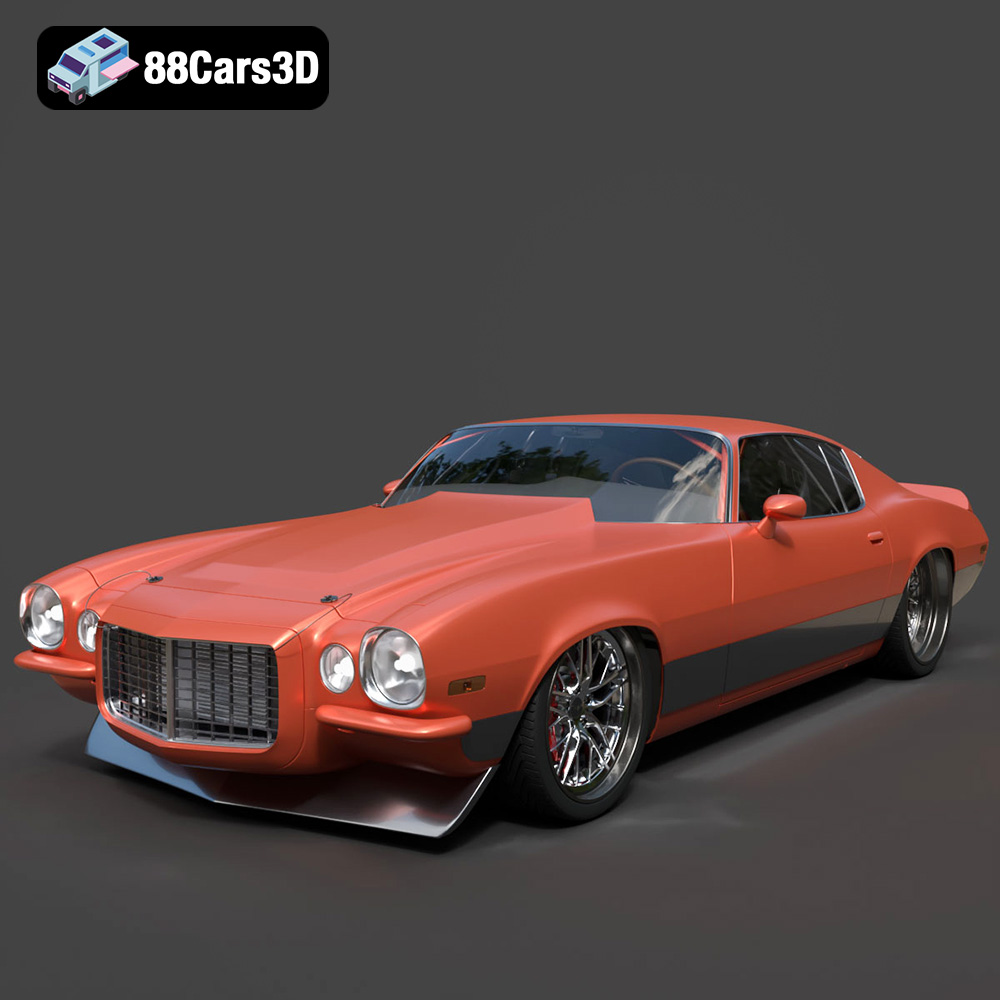
Download the Chevrolet Camaro 1970 3D Model featuring clean geometry, realistic detailing, and a fully modeled interior. Includes .blend, .fbx, .obj, .glb, .stl, .ply, .unreal, and .max formats for rendering, simulation, and game development.
Price: $10

Texture: Yes
Material: Yes
Download the Mercedes-AMG GT 2015 3D Model featuring clean geometry, realistic detailing, and a fully modeled interior. Includes .blend, .fbx, .obj, .glb, .stl, .ply, .unreal, and .max formats for rendering, simulation, and game development.
Price: $88.99
Texture: Yes
Material: Yes
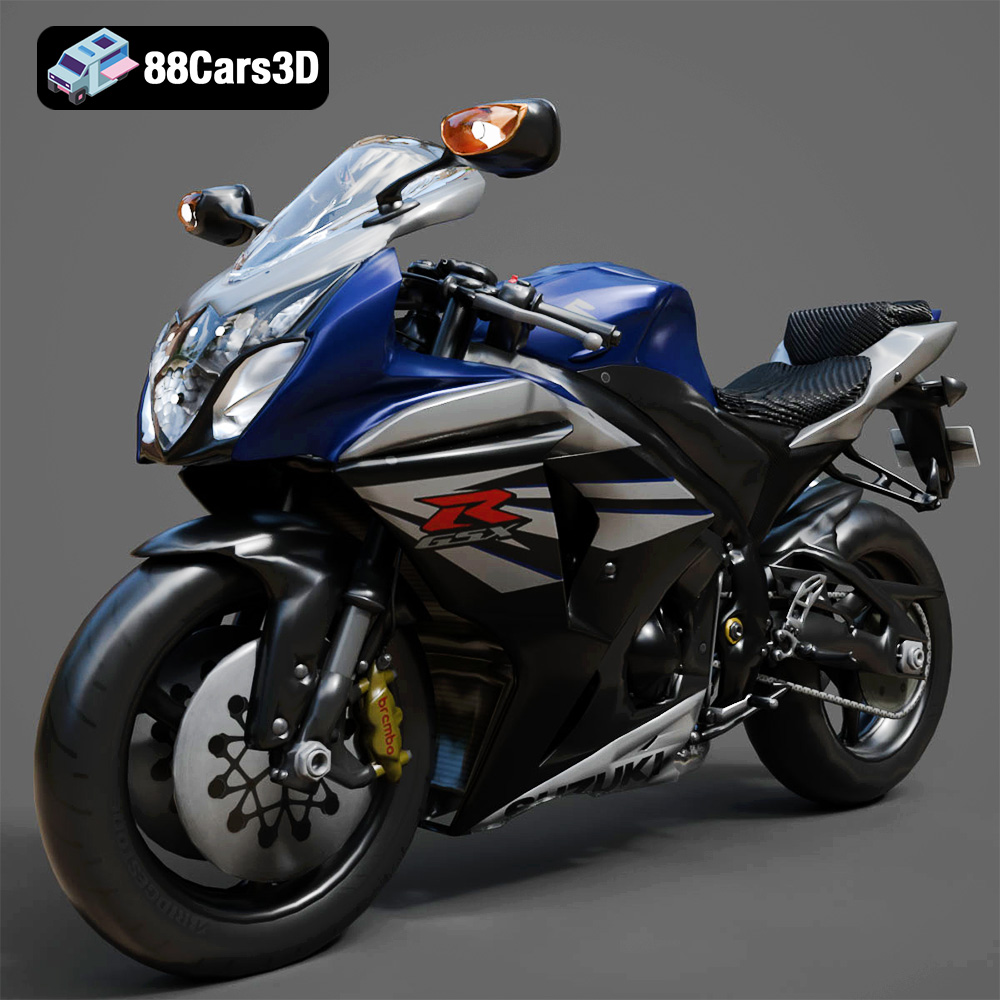
Download the Suzuki GSX-R 1000 3D Model featuring clean geometry, realistic detailing, and a fully modeled interior. Includes .blend, .fbx, .obj, .glb, .stl, .ply, .unreal, and .max formats for rendering, simulation, and game development.
Price: $10

Texture: Yes
Material: Yes
Download the Porsche Cayman S 2024 3D Model featuring clean geometry, realistic detailing, and a fully modeled interior. Includes .blend, .fbx, .obj, .glb, .stl, .ply, .unreal, and .max formats for rendering, simulation, and game development.
Price: $10

Texture: Yes
Material: Yes
Download the Holden Commodore Sportwagon 2017 3D Model featuring clean geometry, realistic detailing, and a fully modeled interior. Includes .blend, .fbx, .obj, .glb, .stl, .ply, .unreal, and .max formats for rendering, simulation, and game development.
Price: $10

Texture: Yes
Material: Yes
Download the Mitsubishi Colt 3 Door 2008 3D Model featuring clean geometry, realistic detailing, and a fully modeled interior. Includes .blend, .fbx, .obj, .glb, .stl, .ply, .unreal, and .max formats for rendering, simulation, and game development.
Price: $10

Texture: Yes
Material: Yes
Download the Mercedes-Benz S650 Pullman 3D Model featuring clean geometry, realistic detailing, and a fully modeled interior. Includes .blend, .fbx, .obj, .glb, .stl, .ply, .unreal, and .max formats for rendering, simulation, and game development.
Price: $95.99
Texture: Yes
Material: Yes
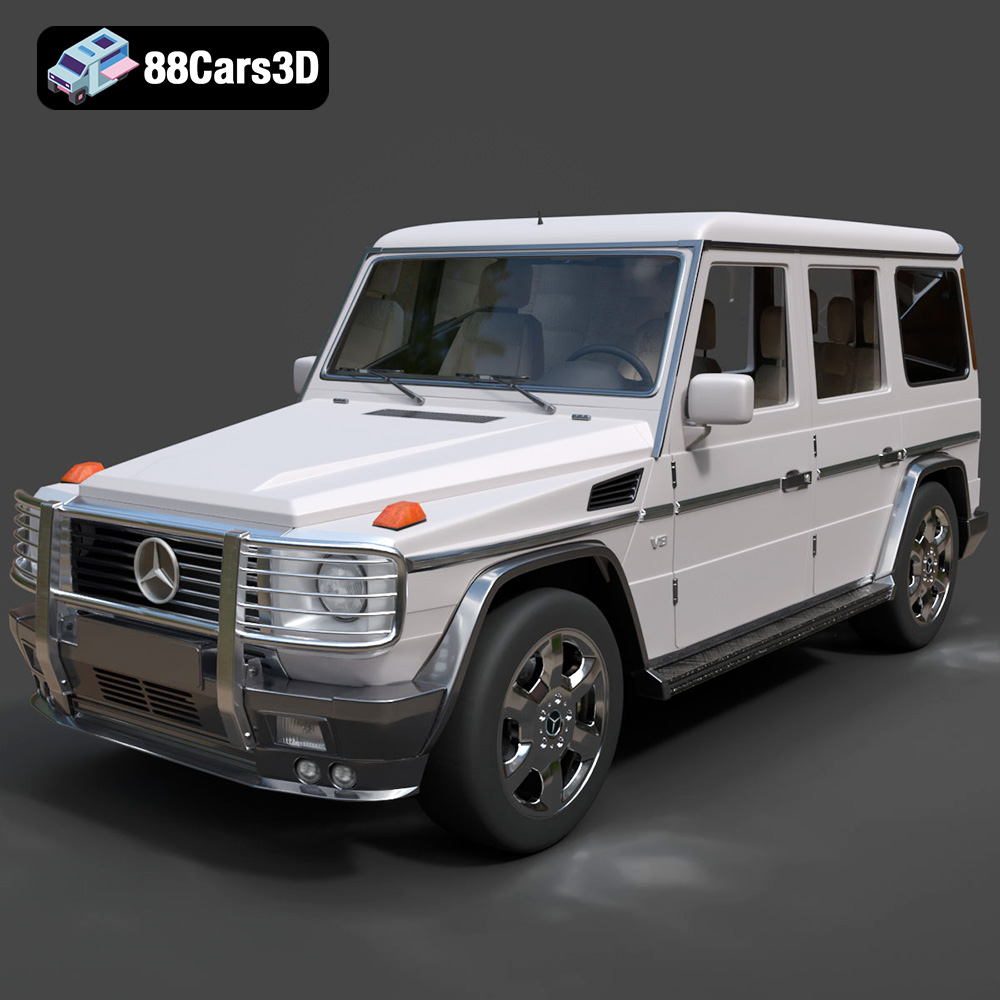
Download the Mercedes G-Class SUV 2024 3D Model featuring clean geometry, realistic detailing, and a fully modeled interior. Includes .blend, .fbx, .obj, .glb, .stl, .ply, .unreal, and .max formats for rendering, simulation, and game development.
Price: $10

