Get 50% OFF All Premium 3D & STL Models!

In the world of high-fidelity automotive visualization, the star of the show is undoubtedly the vehicle. Every curve, every reflection, and every material is meticulously crafted to perfection. But a masterpiece is incomplete without the right canvas. Creating a vast, believable, and performant environment to showcase a 3D car model can be a monumental task, often consuming more time and resources than modeling the vehicle itself. Manual placement of every tree, rock, and guardrail is not only tedious but also creatively restrictive. This is where Unreal Engine’s Procedural Content Generation (PCG) framework changes the game. PCG is not just a tool for scattering foliage; it’s a powerful, node-based logic system that allows you to design and generate complex, rule-driven environments with unparalleled speed and control. This article will serve as your comprehensive guide to leveraging the PCG framework for creating stunning, dynamic worlds for your automotive projects, from realistic forest roads to sprawling urban backdrops, all while maintaining optimal real-time performance.
The traditional approach to environment creation involves artists manually placing individual assets, a process known as “set dressing.” While this offers precise control, it struggles with scale and iteration. If a client wants to change the layout of a road or the density of a forest, it can mean days of rework. The Procedural Content Generation framework in Unreal Engine fundamentally shifts this paradigm from manual placement to rule-based design, offering transformative benefits for automotive visualization and real-time rendering projects.
PCG liberates artists from the monotonous task of placing thousands of objects. Instead of painting individual trees, you define the rules for a forest: its density, the species of trees present, the size of clearings, and how it interacts with other elements like roads and rivers. This elevates the artist’s role from a digital laborer to a true art director. You are no longer just placing assets; you are composing an ecosystem. This shift allows for more focus on the bigger picture—lighting, mood, and composition—ensuring the environment perfectly complements the hero 3D car model at the center of the scene.
Imagine creating a 10-kilometer stretch of scenic coastal highway for a driving simulation or promotional video. Manually populating this would be a herculean effort. With PCG, this scale becomes manageable. You design a single graph that defines the roadside ecosystem—guardrails, light posts, foliage, and rocky outcrops—and the PCG system populates the entire length of the road based on your rules. Need to change the guardrail style or increase the tree density? You simply change a node in the graph, and the entire 10-kilometer scene updates in seconds. This rapid iteration is invaluable in a professional pipeline where client feedback and design changes are constant.
At its core, PCG is a system for processing spatial data. It can read data from the world, such as landscape curvature, height, and material layers, and use that information to drive the generation logic. For example, you can create a rule that places lush vegetation only in valleys where water would naturally collect, while scattering sparse, hardy plants on steep, rocky slopes. This data-driven approach results in environments that are not only visually complex but also logically and ecologically coherent, adding a powerful layer of realism to your automotive visualization projects.
Diving into a new framework can seem daunting, but Unreal Engine’s PCG is designed to be accessible. The foundational concepts are straightforward, revolving around a PCG Graph asset that lives inside a PCG Volume placed in your level. Let’s walk through the initial setup and the core components you’ll be working with.
Before you can begin, the Procedural Content Generation Framework plugin must be enabled.
Once enabled, you’re ready to create your first PCG setup. From the Place Actors panel, search for and drag a PCG Volume into your scene. This volume defines the area where your procedural logic will execute. In the Details panel of the PCG Volume, you’ll see a field for a PCG Graph. Click the “Create” button to generate a new graph asset, which is the brain of the operation.
Double-clicking the PCG Graph asset opens the PCG Graph Editor, a node-based interface similar to the Material Editor or Blueprints. Here, you’ll connect nodes to define a flow of spatial data. The core components are:
A simple “Hello World” graph might look like this: Landscape Data (from Input) -> Surface Sampler -> Static Mesh Spawner. This reads the landscape shape, generates random points on its surface, and then spawns a mesh at each point.
To start, familiarize yourself with a few essential nodes that form the building blocks of most PCG graphs:
Experimenting with these foundational nodes is the best way to understand the core logic of data flowing through a PCG graph.
For any automotive scene, the road is a central element. PCG excels at integrating procedural environments with defined features like roads, ensuring a seamless and believable blend. The key is to treat the road not as an obstacle, but as another source of data to inform your generation logic.
Landscape Splines are a perfect tool for defining the path of a road. Once you’ve laid out a spline in your level, you can have your PCG graph read its data.
With the spline data, you can use a Spline Sampler node to generate points along its length. This is perfect for placing repeating elements like streetlights, guardrail posts, or road markers with precise spacing.
You don’t want trees and rocks spawning in the middle of your road. PCG handles this with set operations, most commonly the Difference node. The workflow is as follows:
This elegantly carves the road’s path out of your procedural foliage, creating a clean and natural-looking boundary. You can even create falloff effects by using multiple, successively larger exclusion zones with different density filters.
Once your foundational elements like roads are in place, the real magic of PCG begins: populating the world with rich, varied, and performant assets. This is where you move beyond simple randomization and start creating intelligent, rule-based ecosystems that react to their surroundings.
A uniform scattering of assets looks artificial. Real-world environments have clusters, clearings, and variations in density. You can replicate this using several techniques:
By chaining these nodes, you can create highly specific rules. For example, you could spawn large trees in areas with high density noise, then use the remaining lower-density points to spawn smaller bushes and ground cover, creating a layered and believable biome.
A single PCG graph can generate multiple distinct biomes. You can split your graph into logical sections using Point Filters or by sampling different landscape material layers. For instance, you could use a Get Landscape Data node to sample the physical material assigned to your landscape layers. Then, use a Point Filter to isolate points that fall on the “forest floor” layer and send them to your tree-spawning logic, while points on the “rocky cliff” layer are sent to a separate logic branch that spawns hardy shrubs and scree meshes. This allows one PCG Volume to manage a complex environment with multiple interacting ecosystems.
The quality of your procedural environment is only as good as the assets you use. For a premium automotive visualization, the environment must match the fidelity of the vehicle. Sourcing game-ready, optimized assets is crucial. Marketplaces such as 88cars3d.com provide hero assets like vehicles that serve as the focal point, and your PCG-generated world must provide a worthy backdrop. Ensure your trees, rocks, and architectural elements have clean topology, high-resolution PBR materials, and appropriate Level of Detail (LOD) meshes. PCG seamlessly integrates with these features, automatically using the correct LODs and leveraging technologies like **Nanite** for incredible geometric detail without compromising performance.
Generating millions of instances is one thing; rendering them in real-time is another. Fortunately, PCG is built from the ground up with performance in mind and integrates directly with Unreal Engine’s most powerful optimization features. A high-poly 3D car model deserves a fluid, high-framerate experience, and a well-optimized PCG environment makes that possible.
PCG’s spawner nodes are highly optimized. By default, the Static Mesh Spawner uses Hierarchical Instanced Static Meshes (HISM). This is a rendering technique that batches all instances of the same mesh into a single draw call, drastically reducing CPU overhead. For assets that support it, PCG can leverage **Nanite**. When spawning Nanite-enabled meshes (like trees or rocks), you can achieve unprecedented geometric detail with virtually no performance cost related to poly count. A key setting in the Static Mesh Spawner is the “Instance Packing” option, which can further optimize how instances are grouped for efficient culling and rendering.
Even with Nanite and HISMs, you shouldn’t spawn more than you need. Managing point count is the most fundamental optimization strategy.
For more information on the intricate details of PCG and other Unreal Engine systems, the official Unreal Engine learning documentation is an excellent resource for developers of all skill levels.
PCG’s capabilities extend into the realm of dynamic and interactive experiences, which is perfect for creating applications like real-time automotive configurators or interactive demos. By exposing PCG parameters to **Blueprint**, you can modify your procedural world at runtime.
Within your PCG Graph, you can promote almost any variable on a node to a graph parameter. For instance, on a Surface Sampler node, you can right-click the “Points Per Squared Meter” value and select “Make public parameter.” This creates a variable that can be accessed and modified from outside the graph. In the Details panel of your PCG Volume in the level, you will now see this parameter listed under “PCG > Graph Parameters.” You can adjust it there for quick iteration, or more powerfully, control it via Blueprint.
Imagine creating an automotive configurator where the user can change the season. You could create two separate static mesh spawners: one for green summer trees and one for snow-covered winter trees. You could then use a Blueprint to get a reference to the PCG Component, call the “Set Property Override” function, and change a “WinterAmount” parameter you’ve exposed. In the PCG graph, a Point Filter could use this parameter to direct points to either the summer or winter spawner. When the user clicks a UI button, the Blueprint updates the parameter, tells the PCG component to “Generate,” and the entire forest instantly swaps its assets to match the selected season, providing a powerful interactive experience.
Unreal Engine’s Procedural Content Generation framework is a profound evolution in environment creation. For professionals in automotive visualization, it represents a leap forward in efficiency, scalability, and creative freedom. By shifting your mindset from manual placement to rule-based design, you can construct vast, detailed, and highly realistic worlds that serve as the perfect stage for your 3D car models. We’ve explored the entire workflow: from the initial project setup and understanding core nodes to advanced techniques like spline-based generation, biome layering, and real-time parameter control with Blueprints. We’ve also emphasized the critical importance of performance, highlighting how PCG’s smart integration with Nanite and instancing allows for immense visual fidelity without sacrificing real-time capability.
The true power of PCG is unlocked through experimentation. Start with a simple project. Take a high-quality vehicle model, perhaps from a specialized source like 88cars3d.com, place it in an empty level, and begin building a world around it. Define a simple road, scatter a single type of tree, and then slowly layer in complexity. Use noise to break up uniformity, use filters to add logic, and see how the environment comes alive. The ability to regenerate an entire landscape with the click of a button is not just a time-saver; it’s a creative catalyst that will empower you to build the breathtaking automotive experiences you’ve always envisioned.
Texture: Yes
Material: Yes
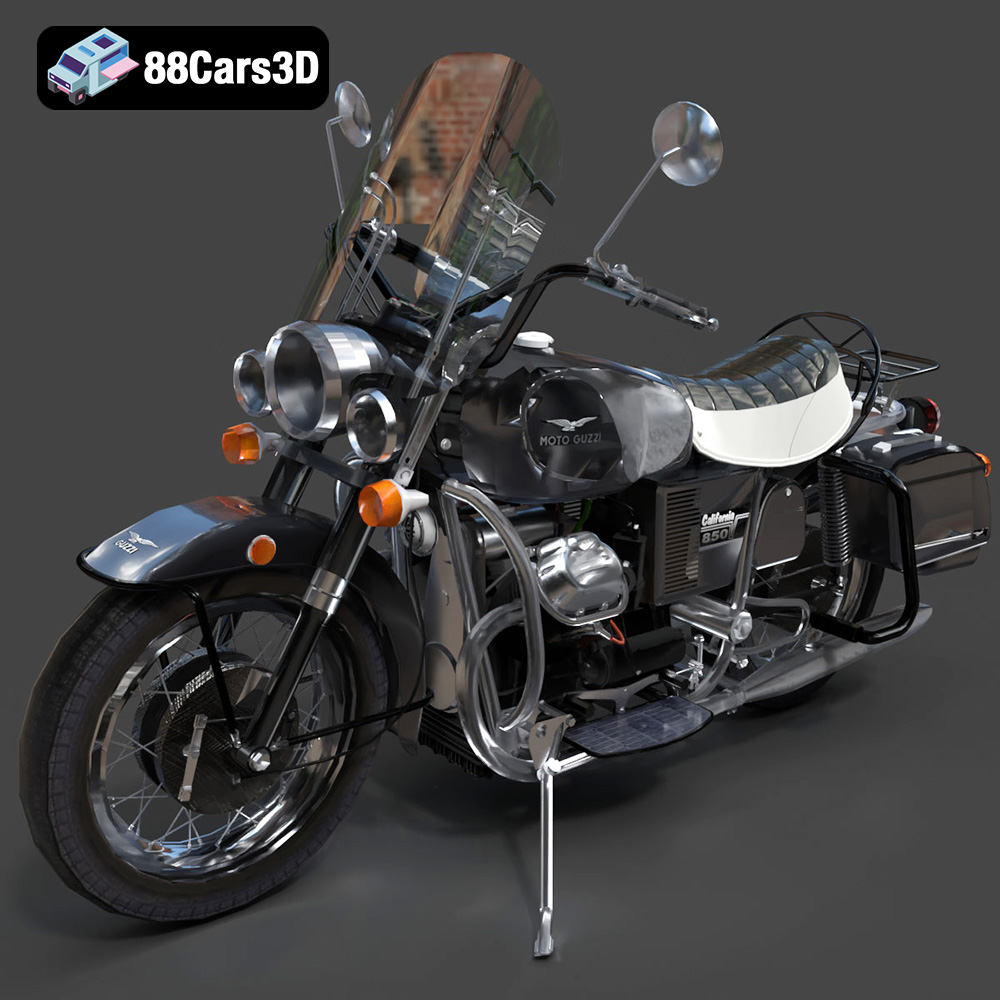
Download the Moto Guzzi Classic Motorcycle 2024 3D Model featuring clean geometry, realistic detailing, and a fully modeled interior. Includes .blend, .fbx, .obj, .glb, .stl, .ply, .unreal, and .max formats for rendering, simulation, and game development.
Price: $10

Texture: Yes
Material: Yes
Download the Mercedes S-Class 2024 3D Model featuring clean geometry, realistic detailing, and a fully modeled interior. Includes .blend, .fbx, .obj, .glb, .stl, .ply, .unreal, and .max formats for rendering, simulation, and game development.
Price: $10

Texture: Yes
Material: Yes
Download the Chevrolet Camaro 1970 3D Model featuring clean geometry, realistic detailing, and a fully modeled interior. Includes .blend, .fbx, .obj, .glb, .stl, .ply, .unreal, and .max formats for rendering, simulation, and game development.
Price: $10

Texture: Yes
Material: Yes
Download the Mercedes-AMG GT 2015 3D Model featuring clean geometry, realistic detailing, and a fully modeled interior. Includes .blend, .fbx, .obj, .glb, .stl, .ply, .unreal, and .max formats for rendering, simulation, and game development.
Price: $88.99

Texture: Yes
Material: Yes
Download the Suzuki GSX-R 1000 3D Model featuring clean geometry, realistic detailing, and a fully modeled interior. Includes .blend, .fbx, .obj, .glb, .stl, .ply, .unreal, and .max formats for rendering, simulation, and game development.
Price: $10

Texture: Yes
Material: Yes
Download the Porsche Cayman S 2024 3D Model featuring clean geometry, realistic detailing, and a fully modeled interior. Includes .blend, .fbx, .obj, .glb, .stl, .ply, .unreal, and .max formats for rendering, simulation, and game development.
Price: $10

Texture: Yes
Material: Yes
Download the Holden Commodore Sportwagon 2017 3D Model featuring clean geometry, realistic detailing, and a fully modeled interior. Includes .blend, .fbx, .obj, .glb, .stl, .ply, .unreal, and .max formats for rendering, simulation, and game development.
Price: $10

Texture: Yes
Material: Yes
Download the Mitsubishi Colt 3 Door 2008 3D Model featuring clean geometry, realistic detailing, and a fully modeled interior. Includes .blend, .fbx, .obj, .glb, .stl, .ply, .unreal, and .max formats for rendering, simulation, and game development.
Price: $10

Texture: Yes
Material: Yes
Download the Mercedes-Benz S650 Pullman 3D Model featuring clean geometry, realistic detailing, and a fully modeled interior. Includes .blend, .fbx, .obj, .glb, .stl, .ply, .unreal, and .max formats for rendering, simulation, and game development.
Price: $95.99
Texture: Yes
Material: Yes
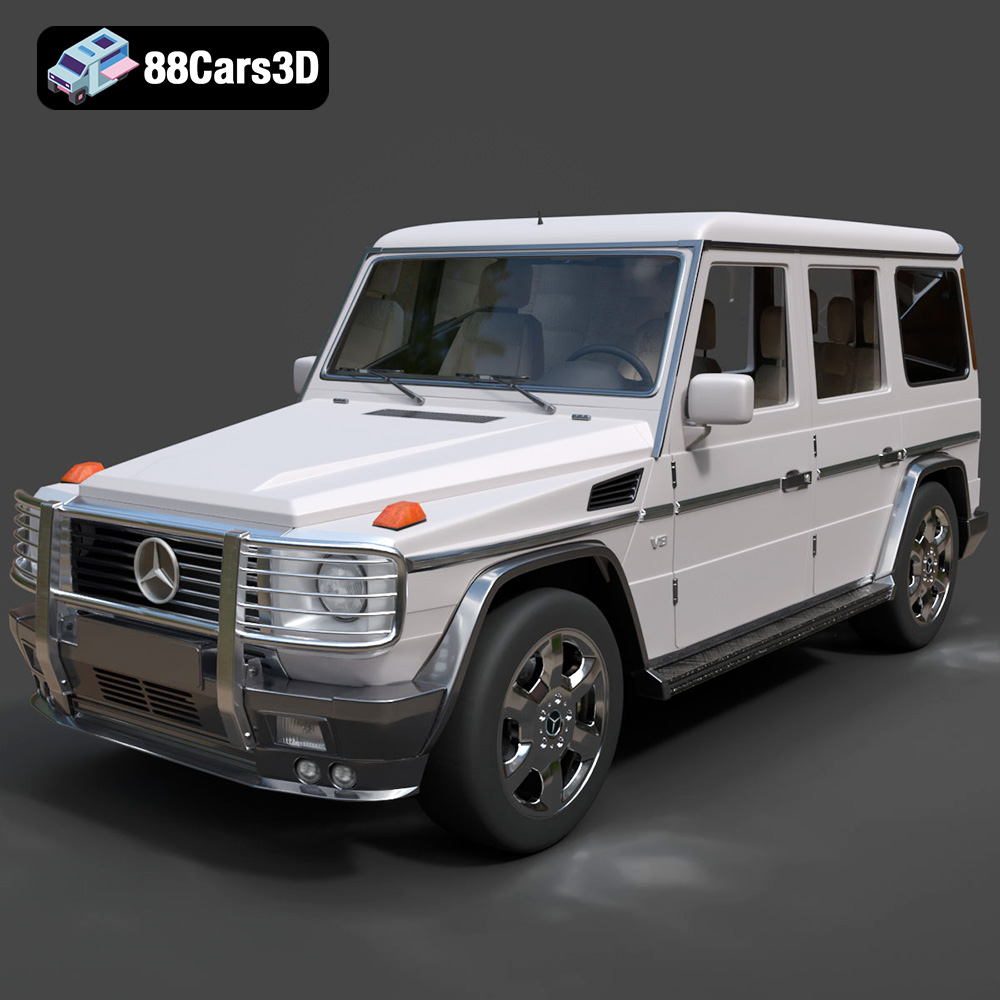
Download the Mercedes G-Class SUV 2024 3D Model featuring clean geometry, realistic detailing, and a fully modeled interior. Includes .blend, .fbx, .obj, .glb, .stl, .ply, .unreal, and .max formats for rendering, simulation, and game development.
Price: $10

