Get 50% OFF All Premium 3D & STL Models!

“`html
Bringing a stunningly realistic 3D car model into Unreal Engine is an exhilarating first step. You can see every reflection in its polished paint, admire the intricate details of the interior, and appreciate the clean topology. But to truly breathe life into it, to transform it from a static art piece into a dynamic, interactive machine, you need one crucial element: believable physics. The difference between a car that feels like a floating box and one that grips the road, leans into turns, and responds to every nuance of the throttle is a well-tuned physics simulation. This is where many developers, from indie game creators to professional automotive visualization artists, hit a roadblock. The complexity of engine curves, suspension damping, and tire friction can seem daunting.
This comprehensive guide will demystify the process of creating realistic vehicle physics in Unreal Engine. We will dive deep into the powerful Chaos Vehicle system, the engine’s native solution for high-fidelity vehicle simulation. You will learn how to properly prepare your 3D car models for physics, configure the core components of a drivable vehicle, and meticulously fine-tune everything from the engine and transmission to the suspension and tire properties. By the end of this article, you’ll have the knowledge to build everything from a responsive arcade racer to a true-to-life driving simulator, turning your high-quality 3D car models into fully interactive, thrilling experiences.
Before you can write a single line of Blueprint or tweak any physics settings, your 3D model must be properly structured for simulation. A vehicle’s physics behavior is fundamentally tied to its underlying skeletal structure and collision setup. Getting this foundation right is non-negotiable and will save you countless hours of troubleshooting later. A poorly prepared model will fight you at every turn, leading to erratic behavior, poor performance, and visual glitches.
Unlike a static environmental prop, a vehicle requires a skeleton, or rig, to define its moving parts. For Unreal Engine’s Chaos Vehicle system, this is a specific, yet simple, hierarchy. At a minimum, your skeleton needs:
This hierarchy is critical because the physics system uses these bones to apply forces. The wheel bones are used to calculate suspension, steering, and rotation, while the root bone is used to move the entire vehicle. Sourcing assets from a professional marketplace like 88cars3d.com can be a major advantage here, as their game assets often come pre-rigged with the correct bone hierarchy, allowing you to focus on the simulation rather than the modeling and rigging.
Collision is another foundational element. Unreal Engine offers two primary types of collision for physics objects:
For optimal performance and stability in real-time rendering, always create a tight-fitting set of simple collision primitives for your vehicle’s skeletal mesh. This ensures smooth and predictable interactions with the game world’s geometry.
With your model prepared, it’s time to dive into the heart of Unreal’s vehicle simulation: the Chaos Vehicle system. Introduced as a replacement for the older PhysX-based system, Chaos offers a more robust, deterministic, and flexible framework designed for modern physics demands. It gives developers granular control over every aspect of a vehicle’s performance, making it a powerful tool for any automotive visualization project.
The move to Chaos Physics was a significant step for Unreal Engine. The primary goal was to create a system that was more predictable and network-friendly, which is crucial for multiplayer games. For vehicle physics, this translates to more stable simulations at high speeds and more consistent behavior across different frame rates. Chaos is now the default physics engine, and the Chaos Vehicles Plugin is the standard for creating ground-based vehicles. For an in-depth exploration of Unreal Engine’s tools, the official documentation at https://dev.epicgames.com/community/unreal-engine/learning is an indispensable resource for developers at all skill levels.
A drivable Chaos vehicle is not a single entity but a collection of cooperating components within a Blueprint. The key players are:
Before you can use these components, you need to ensure the correct plugin is active. To do this, navigate to Edit > Plugins in the Unreal Editor. Search for “Chaos Vehicles” and make sure the Chaos Vehicles Plugin is enabled. You may need to restart the editor after enabling it. Once active, the `WheeledVehiclePawn` class and other related assets will become available for you to use in your project.
Now we move from theory to practice. The process of creating a drivable car begins by assembling the core components into a single, cohesive Blueprint actor. This Blueprint will encapsulate the model, physics, control logic, and any other interactive features you wish to add.
The first step is to create a new Blueprint class. In the Content Browser, right-click and select “Blueprint Class.” In the “Pick Parent Class” window, expand “All Classes” and search for WheeledVehiclePawn. Select it and give your new Blueprint a descriptive name, such as `BP_SportsCar`. Opening this Blueprint will reveal the basic structure, including a Skeletal Mesh component and the crucial Chaos Vehicle Movement Component.
Select the `Mesh` component in the Components panel. In its Details panel, assign your prepared 3D car model to the Skeletal Mesh property. Next, you need to link the visual animation to the physics simulation. For the Anim Class property, you’ll need to assign a `VehicleAnimationInstance`. Unreal provides a base class you can use. Right-click in the Content Browser, go to Animation > Animation Blueprint. In the creation window, select `VehicleAnimInstance` as the Parent Class and your vehicle’s skeleton as the Target Skeleton. Name it something like `AnimBP_SportsCar`, and then assign this new Animation Blueprint to the Anim Class property on your vehicle’s Skeletal Mesh component.
Select the `ChaosVehicleMovementComponent`. This is where the magic begins. For your initial setup, focus on two critical properties:
Getting these fundamental properties right provides a stable foundation upon which you can build the more detailed aspects of the simulation.
A vehicle’s connection to the road is defined entirely by its wheels and suspension. This is arguably the most critical area for tuning, as it dictates grip, stability, and the overall “feel” of the car. The Chaos system provides immense control here, allowing you to simulate everything from the soft, boat-like suspension of a classic sedan to the stiff, responsive setup of a track-focused hypercar.
Instead of configuring each wheel directly on the movement component, Chaos uses a modular approach with Wheel Blueprint assets. This allows you to create different types of wheels (e.g., front, rear, spare) and reuse them. To create one, right-click in the Content Browser, go to Miscellaneous > Data Asset, and select `ChaosWheeledVehicleSimulation`. Then, in your Vehicle Pawn, you need to create a `Wheel` class. Right-click in the content browser again, select Blueprint Class, and search for `ChaosVehicleWheel`. Create separate Wheel Blueprints for your front and rear wheels (e.g., `BP_Wheel_Front`, `BP_Wheel_Rear`).
Inside these Wheel Blueprints, you can define key properties like Wheel Radius (in cm), Tire Friction, Suspension Max Raise/Drop, and Wheel Mass. The friction value is particularly important for controlling how much grip the tires have.
Within your Wheel Blueprints, the suspension settings are paramount for defining the vehicle’s character. The two most important parameters are:
Once you’ve created your Wheel Blueprints, you must tell the `ChaosVehicleMovementComponent` how to use them. In the component’s Details panel, find the Wheel Setups array. Add an element for each wheel on your car. In each element, you must specify two things:
Correctly setting up this array ensures that the physics simulation knows where each wheel is located and what properties it should have.
With the chassis and suspension defined, the next layer of realism comes from the powertrain—the engine, transmission, and drivetrain that deliver power to the wheels. The Chaos Vehicle system offers a robust simulation of these mechanical components, allowing for a high degree of physical accuracy in your real-time rendering and interactive applications.
The engine’s performance is not a single horsepower number but a curve that defines how much torque it produces at different RPMs. In Unreal, this is defined by a Curve Float asset. To create one, right-click in the Content Browser and select Miscellaneous > Curve, then choose “CurveFloat.” Inside this asset, you can add points to a graph where the X-axis is RPM and the Y-axis is Torque in Newton-meters (Nm). You can approximate a real engine’s torque curve for authenticity. In the `ChaosVehicleMovementComponent` under the Engine Setup section, you assign this curve to the Torque Curve property. You also need to set the Max RPM and the Engine Inertia (MOI), which affects how quickly the engine can change speed.
The transmission translates the engine’s power into wheel rotation. Under the Transmission Setup section, you can choose between Automatic and Manual gearboxes. For an automatic setup, you can define the RPM at which the transmission should shift up or down. The most important settings are the Gear Ratios. You need to add an array element for each forward gear and define its ratio. A lower gear (like 1st gear) has a high ratio (e.g., 4.0) for high torque and acceleration, while a higher gear (like 6th gear) has a low ratio (e.g., 0.8) for high top speed. The Final Ratio affects all gears and is an easy way to adjust overall acceleration vs. top speed.
The final step in the powertrain is telling the system which wheels receive power. This is handled by the Differential Setup. You can configure Front-Wheel Drive (FWD), Rear-Wheel Drive (RWD), or All-Wheel Drive (AWD). For each wheel in the `Wheel Setups` array, there is a checkbox called Affected by Differential.
This simple setting dramatically changes the car’s handling characteristics, from the oversteer tendencies of a RWD sports car to the stable grip of an AWD vehicle.
A perfectly tuned physics simulation is useless without a way for the player to control it. The final step in creating a drivable vehicle is to capture player input and translate it into physics commands using Unreal Engine’s visual scripting system, Blueprint. We’ll use the modern Enhanced Input system for this.
The Enhanced Input system is flexible and powerful. First, create Input Action assets for each control: `IA_Throttle`, `IA_Brake`, `IA_Steering`. These represent the raw actions. `IA_Throttle` and `IA_Brake` should be `Axis1D` (float) types, while `IA_Steering` should also be `Axis1D`. Then, create an Input Mapping Context. Inside this context, you map physical keys (like ‘W’, ‘S’, ‘A’, ‘D’ on the keyboard or controller axes) to your Input Actions. For steering, you can add modifiers like `Negate` to the ‘A’ key so it provides a -1.0 value while ‘D’ provides 1.0.
In your `BP_SportsCar` Event Graph, you need to add the mapping context to the player controller (typically on `BeginPlay`). Then, you can create events for your Input Actions. For example, right-click and add the `IA_Throttle` event. This event node will fire every frame the input is active, providing the axis value. Drag a reference to the `ChaosVehicleMovementComponent` and pull off a wire to find the corresponding function. The key nodes are:
With just these three nodes connected, you now have a fully drivable car. You press ‘W’, the throttle input is set to 1.0, the engine simulation calculates torque, the transmission applies it to the wheels, and the car moves forward.
Creating a realistic vehicle is one thing; ensuring it runs smoothly in a complex scene is another. Vehicle physics can be computationally intensive, so understanding how to debug and optimize your simulation is a crucial skill for any project, from games to high-fidelity configurators.
At high speeds, a vehicle can travel a significant distance in a single frame. If the physics engine only updates once per frame, it can miss collisions or produce unstable, “jittery” behavior. To solve this, Unreal Engine uses Async Physics Tick and Substepping. This allows the physics simulation to run at a fixed, high frequency (e.g., 60 or 120 Hz) independent of the frame rate. You can enable this in Project Settings > Physics. Enabling substepping is one of the most important things you can do to ensure your vehicle is stable and predictable, especially at high velocities.
When your vehicle isn’t behaving as expected, you need tools to see what’s happening under the hood. Unreal provides a powerful built-in debugger. While playing in the editor, press the tilde (~) key to open the console and type showdebug vehicle. This will overlay a wealth of real-time information on the screen, including:
This debug information is invaluable for diagnosing problems. If your car is spinning out, you can check the tire slip values. If it feels sluggish, you can monitor the engine torque to see if it’s reaching its peak.
In a scenario with many vehicles, such as a racing game or a city simulation, performance is key. The most expensive part of a vehicle simulation is often the suspension and tire calculations (raycasts). The `ChaosVehicleMovementComponent` has built-in optimizations. For vehicles that are far from the camera, you can increase the Physics Ticking Interval to reduce how often they update. You can also write Blueprint logic to put distant vehicles into a “sleep” state where their physics is disabled entirely, replacing them with a static mesh until the player gets closer. This combination of detailed simulation for hero vehicles and aggressive optimization for background traffic is essential for maintaining a high frame rate.
We’ve journeyed through the entire process of building a realistic, drivable vehicle in Unreal Engine using the Chaos Vehicle system. We started with the critical first step of preparing a properly rigged and collision-optimized 3D model. From there, we assembled the core components into a `WheeledVehiclePawn`, meticulously configured the suspension and wheels for a stable ride, and modeled a powertrain with authentic engine curves and gear ratios. Finally, we brought it all under player control with the Enhanced Input system and explored essential debugging and optimization techniques.
The key takeaway is that realistic vehicle physics is an iterative art. It’s a process of tuning, testing, and refining. Each parameter, from the spring rate to the torque curve, has a tangible effect on the final handling. Don’t be afraid to experiment and push the values to understand their impact. Start with a solid foundation by using high-quality, pre-optimized 3D car models from resources such as 88cars3d.com, as this allows you to bypass complex preparation steps and dive straight into the exciting work of tuning the simulation. Now, take what you’ve learned, open the Unreal Editor, and start building the interactive automotive experiences of your dreams.
“`
Texture: Yes
Material: Yes
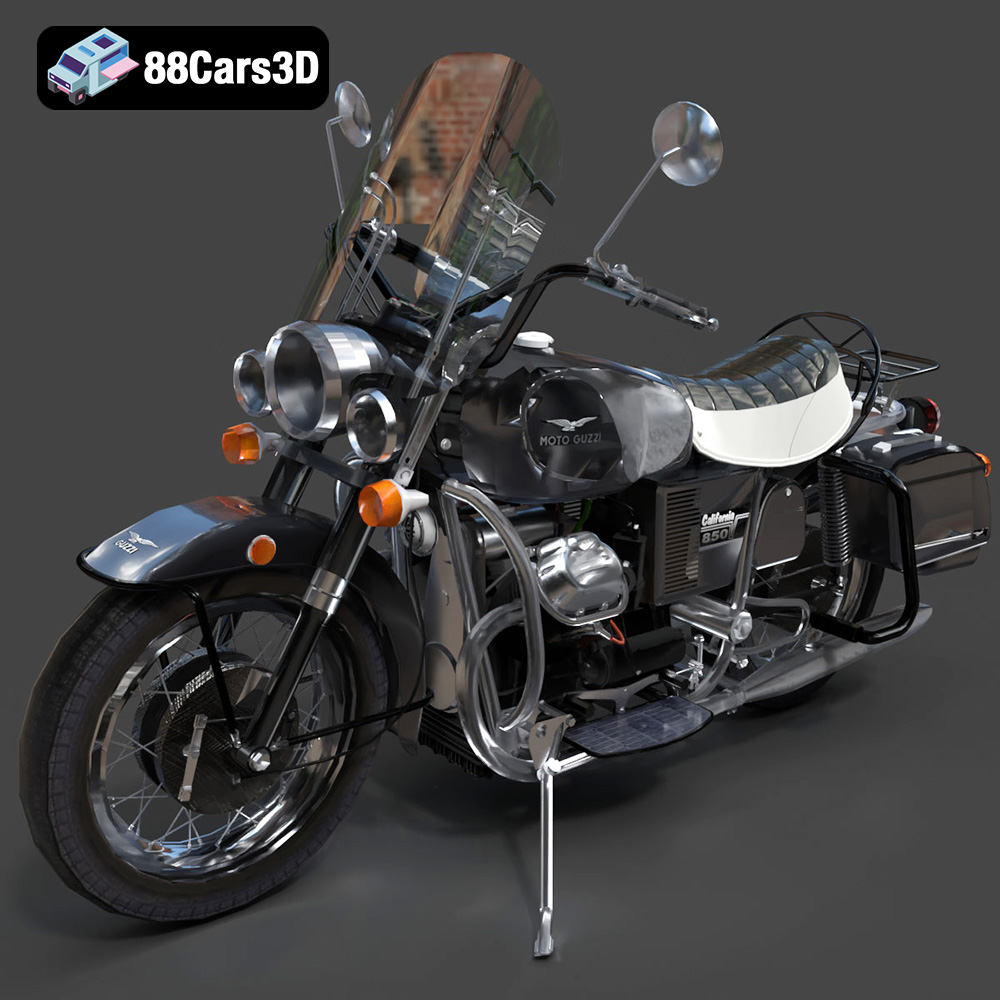
Download the Moto Guzzi Classic Motorcycle 2024 3D Model featuring clean geometry, realistic detailing, and a fully modeled interior. Includes .blend, .fbx, .obj, .glb, .stl, .ply, .unreal, and .max formats for rendering, simulation, and game development.
Price: $10

Texture: Yes
Material: Yes
Download the Mercedes S-Class 2024 3D Model featuring clean geometry, realistic detailing, and a fully modeled interior. Includes .blend, .fbx, .obj, .glb, .stl, .ply, .unreal, and .max formats for rendering, simulation, and game development.
Price: $10

Texture: Yes
Material: Yes
Download the Chevrolet Camaro 1970 3D Model featuring clean geometry, realistic detailing, and a fully modeled interior. Includes .blend, .fbx, .obj, .glb, .stl, .ply, .unreal, and .max formats for rendering, simulation, and game development.
Price: $10

Texture: Yes
Material: Yes
Download the Mercedes-AMG GT 2015 3D Model featuring clean geometry, realistic detailing, and a fully modeled interior. Includes .blend, .fbx, .obj, .glb, .stl, .ply, .unreal, and .max formats for rendering, simulation, and game development.
Price: $88.99

Texture: Yes
Material: Yes
Download the Suzuki GSX-R 1000 3D Model featuring clean geometry, realistic detailing, and a fully modeled interior. Includes .blend, .fbx, .obj, .glb, .stl, .ply, .unreal, and .max formats for rendering, simulation, and game development.
Price: $10

Texture: Yes
Material: Yes
Download the Porsche Cayman S 2024 3D Model featuring clean geometry, realistic detailing, and a fully modeled interior. Includes .blend, .fbx, .obj, .glb, .stl, .ply, .unreal, and .max formats for rendering, simulation, and game development.
Price: $10

Texture: Yes
Material: Yes
Download the Holden Commodore Sportwagon 2017 3D Model featuring clean geometry, realistic detailing, and a fully modeled interior. Includes .blend, .fbx, .obj, .glb, .stl, .ply, .unreal, and .max formats for rendering, simulation, and game development.
Price: $10
Texture: Yes
Material: Yes
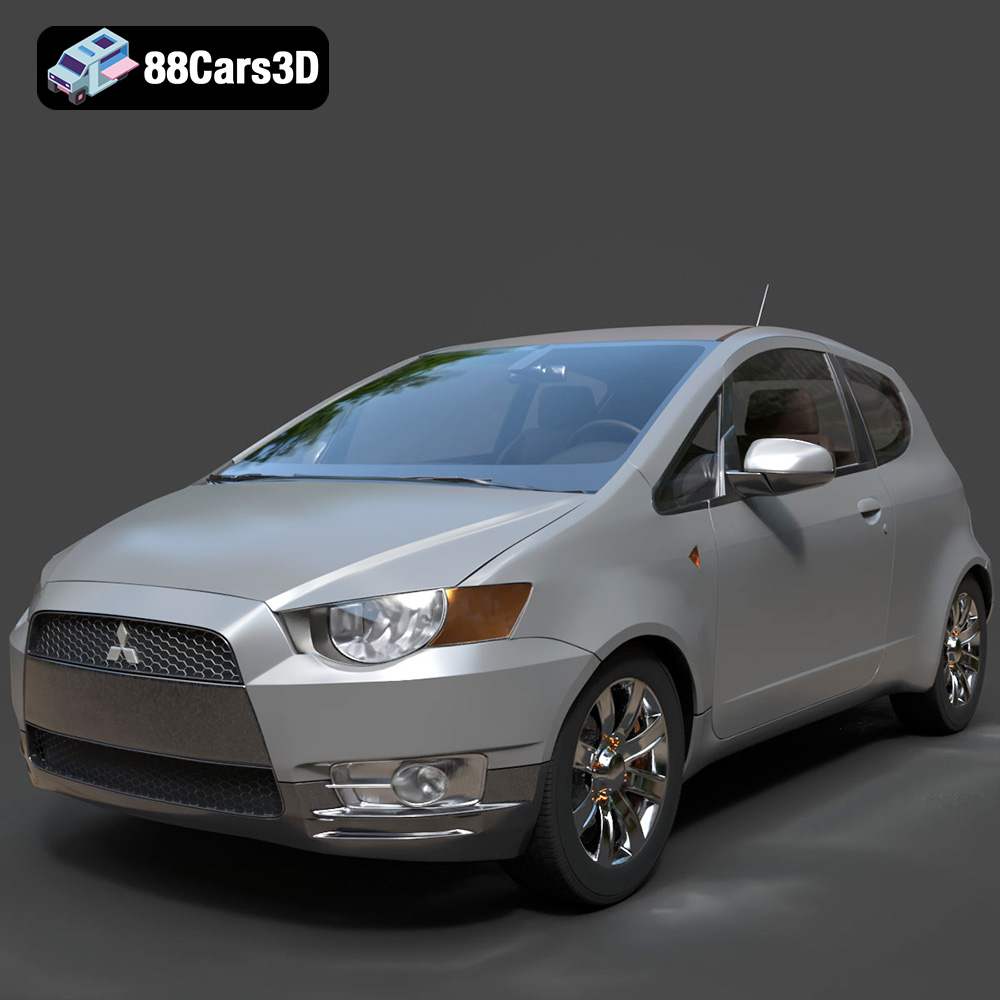
Download the Mitsubishi Colt 3 Door 2008 3D Model featuring clean geometry, realistic detailing, and a fully modeled interior. Includes .blend, .fbx, .obj, .glb, .stl, .ply, .unreal, and .max formats for rendering, simulation, and game development.
Price: $10
Texture: Yes
Material: Yes
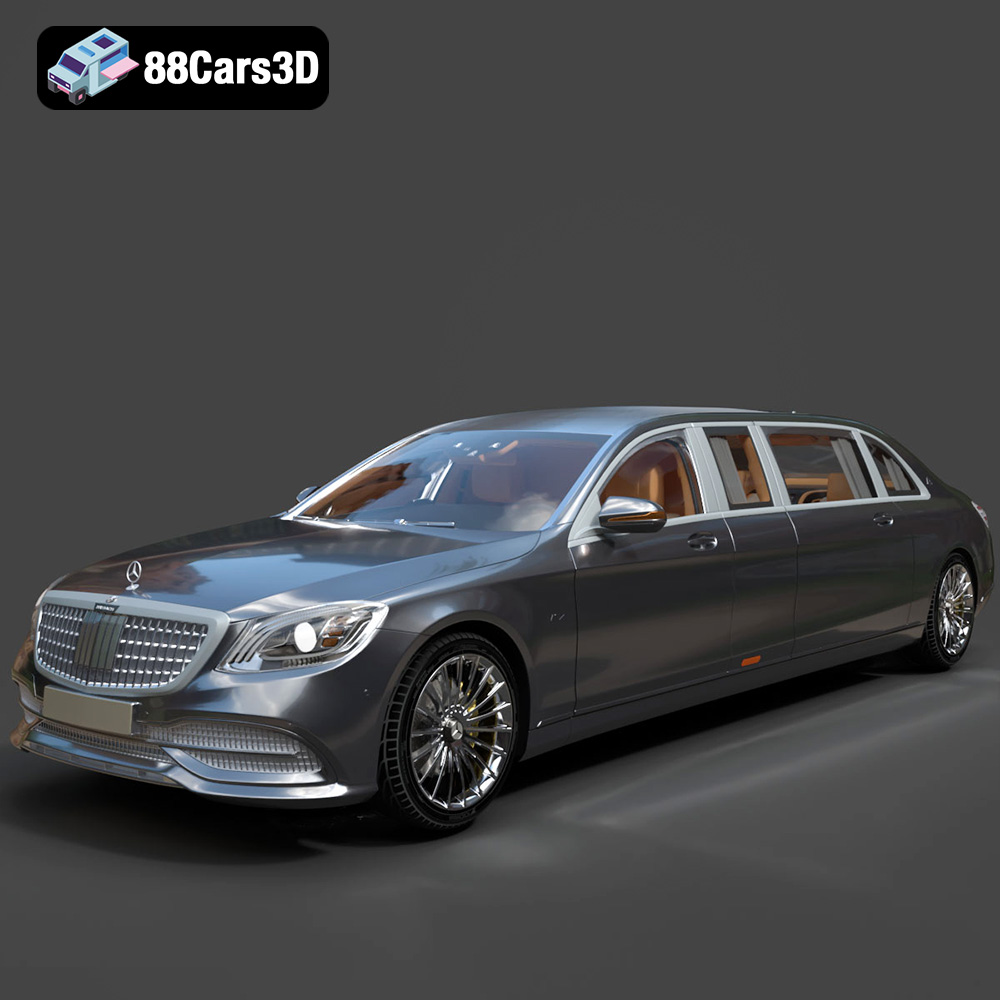
Download the Mercedes-Benz S650 Pullman 3D Model featuring clean geometry, realistic detailing, and a fully modeled interior. Includes .blend, .fbx, .obj, .glb, .stl, .ply, .unreal, and .max formats for rendering, simulation, and game development.
Price: $95.99
Texture: Yes
Material: Yes
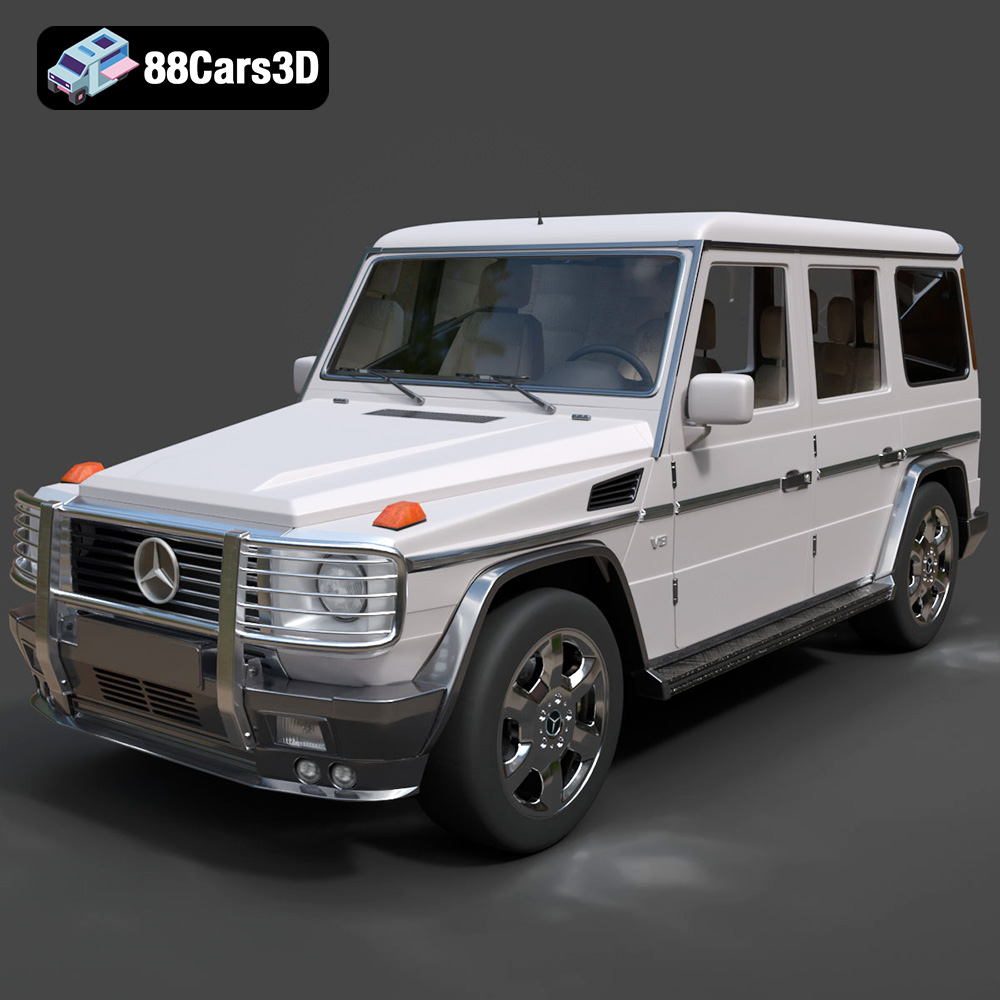
Download the Mercedes G-Class SUV 2024 3D Model featuring clean geometry, realistic detailing, and a fully modeled interior. Includes .blend, .fbx, .obj, .glb, .stl, .ply, .unreal, and .max formats for rendering, simulation, and game development.
Price: $10

