Get 50% OFF All Premium 3D & STL Models!

In the world of real-time automotive visualization, achieving that final 10% of photorealism is what separates a good render from a breathtakingly realistic one. Unreal Engine’s node-based Material Editor is an incredibly powerful tool, allowing artists to create complex and beautiful surfaces without writing a single line of code. However, for those pushing the boundaries of visual fidelity—crafting the subtle shimmer of metallic flakes in car paint, the anisotropic sheen of brushed aluminum, or dynamic weather effects—the node system can sometimes feel limiting. This is where you hit a creative and technical ceiling. To break through it, you need to go deeper, to the very language that powers every pixel: High-Level Shading Language (HLSL).
This comprehensive guide is for the ambitious technical artist and developer looking to transcend the limitations of nodes and unlock ultimate creative control. We will explore why and when to use custom HLSL code, how to set up a professional shader development workflow, and dive into practical, advanced techniques specifically for automotive rendering. You will learn to craft complex, multi-layered car paint materials, simulate realistic metallic surfaces, and optimize your shaders for peak real-time performance. By mastering HLSL, you can elevate high-quality 3D car models into truly dynamic, photorealistic digital assets, transforming your Unreal Engine projects into state-of-the-art interactive experiences.
The Material Editor is the cornerstone of surface creation in Unreal Engine, and for good reason. It provides an intuitive, visual way to build complex PBR materials. However, as your visual targets become more sophisticated, especially in demanding fields like automotive visualization, you may encounter scenarios where nodes alone are not enough. Understanding these limitations is the first step toward appreciating the power that custom HLSL code provides.
While powerful, the node-based system has inherent constraints. Firstly, visual complexity can become a major hurdle. A material for a multi-layered car paint can quickly devolve into a “spaghetti” graph of interconnected nodes, making it difficult to read, debug, and maintain. Secondly, every node you add translates to underlying HLSL code, and this translation isn’t always the most efficient. This can lead to a high shader instruction count, which directly impacts rendering performance. Finally, some advanced mathematical concepts or procedural generation algorithms are either impossible or incredibly cumbersome to replicate with the available nodes, forcing you to find complex workarounds that bloat the material.
Writing HLSL directly gives you absolute control over the GPU. By using the Custom node or external .usf (Unreal Shader File) files, you can write concise, highly optimized code to perform complex calculations that would require dozens of nodes. This leads to shaders with lower instruction counts and better real-time performance. You can implement custom lighting models, create unique procedural patterns, and execute complex logic that is simply outside the scope of the standard node library. This level of control is essential for achieving unique, cutting-edge visuals and for fine-tuning performance on a variety of target hardware, from high-end PCs to AR/VR devices.
Automotive rendering is one of the most demanding applications for real-time rendering. The surfaces are a complex interplay of light, color, and texture. Consider a modern metallic car paint: it’s not a single color but a layered system with a base coat, reflective metallic flakes suspended at various angles, and a final clear coat. Replicating the nuanced sparkle of these flakes as the camera and light move requires complex vector math (dot products between view, light, and flake normal vectors) that is far more elegant and performant to implement in HLSL. Similarly, creating the stretched, anisotropic highlights on brushed metal trim or the intricate weave of a carbon fiber material is a perfect job for a custom shader.
Transitioning from a purely node-based workflow to one incorporating HLSL requires a slight adjustment in your setup and mindset. Unreal Engine provides two primary methods for injecting custom code into your materials: the simple but powerful Custom node, and the more robust and scalable approach of using external shader files. A professional workflow often involves both.
The simplest entry point into HLSL is the Custom node within the Material Editor. This node acts as a blank slate where you can write HLSL code directly. You can define inputs on the node (e.g., textures, scalar values, vector parameters) which become variables you can access in your code. The node has a single output, which is the result of your code snippet.
To get started:
You’ve just written your first piece of HLSL in Unreal! The Custom node is excellent for small, self-contained functions and quick experiments. However, for complex logic or reusable functions, it can become unwieldy.
For a truly professional and scalable workflow, you should use external shader files. By storing your HLSL code in .usf or .ush files within your project’s `/Shaders/` directory, you gain several key advantages:
.usf file can be called from any material in your project.To set this up, you create a custom .usf file in your project’s `Shaders` folder. Then, within a Custom node in your material, you can include this file and call its functions. For detailed guidance on setting up shader paths and structuring these files, the official Unreal Engine documentation is an invaluable resource that you can find at https://dev.epicgames.com/community/unreal-engine/learning.
A solid workflow relies on good tools and habits. Use a code editor like VS Code with an HLSL extension (such as `HLSL Tools`) for a much-improved coding experience. Always comment your code thoroughly, explaining what complex mathematical operations are doing. Use clear, descriptive variable names (e.g., `viewDirection` instead of `v`). Remember that shaders are compiled when a material is saved or when first loaded. Pay close attention to the compilation errors in the Output Log, as they are your primary debugging tool when code fails to compile.
Before diving into complex automotive effects, it’s crucial to understand the fundamental building blocks of HLSL as it applies to the Unreal Engine material pipeline. This includes data types, accessing engine-provided variables, and sampling textures. Mastering these basics is key to writing effective and bug-free shader code.
HLSL is a strongly-typed language. The most common types you will use are:
float: A single 32-bit floating-point number, used for scalar values like roughness or metallic.float2, float3, float4: Vectors containing two, three, and four floats respectively. These are fundamental for representing 2D UV coordinates (float2), RGB colors or 3D positions/directions (float3), and RGBA colors (float4).Texture2D, SamplerState: Objects used to reference and sample textures.HLSL also provides a rich library of intrinsic (built-in) functions for mathematical operations. Some of the most useful include:
lerp(a, b, x): Linear interpolation between `a` and `b` using `x`.saturate(x): Clamps the value `x` to the [0, 1] range. It’s highly optimized.dot(a, b): The dot product of two vectors, essential for calculating angles between directions (like view and normal vectors).normalize(v): Returns a vector with the same direction as `v` but with a length of 1.Within a material shader, Unreal Engine provides a wealth of pre-calculated data. In a Custom node, you can access these through a special `Parameters` struct. For example, Parameters.WorldPosition gives you the pixel’s position in world space. To get UV coordinates, you typically pass them in via a `TextureCoordinate` node connected to an input on the Custom node. To sample a texture, you connect a `TextureObject` to a `Texture2D` input and a `TextureSample` node can pass the sampler state, but often you can use predefined samplers. A basic texture sample looks like this: return Texture2DSample(MyTexture, MyTextureSampler, UVs);
The real power of HLSL comes from creating your own functions, especially within external .usf files. This promotes modularity and code reuse. A simple function to generate a procedural checkerboard pattern might look like this:
float3 Checkerboard(float2 UV, float GridSize, float3 ColorA, float3 ColorB)
{
    float2 pos = floor(UV * GridSize);
    float pattern = (pos.x + pos.y) % 2;
    return lerp(ColorA, ColorB, pattern);
}
You would save this in a file like `MyShaders.usf`. Then, in a Custom node, you would first include the file (#include "/Project/MyShaders.usf") and then call the function: return Checkerboard(UVs, Size, Color1, Color2);. This simple example demonstrates how you can build a library of powerful, reusable effects for your projects.
Now we can apply these fundamentals to create sophisticated materials that bring high-quality game assets to life. When you source a meticulously crafted vehicle from marketplaces such as 88cars3d.com, you get a perfect digital canvas with clean topology and UVs. Applying advanced, custom-coded shaders is the final step to achieving unparalleled realism.
A realistic car paint shader is not a single material but a simulation of multiple layers. We can construct this in HLSL.
float sparkle = pow(saturate(dot(viewNormal, flakeNormal)), 50);. This `sparkle` value can then be used to additively blend a bright flake color onto the base paint color.Anisotropic materials reflect light differently depending on their orientation. Brushed metal is a classic example, where reflections are stretched perpendicular to the brush lines. To achieve this in HLSL, you need to manipulate the material’s tangent vector. The process involves:
This gives you precise control over the direction and intensity of the stretched highlights, a crucial effect for parts like rims, exhaust tips, and interior trim.
HLSL excels at creating dynamic effects that react to the environment. Instead of relying on static textures, you can write shaders to simulate phenomena like rain or dirt accumulation. For rain streaks, you can use world position and a panning noise texture multiplied by a vector pointing downwards (e.g., `float3(0,0,-1)`) to create the illusion of water running down the car’s body. For dirt, you can use the dot product of the vertex normal and an “up” vector to determine where dirt would accumulate (on flatter, upward-facing surfaces), creating a procedural mask that can be used to blend in a dirt texture or color.
Writing custom shader code is only half the battle; ensuring it runs efficiently is just as important, especially for real-time rendering in games or interactive configurators. Performance optimization is a core skill for any technical artist working with HLSL.
The most direct measure of a pixel shader’s complexity is its instruction count. This is the number of low-level operations the GPU must perform for every single pixel on the screen. You can view this in the Material Editor by navigating to Window > Shader Stats. A high instruction count (e.g., 300+) can negatively impact frame rates. A key benefit of HLSL is that a few lines of well-written code can often achieve the same result as a large node network, but with a fraction of the instructions. Always compare the stats of your HLSL implementation against a node-based version to quantify the performance gain.
Writing performant HLSL involves being mindful of the cost of every operation. Here are some critical optimization strategies:
float, use half (16-bit) for colors or texture coordinates where high precision isn’t required. This can significantly speed up calculations on some hardware.When your shader code doesn’t work as expected, debugging can be tricky. Since you can’t set breakpoints like in C++, you have to rely on visualization techniques. A common method is to output intermediate values as a color. For example, if you want to see the value of a variable `MyValue`, you can simply use `return float3(MyValue, MyValue, MyValue);` temporarily at the end of your Custom node. This will render the value as a grayscale color, allowing you to visualize its behavior across the surface. Unreal’s shader compiler will also output detailed errors to the log, pointing you to the exact line and character where a syntax error occurred. Mastering reading these logs is essential for efficient development.
We’ve journeyed from the familiar comfort of the Material Editor to the powerful, code-driven world of HLSL shader development. It’s clear that while the node system is an exceptional tool for a wide range of tasks, mastering HLSL is the key to unlocking the highest echelons of visual fidelity and performance in Unreal Engine. By writing custom code, you gain the granular control needed to craft truly sophisticated and optimized materials, from the complex layers of metallic car paint to dynamic, procedural surface effects. This control allows you to solve unique visual challenges and push the boundaries of what’s possible in real-time rendering.
The path to becoming a shader expert is one of continuous learning and experimentation. Start small with the Custom node, translating simple node groups into code to understand the fundamentals. Then, move on to building a library of reusable functions in external .usf files. Take the high-quality 3D car models you work with, perhaps from a specialized marketplace like 88cars3d.com, and challenge yourself to build materials for them that are impossible to create with nodes alone. By combining premier game assets with your own bespoke shading techniques, you will not only elevate the quality of your automotive visualizations but also establish yourself as a highly skilled technical artist at the forefront of the industry.
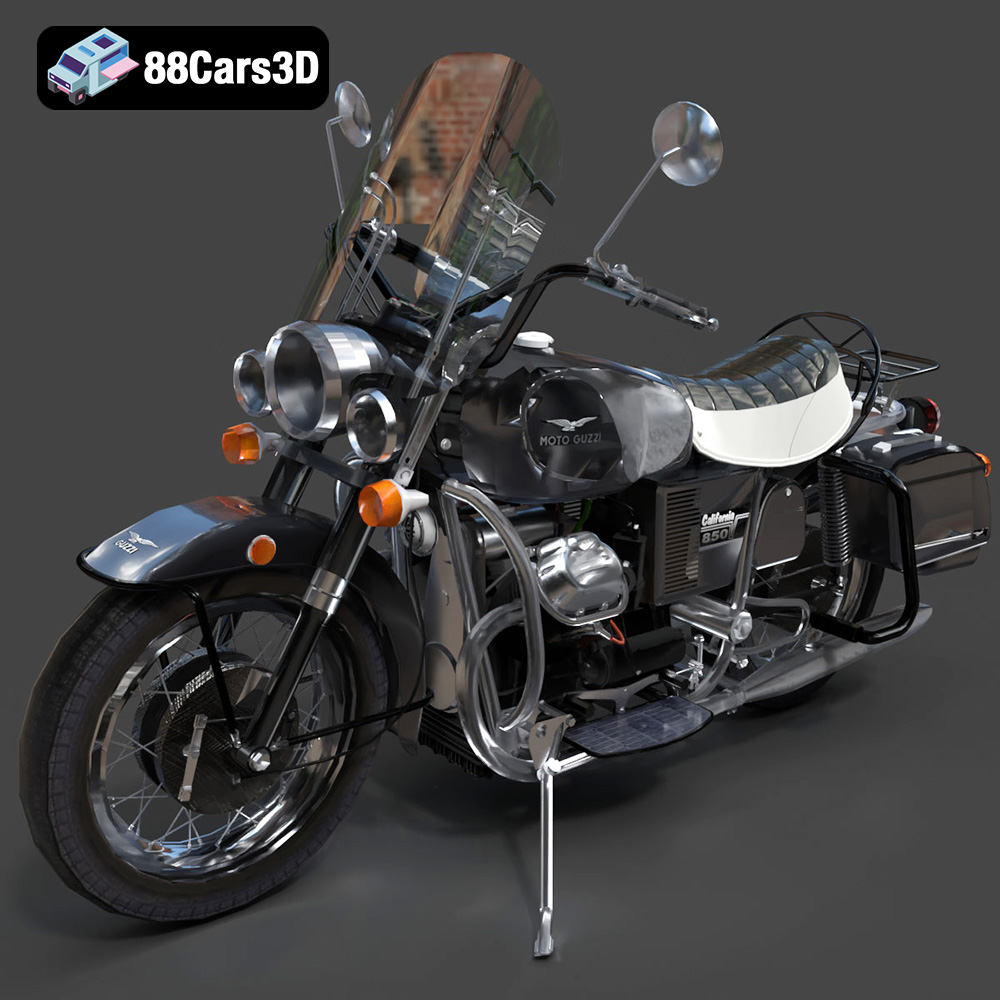
Texture: Yes
Material: Yes
Download the Moto Guzzi Classic Motorcycle 2024 3D Model featuring clean geometry, realistic detailing, and a fully modeled interior. Includes .blend, .fbx, .obj, .glb, .stl, .ply, .unreal, and .max formats for rendering, simulation, and game development.
Price: $10

Texture: Yes
Material: Yes
Download the Mercedes S-Class 2024 3D Model featuring clean geometry, realistic detailing, and a fully modeled interior. Includes .blend, .fbx, .obj, .glb, .stl, .ply, .unreal, and .max formats for rendering, simulation, and game development.
Price: $10

Texture: Yes
Material: Yes
Download the Chevrolet Camaro 1970 3D Model featuring clean geometry, realistic detailing, and a fully modeled interior. Includes .blend, .fbx, .obj, .glb, .stl, .ply, .unreal, and .max formats for rendering, simulation, and game development.
Price: $10

Texture: Yes
Material: Yes
Download the Mercedes-AMG GT 2015 3D Model featuring clean geometry, realistic detailing, and a fully modeled interior. Includes .blend, .fbx, .obj, .glb, .stl, .ply, .unreal, and .max formats for rendering, simulation, and game development.
Price: $88.99

Texture: Yes
Material: Yes
Download the Suzuki GSX-R 1000 3D Model featuring clean geometry, realistic detailing, and a fully modeled interior. Includes .blend, .fbx, .obj, .glb, .stl, .ply, .unreal, and .max formats for rendering, simulation, and game development.
Price: $10

Texture: Yes
Material: Yes
Download the Porsche Cayman S 2024 3D Model featuring clean geometry, realistic detailing, and a fully modeled interior. Includes .blend, .fbx, .obj, .glb, .stl, .ply, .unreal, and .max formats for rendering, simulation, and game development.
Price: $10

Texture: Yes
Material: Yes
Download the Holden Commodore Sportwagon 2017 3D Model featuring clean geometry, realistic detailing, and a fully modeled interior. Includes .blend, .fbx, .obj, .glb, .stl, .ply, .unreal, and .max formats for rendering, simulation, and game development.
Price: $10

Texture: Yes
Material: Yes
Download the Mitsubishi Colt 3 Door 2008 3D Model featuring clean geometry, realistic detailing, and a fully modeled interior. Includes .blend, .fbx, .obj, .glb, .stl, .ply, .unreal, and .max formats for rendering, simulation, and game development.
Price: $10

Texture: Yes
Material: Yes
Download the Mercedes-Benz S650 Pullman 3D Model featuring clean geometry, realistic detailing, and a fully modeled interior. Includes .blend, .fbx, .obj, .glb, .stl, .ply, .unreal, and .max formats for rendering, simulation, and game development.
Price: $95.99
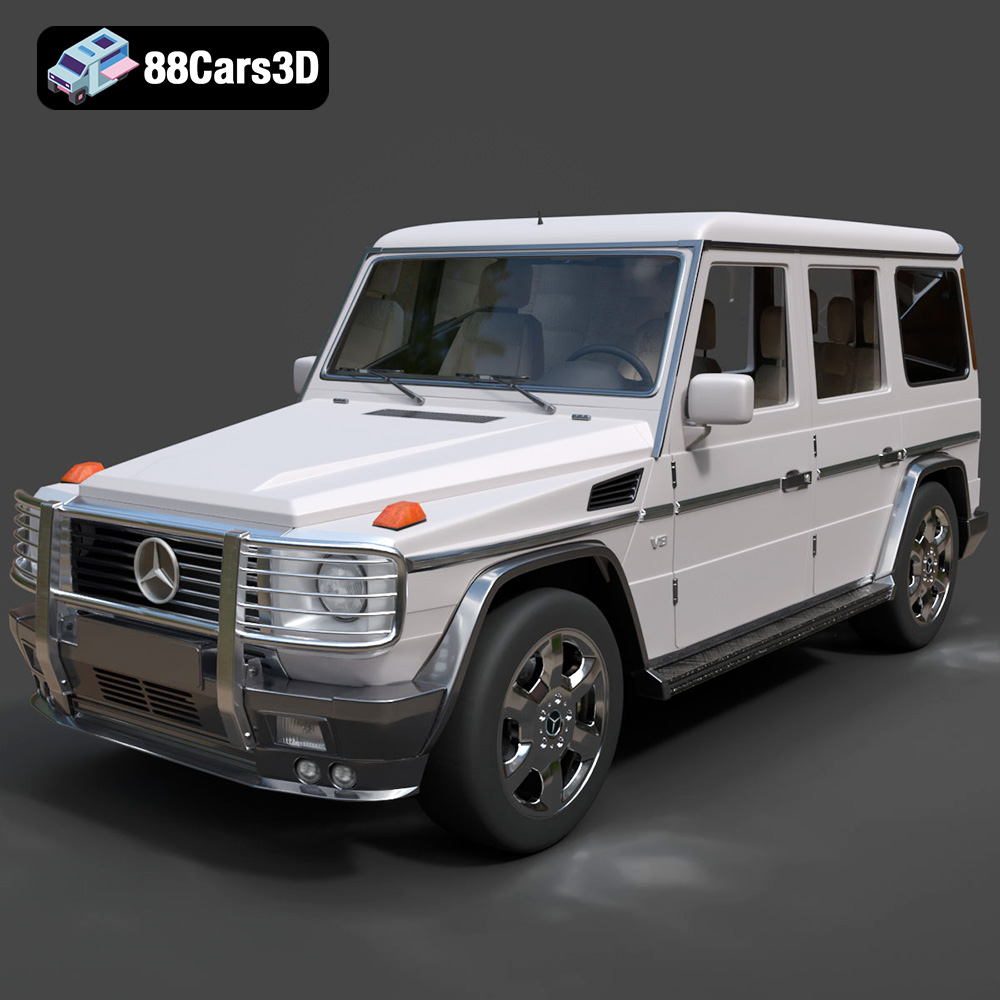
Texture: Yes
Material: Yes
Download the Mercedes G-Class SUV 2024 3D Model featuring clean geometry, realistic detailing, and a fully modeled interior. Includes .blend, .fbx, .obj, .glb, .stl, .ply, .unreal, and .max formats for rendering, simulation, and game development.
Price: $10

