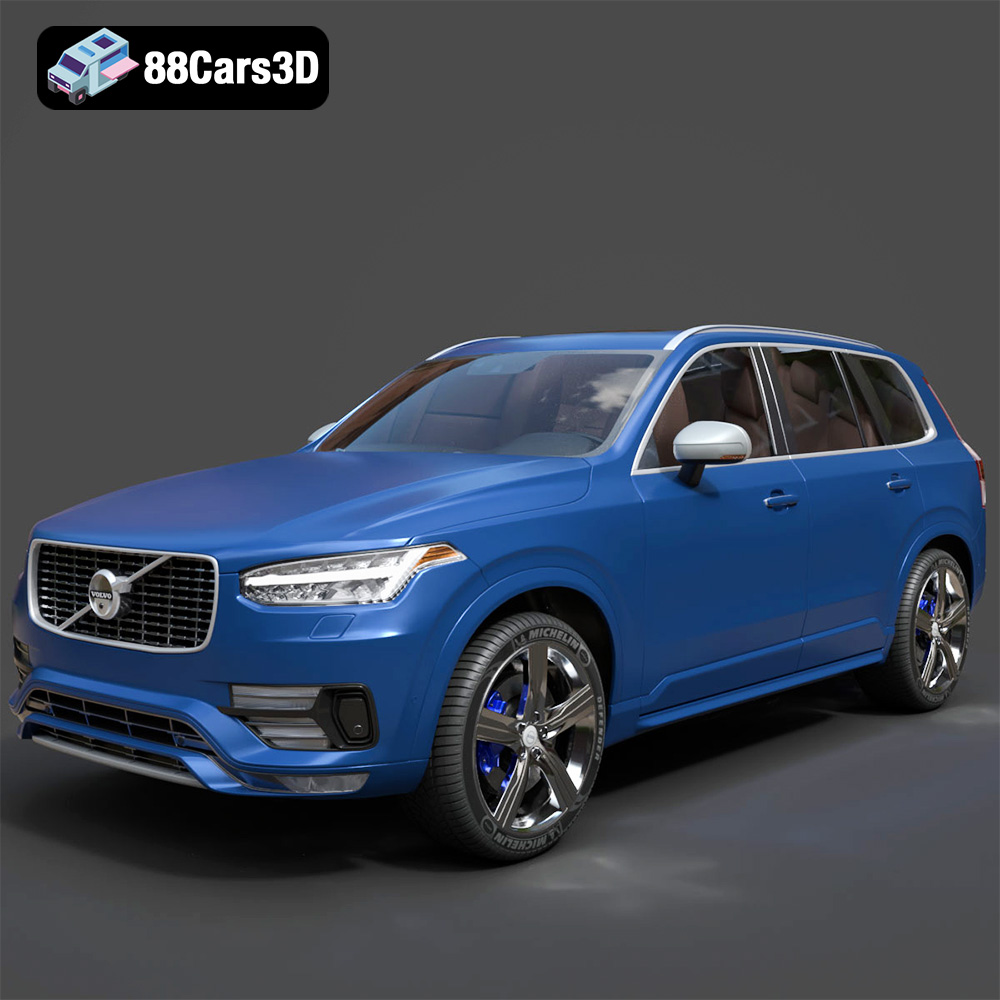
How to Choose the Right 3D Car Model for Your Game Animation or VR Project
Selecting the perfect 3D car model is a pivotal decision that can significantly impact the performance, visual fidelity, and overall success of your game animation or virtual reality (VR) project. With countless options available across various marketplaces and artists, navigating the technical specifications, artistic styles, and licensing agreements can feel overwhelming. A wrong choice can lead to frustrating optimization challenges, inconsistent visuals, or even project delays.
This comprehensive guide is designed to cut through the complexity, providing you with a clear framework to make informed decisions. We’ll delve into the critical factors you need to consider, from understanding your project’s unique requirements to dissecting the technical specifications of 3D assets. Whether you’re developing a high-octane racing simulator, an immersive VR experience, or a cinematic game animation, you’ll learn how to choose a 3D car model that perfectly aligns with your vision and technical constraints. Let’s rev up and get started!
Understanding Your Project’s Needs: The Foundation of Choice
Before you even begin browsing 3D marketplaces, it’s crucial to have a crystal-clear understanding of your project’s specific demands. These foundational requirements will dictate the technical characteristics and artistic style of the 3D car models you should consider.
Game Type & Genre
The nature of your game or animation heavily influences the required detail and complexity of your 3D car models.
- Racing Simulators (e.g., Gran Turismo, Forza Motorsport): Demand highly detailed, photorealistic car models with intricate interiors, advanced materials (like realistic car paint shaders), and accurate physics-ready rigging. Performance optimization is key, but visual fidelity is paramount for immersion.
- Open-World RPGs (e.g., Grand Theft Auto, Cyberpunk 2077): Requires a balance. Hero cars might be highly detailed, while background vehicles or those seen from a distance can be more optimized. A diverse range of car types is often needed.
- Arcade Racers / Mobile Games (e.g., Asphalt 9, Mario Kart): Often prioritize performance and stylized aesthetics over absolute realism. Lower polygon counts, simpler textures, and optimized rigs are essential for smooth gameplay on less powerful hardware.
- Cinematic Animations / Cutscenes: May require the highest level of detail, pushing the boundaries of polygon count and texture resolution for close-up shots and stunning visual effects, as real-time performance is less of a concern.
Target Platform(s)
The hardware capabilities of your target platforms directly impact the acceptable polycount and texture budgets for your 3D car models.
- High-End PC / Next-Gen Consoles (PS5, Xbox Series X): Can handle complex models with high polygon counts (100,000 to 300,000+ triangles for hero cars), 4K PBR textures, and advanced shaders.
- Mid-Tier PCs / Previous-Gen Consoles (PS4, Xbox One): Require more optimization. Aim for moderate polycounts (30,000 to 80,000 triangles) and 2K PBR textures.
- Mobile Devices (iOS, Android) / Nintendo Switch: Strict performance budgets. Typically necessitates very low polycount models (5,000 to 15,000 triangles) and smaller texture maps (512×512 to 1K PBR) to maintain acceptable frame rates.
- Standalone VR Headsets (Meta Quest 2/3): Extremely demanding due to needing to render scenes twice (once for each eye). Optimization is paramount, often requiring similar polycount budgets to mobile, but with an emphasis on cockpit detail for immersion.
Art Style & Aesthetics
Your chosen art style dictates the visual appearance of the 3D car model. Consistency is key to a cohesive user experience.
- Realistic: Requires accurate proportions, detailed surface imperfections, and realistic material definitions (e.g., metallic flakes in car paint, detailed tire tread).
- Stylized / Cartoon: Exaggerated features, vibrant colors, simpler forms. The mesh topology might be less intricate, focusing on clean shapes.
- Sci-Fi / Fantasy: Unique designs, non-standard materials, and often glowing elements or advanced technological details.
Ensure the 3D car model’s aesthetic seamlessly integrates with your existing game assets and overall visual direction.
Animation Requirements
How the car interacts in your project determines its rigging and animation needs.
- Static Background Prop: Needs no rigging or animation. Can be a simple, optimized mesh.
- Drivable Vehicle: Requires a robust rig for wheels (rotation, steering), suspension, and potentially doors, hood, trunk, and interior elements (steering wheel, pedals).
- Detailed Destruction / Damage System: The model might need to be modular (separate doors, fenders, hood) or have specific UV mapping and vertex weights for deformation.
- Cinematic Movement: May require advanced rigging for complex camera movements and character interactions.
VR Specific Considerations
For VR projects, performance and immersion are critical.
- Cockpit Detail: Since players are often inside the vehicle, the interior needs significantly more detail than in a non-VR game. High-resolution textures and accurate modeling of dashboard elements, seats, and controls are crucial.
- Performance (Motion Sickness): Maintaining a stable high frame rate (e.g., 72fps, 90fps, or 120fps) is non-negotiable to prevent motion sickness. This means aggressive optimization and effective Level of Detail (LOD) implementation.
- Scale: Models must be accurately scaled to real-world dimensions to enhance immersion.
Key Technical Considerations for 3D Car Models
Once you understand your project’s needs, it’s time to evaluate the technical specifications of potential 3D car models.
Polygon Count (Polycount) & Optimization
Polygon count, specifically the triangle count, is perhaps the most critical factor for real-time performance. It directly affects how much processing power your GPU needs.
- High-Poly Models: Offer greater detail and smoother curves, ideal for close-up shots, hero vehicles, or cinematic use. They demand more computational resources.
- Low-Poly Models: Essential for mobile games, background assets, or large numbers of vehicles on screen. They prioritize performance over minute detail.
- Level of Detail (LODs): An absolute must for efficient game development. LODs are multiple versions of the same model, each with progressively lower polycounts. Your game engine automatically switches between these versions based on the camera’s distance, ensuring optimal performance without sacrificing visual quality where it matters most. A good 3D car model for games or VR should ideally come with 3-5 LOD levels.
Practical Polycount Ranges:
- Mobile/Background: 5,000 – 15,000 triangles
- Mid-Range PC/Console: 30,000 – 80,000 triangles (for main cars)
- High-End PC/Next-Gen Console/VR (Hero Car): 80,000 – 250,000+ triangles (with effective LODs)
- Cinematic/Offline Render: 500,000+ triangles (no real-time constraints)
Texturing & Materials
Textures define the visual surface properties of your 3D car model, while materials describe how light interacts with those surfaces.
- PBR (Physically Based Rendering): The industry standard for realistic materials. PBR textures typically include:
- Albedo/Base Color: The fundamental color of the surface.
- Normal Map: Simulates surface detail (bumps, scratches) without adding geometry.
- Metallic Map: Defines which parts of the surface are metallic.
- Roughness Map: Controls how diffuse or shiny a surface is.
- Ambient Occlusion (AO) Map: Simulates soft shadowing where objects are close together.
- Texture Resolution: Common resolutions are 1K (1024×1024), 2K (2048×2048), and 4K (4096×4096). Higher resolutions provide more detail but consume more VRAM (Video RAM). For VR, a 4K texture on a detailed cockpit might be justified, while exterior parts could use 2K.
- UV Mapping: Crucial for clean texture application. Look for models with well-organized, non-overlapping UVs that minimize stretching.
- Material Complexity: Advanced car paint shaders with clear coat and metallic flake effects can greatly enhance realism but also increase rendering cost.
Rigging & Animation Readiness
If your car needs to move or interact, rigging is essential.
- Pre-Rigged Models: Can save significant development time, but ensure the rig is compatible with your game engine (e.g., Unity, Unreal Engine) and animation workflow.
- Common Car Rig Components: A good car rig includes bones/joints for each wheel (pivot, rotation, steering), suspension, doors, hood, trunk, and possibly interior elements like the steering wheel and pedals.
- Bone Structure & Pivot Points: Check that pivot points for rotating elements (like wheels) are correctly placed for realistic movement.
Mesh Topology & Edge Flow
The underlying structure of the 3D model.
- Clean Quads: Models built primarily with quadrangles (four-sided polygons) are generally preferred as they deform better during animation and subdivide more cleanly. While game engines convert everything to triangles, a quad-based source model is easier to work with.
- Good Edge Flow: Ensures smooth deformations and proper lighting across the surface. Avoid ngons (polygons with more than four sides) and non-manifold geometry.
File Formats
The format dictates compatibility and what data can be transferred.
- FBX (Filmbox): The most common interchange format for game development, supporting meshes, textures, materials, rigging, and animations. Highly compatible with Unity 3D, Unreal Engine, and most 3D software.
- OBJ (Object): A widely supported format for mesh geometry and basic UVs, but does not support rigging or animations.
- GLTF/GLB (GL Transmission Format): An open standard gaining popularity, especially for web-based 3D and real-time applications. Supports meshes, materials, textures, and animations.
- USD (Universal Scene Description): Developed by Pixar, this format is becoming more prevalent, particularly in complex production pipelines, supporting a vast array of data types.
Always check if the provided format is easily importable into your chosen game engine or 3D animation software.
Where to Find 3D Car Models & What to Look For
The digital landscape offers numerous avenues for acquiring 3D car models. Each has its pros and cons.
Online Marketplaces
These platforms host vast libraries of assets created by artists worldwide.
- TurboSquid, CGTrader, Sketchfab: Large repositories with a wide range of quality and price points. You can find everything from highly detailed cinematic models to optimized game-ready assets.
- Unity Asset Store, Unreal Engine Marketplace: Specifically curated for their respective engines, often featuring pre-integrated assets with materials and prefabs ready to drop into your project.
- ArtStation Marketplace: Known for high-quality assets from professional artists, often with detailed breakdowns.
Pros: Variety, immediate availability, often cost-effective.
Cons: Quality can vary significantly, licensing terms must be carefully reviewed, may require additional optimization for your specific project.
Custom Creation
Hiring a 3D artist or team to create bespoke models.
- Pros: Perfect fit for your project’s unique art style and technical requirements, full control over intellectual property.
- Cons: Higher cost, longer development time, requires clear communication and strong project management.
Checking Model Quality & Licensing
When evaluating models on marketplaces:
- Read Product Descriptions: Look for detailed information on polycount, texture resolutions, included maps (Albedo, Normal, Metallic, Roughness, AO), rigging status, LODs, and file formats.
- Examine Previews: Scrutinize renders, wireframes, and sometimes even video previews to assess mesh quality, topology, and texture fidelity. Look for clean geometry and consistent artistic style.
- User Reviews and Ratings: Valuable insights into an asset’s usability, accuracy, and the seller’s responsiveness.
- Understand Licensing: Crucially, ensure the license permits commercial use for your project and allows for modifications. Standard licenses usually cover this, but always double-check. Some licenses might have restrictions on resale or use in certain types of projects.
Decision Framework: Making the Right Choice
Use this structured approach to weigh your options and select the ideal 3D car model.
Step 1: Define Your Project’s Core Requirements
Revisit your initial analysis:
- What is the game/animation type and genre? (e.g., mobile arcade racer, PC VR simulator, cinematic short)
- What are the target platforms and their performance budgets?
- What is your desired art style? (realistic, stylized, cartoon)
- What level of animation and interaction is required?
- What’s your budget and timeline for asset acquisition/creation?
Step 2: Evaluate Technical Specifications
With your requirements in mind, assess potential models:
- Does the polycount align with your platform’s capabilities and the car’s role (hero vs. background)?
- Are PBR textures included, and are their resolutions appropriate?
- Does it include LODs, and are they well-implemented?
- Is the model rigged appropriately for your animation needs, or can it be easily rigged?
- Is the mesh topology clean (quads, good edge flow)?
- Are the file formats compatible with your pipeline?
Step 3: Assess Visual Quality & Cohesion
Visually integrate the model:
- Does the art style and level of detail match your project’s aesthetic?
- Does it look appealing and professional?
- Are there any glaring visual inconsistencies or issues?
Step 4: Consider Scalability & Optimization
Future-proof your choice:
- If it doesn’t have LODs, is it easily optimizable (e.g., through polygon reduction tools) without significant quality loss?
- Can its materials and textures be adjusted to fit varying quality settings?
Comparison Table Example: Prioritizing Features for Different Project Types
| Feature |
Low-Poly Arcade Car (Mobile/Web) |
High-Poly Racing Sim Car (PC/Console) |
VR Experience Car (PCVR/Standalone) |
| Primary Focus |
Performance, stylized visuals, quick load times |
Realism, visual fidelity, complex physics |
Immersion, performance, cockpit detail |
| Target Polycount (Hero Car) |
5,000 – 15,000 Tris |
80,000 – 250,000+ Tris |
40,000 – 150,000 Tris (with strong LODs) |
| Texture Resolution |
512×512 – 1K PBR |
2K – 4K PBR (8K for close-ups) |
2K – 4K PBR (Cockpit often 4K) |
| LODs Required? |
Optional (good for multiple cars) |
Essential |
Absolutely Essential (3-5 levels) |
| Rigging Needs |
Basic (wheels, steering) |
Advanced (wheels, suspension, doors, steering, interior) |
Advanced (high fidelity cockpit, steering wheel, interactive elements) |
| Material Complexity |
Simple, stylized PBR |
Complex, realistic car paint, glass, chrome shaders |
Realistic PBR, focus on interactive materials |
Practical Examples and Pitfalls to Avoid
- Example 1: Developing a Mobile Racing Game. You need 10 unique drivable cars.
- Correct Choice: Seek out models with polycounts between 5k-15k triangles, 1K PBR textures, and simple wheel rigging. Ensure they come with or can be easily optimized for LODs.
- Pitfall: Buying a beautiful 200k+ triangle model with 4K textures. While it looks great in the marketplace, it will crash performance on mobile devices, leading to frustrated players and a poor user experience.
- Example 2: Creating a High-Fidelity VR Driving Simulator. The player sits inside the car for the entire experience.
- Correct Choice: Invest in a model with an exceptionally detailed cockpit (high-poly, 4K textures for interior), robust and accurate rigging for all interactive elements (steering wheel, dashboard buttons), and a comprehensive set of LODs for the exterior to maintain frame rate.
- Pitfall: Using a model with a sparsely detailed interior or without well-implemented LODs. This leads to a lack of immersion, potential motion sickness due to low frame rates, and a visually unconvincing VR experience.
- Example 3: Producing a Cinematic Animation Featuring a Car Chase.
- Correct Choice: You can prioritize visual fidelity above all else. Look for models with very high polygon counts (500k+), 8K textures, and complex materials to capture every nuance. Real-time optimization is less of a concern here, allowing for maximum detail.
- Pitfall: Over-optimizing by choosing a low-poly game asset. While it’s efficient, it won’t hold up to cinematic close-ups and will lack the visual richness expected in a high-quality animation.
The journey to selecting the ideal 3D car model is a critical step in bringing your game animation or VR project to life. It requires a thoughtful balance between artistic vision and technical feasibility. By thoroughly understanding your project’s unique requirements, meticulously evaluating the technical specifications of potential assets, and adhering to a structured decision-making process, you can avoid common pitfalls and ensure your chosen 3D car model drives success.
Remember, the best 3D car model isn’t necessarily the one with the highest polygon count or the most expensive price tag; it’s the one that perfectly fits your project’s genre, platform, art style, and performance budget. Take your time, assess your options, and make an informed choice that will accelerate your project towards its full potential.
Ready to take the wheel and select the perfect 3D car model? Explore marketplaces with newfound confidence, review specifications like a seasoned developer, and drive your game animation or VR project forward with unparalleled visual quality and optimized performance!