Get 50% OFF All Premium 3D & STL Models!

“`html
The world of automotive visualization has undergone a seismic shift. Static renders and pre-baked animations are no longer enough to capture the imagination of a discerning audience. Today, the demand is for dynamic, emotive, and photorealistic storytelling that brings digital vehicles to life. This is where Unreal Engine, a powerhouse of real-time rendering, steps into the spotlight with its premier non-linear editing tool: Sequencer. More than just an animation tool, Sequencer is a complete cinematic creation suite within the engine, allowing artists and developers to craft everything from stunning product commercials to interactive virtual showrooms. By mastering Sequencer, you unlock the ability to direct, shoot, and edit complex automotive narratives entirely in real-time, achieving a level of creative control and visual fidelity that was once the exclusive domain of high-end VFX studios. In this comprehensive guide, we will dissect the entire cinematic workflow, from initial project setup and asset preparation to advanced camera techniques, dynamic lighting, and final high-quality rendering, empowering you to create breathtaking automotive cinematics that captivate and convert.
Before you can begin crafting your cinematic masterpiece, a solid foundation is essential. Proper project setup and meticulous asset preparation are non-negotiable steps that ensure a smooth workflow and optimal visual quality. Rushing this stage often leads to performance bottlenecks, lighting inconsistencies, and rendering issues down the line. Taking the time to configure your project correctly and prepare your 3D car model will pay dividends throughout the production process.
Your first step is to configure the Unreal Engine project for high-fidelity output. Start by creating a new project using the “Film, Video, & Live Events” or “Games” template, as both provide a good starting point. Key settings to review include:
The hero of your cinematic is the vehicle itself. The quality of your 3D car model directly impacts the final result. Sourcing assets from specialized marketplaces like 88cars3d.com can save you immense time, as they provide high-quality, game-ready models with clean topology, PBR materials, and proper hierarchies. When importing your model (typically as an FBX or USD file), pay attention to the import settings. Ensure you “Import Materials” and “Import Textures.” Crucially, for complex models, enabling “Combine Meshes” should be avoided to preserve the individual components (wheels, doors, steering wheel) for animation. Once imported, review the model’s pivot points. The main body’s pivot should be centered at the base, and component pivots (like doors) should be placed at their hinge points to ensure realistic rotation.
A car never exists in a vacuum. The environment provides context, reflections, and lighting that are vital for a believable shot. You can use assets from the Quixel Megascans library, which is integrated into Unreal Engine, to quickly build realistic natural or urban scenes. Alternatively, a simple studio lighting setup with a curved backdrop can be highly effective for product-focused shots. The key is to create a scene that complements the vehicle without distracting from it. Ensure your environment assets are also optimized, using appropriate LODs (Levels of Detail) and efficient materials.
With your scene prepared, it’s time to open Sequencer and begin the creative process. Sequencer is Unreal Engine’s multi-track editor that allows you to animate objects, cameras, lights, and nearly any other property over time. At first glance, the interface can seem complex, but understanding its core components is the key to unlocking its power.
To start, create a “Level Sequence” asset from the Content Browser. Double-clicking it opens the Sequencer editor, which is comprised of four main areas:
The fundamental workflow in Sequencer is straightforward. First, you add an Actor to the sequence by dragging it from the World Outliner or using the “+ Track” button. Let’s use our car model as an example. Once the car Actor is added, you can add a “Transform” track to it. To create movement, you move the playhead on the timeline to a specific frame, position the car in the viewport, and press ‘S’ (or the small circle icon on the track) to set a keyframe. A keyframe records the value of a property (in this case, location, rotation, and scale) at that specific point in time. Move the playhead to another frame, change the car’s position, and set another keyframe. Sequencer will automatically generate the motion between these two keys.
Simply setting keyframes creates linear, robotic motion. To achieve organic, believable movement, you must use the Curve Editor. You can access it by clicking the graph icon at the top of the Sequencer panel. The Curve Editor visualizes the animation as curves, showing how a property’s value changes over time. By manipulating the tangents of the keyframes on these curves, you control the interpolation—the “in-between” motion. You can change the interpolation from “Linear” (constant speed) to “Cubic (Auto)” for a smooth ease-in and ease-out, which is essential for making vehicle and camera movements feel natural and weighted.
Your choice of camera and how you move it defines the visual language of your cinematic. Sequencer’s integration with the Cine Camera Actor provides a virtual toolkit that mirrors real-world filmmaking, giving you precise control over every aspect of your shot composition and cinematography.
Instead of the standard camera, always use a “Cine Camera Actor” for cinematic work. This special actor exposes properties that mimic professional cinema cameras. The most important of these are:
Replicating classic camera moves is simple in Sequencer. By keyframing the transform track of your Cine Camera Actor, you can create dolly shots (moving forward/backward), truck shots (moving left/right), and pedestal shots (moving up/down). For more complex and perfectly smooth movements, use the built-in Camera Rigs. The “Camera Rig Rail” allows you to define a path for the camera to follow, while the “Camera Rig Crane” simulates the sweeping vertical and horizontal arcs of a real-world camera crane. Using these rigs prevents the jittery, unnatural motion that can sometimes result from manual keyframing.
Professional cinematography relies on precise focus control. In Sequencer, you can keyframe the focus distance manually, but a more powerful method is to use the Focus Tracking feature. In the Cine Camera’s details, you can set the “Focus Method” to “Tracking” and assign a “Actor to Track.” You can create a small, invisible empty actor and parent it to a specific part of the car, like the headlight or wheel hub. The camera will then automatically keep that point in perfect focus as it or the car moves, creating a polished, professional look.
A car is more than just a static object; it’s a collection of dynamic, interactive parts. Sequencer allows you to go beyond simple movement and animate individual components, trigger events, and even incorporate physics simulations to add a new layer of realism and storytelling to your automotive visualization.
High-quality 3D car models, such as those found on platforms like 88cars3d.com, are designed with separate components, allowing for detailed animation. In Sequencer, you can add individual tracks for the car’s doors, hood, trunk, or even an active spoiler. By parenting these objects correctly in a Blueprint or in the level, you can create a sequence where the doors gracefully open, the convertible top retracts, or the spoiler deploys at high speed. This level of detail elevates a simple fly-by into a compelling product feature demonstration.
The Event Track is an incredibly powerful feature that bridges the gap between cinematic animation and interactive scripting. It allows you to trigger Blueprint events at precise moments on the timeline. For example, you can add an Event Track that calls a custom event in your car’s Blueprint. This event could be scripted to:
This allows you to synchronize scripted effects perfectly with your camera work and animation, creating a richer, more immersive experience.
For ultimate realism in motion, you can leverage Unreal Engine’s built-in vehicle physics system, Chaos Vehicles. While directly keyframing physics is not possible, you can use a hybrid approach. Set up your car with the Chaos Vehicle system, perform a driving maneuver in the editor, and use Sequencer’s “Take Recorder” to record the physics-driven movement of the car body and wheels into a new Level Sequence. This captures the subtle suspension travel, body roll, and tire compression of a real vehicle. You can then take this recorded sequence and refine the camera work around it, blending the best of both procedural physics and artistic control.
The final steps in the cinematic workflow involve polishing the visual quality through lighting, color grading, and rendering. This is where you transform a well-animated scene into a stunning, photorealistic final product. Sequencer gives you frame-by-frame control over these crucial elements.
Lighting sets the mood and highlights the form of your vehicle. With Lumen, you can create fully dynamic lighting scenarios. Add your lights (Directional Lights for sun, Sky Lights for ambient, and Rect Lights for soft studio highlights) to your Level Sequence. This allows you to animate any of their properties. You can create a time-lapse effect by rotating the Directional Light, or animate the intensity and color of studio lights to create dramatic, sweeping highlights across the car’s bodywork. Because Lumen calculates global illumination and reflections in real-time, the lighting will react realistically to every change.
Post-processing is the final layer of visual polish. By adding a Post Process Volume to your sequence, you can keyframe its properties to tailor the look of each shot. Animate the Exposure to adjust for changes in lighting, add subtle Bloom and Lens Flares to enhance highlights, and most importantly, use the Color Grading wheels (Gain, Gamma, Lift) to dial in the final color palette and contrast. This shot-by-shot control allows you to ensure visual continuity and enhance the emotional impact of your cinematic. For in-depth tutorials and best practices on these features, the official Unreal Engine documentation at https://dev.epicgames.com/community/unreal-engine/learning is an invaluable resource.
When it’s time to export your final video, avoid the legacy “Render Movie” option. Instead, use the much more powerful and flexible Movie Render Queue (MRQ). The MRQ is a professional-grade rendering pipeline that offers:
Configuring the MRQ correctly is the final, critical step to ensuring your hard work is translated into a flawless, high-fidelity cinematic output.
Unreal Engine’s Sequencer is far more than a simple timeline; it is a comprehensive directorial suite for the modern era of digital content creation. We’ve journeyed through the entire cinematic pipeline: establishing a solid project foundation, mastering the fundamentals of keyframing and animation curves, employing professional cinematography techniques with the Cine Camera Actor, animating intricate vehicle dynamics, and finally, polishing and rendering our vision with dynamic lighting and the Movie Render Queue. By embracing this workflow, you move beyond creating simple animations and step into the role of a virtual filmmaker. You gain the power to craft compelling narratives, showcase engineering marvels with breathtaking realism, and produce automotive content that truly stands apart. The next step is to apply these techniques to your own projects. Start with a high-quality asset, build your scene, and begin telling your story, one keyframe at a time. The powerful tools are at your fingertips, ready to bring your automotive visualizations to cinematic life.
“`
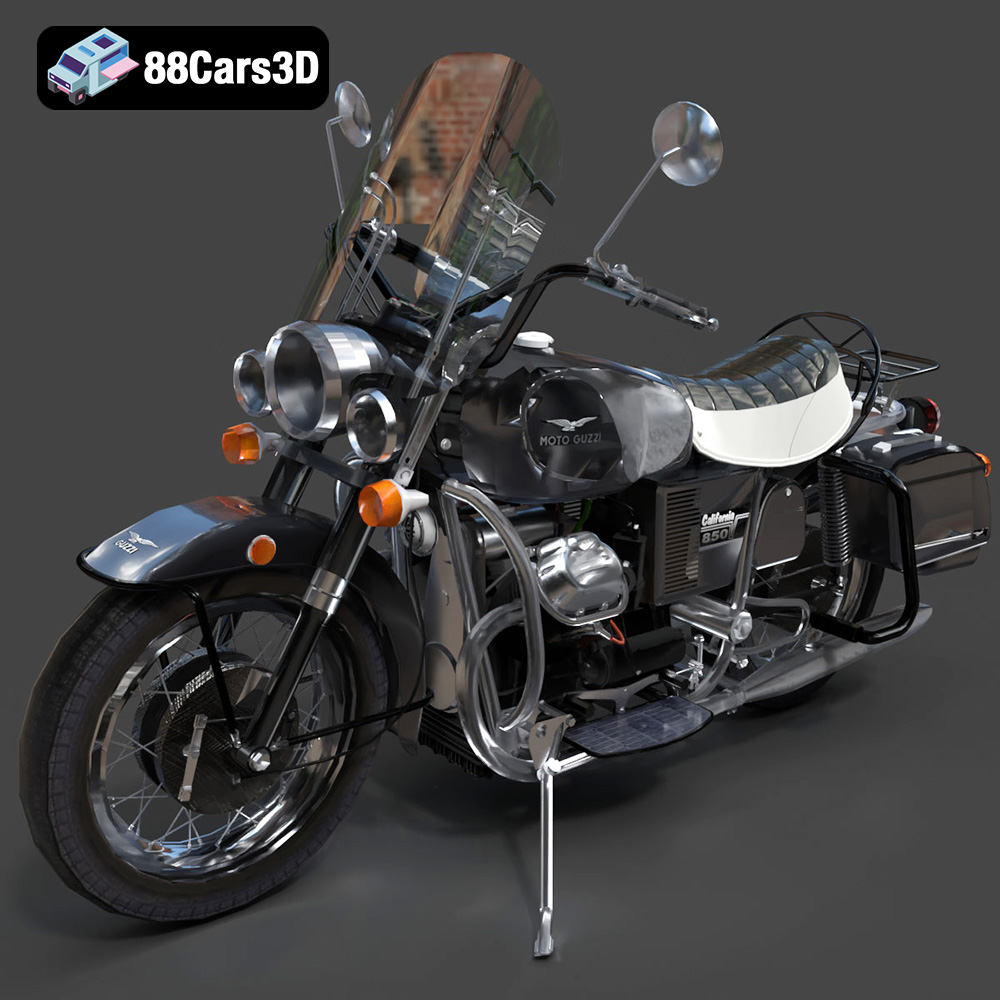
Texture: Yes
Material: Yes
Download the Moto Guzzi Classic Motorcycle 2024 3D Model featuring clean geometry, realistic detailing, and a fully modeled interior. Includes .blend, .fbx, .obj, .glb, .stl, .ply, .unreal, and .max formats for rendering, simulation, and game development.
Price: $10

Texture: Yes
Material: Yes
Download the Mercedes S-Class 2024 3D Model featuring clean geometry, realistic detailing, and a fully modeled interior. Includes .blend, .fbx, .obj, .glb, .stl, .ply, .unreal, and .max formats for rendering, simulation, and game development.
Price: $10

Texture: Yes
Material: Yes
Download the Chevrolet Camaro 1970 3D Model featuring clean geometry, realistic detailing, and a fully modeled interior. Includes .blend, .fbx, .obj, .glb, .stl, .ply, .unreal, and .max formats for rendering, simulation, and game development.
Price: $10

Texture: Yes
Material: Yes
Download the Mercedes-AMG GT 2015 3D Model featuring clean geometry, realistic detailing, and a fully modeled interior. Includes .blend, .fbx, .obj, .glb, .stl, .ply, .unreal, and .max formats for rendering, simulation, and game development.
Price: $88.99

Texture: Yes
Material: Yes
Download the Suzuki GSX-R 1000 3D Model featuring clean geometry, realistic detailing, and a fully modeled interior. Includes .blend, .fbx, .obj, .glb, .stl, .ply, .unreal, and .max formats for rendering, simulation, and game development.
Price: $10

Texture: Yes
Material: Yes
Download the Porsche Cayman S 2024 3D Model featuring clean geometry, realistic detailing, and a fully modeled interior. Includes .blend, .fbx, .obj, .glb, .stl, .ply, .unreal, and .max formats for rendering, simulation, and game development.
Price: $10

Texture: Yes
Material: Yes
Download the Holden Commodore Sportwagon 2017 3D Model featuring clean geometry, realistic detailing, and a fully modeled interior. Includes .blend, .fbx, .obj, .glb, .stl, .ply, .unreal, and .max formats for rendering, simulation, and game development.
Price: $10

Texture: Yes
Material: Yes
Download the Mitsubishi Colt 3 Door 2008 3D Model featuring clean geometry, realistic detailing, and a fully modeled interior. Includes .blend, .fbx, .obj, .glb, .stl, .ply, .unreal, and .max formats for rendering, simulation, and game development.
Price: $10

Texture: Yes
Material: Yes
Download the Mercedes-Benz S650 Pullman 3D Model featuring clean geometry, realistic detailing, and a fully modeled interior. Includes .blend, .fbx, .obj, .glb, .stl, .ply, .unreal, and .max formats for rendering, simulation, and game development.
Price: $95.99
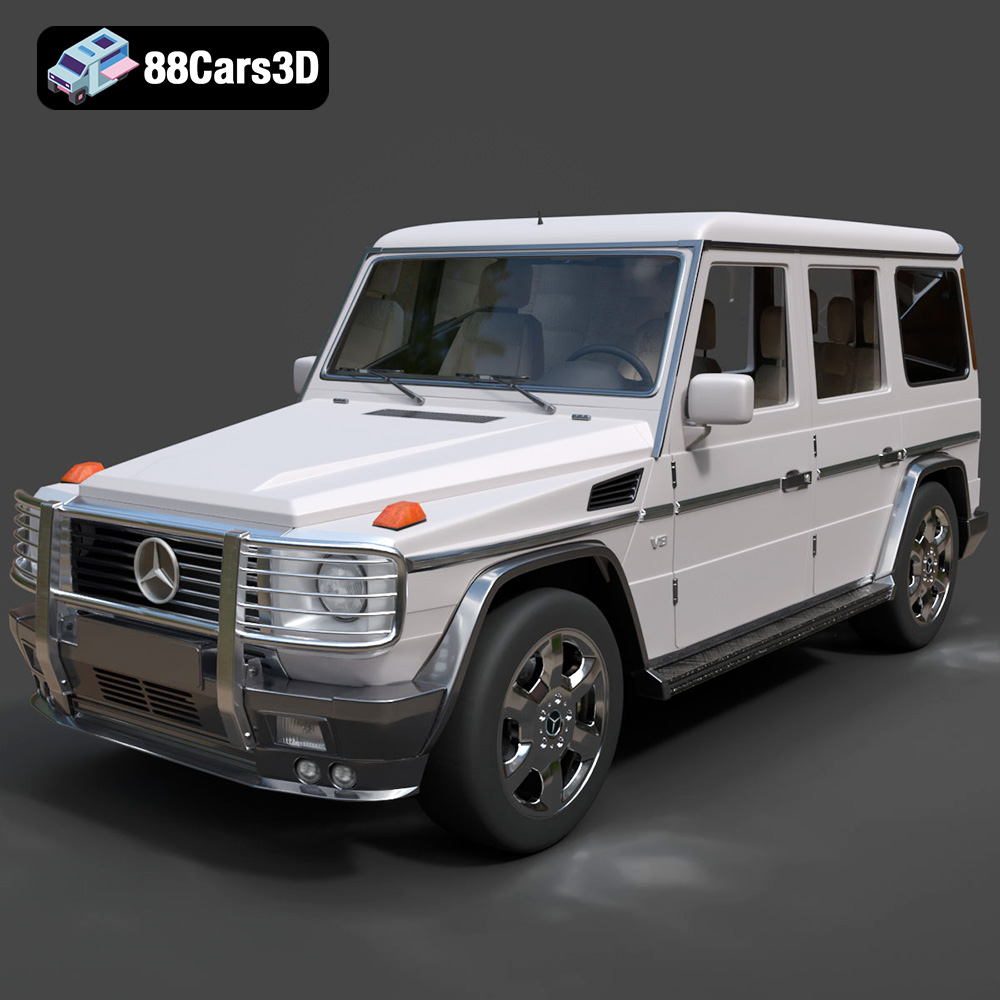
Texture: Yes
Material: Yes
Download the Mercedes G-Class SUV 2024 3D Model featuring clean geometry, realistic detailing, and a fully modeled interior. Includes .blend, .fbx, .obj, .glb, .stl, .ply, .unreal, and .max formats for rendering, simulation, and game development.
Price: $10

