Get 50% OFF All Premium 3D & STL Models!

“`html
3D printing offers incredible opportunities for creating tangible objects from digital designs. Whether you’re crafting intricate car models from 88cars3d.com, prototyping engineering components, or pursuing artistic endeavors, the foundation of a successful print lies in the integrity of your STL file. A broken or corrupted STL mesh can lead to print failures, dimensional inaccuracies, and a frustrating experience overall. This comprehensive guide will walk you through the process of identifying and repairing broken STL files using two powerful, industry-standard software packages: Meshmixer and Netfabb. We’ll cover everything from understanding common mesh errors to employing specific repair techniques, ensuring your 3D prints are flawless.
In this guide, you’ll learn:
An STL (Stereolithography) file represents a 3D object as a collection of interconnected triangles. A “broken” mesh contains errors in this triangular representation, such as:
These errors can confuse your slicing software (Cura, PrusaSlicer, etc.), leading to incorrect toolpath generation, failed support structures, and ultimately, a failed print. For example, imagine trying to print a detailed car model. If the STL file has non-manifold geometry around the wheel arches, the slicer might not correctly interpret the shape, resulting in a deformed or incomplete wheel arch in the final print.
Before diving into repair tools, it’s good practice to visually inspect your STL file for obvious errors. Open the file in Meshmixer or Netfabb and rotate the model to check for holes, gaps, or unusual artifacts. Pay close attention to areas with intricate details or thin walls. When downloading models from marketplaces such as 88cars3d.com, while models are generally pre-checked, it’s still a good idea to check the models yourself to ensure a smooth printing experience. It is also helpful to have a copy of the original file available in case repair attempts introduce new errors.
Meshmixer, a free and powerful software from Autodesk, is an excellent tool for repairing STL meshes. It provides a range of automated and manual repair tools, making it suitable for both beginners and advanced users. Its intuitive interface and robust algorithms make it a go-to choice for many 3D printing enthusiasts.
Begin by launching Meshmixer and importing your STL file (File > Import). Once the model is loaded, use the “Analysis” tool to identify potential errors. Select “Analysis > Inspector” from the menu. Meshmixer will automatically highlight areas with problems using different colored markers. For example, red markers typically indicate non-manifold geometry, while blue markers might signify small gaps or holes. Hovering your mouse over a marker will provide more specific information about the error. This preliminary analysis helps you understand the scope of the repair needed and prioritize your efforts.
Meshmixer’s automated repair tools can often fix common mesh errors with a single click. After running the “Inspector” analysis, you’ll see a panel with options for fixing the identified errors. Try clicking the “Auto Repair All” button. Meshmixer will attempt to automatically close holes, fix non-manifold edges, and correct inverted normals. Examine the repaired mesh carefully after the automated repair to ensure that the process hasn’t introduced any new issues or distorted the original geometry. If the automated repair is successful, you can export the repaired STL file (File > Export) and proceed to slicing.
For more granular control, you can also select individual error markers and choose specific repair options from the panel. This allows you to address errors one by one and fine-tune the repair process. Keep in mind that aggressive automated repair can sometimes simplify or distort complex geometries, so it’s crucial to balance automation with manual inspection and correction.
Netfabb, another powerful software package from Autodesk, offers a more comprehensive suite of tools for STL repair and preparation. While it comes with a cost (subscription-based), it provides advanced features for mesh manipulation, support generation, and build plate optimization, making it a popular choice for professional 3D printing workflows.
Launch Netfabb and import your STL file (File > Add Part). Netfabb automatically analyzes the mesh for errors and displays them in the “Problems” panel. This panel provides a detailed breakdown of each error type, including the number of holes, inverted normals, and self-intersections. Double-clicking on an error in the list will highlight the corresponding area on the model, allowing you to quickly locate and understand the problem.
Netfabb’s “Repair” script offers a powerful and customizable way to automatically fix a wide range of mesh errors. To access the Repair script, right-click on the part in the project tree and select “Repair.” In the Repair dialog, you can choose from various repair options, such as “Close All Holes,” “Remove Trivial Triangles,” and “Fix Self-Intersections.” Experiment with different combinations of options to achieve the best results. Netfabb also allows you to specify tolerances for certain repair operations, giving you finer control over the process. After running the Repair script, carefully inspect the model to ensure that all errors have been corrected and that the geometry is still accurate. Netfabb also offers the option to create a repair report documenting all changes made to the mesh, which can be useful for auditing and quality control.
For complex mesh errors that cannot be resolved with automated tools, Netfabb offers a range of manual editing options. These tools allow you to directly manipulate the mesh geometry, adding, deleting, and modifying triangles as needed. To access the manual editing tools, select the “Modify” tab in the ribbon. Here you will find options for filling holes, stitching edges, and smoothing surfaces. These tools require a deeper understanding of mesh topology and can be time-consuming to use, but they offer unparalleled control over the repair process. For example, when working with a printable car model, you might need to manually bridge a small gap in the bodywork to ensure a watertight print. Careful use of the manual editing tools can often salvage otherwise unprintable STL files.
Sometimes, basic automated and manual repair techniques aren’t enough to fix severely damaged or complex STL files. Here are some advanced techniques that can help:
Remeshing involves rebuilding the entire mesh with a new set of triangles, often resulting in a cleaner and more uniform topology. This can be particularly useful for models with highly irregular or dense meshes. Both Meshmixer and Netfabb offer remeshing tools. In Meshmixer, you can use the “Remesh” tool under the “Sculpt” menu. In Netfabb, you can find remeshing options under the “Modify” tab. Experiment with different remeshing settings to find the optimal balance between mesh density and geometric accuracy. Be aware that remeshing can slightly alter the shape of the model, so it’s important to carefully compare the remeshed version to the original.
Boolean operations allow you to combine, subtract, or intersect different meshes. This can be useful for creating complex shapes or for repairing areas with significant damage. For example, you might use a boolean subtraction to remove overlapping geometry or a boolean union to merge two separate parts into a single mesh. Meshmixer offers a user-friendly interface for performing boolean operations, while Netfabb provides more advanced options for controlling the process. Boolean operations can be computationally intensive, so it’s important to use them judiciously and to simplify your meshes as much as possible before performing these operations.
Some slicing software, such as Cura and PrusaSlicer, have built-in mesh repair capabilities. While these capabilities are typically limited, they can often fix minor errors, such as small gaps or inverted normals. Before exporting your STL file for repair, try loading it into your slicing software and checking for any warnings or errors. The software may automatically attempt to fix these errors during the slicing process. However, relying solely on slicing software for mesh repair is generally not recommended, as it can lead to unpredictable results. It’s always best to repair your STL file using dedicated mesh repair tools before slicing.
Once you’ve repaired your STL file, it’s essential to optimize it for 3D printing. This involves adjusting settings such as print orientation, support structures, and infill density to achieve the best possible print quality and structural integrity. Here’s a breakdown of key optimization techniques:
The orientation of your model on the build plate can significantly impact print quality, support requirements, and printing time. Choose an orientation that minimizes overhangs and maximizes bed adhesion. Overhangs are portions of the model that are not directly supported by the layer below, and they require support structures to prevent them from collapsing during printing. While platforms like 88cars3d.com offer print-ready STL files, understanding how to optimize support structures is still helpful. Experiment with different orientations in your slicing software to find the optimal balance between print quality and support material usage.
Support structures can be generated automatically by your slicing software, but it’s often necessary to manually adjust them to ensure that they provide adequate support without being overly difficult to remove. Consider using different support types, such as tree supports or linear supports, depending on the geometry of your model. Also, pay attention to the support density and the interface layer between the support and the model. A higher support density will provide more support but will also be more difficult to remove. A well-designed interface layer will make it easier to remove the supports without damaging the surface of the model.
Layer height and infill density are two key parameters that affect the print quality, strength, and printing time of your model. A lower layer height will result in a smoother surface finish and finer details, but it will also increase the printing time. A higher layer height will reduce the printing time but will result in a rougher surface finish. The optimal layer height depends on the desired level of detail and the specific requirements of your project. For highly detailed models, such as miniature car models, a layer height of 0.1mm or less is often recommended. For larger, less detailed models, a layer height of 0.2mm or 0.3mm may be sufficient.
Infill density refers to the amount of material used to fill the interior of your model. A higher infill density will result in a stronger and more durable model, but it will also increase the printing time and material usage. A lower infill density will reduce the printing time and material usage, but it will also result in a weaker model. The optimal infill density depends on the intended use of the model. For models that will be subjected to significant stress or load, such as functional prototypes, an infill density of 20% or higher is often recommended. For purely decorative models, an infill density of 10% or less may be sufficient. Experiment with different infill patterns, such as grid, honeycomb, or gyroid, to find the optimal balance between strength, weight, and printing time.
Even with careful mesh repair and optimization, you may still encounter problems during the 3D printing process that are related to underlying STL mesh issues. Here are some common problems and how to troubleshoot them:
Delamination, or layer separation, occurs when the layers of your 3D print fail to adhere properly to each other. This can be caused by a variety of factors, including poor bed adhesion, incorrect printing temperature, and drafts in the printing environment. However, it can also be caused by underlying STL mesh issues, such as non-manifold geometry or inverted normals. To troubleshoot delamination, first ensure that your bed is properly leveled and that you are using the correct printing temperature for your chosen filament. If delamination persists, try increasing the printing temperature slightly and reducing the printing speed. You should also carefully inspect your STL file for any remaining mesh errors and repair them as needed.
Warping, or the lifting of the corners or edges of your 3D print from the build plate, is another common problem that can be caused by STL mesh issues. Warping is often caused by uneven cooling of the printed material, which can create internal stresses that pull the print away from the build plate. To troubleshoot warping, first ensure that your bed is properly heated and that you are using a bed adhesion agent, such as glue stick or hairspray. You should also try reducing the printing speed and increasing the bed temperature. If warping persists, try adding a brim or raft to your print to increase the surface area in contact with the build plate. Finally, inspect your STL file for any sharp corners or edges that may be contributing to the warping and try to smooth them out using mesh editing tools.
Incomplete or missing features in your 3D print can be a sign of significant STL mesh errors. This can occur when the slicer software is unable to properly interpret the geometry of the model due to non-manifold geometry, holes, or self-intersections. To troubleshoot incomplete or missing features, first carefully inspect your STL file for any visible errors. If you find any errors, repair them using the techniques described earlier in this guide. If you are unable to find any visible errors, try increasing the mesh density of your STL file. This will increase the number of triangles used to represent the model, which can help the slicer software to better understand the geometry. However, increasing the mesh density can also increase the file size and printing time, so it’s important to find the right balance.
Repairing broken STL meshes is a critical skill for any 3D printing enthusiast or professional. By understanding the common types of mesh errors and mastering the techniques for repairing them using software like Meshmixer and Netfabb, you can significantly improve the success rate and quality of your 3D prints. From crafting intricate car models sourced from platforms like 88cars3d.com to realizing complex engineering designs, a solid foundation in STL repair will empower you to bring your digital creations to life with confidence. Remember to always thoroughly inspect your STL files for errors before printing, and don’t be afraid to experiment with different repair techniques to find the best solution for your specific needs.
Actionable Next Steps:
“`
Texture: Yes
Material: Yes
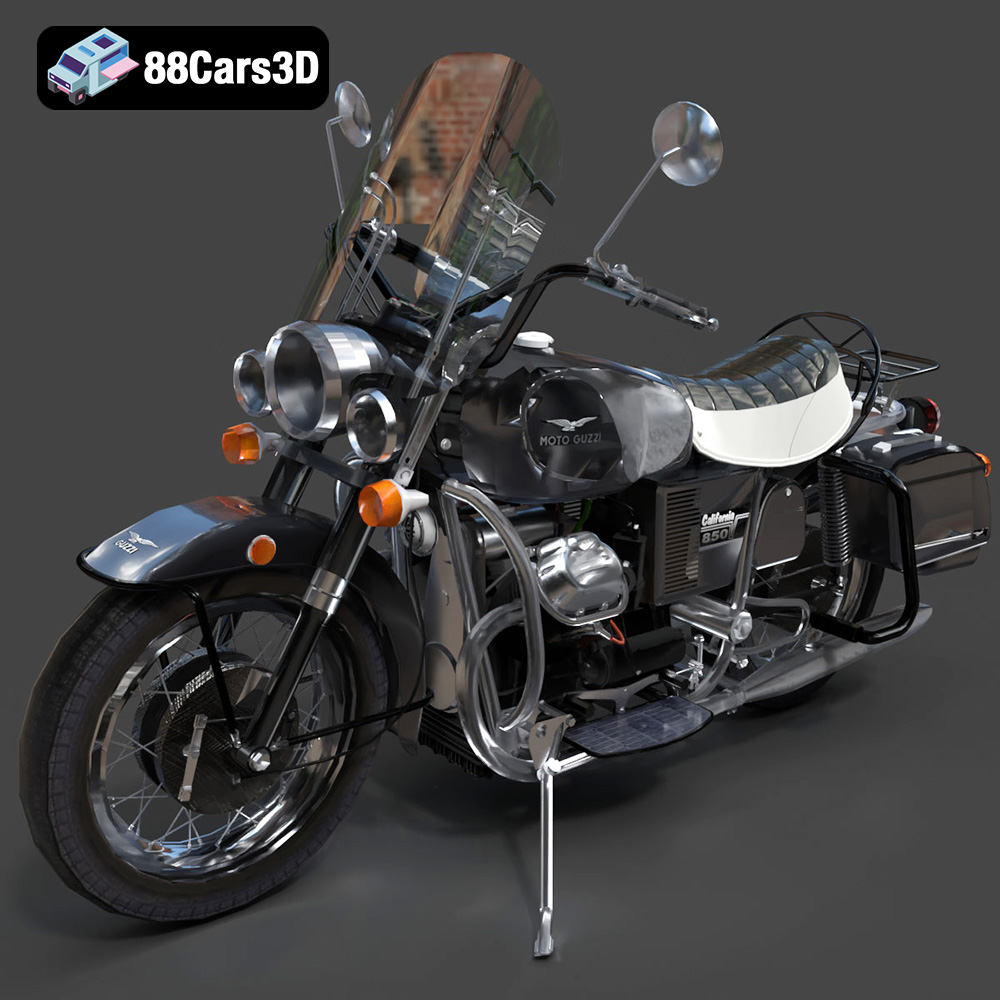
Download the Moto Guzzi Classic Motorcycle 2024 3D Model featuring clean geometry, realistic detailing, and a fully modeled interior. Includes .blend, .fbx, .obj, .glb, .stl, .ply, .unreal, and .max formats for rendering, simulation, and game development.
Price: $10

Texture: Yes
Material: Yes
Download the Mercedes S-Class 2024 3D Model featuring clean geometry, realistic detailing, and a fully modeled interior. Includes .blend, .fbx, .obj, .glb, .stl, .ply, .unreal, and .max formats for rendering, simulation, and game development.
Price: $10
Texture: Yes
Material: Yes
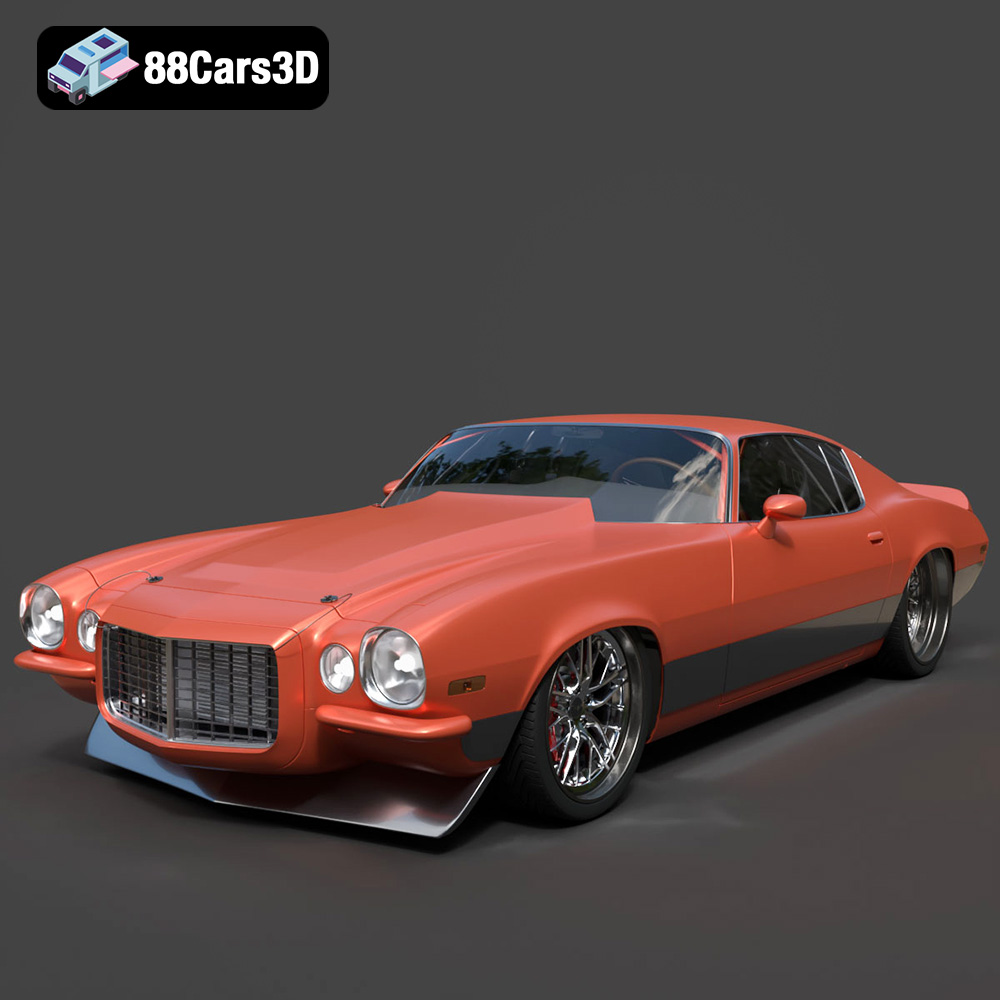
Download the Chevrolet Camaro 1970 3D Model featuring clean geometry, realistic detailing, and a fully modeled interior. Includes .blend, .fbx, .obj, .glb, .stl, .ply, .unreal, and .max formats for rendering, simulation, and game development.
Price: $10

Texture: Yes
Material: Yes
Download the Mercedes-AMG GT 2015 3D Model featuring clean geometry, realistic detailing, and a fully modeled interior. Includes .blend, .fbx, .obj, .glb, .stl, .ply, .unreal, and .max formats for rendering, simulation, and game development.
Price: $88.99

Texture: Yes
Material: Yes
Download the Suzuki GSX-R 1000 3D Model featuring clean geometry, realistic detailing, and a fully modeled interior. Includes .blend, .fbx, .obj, .glb, .stl, .ply, .unreal, and .max formats for rendering, simulation, and game development.
Price: $10

Texture: Yes
Material: Yes
Download the Porsche Cayman S 2024 3D Model featuring clean geometry, realistic detailing, and a fully modeled interior. Includes .blend, .fbx, .obj, .glb, .stl, .ply, .unreal, and .max formats for rendering, simulation, and game development.
Price: $10

Texture: Yes
Material: Yes
Download the Holden Commodore Sportwagon 2017 3D Model featuring clean geometry, realistic detailing, and a fully modeled interior. Includes .blend, .fbx, .obj, .glb, .stl, .ply, .unreal, and .max formats for rendering, simulation, and game development.
Price: $10

Texture: Yes
Material: Yes
Download the Mitsubishi Colt 3 Door 2008 3D Model featuring clean geometry, realistic detailing, and a fully modeled interior. Includes .blend, .fbx, .obj, .glb, .stl, .ply, .unreal, and .max formats for rendering, simulation, and game development.
Price: $10

Texture: Yes
Material: Yes
Download the Mercedes-Benz S650 Pullman 3D Model featuring clean geometry, realistic detailing, and a fully modeled interior. Includes .blend, .fbx, .obj, .glb, .stl, .ply, .unreal, and .max formats for rendering, simulation, and game development.
Price: $95.99
Texture: Yes
Material: Yes
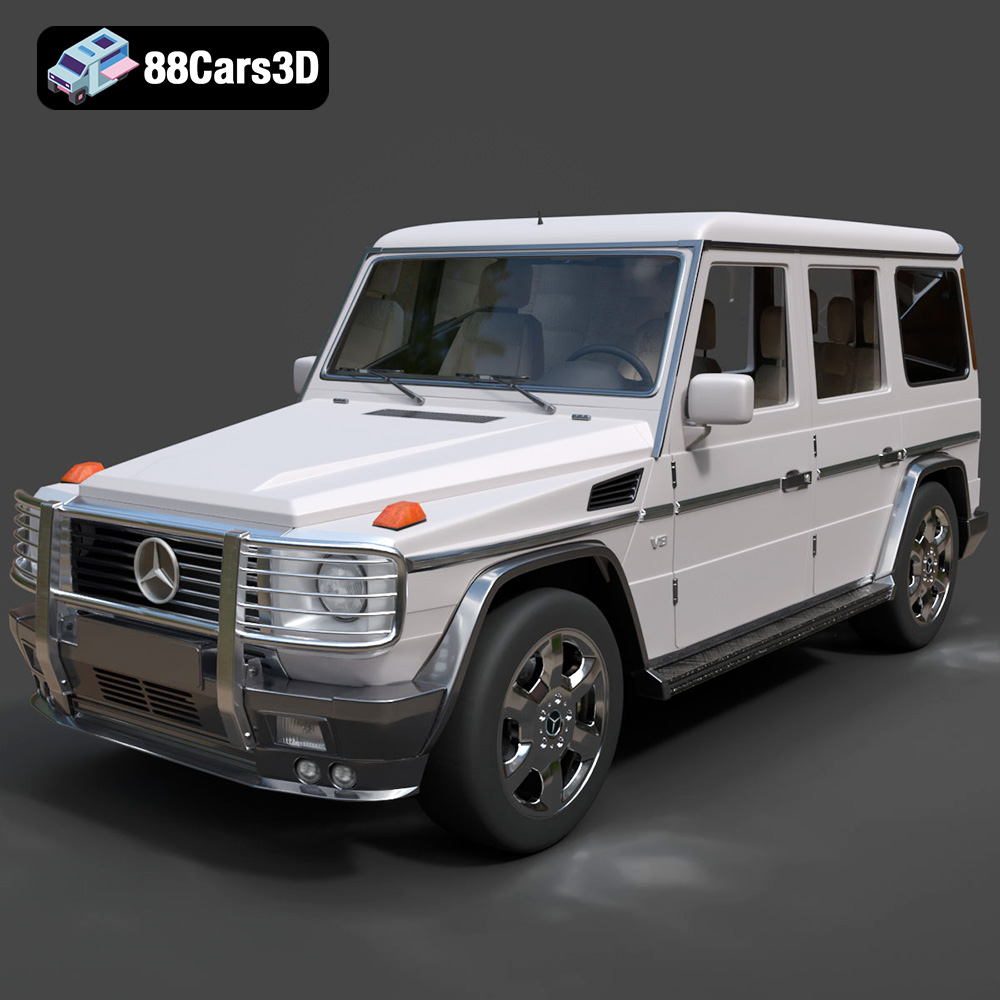
Download the Mercedes G-Class SUV 2024 3D Model featuring clean geometry, realistic detailing, and a fully modeled interior. Includes .blend, .fbx, .obj, .glb, .stl, .ply, .unreal, and .max formats for rendering, simulation, and game development.
Price: $10

